Archive for ‘Office’ Category
On the Road Again: Organize Your Mobile Office

Road Warrior Image by Mohamed Hassan from Pixabay
During the last two years, the watchword has been “work from home.” In this recent WFH era, we’ve eschewed office buildings and turned snuggly corners of our bedrooms and dining rooms into home offices. Many companies have closed their local operations altogether, finally trusting that there’s no need to micromanage their knowledge-worker staffs. More and more, companies are OK with letting people work where and how they operate best.
Of course, this isn’t the case with everyone. Some employers are rushing at breakneck speed to return the North American workplace experience to “normal,” despite the distinct rise in European and Asian COVID cases of the Omicron BA.2 subvariant. Count me as one of those who is curmudgeonly aghast at the state-by-state dropping of precautions, as I noted in the following reply to a friend, which got a lot of Twitter love.
I am so tired of people saying it’s over because they want it to be over. It’s not a relationship, it’s a virus.
— Julie Bestry, CPO® (@ProfOrganizer) March 23, 2022
Obviously, though, there are some people who can’t work from home. Your favorite restaurant can’t let the sous-chef work from his back deck. An OB-GYN is the perfect example of how you can’t phone in every kind of delivery!
And people who travel about for work, whose very career depends on them physically arriving at different locations, whether locally, regionally, nationally, or internationally, need to get on the road (or the tarmac), however ambivalent they might feel about the prospect. And, of course, they need to be organized.
HOW TO ORGANIZE YOUR MOBILE OFFICE
From smart phones to Zoom to cloud computing, modern technology has made road warriors a little less embattled, but keeping your mobile office from looking like an outtake from Game of Thrones battle requires some special equipment and finesse.
Over twenty years as a professional organizer, I have worked with a wide variety of clients who work, at least some of the time, from the road.
There have been numerous pharmaceutical sales representatives who needed to organize medical literature, promotional materials, medication samples, durable medical goods, and anatomical models and schlep them from medical offices and hospitals in their assigned local or regional areas. I’ve worked with a few mobile pharmacists serving as pharmacy supervisors, traveling each week to different outlets, and working both as members of their profession and in consultant/supervisory capacities on behalf of their companies.
I had one client who traveled her “territories” in various parts of the country for a restaurant chain, training franchisees and their staff on everything from computer systems to how to prepare and garnish certain delicious foodstuffs. And one client shared memorable tales of his experiences as a high-level insurance executive assigned to travel and review high profile claims.
What all of these hearty folks had in common is that they needed to have all of their necessary office supplies, documents, and resources available to them with the same ease of accessibility as when they were comfortably seated in actual offices. While each had unique needs, their were a wide number of commonalities.
In the Car
Let’s focus on documents. Back at a decidedly stationary office, you’d have filing cabinets, hanging file drawers in a desk, and a variety of other options with the distinct advantage that you never need worry about jostling.
Cars, however, jostle. They are buffeted by the wind on the highway and hit unanticipated bumps from potholes and running over detritus that has fallen off of other vehicles.
If your mobile office requires bringing lots of glossy literature, forms, or other pre-printed material, you’ll want to approximate a standard filing system as much as possible.
Personally, I’m a fan of sturdy file crates. These crates, fashioned after old-school milk crates but with file rails on all four sides (to accommodate letter-sized or legal-sized files) take a licking and keep on ticking when you’ve got a heavy load of hanging files filled with file folders and lots of paper.
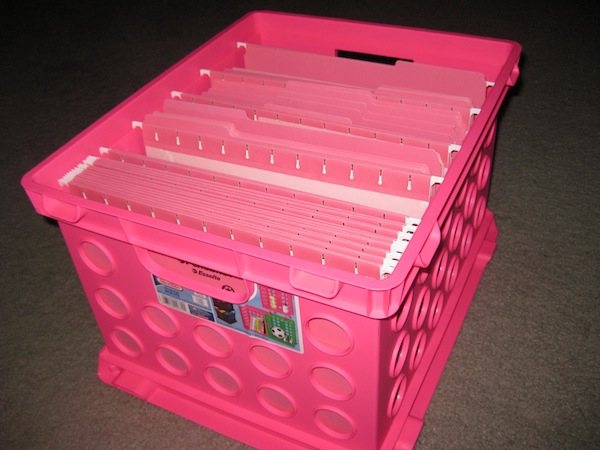
My favorite version is made by Sterilite and, like the very best versions of the TARDIS’s control room, has lots of “round things.” I own them in four different shades of pink/plum/mauve, plus blues and blacks. Another client swears by teal.
In most “big box” stores like Target or Walmart or office supply stores, you can usually fine single crates for $5-10. (Storex makes a very similar version, with weirder displays of “round things,” but usually only in packs of three or more for somewhat higher prices.)

A good alternative to file creates is to pick a few sturdy lidded totes equipped with hanging file rails. In this case, I’m not referencing portable file boxes (we’ll get to those), but larger file tubs requiring a two-handed grip. Bankers Box (yes, famous for their fold-into-place cardboard paper storage) has hearty one:

Office Depot and Staples have their own lines of dependable tubs. They key is that you want a heavy-duty file tote or tub with hanging rails, one that will withstand the test of time and changes in temperature and humidity. A warped tote is not a happy tote.
These crates or totes should generally stay in your trunk or the rear of your hatchback/SUV, removed rarely just for cleaning of the vehicle. In general, if you keep the contents organized and maintained, updating which folders (and which file contents) are stored within, they shouldn’t require much upkeep.
Aesthetics are less important than durability. However, if you’re eager to move your resources from your trunk to your a hotel room or event venue, there are other options, with functional and aesthetic appeal.
Last year, I guest-blogged for the great folks at meori, and wrote From Dad’s Study to the Modern Home Office, performing a deep dive into the essentials of a home office. One of my favorite products I got to know was meori’s Hanging Office Box.
It’s available in a few different colors, accommodates hanging files, and is collapsible.
Whichever you choose, use these kinds of file storage for stockpiling multiple copies of leave-behind resources: glossy one-sheets, brochures, catalogs, blank forms, and templates. To ensure that you’re always prepared for a surprise trip, restock your mobile file space weekly if you stay local, or upon each return from out of town.
On Client Calls
When you head into a client meeting while on the road, you’re not going to want to keep zipping back to your car for the documents you want to share or disburse. If you think of the trunk storage totes and crates as the big deep-freezer in your basement, these next options are more like your lunch box or picnic basket. You’ll use them for your laptop or tablet, essential files, and office supplies and related resources, like chargers. It’s the stuff you carry with you.
Recently, I shared with you my beloved ZÜCA Business Backpack.
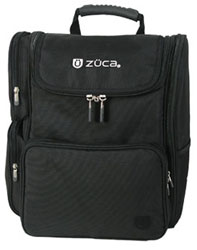
For an even more refined look, the Samsonite Business Slim Backpack (in Cognac or Black) is a sleek option.
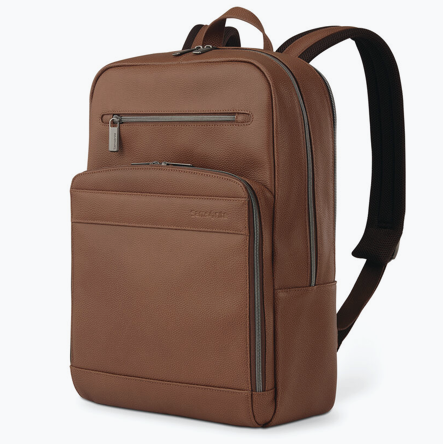
A full analysis of business backpacks is probably better left for a post on travel, but I can tell you that there’s enough of a variety of business backpacks that you can be assured they’ve come a long way from the backpacks of the days of pep rallies and bus rides. To find a professional backpack to your liking, consider these expert round-ups:
Specialist Satchels: The 19 Best Men’s Backpacks for Work from The Coolist
19 Best Laptop Backpacks the Provide Both Fashion and Function from Marie Claire
The 10 Best Business Travel Backpacks from the blog The Broke Backpacker
The Best Laptop Backpacks for Work (and Life) from Wired
If you’re looking for something with a little more accent on fashion, primarily for hanging files, there are alternatives to the standard backpack or briefcase. Sadly, the long-beloved (by clients and professional organizers alike) leatherette file totes from Jamie Raquel exist no more, but Levenger’s LevTex Portable File Totes scratch a similar itch.
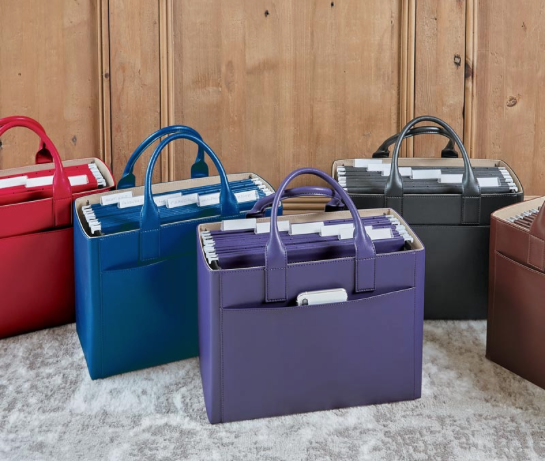
Available in Black, French Blue, Purple, Red, or Hickory, with a tan twill interior lining, the LevTex line runs $99.50 each (though I’m spotting it on sale for $69 at the time of publication of this post).
At a lower price point, Lakeside Collection has a similar faux leather Chic File Folder Organizer Tote in Red, Brown, and Black for just $39.99 via Amazon:

If image is less important to your line of work than durability, and you’ve got a lot of paperwork to share in meetings or at events, consider a portable file box with hinged lids, sturdy handles, and hanging file rails. Search for “portable hanging file box” and you’ll come up with a wide variety of brand-name and generic versions like this:

These are practical for bringing in just what you need for a specific client call: notes, blank contracts, and a subset of literature from the mobile file space in the trunk.
If you carry blueprints or other large-format documents, carry both a standard portable file box for business papers and an art portfolio case. If you will be leaving designs behind, use inexpensive red rope portfolios; invest in a durable leather or nylon case if you will be using it long-term.
When you’re on the road, is your need to schlep a more heavy-duty experience? Expanding rolling crates are suitable when your display materials include heavy catalogs and sample products. They offer a robust upgrade from portable file boxes and won’t break the bank — or your back.

For a more elegant or refined look, try a rolling catalog case or a leather litigation briefcase like you see lawyers (or, more likely, their paralegals) using on TV.
And while you’re gathering all the resources to show off to your clientele or supervisees, make sure you don’t lose sight of all the chargers, cables, gadgets, tools, and small personal items that keep you efficient.
One favorite line of professional organizers everywhere is the Grid-It! from Cocoon Innovations. I am constantly amazed at how much I can pack into a small space with just a Grid-It! board covered in elasticized bands, but Grid-It! never fails to secure possessions, prevent tangles, and ensure that nothing falls into a black hole.
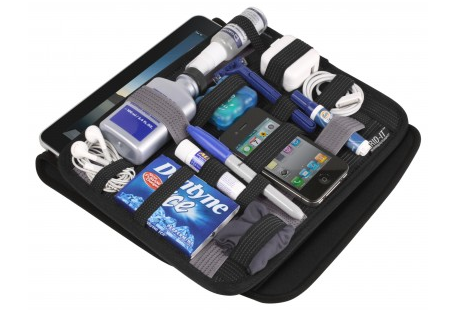
Cocoon also has an impressive array of slimline backpacks with Grid-It! stylings built in, for the road warrior who is living on the road, or in the air. Speaking of which…
On the Road…and On the Tarmac
Are you spending time in hotels, dropping in at co-working spaces, or hot-desking at divisions of your company as you jaunt around the country or around the world? When space is at a minimum but you want to feel like can keep your eye on all of your documents and resources, it can be helpful to adjust the vertical control. Look upward instead of outward!
For my clients who are always on the road, I suggest the Smead Cascading Wall Organizer. This snazzy revamp of the original can hang on the wall or anywhere from a nail, hook, or even a hotel hanger to reduce clutter in your workspace.
Made of durable, bright, and easy-to-clean polypropylene, the six colorful (yellow, orange, fuscia, green, blue, and purple) letter-size pockets can be removed to take to individual meetings. (Each folder holds up to 50 sheets.)
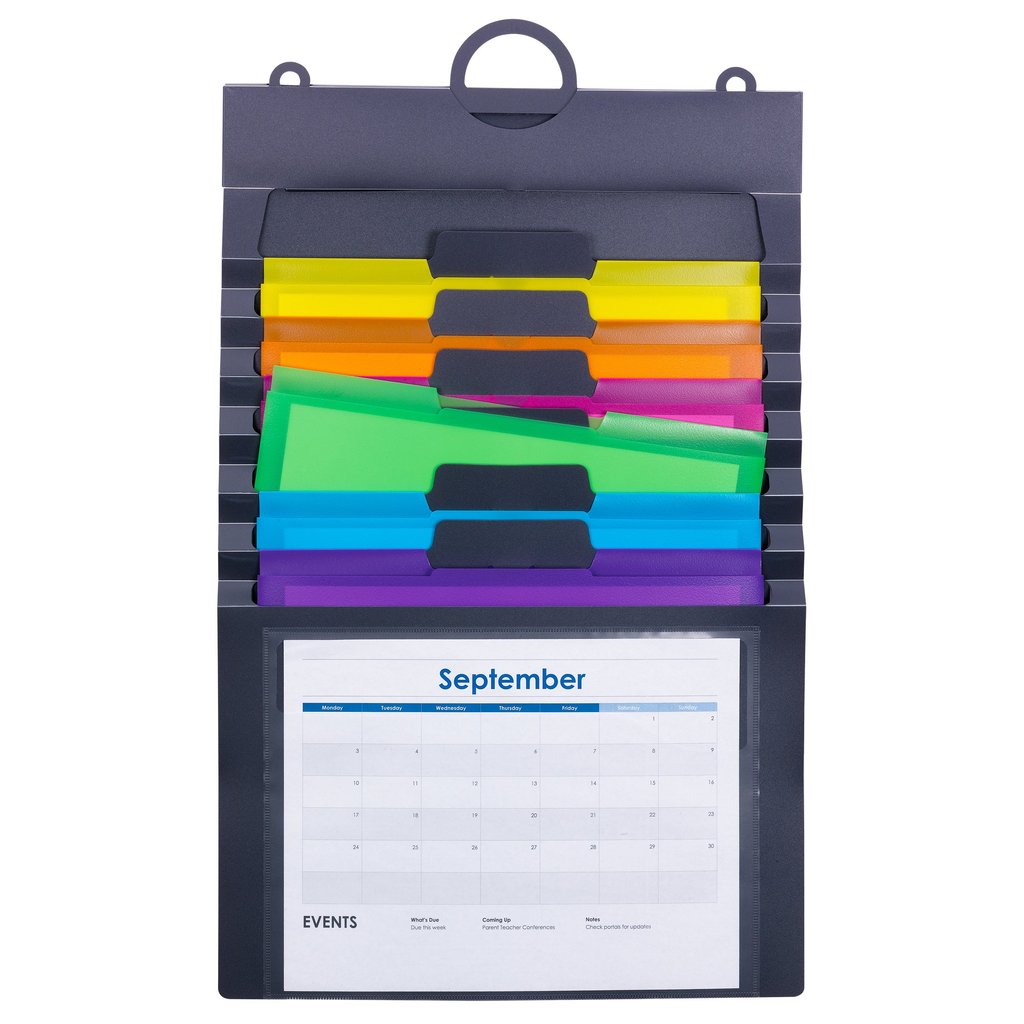
Use the clear front pocket to show the current month’s calendar, a project timeline or GANTT chart. (Fuzzy on that? Check out Checklists, Gantt Charts, and Kanban Boards – Organize Your Tasks from last year.) There’s a 3-part hanger (use one loop or all three), and an elastic cord closure for putting it all together and stowing it away.
The whole thing is PVC-free and acid-free, and measures 14 1/4″ wide by 24″ high (when fully expanded). Available directly from Smead for $19.03, or you can find it on Amazon for $29.88.
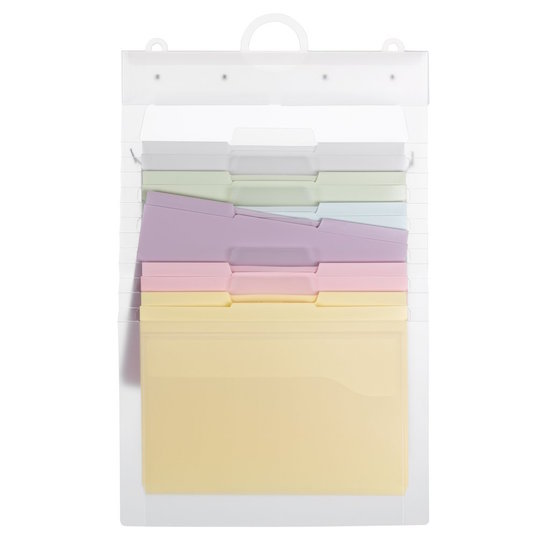
There are two variations on the theme. If the above brights are too vibrant for your super-stuffy colleagues, the clear version (with pastel pockets) of the Cascading Wall Organizer is also $19.03 at Smead or $11.10 at Amazon:
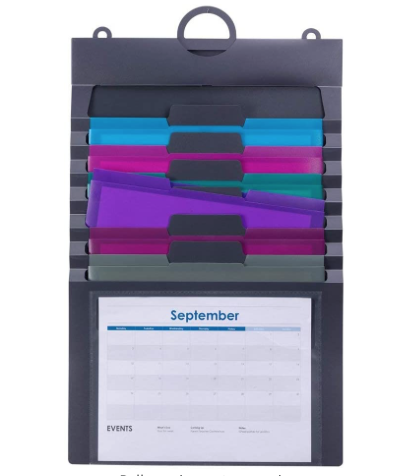
 Conversely, there’s one with sumptuous jewel tones for $10.94.
The Container Store has a similar product, the Multi-Color Cascading 6-Pocket Letter File Wall Organizer Tote, for $16.99.
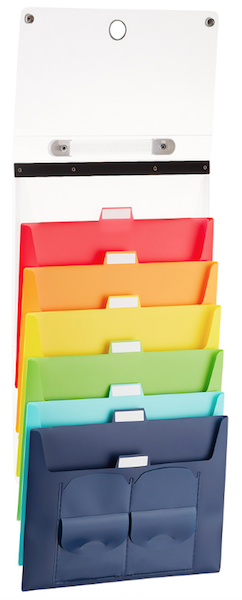
It measures 13 3/8″ wide by 10 1/2″ high, and when it’s not fully extended, it folds and collapses into a 1 1/2″ thick tote. Two snap closures open to reveal six cascading pockets (red, orange, yellow, green, teal, and dark blue) that hold letter-sized interior file folders (sold separately). You can label the tabbed pockets, and there’s both a handle for carrying the closed tote and a ring for hanging it for display.
At a similar price point of $25.29, the Pendaflex Hanging Organizer looks and works much like the others, with color-coded file pockets in an indestructible, poly carrying case.
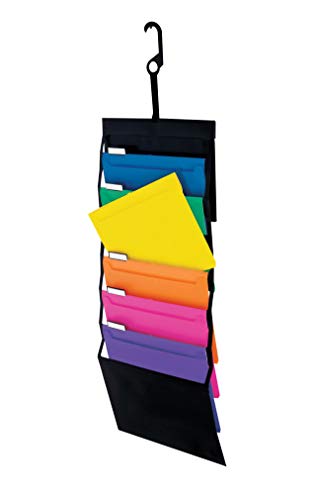
Expand it like an accordion file, collapse it to store in a briefcase, or hang it with the files neatly cascading from a hotel doorknob or coffeehouse chair when you set up a temporary workspace.
And sometimes, you just need a space of your own when you’re away from your own space. For such occasions, the Plan Station Pro is kind of interesting. It reminds me of the graduate student study carrels in college libraries, but set up on an ad hoc basis.
This nifty workstation measures 24″D x 48″W x 24″H and lets you create a sitting or standing desk wherever you land, whether that’s a hotel or a job site, for just $40. You carry it like a large portfolio, then hang or use the included dowels so it will free-stand to create a mini office.
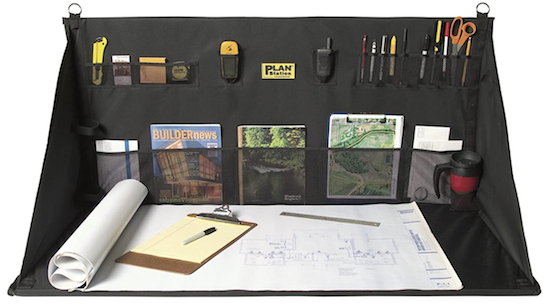
Finally, even if you have to work in a public space, avoid the temptation to invest in a wheel-mounted desk. If you must work from your car, it is roomier and more comfy (though admittedly more awkward-looking to ouotsiders) to sit in the center of the rear seat and balance your laptop on your knees.
There’s also a narrower version, the Plan Station Mini Portable Work Station, measuring 24″D x 32″W x 24″H. It’s currently $26.47.
Be Tactical With Your Tech
As Paper Doll, I’m always going to focus on your tangible, paper resources, but that doesn’t mean we’ll forget about the tech and other essentials. Your digital resources may live in the cloud, but you still need to reach them from down here on earth (and, OK, sometimes when you’re up in the clouds, too).
Generate a packing list to use with your backpack or satchel so that every night before you get on the road, you can make sure you’ve packed what’s necessary. Consider the following
- Phone (or a note to remind you to pack it in the morning once it’s charged)
- Laptop or tablet
- Mobile hot spot (you can tether your phone’s internet access, but you may want to buy a more powerful mobile router to make sure your computer, tablet, and any other Wi-Fi-able device gets the connection it needs)
- Bluetooth keyboard
- Bluetooth mouse (if you, like me, never got the hang of a trackpad)
- Bluetooth or wired number keypad (if you crunch a lot of numbers when working)
- Chargers and charging cables
- Adapters (because, between USB and USB-C, not to mention Lighting connections, nothing attaches to anything else these days without some fiddling)
- Headphones or ear buds (so that you can dial in to conference calls or Zooms with minimal distraction for yourself or other attendees)
- Flash drives (because you can never count on your laptop communicating nicely with the presentation set-up at any conference venue or work location)
- A legal pad or notebook (because sometimes, the internet or WiFi isn’t your friend)
- Post-It® Notes — always have a stack in your favorite color. Combine a sticky note and a Sharpie for everything from leaving a note on the bathroom mirror for hotel housekeeping to capturing an idea when the data on your phone peters out
- Your favorite pen, a colorful Sharpie (or several), highlighters (for calling someone’s attention to something in the analog/paper world)
- Headrest hangers, so you can keep your jacket or suit neatly hanging and wrinkle-free
Making Time for Putting it All Back Together
Block time every evening to review the list of people you will be seeing the next day. This is also a good time to check tomorrow’s slot in your tickler file. C’mon, you didn’t think I’d miss a chance to remind you about the value of tickler files, right? I’m always going to prompt you to tickle yourself organized, even when you’re on the road! (Especially when you’re on the road!)

Clarify the end goal of the meeting, so you know what you need to display or distribute. Verify that you have (or can acquire) enough copies of each. Make sure all essential items are in tomorrow’s tickler file slot.
After each appointment, before belting yourself into your car, ensure that any papers you acquired in the meeting are either filed for reference or added to your tickler file for prompt follow-up.
Laminate a checklist or create one in Evernote or your favorite digital system so that you can follow the same procedure every time you return from a client visit or sales trip.
Finally, taking a few moments to remove the pop cans, meal wrappers, and other schmutz of the day ensures that you will enter a fresh-smelling, chaos-free mobile office tomorrow.
Happy travels, and stay safe…and organized!
Ask Paper Doll: Should I Organize My Space and Time with Color?
This is part of a recurring series of Ask Paper Doll posts where you can get your burning organizing questions answered by Paper Doll, a 20-year veteran professional organizer and amateur goofball.
Dear Paper Doll:
It’s only January and I’m already at a loss for motivation. I’ve been thinking about using color to organize my office and maybe my calendar, but the more I look at my options, the more overwhelmed I get. How can I organize by color and not constantly be tinkering with my systems and remembering what color goes where?
Signed,
Feeling grey with a case of the blues
Grey sky, grey streets, grey mood? Even if we weren’t in the second winter of a pandemic, January is a tough month to feel sparkly. We’re still nine weeks away from Daylight Saving Time, so our late afternoons are dark and gloomy. Plus, after the ongoing glow of holidays from late November through New Year’s Day, of course you’re feeling a loss of spark.
And yes, color is a great way to pump up the mood. If color weren’t so vital, Pantone wouldn’t be known worldwide for coming up with its color of the year. By the way, Paper Doll is a huge fan of this year’s color, Very Peri.

But organizing by color and organizing with color can be very different things.
ORGANIZING BY COLOR
Some people are enthusiastic about using color to organize everything in their homes, offices, and lives. Maybe they have a signature color that serves as a personal brand; others believe in color-coding and sorting everything by hue. Paper Doll isn’t necessarily keen on that. Using color to decide where something goes and with which it is grouped depends on the situation.
Organizing clothing or shoes by color? Sure. Imagine you have all of your long-sleeved shirts hanging in the closet, in roughly ROY-G-BIV color order, or group all your black pumps together, then the blue, then the red, and so-on within your collection of heels.
This will make it easy to recognize you’ve tipped the scale toward full-on goth when you’ve got 17 black turtlenecks, or may be mistaken for Dorothy if most of your shoes are ruby red. Sorting and ordering your clothes and shoes by color makes sense, but probably as a secondary sorting characteristic within clothing/shoe types.

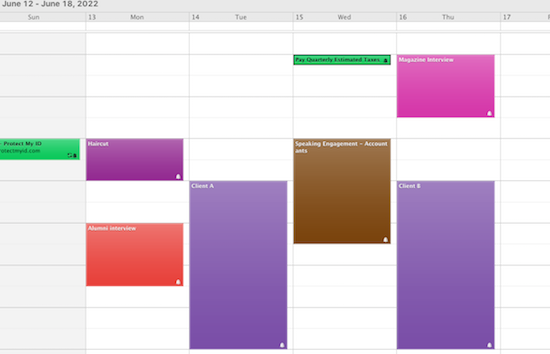
Organizing your calendar by color? Absolutely! Whether you grab a selection of pretty markers to fill in your paper planner (medical appointments in red, billing or tax dates in green, social events in purple) or use the settings in Outlook, Gmail, or any other digital calendar, you can color-code to your heart’s delight.
And the best thing? If you select the wrong color, you don’t need white-out or an eraser to fix it. One little click, and you’re back in business!
Organizing files by color? Mayyyyyyyybe. I hate to sound coy, but the effectiveness of a system based on color-coding files depends on the level of commitment of the user.
In the abstract, it can be great to organize your files (either tabbed folders or hanging folders) by color. Figure out what your overarching categories are, and assign colors to those categories, whether in your reference or action files. For example:
- Red folders — Urgent tasks or information you always need to get your hands on in a hurry
- Green folders — Financial information related to taxes, payable accounts, and investments
- Blue folders — Planning, like for vacations or work projects
- Yellow folders — Client information or class materials
- Purple folders — Creative tasks
and so on. Color (as we’ll see below) stirs emotions, creates enthusiasm and motivation, and triggers action. What could be better?
The problem isn’t with the system, per se, but with the users. If you let yourself run out of yellow folders just as you sign on a new client, what will you do? Are you likely to order new folders in that color scheme right away? If so, you’re set. If not, you may let a pile of papers related to that client languish in the corner of your desk, risking them getting mislaid or lost.
Plus, keeping many different boxes of colored tabbed folders can be expensive and get out of balance quickly. You may use three times as many purple folders as red ones and your red box may sit year after year, mostly untouched.
If you want to embrace color, there are a few other options beyond a full-on color-coding assault. You could:
- Pick your favorite color, and use those tabbed folders exclusively.
- Start with just two or three of your most used categories and pick colors to define each of those. You’ll still be using color as a sort of trigger or label, as above, but you won’t be going “whole hog,” at least not at the beginning.
- Use plain manilla tabbed folders, but pick a beloved color for hanging folders. (Because hanging folders hold tabbed folders, and can generally accommodate three-in-one, we don’t run out of them as quickly.) Traditional olive/army green hanging folders aren’t likely to cheer anyone up, and using a fun hanging folder uniformly through your filing system will brighten your mood without requiring you to keep up with a complex system.
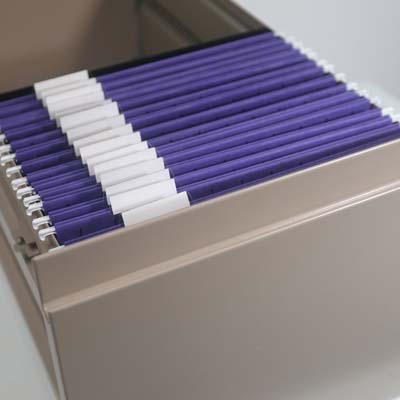
(These purple Smead hanging folders are bright and bold, and are available in most Big Box stores and at Amazon for $17.89 for a box of 25.)
Organizing your spices by color? How experienced a chef are you that you could catch yourself before you added a visibly similar (but wrong) spice to a recipe? Ground nutmeg, cloves, and cinnamon look alike; but would you want to risk grabbing the wrong one and making iced nutmeg rolls or clove-raisin coffee cake?
Are you willing to mistake similarly-red cayenne pepper for paprika? Perhaps it’s better to group spices by the categories of usage (baking tasks vs. preparing meat/vegetables, etc.). SpiceAdvice has a nice Quick Reference Spice Chart sorted by usage categories.
Organizing your books by color? Oh, gracious. This question has stirred quite a bit of controversy over the last few years. I mean, there’s this person:
I feel like coordinating books by color is one of those things you either love or are wrong about. pic.twitter.com/U6GfIZLgnQ
— Jennifer Wright (@JenAshleyWright) July 15, 2020
I’d take umbrage, but I’m too busy worried about how cold her legs must be.
And then there’s Clea Shearer and Joanna Teplin from the Netflix program Get Organized with the Home Edit. They’re known for their passion for color-coding, and they did that with a few bookshelves on their show. But they were children’s books, and let’s face it, the way tiny humans pull books off shelves, it’s not like alphabetized books are going to stay that way. (Their background, at the above link, shows a full set of bookshelves for grownups arranged by color. I’m looking around for my fainting couch.)
Magazines have been rife with headlines in favor of organizing books by color. For example, Jezebel ran with a piece called Sorry, Color-Coded Bookshelves Look Good, while Slate stood up for the design-oriented folks with Arranging Your Books By Color Is Not a Moral Failure.
Of course, in this highly competitive media market, every online magazine’s job is to stir controversy and curry clicks. Thus, I suspect these headlines recognize that those of us who read may care more about the content of our books than using them as decor and are trying to drive some righteous indignation clicks to their sites.
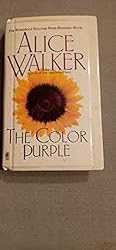
But Paper Doll stands firmly in the NOPE category on organizing books by hue. The color of a book’s cover is about marketing; it was almost certainly chosen by a marketing team based on the designs in fashion for that genre during that season. The color may not even have been approved by the author or seem to make sense. I mean, even early versions of Alice Walker’s The Color Purple didn’t have a purple book cover or spine!
 I’m a practical person. I believe that function should always come before form. A gorgeous outfit that doesn’t cover all your fleshy bits and gives you frostbite? Nuh-uh. A bookshelf that requires you to remember the color of the cover vs. letting you just walk over to peruse the category (fiction? organizing? recipes?) or authors? I can’t countenance that.
I’m not saying you can’t do it; I’m saying I can’t advise it.
And that’s because, as a professional organizer, my role is to help you live a more organized and productive life. Sure, I’ll leave your space looking better than it did before, but my reason for being in your space is to leave it working better than it did before.
ORGANIZING WITH COLOR
So, what’s the difference?
Organizing by color requires creating a system. With clothes or shoes, it might just be ROY-G-BIV and keeping things in order. When you put away your clothes, as you approach with a freshly-laundered shirts on hangers, you’ll be able to put away each item in the general color order. It’s your closet, so you don’t have to be too persnickety unless Vogue is coming to do a photo layout of your walk-in, in which case, good for you!
With file folders, as described above, organizing by color requires a stricter system. In effect, you’re deciding, up front, what all of your categories will be and assigning colors to those categories. You have to be willing to stop, each time you create a folder, to consider what category the contents of the folder belong to, and select that color every time. If you’re comfortable with that, then you have my blessing. I just don’t want to see you get stressed out.
You also have to be relatively sure that you’ll “feel” this association going forward (unless you’re just having fun and don’t care whether there’s a cognitive connection between your colors and your categories); if you soon realize that you hate the color orange but have assigned orange to your accounts payable, you might stop filing your paid bills or (eek!) avoid paying them altogether.
Organizing by color can be great, and I’m absolutely in favorite of it, as long as you, as an individual, feel comfortable sticking to a system. If not, that’s OK. There are still magnificent ways to organize your life with color, without adhering to strict or narrow categories.
Organizing with color lets you pick functional objects that add a pop of color but don’t require a lot of mental or physical effort to maintain.
It’s more thematic than systematic.
It’s sort of how we talked about about goals and resolutions vs. picking a word of the year. (If you haven’t read Review & Renew for 2022: Resolutions, Goals, and Words of the Year, this is a great time to help you get back on that motivation kick!) Goals — and the habits we embrace to achieve them — are like the systems for organizing by color; a word, mantra, or theme of the year, rather, provides a sense of focus, and color can do that for you.
Pantone does it with the color of the year; you can brand yourself, or your year, with color that’s meaningful to you! Think, “2022 in Royal Blue!” (Good luck rhyming a year with periwinkle or burnt sienna, though.)
Let’s get a sense of what color psychology tells us. Our friends at Quill created a nifty explanation to help explain some of the meanings of color in “Color Code Your Way to an Organized Workspace with Office Products.”
Do you have to use the specific colors that are associated with specific feelings? Of course not. I don’t particularly find the color yellow to be “associated with hope, happiness, and positivity.” I don’t even buy the original yellow Post-it® Notes because yellow just doesn’t do it for me. (I’m so into pinks and purples, as you might have guessed.)
But do experiment and take advantage of the aspects of the psychology of color to make your space your own.
A FEW FUN WAYS TO INTRODUCE COLOR INTO YOUR LIFE THIS SEASON
Our friends at Time Timer have come up with some gorgeous, new colorful timers.
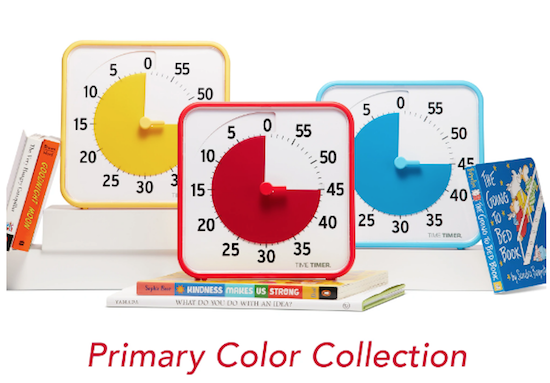
First, they’ve released their original 8″ timers in Learning Center Classroom Sets (of 3) in two different color schemes. But you don’t need to be using them in a classroom to brighten up your office or workspace. There’s a primary color set:
and a secondary color set:
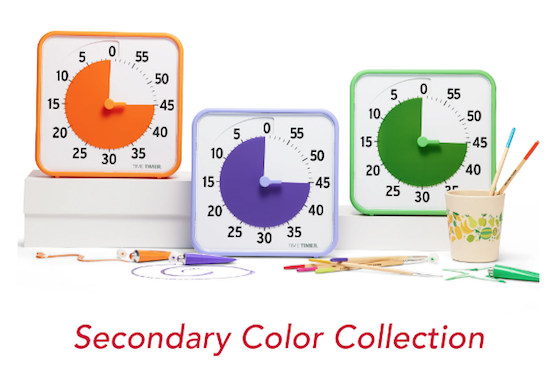
These sets are priced (for pre-order) at $104/set. Again, these are designed for learning activities, but there’s no reason why you couldn’t have one timer in your office, one in your kitchen, and one in your workout area.
Each set comes with three Original 8″ visual timers (for up to a 60-minute duration) with magnetic backs and fold-up feet, three dry erase cards for labeling the current activity (great for helping you focus during a 25-minute pomodoro task), and one free download of the Time Timer Desktop App.
They’re also selling a Time Timer MOD® – Special Edition Tie-Dye version (for pre-order) for $36.95. I’m a big fan of the little MODs, and this 3 1/2″ square MOD provides a tiny pop of color while helping you visualize time passing, and keep you motivated to accomplish your tasks.
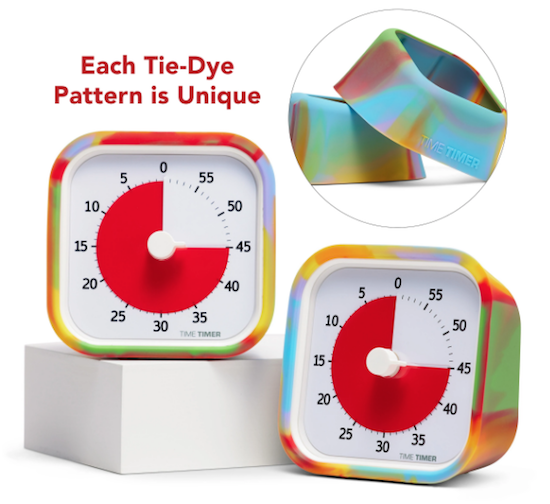
For a burst of color for office supplies, consider Poppin desk, wall, and office accessories:
You can buy their products directly from the Poppin website, or at Staples, Quill, and The Container Store. Be sure to check out Poppin’s Work From Home section for more fun, motivating bursts of color.
Do you like to wrap yourself up in color or just use it for accents?
Are you comfortable with intricate color-coding systems, or do you just want to surround yourself with your favorite hues?
And what’s your favorite color?
Meet me in the comments and tell all!
Cross-Training for Families: Organize for All Eventualities
WHAT’S THE DEAL WITH CROSS-TRAINING?
The term cross-training appears to have originated in the fitness and athletic world. One’s usual sport strengthens certain muscle groups and develops a specific set of skills; training in different disciplines, allows you to address other muscle groups, gain and sharpen different skills, and create a more well-rounded overall performance.

Photo by Marta Wave from Pexels
Cross-training in business yields the same kinds of benefits. Let’s say you work for a widget-making company. (“Hi! I’m <insert you name here>. I work for a widget-making company!”) Your job might be to oversee the complicated machine that cuts out the widgets; your friend down the factory line has a complementary job, making sure that the widgets are quality-controlled to meet international widget-production specifications.
If your company is run smoothly, each employee must be crackerjack at his or her job. But what if there’s only one person who knows how to do a specific thing? What if that person wins the lottery and quits, or gets hired away by a competing widget maker? Sure, the company can hire and train a new widget quality-control specialist, but until that happens, a manager with prior experience might have to step in, reducing the time the manager can, well, manage.
But what if the staff were cross-trained so that in addition to knowing your own job up, down, and sideways, everyone had at least a little training at other people’s jobs? Wouldn’t that make things better?
When I worked in television, I was a program director at local network affiliates. My assistant and I each had our separate spheres of influence, but the truth was that on most days, I was handling managerial tasks (research, contract negotiation, meetings with syndicators, etc.) and my assistant was handling day-to-day operations (maintaining the film vault, overseeing satellite operations, quality-controlling programming tapes — because this was in ancient times, before programming all lived inside computers).
Ours was a two-person department; without cross-training on the intricacies of satellite operations and whatnot, my assistant would never have been able to call in sick, take a vacation, or move onward professionally without things grinding to a stand-still. Cross-training saves butts!

Photo by Christina Morillo from Pexels
Major advantages of cross-training in business include:
- Better efficiency, because the more people have a good handle on how to do any one thing, the better it will get done.
- Improved flexibility, because the organization as a whole can be nimble.
- Clarity for emergency response planning. Back-up plans can save companies and that can save lives.
- Better “coverage,” so that if there are greater needs in one area (like greater demand for boxing up widgets) employees from other departments can fill those roles.
- Better integration and institutional knowledge across the company. If you only know how your department works, and are fuzzy on the operations of the rest of the business, not only does it hold you back from spotting potential problems and making suggestions (for the company’s benefit), it keeps you from achieving personal growth by seeing what other possibilities exist for you.
- Better morale. The more you know how to do, and the better you are at it, the more self-confidence you’re going to have.
- More satisfied customers. If you are involved in client/customer-facing work, cross-training means you can respond wisely, deftly, and quickly to questions, yielding more confidence in the company and in you as an expert.
Cross-training in your family, especially with regard to essential paperwork, information, and rituals, has the same benefits. Think about what happens when one parent is the main caregiver for a child but has to leave for a business trip or to help an ailing grandparent. The other parent (or other adult in the household, if there is one) needs to step in and step up!
Cross-training in the family has the same benefits as with companies.
- Better efficiency, because the person who usually pays the electric bill, does the carpool drop-off, or renews the car insurance policies may not always be available without difficulty or overwhelm.
- Improved flexibility, because the family as a whole can be nimble.
- Clarity for emergency response planning. You back up your computer; shouldn’t you have backup for when you’re headed to give a career-defining speech and the school calls to say your child just threw up?
- Better “coverage,” so that when one adult in the family is overloaded, the other can pick up the slack without having to explain what to do, how to do it, what the pitfalls may be, and who may complain (about the color of the frosting or how the sandwich is cut).
- Better integration and “institutional” knowledge across the family. It’s not 1957; it’s unreasonable to expect that one member of the household is “in charge” of all things related to the kids or that one (other, or the same) person is “in charge” of all financial, legal, and organizational goings-on.*
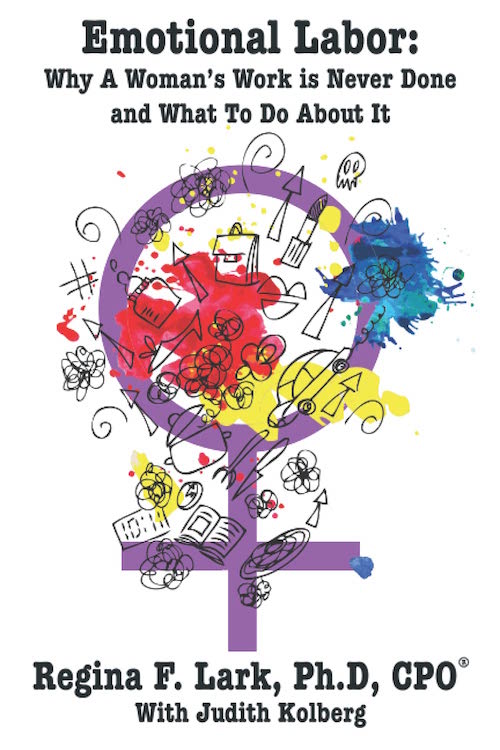
*This is a really complex topic. Being a caregiver for children and running a household, even when one works outside the home for pay, involves not only the physical labor but the mental load and emotional labor of anticipating cognitive, emotional, and other needs of stakeholders (but instead of CEOs and shareholders, it’s tiny humans and life partners). I’m excited to note that my colleagues Regina Lark, PhD and Judith Kolberg have written Emotional Labor: Why A Woman’s Work Is Never Done. It was just released, and deals more specifically with this concept.
- Better morale. It’s a reality. The more active a part of your family you are (or your partner is), knowing everything from which lullaby scares away the monsters to which color notebook into which the teacher requires permission slips be inserted, the happier everyone will be.
- More satisfied “customers.” OK, your kids and your spouse/partner, and maybe even other members of your household (like aging parents) want to feel confident that you’re a full-fledged member of the family, that you know what you’re doing and that you want to be there doing it.
Cross-training rocks!
SO WHY DO PEOPLE AVOID CROSS-TRAINING?
If cross-training is so great, why do people groan and avoid it? (I’m so glad you asked!) The sticking points are the same at work as they are at home, though they are expressed differently.
Inertia
At work: businesses tend to focus on urgent priorities, so even if there are directives from on-high requiring quarterly cross-training sessions, management often finds a way to avoid taking time away from meeting deadlines to carve out slots in the schedule for cross-training.
At home: same deal. Your life is busy. Maybe you read a blog post like this, or your professional organizer calls your attention to a problem waiting to happen.

Baby & Teddy Bear Image by StockSnap from Pixabay
Or you hear a horror story about spouse who went on a business trip and the at-home parent couldn’t find the right sleeping stuffie, and so the child cried for two days straight. Or you hear about a widowed friend of your parents who didn’t pay the insurance bill because they didn’t know it came to the deceased spouse’s email address, not via mail. These are cautionary tales.
Focusing on the benefits rather than the inconvenience will help everyone acclimate.
Learning curve on new material
At home and at work, nobody gets everything right on the first try. It’s human nature to avoid attempting something if you fear you won’t do it well. In the workplace, Impostor Syndrome may kick in, and an employee may fear attempting something outside the usual skill set, fearing the inability to get it right immediately might lead to firing. And at home, someone might feel nervous about being slow to succeed at a task one’s partner already does well.
When you invite your partner to join in household cross-training, acknowledge that you have different skill-sets and you may not be equally adept at everything. The point at home isn’t to be perfect, it’s to be perfectly satisfactory as a back-up.
Job security
At work: If you’re the only one who knows how to do something, you may feel like you have job security. (Of course, the flip-side of this is that management will tend not to promote you if you’ve convinced them nobody else can master your area.)
At home: While most people aren’t afraid that a spouse will divorce them if they don’t pick up right away on how to use the digital password manager, we all feel a little anxious about being seen without our halos.
Fear of higher expectations, higher workload, and being taken advantage of
At work: It’s a reasonable fear that if you know how to do more, you might be expected to do more. To some extent, this can be a positive thing, allowing you to do your own rendition of “This little light of mine, I’m gonna let it shine!” This is your chance to step up!
But if your workplace tends to be firmly on one side of the continuum, anywhere from moderately dysfunctional to toxic, you’ll want to watch for signs that you’re being taken advantage of, and be prepared to negotiate for better pay and benefits (or depart for greener pastures with your newfound skills).
At home: Unlike in businesses, where capitalism is the basis of everything and mutual loyalty can be a dubious concept, families are based (or should be based) on love, mutual respect, and loyalty. The point of family cross-training is to strengthen the family, for the benefit of everyone!
Focus on how improving skill training and sharing knowledge will support the healthy growth of the partnership and create a financially and emotionally sound foundation for the kids, the parents, and everyone in the family.
AREAS FOR FAMILY CROSS-TRAINING
Your family is unique, so I won’t presume to know everything you should consider when cross-training. However, this list should get you started.
Organize financial paperwork together
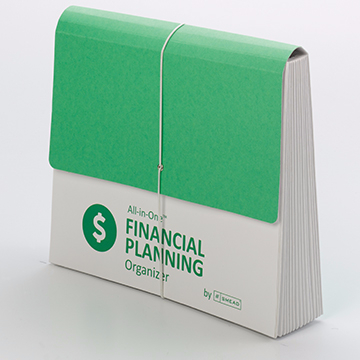
Smead All-in-One Financial Planning Organizer
Get clarity on the status quo. Do both partners know the following:
- What household, credit card, and other bills does the family receive?
- What is the frequency of the billing? (Sure, most utility bills come monthly, but your water and sewer bills may be quarterly. Some insurance premiums are paid monthly, others quarterly; car insurance is often paid every six months.)
- When do the bills usually arrive? (The partner regularly paying the bills may have a gut sense of these dates and know there’s something wrong if the Capital One bill doesn’t arrive by the 10th; with the postal service continuing a massive slowdown, the other partner might be in for a shock if the bill arrived days or weeks late.)
- How do the bills arrive? Via U.S. mail on paper? Via email notifications prompting logging in? Are the bills auto-paid?
- How are the bills usually paid? If you were in the hospital and your partner sat down to pay the bills, not knowing that a particular bill is auto-paid could lead to an expensive double-payment.
- What’s the typical amount of each bill? If you don’t have a chat about these things periodically, you or your spouse might not notice an error in billing or a significant jump in costs.
This probably won’t be a one-time cross-training event. Discuss these issues, then consider spending one month with the partner who usually doesn’t handle the bills taking care of things and “reporting” back; alternatively, you can go through the process side-by-side. The key isn’t to micromanage, but to support one another for common financial goals.
Once your kids are tweens/teens, you might want to include them in some aspects of this cross-training so that they understand the complexities of household finance.
For more guidance on organizing financial paperwork, you might want to start with a classic Paper Doll post, Financial Filing—Scrapbooking snapshots of your money’s life.
Know your household computer set-up
Depending on your ages/generations, you and your partner might be a digital immigrant (a person born or brought up before the widespread use of digital technology) or a digital native. If one of you has discomfort with technology, you’ll need patience to approach these topics. If both of you are digital immigrants, consider hiring someone to help walk you through making sure you’re fully trained on how to achieve your computer-related goals.
 Computer security image by TheDigitalWay from Pixabay
- How and where do you keep the essential passwords? It does no good for your partner to be willing to pay the bills if, in an emergency, they can’t log into the credit card or auto loan account.
- Are you happy with your password management system? (Do you HAVE a password management system?) Know where to find all the passwords that allow your household to run smoothly.
- Do you know (and know how to use) your computer backup system? From family photos to your browser’s bookmarks/favorites to all of your documents, everything needs a backup. I recommend a belt-and-suspenders approach, with local back-up to an external hard drive and cloud back-up via one of the popular backup companies. (I use Backblaze.) For more on backup, you might want to read a guest post I wrote for Alexa Bigwarfe’s WritePublishSell.com called 9 Ways to Keep Your Writing Safe.
- What about all your household tech? Do you know your DSL/Cable modem configuration URL (and the user name and password)? What about security settings for your internet router? If you (or your partner, or the internet tech) set up your Wi-Fi password eons ago, would you be able to find it to set up a new device?
Do you know the state of your estate?
From wills to beneficiary lists, from a Power of Attorney for financial decisions to your healthcare proxy, from your advanced care directives to how much (and what kind) of life insurance you have, chances are good that one person in your family took point and the other is only vaguely aware of what’s going on. Or, maybe you haven’t gotten around to squaring any of this away yet?
Either way, start with making sure you’ve both read up on the topics. You can begin with:
How to Replace and Organize 7 Essential Government Documents
How to Create, Organize, and Safeguard 5 Essential Legal and Estate Documents
The Professor and Mary Ann: 8 Other Essential Documents You Need To Create
Nobody ever likes talking about death. But talking about your estate documents, and maybe even working together to create them in the first place, is the first step to knowing that your family is safe and covered in case of the worst eventualities.
Other ways you can cross-train in the family
There’s obviously so much more than financial and legal paperwork and information to consider when cross-training. Your entire family might want to sit-down to brainstorm ideas. Some possibilities:
- Medical issues — Does everyone (or at least every adult) have a working knowledge of what to do in a medical emergency? My friend has Type 1 diabetes, and her 10-year-old has known, from an early age, how to help his mom by fetching a juice box to raise her blood glucose. Kids should know how to make a phone call to 9-1-1 and how to identify themselves, their address, and some basic information to relay about their parents.
- Medical care — Do you and your partner both know the pediatrician’s name and phone number? Where to find the First Aid kit? What medication you and your kids regularly take, so they can convey this in case of an emergency?
- Parenting essentials — This could be a blog post (or a book) all unto itself. From favorite sippy cup to which kids (and the kids’ best friends) have specific dietary requirements and preferences, from the name of the kids’ teachers to how to contact their friends’ parents (in case one of the tiny humans independently decides to get off the bus and go to a friend’s house without informing you), there’s a lot of essential information and skills that go into parenting. The grownups in the house need to share that wealth of information with one another!
- Laundry and household care — Are there sneaky tricks to getting household appliances to work properly? If something in the basement makes a weird, loud teapot-whistle sound, would you know that it was the sump pump having run out of distilled water? Does it do any good if your partner knows that and you don’t? (So much NOPE!)
- Auto care — Does one partner always handle the interactions with the mechanic? Maybe you need to share the knowledge so that you can speak authoritatively when you’re pressed to make a pricey decision.

Photo by MART PRODUCTION from Pexels
HOW TO PROPOSE FAMILY CROSS-TRAINING
You are the expert on how your family and household works. This post is just designed to give you an idea of how you can not merely share the load (and the information) but do it in a way that ensures your family’s immediate and long-term security. Whether the stakeholder is your toddler (who is sobbing that “that’s the wrong bedtime book”) or the finicky garden hose, the mortgage company or your partner’s grandmother, having a complete sense of what gets done — when, where, and most importantly, how — is essential.
I encourage you to share the concepts of this post with your partner. Talk about the benefits: efficiency, flexibility, clarity for emergency response, better coverage when one family member is overloaded, more integrated family “institutional” knowledge, greater morale, and a happier constituency of family members.
But don’t just talk about the benefits. Speak honestly about potential fears and reasons for avoidance (including inertia, worries about learning curves, the sense of “job security” and higher expectations). Ignoring them won’t make them go away, but talking may be just what you need to conquer those challenges and support your family team.
WHAT IF YOU’RE ON YOUR OWN?
I get it; not everyone has a partner. There are a lot of single parents, widows or widowers whose children are “grown and flown,” and just random singletons (like Paper Doll). That doesn’t mean that you’re completely on your own. Think about who you’d call in an emergency. To whom would you reach out if you needed someone to watch your tiny human? Who would you trust to log into your accounts and pay your bills for you?
These may not all be the same person. You may need to do cross-training with a number of someones: your ex, a sibling in another city, a best friend, a professional organizer trained in financial organizing (whom you can find through NAPO and AADMM), an accountant, an attorney, a hoc nanny, and others. The key is to start thinking now:
Who can be you when you can’t be you?
Rhymes With Brain: Languishing, Flow, and Building a Better Routine

Are you having trouble getting back in the saddle?
Yes, I know, this is not your first rodeo. You’ve had to get back into a routine before: after the easy pace of summer, after the winter holidays, after vacations.
But perhaps this feels a little different? Maybe you’re distracted because this is the first time you’re headed back into the office after a year and a half of working remotely? Or perhaps you’ve realized that you can’t keep working from your kitchen table anymore, and it’s time to really get back into a routine.
There are a few reasons why you might be feeling at loose ends. First, you might be stuck in the past. It happens to all of us. Last week, in Emerson, Angelou, Ted Lasso, Tashlich & Zen Monks: Letting Go for a Fresh Start, I walked you through rituals and mantras for helping you let go of past mistakes and frustrations.
A LESSON ON LANGUISHING
Perhaps the problem isn’t the past, but the present. Over the summer, the New York Times got a lot of attention for a piece called Feeling Blah During the Pandemic? It’s Called Languishing. (Depending on where you’re located, you might have more luck with this link to the piece.)
Some people have flourished as a result of the past 18 months; people who’d lost time with their families due to long work hours, commutes, and work travel were sometimes able to bask in the joy of remote work; others were able to put energy into side hustles that became true callings and got to leave careers that weren’t fulfilling.
Meanwhile, of course, many others have found working and just getting through life to be agonizing. This has been a period of distress, whether a constant onslaught or troubles that come in waves, worrying about keeping themselves and their families healthy, coping with financial strife, and being expected to work and act as if all of this {picture me waving my hands all around} was remotely normal.
So, for some, after the initial period in Spring 2020, life has been a collage of yoga positions and perfectly golden sourdough bread. For others? Let’s just say Edvard Munch could easily time travel from 1893 to 2021 and paint The Scream all over again. (Except he’d have needed to draw a mask.)

But in between flourishing and drowning, the Times article found that many of us are having trouble gaining traction because we’re languishing. It’s not depression or anxiety, but in an excerpt of the piece, we see exactly what’s making it difficult for many to get back into a routine:
In psychology, we think about mental health on a spectrum from depression to flourishing. Flourishing is the peak of well-being: You have a strong sense of meaning, mastery and mattering to others. Depression is the valley of ill-being: You feel despondent, drained and worthless.
Languishing is the neglected middle child of mental health. It’s the void between depression and flourishing — the absence of well-being. You don’t have symptoms of mental illness, but you’re not the picture of mental healtheither. You’re not functioning at full capacity. Languishing dulls your motivation, disrupts your ability to focus, and triples the odds that you’ll cut back on work. It appears to be more common than major depression — and in some ways it may be a bigger risk factor for mental illness.
The author of the piece, Adam Grant, is a organizational psychologist at the Wharton School at the University of Pennsylvania, and his TEDTalk really clarifies what languishing is, and how it negatively impacts our motivation and focus, and thus, our productivity. It’s definitely worth watching:
Cheatsheet: the best predictor of well-being (and thus, I’d say, productivity) is not optimism, but flow. We’ve talked a lot of Mihaly Csikszentmihalyi’s concept of flow recently in Back-to-School Solutions for the Space-Time Continuum and in the spring in Flow and Faux (Accountability): Productivity, Focus, and Alex Trebek (where you also learned how to pronounce Mihaly Csikszentmihalyi).
Flow is that experience when you’re completely absorbed in what you are doing. Time and space and your annoying neighbor and the fight you had with your teenager and the stresses you’re feeling all dissolve, or are at least held at bay, and you are completely focused, without distraction, on what you’re doing. It might be a creative endeavor like playing a piece of music or writing a blog post; it could be playing with your child or dining with your family; and if you’re lucky when you’re sitting down to work, it’s whatever you’re supposed to be doing.
Grant advises us to have some small, achievable goals to work toward to chip away at languishing and give us the opportunity to achieve flow. I have a few more ideas to add to his.
So, having looked at how to let go of past troubles in last week’s post, now let’s look at how we can make your near future an opportunity for flow so you can get back in the saddle.
FLOW FACTORS THAT RHYME WITH BRAIN
Abstain
There are all sorts of distractions, from within and without. Some come at you, and some you go out of your way to pick up. You know what leads you down a rabbit hole. Maybe it’s social media. (OK, yeah, it’s probably social media.) Maybe it’s the news. Maybe it’s one TikTok or YouTube video someone sent you that leads to you watching the next and the next, and suddenly you’ve missed lunch.
I’m not saying that you should eschew all social media or news reports or videos. But instead of reaching for your phone first thing in the morning when you wake up, or while you’re eating breakfast, making it more likely that you’ll be late to your desk (and in a less chipper and more distractible mood), consider alternatives activities.
Retrain
From bed to desk, whether that involves a commute or a stroll down the hall, your brain needs buffer time. You definitely can’t be expected to go from zero to 60 with work (or life) mere minutes after you were in La La Land. Retrain your brain by selecting different types of sensory inputs from your usual fare.
Instead of starting with the news and social media, how about reading a book, a short story, or a few non-news-related articles while eating breakfast? What if you read a poem before getting out of bed, and then spent your shower-and-grooming time thinking about what the poem means, both the words on the page and what it means to you?

I’ve covered a number of ways to have more opportunities to read:
12 Ways to Organize Your Life to Read More — Part 1 (When, Where, What, With Whom)
12 Ways to Organize Your Life to Read More — Part 2 (Reading Lists, Challenges & Ice Cream Samples)
How To Make Your Reading Time More Productive With Book Summaries
If you complain that you never have time to read, this eliminates that problem along with the trouble of a whirring mind. You’ll “make” time by trading a task that swallows you up (like doomscrolling) for one that can give you gentle practice at immersion and flow. And if your prep time in the morning requires a lot of hands-on work (packing lunches, walking the dog), an audio book or a podcast can give you that immersion in an auditory instead of visual way.
If you don’t think you can focus on words and meanings longer than a tweet, explore listening to a genre of music that’s new to you. If you like rap, try Broadway. (Hamilton blends the two.) If you only listen to country, noodle the dial to a jazz station. Retrain — shake up your brain.
Restrain
If you’re not unwittingly seeking out obstacles to flow, both in advance of getting things done and once you’ve started, it may be others standing in your way. Perhaps one of the parents in the pick-up/drop-off line wants to gossip and (no matter how entertaining) doesn’t seem to understand that you’ve got a deadline, a doctor’s appointment, or something else that requires your immersive attention.
Build some muscles for restraining that tendency to go along to get along. I’m not suggesting you wear dark glasses and a trench coat so you won’t be seen by Social Suzie, but perhaps you can cut her off at the pass and let her know for the next few months, you have to be on a daily conference call at “oh-will-you-look-at-the-time?!” If she’s someone you do want to hang with, schedule a phone call, a Zoom lunch, or a weekend walk (to get your steps in) at the park. You don’t have to eliminate people from your life, just be more deliberate about what part of your life (and schedule) they can take up.
Constrain
Restricting how much space you take up for your work and resources means fewer attempts to find things, fewer guesses where something might be, and more time to do the important work on your plate.
If you’re working remotely, your whole house may be available to you for work, but that doesn’t mean you should take up all of that space. Sure, you could work on your bed, at your dining table, and with your computer on the coffee table when you’re on the floor with your back against the bottom of the couch. But should you? Nope.
Create an atmosphere where a space is designated for a task. If you do expense reports in the bedroom, you’re letting your financial brain seep into the space that should be for sleep, rest, and intimacy, making it more likely that math-y concepts will pop up into your mind when you’re trying to, um, do something else in that space. If you work where you hang with your family or binge-watch Netflix, you lose that delineation between work and life, making it harder to leave work at work, already made difficult when you’re working from home!
Contain
If you’re back to working outside the home, you already have a space assigned to you, whether that’s a desk in an office, a counter in the bank, a conveyor belt in the cashier line, or the cockpit of a plane. (If it’s the latter, can you hook a girl up with some of those Biscoff cookies? Yum.) And if you’re working from home, it just makes sense to promote one space in your home to your ideal workspace.
But either way, limiting the spread of your stuff is going to make it easier for you to focus and get into flow.
So, as you move to contain the things round you, you’ll want to clear your desk of excess and keep your workspace for the project or tasks you’re working on now, or at least today. Read the Paper Doll classic article, Clean Desk Club to make your deskspace functional, hygienic, and secure. If paper clutter is the problem, read If You’re Drowning in Paper, Build a RAFT.
And for a detailed look at how to organize your home office so it’ll deliver opportunities for you to be comfortable and focused, explore the bonus-sized guest post I did for meori, Home Office Storage Ideas: From Dad’s Study to the Modern Home Office.
Containing and constraining aren’t just about tangible items. They’re also about how we schedule our time. If we have a long to-do list with nothing prioritized, no game plan, and no firm schedule, chances are, we’re going to spend more energy thinking about what we have to do than actually getting started.
Developing routines, where we can put the efforts of part of our days and weeks on autopilot, is a key. To help you contain your worktime and constrain your output to acheive the most good, start with the advice in these posts:
Playing With Blocks: Success Strategies for Time Blocking Productivity
Checklists, Gantt Charts, and Kanban Boards – Organize Your Tasks
Getting in the flow so you can get back to a (hopefully better) routine means setting boundaries in your time as well as your space. (That’s where that time-blocking post really comes in handy!) We all know that we never get enough done if we only do what we feel like doing. Most of us never feel like working out or vacuuming or writing monthly reports.
Just as our stuff has to have a place to live in our desk, our tasks need a place to live in our schedules. Merely giving them homes is a super way to jump-start ourselves back into the saddle if we were loosey-goosey with our schedules all summer (and even before).
We also depend on activation energy. Because the hardest part of what we do is the getting started, we have to incentivize ourselves to get going. There are all sorts of ways we can trick ourselves (a little bit) with rewards, like pretty desk accessories or a coffee break, but the problem is that action precedes motivation. We’re not usually psyched to get going until we have already started!
Action precedes motivation. We're not usually psyched to get going until we have already started, whether it's a runner's high or Csikszentmihalyi's flow. Share on XIf you are struggling to get back into the thick of it with your routines, the best way to “contain and constrain,” time-wise, is to borrow accountability support from others as described in:
Count on Accountability: 5 Productivity Support Solutions
Flow and Faux (Accountability): Productivity, Focus, and Alex Trebek
Maintain
One of the best predictors of future productivity is past productivity success. Stop and think about when and how you are good at maintaining your routines.
What is it that has helped you in the past?
- Interspersing short work sprints with breaks? Embrace the Pomodoro Technique.
- Deadlines? Borrow a friend as an accountability partner to give you some external spinal fortitude!
- Physical activity and/or time in nature to get your creative juices flowing? Block times for daily mid-afternoon walks. Research shows that shinrin-yoku, the Japanese concept of “forest bathing,” has a variety of benefits, including mental focus, increased energy, improved mood, decreased blood pressure and stress hormones, and boosted immunity.
Know where you excel. Every professional organizer and productivity expert will look at your systems and resources and ask some variation of “What’s already working?” The key is to build strategies on the foundation of your success and link future approaches atop them.
Attain (and Explain)
Remember how I said, earlier, that developing routines and going on autopilot helps? But I also said we should do it for part of our days and weeks. But we can’t be on autopilot all the time.
Our brains will atrophy if we don’t keep learning.
If you’re having trouble getting back into a routine, add something to your list that will energize your brain. For me, when I’m in the doldrums, practicing Italian with Duolingo peps me up. If I’m having trouble motivating myself to reply to a frustrating email or draft a blog post, a few challenging lessons in the Italian future perfect tense will have taken me out of the doldrums. (That’s a future perfect tense joke, readers. OK, yeah, more tense than funny.)
What can you do that will shake the cobwebs loose, improve your cognitive function, boost your self esteem, and get you revved up to sit at your desk and do the next important thing?
- Learn/practice a language.
- Look ahead in your child’s schoolwork and study the concepts (long division, the parts of a cell, the causes of World War I, the themes in War and Peace) so you can discuss them together.
- Find something you’re curious about and become an expert on some small element of it. You don’t have to know everything, but if you know one thing really well, it’ll give you confidence to explore all sorts of areas of your current work, and maybe help you consider bold, new options for work and life.
- Develop a skill, whether it’s silly or serious, visually creative or experiential.
Once you attain this knowledge or skill, you can share it with others. You really know you’ve learned something when you can explain it to someone else. And when someone asks you how you were able to get back into your post-summer, post-pandemic routine so easily, maybe you can answer them in Italian or in Ubbi Dubbi!
(Shoutout to all my GenX readers for whom “Zoom” will always mean “Boston, Mass 02134” rather than video conferencing.)
Gain
It’s impossible to get excited about doing the same thing every day, day in and day out. There’s a difference between being in a groove and getting stuck in a rut, between having a routine and things being routine. All these years later, I still feel sorry for this guy.
Gain momentum by jump-starting your enthusiasm. The easiest way to do that is to have a goal to look forward to or an achievement toward which you’re striving. As with learning a new skill, I know it seems counterintuitive to add something to your activity list when you’re trying to buckle down and commit to what’s already hard to accomplish.
Most of the time, I implore my clients to let go — of excess clutter, obligations that don’t meet their goals and values, outdated ideas that no longer fit who they’re trying to become. That’s logical; cutting down the excess lets you focus on your priorities.
We could eliminate excess, only work on the work tasks and projects we’re assigned (or which we’ve assigned ourselves), and keep our heads down and our noses to the grindstone. But with our heads down, we’ll never see the sun, and with our noses to the grindstone, well, I’m not sure, but I think we’d have sore, pointy noses.
But we’re not robots. Just as learning helps us expand our minds and gain confidence, having aspirations and goals gives our lives purpose. Consider the Japanese concept of Ikigai (sounds like icky guy), or “reason for living,” or Viktor Frankl‘s wisdom in Man’s Search for Meaning.
As humans, having something to aspire to in our work and in our lives, beyond a paycheck and the same-old, same-old, imbues our days (and thus our lives) with meaning. Think of something you’d like to achieve and build time into every week, preferably every day, as part of your routine, to move you closer to that goal. Maybe you want to write a book, plan the trip of a lifetime, train to be a Rockette — the what doesn’t matter, as long as it’s your what.
Embracing a gain in your life as you head back into a day/week/life of routines will be easier when you’ve planned space in your schedule for anticipatory joy.
Just be sure to reject perfectionism on the way to spelling out your gain. The key to improving your delight in getting back into a routine is that it will grant you space in your schedule to do everything that matters, including that aspirational entity that gives it all meaning. Think progress, not perfection.
On August 23, 2021, author Sam Thielman tweeted:
Just want to say this thing I haven’t written is fantastic. Gets better and better the more I don’t write—it contains every conceivable line of inquiry yet has a single, easily understandable throughline. Prose is perfect. Can’t bring myself to destroy it by actually doing it
— ? (@samthielman) August 23, 2021
Take action every day. Get back in the saddle. Get back on the horse. It may not be your first rodeo, but it can be your best rodeo yet!
The Perfect Unfolding As We Work From Home
 Readers, I beg your indulgence as I wax philosophical today about folding and unfolding as we work from home. (No, this isn’t about laundry. I’ve written about that before, in 5 “Real Simple” Reasons We Don’t Get the Laundry (or Paperwork) Done.)
This weekend was my birthday. Last year, I went out to dinner with a friend, and I remember that strange week, as everything was changing, but nobody knew what was to come. We tensely folded ourselves in toward the booth, away from our fellow diners. We were already being more circumspect, but it wasn’t until the next day or so before the reality of 2020 set in. (But this post isn’t really about that, either.)
The Folding and the Unfolding of the Lost Year
Over the past year, I’ve been thinking deeply about folding and unfolding as it relates to our lives now, both at home and at work. In most ways, our lives constricted 12 months ago. We were running around, blissfully living our lives, commuting to work, dining in restaurants, out there in the world. And then, almost overnight, we folded ourselves up, kit-and-caboodle, and took ourselves home. Crumpled into tinier lives in smaller spaces (at least smaller than the whole world we had at our disposal before), anxiety squished us into smaller versions of ourselves.
We’d packed up our work bags, our school bags, our schedules, and folded ourselves away in our houses, nervously watching newscasts and doomscrolling our devices as we perched on the edges of our couches and dining tables.
And then something interesting happened, though we couldn’t see it at first. We unfolded ourselves. We embraced freedom from sitting in one stuffy workspace, at one desk, between the same two co-workers. We unfolded the squished toes that had been crammed into the shoes we wore as part of our uniform to be taken seriously at work. We unpacked our projects and spread them out in the new spaces we had to create to work at home while avoiding feeling like we were living at work. (More on that in a bit.)
The Unfolding of New Opportunities
As some parts of our lives fell by the wayside, other new adventures eventually appeared.
I am proud to announce that I recently became Meori‘s first guest blogger. You might recall that I first wrote about Meori three years ago, in NAPO2018: Paper Doll Explores Meori & the Glorious Goodies Within.
When I was first contacted about being a guest blogger, I was enthusiastic but cautious, as I always am in these situations. As a Certified Professional Organizer®, I’ve built my practice on developing strategies to guide clients in creating systems for making their lives more organized and productive. I view organizing products as tools, always worthy of consideration, and I tell clients (and you readers) about how those tools can serve their needs. (And yes, I tell you about my favorite products.)
But I’m not a salesperson, and if they’d wanted someone to be a product spokesperson, I wouldn’t be anyone’s first choice. (I think we can agree that brevity is not the soul of my wit, and “pithy” is not in my wheelhouse.)
So, I was delighted when I first spoke with Deirdre Meyer, co-owner of Meori (with her husband Dirk) and Karen Oboy, Meori’s sales and marketing manager, about this opportunity. Deirdre made it clear that she wanted bloggers who knew about the necessary skills and systems of organizing.
And better yet, she wanted me to write a LONG post. (Readers? Can you imagine how hard it was for me not to jump through the Zoom window and hug them in their Seattle offices?)
In my premiere post, Home Office Storage Ideas: From Dad’s Office to the Modern Home Office, the great people of Meori gave me free reign to cover both the strategies (mindsets and systems) behind creating a peaceful, productivity-producing home office space and tactics (tools and methods) for making it all work. I encourage you to read the post at Meori’s site and let us know what ideas resonated with you.
Unfolding and Folding Products
Initially, I was intrigued by Meori’s growing line of fold-flat storage products for home and office, but I was puzzled by their name, as I’d seen that the labels on the packaging were in English and German, and Meori didn’t strike me as a German word. It turns out, they combined two Japanese words, “meian” for great idea and “origami,” to create meori as “the fantastic idea of folding.”
I got excited, because I like things that fold and unfold, or collapse and recreate themselves. I’ve written before about how much I love Origami Rack shelves, desks, and racks, which “unfold” much like one opens an accordion or an ironing board. From flat-pack to fully useful in a minute!
Long before the pandemic, I was singing the praises of my Origami 6-Tier bookshelf, shown in operation above.
(I’m not an affiliate for either Meori or Origami Rack, but it occurs to me that, like Reese’s Peanut Butter Cups, these would be two great tastes that taste great together!)
Time To Unfold Again
We all eventually found our temporary footing, dealing with each ad hoc bump in the road that was 2020-2021. But lately, as the one-year mark approached, I’ve heard more complaints. Sitting on Zoom calls, I’ve noticed more and more people looking tense, almost as though they’d folded themselves directly into those tiny Zoom boxes. People are rolling their shoulders, trying to get rid of cricks in their necks. They’re fidgeting. They’re hitting the pandemic wall. They’re experiencing burnout.
Does that sound like someone you know (or someone you became) in the past year? It wouldn’t be surprising if it did, because a study by the CDC’s National Center for Health Statistics shows that 41% of Americans were showing signs of clinical depression or anxiety disorders at the start of this calendar year, up from 34% last spring. As I’ve written many times in the past year, we need to give ourselves some grace.
There have been multiple articles about hitting the pandemic wall:
It’s Not Just You: A Lot of Us Are Hitting the Pandemic Wall (Huffington Post)
Why Kids Are Hitting the Pandemic Wall (CNN)
America Has Hit the Pandemic Wall (The Washington Post)
This article from Mayo Clinic, Job Burnout: How to Spot it and Take Action, was created in the “before times” but it’s just as apt now. They define burnout as, “…a special type of work-related stress — a state of physical or emotional exhaustion that also involves a sense of reduced accomplishment and loss of personal identity.” Those symptoms sure sound familiar to my friends and clients.
Personally, after hitting a snag back in April, 2020, I felt like I was handling everything fairly well. After all, I’d been “working from home” (for administrivia) for most of twenty years, though it only make sense to organize at clients’ homes and offices, because that’s where the clutter lives!
“You are not working from home; you are at your home during a crisis trying to work.” pic.twitter.com/nsfb2ecTZZ
— Ethics in Bricks (@EthicsInBricks) January 2, 2021
But, as wise tweets reminded us, we weren’t just working from home. We were working from home during a crisis. I thought I’d handled the complexities of virtual organizing and “working from home” well until January, and then all bets were off. Focusing got harder; I blew through a soft deadline and had to explain to the nice Meori people that yes, I’d hit the pandemic wall, too.
Unfolding & Untangling Your Work Self and Your Self Self
It’s been my contention for a while that the biggest problem we experienced, just after we got a hang of working from home, is that we made our work lives so comfortable that we were now living at work.
One good thing about our old lives was that, for most people (who weren’t already working from home), it was easy to fold oneself up to fit in a work space and a home space. Before the pandemic, people who went off to work didn’t need the same kind of help as work-from-homers, such as I’d presented in R-E-S-P-E-C-T: The Organizing Secret for Working at Home back in 2015.
That post focused on how to show respect to yourself, and how to get others to respect the value of your time, when you’re working from home. Nowadays, that advice is more needed that ever.

Photo by rishikesh yogpeeth on Unsplash
If you’re feeling all-folded-up, maybe even tangled up, I encourage you to start with the following:
1) Separate your work space from your home space.
I know, that sounds ridiculous. You probably don’t have oodles of space You finally found the “good” lighting so you don’t mind having your Zoom camera turned on, so I’m not going to tell you to create two spaces, one for Zooming for work and one for Zoom-hanging with your friends. (But if you do have the space, your friends will love you just as much if you move the laptop or tablet to the couch, and look more like if they were on the couch with you, in an imperfectly-lit room, and less like you’re about to advance a Powerpoint slide at any moment.)
Basically, it’s been a year, and you’ve probably got a work space that works for you. (If not, that’s even more reason to check out my Meori guest post!) But maybe it’s time to create more space at home in which to live.
As the weather warms up, maybe move a chair onto your front porch and read 10 pages of a novel in the fresh air and daylight during your lunch break? Maybe make sure you’re not eating at your desk, even if your desk is your dining table?
2) Understand that downtime is good for you – and your career.
Usually, my advice is designed to make your work life more productive. For years, in the “before times,” I told clients to treat working from home as if they were working from an office. Run laundry or make personal calls at lunchtime, if you must, I’d say, but work when you are “at work” and do home things on your “personal” time.
Wow, how very 2019 of me!
This advice made sense when the struggle was ignoring inanimate sensory inputs (a pile of laundry, bills to be paid, dinner to defrost); now, the sensory inputs are tiny humans needing help, or a gentle prodding, with online school. You can’t, and shouldn’t, be all-work-and-no-play during the day.
According to research by the National Bureau of Economic Research, Zooming is helping us keep our meetings shorter, but we’re working longer. “We also find significant and durable increases in length of the average workday (+8.2 percent, or +48.5 minutes), along with short-term increases in email activity,” they found.
As the articles on hitting the pandemic wall acknowledge, we’re all experiencing overstimulation. We’re ALWAYS ON, so of course it’s hard to wind down. Just as the temptation to address home things during work hours must be guarded against, we struggle with doing more work during “home” time.
So, maybe don’t check work email while you wait for the pasta to boil. Pick up a book from your to-be-read pile instead of a report from work. Turn off your Slack notifications at night and on the weekend.
Embrace the idea that you are more than just your job. Perhaps read this New York Times article, Remember: What You Do Is Not Who You Are. A snippet I particularly liked, in (and following) an interview with Art Markman, a professor of psychology and marketing at the University of Texas at Austin, said:
“The brain needs a little downtime,” he said. “You can’t sustain concentration. Unless you can get away from the problems you’re trying to solve in your work life, you don’t give your brain a chance to reset and come up with a different way of characterizing what you’re dealing with. So even if your primary goal in life is to be as productive as possible at work, you need some time away to make that happen.”
This doesn’t mean you shouldn’t be invested in your work or not care about your career and the people you work with. That investment can be an asset, and being passionate about one’s work can help lead to better output. Rather, give that investment a ceiling.
3) Put the commute back into your day.
Inc. Magazine recently ran an article called The German Secret to Getting More Done While Working Remotely. Even though my job is to help people be more productive, inwardly, I groaned when I read the headline. Isn’t everyone already feeling guilty and dismayed by not getting more done, as if the purpose of life was to be more productive? (Paper Doll has a secret for you. I think the purpose of life is to ENJOY YOUR LIFE. Be productive so you can have more time to do that!)
Paper Doll has a secret for you. I think the purpose of life is to ENJOY YOUR LIFE. Be productive so you can have more time to do THAT! Share on XWhat did you do on your morning commute? Did you listen to a podcast? Talk to the people who sat by you on the train? Read? Maybe your “commute” was just driving your kids to school before turning around and heading home for the rest of your day. Are you missing those things? Your afternoon commute has similarly been blown out of the water.
For years, I’d recommended to clients who had trouble starting their work days to put on their shoes, even their coats, and go outside and then come back in before sitting down to work. Whether they went to a coffee house to procure overpriced coffee, walked around the block, or just went out the garage door and came back in the front door, this helped them trigger their brains that it was time to start the work day. Whether it’s our morning commute or our kids hearing the announcements over the PA at school (they DO still do that, right?), we need rituals to start our days.
Well, this fancy-pants Harvard professor – OK, I’ll be fair, it’s possible he has perfectly quotidian pants – advises much the same, though he focuses on the end of the workday. Per Professor Ashley Willhans, the Germans have a concept called feierabend. Google Translate merely says it’s “the end of the working day,” but apparent it’s more of “a daily evening celebration marking the moment when work is switched off for the day.” (And it apparently involves beer.)
In the old days, people sometimes went from work to the gym, and then home. So maybe this means our date with Yoga With Adriene needs to come at the end of our work day, and maybe that needs to be a bit earlier? Perhaps knowing that we can’t push dinner too terribly late (either for the comfort of our family or of our digestion) means that we’ll have to truly stop work so we can change from our work loungewear into our workout loungewear and work out at a decent hour so we can eat at a decent time?
My own end-of-day ritual is calling Paper Mommy. The idea of debriefing, recapping my work day, out loud (often during a 45-minute walk outside) is just what I need to unknot, detangle, and unfold my brain, my body, and my life. What kind of “commute” could you add to the start and end of your day?
Unfolding of Hope and Confidence
In the past year, my friend and colleague, Dr. Melissa Gratias, introduced me to the concept of the Shraddha Sutra she learned in her meditation class. (You can read Melissa’s take on it in her post, Are We Broken?)
śraddhā = śrad + dhāśrad literally means “that which gives you space and holds you in place” dhā provides nourishment for you to grow śraddhā conviction; faith; trust
However, my friend’s meditation teacher explained it more conceptually as “radical trust in the perfect unfolding” of one’s life.
Whoa.
Melissa and I have been discussing this concept a lot over the last year, as we look at how our spaces, our careers, our relationships, and our very lives have been evolving. I said it in my post, The Now Normal: When the New Normal Changes Quickly, and I have been surprised by how prophetic it was. (Whoohoo, Paper Doll!)
This March is not last March. We see sunlight instead of darkness. Every day, more of our parents and grandparents and friends are able to get the vaccine. More of us have a sense of what we want our lives to be (or not be) as we come out on the other side, as we unfold ourselves into new shapes and new selves.
Perhaps this probably didn’t sound very much like an organizing and productivity post. But please remember that the purpose of organizing, at least the Paper Doll version of it, is to have more space and time to do the things you want with the people you care about.
So, I don’t know about the radical trust part, but as we move forward, I hope that you experience the perfect unfolding of your life.

Follow Me