Archive for ‘Holidays’ Category
Organize Your Way Out of the Winter Doldrums
Sigh. the musical Annie may be right that “The Sun’ll Come Out Tomorrow,” but the sun never came out yesterday.
Granted, it was a rainy day, but in addition to the dark, dreariness of the day, and the too-swift passing of a December Sunday, the sun went down without my noticing because it really never seemed to come up. As I may have alluded to in Organize Your Sleep When the Clocks Change and Beyond, I’m not much of a fan of Standard Time. I like lots of sunshine, and particularly want long, light evenings to run errands and move about in the world.
We’re in a darker, gloomier time of the year here in the Northern Hemisphere. That, combined with the wonkiness of the end of the year, makes this a weird time. Some folks are delighting in preparing for the holidays, getting ready to entertain and celebrate, but over and over, I’m hearing from friends and clients alike that they aren’t quite “feeling it,” or at least not yet.
A few people have asked, having jokingly, if there are ways to organize yourself out of feeling out of sorts at the end of the year. I think there are.
This is the final “normal” week of the year. Next week is Christmas and the start of Hanukkah, and the week after, is New Year’s. While many folks are (or will be) with family and celebrating, there are many who are feeling a walking-through-molasses sluggishness at this time of year. Half their co-workers are out of the office, and while some clients are expecting attention, there’s a widespread, tacit understanding that nobody is starting anything new for the next 2 1/2 weeks.
So, if you’re in your annual happy place, please feel free to skip this week’s post. But if you’re grumbling about the dark and the cold, about another year over and about the “meh” of it all, I have some suggestions.
COPING WITH THE “BASEMENT WEEKS” OF THE YEAR
These weeks aren’t just the bottom of the year. They can feel dark, cold, even soggy. There’s a hurry-up feeling just before the holidays and, for most, a drop-off in delight between the holidays and again at the start of the year.
But winter really can be the most wonderful time of the year if you have the right mindset, according Kari Leibowitz, PhD., a Stanford-trained psychologist. She’s written a book on how to improve mental health by changing how you think about the winter months.
Leibowitz moved to Tromsø, Norway, above the Arctic Circle, to live for a year. For two entire months, the sun doesn’t rise in Tromsø! You’d think everyone there would be crabby and stabby during that time, but she found that the community approached the season with a chipper mentality. She similarly explored places on earth with “some of the coldest, darkest, longest and most intense winters, and discovered the power of “wintertime mindset”— viewing the season as full of opportunity and wonder.”
To help those of us (who can at least feel grateful that we’re not above the Arctic Circle) starting to struggle with finding inspiration this time of year, Leibowitz wrote How to Winter: Harness Your Mindset to Thrive on Cold, Dark, or Difficult Days.

Get Psyched for Winter
Liebowitz says that changing our mindsets about winter is key. Apparently, we tend to psych ourselves out, adopting a mindset that assumes that winter will be grim, so it feels that way. I get it. As a professional organizer, I’ve seen how often people expect that organizing will be boring and that they’ll be grumpy, so when they do it on their own, it is. They’re surprised when a professional organizer comes in and treats the experience as hopeful and (dare I say it?) entertaining?
As an organizer, I approach working with a new client, or even a new session, by focusing on the possibilities of finding delight. I see myself, in partnership with a client, as an explorer, a detective, an anthropologist, and more. Because I expect fun, I will (generally) find it (and get to share it with the client).
Confirmation bias is the tendency to look for, and interpret, new evidence as confirmation of one’s existing beliefs or theories. If you expect winter to be misery-inducing, you’ll find signs of it everywhere.
Easier said that done? Maybe not. Instead of seeing winter as two potentially fun (but possibly disappointing) weeks followed by months of darkness, we can look for ways to see winter, as a whole, as fun.
Create a Winter Wonderland in Your Space
I’m sure you’ve heard about hygge. A few years ago, books about hygge, the Danish approach to winter coziness, was all the rage. (If you need an introduction, The New Yorker‘s 2016 piece, The Year of Hygge, the Danish Obsession with Getting Cozy, is a great place to start.)
Western articles about hygge tend to focus on the physical atmosphere. Every single piece will reference candles. The Danes are very big on candles being comforting. Personally, I worry about candles getting knocked over. If you have pets and tiny humans, consider safe alternatives to lit candles, like fairly lights or tiny, flickering LED tea lights.

If you have a fireplace and don’t have to worry about kids or creatures in close proximity, consider making a ritual out of lighting a nightly fire to increase the cozy atmosphere.
There’s no official hygge-ness to it, but I think it’s wise to create a winter beverage station. Think about the coffee stations you see in bed & breakfast venues and boutique hotel lobbies. Consider investing in a cute tray and a variety of teas, coffees, mulled ciders, and hot chocolates. Buy a few tiny bottles of flavoring syrups, or fill a glass canister with mini-marshmallows. Whether you’re working from home or recovering from exposure to a snowy day, your daily beverage experience can be a ritual for emotional, as well as physical, warmth.
If you’re up for some “scentsational” improvements, extend the scents of the holiday season and use essential oils like cinnamon, pine, or citrus. (Generally, I prefer unscented products, but am obsessed with buying citrus-scented foaming hand soaps. Even before COVID, I was in the habit of washing my hands as soon as I came in from the outside world — you never know what supermarket shelf had germs! — and those citrusy, foamy bubbles and warm water are a great transition when you first come in out of the cold.)
Increase comfort in various places in your house. Plush blankets are soft, warm, and nurturing. The weather outside may be frightful, but you can feel snuggly the whole day (and night) long.
Fellow GenXers may recall how cozy it was to wear leg-warmers in the 1980s, both inside and outside. You might think leg-warmers disappeared when Jane Fonda workout videos did, but they’re still available in a variety of styles and colors.

It’s not necessarily hygge to use them this way, but on a day where you need a lift, dance around your house to a TikTok video and pretend you’re an extra in an episode of Fame.
Organize Your Winter to Embrace Hygge Attitudes
In addition to the physical comforts that can improve your mood in the winter, there are hygge-related attitudes (irrespective of holidays) that can give you some uplift when you’re struggling against the (literal or figurative) darkness.
- Be present — It’s so easy to get caught up in the news and crummy things happening halfway around the world or just elsewhere near you, but miss the small treasures in your own life. Be present in the moment by stepping back from technology. For more reasons and inspiration, read my post, Celebrate the Global Day of Unplugging.
- Add pleasure rituals to each day — You can counteract the glumness of winter by adding little treats to your day (and to the days of everyone around you). Call a friend to come over and hang out while you bake cookies. Of course, winter treats don’t have to be caloric. Come home after a work day to glory in a bubble bath. Try skincare rituals that may have seemed like silly luxuries before, like a face- or full-body sheet mask.
- Create a cadence to the week with personal and social rituals — Rituals added to the ebb and flow of your week can make the winter pass more quickly. For the next few months, try having a standing date with friends, whether it’s a low-effort Sunday dinner (rotating houses), board-game afternoon, or a movie night. Consider pancake/waffle breakfasts on Saturday with the kids and experiment with different types recipes or shapes. The key is that you don’t have to go out in the winter weather (though you could) to have something to look forward to each week that’s not a big production, but that will lift your spirits.
- Practice gratitude — Hey, at least you don’t live above the Arctic Circle. At least we don’t live in horse and buggy days and have to get our drinking/cleaning/bathing water from the river. At least there’s Zoom and Door Dash and electricity. Be thankful for small mercies, for loving friends, or for whatever you don’t have that you don’t want. Journal, write gratitude lists, or write notes to the people to and for whom you are grateful! Imagine how getting such a note could brighten their winter days!
- Volunteer — If you’re having trouble even feeling grateful, consider volunteering with a local charity, at a shelter (for unhoused persons, for victims of domestic violence, for animals looking for their forever homes, etc.).
- Practice mindfulness — The Polish website Prze Kroj’s Mindfulness Exercises for a Cold Day provides a variety of approaches to reframing the thoughts we have about the stagnation of these dark days (“Oh, no, another year is ending and I still haven’t written my novel!”) and offers ideas for positive reinforcement and self-awareness.
Behave “As If” and Upgrade Your Winter Activities
I will never ski. I ice skate maybe once every fifteen years. You know how some people are “at one” with nature? I am at two with nature.
But Leibowitz found that the folks of Tromsø found ways to spend their winters living more closely in sync with nature, adapting to the seasons by giving in and taking cues from our animal friends. Perhaps we need not hibernate, but that hygge coziness (resting more, slowing down) apparently blends nicely in concert with Thumper and Bambi (playing outside).
So, following Leibowitz’s advice that we act as if we were outdoorsy folks, we could:
- Take an energizing walk when the sun is out. (You may recall from the Organize Your Sleep When the Clocks Change and Beyond that getting daylight helps reset the body clock so our insides know that it’s time to go night-night.)
- If you’re not me, try a winter sport or activity that’s less about competition and more about having fun: ice skating, sledding, skiing (downhill or cross-country), snowshoeing, tubing, tobogganing. etc.
- You don’t have to be athletic. You and the neighbor kids (or the cute neighbor guy, if your life imitates a Hallmark movie) can make a snowman or build a snow fort.
Love and Other Indoor Sports
Of course, you don’t have to go outside. Leibowitz recommends the dark winter months are ideal for engaging in “low-arousal positive activities,” — activities that give us a warm glow rather than ruddy faces and iced-lung wheezes.
If you’d like to explore an activity that makes the winter brighter or cozier but without having to put on your shoes, winter is a great time to organize your hobby exposure.
- Take up a craft or hobby. Give yourself permission to be terrible at knitting or painting. Nobody needs to know.
- Explore an online class (live or recorded) to learn how to do something (cook, take better photographs, do those viral social media dances) or just to know something (about the Holy Roman Empire, or what are the other parts of a cell, because all you remember is that mitochondria is the powerhouse of the cell, and there must be more to it).
- Take up an indoor physical activity. Every January, people sign up for gym memberships as part of New Year’s resolutions. They go a few times and their motivation peters out. Don’t let winter beat you up or guilt you out. Try an online exercise class. There’s a reason why Yoga with Adriene is a perennial favorite, even with those of us with wonky balance and no flexibility. Adriene and her doggie offer a comforting yoga practice, and you don’t have to switch out of your jammies and into Spandex. (Though you might want to try out the aforementioned leg-warmers!)
Conversely, go the reverse route. Instead of trying something new, reinvigorate yourself with the love of something old.
From my late twenties and through my thirties (and beyond), I had a favorite regional band, The Floating Men. They weren’t MTV-famous, but I attended their small- and medium-sized venue concerts in various cities where I lived (or traveled to) and always felt immense joy as we all (The Floatilla) sang along and danced with revelry.
The band stopped playing gigs as their grownup careers got in the way, but last year, they announced they were going to start performing again. There wouldn’t be shows every few weeks, but there would be a show in Nashville and I was jazzed! But it sold out in moments. They added a second show. It sold out right away again. I shrugged and figured I’d just comfort myself with the CDs that have sustained me for decades.
I was surprised and delighted when they announced a show here in Chattanooga, and I managed to get tickets; that show, too, had sold out quickly and a second night was added, and as frugal as I am, I arranged to go to that show, too. I’ve been listening to the band’s music for a long time, but in the months since I bought the ticket, I listen much more often, singing out loud and dancing around the house. I’m remembering the concerts, but also the joy of hearing the music for the first time, or introducing it to others. Sometimes, recalling old loves can kindle new sparks.
What old loves can you bring back into your life? (No, don’t call your ex.)
- Re-read books that brings you joy or comfort — I re-read all the Jane Austen novels almost every year. (This winter, I’m considering a movie marathon over weeks, watching every movie based on an Austen novel.)
- Listen to music from your youth — Listen to your tangible music formats or go to Spotify, but pretend it’s your senior year of high school or college and play what thrilled you back then. If it’s Squeeze’s Singles – 45’s and Under, let me know in the comments and we can sing Tempted together over Zoom.
- Re-binge your favorite shows from way back — Chances are good that there are shows you loved back before there were DVRs (or even VCRs). Watch them again, and maybe share the love with a partner, friend, or kid who never experienced the show the first time through. (I’m ready for a Buffy the Vampire Slayer rewatch.)
- Listen to podcasts that review the stuff you loved — I’m a sucker for podcasts where fans talk about TV shows, but also where actors talk about the shows they were in, and each show focuses on one episode. I loved The West Wing Weekly when there was a new episode every week, and my plan is to start listening to I Am All In, Scott (Luke Danes) Patterson’s Gilmore Girls podcast.
And as long as I’m talking about Gilmore Girls, have you seen the new Walmart commercial with the cast?
Unlike some of the rest of us, Lorelai loves winter. If you’re a fan, you know how happy she gets when she can smell snow.
The point of all of this is that you can use the darkness of winter as permission to slow down, rest, and rebuild for a coming spring. Soon enough, we’ll be talking about all you want to accomplish for the new year. Until then, maybe reinvigorate yourself gently?
A PERSPECTIVE TO HELP YOURSELF LET GO
Paper Doll Post:

Organize Your Holiday Gift-Giving With Social Science Research

It’s that time!
Every December, my professional organizing colleagues and I write blog posts about giving (and asking for) clutter-free gifts, experiential gifts, and gifts that that help you be more organized.
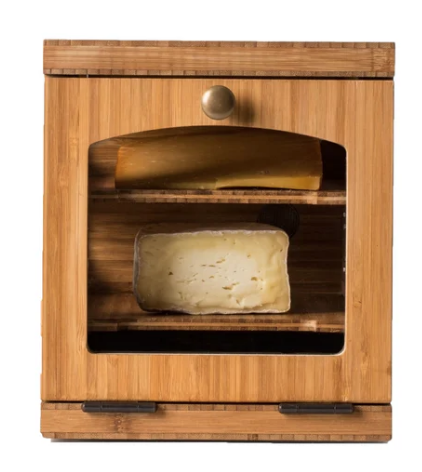
The years I’ve written about consumable gifts, I’ve made myself so hungry that I’ve stopped blogging halfway through to eat close approximations of whatever I’ve researched. And I’ve coveted experiential gifts of practicality, adventure, education, and pampering. I still want the Petite Cheese Storage Vault that I wrote about in Paper Doll’s Holiday Gift List: Warm Their Hearts and Fill Their Tummies.
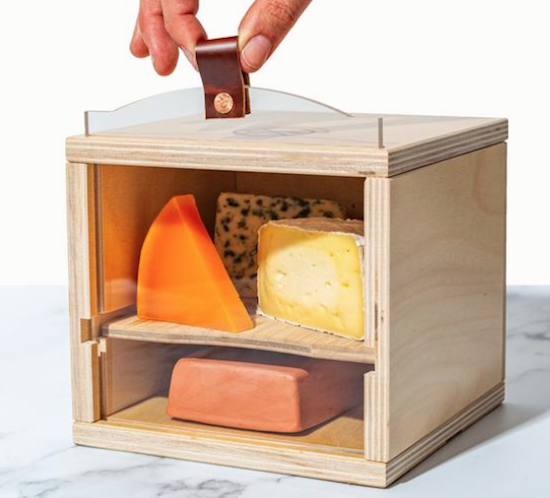
Apparently it no longer exists, though Cheese Grotto™ seems to have a nice approximation!
But recently, I’ve been reading some scientific research that may help organize and improve the gift-giving process and reduce some of the (emotional and financial) stress around gift-giving.
HABITUATION AND THE DELIGHT OF GIVING
I’m reading Look Again: The Power of Noticing What Was Always There, by Tali Sharot and Cass R Sunstein.

The book is focused on helping us appreciate habituation, the way we are less and less delighted by things — from tangible items to our homes to our relationships — as we get used to them, and how we can change our behaviors (take breaks from our spaces, our habits, social media, and our habitual ways of living) to “resparkle” and appreciate our lives more.
The authors even quote economist Tibor Scitovsky’s classic, The Joyless Economy: The Psychology of Human Satisfaction, explaining that “pleasure results from incomplete and intermittent satisfaction of desires.”
In other words, things are more fun when we do them intermittently, rather than constantly. It’s one reason why we get delight from giving and getting gifts at the holidays. Goodies are nice, but we’d probably get bored, or at least habituated, if we got gifts every day. (OK, yes, I’m sure we’d all like to test that theory out.)
Early in the book, Sharot and Sunstein talk about the values of happiness (however you define it) and having a meaningful purpose are key to enjoying life, but that we tend to habituate to both happiness (new jobs with new salaries or new relationships) and meaning.
As an example, you might enjoy bingeing a TV show, which isn’t particularly meaningful, and the ROJI (return-on-joy-investment, in my own silly coinage) will wear off; conversely, you may invest your time in volunteering, which is fulfilling and purposeful, but you may not be particularly happy if the effort is laborious or wearying. (Why is it that good deeds can be both uplifting and exhausting?)
The authors note that one exception is the joy and meaning that comes from raising children, and they posit that we habituate much more slowly to the “satisfaction” that results from doing things for (or giving things to) others.
They evaluated and built on the social science research of Ed O’Brien and Samatha Kassirer in People Are Slow to Adapt to the Warm Glow of Giving in the journal Psychological Science, and found that if individuals were offered a $5 treat day after day for five days, the sense of joy wore off quickly.
However, when people were given (or “won”) similar funds to spend on others, day after day, while the delight they experienced did lessen somewhat, over the course of the week, they habituated to the “warm glow of giving” much more slowly. Per Sharot and Sunstein, giving “provides a greater sense of meaning than getting” and according to O’Brien and Kassirer, this is because focusing on the act of giving is inked to feelings of social connection, and by extension, value.
This doesn’t mean that you’re always going to feel great about giving your sister-in-law a gift that you know from past experience she will return. However, from an organizational perspective, keeping this concept in mind might help you avoid procrastinating on getting that “difficult” gift.
For example, when you’re dealing with the hubbub of the holiday season and are perhaps feeling dubious about the prospect of shopping or giving the “right” gift, or are even wondering if your efforts will be for naught because the other person won’t be getting you a gift that is as nice or that takes as much effort as you’re putting in, take a breath.
Gift-giving isn’t obligatory, and you need not go into debt for the holiday season. But it’s also not so that you’ll get a gift of equal value and effort. (I mean, it can be, but it shouldn’t be. Let’s organize ourselves out of these habits and attitudes.)
If you are giving gifts, and the shopping and the lists and the traffic are all giving you a headache, pause. Go have a hot cocoa (or whatever overly frothy Starbucksian beverage is your fave) and think about the fact that you’re going to get more sustained joy out of giving gifts that you might think.

Cocoa photo by Sixteen Miles Out on Unsplash
Give yourself kudos and let yourself feel some delight with the knowledge that science says gift-giving is good for you.
WHAT SCIENCE SAYS ABOUT GOOD GIFT-GIVING
Did you know there’s serious research into what goes into giving a good gift? In fact, there’s a lot of it.
In the Society for Consumer Psychology Journal, Julian Givi and his team reviewed more than 160 published research papers on the topic and reported on their findings in An Integrative Review of Gift-Giving Research in Consumer Behavior and Marketing. (If you’re into reading social science research, there are links to the source material at the end of their abstract, and you can read some of the papers through Google Scholar. However, social science research tends to be a little dry, and you might nod off into your egg nog.)
Why understand the science of good gift-giving if we know the mere fact that giving gifts makes us happy?
To start with, a lot of gifts end up in the landfill. According to one estimate in 2017, five billion pounds of gift returns ended up in the landfill! And an updated 2020 estimate placed that figure at 2.6 million tons, and yes, this is just counting the United States. If we give better gifts (and here’s a one of many plugs for experiential gifts, that don’t take take up space anywhere, let alone a landfill), we’ll be kinder to the environment.
Experiential Gifts for the Win!
Every year, I sing the praises of experiential gift-giving. For example, here’s what I said last year, in Paper Doll on Clutter-Free Gifts and How to Make Gift Cards Make Sense:
The social-psychological research is sound — experiential gifts are both more memorable and more satisfying.
Memorable
With rare exceptions of special surprises and greatly anticipated gifts, we tend not to remember the tangible stuff we get. (This also means we often don’t remember the gifts we’ve bestowed on others; my organizing clients and I have discussed how we’ve received quite a few “repeats” from well-intentioned loved ones.)
Tangible gifts rarely take us out of the way we live; they fit into the lives we already lead. We may be changing what we’re wearing or how we’re cooking or what we’re playing with because the new gift varies the activity (as an accessory), but experiential gifts are uniquely different from how we spend our everyday lives. Participating in an experience changes our cognitive and physical lives in a few ways.
Part of the fun is anticipatory. When we get a tangible gift, we unwrap it and then…what? Maybe we’ll use it, maybe we’ll put it away until we think of wearing it or using it (or attempt reading the manual to learn how to use it). But when we get a gift of an experience, from the time we receive the gift card or certificate or gift announcement, we begin anticipating everything it involves. We research and get a sense of what might happen. Our imaginations take the gift we receive and add flourishes to what has been given to us.
When we get a gift of an experience, we begin anticipating everything it involves. We research and get a sense of what might happen. Our imaginations take the gift we receive and add flourishes to what has been given to us. Share on XGive someone a gift that allows them the excitement of anticipating the experience on top of the experience itself and it will be a gift that delights on the holiday, during the intervening period until the experience, and then later in retrospect in the relived and shared memories of the experience. Whoohoo! Now compare that to a sweater or a gadget (if your recipient hasn’t specifically asked for a sweater or that gadget) and you can see how an experiential gift is more nuanced and layered.
Uniquely Satisfying
Experiential gifts are unique. Human beings are social animals and even when we don’t intend to be, we are competitive. We log onto social media, see what our co-workers or our exes’ new partners got for gifts and we compare. Even if we loved our gifts before we logged on, if they got a fancier upgrade or a snootier brand, our holiday cheer is just a bit tarnished. Even if our tangible thing is somewhat superior, the excitement doesn’t last.
However, we don’t compare experiences in the same way. Even if we both went to the same escape room or to Las Vegas or on a cruise, the variables — who we’re with, the weather, our moods, etc. — are going to be so different that there’s no valid comparison. Our experiences are unique to us.
But guess what, it’s not just me saying that!
In reporting on his research review, Givi said that the published papers he looked at found several interesting things about experiential gifts.
What a Girl (or a Guy) Wants
First, as much as we professional organizers have tried to persuade you that experiences are the way to go, gift-givers like giving material gifts but recipients really want gift of experiences. In “Remember me, will you?”: Overusing Material Gifts for Interpersonal Memory Management, researchers found:
Givers are more likely than recipients to consider the memory consequences of gift options, as givers intuitively use material gifts as interpersonal mnemonic devices to facilitate the recipient’s retrieval of giver-related memories. As such, this preference discrepancy occurs in various stages of developing relationships but is mitigated in very close relationships.
In other words, “Hey, mom, remember when I got you that expensive hair dryer made by the people who made your vacuum cleaner?”

We’re often focused on trying to make sure our recipients remember not just the gift (which, as I’ve already suggested above, is less likely with tangible things than experiences) but remember that we were the ones who gave it. I mean, I don’t want to say we’re being manipulative when we do that, but there’s obviously some ego involved. Are we buying love? Are we jockeying for position in the family hierarchy relative (no pun intended) to our siblings? Are we trying to get our in-laws to stop referring to us by our significant other’s ex’es name?
Personally, I suspect that if you give your Aunt Sylvia a gift certificate for a massage or Gramps a National Parks pass, they’re going to remember where the gift originated from a lot more than they would with a fuzzy sweater or a book about World War II.
Don’t Focus on the Face!
Second, not only do we not give people what they want (leaving aside the people — usually teens — who are very specific about what they want), but research says that we tend to give people what will yield a more (visibly) positive reaction than one what will actually satisfy them!
In The Smile-Seeking Hypothesis: How Immediate Affective Reactions Motivate and Reward Gift Giving, researchers found (through six (!) studies) that people put a lot of effort into giving gifts based on what they anticipate the recipient’s reaction will be, “independently (and even in spite of) anticipated recipient satisfaction.”
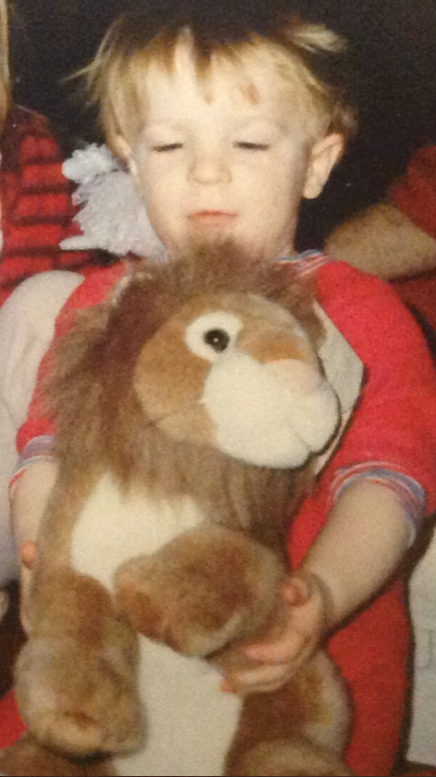
(When the first of my friends had a child, I put way too much effort into imagining how they’d react when opening the gift. Given my terrible job trying to wrap a stuffed lion, I suspect the emotion was pure relief that the gift was finally uncovered!)
If you’re dealing with a five-year-old, the “affective reactions” and their feelings about their Barbie or video game will likely be the same, but adults mask their true feelings and give socially-acceptable reactions to gifts. (Think about how moms and dads made a huge show of getting misshapen clay ashtrays as gifts even if they didn’t smoke, or how fancy-pants successful young adults in Hallmark movies give their parents expensive but impersonal gifts when the parents just want their kids home for the holidays on their reindeer milk farm.)
One other intriguing thing: this “reaction-maximizing preference” where givers focus on reaction rather than recipient satisfaction was lessened when the gift wouldn’t be opened in the presence of the giver.
Apparently, we try to psychoanalyze our recipients and figure out what’s going to make them make us feel good about what we gave them. If we’re not going to be there to see their faces, especially in this era where almost nobody sends thank you notes, we don’t fret as much about their reactions.
Maybe this explains why we’re less likely to give experiential gifts? There’s a ritual involved in unwrapping a gift and showing it off to all in attendance, and you can’t really do that to the same effect with a gift certificate, theater tickets, or a fancy reservation.
We don’t know that’s what we’re doing, so it’s not like we’re monsters, but maybe now that we know, we can reign in this behavior? (If nothing else, you can share this post with your significant other so that when your whole family is exchanging gifts and you get something wildly inappropriate that you know you’re supposed to gush over, you can tug on your ear Carol Burnett-style to share an understanding of the ridiculousness of the situation.)
Build Stronger Connections
Third, Givi found another reason for giving gifts of experiences that I’ve never touched on in all the years I’ve written about this topic. He notes that in Experiential Gifts Foster Stronger Social Relationships Than Material Gifts in the Journal of Consumer Research, Cindy Chan and Cassie Mogilner found that, as the title notes:
…experiential gifts produce greater improvements in relationship strength than material gifts, regardless of whether the gift giver and recipient consume the gift together. The relationship improvements that recipients derive from experiential gifts stem from the intensity of emotion that is evoked when they consume the gifts, rather than when the gifts are received. Giving experiential gifts is thus identified as a highly effective form of prosocial spending.
Which is all a dry, academic, social science-y way of saying that when you give someone an experiential gift — even if they’re not going to be having the experience with you — it strengthens the bonds between you.
And further, the Big Wow of emotion doesn’t come at the moment when you tell someone that you’ve bought them tickets to Hamilton (though they’ll likely be super-psyched) or a year’s supply of car washes; it comes when they’re all dressed up and humming “The Room Where It Happens” or driving through the car wash without having to open their wallet.
Other Findings About Gift Giving
Skip the novelty gifts — Once again, gift-givers are focused on the moment the gift gets unwrapped.
I get it. You see something cute or funny or outrageous and want to see your giftee’s expression when they see they got Big Mouth Billy talking bass, but aside from the fact that it’ll be one of the first things their eventual professional organizer will be helping them let go of, recipients are focused more on the long-term utility of a tangible (non-consumable) gift.
Skip grand but meaningless gestures — Similarly, a gift that evinces shock, surprise, or humor isn’t as big a draw as things that are useful. If your recipient has an Amazon wish list, look at it and select a gift from it. (If you must do something that reflects your personality, make that a stocking stuffer or night 7 Hanukkah gift.)
Rethink gift cards — As I wrote about last year, gift cards give people flexibility. Yes, there are some negative connotations surrounding gift cards among the Silent Generation and older Boomers. But the younger people are, the happier they are likely to be if they get a gift card that reflects their tastes. (Still, unless they asked for it, don’t give your spouse a gift card as their main gift. Figure out what they really want.)
If you give a Dungeons & Dragons dungeon-master a gift certificate to her favorite game store or a fashionistas gift cards to their favorite clothing shops, letting them pick out what’s perfect for them, you’ve ensure that the thought does, indeed, count, and the thought is that you know them well enough to guess, at least generally, and care enough not to impose your own tastes.
Don’t be afraid to be sentimental — Researchers (such as in the Journal of Personality and Social Psychology) have found that people tend to avoid giving sentimental gifts because they may seem schmaltzy or fear they will miss the mark. A candle or a picture frame may seem safe, but is “safe” the way you want to go when giving a gift to someone you love? I think not.
And again, as with experiential gifts, sentimental gifts have a value that keeps you off the hedonic treadmill.
You remember the hedonic treadmill, right? As I wrote in Toxic Productivity Part 2: How to Change Your Mindset,
In the famous story of Diderot’s dressing gown, the French philosopher was gifted a fancy robe to replace a tatty one. As Diderot got used to his new dressing gown, he came to see his sense of self as defined by its finery. He felt dissatisfaction with his older possessions and began of spiral of 18th century keeping-up-with-the-Joneses consumerism, replacing the perfectly good items associated with his old life and going into debt to keep up with the identity of the new.
Just as experiences are unique and uniquely satisfying, sentimental gifts that recall (and reinvigorate) personal relationships — gifts like photo books, albums, family recipe collections, and anything that evokes memories — are unique to those involved. You don’t habituate to sentimental gifts the way you do to an air fryer or bathrobe.
So, to wrap it up:
- Remember that gift-giving will make you feel good.
- Take your ego out of gift-giving and focus on the recipient’s needs and tastes.
- Give gifts of experience because they’re meaningful, recipients like them, and it’ll bring you closer together.
- Don’t focus on the big reveal (when they unwrap the gift) or your recipient’s social-norm-induced reaction.
- Think about what they asked for, what you know about their tastes, and what will make them really happy.
RECAPPING THE BEST OF PAPER DOLL’S GIFT-GIVING ADVICE
If you need some inspiration for what to get the people in your life this holiday season, I invite you to explore some of my posts over the last few years.
Paper Doll on Clutter-Free Gifts and How to Make Gift Cards Make Sense
Paper Doll’s Ultimate Guide to Clutter-Free Experiential Gifts: Adventure, Practicality & Pampering (Note: this is one of my of all of my holiday posts over the last 17 years.)
Paper Doll’s Ultimate Guide to Clutter-Free Experiential Gifts: Educational
MORE GOOD ADVICE FROM MY COLLEAGUES
Collectively, my colleagues have written too many stellar posts on giving great clutter-free, experiential, or organizing-themed gifts over the years for me to name them all. However, I think you’ll enjoy taking a peek at these recent posts:
Great Organizing and Productivity Gifts for 2024 from Seana Turner of The Seana Method is chock-full of gifts that — if you are set on giving someone something to unwrap — will solve organizational problems without screaming “I’m practical and boring!” (I’m partial to the rechargeable lamp and the cool yoga storage tube.)
Tons of No-Clutter Gifts for the Holidays from Sabrina Quairoli of Sabrina’s Organizing focuses on consumable gifts (so, yummy!), memberships, and charitable donations, as well as her Sabrina’s take on experiential gifts with days/evenings out and lessons.
Plus, The Spruce interviewed three professional organizers for their 5 Holiday Gifts That Will Only Make Your Home More Cluttered, According to Organizers, and I have to say I agree.
That said, I have to admit that I’m a sucker for coffee mugs with messages or images that delight. Several years ago, my colleague Dr. Regina Lark gave me a coffee mug with a funny (though naughtily unprintable in a “family” blog) message that delights me each morning that it comes up in my rug rotation. Also, I really like my Mr. Rogers mug. (His sweater changes colors when you pour in a hot beverage!)

Again, this is where knowing your recipient is important!
As this post goes to press, you’ve got about two and a half weeks until Christmas and the start of Hanukkah. I hope today’s post and the links to past advice will help you find delight in giving.
Paper Doll Post:

Recapping Paper Doll’s 2023 Posts — Which Were Your Favorites?
With one week left in 2023, have you taken time yet to review your year?
For the December Productivity and Organizing Blog Carnival, Janet Barclay asked us to identify our best blog posts of 2023, and I had a tough time.
“Best” is subjective, and Janet let us have free reign as to which post fit. Some bloggers chose their most popular posts in terms of readership; others, the ones that garnered the most comments. Some of my blogging colleagues picked their most personal posts, while others selected what they felt would have the most impact on people’s lives.
The problem is that picking just one means leaving the others behind, and I wrote forty-two posts this year! Eventually, I narrowed the selection to half a dozen posts, and then turned to colleagues and friends who were almost evenly split, bringing me no closer to a solution. In the end, I picked Paper Doll On Understanding and Conquering Procrastination because it served as the foundation for so many other posts, but also because I’d been lucky enough to find some great visuals, like this one from Poorly Drawn Lines:
so much to do pic.twitter.com/fiSm7Y2Erg
— poorly drawn lines (@PDLComics) December 21, 2022
Beauty, like clutter, is in the eye of the beholder. To that end, here’s a recap of everything we’ve discussed in 2023, with a few updates and tweaks along the way. My personal favorites are in bold, but I’d love to know which ones resonated the most with you during the year!
ORGANIZE YOUR INSPIRATION
After uploading last week’s post, Toss Old Socks, Pack Away 2023, and Adjust Your Attitude for 2024, I got to thinking about all the different ways we can take our word, phrase, or song of the year and keep it in the forefront of our minds.
I’d reviewed the traditional methods (vision boards, posted signs, turning the song into your wakeup alarm), but felt like there needed to be something that stayed with you, independent of your location. Only being reminded of your goal to be a leader when you’re standing in front of your fridge doesn’t really help you in your 1-to-1 meetings at work. (I mean, unless you’re the Queen of the Condiments or King of the Crisper Drawer.)
Only being reminded of your goal to be a leader when you're standing in front of your fridge doesn't really help you in your 1-to-1 meetings at work. (I mean, unless you're the Queen of the Condiments or King of the Crisper Drawer.) Share on XSerendipitously, within minutes of thinking about this, an ad came across one of my social media pages. (Normally, I ignore ads, but this one had me thinking maybe “serendipity” would be a good theme word for some year!) The ad was for Conscious Ink, an online temporary tattoo retailer specifically for creating body art to help you mindfully connect with your themes and messages to yourself, disrupt negative self-talk, and promote the healthy habits you’re trying to embrace!
As Conscious Ink’s About page explains, if you want to keep something top of the mind, why not try something that keeps it “top of the body?” Whether body art is your thing or you haven’t experimented since your Minnie Mouse temporary tattoo at summer camp <mumble mumble> years ago, this is a neat trick!
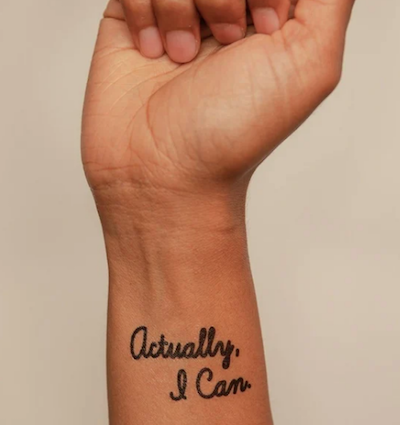
There’s even research as to how a temporary tattoo can support permanent emotional and cognitive transformation and improve mindfulness and focus on things that uplift one’s higher self. And that’s the point of a theme word, phrase, or song, to keep you focused on what you want rather than what you allow to drag you down! Manifest what you want your life to be.
Conscious Ink’s temporary tattoos use non-toxic, cosmetic-grade, FDA-certified, vegan inks. Each one lasts 3-7 days, depending on where you apply it, your skin type and activity level, and (I suspect) how many life-affirming, stress-reducing bubble baths you take. Categories include mindset, health and wellness, spiritual/nature, relationships, parenting, celebratory, and those related to social causes. Prices seem to hover at around $10 for a three-pack and $25 for a 10-pack. There’s even a Good Karma Guarantee to make sure you’re satisfied.
Whether you go with Conscious Ink (which is designed for this uplifting purpose) or seek an alternative or custom-designed temporary tattoo (through vendors like Momentary Ink or independent Etsy shops), it only makes sense if you place it somewhere you can see it often.
After all, if you place a temporary tattoo reminder to stand up for yourself on your tushy, it probably won’t remind you of much. For most of us of a certain age, putting it at our wrists, covered (when we prefer) by our cuffs, will give us the most serene “om” for our buck.
If you place a temporary tattoo reminder to stand up for yourself on your tushy, it probably won't remind you of much. Share on XAlong the same lines as my advice on adjusting your attitude for 2024, you may want to consult Gretchen Rubin’s Tips for Your “24 for 2024” List. Rubin and her sister/podcast co-host always have an inspring Happier Trifecta: a year-numbered theme, along with with a challenge and a list.
PRODUCTIVITY AND TIME MANAGEMENT
This was a big year for productivity discussion. I’m a firm believer that keeping your space and resources organized is key to being productive. However, it’s hard to keep the world around you organized when outside influences prevent you from being efficient (doing things well) and effective (doing the right things).
We continue to see the value of body doubling, whether through friendly hang-outs, co-working (virtually or in person), or professional organizing services, whether you want to conquer garden-variety procrastination or get special support for ADHD.
Partnering for Success
Paper Doll Sees Double: Body Doubling for Productivity (I almost submitted this post to the carnival. Accountability and motivation for the win!)
Paper Doll Shares 8 Virtual Co-Working Sites to AmpUp Your Productivity
If you’d like to explore the body doubling or co-working experience, friend-of-the-blog Deb Lee of D. Allison Lee is offering a no-cost, two-hour Action Day event on Tuesday, January 9, 2024, from 10 a.m. to 12 p.m.

This event is designed for her clients and subscribers, but after a cheery holiday conversation, Deb said it was OK to let my readers know about the opportunity.
Deb describes an Action Day as “personal training for your productivity muscles!”
An Action Day (especially as Deb runs them) is a stellar way to narrow your focus and start taking action on your goals. (And what better time than at the start of the new year?) You’ll get to connect with others who are also working on goals and habits with the support of Deb, a productivity coach I admire and adore.
Just bring your top two or three priorities, and you can conquer anything, like:
- organize your workspace
- write your book outline
- clean up your digital files
- test a new productivity app
- send out client proposals
- anything!
You’ll videoconference with a small, select group via Zoom. Share your goal and tasks, work for the bulk of the two hours, and then take time to debrief and share your successes!

Moving Yourself Forward
Getting anything done involves figuring out what you have to do, knowing what’s kept you from getting started, making it easy for you to begin, and celebrating even the smallest wins. These next three posts were where the magic happened this year!
Paper Doll On Understanding and Conquering Procrastination (This is the post I submitted to the Productivity & Organizing Carnival.)
Frogs, Tomatoes, and Bees: Time Techniques to Get Things Done
Use the Rule of 3 to Improve Your Productivity
Dealing with the Pokey Times
If you’re overwhelmed by all you’ve got going on during late December and early January, you can skip onward. However, if your workplace closes down during the holidays, or your professional and personal lives just feel like they’re kind of in a slump right now, you may find some inspiration in two pieces I wrote for the summer slowdown.
The weather outside may be frightful (unless you’re reading from Australia), but if you are looking for ideas to pump you up when everyone is in a post-shopping/meal/travel haze, these posts may stir your motivation:
Organize Your Summer So It Doesn’t Disappear So Quickly
Use Your Heart, Head, and Hands to Organize During the Slow Times
Try To Do It All (And Knowing When to Step Away)
Maybe you did your annual review and found that you’re feeling burned out. If so, you are not alone. It’s easy for your groove to turn into a rut, and for all of your drive to accomplish come crashing down because you never take your foot off the gas all year!
If you missed these posts earlier need a second shot at embracing the importance of variety, small breaks, and actual vacations, here’s your chance to read some of my absolute favorite posts of the year:
Paper Doll Says: Don’t Get Stuck in a Rut — Take Big Leaps (Be sure to watch the diving board video!)

Was baby Paper Doll burned out? In a rut? Just pooped?
Take a Break — How Breaks Improve Health and Productivity
Take a Break for Productivity — The International Perspective (This is the post that introduced the Swedish convivial snack break, fika!)
If you had any doubts about what I said about the importance of taking breaks in your day to refresh your body, your brain, or your spirit, a new report just a few weeks ago confirms that we need that late afternoon break if we don’t want our productivity to turn to mush! And the more we push ourselves beyond work hours, the greater our decrease in productivity!
If you’re desperately in need of a full break, but are suffering from decision fatigue and don’t have the energy to begin planning a whole vacation, there are options to make it easier for you. In the BBC’s piece, Why 2024 May Be the Year of Surprise Travel, you may find some rousing options.
Need a little inspiration to spend your holiday gift money on experiences rather than tzotchkes? Check out Time Out’s 24 Best Things to Do in the World in 2024 to envision where you could take long breaks to refresh yourself. Those vintage trains in Italy are calling to me, but perhaps you’d prefer the immersive “Dream Circus” in Sydney, Australia, or Montréal en Lumière’s 25th anniversary?
(Never mind, I know. Everyone wants to go on the Taylor Swift cruise from Miami to the Bahamas. Just come back with good stories instead of memento clutter, OK?)
TOOLS AND IDEAS FOR GREATER PRODUCTIVITY
Sometimes, rereading my own posts reminds me how many nifty things there are to share with you, and how many are still to be discovered.
Paper Doll Helps You Find Your Ideal Analog Habit Tracker — So many people have requested a follow-up covering digital habit trackers, so watch for that in 2024.
Paper Doll Presents 4 Stellar Organizing & Productivity Resources
Paper Doll Shares Presidential Wisdom on Productivity — From the Eisenhower Matrix to Jefferson’s design for the swivel chair, from limiting wardrobe options to understanding the difference between being busy and being productive, we’ve had presidents who have known how to get more (of the right things) done. With an election year in 2024, I’d love a debate question on the candidate’s best tips for staying organized and productive!
Surprising Productivity Advice & the 2023 Task Management & Time Blocking Summit
Highlights from the 2023 Task Management & Time Blocking Summit
3 Simple But Powerful Productivity Resources — Right in Your Browser Tab — The offering that got the most attention this year was definitely Goblin.Tools. I’m sure that as we head into 2024 and beyond, I’ll be sharing more resources that make use of artificial intelligence.
Let’s just remember that we always need to give precedence to our own intelligence, in the same way we can’t follow GPS to the letter if it directs us to drive in to a lake. In fact, like all organizing and productivity guidance, remember what I said way back in 2020 in The Truth About Celebrity Organizers, Magic Wands, and the Reality of Professional Organizing: there is no magic wand.
AI and other solutions, tangible or digital, and even professional organizers, can make things easier, but the only way to get the life you want is to embrace making positive behavioral changes.
RESOURCES FOR ORGANIZING YOUR WORK AND TRAVEL SPACE
Privacy in Your Home Office: From Reality to Fantasy — It’s interesting to see that privacy, and not just in home offices but in communal workspaces, has become a priority again. Check out this recent New York Times piece, As Offices Workers Make Their Return, So Does the Lowly Cubicle.
Paper Doll Refreshes Your Paper Organizing Solutions
Paper Doll Organizes Temporary Papers and Explores Third Spaces — Do you have systems for dealing with your “temporary papers,” the ones that you don’t need to file away but aren’t triggering an immediate action?
Paper Doll Organizes Your Space, Money, and Well-Being While Traveling
Paper Doll is Clearly Organized — Translucent Tools for Getting it Together
Paper Doll Explores New & Nifty Office and School Supplies
Organize Your Desktop with Your Perfect Desk Pad
No matter where I go in 2024, be assured that I will be keeping my eyes open for solutions for keeping your paper and work supplies organized.
My Thanksgiving weekend shopping trips brought me a variety of intriguing options. At Kohl’s, I saw 30 Watt‘s Face Plant, a way to keep your eyeglasses handy while refreshing the air around you (and keeping you perky) with greenery. The 5.5″ x 6″ x 5.25″ ceramic planter holds a plant, gives you a place to rest your glasses (so you won’t misplace them under piles of paper on your desk), and is dry erase marker-friendly! (It’s currently on sale for under $14.)

A stop at IKEA in Atlanta was so productive for organizing tools that you’ll be seeing posts with nifty names like Övning (for tidying a child’s desk accessories and creating privacy), Kugsfors (wall-mounted shelves with tablet stands for keeping books and iPads visible while working), Bekant (sit/stand desks) and more.
ORGANIZING YOUR FINANCIAL & LEGAL LIFE
Not everything in the organizing and productivity world is fun to look at, and that’s especially true of all the financial and legal documents that help you sleep soundly at night. Still, Paper Doll kept you aware of how to understand and protect your money, your identity, and your legacy.
Speaking of which, if you haven’t created your Apple Legacy Contact and your Google Inactive Account Manager, why the heck not? Use the power of body doubling up above, grab a partner, and get your digital life in order!
Lost & Found: Recover Unclaimed Money, Property, and Savings Bonds
Paper Doll’s Ultimate Guide to Legally Changing Your Name
Paper Doll Explains Digital Social Legacy Account Management
How to Create Your Apple & Google Legacy Contacts
Paper Doll Explains Your Health Insurance Explanation of Benefits
DEALING WITH EMERGENCIES AND STRESSFUL SITUATIONS
Sometimes, I write a post I wish I’d been able to read earlier (like the one on preventing and recovering from a car theft). Other times, like when a friend had a health emergency, or when Paper Mommy had her fall in November, I’m glad the posts already exist. If you missed these the first time around, please be sure to read, share, and bookmark them; think of them as an insurance policy, and let’s hope you won’t need them.
How to Organize Support for Patients and Families in Need
Organize to Prevent (or Recover From) a Car Theft
Paper Doll Organizes You To Prepare for an Emergency
GRAB BACK OF INTERVIEWS, UPDATES, AND PHILOSOPHY
Paper Doll Interviews Motivational Wordsmith Kara Cutruzzula
You already know how beloved my friend Kara Cutruzzula‘s Brass Ring Daily newsletter and Do It Today podcast are at Paper Doll HQ.
After having read and enjoyed Kara’s Do It For Yourself — A Motivational Journal and her follow-up, Do It Today — A Motivational Journal (Start Before Your Ready), I had no doubt that I’d be jumping on her third when it was released in September.
If you haven’t already picked up Do It Or Don’t — A Boundary-Creating Journal, use that Amazon money you almost certainly got this holiday season!
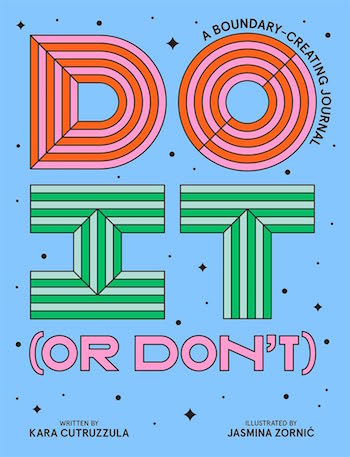 One of the Paper Doll themes for 2024 will focus on setting (and maintaining) better boundaries to accomplish more of what’s meaningful, and I’ve got multi-color tape flags sticking out of Kara’s book from all the chapters to share her bounty with you.
What’s in a Name? “Addressing” Organizing and Productivity
Paper Doll Suggests What to Watch to Get More Organized and Productive — As we head into the new year, I’ll be keeping my eyes open for podcasts, webinars, and TV shows to help you keep your space organized, your time productive, your finances orderly, and your life joyous. Readers have been sending in YouTube and TikTok videos that inspire them, so please feel free to share programming that you’d like to see profiled on Paper Doll‘s pages.
Paper Doll on How to Celebrate Organizing and Productivity with Friends
Paper Doll and Friends Cross an Ocean for Fine Productivity Conversations
From in-person get togethers with frolleagues (what my accountability partner Dr. Melissa Gratias calls those special folks who are both friends and colleagues) to Friday night professional organizer Zooms, accountability calls, and Mastermind group collaborations, this has been a great year for staying connected and sharing the benefits of those conversations with you.
I also loved guesting on so many fun podcasts related to organizing, productivity, technology, and more. If there’s someone you’d like to hear me debate or banter with, let me know!
SEASONAL POSTS
Spooky Clutter: Fears that Keep You from Getting Organized
Paper Doll’s Thanksgiving Week Organizing and Productivity Buffet
Paper Doll De-Stresses Your December
Paper Doll on Clutter-Free Gifts and How to Make Gift Cards Make Sense
Are you stressed out because you haven’t gotten someone a gift yet? Maybe a good start would be to help an overwhelmed special someone take my advice about going on a travel break. Consider gift certificates for something like Get Your Guide, with opportunities to get guided tours of locally-vetted, expertly-curated sporting, nature, cultural, and food experiences. With 118,000 experiences in 150 countries, pick a multiple of $50 or set your own amount, and your recipient can pick the domestic or international travel experience that fits best.
If you know your recipient will be traveling by rail, consider a gift card for Amtrak or ViaRail in North America. Eurail doesn’t sell gift cards, but you can pay for a pass, or buy a gift card for a rail pass for more than a dozen specific European train lines. And if you’d like to help someone organize vacation serenity and secure a bundle of travel attractions for a given city, try TurboPass in Europe or City Pass and The Sightseeing Pass in North America.
HERE’S TO A MORE ORGANIZED AND PRODUCTIVE 2024
Whether you’ll be spending the next few days reading, traveling, or doing your annual review, I hope this last week of 2023 is a happy and healthy one.
To send you off for a cozy week, I’d like to share a Whamagaddon– and Mariah–free, retro 100-minute holiday playlist from the late 1930s through the early 1960s. It’s somehow easier to dismantle the tree and write thank-you notes to Guy Lombardo. (My favorite clocks in at 52:42 with “What Are You Doing New Year’s Eve?”)
Please let me know your favorite Paper Doll posts from this year, and I’ll meet you back here in 2024!
Paper Doll Post:

Paper Doll on Clutter-Free Gifts and How to Make Gift Cards Make Sense
Chances are good that you’ve got three things on your mind right now: shopping for holiday presents, trying to keep your shopping and your budget organized in this most expensive of months, and dealing with the fact that — holy canoli! — the year is almost over! Paper Doll can’t stop time, but I’ve got some ideas for the first two.
EASY-TO-BUY EXPERIENTIAL HOLIDAY GIFTS
Almost every year since I began writing this blog, I’ve sung the praises of experiential gifts rather than tangible ones. The social-psychological research is sound — experiential gifts are both more memorable and more satisfying.
Memorable
With rare exceptions of special surprises and greatly anticipated gifts, we tend not to remember the tangible stuff we get. (This also means we often don’t remember the gifts we’ve bestowed on others; my organizing clients and I have discussed how we’ve received quite a few “repeats” from well-intioned loved ones.)
Tangible gifts rarely take us out of the way we live; they fit into the lives we already lead. We may be changing what we’re wearing or how we’re cooking or what we’re playing with because the new gift varies the activity (as an accessory), but experiential gifts are uniquely different from how we spend our everyday lives. Participating in an experience changes our cognitive and physical lives in a few ways.
Part of the fun is anticipatory. When we get a tangible gift, we unwrap it and then…what? Maybe we’ll use it, maybe we’ll put it away until we think of wearing it or using it (or attempt reading the manual to learn how to use it). But when we get a gift of an experience, from the time we receive the gift card or certificate or gift announcement, we begin anticipating everything it involves. We research and get a sense of what might happen. Our imaginations take the gift we receive and add flourishes to what has been given to us.
When we get a gift of an experience, we begin anticipating everything it involves. We research and get a sense of what might happen. Our imaginations take the gift we receive and add flourishes to what has been given to us. Share on XGive someone a gift that allows them the excitement of anticipating the experience on top of the experience itself and it will be a gift that delights on the holiday, during the intervening period until the experience, and then later in retrospect in the relived and shared memories of the experience. Whoohoo! Now compare that to a sweater or a gadget (if your recipient hasn’t specifically asked for a sweater or that gadget) and you can see how an experiential gift is more nuanced and layered.
Uniquely Satisfying
Experiential gifts are unique. Human beings are social animals and even when we don’t intend to be, we are competitive. We log onto social media, see what our co-workers or our exes’ new partners got for gifts and we compare. Even if we loved our gifts before we logged on, if they got a fancier upgrade or a snootier brand, our holiday cheer is just a bit tarnished. Even if our tangible thing is somewhat superior, the excitement doesn’t last.
However, we don’t compare experiences in the same way. Even if we both went to the same escape room or to Las Vegas or on a cruise, the variables — who we’re with, the weather, our moods, etc. — are going to be so different that there’s no valid comparison. Our experiences are unique to us.
Reviewing Experiential Gifts
Over the years, I’ve collected so many examples of experiential gifts in each category that in 2022 I had to split my traditional post into two (also enormous) posts. I’ve checked (and, where necessary, updated) the links, so rather than give you all the options over again, I’ll just point you to the general categories you can find in those two posts (with a teeny bit of commentary).
Paper Doll’s Ultimate Guide to Clutter-Free Experiential Gifts: Educational
This set of experiential gifts included a wide variety of classes and lessons, including:
- Learn by doing (like music lessons, performance classes like singing or dancing, physical fitness training, horseback riding, language learning and practice, cooking, and food and wine tours). I’m still engrossed in my learning of Italian, having hit 1975 days straight in practicing.

My colleague Maria White of Enuff With The Stuff in Reston, Virginia asked me on social media, “How does it feel to be in the 1% class?” and I replied, honestly, that “I feel like the smartest 56-year-old in a class of preschoolers.”
I may never learn the future conditional tense well enough to respond aloud quickly, but I can suss out a good smattering of what’s written on the web site for L’Associazione Professional Organizers Italia, aka: The Italian Association of Professional Organizers. Grazie mille, Duolingo!
- Learn for the delight of knowledge — This covered educational opportunities for those on your list who miss school and are charmed by an online academic setting. I loved the Jane Austen class I was gifted from The Great Courses a few years ago, and I’d be delighted if I got a Master Class subscription so I could take James Clear’s just-added Small Habits class.
Paper Doll’s Ultimate Guide to Clutter-Free Experiential Gifts: Adventure, Practicality & Pampering
- Gifts of adventure — Whether your (or your giftee’s) idea of adventure is physical exertion in the great outdoors (of which Paper Doll is not exactly a fan), indoor physical adventures that guarantee you won’t get eaten by wolves (like axe-throwing or trampolining) or something more physically sedate but intellectually adventurous (like an escape room), there are options galore.
- Gifts of practicality — Don’t pooh-pooh practical gifts as ho-hum. Obviously, you have to know your recipient. (For example, gifting Paper Mommy a new spring and mattress for her 40th birthday was not one of my father’s wisest moves.) Giving gifts of home care or car care, or coverage of monthly costs (like internet, cable, streaming, digital backup, or video conferencing) can be a boon that lets your recipients spend their (possibly limited) money on ideal needs and wants.
(For what it’s worth, I am a longtime user of Backblaze‘s backup services, and just got an email saying that if you sign up via my Backblaze referral link between December 15, 2023 and January 31, 2024, you get a free trial month. (It’s usually two weeks.) That’s kind of like a gift for all you readers. Disclaimer: If you end up buying Backblaze services, I’ll get a free month, too!)
- Gifts of pampering — Modern life is hard. Everyone deserves gifts that make it (or skin or hair) a little softer. The people most in need of pampering are often the least likely to splurge on themselves.
- Gifts of organization — No clutter-free gift advice can go forward without suggesting the services of a professional organizer, whether in-person or virtually. Again, know your recipient if this isn’t something that’s been requested. The magic of a professional organizer’s services is likely to be an appreciated unasked-for gift for a parents-to-be who want to set up a nursery or pals wanting to support a friend setting up a productive office for a new home-based business. The services of a professional organizer as a “gift” from a parent-in-law who tends to harp on the tidiness of adult child’s partner may not be seen in the same light.
So, click on those two Paper Doll posts above and I bet you’ll find perfect clutter-free presents for the harder-to-buy-for folks on your list.
One more advantage of buying these kinds of clutter free gifts? They’re quick and easy to purchase. In almost every case, you can buy these gifts online. In the rare case where a venue requires a purchase in-person, it’s still easier than wending your way through a big box store; whether it’s a salon, store, or event venue, you can generally go to a desk right inside the front door to purchase gift certificates.
MAKE A (SMALL) MOUNTAIN OF MONEY OUT OF A SERIES OF (GIFT CARD) MOLEHILLS
Do you cringe when you think about giving gift cards? Do leftover gift card balances annoy you?
Get Over Feeling that Gift Cards Are Too Generic
Some people hate gift cards because they’re “generic,” as if a gift card that allows someone to get what they like (or love) is more generic than a random picture frame or candle for a recipient who has shown no interest in such things.
Personally, I think gift cards are fabulous because they are less crass than cash.
As an aside, I have no idea why we in Western society consider giving cash as crass for anyone except adorable octogenarian grandparents. Grandmas gift crisp currency to their grandchildren and we grin at the quaintness. I just worked with a client in his 60s, and in a box of clutter we found a birthday card from his mother containing a crisp bill bearing the likeness of Benjamin Franklin!
Lots of people would love to have a little extra cash at the holidays, when they’ve scrambled to purchase gifts for others, especially versus an ill-fitting gift they can’t return.
A nice alternative, when you truly don’t know what someone wants is a gift card that gives someone an opportunity to get exactly what they want. A teenager or college student is probably going to prefer an Apple or Amazon gift card to one for a clothing store that doesn’t sell the style of clothing they and their friends wear. And failing that, gift cards can be re-gifted.
If you know someone whom you fear may not have the funds to fully experience a gift you’d like to give, you can pair a gift with a gift card. For example, perhaps you know someone who’d appreciate a popular new cookbook but might not be able to buy all the special groceries.
One of the most popular (and most highly rated) cookbooks right now is Baking Yesterday: The Best Recipes from the 1900s to the 1980s, based on B. Dylan Hollis’ TikTok account, where he prepares random dishes from the last century, like Depression-era Peanut Butter Bread or 1950s Tomato Soup Cake. His videos are hysterical, and the recipes can be intriguing.
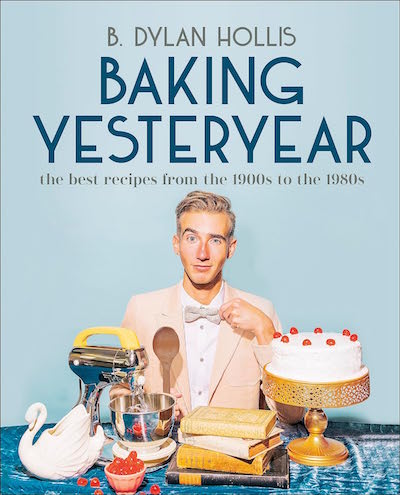
But have you been to the grocery store lately? The average recent college grad probably has a food budget one step up from packets of ramen noodles. Without the funds to make the recipes, this cookbook would just be clutter.
Show your fave wanna-be chefs that you know what’s trendy without bumming them out over their budgets. Pair the cookbook with a gift card for a grocery store near them.
Almost all grocery chains and many local supermarkets offer gift cards, and you can pick them up conveniently when you’re buying you’re own groceries, or purchase them online. If you don’t know which grocery story best serves them, try a gift card for a delivery service like Instacart or Shipt, which covers the cost of the food and store-to-door service.
If your recipient has such a busy life that getting out to buy groceries, let alone having time to prepare and cook meals, is a non-starter, try gift cards for Door Dash or GrubHub. (You can even buy gift cards for these services on Amazon!)
How to Solve the Tiny Denomination Gift Card Conundrum
The one problem with gift cards (for the recipient) is when someone has received a generic cash-like gift card, such as a Visa/Mastercard/American Express gift card. It’s nice to have a gift that can be spent anywhere, but it’s awkward when you have a gift card (or many) with teeny balances. Imagine going to a store, with oodles of people behind you in line, and saying, “I’d like to pay with these seven Visa gift cards, which have balances ranging from $1.43 to $5.87.”
Recently, I received a payout from a class action lawsuit. Usually, the class action funds are sent as small check that you would have felt embarrassed to hand to a bank teller. Nowadays, everyone makes deposits via their phones or at ATMs, sparing us the indignity of having to summon a challenging stare at the teller, telepathically communicating: “Yes, I am going to deposit this check that will barely cover the cost of a soft drink! What of it?!”
This class action check came in the form of a digital code to get a MasterCard e-gift card. In the process of registering, I was given the option to applying the card to my Apple Wallet on my iPhone. I’ve never actually used my Apple Wallet in-person, but figured I could use the e-gift card to pay toward my tiny monthly Apple card expenses (for iCloud and Apple TV).
But guess what? You can’t pay your Apple Card from a gift card in your wallet unless you’re spending at least $10, and the class action money was less than that!
How could I spend that teeny bit of class action money? How could my clients get those minuscule amounts off of their Visa gift cards? How can we stop cluttering wallets (digital and tangible) and drawers with mostly-used Visa/MasterCard/AmEx gift cards?
I’m delighted to tell you that I’ve got a solution I hope you’ll share with others. Did you know that you can purchase Amazon e-gift cards in any denomination from one dollar upward? The process takes a multiple (tiny) steps, but is easy to accomplish.
1) Log into your Amazon account.
2) Go to the Amazon gift card page or type “Amazon gift cards” into the search box.
3) Select the option for Amazon.com eGift Card $1.00 – $2,000. (For me, it’s usually the second option. It looks like this:

4) On the next page, make a few selections:
- First, it will ask you for what kind of design you want. You’re buying this for yourself, basically just trading gift card credit for Amazon credit, so skip this step and it’ll just apply the default Amazon design.
- On the amount line, fill in the value on the far right, where it says “$ Enter Amount.”
- Fill in the rest such that you’re sending the “gift” from yourself to yourself. It will automatically fill in your name in the “from” section.
- Click “Add to Cart.”

5) Proceed to the checkout page.
- When you go to pay for the gift card, it will ask you to verify the recipient. (Again, it’s you.)
- Then, it will ask you what method you want to use to pay, just as it normally does when you make an Amazon card purchase. This is where you get to “spend” your random Visa/MasterCard/AmEx gift card money. You do this by ADDING the gift card to your Amazon wallet.
- You probably have one or more credit or debit cards and checking accounts listed in this section. Down at the bottom of the “Your Credit and Debit Cards” section, you’ll see where it says, “Add a credit or debit card>Amazon accepts all major credit cards“ — click on it.
- Add the information on the Visa, MasterCard, or AmEx gift card you’re getting rid of. Fill in the number, the security code, and any other information it requests, just as you do when you enter or update credit card information in your Amazon account.
- Once Amazon accepts this as a payment amount, you’re done with the hardest part.
6) Complete your purchase of the Amazon e-gift card as if you were making any other purchase.
7) Wait a few minutes and then check your email. You’ll have received an email telling you that your purchase went through. Hurray! Then you’ll get another email — surprise! — telling you that someone has sent you a gift card.
8) Follow the steps in the email to add the new Amazon eGift Card to your Amazon balance. Usually, you’ll just just have to click a redemption link it’ll be done, but you may have to paste a code from the email into the resulting Amazon page.
- If you never run an Amazon gift card balance, know that the next time you make a purchase, this little amount will be automatically applied and used up, with the remainder charged to your preferred card.
- If, like me, you tend to have lots of random Amazon credit (due to gifts, survey rewards, returns, etc.), this will just increase the total amount of your Amazon balance, which you can always check by going to the Accounts tab when you’re logged in to Amazon and clicking on the Gift Card button. You’ll see your gift card (i.e., account) balance as well as a history of gift card transactions.
Once you’ve done it once or twice, you’ll get the whole process down to about two minutes, not counting waiting for the “Hey, someone sent you an Amazon gift card!” email.
After you’ve completed all of this, and you’ll also get an email telling you that your recipient (again, you!!!) received the gift.
Bonus Tip: How To Delete an Amazon Payment Method
I’ve had clients complain that although they love being able to get rid of dribs and drabs left on generic gift cards using this method, it tends to fill up their Amazon Payments Method section with a mess of random cards that are no longer usable. And it’s not obvious how to remove unnecessary payment methods.
I’ve got a solution for that, too!
If your Amazon Payments Method section is too crowded, you can delete any generic gift carsd you used (to buy the Amazon card):
- Log into your Amazon account.
- Click on Account from the Account & Lists tab dropdown.
- Select the “Your Payments” button.
- You’ll see your Amazon Wallet with all of your payment methods, both the “real” ones you use with your actual debit and credit cards, and whatever random debit or credit card balances you’ve cashed in for Amazon credit.
- For any item you want to delete, click on the card in the column on the far left.
- A graphic of a card will pop up in the center of the page. Click on “Edit.”
- On the resulting screen, you’ll be able to edit the details of the card (name, expiration date, billing address, etc.) or delete it altogether. Click the red “remove from wallet” at the bottom of the pop-up.
You can use this method to get rid of the one-off cards or update any of your regular credit or debit cards, making your Amazon Wallet more organized.
Happy holiday shopping, and please feel free to share these gift card tips with anyone who suffers from a mountain of gift card clutter.
Paper Doll Post:

Paper Doll De-Stresses Your December
Did December sneak up on you? Were you so focused on Thanksgiving that when you got to the other side of it last week and flipped the calendar page, you gasped to realize how little of the year was left and how much was suddenly (or still) on your plate?
Today’s post offers some cut-to-the-chase advice for organizing your December life, whichever way your sugar cookie is crumbling right now.
DON’T BE LISTLESS
Even Santa can’t keep it all in his head. No matter how organized you are throughout the rest of the year, December often feels like people are whizzing tennis balls at your head from all directions. As I wrote about in Paper Doll on the Magic of Making Lists, a good list can help you brainstorm, set and maintain boundaries, recognize your priorities, organize your mind, relieve anxiety, and aspire to greatness.
A good list, especially in December, can help you brainstorm, set and maintain boundaries, recognize your priorities, organize your mind, relieve anxiety, and aspire to greatness. Share on XGet in the habit of writing everything down the minute you think of it; don’t trust that you’ll remember it later. It doesn’t matter whether you create your lists digitally or on paper, as long as you commit to putting them in one place and referring to them often. However, for lists you’ll be referring to annually, you may find it easier to keep organize digitally so they’ll be easier to update from year to year.
Create Gift Lists for Others
Obviously, it would have been better keep a running list all year, and to have taken notes when inspiration struck or clues were dropped. But meet your holiday shopping conundrums where they are, not where you wish they’d be.
Start by listing the people for whom you need/want to buy (or make) presents and note what you know they like. This may seem obvious, but keeping a written list will ensure you won’t have seven gifts for one person and none for another. Have a column on your lists to keep track of which gifts you’ve already purchased and for whom so when it’s time to wrap them, you can do it quickly (or even delegate it to your favorite Santa’s helper).
 Made in Santa’s Workshop Photo by Samuel Holt on Unsplash
If you can get giftees to share clues or you can find their Amazon wish list, all the better. Otherwise, whenever possible, let the internet do the labor for you. There are numerous blog posts with titles like, “Best Holiday Gifts for Teenage Girls” or “Best Presents for Seniors.” While nobody wants to be a stereotype, everyone would rather get a present that’s at least somewhat apt for them rather than a generic candle or picture frame.
Don’t forget “white elephant” gift exchanges and gifts or gift cards for the people who make life better for you and your family, like teachers and service providers.
(Consider wrapping gifts as soon as you buy them, complete with a gift tag with the recipient’s name. Wrapping two or three gifts a night is less exhausting than having to lock yourself in a room for two hours to conquer everything.)
Create a Gift List (and a Gift) for Yourself
The surest way to be disappointed in the holiday season to hope you’ll be surprised and delighted by receiving gifts from people who either aren’t good at it, or who’ve embraced learned helplessness. Don’t be a martyr. Be clear about what you want.
If you are the partner in a couple who takes on all the emotional labor (year-round, but especially at the holidays), you may find that each year, you’re the recipient of last-minute gifts. And I always hear about children pointing out that Daddy and all of the kids have full stockings hanging from the mantle, but Mommy’s is empty. This is the year to up-end that unfortunate tradition.
Keep a gift list of what you want, either specifically or categorically, and don’t feel at all guilty saying what you don’t want. (Nothing that brings you more labor!)
Share the link to your Amazon or other wish lists, and let go of the idea that if someone really loved you, they’d know what you want. Some people are just really horrible at buying gifts and lack the gene or skill for listening for clues all year. (Note: this advice assumes your person is otherwise stellar. If failing to really “know” you is the least of the reasons why your partner is on Santa’s naughty list, I’m not being snarky when I say to give yourself the gift of counseling to see if that is not the right partner for you.)
As for someone not picking up the slack, leaving you with all of the emotional labor and mental load, it may be helpful to re-read a post from a different holiday season, Paper Doll’s Pop Culture Guide to Decluttering with Your Valentine, which covers navigating these kinds of imbalances regarding expected responsibilities. Then you may want to check out Dr. Regina Lark and Judith Kolberg’s Emotional Labor: Why A Woman’s Work is Never Done and What To Do About It.
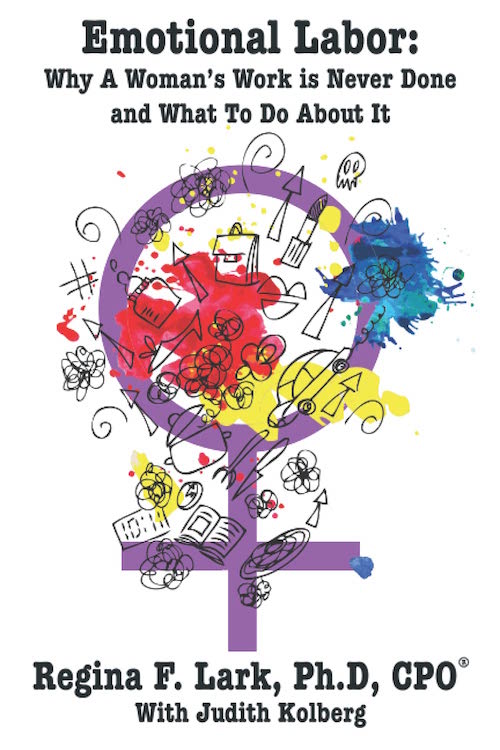
Outline a No-Surprise Budget
Most people don’t create holiday budgets, and when they do, they focus on gift budgets. But the holiday season means shopping for more than gifts, including decorations, food, special event clothing, travel, and more.
Decide on how much you’re willing to spend on these holiday expenses, and keep a running tally as you go along. If the money appropriated for that category runs out, either make do, or borrow from a different budgeted category. Keeping up with the Joneses in December can make it hard to pay the electric bill in January.
Check out Capital One’s How to Make a Holiday Budget and Stick to it in 7 Easy Steps.
Don’t Just Plan the Big-Deal Meals
Start with your lists of favorite recipes and needed ingredients for shopping and preparing holiday meal, whether it’s latkes on the first night of Hanukkah or the multi-generational family dinner for Christmas or heavy hors d’oeuvres and desserts for a New Year’s open house.
Knowing what you’ll be cooking for what events will help you create the shopping lists for those recipes. If this isn’t your first jingle bell rodeo, then you may have this down. But don’t forget to master plan your regular meals — at last dinners — for throughout the month. With parties at school and in the workplace, and after holiday recitals and concerts, various members of your family are likely to fill up on snacks and noshes and not be hungry at regular meal times. Give yourself a break, and plan ahead that on those nights you can skip the prep and have leftovers or make breakfast for dinner.
Don’t Leave Home Without It — A Master Travel List, That Is
Whether you’re going over the river and through the woods to see the USA in your Chevrolet, or you’re jetting off somewhere tropical, you’re going to want lists for getting your home in order (setting the heat, putting the lights on timers, stopping the mail and the newspaper, having someone water your plants), shopping, packing, making travel plans (getting tickets, ensuring passports are up-to-date, making reservations), and more. For help on this, check out:
Paper Doll’s 5 Essential Lists For Planning an International Vacation
Paper Doll on the Smead Podcast: Essential Lists For Organized Travel
Paper Doll Organizes Your Space, Money, and Well-Being While Traveling
Please Mr. Postman (and Yourself) with Card and Mailing Lists
Keep a list of people to whom you want to send holiday cards or to whom you’ll be shipping gifts and care packages. Digital lists allow you to update them, so when you get cards from others, check the return address against your list to make sure nothing has changed.
Check cards and packages off your list and make a note of when you sent them (in case someone asks) and be sure to insure any valuables.
The United States Postal Service have tables of Holiday 2023 shipping and mailing deadlines on the website. At the above link, click the red “recommended shipping dates” to get a sense of when to ship for domestic and international deadlines to get your goodies where they’re going on time.
Then check out my post How to Organize and Track Your Packages and Mail for ways to keep tabs on all of your shipments.
When To Many To-Dos Make You Forget What To Do
Sit down with your family to map out all the to-do items you can brainstorm. Be sure to keep this list to use as a template for next year.
For example, there might be date-specific tasks, like picking up Aunt Gertrude at the airport, or more general tasks like cleaning and organizing to make your home company-ready or decluttering the pantry so your ingredients are all fresh.
Don’t Eat Your Heart Out About Giving From the Heart
First, remember that your charitable gifts, whether monetary or tangible, are needed all year long. Don’t feel compelled to do all of your giving in December. Second, there’s no need to reinvent the wheel. Decide what charities you want to support and give according to a plan, rather than feeling guilty about not giving to every charity that asks. (It’s just like how you should shop based on what you want or need, not because an ad has snuck into your feed.)
When you do make charitable gifts, keep a log of the amounts and the organizations to whom you’ve given so you’ll be prepared when doing your taxes.
Make Catastrophes Less Catastrophic with Emergency Lists
Being organized doesn’t prevent emergencies, but can make them less anxiety–provoking. One year at Thanksgiving, my sister and I, in separate areas of her house, each used our hair dryers, causing a half-house power outage. (Yay to my college bestie, Mark, for walking us through my sister’s weird fuse box over the phone!) Another year, the night before Thanksgiving, the kitchen sink started leaking flooding the cabinet underneath!
Paper Mommy can recall the number of times I got sick on holidays, particularly getting chicken pox on Easter (which, while not our holiday, made it hard to get ahold of a doctor).
Before you need them, make sure you have numbers to cover various emergencies so you have a better chance of finding help if you need a plumber, electrician, baby sitter, etc., whom you can call during the holiday season, as well as a short list of restaurants, pharmacies, and doc-in-the-box locations open on holidays.
KEEP YOURSELF ON AN EVEN KEEL
All of the foregoing lists can make sure you can keep everything straight. But that doesn’t mean you won’t be exhausted. Here are some ideas so you won’t be one big raw, frazzled nerve by New Year’s Eve.
Practice Graham Allcott’s Battery Saver Mode
Productivity Ninja Graham Allcott has a great newsletter, Rev Up for the Week, that arrives in my newsletter every Sunday. A few months ago, he talked about what I think is an absolutely brilliant way to say “No” in a way that people can actually understand.
In Battery Saver Mode, Graham talked about how we all reach a point where we’re just a bit of burnt toast. We see this most at (and just after) the holidays. It’s not that we don’t experience burnout and overwhelm at other times in the year, but this is the time of year where everyone is weighed down all at once, running on too little sleep, too much sugar (and maybe adult beverages) and way too many activities and obligations.
Graham makes the point we all recognize, that in order to meet our current commitments, we have to maintain our boundaries and guard our energy by not taking on further commitments.
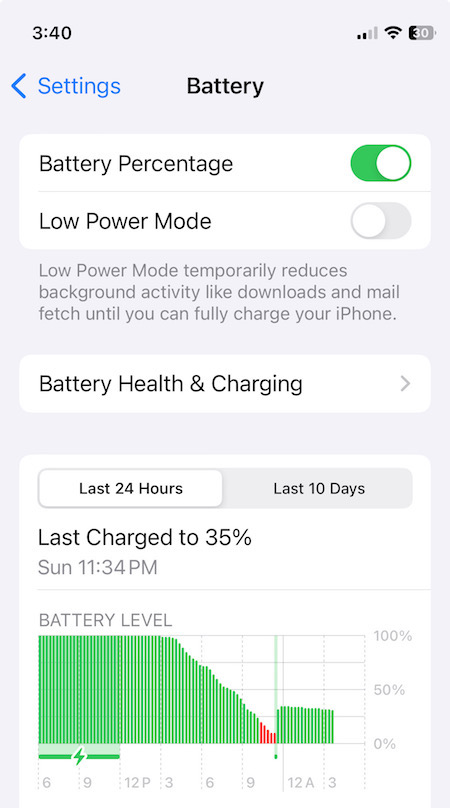
He calls this concept “battery saver mode,” like how your phone puts you in the low-power red zone and gives you an alert when it hits 20% and then 10% and then shuts down. As Graham says,
“Battery saver mode is the idea that if it isnt a core commitment, I’m committing myself to saying no to it. I’m waiting til I get myself charged up again, and not putting a timeframe on when that’ll be.”
Being honest — with ourselves as much as with others — about what we can take on can make all the difference between maintaining our focus and energy and becoming so scattered that we burn ourselves out.
Prioritize taking care of yourself or you will soon find you won’t be able to take care of anything or anyone else. For more on this idea, I direct you to The Magic of “No”, an article I wrote so long ago that babies born the day I published it can now vote.
Schedule Time for Yourself
None of us can live only for others. Just as my recent post, Take a Break — How Breaks Improve Health and Productivity, talks about the importance of taking a break from work to keep yourself physically, cognitively, and emotionally vital, it’s just as essential to take these breaks for yourself.
That means that if you have to delegate tasks (even if that means lateral delegation to your partner) so that you get time to eat, sleep, meet up with friends, get a massage, or just have quiet time away from the kids and your mother-in-law, so be it.
Just as you block out times on your calendar for meetings or obligations that benefit your employers or your family members, you need to take time for yourself and self-care.
Figure out and prioritize what parts of the holiday season will give you joy and revitalize you (even if that means taking a few hours to escape the holiday season, itself).
Think Blue Skies, Not Blue Light
There are three important reasons to limit how much time you spend on your devices, especially at the holidays. First, the more time you spend online, the less time you can engage with the delights of the holidays and the people you care about.
Second, stressful news updates and social media can provoke anxiety in anyone, and can especially lead to feelings of isolation for those without social support during the holidays.
Third, extended use of devices is just bad for your health. Bad posture from shlumping at your desk, gripping your phone, or hyperextending your neck is all the more problematic in a season of sitting shlepping through airports, climbing ladders to decorate, and sitting on uncomfortable elementary school auditorium seats. Exposure to blue light emitted by phones, tablets, and computer screens can also produce insomnia, which can further impact your ability to focus, either on work or joy.
I’m not saying to cover your phone in wrapping paper, but limiting your device use may bring back some of the old-time joy of the holidays.
Chill Out
With the exception of college students home for winter break, nobody gets enough sleep or relaxation during the holidays. Lack of sleep can exacerbate stress, and the less recuperative sleep you get, the more you’re putting your immune system at risk just when you’re also being smooched all over by relatives, friends, and random acquaintances who’ve been hanging out with germy (though adorable) grandkids and fellow airplane travelers.
To preserve your physical and mental health, you need relaxation and sleep. There’s an internet full of advice on both topics, so I’ll just share a few ideas.
Practicing mindful relaxation techniques doesn’t have to be a huge thing. If you’re excited to embrace formal meditation, yoga, breathing techniques, or whatever, there are numerous apps for that.
If you’re not sure what methods you want to try, but know you need some guidance, UCLA has a whole website of guided meditations in multiple languages.
These include “drop-in” meditations in podcast form, as well as longer meditations for health and wellness, body scans, developing lovingkindness, and breathing. Languages offered include English, Arabic, Armenian, Cantonese, Farsi, Filippino, French, Greek, Hindi, Japanese, Korean, Mandarin, Mixtec, Russian, Spanish, Vietnamese, and American Sign Language.
You can download the UCLA Mindful App for iOS or Android at no cost.
Another option is Yoga Nidra, also called Non-Sleep Deep Rest (or NSDR). It combines controlled breathing with comprehensive body scanning to yield a state of heightened awareness and profound relaxation.
The idea is that NSDR activates the parasympathetic nervous system and helps stimulate the release of serotonin so you can go from stressed out to blissed out. While it doesn’t put you to sleep, it makes it easier to relax so that you can fall asleep. Here’s one example, with more than one million views.
There are oodles of YouTube videos for trying out Yoga Nidra. Just don’t listen to them while driving or after you’ve put something in the oven or on the stove.
KNOW THAT YOU’RE NOT ALONE IF DECEMBER FAILS TO DELIGHT YOU
Are you looking at the month ahead and feeling let down? Maybe you’ve recently moved, broken up, or moved across the country from your family? Perhaps you recently graduated and this is your first year on the job, so you don’t have a social circle yet? Or, worse, maybe you’ve suffered a loss in the past year and you’re not up to celebrating.
As a society, we put so much emphasis on the spectacle of the holidays that it’s hard to know what to do with yourself when it seems like everyone else is having a better time than you. If you don’t celebrate the December holidays, or just aren’t feeling up to it this year, you may want to consider organizing your month in a number of alternative ways:
- Get a head start on your 2024 goals or resolutions. There’s no reason you have to wait until the calendar flips to commit to something requiring your attention and focus. If you plan now, you’ll be miles ahead of everyone else on January 1st!
- Volunteer. Many agencies and programs have difficulty finding volunteers during the holidays because individuals who usually help are overwhelmed with other obligations. AARP has a great Create the Good volunteer search page. Just type in the type of volunteering you’d like to do and/or your zip code, and it will provide a list of options. Whether you want to be care for animals, cuddle newborns, or support those less fortunate, you may be surprised how much you can boost your mood by feeling a new sense of purpose.
- Explore your community as a tourist. So much of the year, we spend rushing to get to and from work and through our other tasks. Use your downtime in December to see where you live with new eyes. Check out Wanderlush‘s How to Be a Tourist in Your Own City: 12 Easy & Creative Tips.
- Organize! December is a stellar time to put on some music (and no, it doesn’t have to be holiday music — Weird Al Yankovic is always a good option) and pick a closet or cabinet to purge and downsize. Donate what doesn’t serve you and know that it’ll be a blessing to someone else.
- Get some fresh air without feeling like you have to rush anywhere in particular.
- Start in on that self-care I was talking about!
- Get support. It’s much more typical (let’s not say “normal” — that’s just a setting on the washing machine) to feel let down or lonely during the holidays. Reach out to friends and family, or to a mental health professional whose whole professional purpose is to have the expertise to show you how talking about your feelings can be therapeutic. (If you or someone is struggling and in need, there are also peer-run warmlines and the 988 Suicide and Crisis Lifeline.
FOR MORE DECEMBER GUIDANCE
If you’re tired of the holidays making you feel like you’re taffy being pulled in several different directions, check out my ebook, Simplify the Season and Save Your Sanity.
Have a wonderful December!



Follow Me