Archive for ‘Psychological’ Category
Emerson, Angelou, Ted Lasso, Tashlich & Zen Monks: Letting Go for a Fresh Start
THERE’S SOMETHING IN THE AIR
Officially, the summer doesn’t end until September 21st. But you just know that something is changing right now. For all intents and purposes, in the United States, Labor Day is the unofficial start of Fall (and pumpkin spice doughnut season at Krispy Kreme).

Growing up in New York State, we always started school the Wednesday after Labor Day, so you knew that the holiday weekend was the last time you got to stay up late, sleep in, goof around, and wear comfy summer clothes. Companies around the country that had lax Friday afternoon schedules went back to firm attendance expectations once the calendar flipped to September.
This year, sundown on Labor Day coincides with Erev Rosh Hashanah, the start of the Jewish New Year. (For those of you keeping track of such things, we’re ending the year 5781 and ushering in 5782.) And I think we can all agree that any opportunity to start fresh with a new year, whether it’s January 1st or a new school year, Rosh Hashanah or Chinese New Year, or the start of the new TV season (Monday, September 20th, the day after the Emmy Awards, baby!), is a good thing, psychologically.
Because of remote work, remote school, and nothing feeling remotely normal last year, it didn’t feel like we had a clean demarcation between summer and fall. This year, it’s shaping up, globally, to be another weird one.
But locally? As in — your job, your family, your little world? You can still have some control. You can embrace this period as the end of those fuzzy, mirage-like summer dreams and the start of a period of motivation, enthusiasm, and a bias toward action.
Speaking of which, before we get to the focus of today’s post, watch this TEDx talk about The Science of Taking Action to help rev your engines.
I encourage you to take the 9:47 to watch the whole video, but if you don’t have the time right now, know that Steve Garguilo‘s central lesson is, “Everything in life that is hard is just a series of things that are easy.” But you have to take that next step.
[FYI, Garguilo’s spontaneous foray in looking at a bias toward action began with some free Post-It Super Sticky Big Notes and a friend. They’re 11″ x 11″ squares, $6.49 for a 30-sheet pad in Bright Yellow, and great for brainstorming. (Friend sold separately.)
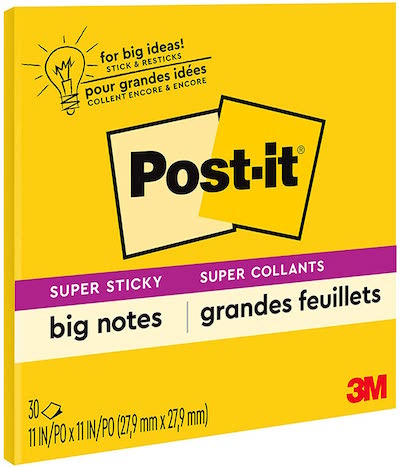
Though harder to find, Big Notes also come in Neon Green and Neon Orange, and in 15″ x 15″.]
But as usual, I’m getting ahead of myself. While you can always brainstorm, actually taking action requires a prior step.
To be productive and embrace new things, you have to let go of the old and unproductive ways of thinking and acting. In professional organizing, when my clients are dealing with tangible clutter, we have to do what I call a “Level 1 Purge” and remove as much excess as possible before grouping and containing what remains.
With time management coaching, this involves eliminating tasks and obligations that don’t resonate with someone’s values and goals so that they can say, “Hell Yes!” to the things that will bring more meaning to their lives and work.
And with everything, a huge part of letting go means decluttering mental and emotional clutter.
LET IT GO!
That tune from Disney’s Frozen isn’t just catchy. It’s good advice. (Well, at least the “I’m never going back, the past is in the past” and the part about letting go of perfectionism.)
It’s really difficult to start fresh with the weight of the past hanging over you. As I’m writing this over Labor Day weekend, I (and I expect, you), probably don’t want to be weighed down with heavy thinking and step-by-step instructions. Instead, we’ll look at approaches from different cultures and for different audiences — sectarian and non-sectarian, children and adults, highbrow and middlebrow.
Zen Meditations from a Panda Perspective
Many years ago, friend-of-the-blog Erin Doland introduced me to the 2006 Caldecott Medal–winner Zen Shorts by Jon J. Muth. In Muth’s books, three siblings meet Stillwater, an oversized panda bear carrying a red umbrella and speaking with a “slight panda accent.” In each chapter, Stillwater shares an anecdote with brothers Karl and Michael and their sister Addy to help them surpass an emotional obstacle. (The books have since been turned into an a delightfully soothing animated series, Stillwater, on AppleTV+.)

Muth’s telling of A Heavy Load is a version of my favorite Zen story. (I’ll summarize it here, but it’s absolutely worth getting the book, reading Muth’s words, and embracing the lovely illustrations.)
Two monks are traveling when they come to a swollen river that must be crossed. A wealthy woman’s servants attend to her belongings and thus cannot help her cross to the other side. Without comment, the older monk lifts the woman and carries her across, but after he puts her down, she doesn’t even deign to thank him. The two monks continue on their way, but his younger companion still ruminates on the woman’s rudeness and lack of appreciation. Eventually, the older monk says, “I set the woman down hours ago. Why are you still carrying her?”
Whoa.
When I was younger, I would do this. I’d ruminate and brood over indignities suffered at the hands of the “mean girls.” I’d kick myself over l’esprit d’escalier, the French term for thinking of the perfect reply, but just too late. And sometimes I’d be frozen in place by small errors, anything from typos to falling short on goals, even when nobody cared about those benchmarks but me.
It’s hard to let go, but sometimes rituals (actions) and mantras (sayings) can help us over the hump in letting go of counterproductive ruminations on our own shortcomings so that we can start fresh on a new project or class, or in a new season of life or a new “year” (however we define the year).
Tashlich
Tashlich literally translates to “casting off.” It’s a ceremony held in the afternoon on the first day of Rosh Hashanah. Jews who observe this ritual head the shores of a river or lake or a bridge over flowing waters, and throw in small pieces of bread* to symbolically cast off or throw away one’s “sins” or failings, the things they’ve done wrong in the past year.
*Bread isn’t good for the duckies and other wildlife, it seems, so there are a number of modern takes on tashlich that are more environmentally-friendly.

Tashlich is a physical ritual to representationally cast off what’s weighing you down. It’s not a magic hall pass. We’re still expected to apologize to those we’ve hurt in the past year and make amends to them between Rosh Hashanah and Yom Kippur, the next week. But Tashlich gives everyone who participates the opportunity to reject dwelling on our mistakes. We’re encouraged forgive ourselves and focusing on what we can do better.
Of course, you don’t have to be Jewish to develop your own ritual. Many faiths and cultures have “burning bowl” or similar rituals for writing your mistakes, your upsets, or as “Money Goddess” Morgana Rae teaches, “lessons you are done learning” (e.g., letting people stomp on your boundaries) on small pieces of paper and then burning them.
Paper Mommy doesn’t let me play with matches, so you could similarly write on a small piece of biodegradable paper and flush those troubles away. You can even teach children to let go of last school year’s mistakes or troubles by using sidewalk chalk to write or draw them out and then bring the river to them with a garden hose to wash everything away.
The point? Acting out such a ritual is more than just cognitive. It involves your whole body in saying, “I’m letting go of what I did wrong, what I let others do, and whatever stood as an obstacle to my moving forward.” Sometimes, our brains aren’t so smart until we get our bodies involved.
A (Famous Literary) Parent’s Advice to His Child
Starting fresh depends on being able to absorb the lessons of our mistakes while doing better the next time.
In 1854, Ralph Waldo Emerson wrote a letter to his daughter Ellen, who was away at school. In the 1880s, his letters were carefully preserved in a six-volume collection, and in 1939 (and again in 1943, 1959, and 1982), his advice was re-edited and re-punctuated. But the central notion of what he wanted his daughter to understand is this:
Finish every day and be done with it.
You have done what you could;
some blunders and absurdities crept in;
forget them as soon as you can.
Tomorrow is a new day.
You shall begin it serenely and with too high a spirit to be encumbered with your old nonsense.
It’s hard to argue with good old Ralph Waldo. Post this (or any of the various edited versions of his advice) near your desk, so you’ll see it before you close up shop on your work day, or on your mirror so you’ll see it before going to bed at night.
Give yourself permission not to be encumbered with your old nonsense!
Be a Goldfish!
Of course, not everyone wants or needs such a long message as Emerson’s to inspire letting go of self-imposed difficulties. If you need a short mantra to remind yourself to let go, Coach Ted Lasso has some advice that resonates.
Be a goldfish. Have a short memory for the times when you failed and things you can’t go back and change.
OK, in actuality, scientists have proven that goldfish can actually recall things for at least three-to-five months.
But the lesson holds true. Acknowledge what didn’t work, vow to do better, identify what specific steps you can accomplish to achieve your goals, create new systems (of which, more next week), and start fresh.
Oh, and an excellent way to let go is to embrace something that captivates and delights you. For me, an episode of Ted Lasso makes me grin until my face aches, fills me with unexpected laughter, and inspires me with lessons about forgiveness (and self-forgiveness). It’s a great show for reinforcing the idea of being supportive (and accepting support) so you can learn essential lessons and move forward.
Maya Angelous Wasn’t Speaking Only to Oprah
The amazing Dr. Maya Angelou is often misquoted or incompletely quoted on this topic of recognizing our past failings but moving beyond them. She actually focused on her own experience:
I did then what I knew how to do.
Now that I know better, I do better.
Of course, Oprah (being Oprah) managed to turn Dr. Angelou’s lesson around, turning it outward as actionable advice.
“When you know better, you do better.”
As you head into this “new year,” and start getting back into routines and begin making your ideas biased toward action, take the lessons you learned but leave behind the pain and the guilt.
And, as a bonus, directly from Dr. Angelou, here’s another great mantra to take with you after you’ve let go of what weighs you down:
Just do right.
Next time, we’ll look at more practical ways to get back into the swing of things. Until then,
Happy New Year!
L’shana tovah!
Have a great school year!
Enjoy fall!
And I’ll see you at Krispy Kreme!
The Boo-Hoo Box: Organizing Painful Clutter
This post was originally published on May 17, 2021. It has been updated as of August 21, 2022.
Red Amazon Danbow on Brown Wooden Surface by burak kostak from Pexels
As you read organizing blogs, it may seem as though all of the advice is the same, about reducing clutter and then organizing what remains. However, it’s important to recognize that not all clutter is the same.
CATEGORIES OF CLUTTER
Understanding the different types of clutter gives us good insight into the different reasons we keep things, but also helps develop different strategies for managing that clutter. When working with my organizing clients, we tend to identify six different kinds of clutter.
- Practical clutter — These are things that are useful, in and of themselves, like clothing, bedding, or kitchen implements. It’s not that we don’t need these things, but we generally don’t need so many (black skirts, frying pans) and we need to let go when specific items no longer suit our needs.
- Informational clutter — We keep documents and clippings, whether on paper or digitally, because we believe the information is valuable. The problem is that we rarely go back to consider how valuable something is now vs. when we acquired it, and we tend not to think about whether it might be better to eliminate outdated information, digitize it, or access the information anew via the internet to reduce the bulk.
- Identity clutter — Sometimes, the clutter we keep is an excess of items that we feel help define us. Our clutter may not be useful (in a practical sense) but we perceive it as useful for defining who we are or who we wish to be seen as. Our clutter might say, “I’m the kind of person who runs marathons [or wins spelling bees or bakes from scratch].”
- Aspirational clutter — This type of clutter accounts for all of the items in your space which support hobbies you tell yourself that you are going to take up, but never really do. Whether you are saving a closet full of fancy papers and Cricut gadgets for the day when you finally decide to become a scrapbooker or amass shelves of books on the topic of How To [train championship Greyhounds, write a novel, become a successful crypo-tocurrency miner], there comes a point when you’ve got to recognize that you have an excess of items supporting a life you don’t really lead.
- Nostalgic clutter — Nostalgia is defined as “a sentimental longing or wistful affection for the past, typically for a period or place with happy personal associations.” Obviously, life is made better by the things that truly remind us of happy (or happier) times, but an excess of nostalgic emblems of our past can fill up our homes in the present and prevent us from having space in our lives to make a future. Sometimes, we just have to take photos of those ancient macaroni art projects and discard the originals, letting them crumble in peace.
An excess of nostalgic emblems of our past can fill up our homes in the present and prevent us from having space in our lives to make a future. Share on X - Painful or sad clutter — This category encompasses things that remind us of bad times or bad people.

Break-Up Photo by Kelly Sikkema on Unsplash
Today, we’re going to look at that final category and how to make letting go easier.
It may seem odd that anyone would hold onto things that make them unhappy. Sometimes, they’re keeping things that are unpleasant but necessary to maintain (for legal or other reasons), but far more often, we professional organizers find clients keeping things that just plain make them feel bad.
KNOW WHEN TO ELIMINATE PAINFUL CLUTTER
Early in my career, I worked with a client who was trying hard to regain control of her life after a variety of disappointments and challenges. We’d made it through her closets, cabinets, and practical storage areas and were working through her home office easily until we encountered personal papers. At that point, we hit a wall.
This is why most professional organizers will encourage you to start with practical items and those with no sentimental attachment; it’s important to build up decluttering and decision-making skills first before attempting to let go of possessions that are fraught with the weight of personal history. For this client, the emotional clutter took the form of a series of letters written by her mother.
These letters were unpleasant, unkind, and to my eye (and according to the client) filled with claims that were patently untrue. My client had done a remarkable job developing emotional strength and stamina to reject emotional abuse from earlier in her life. Intellectually, she wanted to let these items go. Emotionally, she could not bring herself to do it.
It’s not my role as an organizer to make decisions for clients; rather, I present my expertise and advice and try to support them in the ways they most need in order to reach their stated goals.
Getting Ready to Let Go
So, first, we talked about how and when she “used” the letters. She noted that she used to read the letters far too often, in effect abusing herself by becoming a sort of Groundhog Day postal carrier, re-delivering the anger and unkindness to herself. She felt she’d “gotten better” in recent times, only looking at them when her self-esteem was at its lowest. Of course, that’s when they could do the most damage!

Therapy Photo by cottonbro from Pexels
Second, I encouraged her to discuss the letters with a therapist. Although my client has shared much of her prior history in counseling, she had not shared the specific content: the ugly words, threats, and heart-wrenching claims. After several sessions, my client felt relieved because a trained mental health professional was able to disabuse her of the idea that the letters held any more truth than a scary Stephen King novel.
Finally, we talked together about why she thought she was keeping the letters. (She touched on this in therapy, but we found some different angles.)
It’s very common that when we have a tangible reminder that someone has hurt us, we hold on to it as proof. Somewhere deep inside us, we may feel that letting go of the proof is absolving the person of responsibility for what they’ve done.
It’s not true.
Letting go of your college boyfriend’s tacky breakup letter won’t absolve him of the pain he caused you. But it will set you free from the cycle of pain you experience every time you re-encounter it when flipping through your yearbook or sorting through mementos.
Letting go of your college boyfriend's tacky breakup letter won't absolve him of the pain he caused you. But it will set you free from the cycle of pain you experience every time you re-encounter it. Share on XIf you have painful clutter, once you’ve talked through the underlying issues with a licensed mental health professional, it may help you to then recite a quote variously attributed to everyone from St. Augustine to Carrie Fisher:
“Resentment is like taking poison and waiting for the other person to die.”
Be Kind To Yourself
Not all of the painful clutter in our lives comes from others. Sometimes, we hold onto things that reflect pain that we’ve caused ourselves. I’ve had clients who keep “fat photos,” pictures of themselves in bathing suits when they were significantly less healthy than they are now, in places where they’ll come across them fairly often — in their underwear drawers, on the walls of their closets, under a silly magnet pinned to the refrigerator door, etc.
Come on now. That’s just bullying yourself. Yes, some people need the stick rather than the carrot approach to be motivated, but it’s important to avail yourself of healthy motivators.
Similarly, people often hold onto what they view as examples of their failures. These often come in the form of messages from others who (generally) mean no ill will, but which individuals use to beat themselves up.
For example, I’ve worked with clients in their fifties who saved college rejection letters and failed tests. In some situations, these kinds of things can have potential to motivate; if you post the 37% you got on your algebra quiz above your desk, it may help you push forward to do your homework, work with a tutor, and attend office hours, but if all it does is sour you on math (or if you’ve been out of school for decades and never have to take another math class again), then OMG, free yourself!
Not everyone has to be good at math. As Paper Mommy often says, “Someone has to make the struedel!”
Not everyone has to be good at math. As @PaperMommy often says: Someone has to make the struedel! Share on XSimilarly, if you’re keeping rejection letters for your novel so you can make them into wallpaper, or show them off as a badge of honor once you make good, that’s cool. But if, instead of motivating you, they just make you sad, then they’re clutter. It’s time to let go. Shred them. Trash them with the wet coffee grounds, cat litter, and dirty diapers. Burn them.
[Note: the above advice is designed to help you let go of the sad kind of painful clutter. However, if you have been the victim of domestic violence, stalking, or workplace or online harassment, it’s important to be able to document the behavior, especially if it escalates, for legal purposes.]
HIDE PAINFUL CLUTTER
Fans of The Gilmore Girls may recall Lorelai’s two pieces of sage advice to her daughter after Rory and her first love, Dean, broke up.
First? “Wallow!”
From an organizing perspective, however, a more important piece of guidance is knowing when to create The Box. In the show, Lorelai helped Rory gather up every reminder of her precious, heart-wrenching three-month relationship with Dean (complete with the box of corn starch Rory accidentally shoplifted after Dean surprised her with her first kiss). Then they put it all in a box. A Dean Box.
Rory begged her to take it all “far, far away from the house” and Lorelai promised that, like any good mafia hit victim, “it sleeps with the fishes.” Of course, as Rory eventually learned, her mom actually just hid the box in the back of the closet, wisely knowing that sometimes, our painful clutter isn’t always painful forever, and it’s not always even clutter, with the passage of time. Sometimes it can become nostalgia.
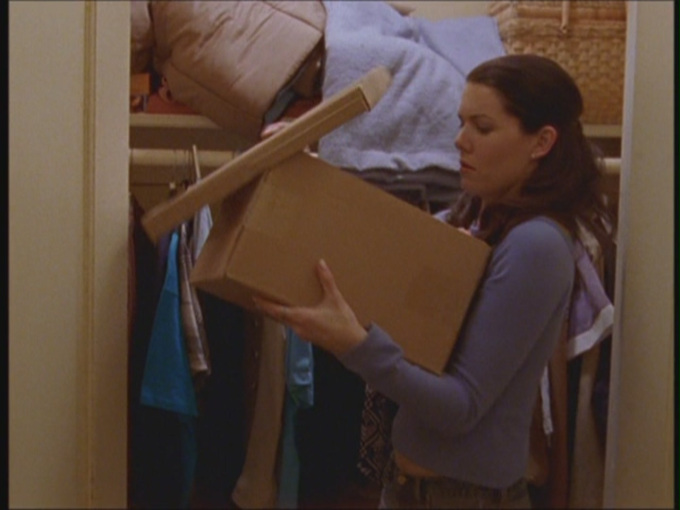
You may have your own version of the Dean Box. (Even Lorelai had a Max Box, reminders of the man who proposed with a thousand yellow daisies.) I often call it the Boo-Hoo Box, or the Bad Boyfriend Box. Sometimes it starts with reminiscences from one heartbreak and it becomes a repository for all the heartbreak you’ve experienced over time. That’s fine, as long as you stick to one box — the point is to lessen the clutter in your space!
Baby Steps for Hiding Painful Clutter
Use a non-descript container for the Boo-Hoo Box. If you use a pretty hatbox or a container in a designer color, then you’ll never be able to use that container and see anything but heartache. Opt for something quotidian and universal, like a used Amazon box or a classic Bankers Box.
Label the box in a low-key way, especially if you don’t want people poking around. “1997 Tax Prep” is a label that won’t encourage anyone to go spelunking. You’ll know what the box contains, unless you’re one of the rare people gifted with people able to always and completely forget about the Boo-Hoo box. (If you are, then once you come across the box after a long time, you’ll be in a much better position to review the contents and downsize or even eliminate it.)
Store the box where you won’t have to see it all the time. The back of a closet is the best place to hide heartache you’re not ready to toss. (If feng shui matters to you, try not to store the box in the part of the bagua related to romance or family, or whatever the contained items relate to.)
Rename paper file folder tabs if being reminded of the content stirs up too much emotion. One of my clients was going through a divorce. He needed to keep a variety of documents at easy reach, sometimes even on his desk, but didn’t want to be reminded (or have his kids reminded, when they walked by the desk). Yes, obviously everyone knew there was a divorce, but he didn’t need to keep rubbing salt in the wound. We labeled the file “Dallas” because Dallas and divorce both begin with D and because nothing about Dallas duplicated anything he was already working on. Give yourself some emotional distance from the contents when you can’t create physical distance.
Create digital Boo-Hoo boxes for your non-tangible painful clutter:
- To keep but hide certain unhappy-making emails, create a separate subfolder and manually move the email out of your inbox. [Note: If you’re maintaining email from a stalker, an estranged family member, or someone whose message you’d otherwise like to avoid, use the Rules function of your email platform (Gmail, Outlook, Apple Mail) to automate moving all mail arriving from a sender to a specific subfolder.
- If you have painful documents on your computer, it’s important to avoid stumbling upon them. Create a folder that serves as a digital Boo-Hoo Box and put it inside another folder, one where the hierarchy makes sense. A folder called “Yucky Stuff” will alphabetically sort near the bottom of a “Personal Stuff” folder on your computer, and is vague enough that it won’t immediately call to mind the thing that might set off tears.
- On your phone, photos of you and a loved one that are too painful to look at right now could be marked as “hidden” and will be sent to a hidden album to which you need to navigate, rather than randomly showing up in your camera roll. Remember, the purpose of hiding is not security, but just to protect your heart.
- If your painful clutter comes by way of social media, remember that you have options. Whether your former BFF uninvited you to a wedding, you’re on the outs with a family member, or you don’t want your ex to know how much it hurts to see them moving on, learn the tools that let you play it cool. On Twitter, you can mute someone without unfollowing; on Facebook, you can unfollow without unfriending; on Instagram, mute without unfollowing.
Send your heartbreak on vacation. Sometimes, you need to get painful clutter completely out of your space until you are in the right frame of mind to think about it. One stellar solution is to take your Boo-Hoo Box to a close friend’s home — OK, probably your best friend’s home — and let them babysit it in the back of their closet for six weeks or six months or six years.
Obviously, you don’t want to turn your clutter into theirs, which is why you want to limit this to one reasonably-sized box. Seal it more securely than you would if it were in your own home, especially if your friend has tiny humans, and label it with something that has your return address on it in case something unforeseen happens.
If the contents of the Boo-Hoo Box are sensitive, something that you could not bear to have seen by your BFF or her snooping mother-in-law or have displayed on social media, open a safe deposit box at your bank and secure it there. By the time your box is up for renewal in a year, you’ll have had time to consider the contents with fresh eyes, and hopefully, a refreshed spirit.
EVENTUALLY…
As Lorelai Gilmore wisely knew, heartbreak doesn’t last forever. Eventually (hopefully), it’s the ending of some love stories that creates the poignancy that makes the whole romance worth revisiting, whether after months, years, or decades. (This likely feels more true of anyone’s first lost love than a recent one.)
Other kinds of sadness comes from loss, from cruelty, from embarrassment, and from a variety of sources at which we’d like to stick out our tongues. There’s no timetable for getting ready to review or to eliminate any of these items. But it’s healthier and easier to heal with we’re not confronted with reminders of our pain every day.
The more we can downsize, repackage, and yes — if necessary — hide painful clutter, the more quickly we can regain our emotional strength and resilience.
Count on Accountability: 5 Productivity Support Solutions
Procrastination strikes for many reasons: perfectionism, fear of failure, lack of inspiration. Sometimes, there’s no apparent reason why we procrastinate on completing a task or working on a project; we just know that do and we wish that we didn’t.
Canadian psychology professor and all-around expert on procrastination, Timothy Pychyl, author of Solving the Procrastination Puzzle: A Concise Guide to Strategies for Change, explains that procrastination isn’t just delay. He explains that procrastination is “a voluntary delay of an intended act,” one where the person procrastinating is cognizant that the delay is going to have a cost, whether that cost is financial, interpersonal, professional, legal, or otherwise.
When we procrastinate, we know that there’s no upside; we aren’t merely weighing a logical choice between two options of equal value. It’s less, “geez, how can I decide on whether to go on this romantic anniversary date with my spouse or prepare for my presentation this week?” and more, “Eek, I’m feeling icky about doing this thing for some reason and I’ll latch on to any random thing, like bingeing a sit-com I’ve seen in its entirety three times!”
Experts like Pychyl have found that at its base, procrastination is “an emotion regulation strategy” – a way to cope with a particular emotion while failing to self-regulate and perform a task we know we need to do. We convince ourselves we’d rather feel good now, thereby causing more trouble for our future selves.
And be assured, professional organizers and productivity experts are not immune. I’ll admit that I hit a Pandemic Productivity Wall in February on a project I could normally complete in my sleep, but every time I sat down to attempt it, I couldn’t focus and got anxious. We all know how this feels.
Today, we’re going to look at one particular well-researched strategy for outmaneuvering our procrastinating selves: accountability.
So, What Is Accountability?
At its most basic, accountability is having some external source hold your feet to the metaphorical fire. It can work in many ways.
As professional organizers, my colleagues and I often perform a technique popularized in the ADHD community called body doubling. We literally work side-by-side, often quietly folding clothes or sorting papers while clients sort through their possessions or pay their bills. When you’re on your own, you might find ways to delay or distract yourself, but when someone is there, investing their time in you (and you’re investing your time and money to achieve your goals), body doubling helps you push past the anxiety and be more productive.
Accountability can be a matter of having someone check in with you. Knowing that someone else is taking an active role in caring whether you get a task done (but who doesn’t directly benefit from you completing the task, so it doesn’t feel like nagging) can get you over the hump. It’s all about support.

Image by Wokandapix from Pixabay
Accountability can be accomplished by dangling the carrot to give you an emotional reward, or threatening with the stick, yielding an unfortunate experience or event even worse than the result of your procrastination.
There are five main ways to get accountability. Not all will work for every person or in every situation, so it’s worth experimenting.
FIND AN ACCOUNTABILITY PARTNER
The first category for getting accountability support is to seek out one individual at no financial cost.
- A close friend or loved one – Getting support from someone close to you works best when the stakes are low and what you need most is a cheerleader. Let’s say that you’ve literally hit the wall in your closet – all the walls – and there’s just too much clothing in not enough space. Every time you attempt to start purging your closet, the prospect of trying things on and discarding much-loved clothes slows you down.
In the parlance of Grey’s Anatomy, call “your person,” the one you could call for anything.
Explain to your friend what you want to do. Agree to talk at the start, and set the alarm for a reasonable amount of time, perhaps 45 minutes. When the alarm goes off, you call or text her (or she calls or texts you, depending on what you’ve decided), and you can report in. If you had trouble deciding about a few items, you can have an ad hoc fashion show, or otherwise seek your friend’s advice.
You see, the sneaky thing about accountability is that many of us are bad at doing things for ourselves. But the minute we know that someone else cares whether we accomplish the task, even if they have no inherent skin in the game, we tend to push forward to accomplish it.
Note: this isn’t applicable to everyone. While many of would fall into Gretchen Rubin’s Obliger or Upholder categories, per her Four Tendencies of responding to expectations, there are a handful of rebels and Questioners out there who chafe at fulfilling others’ expectations. If that’s you, accountability may still work for you, but more because of the camaraderie than the idea of fulfilling implied obligations to someone else.
I’ve had a number of accountability buddies over the years, including professional organizer Jeri Dansky, with whom I used to trade daily accountability emails, and my long-time accountability partner, Dr. Melissa Gratias. I have a virtual meeting once a month with Melissa and her dog Dobby, where we review what we said what we would accomplish and set new goals. This isn’t for time-specific tasks, but more for having a partner-in-crime to keep focused on growing our businesses.
Not everyone feels comfortable asking a close friend or relative for this kind of support; sometimes we fear feeling too judged by the people we like the most. (True story: I once told PaperMommy, “I value your opinion too much to actually want to hear it!”)
Sometimes we fear feeling judged by the people we like the most. (True story: I once told @PaperMommy, 'I value your opinion too much to actually want to hear it!)' Share on XIf you’d still like to find just one accountability buddy, whether for an ad hoc task or perhaps for a longer term partnership, you may be more comfortable setting up an accountability relationship with someone you don’t know as well, like a colleague. That little bit of competitive friction may push you through your procrastination.
Other opportunities you might try:
- Put a post on social media and ask if anyone would like a short-term accountability partnership (for an hour, a day, a week…)
- Try an app like Supporti, which pairs you up with a one-on-one buddy for one week at a time.

- For your professional endeavors, consider Focusmate, a virtual co-working model where you “work by connecting to other professionals who have committed to being accountable for finishing their most important work.”
Focusmate claims that this style of virtual coworking “harnesses pillars of psychology proven to boost productivity 200-300%.” You set the time(s) you want to be productive, and Focusmate sends you an email to confirm your virtual session. (You need to use Chrome on your computer, or Chrome or Safari on mobile.)
At the appointed time, you greet your partner, declare your goal, and work for 50 minutes, quietly but in tandem, approximating the body doubling model. You get three focused sessions in a week for free. Read more about this platform in Mel Magazine‘s I Let A Stranger Watch Me Work For a Day — And I’ve Never Been More Productive. (As an added bonus, I was surprised and delighted to see that Melissa Gratias was interviewed!)
JOIN AN ACCOUNTABILITY GROUP
Support groups are popular for a reason. Whether you’re talking about a Twelve Step program, a lifestyle program like Weight Watchers, or school or professional groups, members support one another toward a like-minded goal. This is ideal when you’re not looking for someone to help you stick with a task, but progress toward a larger life achievement. Consider:
- Mastermind groups seem like a newfangled option, but they’ve actually been around for almost a century, when they were proposed by Napoleon Hill in his 1925 book The Law of Success, and explained in more detail in his 1937 book Think and Grow Rich. Basically, mastermind groups are peer-to-peer mentoring group; everyone’s a mentor, and everyone’s a protégée. Members present their professional concerns, brainstorm together, offer input…and provide accountability.
Golden Circle, the veteran members of NAPO, offered us the opportunity to form our own mastermind groups a few years ago. I’m delighted to be a member of the PM Crew (we meet in the evenings because Paper Doll is not a morning person), which includes my colleagues Maria White in Ashburn, VA, Nancy Haworth in Raleigh, NC, Yve Irish in Rochester, NY, and Karen Sprinkle (just up the highway from me) in Knoxville, TN. We meet once a month by phone or Zoom, send weekly group emails recapping our progress on the prior week’s goals and setting goals for the upcoming week, and share LOTS of supportive texts. Yve, in particular, is a star when it comes to sending supportive memes, gifs, and bitmojis:

- Study groups have been around since at least ancient Greece. Law schools and MBA programs, in particular, promote the use of study groups: they study cases, debate approaches, and help one another maintain focus and keep pace. Whether you’re a freshman in college or taking Bible study classes, whatever you’re trying to learn, forming a study group can help you ensure that you’ll hit your goals and gain confidence in both the content and your own skills.

- Virtual study groups are a twist on working with your actual classmates. For example, Hours uses the concepts of gentle social pressure for accountability and the focused attention of having a pre-determined commitment to create a study/work partnership for improved productivity.
- Professionally led groups are another option. A number of professional organizers and productivity experts lead in-person and virtual membership groups to create a collaborative platform for helping members achieve their goals.
HIRE A PROFESSIONAL
As a Certified Professional Organizer, my colleagues and I are, in many ways, professional accountability partners. We provide physical organizing services and share our expertise on organizing and productivity topics, but clients often say that motivational and accountability support is the key to helping them break through the emotional obstacles to getting things done.
The type of accountability you get from a professional organizer might include in-person or virtual body doubling, homework assignments, or phone/email/virtual check-ins, and the type of accountability format will depend on your needs and personal style.
To find a professional organizer who can help you in-person or virtually, use the search functions at NAPO, the Institute for Challenging Disorganization, or Professional Organizers In Canada.
Other professionals you might consider to help you gain accountability might include a:
- business coach
- life coach
- ADD/ADHD coach
- fitness coach or personal trainer
- There are even people who bill themselves as accountability coaches. Although I was unfamiliar with the term, I was intrigued by this provider on Fiverr, who offers three levels of accountability coaching, with goal setting and check-in sessions.
To find a coach or specialist for your needs, you might wish to search the International Coaching Federation.
DOWNLOAD AN APP OR USE A GADGET
If you’re an introvert (or shy), you may prefer to get accountability without face-to-face (in-person or virtual) interaction. If that’s the case, a number of apps and digital solutions can provide accountability, but these are better for longer-term goals than specific tasks or short-term projects.
- StickK – This is an app-based commitment platform designed for those for whom the carrot (a reward) is less effective than the stick; in some circles, this is called loss aversion. Users sign “commitment contracts,” stating the amount of money they’re willing to put on the line to achieve their defined goals (for health, career, exercise, etc.). For example, if you don’t follow through, then the $250 you earmark will be given to a politician or charity you would never support. (If you achieve your goal, you get your money back and may earn some.) StickK’s stakes don’t have to be financial; they can be “reputational,” meaning you might have to publicly say or do something embarassing if you fail to achieve your goal. It’s not everyone’s cup of tea, but it is a bold option.
- Beeminder – The Core Beeminder level is free, gets you three trackable goals, and integrates with a wide variety of apps. There are three premium levels, which earn you an infinite number of trackable goals, customized goals, and options like text-bot responses and real-time support. You can self-report your achievements or connect the app to other apps, like Fitbit, Duolingo, Strava, Apple Health, and Todoist and let them report your achievements directly. This app has aspects of both the carrot (rewards) and the stick (lost challenges).
- Go F***ing Do It – This potty-mouthed (and name/logo-redacted) site lets you challenge yourself or others to commit to a task or project (cook every day, publish your book, etc.) by a specified date and pledge to pay a dollar amount of your choice if you fail to accomplish it. This is definitely more of a stick than a carrot!
- Pavlok – Billing itself as a habit-changing, Bluetooth wristband using tiny electric shocks, I have to be honest, I thought this was an early April Fool’s joke, but it seems to be for real. It tracks steps, activity, and sleep quality, can tell if you’re biting your nails or thinking obsessively about your ex, and uses vibration, sound, and LEDs as behavioral triggers and notifiers. Check out their approach to building good habits and eliminating bad ones via a combined carrot-and-stick approach:
PARTICIPATE IN AN EVENT
A variety of individuals and businesses offer virtual co-working events and platforms that provide group accountability.
- Sign up for an existing accountability event.
For years, I’ve been participating in my colleague Deb Lee‘s periodic Action Day events. A group of us register, join virtually, and announce what we intend to work on. We then mute our microphones, minimize the video (so we can still see if someone is making a silly face), and work.
We seek each other out in the Zoom text chat and meet on-camera for periodic breaks. The experience provides camaraderie and accountability, and Deb’s tech expertise means that if what we’re trying to work on involves a website, computer, or online kerfuffles, Deb will probably be able to save our bacon.
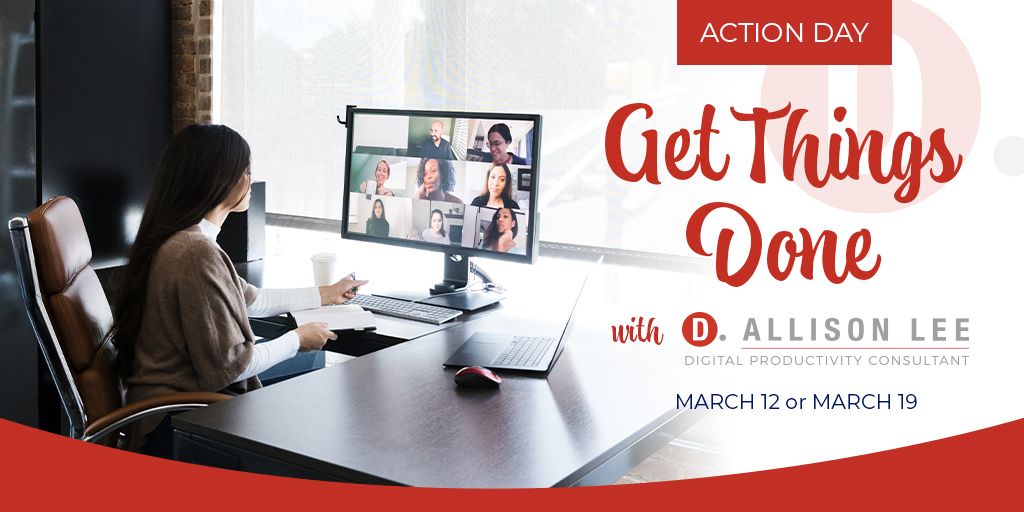
Deb has two upcoming events: Friday, March 12, 2021 (which is almost at capacity) and Friday, March 19, 2021 (which has more available spaces), both from 11 a.m. – 2 p.m. EST. You can register for a no-cost Action Day at her site.
I’ve noticed that specialists in other fields, including digital marketing, authorship and publishing, and design also offer these kinds of events (either for free or with a fee). In addition, many brick-and-mortar co-working spaces are running virtual events of this kind during the pandemic, so check in with the spaces in your community. They may also be referred to as accountability days, design sprints, or use other industry-specific names.
- Create your own accountability event.
Cat Johnson has an excellent blog post entitled 25 Virtual Coworking Ideas for Workspace Communities that might give you some ideas for getting started with an event for you and your friends, members of your mastermind group, or some willing social media almost-strangers.
- Join an online work gym.
I hadn’t heard the expression “work gym” until I began researching the topic, nor had I heard of “procrastination nannies,” but as of the start of the pandemic, virtual co-working for the purpose of conquering procrastination through accountability has become big business. Focusmate, discussed above, has a freemium approach, but there are two major for-profit players in this field:

Caveday originated as an pop-up program at companies and real-world co-working spaces but easily pivoted to the virtual world in 2020. Caveday offers 40-52 minutes-long “sprints” to optimize the brain’s focus capacity, combined with short, energizing breaks led by facilitators. Try a three-hour drop-in experience for $20, or embrace the full-on cave for $39.99/month for unlimited access.
Ultraworking is the pricier option. Ultraworking offers a rolling schedule of 24/7 Zoom sessions, which they call work cycles, so that users don’t have to wait for a pre-scheduled session. The cost is $49//month, billed quarterly.
Whether you prefer a carrot or stick, whether you’d rather work with an individual or a group, whether you select a free option or pay to increase your commitment), I hope you find one or more accountability solutions to help you push through your procrastination and achieve your goals.
If you have an accountability tool or success story not mentioned here, please share in the comments section. And for more to help you be productive, be sure to check back for my next post, Flow and Faux (Accountability): Productivity, Focus, and Alex Trebek.
6 Steps to Ease Your Way Into Organizing the New Year
Happy New Year! Paper Doll knows that the first week of any new year (let alone after the year we’ve just escaped), can be daunting. Instead of weighing you down with homework, how about we set you up for success with some simple strategies that will ease you into a more organized approach to this year? Deal?
START WITH BABY STEPS
When it comes to clutter, it’s not the space it takes up in your house, it’s the dent it puts in your life!
When it comes to clutter, it's not the space it takes up in your house, it's the dent it puts in your life! Share on XIf you’re late every day because you can’t find your keys or your kids can’t find their homework, that’s a much bigger deal than a cluttered guest room closet or piles of old birthday party photos that haven’t been scrapbooked. (Need I explain to younger readers that photos used to be on paper?)

Focus on your biggest daily stressors, break them down into small, actionable steps, and solve those first.
For example, each night after dinner, sort through and declutter one kitchen drawer. When you change for bed, flip through five hangers to see what’s ready to depart. Put a table near the door for the daily launch pad of essential items you need to take with you. Hang a key hook and charging station there and make it a nighttime ritual with your kids to check that everything you’ll need the next day is there.
Don’t even know where to start? Try some of these easy options to organize your finances, your health, and your life – no heavy lifting required:
- Make a tax prep folder. Just grab a folder, label it Tax Prep 2020, and as documents start trickling in this month, you’ll at least have some place to stow them. (Don’t know what to watch for? Read last year’s Paper Doll Says the Tax Man Cometh: Organize Your Tax Forms to get a head start.)
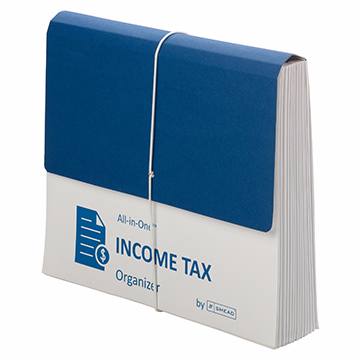
If you want to get a little more advanced, consider Smead’s All-in-One Income Tax Organizer.
- Flip through your new 2021 planner or your digital calendar to see what medical appointments are already scheduled. Make a list of all the doctor’s appointments that you need — family doctor/GP, pediatrician, dentist and orthodontist, ophthalmologist and/or optometrist, OB/GYN, and any specialists, as appropriate.
Check all those appointment cards at the bottom of your bag or thrown in the junk drawer to make sure you’ve scheduled them on your calendar. Then pick up the phone and make all the other appointments now. (Going forward, always schedule your next appointment before you leave their offices. See if you can make one day a week, like Mondays, your “appointment” day so that you’ll get it out of the way early in any week.
- Look through your wallet and VIP files to see what needs to be renewed — driver’s license, car registration, passport, etc. Instead of marking just the expiration date, make notations on your calendar to handle renewals enough in advance so nothing falls through the cracks.
GIVE UP TOLERATING WHAT BRINGS YOU DOWN
Last summer, in Organize Away Frustration: Practice the Only Good Kind of Intolerance, we talked about this at length. Take notice of the things that annoy you, whether it’s a closet too cluttered that you can’t close the door, a light fixture that keeps flickering, or a cable bill that should be renegotiated with a gentle threat to cut the cord. If something doesn’t bring you closer to the life you want to be living, make this the year you let it go. Don’t tolerate what doesn’t delight you.
Do a brain dump. Think of a brain dump as mental hygiene, like the cognitive equivalent of brushing your teeth. Ever have the taste of garlic or fish in your mouth after dinner, such that you couldn’t really enjoy your dessert? A brain dump, where you get everything out of your head and onto paper, let’s you stop thinking of things and start thinking about them, in context. Taste your life!
Try to make a list of everything that you know you have to do in order to stop being frustrated. Go room to room and write down what you need to address. (If you’re the kind of person who really needs categories, you can create columns for things that are free or only require your own effort vs. things that require payment.)
Once you have the list, you can start working through what are immediate priorities, what’s worth scheduling, and what can go on the “I’ll do it if I’m so bored it’s between doing this task or watching paint try” list.
Feel free to tackle the tasks in any order you choose, but come up with a plan. Easiest-to-hardest helps you gain confidence; hardest-to-easiest makes everything less stressful because you’ve tackled the most difficult item first. Doing the free tasks first gives you time to budget for the more costly ones, but if you can purchase freedom from a frustration, it’ll release mental energy for other tasks.
STOP USING CLUTTER AS A TO-DO LIST
- Are you keeping a holiday gift on the dining table so you’ll remember to write a thank you note?
- Do you have boxes of donations in the middle of the hall to prompt you deliver them?
- Are you keeping a receipt to remind you to get someone to pay you back for their half of a gift (or to remind yourself to pay them back)?
- Is your unopened electric bill sitting out to remind you to pay it?
- Do you have months’ old email in your inbox hoping that keeping it there will push you to reply?
How’s that working for you? Instead, follow these steps.
- Clear your desk or a space at your kitchen or dining room table to give yourself work space.
- Take five minutes and look around the room you’re in. What do you see that’s out of place because you’re (intentionally or otherwise) using it to prompt you to do something?
- Grab a notebook and for each thing that’s in the wrong place, write down what you should be doing, instead. Yes, this gives you a To Do list that will stare you in the face (but we’ll get to that).
- Put the item away so that it’s no longer clutter.
- DO THE THING!
©2010 Allie Brosh, Hyperbole and a Half, via MemeGenerator
Let’s see how this works. Unpack and put away the holiday gift and go grab a notecard, envelope, return address label and stamp. Put it down on your cleared desk space.
Now, here’s the first tricky part. You can either write out the thank you note right now (check out my Gratitude, Mr. Rogers, and How To Organize A Thank You Note for guidance) and then you won’t use all your mental energy procrastinating about it, or you can put it on your To Do list. If you write the note now, you can put it on your To Do list and check it off your list, all at once, giving you an immediate sense of accomplishment! Whoohoo!
Repeat the process. Carry the donation boxes to your car, then eyeball your calendar to figure out when you can deliver the donations. Schedule the task, delegate it to a family member, or use GiveBackBox to schedule a free pickup.
And again! Use your favorite app, like Zelle, CashApp, Paypal (or ugh, fine, Venmo) to pay or request money and either file or shred the receipt as necessary. Pay the electric bill. Reply to the email or declare bankruptcy on it.
FOLLOW THE ICE CREAM RULE
So maybe your clutter is there because you don’t know where else to put it.
I tell my clients, “Don’t put things down, put them away.” By “away,” we assume you’ve already got a location in mind. Good organizing systems have two parts: the where & the how. If you bring home a bag with three items, ice cream, toilet paper, and breakfast cereal, I’m pretty sure you’re going to put the ice cream away in the freezer first (and immediately) to keep from having a melted, sticky mess. The freezer is the “where” but putting the ice cream away first is the “how.” It’s so innate, you don’t even think about.
Clutter comes from deferring that decision making. With ice cream, you don’t even have to stop and think; it’s instinct built from life-long experience. With everything else entering your home (whether a purchase, a gift, or a freebie), decide on a home before you buy or bring it in. Once it’s in your space, build time into your calendar for how/when you’ll deal with maintaining it or getting it back to where it lives.
Do you bristle at the idea of planning when you’ll do things? Maybe you feel like scheduling things belongs in the category of “budgets” and “diets” — it’s about The Man trying to keep you down!
The thing is, if you’re organized, you probably already have a system and your system feels like a safety net rather than a suffocating obligation. If you’re NOT organized, you’ll just have to trust that a system – a plan, if you will – makes life more organized so you don’t have to keep thinking about these things.
What are the triggers in your system? When will you do laundry: when the laundry basket is full or when it’s Tuesday morning after breakfast? When will you file financial papers? When your in-box is overflowing, or when your computer dings to tell you it’s 11:45a on Wednesday?
Remember: “Someday” is not a day on the calendar. Until something is innate, having an auditory or visual trigger (or both) will help remind you where and when to put things away.
REMEMBER THAT EVERYTHING SHOULD HAVE A HOME…BUT NOT EVERYTHING HAS TO LIVE WITH YOU
Systems are important, but don’t forget a universal truth: not everything you own needs to stay in your orbit forever.
Give what is no longer age-, size-, or lifestyle-appropriate new life via charity or consignment. Let it be a blessing to someone else.
Give what is no longer age-, size-, or lifestyle-appropriate new life via charity or consignment. Let it be a blessing to someone else. Share on XIf it’s broken and you’re not willing to spend the time or money to repair it, let it go. If you have an emotional attachment to something that’s broken, outdated, or takes up too much space to keep, take a photo of you holding it or wearing it. Then set it free!
Setting up a donation station in your home is as easy as putting a box or plastic tub in your utility room, mudroom, or garage. When you’re doing laundry or sorting through toys in the playroom, if it doesn’t fit your life, take it to the donation box right away. When the box is full, log the contents (if you’ll be taking a deduction), and send it to your favorite non-profit. Don’t wait until you have lots of boxes – one box of useful items or clothes, sent on its way, is more useful to others than mountains of boxes that never make it out of your home.
Are your file folders bulging? Do I Have To Keep This Piece of Paper? gives you a clear idea of what you need to keep and for how long. The rest? Shred and send on its way! Buh-bye!
FOLLOW THE BUDDY SYSTEM
Getting your space, time, and priorities in order can be overwhelming, but you don’t have to go it alone. For accountability and support in reaching your organizing goals, buddy up with:
- Your spouse – Trade the chore you hate (unloading the dishwasher) for the one that annoys your spouse (folding laundry) and you’re each less likely to procrastinate.
- Your kids – Make organizing a game – play Beat the Clock with your kids to see who can collect the most things that don’t belong in the living room before the song ends, and then work together to put the items away.
- Friends – Make organizing social, even when you can’t get together. Text “fashion show” photos or do a Zoom call as you organize your closets. (Friend-of-the-blog Nancy Haworth of OnTask Organizing and I did this last week! I got rid of big-shoulder-pad 80s-style blazers and she jettisoned clothes that pre-dated her strong, lithe, “certified exercise instructor” shoulders!)
- A professional organizer – As a Certified Professional Organizer®, I know how much my clients get out of having someone who knows the ropes guide them in making solid decisions and developing systems to surmount those challenging obstacles. Find a professional organizer near you by using the search function for the National Association of Productivity and Organizing Professionals (NAPO).
Speaking of which, it’s January, so that means it’s GO (Get Organized and Be Productive) Month! It’s the perfect time to focus on making your life run the way you want it to. Happy New Year, Happy GO Month, and just plain…be happy!
Paper Doll Wraps Up, Declutters, and Updates 2020
It’s been quite the year. “Unprecedented,” you might say. (Or, better yet, let’s not say. How about we purge that word from our vocabulary?) Before we turn the calendar page to 2021, there are a few additions and updates for the posts you read (or might have missed) over the past year.
PANDEMIC PRODUCTIVITY
The Now Normal: When the New Normal Changes Quickly
Back in March, none of us knew what the next nine months would bring. I’d acknowledged the difficulty of being at home, whether that meant working from home, home-schooling, or dealing with family and their foibles 24/7, and noted that at least, to some extent, we’d get used to it, or at least we’d have to get used to the “Now Normal” of things constantly changing and us not getting used to things. Little did we know how long (how very, very long) we’d be getting used to things constantly changing. I gave you all permission (as much as anyone needs permission from random internet bloggers) to be OK with not being OK.
Now, on the cusp of 2021, there’s light (in the form of a vaccine) at the end of this tunnel. But I suspect things will never go back to exactly where they were. Remote work had already been increasing (by 173% between 2005 and 2018); 2020 gave companies the impetus to make this a more permanent option. Companies that had believed workers could never be as productive when working remotely found that the opposite was true. According to research collated by Apollo Technical:
- Performance can improve up to 13% when working remotely (in a quieter, more convenient workspaces)
- Remote work yielded greater worker satisfaction
- Remote workers spend 15% less time avoiding work tasks
- Anecdotally, once supervisors trust the work-from-home approach and stop micromanaging, productivity increases.
This doesn’t mean we can extrapolate only good things to come out of more people working from home. Even once children and life partners are no longer in the home/work space, the distractions of household tasks (especially for women) will likely adversely impact productivity, and research indicates that productivity may take a hit due to prolonged lack of social interaction (especially for extroverts, like moi).
Some workplaces will stay 100% remote; others will return to traditional venues; and I suspect many employees will demand greater flexibility, and companies will want to consider the reduced overhead associated with smaller (or no) dedicated offices. The only thing we know for sure is that things will continue to change, and we’ll have to be nimble, accepting that the sand will keep shifting under our feet. As L.P. Hartley once wrote, “The past is a foreign country; they do things differently there.”
The only thing we know for sure is that things will continue to change...As L.P. Hartley wrote, 'The past is a foreign country; they do things differently there.' Share on XPaper Doll’s Ultimate Guide to Organizing a Virtual Field Trip
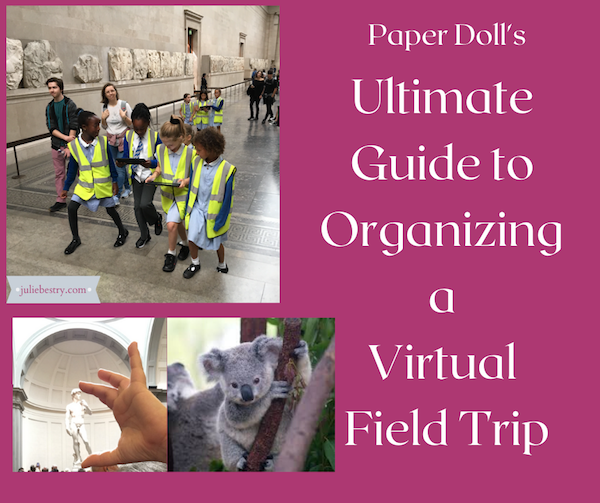
This post proved to be one of the most popular during the early pandemic. Organizing our days to include breaks, including virtual day trips to escape monotony, became a necessity this year, and rarely a week went by when a reader did not email or tweet or post to tell me about other cool virtual field trips.
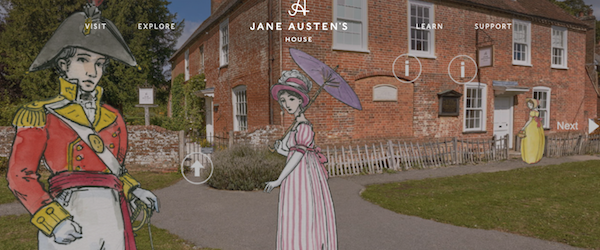
Friend of the blog Janet Barclay knows that Paper Doll is a consummate Jane Austen fan, and forwarded Celebrate Jane Austen’s Birthday With a 360-Degree, Interactive Tour of Her House, and from there it was a quick hop, skip, and virtual jump to the Emma Thompson-narrated Twelve Days of Christmas special. There are also paid live virtual tours of Jane Austen’s House from Home, trails, and exhibitions. (Two live tours in January each go for £5, or about $6.78).
Discovery Education has developed a variety of live and on-demand, family-friendly interactive field trips. Each is free and includes a companion guide with hands-on learning activities! Take your kids to “visit” the Johnson Space Museum in Houston, see the cars of the future, hobnob with polar bears in the Tundra, and so much more. Whether you need a virtual field trip to break up winter vacation, quell home-schooling doldrums, or reverse just too little play time, Discover Education is a delightful addition to the options in my post.
Perhaps you binged too much of The Crown and need a reality check? Take a virtual tour of Buckingham Palace. Prefer a different venue? How about the Taj Mahal, the White House, or the Vatican?
Virtual Museums started an interactive map of the world’s museums available to virtual visitors. (Create an account to track and rate your visits.) From the Canadian Museum of Human Rights to South Korea’s National Museum of Modern and Contemporary Art to the mysterious fossils of the Graz Natural History Museum in Austria, new field trips for grownups are appearing all the time.
And if you need the the kind of field trip that takes you away from the hubbub, Escapista may be to your liking. Escapista has developed a manifesto to explain its approach to selecting opportunities for immersive meditative experiences, from pausing by a snowy river to Norway’s “Slow TV” experience of ten hours on a train. (Click the speaker icon to turn on the audio.)
Be sure to organize time in your life to relax and to learn for fun.
Does Anybody Really Know What Time It Is? 5 Strategies to Cope With Pandemic Time Dilation

There’s an irony of mentioning time dilation between two long weekends marked by Christmas and the new year. I’ve lost count of how many people have told me they checked for the mail on Friday or took the trash to the curb on the wrong day.
In the original post, I explained why our body clocks became so borked during our quarantine and recommended five strategies, with LOTS of tactical suggestions, for keeping everyone from becoming unstuck in time:
- Put structure in your life.
- Enhance novelty.
- Create vivid sensory clues for the passing of time!
- Get what you know you need! (Daylight, sleep, exercise, and for those of you who’ve had the same pair of sweats in rotation since St. Patrick’s Day, get dressed!)
- Take a technology break.
As a professional organizer and productivity coach, my job is to help people get more out of their time. But efficiency isn’t everything. In a year like we’ve had, and going forward, some daydreaming and navel-gazing preserves sanity. If you find yourself losing track of time too often, add in a bit of structure to your day and use technology to get a quick “beep-boop.” But do give yourself permission to enjoy the one small benefit of this year, living by your natural body clock.
Organize Your Health: Parental Wisdom, Innovation, and the New Time Timer® Wash
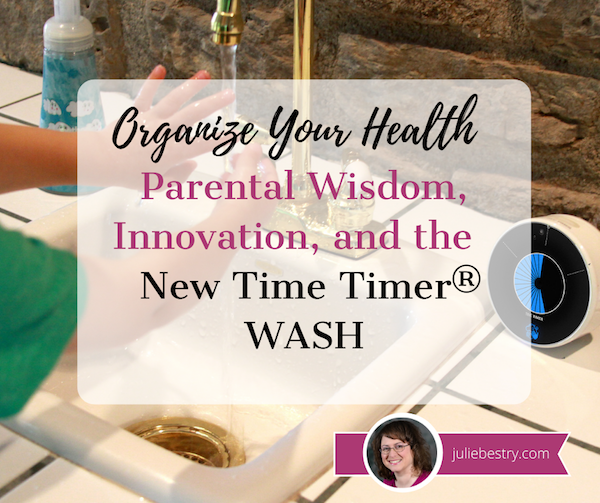
Don’t touch your face. Wear a mask. Wash your hands. It’s good advice, so listen to your mom. Listen to mine.
READING RENEWAL
12 Ways to Organize Your Life to Read More — Part 1 (When, Where, What, With Whom)

I’m not the only embracing tips for reading more. Oprah, the ultimate book club leader, may have ended her print magazine, but the December issue offered up 20 Simple Ways to Read More and Enjoy More Books in 2021. (Personally, though, I preferred my take on developing a reading nook. What do you think, readers?)
12 Ways to Organize Your Life to Read More — Part 2 (Reading Lists, Challenges & Ice Cream Samples)

Want to read more in 2021? You’ve got a bounty of options for finding recommended reading lists. One of my favorites is the NPR Book Concierge. (Find annual suggestions going back to 2013.)
If, instead of looking for a specific title, you want to find a 2021 reading challenge that, well, challenges you, opportunities abound, including:
The Uncorked Librarian (Most intriguing suggestion: read a book set on a train.)
Modern Mrs. Darcy (This year, it’s not just reading prompts, but an entire interactive kit for creating your personalized reading life!)
GirlXOXO Master List of Reading Challenges (While I’ll skip the challenge to read mysteries with cats as main characters, there are certainly lists galore for every taste!)
Meanwhile, who would be up for a Paper Doll reading challenge to embrace books on organizing and productivity?
How To Make Your Reading Time More Productive With Book Summaries
My coverage of book summaries focused on non-fiction. Unless you’re in 11th grade English class (sorry, kids), you probably don’t want summaries of novels. However, you can get ice cream tastes of fiction, to see if you like an author’s style.
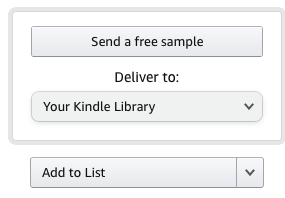
- Most people are familiar with Amazon’s “Look Inside” feature, which allows you to click a link above the book cover and read a handful of pages. But did you know that many Kindle books have “Send a free sample” link so you can preview chapters? Check in the browser version, not the app, below the “purchase with one click” section and above the “add to list” button.
- You can also get a free audio sample. Check for a link under the book cover.

- Literary Hub has daily offerings of novel excerpts. Click on the book cover you want to try, and the resulting page provides short author bio and a selection from the novel. Titles range from new releases, like Mrs. Murakami’s Garden, to reprints of classics, like Betty Smith’s Tomorrow Will Be Better. (Literary Hub also has short stories excerpted from short story collections.)
PAPERWORK DECLUTTERED
Organize for an Accident: Don’t Crash Your Car Insurance Paperwork

In April and May, due to much of the country quarantining and people driving far fewer miles, many insurance companies offered 15%-25% premium rebates to customers.
While rebates largely disappeared by June, that doesn’t mean you should be paying full price if you’re still staying close to home. For example, if your workplace has decided to go “permanently remote,” and you no longer have a commute, it’s worth contacting your insurance agent about potentially lowing your premiums now that you are regularly driving less each week. One option insurance companies are exploring is vehicle telematics, little “black boxes” that keep track of your speed, mileage, and precision at accelerating and decelerating, and report back to the insurance company. Safer drivers get better rates.
Similarly, if your college-age student is not currently on campus and is attending school remotely (from your home), that means your car is in the driveway most of the time, not states or time zones away. Review your situation with your agent for the greatest number of discounts.
Paper Doll On Narwhals, Fake News, and How To Get A REAL ID

Everything in the post is still accurate except for the enforcement deadline. Due to COVID, the federal government delayed enforcing REAL ID by one year, to October 1, 2021. Remember, as of next October, if you don’t have Real ID-compliant identfication, you won’t be able to board a domestic flight or enter federal courthouses or restricted federal facilities, like military bases, nuclear power plants, or the White House.
Paper Doll Says The Tax Man Cometh: Organize Your Tax Forms
The forms are the same, but a few the rules have changed. Kiplinger’s Magazine covers a few dozen of the Tax Changes and Key Amounts for the 2020 Tax Year.
ORGANIZING ADVICE, PLAIN AND SIMPLE
The Truth About Celebrity Organizers, Magic Wands, and the Reality of Professional Organizing
As you head into 2021 armed with resolutions to get more organized, please review my counsel in this post. I stand by my word that there are no magic wands!
And in a future post, I’ll have more to say about advice from celebrity organizers with regard to organizing by color. Here’s a preview:

(Readers, if you like curry in your pumpkin pie, feel free to tell Jacki directly!)
Organize Away Frustration: Practice The Only Good Kind of “Intolerance”
This is the perfect week for you to take note of whatever frustrated you during the holiday season: a light system with too many broken bulbs, an artificial tree that has seen better days, a sense of obligation to send holiday cards to people who haven’t so much as liked one of your Facebook posts in a decade. Stop tolerating what doesn’t work for you, and if you don’t know the solution, seek help to find one.
Paper Doll Peeks Behind the Curtain with Superstar Coach, Author & Speaker Leslie Josel
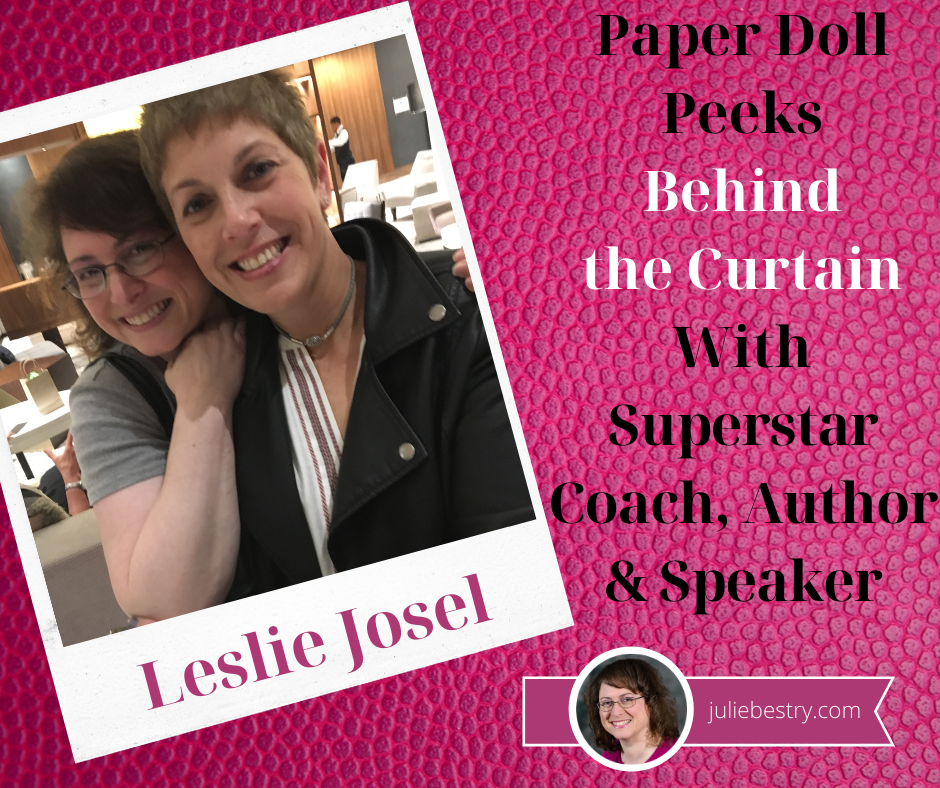
Our talk about 1980s sweaters may have been dated, but discussion of student procrastination is not. This fall was the first semester that was 100% in COVID times; even stellar students struggled, and “taking an incomplete” has become a common refrain. If you have (or are) a student, Leslie’s How To Do It Now, Because It’s Not Going Away should be on your bookshelf.
Organizing in Retrospect: A Confessional Look Back at 2020
Writing this post, I realized I accomplished more than I realized. (Which would have been easy; when people asked what I’d been doing this year, I was often at a loss for words. “Missing my mom, my friends, and my travel plans, eating too much cheese, and craving Chinese food” seemed like an ineffective response.
This quiet lull before the new year is the perfect time to pull out your calendar and scan your To Do lists. Take notice of your achievements; in a year like this, it’s easy to forget small (and even not-so-small) victories. Ask your friends and loved ones to report back on the successes they recall from your year. Tally them up. Whether you use this in your next performance evaluation at work or just to buck up your self-esteem, remember that surviving this year intact is an accomplishment!
CLUTTER-FREE HOLIDAY GIFTS
In a Downton Abbey-themed post a few years ago, I told you about Give Back Box, a program whereby you could gather up the items your new holiday presents made redundant and easily ship them off to charity. This year, especially, when a touch-free donation option is especially useful, I encourage you to explore Give Back Box.
Clutter-Free Holiday Gifts for the Weird Year of 2020 (Part 1): New Twists on Old Favorites
For those of you looking for gifts of cooking classes, two highly praised options came in after deadline: King Arthur Baking‘s impressive calendar of interactive, online cooking and baking classes, and Milk Street‘s live-streamed and recorded, self-paced virtual classes. (If you give a cooking class gift to someone with whom you live, you get to eat the homework!)
Clutter-Free Holiday Gifts for the Weird Year of 2020 (Part 2): Giving Well, Giving Back
In addition to tangible gifts that give back to others, I wrote about charitable giving in your recipient’s name. Due to COVID, new tax laws let most taxpayers deduct cash donations of up to $300 made by December 31, 2020 when filing taxes in 2021 – even if you don’t itemize. (Note, this is a “per return” deduction, meaning married couples get the same $300 deduction as singletons. Consult your tax advisor.)
Clutter-Free Holiday Gifts for the Weird Year of 2020 (Part 3): Organizing Yourself & Others
Finally, I hope one of the gifts you give yourself is the time and opportunity to keep reading organizing and productivity advice here at Paper Doll.
Thank you, my dear readers, and have a happy, healthy 2021!
Follow Me