Archive for ‘Productivity’ Category
Use the Rule of 3 to Improve Your Productivity
It’s Monday — the first Monday of a new month, of a new quarter, and the last quarter of the year. It may suddenly feel like a lot is riding on getting things crossed of your list so you can make those dreams come true before 2023 is in the rear-view mirror.
RECAPPING THE ESSENTIALS OF TACKLING YOUR TO-DO LIST
Back in May, in Frogs, Tomatoes, and Bees: Time Techniques to Get Things Done, we looked at a spate of productivity concepts for breaking down the hours of your (preferably time-blocked) day to effectively use your discretionary time (that is, the part of your schedule not determined by your boss, school, or firmly-scheduled obligations). We started with the essential elements of accomplishing things:
Knowing what to do — This involves a brain dump to capture every potential task stuck in your head, adding to it from everything in your various in-boxes and buckets (GTD-style), and creating a master list, whether that’s pen-on-paper or a task app.
Knowing what to do first — Prioritizing tasks involves a complex intersection of what is important and urgent. We shorthanded the process with the Eisenhower Matrix (which, as explained in Paper Doll Shares Presidential Wisdom on Productivity, wasn’t invented by the Ike we like, but was attributed to him due to a speech he gave and was made more famous by Stephen Covey).
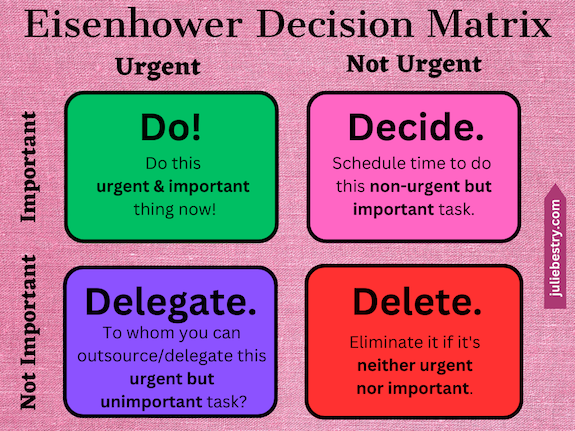
The Eisenhower Matrix gives you the opportunity to (literally or just figuratively) graph each task from your massive brain-dumped list to identify where it falls along a continuum of importance and urgency. From January through mid-April, filing your taxes is important, but it only becomes more urgent as St. Patrick’s Day is behind you and April 15th draws nearer.
Conversely, this Friday’s registration date for an adult education class on French cooking has what appears to be an urgent task; however, if learning how to make Julia Child’s famed Boeuf Bourguignon isn’t that compelling and you were only doing it to please your mother-in-law, it may fall low on the importance scale.
 Julia Child on KUHT/By KUHT via wikimedia commons
A big part of identifying the value of a task may involve looking at what your motivation is. You perform extrinsically-motivated behaviors in order to receive some external reward (or to avoid an external punishment). You might work at a job for a paycheck, work hard in a class to get the grades that allow you to get a scholarship, or make that Boeuf Bourguignon to keep the peace between family members (because it’s hard for people to snipe when their mouths are full).
Intrinsically-motivated behaviors are those that you do because they fulfill you personally. These include passion projects like volunteering, participating in hobbies and sports, or even simultaneously compelling but challenging life activities, like parenting.
Sometimes, you may find yourself frustrated that the very things you value for your sanity-preserving self-care are less valued by society. (This is largely because, as we discussed in our series on toxic productivity, late-stage capitalism values producing work that yields revenue, generally for the people above you in the hierarchy. Sigh.)
Of course, the ideal is to find opportunities for extrinsically- and intrinsically-motivating behaviors to dovetail. When that happens, the things that are important are easier to accomplish because they give you personal fulfillment and extrinsic rewards.
Making something a high priority, per se, doesn’t ensure that you’ll do it, but if that task is important, not just for keeping you out of debtor’s prison but also making your heart sing, you’ll do it less begrudgingly, and if it’s urgent, you’ll find you’re less likely to procrastinate.
You’re probably not going to find that your love of the game will allow you to become a professional pickleball player — more power to you if you do! — but you may find that by becoming more efficient and effective at your for-a-paycheck job will yield more free time to pursue a passion that could turn into a new livelihood.
Once you gauge your each task’s relative importance and urgency, you can move forward to knowing what to get done today (vs. delaying to later in the week), what you might delegate, and what you can hang it in the maybe/someday closet.
Do it! — The final piece of the puzzle involves making time to do what you’ve decided to accomplish.
MANAGING OUR DAYS BY MANAGING OUR HOURS
Back in that post I referenced, Frogs, Tomatoes, and Bees: Time Techniques to Get Things Done, I reviewed well-known and lesser techniques for hunkering down and getting tasks done. I encourage you to read the prior post for details of the methods you find less familiar, but in general, the post reviewed:
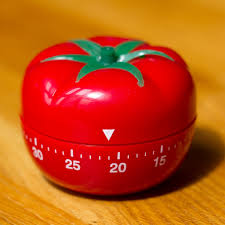
Pomodoro Timer by Michael Mayer CC By 2.0 Deed
- The Pomodoro Technique — At its most basic, the process involves identifying a task to work on now, setting a timer for 25 minutes, focusing on that task for 25 minutes without interruption, and taking a short break. Proponents believe it short-circuits procrastination but detractors note that it prevents getting into a flow state.
- Tocks — This variation on the Pomodoro Technique involves working 45 minutes rather than 25, and adds the step of taking note of distractions as they arise for later analysis.
- The 90-Minute Focus Block — Here, the work blocks expand to 90 minutes and the breaks extend to 20. The expanded time frame is based on research in neurobiology and how our brains use potassium and sodium ions to conduct electrical signals indicates a biological component to our ability to effectively focus.
- 52/17 Method — Splitting the difference between the traditional Pomodoro and the 90-Minute Focus Block, this accents 52-minute sprints of dedicated and intense work followed by mentally-refreshing breaks. It’s backed by behavioral analysis rather than neurobiology.
- The Flowtime Technique — This method starts like all of the others, with uninterrupted work sessions, but instead of ceasing at the behest of an alarm or other external force, you work until you start to feel distracted or mentally or physically fatigued. While this method involves a lot of administrative work for logging both distractions and statistics regarding work patterns, it’s probably the most ideal for creative endeavors, as you ignore the clock and embrace the flow.
These methods work in concert with the principles we’ve discussed regarding time blocking, particularly from these two posts:
Highlights from the 2023 Task Management & Time Blocking Summit
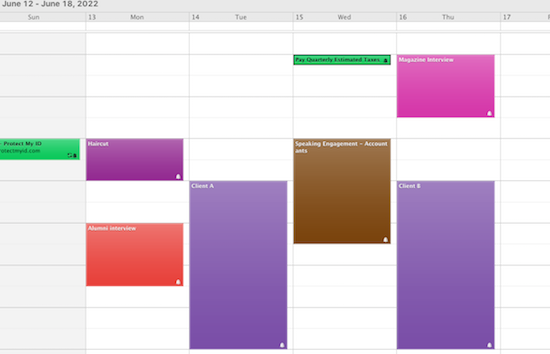
Putting it all together, you figure out what you need to do (overall), identify your priorities, and block your time to ensure ample space in your schedule for accomplishing tasks. Then you get to it!
USE THE RULE OF 3 TO KEEP LIFE FROM GETTING IN THE WAY
All of the above is great for once you get your butt in the chair and have identified a specific task, but let’s face it, getting to that point? It’s a lot.
If you work in an environment where most of your daily schedule can be firmly set in stone (or bytes) with very little to distract you, you’re lucky. But most people experience a multitude of interruptions from co-workers and bosses and tiny humans and senior parents (whether they have physical challenges or just need tech support). Others are dealing with mental and physical health crises and have limited spoons (that is, energy and capacity) to get through the day, let alone accomplish prioritized tasks.
If you’re feeling overwhelmed, there’s a productivity principle that can help you get a foothold when things feel like their going off the rails.
It’s called the Rule of 3.
At its most basic, the Rule of 3 asks you to apply your focused attention, intentionally, to three goals or main tasks for a specific time frame. Generally, and the way we’re going to examine it, that time frame is a day, but you could apply it to a week (or a four-day conference, or a working weekend) or whatever period of time you need.
The key is that you are concentrating on a small number of crucial tasks to maximize your focus, your effectiveness, and your overall productivity. The steps are simple:
Identify three key tasks.
When you plan your day, identify the three most important goals or tasks that you want to accomplish. These may all be work tasks, or they could be a combination: one key work task, one goal item for your family, and one for self-care.

These three should be whatever you think will have the most significant impact on your personal projects, your work projects, or whatever matters the most to you.
And obviously these aren’t the only three things you’re going to get done in a day. You’re not going to skip processing email or picking your kid up from Drama Club or brushing your teeth. We ALL do more than three things in the day. But the Rule of 3 says:
Whatever else I’m doing today, I am absolutely focusing my time and attention to
GET THESE THREE GLORIOUS TASKS COMPLETED!
We’ve already talked at length about the value of the Eisenhower Matrix in prioritizing, and that’s a great place to start, but there are other concepts to help you pick your three key tasks.
Parkinson’s Law states that work expands to fill the time available for its completion. We’ve all had days where we fiddled around and didn’t start working on “the thing” until just about the time we knew we had to being in order to finish on time.
But imagine not doing that. Imagine getting the thing done. And then the next thing. And one more. Imagine not taking all the time available and just taking the time necessary.
Limiting yourself to three tasks creates a sense of urgency. If you recognize that to honor your obligation to yourself, you will focus on achieving the three key tasks, you cut procrastination off at the pass. No fiddling.
Next, experts in cognitive psychology have found that we generally have limited attention and cognitive resources. We get tired. We get bored. We get distracted. We get antsy. We get hangry. By narrowing your focus to a small number of tasks, you are able allocate your attention and mental energy more effectively, which aligns with the Rule of 3’s idea of prioritization.
Finally, Hick’s Law is a psychological principle that says that the time it takes to make a decision increases with the number and complexity of choices. Once you limit your choices for the day to just three key tasks, you are reducing the signal-to-noise ratio and the decision-making complexity. The less you must think about doing, the more you can focus on the task at hand. (And remember, you can always do more of your important (and urgent) things once you’ve done your big three!)
Commit to each of the three priorities and focus.
OK, yes, you still have three things, and you’ll have to decide which of these to do first, and second, and third. You’ll have to figure out into which time block you’ll slot each item. And then you’ll have to blur out two of them while you focus on a third.
In theory, the Rule of 3 calls on you to focus your energy and attention on completing these tasks before moving on to less critical or lower-priority activities. And obviously it discourages multitasking and giving into distractions while working toward finishing the key goals. You can use any of the focused work-session techniques listed up above once you sit down to focus on the task, but before you can focus on the tasks, you have to commit to them, to the idea that you WILL do these three key tasks today.
OK, let’s step back.
Paper Doll recognizes the need for a reality check. You will not always be able to tackle all three key tasks first before getting on with your day unless your efforts do not require the involvement of other human beings (whether tiny humans or large egos).
For example, last Friday, my car was finally ready for pickup. It’s been a long two months since it was stolen, recovered, and had to go through many, many repairs. (For reference, Organize to Prevent (or Recover From) a Car Theft tells the initial tale; everything since has been a nightmare of dropped balls, global supply chain failures, and random poopyheads.) But I also wanted to get my flu shot and had two essential financial tasks.
The car issue was actually a series of interlocking tasks. I had to confirm the specifics with the body shop, and wanted to view and approve all the work before paying my deductible and returning the rental car, which involved more phone calls and scheduling, and I needed to approve the last round of digital insurance payments.
The car goal was both important and urgent, as I didn’t want to be charged for further days of the rental car, and frankly, I missed my adorable red Kia Soul as if it were a child away at summer camp for far too long. But while most of the car’s mechanical and body work were completed, there were a few painting-related flaws, and a review of the final no-longer-estimated estimate yielded lots of new questions. However, by staying single-minded on the task and not being distracted by calls, texts, and emails, it eventually got done, and I felt an immense sense of relief and completing this key task for my day.

Getting my flu shot involved confirming that my pharmacy had the flu vaccine and that no appointment was necessary. (Last year, appointments were required and only given on certain days of the week, which often conflicted with my client schedule.) And the bank tasks, though easy, were dependent in part on the arrival of the mail, and the fill-in postal carrier did not deliver the mail until close to 6 p.m.
Celebrate your wins!
Being successful with the Rule of 3 means acknowledging completion of the task and feeling satisfaction. Far too often, we rush through what we must do without celebrating that we’ve actually done it. However, taking the time to celebrate wins improves your confidence, boosts your motivation, and will make it easier to approach other tasks (especially long-avoided ones) with verve.
For a sense of psychological benefit of this step in completing key tasks (particularly those we might define as “adulting,”) I direct you to Hazel Thornton’s recent post, High Five Friday. She explores turning this celebration of completion of key tasks from a solitary act into a social one, and as I’ve watched people follow Hazel’s lead, the evident delight people experience is palpable!
Re-evaluate, or Lather/Rinse/Repeat: The “What’s Next?” Step.
OK, so you figured out what to do, did it, and gave yourself an atta-girl or atta-boy. Now review the process. Evaluate your progress to determine the big question: what’s next?
(Fans of The West Wing recognize the power of those two words. Lin-Manuel Miranda created this video for the late, great The West Wing Weekly podcast. There are two profanities within (at :50 and 1:04), so please be forewarned.)
This is the time to evaluate your progress (and your process for getting there). Determine the next three most important tasks to focus on, whether that’s for the remainder of today, or for tomorrow, or your next key time period.
You’re creating a continuing cycle of identifying key tasks, prioritizing them, completing them, doing a happy dance and high-fiving yourself, and reevaluating what worked and what didn’t. All of this is designed to help you maintain a higher level of the good, non-toxic kind of productivity that keeps you aligned with your ultimate goals.
Why does the Rule of 3 work?
First, it’s simple, so you may actually try it. Everyone loves a new productivity technique, but the more working parts, the less likely you will be to do more than think about using it.
Second, three is a magic number.
Whether it’s “lions and tigers and bears” or “faith, hope, and charity” or if you’ve been hearing a lot about the Roman Empire lately, “friends, Romans, countrymen.” It’s easy to keep three daily priorities in your head, so if you check in with yourself at lunchtime or mid-afternoon to see how you’re doing on your goals, you can mentally measure your progress in seconds.
Finally, and most importantly, the Rule of 3 is an effective approach because it prevents the overwhelm and decision fatigue that often results from having a long, fiddly, and overwhelming to-do list.
The Rule of 3 is an effective approach because it prevents the overwhelm and decision fatigue that often results from having a long, fiddly, and overwhelming to-do list. Share on XNarrowing your focus to just three tasks sets you up to more efficiently allocate your time and energy, so you can accomplish more meaningful things. Again, this may be work, but could be personal enrichment or self-care. Completing a project for work may be important, but exercising and having essential medical appointments and living a fulfilled life are of inestimable importance and urgency. In other words, you matter. Paper Doll says so!
ADAPT THE RULE OF 3 TO YOUR NEEDS
As with any productivity concept, the Rule of 3 is a only guideline. There is no “boss” of the Rule of 3 in the same way that practitioners of GTD look to David Allen; indeed, I’ve done extensive research and have yet to find an originator. I originally read about the Rule of 3 almost ten years ago in Chris Bailey‘s The Productivity Project: Accomplishing More by Managing Your Time, Attention, and Energy.

Bailey, in turn, learned of it from J D Meier in his book, Getting Results the Agile Way.
I strongly believe that the “rules” in productivity only exist to give us lanes to follow. Stick to the rules until you identify ways you can modify them to more effectively support you. Then head off-road. Do you, boo!
You may choose to use the Rule of 3 daily, or only on work days. Perhaps you’ll find you only need it when life gets overwhelming, or when you’re counting down days to vacation and have to focus on what allows you to actually get out of Dodge and get to someplace sun-drenched.
However you apply it, the key concept is that you’re going to maintain a balance between setting ambitious goals and being realistic about what you can accomplish within a specific timeframe with your entirely human, non-robot, body.
For Further Exploration
If you’d like to read more about the Rule of 3, consider the following:
Get More Done With the Rule of 3 (The Art of Manliness)
How to Use the Rule of 3 to Get More Done and Regain Control of your Day (The Ladders)
The Rule Of Three: A Productivity Hack to Achieve Your Goals Right Now (Dan Silvestre)
If you focused on just three things today, what would they be?
Paper Doll Says: Don’t Get Stuck in a Rut — Take Big Leaps

Are you feeling stuck? When you flipped the calendar to the new month and realized how close we are to the end of summer, and even the end of the year, were you struck by a gnawing feeling that you’ve been mired in the same place for too long?
Are your New Year’s resolutions the same every year? Do you make the same wishes, have the same complaints, and feel like you’re Groundhog Day-ing it through life?
At the end of May, in Organize Your Summer So It Doesn’t Disappear So Quickly, we talked about how the lack of structure, novelty, and sensory clues for the passage of time (along with lack of self-care and an excess of technology) can make us sluggish. We may keep doing the same things, over and over. We may not notice that sometimes we are very efficiently doing the wrong things.
Perhaps it’s time to stop doing some things, start doing other things differently, and to take bold strides on other things altogether.
Although most people think of professional organizers in terms of their possessions, I usually talk about how I help people manager their stuff. Stuff is more complex than just possessions. Your stuff may be what’s piled up on your desk or precariously balanced on your kitchen counter or squished into your closet.
Alternatively, the stuff causing you overwhelm may be the excess in your schedule rather than your space. The temporal, rather than the tangible, can also weigh you down.
However, it’s possible to be crowded out of your enjoyment of life by other than too much in your space and schedule. You could have so much going on in your brain that you can’t accomplish what you want.
The stuff in your head could be ADHD. It might be anxiety or clinical depression. And it certainly could be fear. In fact, several years ago, in Paper Doll Talks With Smead About Fear & Disorganization, I shared how fear holds us back.
Too much, or at least too much of what doesn’t serve you, can keep you from moving forward, from taking leaps. Today, we’re going to look at how to get out of a rut and then consider taking bold leaps forward.
HOW TO GET OUT OF A RUT
Investigate Your Life
Pull on your Sherlock Holmes deerstalker hat, twirl your Hercule Poirot mustache, jump in your Nancy Drew blue roadster, and think about what’s feeling stuck in your life. Let’s start by identifying the symptoms of being in a rut.

Have you lost your enthusiasm? If you can’t pinpoint obvious reasons (lack of recuperative sleep, diagnosed depression, a bed that’s just too comfy) for not wanting to get out of bed, you may be in a rut.
When someone asks you what you want — what to do, what (or where) to eat, or where to go, whether for the afternoon or for a holiday — do you mentally check out? Sometimes, when you’re in a rut, you can’t even imagine different ways of doing things.
You’re not broken. You’re probably in a rut.
The next step is to figure out why? Is it you, or is it what’s in your space, your schedule, or your head (that shouldn’t be) or what’s not there that should be? Understanding the root cause is essential.
It is too much of something? Is there clutter that’s keeping you from entertaining in your space or feeling relaxed enough in your home to pursue your activities? It may be obvious, as this is an organizing blog, but check your space for excess. Are you in a rut physically because you always have to move things off the counter to reach the microwave, or pull suitcases out of the closet to get to your clothes?
Do you have too many activities filling up your schedule? I don’t just mean work-related, though too many Zooms or in-person meetings can wear you down. Maybe your kids are signed up for so many after-school activities, which means you’re constantly schlepping them to-and-fro. Maybe you’ve been in the same clubs with the same people for what seems like forever.
Have you outgrown the life you’re leading? I’m not suggesting you need to take the 10:25 to Reno and leave your job and family behind. But there may be aspects of your life that no longer fit, like a too-small pair of jeans that makes you feel like you can’t really breathe.
It’s possible that you’ve grown out of the things you’ve collected. When my sister was in college, she had a few small elephant-themed items, and soon it became habitual for people to give her elephants in the form of earrings and knickknacks and stuffed animals. Somewhere after a few decades, I noticed that she wasn’t displaying the elephants. She was over the elephants.
And again, you may have things in your schedule that don’t serve the person you are, or the person you want to be. You calendar might not be overloaded, but the things in your calendar may no longer be giving you joy. Are you going to that book club because you’ve always gone or because you love the books and the people? (If you’re going just because you love the cheese plate, be assured that you really can buy that yummy cheese and eat it all yourself.)

Cheese board photo by Andra C Taylor Jr on Unsplash
Track the Clues: Routine or Rut?
If, while playing detective, you find it hard to actually detect what’s wrong, you may need to get more granular. Pick a random week (or start with a day if a week seems overwhelming) and take note of what you do and how your week (or day) flows.
- Are there things you do the same way, over and over?
- Does each day’s schedule blend into the next?
- Do you have trouble differentiating between the average Monday and the average Thursday? (Does every day feel “average?”)
You may be thinking, “But Paper Doll, I have a routine! Isn’t the best way to make sure everything gets done to have a routine?”
Yes!
But also no, not always.
Routines and ruts are related concepts, but they have distinct differences:
A routine is a planned and organized set of tasks or activities that you regularly follow. Your laundry routine makes sure that you don’t have to send your tiny humans to school in Wonder Woman bathing suits under their clothes. Your morning routine gives you the centering, mindful energy, nutrition, and caffeine to keep you from smacking your annoying co-workers with a keyboard.
You design your routines to help you manage your time, reduce stress, and increase efficiency.
Conversely, a rut is a stagnant pattern, one that makes you feel unmotivated or unfulfilled. When you’re in a rut, you may find yourself going through the motions without any sense of intentionality. You’re doing what you’ve always done, getting what you always got. (The longer you’re in a rut, perhaps the less you get back?)
A routine is a deliberate; you structure the sequence of actions and schedule them to create a order in your life. A routine empowers you. By contrast, the stagnant nature of a rut — because you are no longer deliberately evaluating the success and productivity of the routine but just mindlessly abiding by it — may leave you feeling unfulfilled at best, and trapped at worst.
Ruts may occur in our diets, our personal activities, our careers, or our relationships. While Woody Allen isn’t exactly a favored source of inspiration these days, the movie Annie Hall has an apt quote.
While routines can be healthy and productive, ruts are usually associated with a lack of progress and satisfaction in life. We often consider “improvement” to be the key sign of progress, but in some cases, breadth, depth, or variety may also be evidence of progress.
Putting it all together, a routine helps you achieve a groove. But sometimes, treading that same ground, over and over, turns a groove into a rut.
The Magic of Intentionality
Once you see where your life is lacking progress, variety, or fulfillment, you can achieve more of what you want by intentionally making changes in various ways:
- Subtract — Look at what’s blocking your energy and take those obstacles away. If you’re not doing your workout because there’s junk piled up in your workout room, use all the resources we often talk about to sort, clear the clutter, move things to more logical homes, and/or donate, sell, or discard what no longer fits your life.
If there are activities that no longer float your boat, jump overboard. You might have to relinquish responsibilities and it could momentarily inconvenience others to have to find someone to handle the role you’ve done uncomplainingly for far too long. That’s OK.
Offer to help your replacement with the transition, but stand firm on letting go of tasks that don’t nourish you personally or professionally.
- Add — If you’re in a rut, just taking things away probably won’t solve all of your problems.
Having more empty space may mean you don’t have as much housework to do, or it could make you uncomfortable. If you finally eject all of your ex’s stuff from the house, the emptiness may make your space, and even your life, feel cold or lacking. Mindfully consider what you might enjoy having in your space.
Similarly, emptying your schedule of undesirable obligations may not be enough. Having all that extra time may initially make your life feel empty. You needn’t fill every moment all over again with different activities, but do open your mind to exploring what you may have not realized you were missing.
Start by adding self-care activities to slowly fill up a small number of those relinquished schedule slots. Remember to make time for sleep, mindfulness or meditation, exercise, nutrition, and uplifting social relationships. Feed your body and your mind to jump out of that rut.
Daydream and allow for possibilities you never previously considered. Just because you never considered yourself artistic or creative before doesn’t mean you might not explore a painting class or community theater. Maybe you’ll try to acquire new skills or knowledge relevant to your goals, but remember that personal fulfillment or enjoyment is a good enough reason to have new experiences.
Not everything is about productivity. Let joy be enough.
- Prioritize — Once you know the negative effects of the rut you were in and have considered how you want to replace (or enjoy the absence of) the tangible, temporal, and cognitive clutter you had before, figure out what’s most important to you.
Do you want to work on your body? Your spiritual well-being? Your professional development? Do you want to taking dance lessons or spend more time reading?
Spend some time writing down everything that was missing from your life when you were in a rut, and what you want to experience instead. Then pick your top two priorities.
Why two? If you are working on just one priority, and achieve it, turning to the next on your list will make you feel like you are starting from scratch, which can be demotivating. Focusing on one priority, but having a backup that gets a little attention, means you always have an proactive alternative to consider when you need a pause.
Why only two? Focusing on changing more than two areas of your life simultaneously usually leads to overwhelm. The goal is to lighten your life, not weigh you down.
- Break it down — Once you figure out what you want, figure out what gets you there.
Let’s say your rut was dietary. No matter how much you love tacos, having Taco Tuesday every week, with no change in the ingredients or dining companions or cooking responsibilities can be a bit much. Break your proposed life changes down into small steps and reconsider everything.
Maybe your spouse will cook more often; perhaps your family will experiment with group meal planning and grocery delivery, eliminating Thursday shopping trips (and the need for a babysitter).
- Reinvigorate your routines — Remember what we said about the difference between ruts and routines. It’s OK to have routines; just be intentional about them.
Getting out of a rut doesn’t mean abandoning all structure from your life and schedule. It doesn’t mean never cleaning the bathroom; it does mean giving yourself permission to delegate the task your teenager (either as a life lesson or in return for car privileges) or hire a cleaner.
It doesn’t mean never taking your kids to their activities, but it does mean exploring the alternatives — trading off with your co-parent, with other kids’ parents, or (if your kids are old enough) arranging for a car service — so the time you spend going to your children’s activities are more often related to seeing or participating in those activities (as a supportive audience or coach) because you are now more fulfilled.
Use the time management skills you’ve learned from this blog and elsewhere to use the Eisenhower Matrix to put more of your attention on tasks with high importance and/or high urgency and reject or lessen the things with lesser value to your life.
- Replace the bad stuff with good stuff — This is a follow-up on the advice to add and subtract. If you were in a nutrition rut, you might eliminate the purchase of empty calorie foods. If your life has been filled with the equivalent of empty calories, eliminate the distractions of app notifications, clutter in your workspace, and interruptions from people and relationships that don’t fit your greater good.
- Stay flexible — If you’ve been in a rut for a long time, empty space (in your home, your schedule, or your mind) may feel scary. You could be tempted to create lots of new routines with just as little flexibility as before, and you’ll find yourself worn down again. Leave yourself open to adapt to new possibilities. Nobody gets out of a rut overnight. Have patience with yourself.
- Welcome support — Reach out to supportive friends or family for help brainstorming, noticing habits, or seeing new pathways. Professional organizers and productivity coaches can help you find new ways to make changes in your space, schedule, or thoughts. If you’ve been weighed down by more problematic thoughts or feelings, consider how a therapist can provide valuable perspective, guidance, and support. You’re not alone.
For more on excaping a rut:
You 2.0: How to Break Out of a Rut (Hidden Brain podcast)
How to Get Out of a Rut in 8 Steps (Master Class article)
How To Get Out of a Mental Rut, According To Psychologists (Well+Good article)
Getting Off the Treadmill: Six Ways to Break Out of a Rut (Science.com article)
Finally, and especially as we’re approaching the Jewish New Year at the end of this week, I encourage you to revisit Organizing A Fresh Start: Catalysts for Success for motivation and support.
HOW TO TAKE A BIG LEAP
The opposite of a rut can be a leap.

Sunset Leap by Kid Circus on Unsplash
Once we figure out what to stop doing, and start examining what we’re going to do differently, we give ourselves permission to think on a grander scale.
We have lots of reasons why we don’t take leaps, and they are similar to why we stay in ruts. Why make waves? Why risk new problems? We generally step back from taking leaps because of fear, and those fears may or may not be warranted, but they definitely keep us in limbo, wanting but never trying.
I’m a cautious person by nature. I suspect that’s true of many professional organizers. We’d rather prevent problems than have to fix them, even though our arsenal of skills helps us do both.
In college, I never took Italian because I feared doing damage to my GPA, and I was a decade out of graduate school before I realized that never once after I left academia did anyone, ever, ask about my GPA. Studying Italian these five years has brought joy to my life; my only regret is that my introduction came from the cartoon characters in Duolingo and not the the professors and fellow students at Cornell 35 years earlier.
There’s no wrong time to take a leap. There are certainly wrong ways. Selling your wares for magic beans isn’t smart; giving up your well-paying career to become a professional surfer when you’ve lived your entire life in Iowa probably won’t yield a secure life. But I’d like to share the advice on leap-taking I’ve gleaned from a few articles I’ve read lately.
Regrets, I’ve Had a Few
In Woulda, Coulda, Shoulda: The Haunting Regret of Failing Our Ideal Selves, the author looks at the published research of Cornell University professor Tom Gilovich and former grad student Shai Davidai in The Ideal Road Not Taken: The Self-Discrepancies Involved in People’s Most Enduring Regrets.
They identfied three elements of our sense of self, the:
- actual self — the attributes a person believes they possess.
- ideal self — the attributes people would ideally like to possess (including their “hopes, goals, aspirations or wishes”)
- ought self — what a person feels they should have been, based on duties, obligations and responsibilities.
Through six experiments, Gilovich and Davidai looked at two areas of discrepancy — what they call ought-related regrets and ideal-related regrets.
When people look back at their lives, they cope fairly well with any discrepancy between what they thought they ought to have done, in terms of duties and responsibilities, and what they actually did. Basically, we forgive ourselves when we feel like we ought to have dieted and exercised, we ought to have been more attentive to our studies, or we ought to have been better at managing our money.
Conversely, when we fail to take actions that could allow us to become our ideal selves, those regrets remain unresolved; we don’t get over our failure to act to become whomever we might have been.
Most tellingly, Gilovich said, “In the short term, people regret their actions more than inactions, but in the long term, the inaction regrets stick around longer.”
This brings to mind two of my favorite quotes:
“It is never too late to be what you might have been.” ~ George Eliot
It is never too late to be what you might have been. ~ George Eliot Share on X“The life you have led doesn’t need to be the only life you have.” ~ Anna Quindlen
The life you have led doesn't need to be the only life you have. ~ Anna Quindlen Share on XRisky Business
Do You Rarely Take Risks? Maybe it’s Time You Do, talks about how mindful risk-taking can be extremely rewarding. As we age, we’re more likely to settle into our comfort zone, and that coziness of comfort zone can easily leave us mired in a rut.
The article shares the advice of clinical psychologist Carla Marie Manly, who warns that as we age, we tend to turn more toward fixed mindsets than growth mindsets, narrowing the new opportunities we give ourselves. Manly advises that we first work to be conscious of the fact that we’re prone to lock down, which enables us to be aware of our fear and then deal with the related discomfort.
Manly argues in favor of acknowledging our discomfort but choosing risks that we find compelling. They don’t have to be big risks; the “riskiness” might be as small as ending up with a meal you don’t love as much what you usually order. But organizing your life to experience things that are new, different, and outside of your comfort zone increases the chance that you will increase the size of your comfort zone!
Respect Yourself. Don’t Reject Yourself.
One of the best things I’ve read lately related to taking leaps came from this article from Ness Labs entitled Turning Fear of Failure Into Increments of Curiosity.
So often, when we fail to take a leap, we do it out of fear of failure, particularly the fear of others judging us, especially if we fail.
The focus of this excellent piece is that we should approach bold strides as if we were scientists. The scientific method says, “Hey, let’s try this and see if it turns out the way we expect.” And if it doesn’t? Science says, “That’s cool, too! Because now we know!”
The article recommends making small moves and iterating again and again, creating bigger growth loops. It’s a short piece, and I recommend reading at least the end, where the author walks through the steps of an intentional life experiment for getting past the fears that keep us all from moving forward.
But my favorite part of the piece was near the beginning. The author, Anne-Laure Le Cunff, recalls being ill at ease about applying to a selective academic program abroad; she feared she would not be accepted. Le Cunff’s mother noted, “It’s not your decision to make.”
This was a “wow” for me. When we hesitate to take action out of fear that we will not win, or be accepted, or hired, or loved, we are taking the opportunity to reject or accept us out of the hands of the panel or the company or the person whose decision it should rightfully be.
The Big Leap — It’s Your Decision
Nobody can make the decision for you as to whether you will make bold strides, or when, or how.
The following short film examines a dilemma at the top of a ten-meter diving tower: to leap or to risk the embarrassment of climbing all the way back down. I think you’ll find it worth the price of admission. (Note: Almost all of the dialogue is in Swedish with English subtitles, but there are a few English profanities. Consider yourself forewarned.)
Fortune favors the bold, or so goes an ancient Latin proverb. Would you leap?
Paper Doll and Friends Cross an Ocean for Fine Productivity Conversations
When you love what you do, it’s easy to make connections with people involved in the same things. This is especially true for me when I get around people who like to talk about organizing and productivity. (I mean, who wouldn’t want to talk about productivity and organizing?)
DO YOU HAVE AN ORGANIZED PERSONALITY?
At the start of May, I saw that my friend, accountability partner, and friend-of-the-blog Dr. Melissa Gratias had posted that she was a guest on Jon Tromans’ Triple “T” Productivity Podcast in an episode called Productivity. It’s all in your mind! A chat with Dr Melissa Gratias. Jon’s in the UK, Melissa’s in Savannah, and the conversation was out of this world!
(You know Melissa from many posts, but especially Paper Doll Interviews Melissa Gratias, Author of Seraphina Does Everything!)

Melissa and Jon pondered the age-old question of whether we are born productive (or unproductive), or whether it’s matter of environment and training. As Melissa is a trained in psychology (she has a Ph.D. in Industrial and Organizational Psychology!) she offered insight based on “the Big Five personality traits” in the Five-Factor Model of Personality (also called The Big Five Model), and particularly the role of conscientiousness. I found this fascinating and jumped in to read more!
For those who haven’t taken a Psych class since college, the theory (which can go by the acronym CANOE or OCEAN) says that personality can generally be examined in terms of five core factors, each along a continuum:
- Conscientiousness — You might think that being conscientious is just a good policy. However, as a character trait, one can over- (or under-) do it. Too high on the conscientiousness continuum, and you might be a perfectionist or workaholic; too low and you might give in to impulsiveness, irresponsibility, and disorganization. The goal is to be organized, responsible, and productive without going overboard into the toxic productivity realm we’ve been talking about lately here on the blog. Melissa talked with Jon about the correlation of the conscientiousness personality trait in seeming to be “naturally” organized.
- Agreeableness — Understandably, the continuum here ranges from those who are too trusting, selfless, and possibly even gullible on the high end to being overly suspicious, uncooperative (or — eek! — manipulative) on the low end. Someone striking a balance will be compassionate, respectful, and trustful to a logical degree.
- Neuroticism — Note that this refers to the tendency to experience negative feelings. Neuroticism feels like the one odd duck in the model, because one would assume you wouldn’t want to be neurotic at all! As you’d expect, at the high end of neuroticism, someone might be anxious or depressed, pessimistic, and even filled with shame. But on the low end, it’s apparently possible to have too little neuroticism, leading to a sense of shamelessness. The safe harbor here is being confident and calm,
- Openness to Experience — Those toward the high end may be seen as imaginative or creative, spontaneous, and curious, while those in the comfortable middle may be prefer practicality and routine, and at the low end might seem inflexible.
- Extraversion — The range of extraversion is wide, and someone might range from attention-seeking to reserved. Basically, you want to be out there but not too out there! (Someone should have discussed this with 7-year-old Paper Doll.)
If you’d like to read more about this model, these articles offer a good start:
Big 5 Personality Traits (Psychology Today)
Big Five Personality Traits: The 5-Factor Model Of Personality (Simply Psychology)
What Are the Big 5 Personality Traits? (Psych Central)
For what it’s worth, I did a self-test at BigFive-Test.com (having searched for a free test, I picked one at random) and got the following results. As you can see, I score highest on conscientiousness, which would seem to validate Melissa’s wise thoughts on Jon’s podcast, given my field of work.
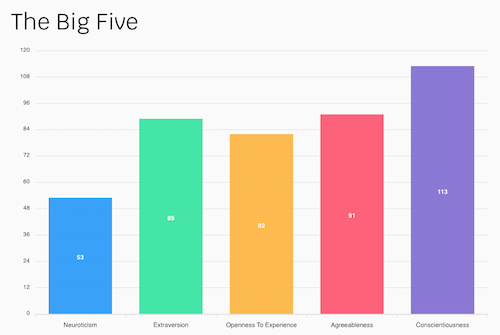
The results also looked at various characteristics within each trait. For example, extraversion looked at friendliness, gregariousness, assertiveness, activity level, excitement-seeking, and cheerfulness. Conscientiousness broke down the score for self-efficacy, orderliness, dutifulness, achievement-striving, self-discipline, and cautiousness.
And speaking of caution, this was just a free internet test, probably more valid than Which Grey’s Anatomy Character Are You? but not as valid as working with a psychologist or expert in this kind of testing. Also, in case you’re wondering, at least according to the internet, I’m Lexie Grey.
Lexie Grey via GIPHY
(Even considering the dangers of the Red Wedding, something tells me I should have gone with a Game of Thrones character quiz!)
But I digress. We were talking about Jon Troman’s Triple “T” Productivity Podcast.
JON TROMANS’ CAST OF CHARACTERS
I was charmed by Jon’s interview with Melissa, which mixed fun and lively conversation with a deep dive into philosophies of productivity. Although I did not know Jon, I recognized his name as a fellow Evernote Certified Expert, and made a point to learn more about him.
The next week, he profiled a professional organizer, Lucy Milligan Wahl, owner of LMW Edits in San Francisco for the episode Maximizing Productivity through an Organised Life. A chat with Lucy Milligan Wahl.

Lucy is a NAPO colleague, and while she and Jon did discuss Evernote and organizing, I was most taken by her approach to making a symbolic (and clear) division between life and work through ritual. It was a compelling chat, and I felt like I was listening in on a cool conversation at the next table in a café.
By the next episode, Me And My Evernote With Ray Sidney-Smith, I was definitely hooked. Ray being on the podcast was a double-delight for me. First, you’ve already met my productivity buddy Ray in many Paper Doll posts, so you’ve read how much I respect him, like in Paper Doll Picks: Organizing and Productivity Podcasts. He is one of the kindest individuals I’ve ever met, with a wicked/quick/clever sense of humor, and a wisdom surrounding productivity concepts in general and Evernote and David Allen’s Getting Things Done in particular.

But Ray is also special to me because he was my very first Evernote friend. We were in the same certification class, way back in 2015, and I am always agog at how much he manages to do, because is he reminds me of that movie title, Everything Everywhere All at Once.
He works a day job, he knows everything there is to know about Evernote, he leads in-person and virtual productivity meet-ups, and as he disclosed in the episode, he’s read more than 400 productivity books! According to my Goodreads book list, I’ve read a lot, but 400?!
For what it’s worth, I messaged Ray to see if he’s got a written, sharable list of his books, but sadly no. To be honest, I’m a bit shocked he doesn’t have an Evernote note listing every title, but he’s taken my request on board and put it on his Maybe/Sometime task pile. I’ll be sure to let readers know if he comes forward with a full accounting of all of the titles!)
MEETING THE MAN HIMSELF
At this point, having listened to three of my friends and colleagues get to chat with Jon (and then going back to hear his convo with our fellow Evernote Certified Expert Vlad Campos, maker of fascinating technology, productivity, and Evernote videos), I had to let Jon know how much I appreciated his stuff.

I did a little poking around and found that, like me, he had a whole prior career in broadcasting! (You can be sure that, off-microphone, had and I have now had some rollicking conversation about that era of our lives.) He also builds websites, develop marketing campaigns, and works with businesses to improve their digital content. Plus, he hosts the Not Another Marketing Podcast that covers the whole realm of digital marketing.
On top of it all, which is what made me realize he was more than just the guy I knew from the Experts forum, he started the Taming the Trunk newsletter and community. (The “trunk,” for the uninitiated, is the Evernote elephant logo’s trunk.) And from there, I guess creating the Triple “T” (get it? “Taming the Trunk?) Productivity Podcast was a natural extension.

Jon’s located on the Welsh border in Shropshire, West Midlands, and while I did get to go to England, Wales, and Scotland on my 2019 tour of the UK, I never got that close to where he is, which is a real shame because (as you’ll hear if you listen to any of these podcast episodes) he and his charming accent are a delight!
Once we realized all the connections between us, Jon was lovely enough to invite me on his show, and we recorded the episode, Me and my Evernote with Julie Bestry, last week. I think you’ll be able to tell that we had a ball!
Jon asked me about all my favorite topics, from my take on paper vs. digital to what I really think of the idea of scanning all of your papers. Plus, Jon’s got a short list of questions he asks all of his guests, including a knockout of a question about life advice, which gave me a chance to share the always-brilliant wisdom of Paper Mommy.

You can listen to all of these episodes at the website episode pages to which I’ve linked above or at the episode archive, but for the full experience, subscribe and listen to the Triple “T” Productivity Podcast at Apple Podcasts, Spotify, Amazon, and (as they say) wherever you get your podcasts.
I invite you to listen to my episode and let me know what you think.
Organize Your Summer So It Doesn’t Disappear So Quickly

When I was a child, each July 4th as the music in the bandshell would stop and we’d pack up our chairs and blankets to the post-fireworks hubbub of people making their way to their cars, my father would always say the same thing.
As Independence Day would ebb away, he’d say, “Well, it’s the 4th of July. Summer’s over.”
And this would always annoy Paper Mommy.
It didn’t make sense. In New York State where we lived, school had usually only let out about two weeks earlier. Summer didn’t even officially begin of June 21st, and wouldn’t end until the third week of September. How could summer be over?
As an adult (and likely to Paper Mommy‘s dismay), I understand what my father was getting at. We all struggle through dark, dismal winters of our lives (literally and figuratively), holding out for the bright energy of the summer. I contend that it’s not spring we ever really eagerly anticipate. Springtime is rainy and windy; it contains the misery of April 15th and paying taxes, and after all, as T. S. Eliot said, April is the cruelest month.
But as May is ushered in, we finally get warm weather. Early graduations, while signaling the end of schooling, also bring new beginnings. And though the holiday is meant to pay tribute to those who died in service of protecting our nation and democracy, Memorial Day is nonetheless the marker we all use to signal the first real refresh of our lives and plans since New Year’s Day.
January 1st puts us on notice (or has us put the world on notice) that we have the power to make changes in who we are. Of course, we experience these changes every day, and don’t need holidays or permission to make ourselves new, as I wrote in Organizing A Fresh Start: Catalysts for Success.
And remaking ourselves and renewing our outlooks doesn’t have to take the shape of a resolution, as I’ve shared for many years, most recently in Review & Renew for 2022: Resolutions, Goals, and Words of the Year.
That said, we’re five full months into the year, and we may not have accomplished what we’d hoped. June is still a few days away, but if we’re not careful, if we’re not intentional, July 4th will be here in the blink of an eye. The week after the July 4th holiday is usually spent recovering from either revelry or obligatory travel to relatives. The heat of the summer builds up and our motivation wears down, and then suddenly it’s August.
For European friends and colleagues, life comes to a stop in August and entire nations turn their backs on toxic productivity and go on holiday. On this side of the Atlantic, we trudge on, working on what we must and shocked at the brevity of weekends when there’s fun to be had at barbecues and pool parties. And then there’s a shocking moment when someone asks what we’re doing for the holiday and Labor Day is one flip-of-the-calendar away!
To Paper Mommy‘s chagrin, my father was right. By the time the smoky scent of the fireworks retreats on July 4th, it’ll be a merely blink, two at most, and summer will be over.

But it doesn’t HAVE to be that way. We can take our summer back. We have 98 days from Memorial Day to Labor Day. What if we make a pact to make some of our plans, perhaps even actual dreams, come true?
UNDERSTAND WHY THE SUMMER DISAPPEARS SO QUICKLY
Way back in March 2020, in Does Anybody Really Know What Time It Is? 5 Strategies to Cope With Pandemic Time Dilation, I talked about how the oddness of the COVID lockdown made us lose track of time. I compared it to how in the first few days of a vacation, we’re hyper-aware of the strange stillness of not abiding by our usual and strict minute-by-minute schedules. But by a while into the vacation, we let our guards down and allow ourselves to drift off into the seductive haziness of having too few obligations.
If your work has “summer Fridays” or your kids don’t have scheduled activities (camp or lessons or clubs), you likely know what it’s like when summer makes your schedule feel more amorphous. Mealtimes, bedtimes, worktimes…summer time, in general, lacks structure.
When we aren’t careful about adding structure, we sink. (And while most TV-viewing GenXers have been shocked by how little literal quicksand we encounter in our 21st-century lives, we’ve nonetheless found that summer, like a mini-version of our early pandemic lives, causes us to sink into a malaise.)
MAKE YOUR SUMMER SCHEDULE SERVE YOUR GOALS
What I said in Struggling To Get Things Done? Paper Doll’s Advice & The Task Management & Time Blocking Virtual Summit 2022 is still apt. While much of that advice was envisioned for accomplishing things when there’s too much going on in your life, it’s surprisingly useful when the summer’s vagueness and low expectations melts our brains and our aspirations.
1) Put structure in your life.
Create daily rituals so you have a real sense of the start and end of your workday, and develop buffer habits so your brain gets the same benefits of a commute even if you’re walking around the block instead of driving to work while listening to your favorite podcast.
Time block to create boundaries in your day. By blocking off specific times in your schedule for overarching categories (passive work projects, creative/active work projects, self-care, self-education, entertainment) you’re guaranteeing that there’s a place in your schedule for each. Knowing this gives you a sense of security, a system upon which you can depend.
Someday is not a day on the calendar. Whether you schedule 15 minutes in the morning or two hours on each weekend day or a chunk of time on Tuesdays and Thursdays, nothing gets done unless you assign a place for a task or behavior to live (in your schedule). For help, revisit:
Playing With Blocks: Success Strategies for Time Blocking Productivity
Highlights from the 2023 Task Management & Time Blocking Summit
Surprising Productivity Advice & the 2023 Task Management & Time Blocking Summit
2) Enhance novelty.
During the summer, the weather tends to offer a delightful and dreamy sameness. With the exception of rain, the weather tends to offer little variance. The temperature tends to be the same, daily, and it requires fewer precautions on our part. So, we have to create opportunities for novelty.
If you work from home, especially on days where you don’t have to Zoom into a meeting, work at least a few hours a day from a different venue. Set up on the patio or your balcony before the day gets too hot. A friend often posts a photo of his laptop balanced on his outstretched legs in a hammock! Even moving to a different area in your house with a different view from the window can refresh your energy and give you the spark to tackle new opportunities.
Don’t stop with work. Make a point of eating different foods the usual, and consider dining al fresco in your backyard. Without a lot of advanced effort or admin, invite friends over to picnic after dinner without planning. They bring their meal, you eat yours, and maybe you share, but the point of the conviviality (beyond the loveliness of their company) is doing something different.
Author Laura Vanderkam‘s Tranquility by Tuesday: 9 Ways to Calm the Chaos and Make Time for What Matters, has a good handle on overcoming the sameness of our days.

As a result of her research on the tracked time use of 150 of her study participants, Vanderkam posits that to get out of the ruts our lives inevitably fall into, we need more novelty, texture, and richness in our time and our tasks.
I’ve talked about Vanderkam’s nifty idea before. She encourages people to identify one “big adventure” (lasting perhaps half a weekend day) and one “little adventure” (lasting an hour) each week to introduce novelty. Why? As Vanderkam noted, “We don’t ask where did the time go when we remember where the time went.”
As @LauraVanderkam noted, *We don't ask 'where did the time go?' when we remember where the time went.* Share on X3) Create vivid sensory clues for the passing of time!
You’ve heard this from me before. Go analog!
Digital time just doesn’t provide the same sense of the passage of time as analog wristwatches and clocks. You don’t have to chuck everything out, though.
Identify which of your digital clocks you can change to an analog appearance.
- Car — This weekend, I couldn’t figure out why my car was playing a podcast over Bluetooth when my phone was plugged into the charger. (Short answer: the charging cable worked fine for charging but decided not to be helpful for CarPlay. Apparently, that’s a thing that happens.) But while I was trying to figure out what the heck was wrong with CarPlay, I tapped on literally every function on my Kia’s screen. And I learned that the default screen has ALL SORTS of different display options, just like you can change the wallpaper on your phone. And one of those options let me me change the default screen to an analog one.
- Trackers — For example, my FitBit has multiple clock faces, from plain digital to an avant guard look to a lovely, old-fashioned analog clock face.
- Phones — Android phones allow you to change your lock screen from digital to analog easily. Things are a little murkier on the iPhone; the clock app icon is a working analog clock (Yes, really! Watch the red second hand sweep the clock face), but the lock screen stays digital. Sigh.
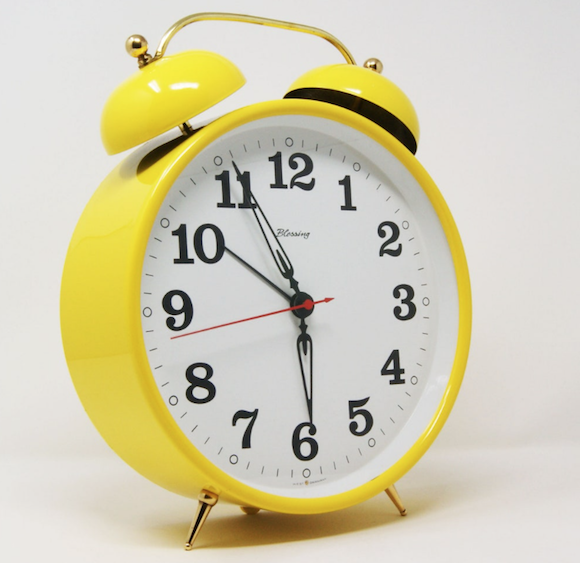
Invite physical analog clocks into your space to make the passage of time more visible and real, and shake up your relationship with time.
4) Remember self-care!
It’s no secret that I’m not a morning person, but it’s only been in the past few years that I’ve learned that our bodies need daylight in order to set our internal clocks to that we’re able to sleep at night. (This explains so much!) So, while there’s more daylight in the summer, it does you no good if you’re stuck inside your office or home and toiling away, missing it.
At work, your fellow staffers may take advantage of smoke breaks. (Ugh.) That’s paid break time of which you may never have availed yourself. So try it. No, don’t smoke (seriously, don’t), but take the break time and go outside. Here are some good moments to take a fresh-air-and-sunshine break:
- When you’ve come out of a meeting
- If you’ve just finished a virtual call on Zoom or Meet or Teams
- When you make three mistakes in a row. Everybody makes booboos, but if you mis-speak three times, or get confused about a concept, or just have a series of oopsies, that’s a sign that your brain is getting fuzzy and you need to refresh.
- If you’re angry, frustrated, hurt, or disappointed. There’s a reason the “Taking a stupid walk for my stupid mental health” TikTok trend has become so popular. It works!
- When you’ve just finished a chunk of deep work. Whether you’ve done a series of 25-minute pomodoros and are ready for a longer break, or you’ve tried the 52/17 Method and you’re ready for 17 minutes of sunlight, get the heck away from your desk. (More more on this, re-read Frogs, Tomatoes, and Bees: Time Techniques to Get Things Done.)
You also need sleep (aim for multiples of 90 minutes, so try 7 1/2 or 9 hours rather than your usual eight) to make sure you’re getting complete REM cycles.
Remember exercise. Whether it’s gentle yoga or power cardio, your body needs strong muscles, flexibility, and stamina.
Hydration and good nutrition are also essential. And no, this isn’t a wellness blog. But all of these things require good organization and management of your time. Set an alarm on your smartwatch or use an app to remind you to drink water.
5) Take a Technology Break, or a Few
Our dependence on technology can prevent us from noticing the real world all around us and the passage of time. I’m not saying to send letters by carrier pigeon instead of using email or scribbling numbers on the wall instead of using a spreadsheet. (Though it might be neat to receive a letter via the Owl Postal Service in the Harry Potter books!) But consider some options for reducing your dependence on tech when it’s not serving your productivity needs.
Keep the phone out of your bedroom. You’ll be less likely to doom scroll into the wee hours, and the blue light of your device won’t wreck your ability to fall and stay asleep.
When you do wake up, don’t grab your phone right away. Instead, do something intentional that will help you achieve your goals for making these hazy, crazy days of summer something more productive (or relaxing or dream-fulfilling). Why not:
- Meditate or explore silent devotion?
- Read a few pages of a real book?
- Visualize your goals for the day and embrace some positive affirmations?
- Get moving? Do some yoga stretches, go for a brisk walk, or do a short workout, or any tiny movement that won’t feel like labor but a nice blip of activity!
Start your day calmly and in control so you have a much better chance of achieving whatever it is you’d like to do with your summer.
When you’re working (or playing), keep your phone in your drawer or your bag. You’ll be distracted and interrupted far less often, allowing you to focus on what you’re doing and get into a flow state.
And maybe consider a digital detox where you put your gadgets and gizmos away after a certain time in the evening, or a technology sabbath where you eschew those pings and whooshes and curated feeds for 24 hours a week.
IDENTIFY WHAT YOU WANT TO ACCOMPLISH THIS SUMMER
Only you know what you want to achieve this summer. Once you’ve got an overarching goal, you can consider how you’ll implement it in small, manageable ways.
Write a book? If you do want to write a book, check out the sixth year of acclaimed author Jami Attenberg‘s 1000 Words of Summer challenge. It provides accountability and motivation for getting a jump start on your writing.
[Editor’s note: Jami’s series of challenges led to the 2024 release of 1000 Words: A Writer’s Guide to Staying Creative, Focused, and Productive All Year Round.]

Get in shape? Pick just one thing. If you’re intrinsically motivated, block time to swim in the morning before work instead of scrolling social media and hitting your snooze alarm, or after work to give your brain a complete refresh before having a “part 2” of your day. If you need external motivation and support, explore joining a summer workout program. Many cities and communities have outdoor sponsored by the Parks & Recreation departments for free or at minimal costs, and it’s less pressure (and cost) than joining a gym.
Maybe you don’t even know what you want to do this summer, but you just know you want this summer to be different and not whoosh by in a series of passing strangers on the street and saying, “Hot enough for you?” over and over. Peruse these posts for ideas:
102 Summer Goals That Are Perfect For Overthinkers
31 Best Summer Goals to Set This Season (2023)
45 Summer Goals: A List to Set for 2023
25 Summer Goals to Make the Most of the Season
Your summer plan doesn’t have to be a big thing. It doesn’t have to be a thing at all. Not everything has to be a big enough deal to make your family’s holiday newsletter. You could decide to eat more seasonal produce (rather than letting it turn to glop in the back of your fridge).

(I don’t know why this man needed so many bananas, but I applaud his enthusiasm!)
Maybe decide to set aside your spare change all summer and then donate it to charity…or splurge on something fabulous Labor Day weekend. (I won’t judge!) You could even strive to do some the things you missed out on during COVID, whether that’s seeing your favorite band on tour or traveling to a far-flung place.
Maybe you want to spend more time with your children to build memories, or have more quality time with your Significant Other or your BFF (not that your best friend isn’t also extremely significant)! Follow Laura Vanderkam’s suggestion and plot out big and little adventures for the summer weeks. By Labor Day, you’ll have stacked up a series of adventures that will make the summer memorable.
FIND A PARTNER
As I mentioned briefly in Paper Doll To the Rescue: How To Save Wet Books & Documents, a few summers ago, after a lifetime of trying (and failing) to read Anna Karenina, I partnered with my college friend and pre-COVID traveling buddy to read the book together. She’s a pediatrician in Upstate New York; I’m a Paper Doll in Tennessee. But through email and texts and phone calls, we were able to explore the characters and how we interpreted their behaviors through a modern lens. (Honestly, we gossiped about them as if they were Grey’s Anatomy characters. Just very, very Russian.)
We’ve decided to do it again, knowing we’re less likely to give up at a boring point if we’re doing this together. We agreed on reading another classic — we’re both fans of Jane Austen, but I already reread all six novels annually, and we wanted something new to both of us. I suggested Middlemarch, but she’s anti-George Eliot due to an unfortunate high school Silas Marner experience. She countered with Frankenstein, and while I appreciate Mary Shelley’s under-appreciated talents, I’ve read it before and it’s a downer.

And that’s how we ended up starting reading Vanity Fair this weekend. Mr. Thackeray, do your darnedest!
Having a partner in crime is always a great way to stick to your goals, large or small. As a reminder, you’ll find lots of suggestions for getting support and accountability in:
Paper Doll Sees Double: Body Doubling for Productivity
Count on Accountability: 5 Productivity Support Solutions
Flow and Faux (Accountability): Productivity, Focus, and Alex Trebek
ESTABLISH BENCHMARKS AND CELEBRATE YOUR SUCCESS!
Whatever you want to do this summer, whether it’s a big, honking deal or just a plan to find more time for your bliss, formally noticing that you’ve made strides toward your goal is a great way to honor your effort (and your magnificence).
Formally noticing that you've made strides toward your goal is a great way to honor your effort (and your magnificence). Share on XWhether you choose to notice your successes by posting updates on social media or just calling your mother (or my mother — she’s great for building up confidence), the point is that you take time to pat yourself on the back and say, “Yay, me!”
Enjoy your summer!
Pulitzer Prize-winning Mary Oliver‘s oft-quoted poem, The Summer Day, has a profound message. After pondering the nature of nature, prayer, and mortality, and debating whether one even knows how to do what they’ve already been doing all day, the narrator asks with passion and reverence what we might want to ask ourselves as we set forth into the summer:
Tell me, what is it you plan to do
with your one wild and precious life?
You’ve got 98 days. Whatever your answer to the question, go for it!
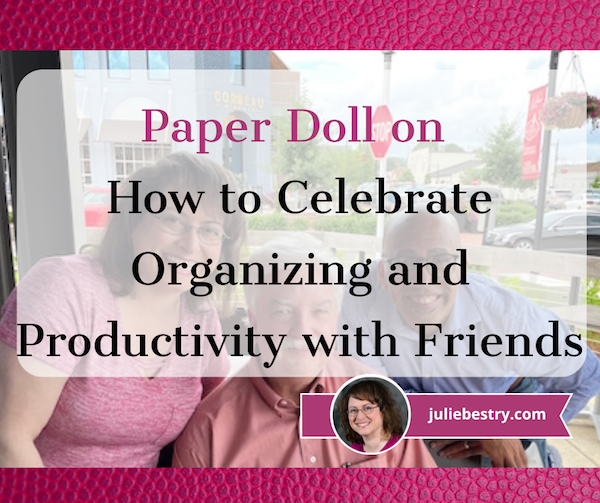
Paper Doll on How to Celebrate Organizing and Productivity with Friends
DO IT TODAY
Back in March, I told you all about my fabulous friend-of-the-blog (and of the blogger — me!), Kara Cutruzzula in Paper Doll Interviews Motivational Wordsmith Kara Cutruzzula. Writer/editor/playwright/lyricist/librettist & all-around-cool-kitten Kara and I have been collaborating for years and sharing one another’s achievements, and today is a chance to share something fun we’ve created together.
If you didn’t get the chance to read that post back, I recommend you jump over to do that. (There are some cool comedic and musical interludes!) We covered Kara’s talents at writing dialogue, especially spitfire-fast banter for whip-smart female characters like those in The Gilmore Girls and The Marvelous Mrs. Maisel, and her skills at writing musicals. That post dug deep into Kara’s background and the resources she creates, including her uplifting Brass Ring Daily newsletter, and her books:
Do It For Yourself: A Motivational Journal,


and her forthcoming Do It Or Don’t: A Boundary-Creating Journal.

In that prior blog post, I also told you that Kara and I had recorded an episode of her Do It Now podcast to air in the podcast’s second season — and that episode is out now!
Today with Julie Bestry: Letting Go of the Stress of Getting Things Done

And it’s not just out, but it’s hot! The episode premiered last Monday, while I was off celebrating a long Mother’s Day weekend with Paper Mommy. Meanwhile, Kara promoted our lively conversation in her Brass Ring Daily newsletter, and listeners really took to it. Kara even forwarded one fabulous email message she received:
“I just wanted to share that on average, I listen to zero podcast episodes a year (it’s not a format that works for my brain usually) — and I could have listened to another two hours of you two talking. I enjoyed that so much this morning. Thank you for making this and sharing it, and to Julie of course. Inspiring as always, and so expansive. Wow. ❤️ thank you.”
Given that Paper Doll readers know how extensively I like to cover a topic, and how delightful and wise Kara is, I’m pretty sure we could have spoken for another two hours — maybe even another two days!
Kara’s podcast usually involves interviews with people I’d consider a much bigger deal than I am — Broadway bigwigs (performers, producers, and stage managers), screenwriters, musicians, journalists, and others who do their work on a big stage (no pun intended). But what we all have in common is the need to get things done each day, and that’s exactly what Kara asks guests about as a jumping off point — what we’re doing that day, and what goes into making sure we get it done.
I’d been fascinated by, and had taken gems away from, every episode of the podcast’s first season, and I was a little uncertain as to what new I could bring to the table. It’s not like I could break into song or share any behind-the-scene secrets from Hamilton or Six. (Oh, if only I could!) But it took all of two seconds for Kara to put me at ease, Oprah-style, and we were off and running. We covered a lot of ground, including:
- Body doubling (as we discussed in Paper Doll Sees Double: Body Doubling for Productivity and Paper Doll Shares 8 Virtual Co-Working Sites to Amp Up Your Productivity)
- Brain dumps, administrative tasks, and making your schedule work
- Setting boundaries, closing loops, and getting back to people without interrupting your flow
- Time blocking to achieve your most meaningful work (as covered in Playing With Blocks: Success Strategies for Time Blocking Productivity Struggling To Get Things Done? Paper Doll’s Advice & The Task Management & Time Blocking Virtual Summit 2022, and Highlights from the 2023 Task Management & Time Blocking Summit
- Using the 1-2-3 system to make sure you’re accomplishing essential tasks and deep work
- Toxic productivity and the necessity of letting go of the stress, shame, and overwhelm of not doing “enough” (alluding to my five part series: Toxic Productivity In the Workplace and What Comes Next, Toxic Productivity Part 2: How to Change Your Mindset,Toxic Productivity, Part 3: Get Off the To-Do List Hamster Wheel, Toxic Productivity, Part 4: Find the Flip Side of Productivity Hacks, and Toxic Productivity Part 5: Technology and a Hungry Ghost)
- Overwhelm and the complexity of living in the 21st century
- Paper shame, the call to do everything digitally, and permission to go the analog route
- Living (and working) authentically for the way your brain works
- Plus, a book recommendation that Kara followed up on and ended up loving! (You’ll have to listen to the podcast to hear which book it was, unless you’re one of the dozens of people I’ve pressed to read it in the last few months!)
- “Building a canoe” — and what I’ve learned to consider differently since listening to the Do It Today podcast
- How do you know when you’re “done” for the day? (In other words, once you “do it today” how do you know that “today” is over?)
Having so much fun talking to Kara and riffing on these kinds of topics *almost* makes me wish she and I had a regular podcast where got to talk all the time!
You can catch Kara’s and my conversation on the podcast episode page, or at pretty much anywhere you listen to podcasts, like Apple Podcasts, Spotify, Google Podcasts, Overcast, Pocket Casts, Amazon Music, Castro, Castbox, Podcast Addict, Player FM, and Deezer. (And no, I hadn’t heard of most of those services, either.) You can also subscribe to the podcast by RSS.
WORLD ORGANIZING DAY
This past Saturday, May 20, 2023, was World Organizing Day. To quote from NAPO‘s web site:
World Organizing Day is a global initiative founded by the International Federation of Professional Organizing Associations (IFPOA) to celebrate the work of organizing and productivity professionals.
This designated day aims to increase public awareness of the benefits of getting organized. It highlights the work of organizing and productivity professionals who enrich the personal and professional lives of their clients.
It also recognizes the accomplishments of individuals and organizations in their efforts to become more organized and productive.
With regard to benefits, it’s obvious that being more organized allows us to save time and money, and to be more productive. When we have organized systems and skills to get (and stay) organized, we can more effectively and efficiently use our space and find what we need when we need it.
However, the psychological benefits of organizing are manifold, as well. When we declutter our living and working spaces, we also reduce the psychological friction that stands between us and getting things done. We reduce frustration and overwhelm, giving ourselves a sense of confidence about our abilities and our surroundings, and increase our sense of ease around having others in our environment with us.
In honor of World Organizing Day, the Institute of Challenging Disorganization (ICD) is making four 90-minute sessions from their 2021 virtual conference available for free to professional organizers as well as to members of the public. Start by watching this video:
Next, go to the ICD website page for World Organizing Day. If you’re already a subscriber or otherwise have an account, you can just log in and go straight there; otherwise, you can quickly create an account.
Then you’ll be taken to the Request for Access to World Organizing Day online form. Once you fill in a few details, you’ll immediately be sent an email granting you access to watch any or all of the four available courses in the World Organizing Day 2023 Package, covering a wide variety of issues related to chronic and challenging disorganization:
- Thriving with Distraction: The Science and Strategies You Need to Know to Make a Transformative Impact in Your Client’s Life taught by Edward (Ned) Hallowell, M.D., author of many famous books on ADHD, including Driven to Distraction (Revised): Recognizing and Coping with Attention Deficit Disorder, Delivered from Distraction: Getting the Most out of Life with Attention Deficit Disorder, Driven to Distraction at Work: How to Focus and Be More Productive, and last year’s ADHD 2.0: New Science and Essential Strategies for Thriving with Distraction–from Childhood through Adulthood.

- A Fabulous Way to Build Resilience to Mitigate the Impact of Compassion Fatigue, taught by Barbara Rubel MA, BCETS, DAAETS, author of a variety of books on loss, grief, bereavement, and renewal.
- Neuroarchitecture Contributions To Challenge Disorganization, taught by Andréa de Paiva, MA, professor, founder of NeuroAU, and an architect seeking to bridge research, education and design.
- Turning Pain into Purpose: My OCD Journey, taught by Ethan S. Smith
Please note that while all four sessions are free of charge, they are only available through June 3, 2023.
OLD HOME WEEK & PRODUCTIVITY PEEPS
Meanwhile, as my colleagues across the planet were celebrating World Organizing Day, I went on a little road trip and got to enjoy camaraderie and talk about productivity with two people whose names might be familiar to Paper Doll readers.
Each March for the past several years, I’ve participated in the Task Management and Time Blocking Summit run by Francis Wade. As I’ve mentioned, not only do I know Francis from the productivity community, but we actually lived in the same dorm, the International Living Center, at Cornell University!
Although we’ve popped up on the same podcasts, webinars, and virtual meet-ups, Francis and I hadn’t seen each other in person in about 37 years! A few months ago, I found out Francis was flying in from Jamaica to Atlanta to present at an International Association for Strategy Professionals (IASP), and would be taking a quick jaunt to Alabama to see family and meet up with our fellow productivity colleague (and my fellow Evernote Certified Expert), Dr. Frank Buck. We knew we’d have to find a way to meet up!
You readers know Frank from when he interviewed me for his own podcast. And all three of us have crossed paths in a variety podcasts and summits recapped in Paper Doll posts, including those mentioned above and Paper Doll Picks: Organizing and Productivity Podcasts.
I wonder if anyone frets over (I mean, “embraces the challenges of”) logistical concerns more than organizing and productivity people. Over several weeks, we squared away the details of triangulating the travel details of our little circle. (See what I did here?) Francis was arriving from Jamaica and driving west to an outer suburb of Birmingham, Alabama to spend the weekend with family before heading back to Atlanta for his conference.

(Ignore the total time and mileage; I couldn’t figure out how to make Google show two separate routes simultaneously, so it added two routes together.)
Added to the complications of planning were my continuing reliance on COVID precautions (not dining indoors) and the fact that I don’t eat meat, but Frank took on the role of cruise director with aplomb and dove into research mode!
Once we knew Francis had arrived safely, I’d be driving southwest from Chattanooga, and Frank would drive a far shorter (but not insignificant) route westward. Through the magic of Google, we identified the unfortunately-named but absolutely delightful community of Trussville, Alabama for our meet-up. There were a few kerfuffles due to weather and communication (take note: always agree on which method of communication — email or texting or whatever — before arranging any muti-location adventure), but we still managed to arrive at our destination within moments of one another.
For anyone ever hoping to meet up with friends in the general vicinity of central Alabama (and I’m not sure how many of Paper Doll readers might find that likely), and not having a reason or inclination to go all the way to Birmingham, I can’t recommend Trussville more highly. This walkable community, filled with restaurants, shops, and a central “entertainment district“ with a communal dining pavilion, outdoor theater, and hanging-out lawn was perfect for getting together for a late lunch/early dinner.



Interrupted only a few times by bursts of rain that moved along in minutes, Francis, Frank, and I enjoyed an afternoon and evening of hearty discussion of productivity methods, Evernote, Artificial Intelligence, video editing, our respective families’ genealogical histories, the current politics of education in America, international perspectives on long-term strategic planning (as a nod to Francis’ conference topic), and the meaning of an all-gender bathroom pictogram (which apparently is not a common sight in Jamaica — we assured Francis that it’s just like any one-person bathroom available to all, like in one’s home or on an airplane, ).
 At Pinchgut Pies, the fellas partook of a specialty “Gaitor Bait” pizza with alligator sausage, while I ordered a pesto-and-fresh-mozzarella pie; later, after hearty discussion of all of the above topics, plus early 20th-century treatments of polio and our experiences of 9/11 (Frank was a school principle; I was working in television), we sampled the wares of Cookie Dough Magic, which sells both ice cream and edible cookie dough.
After three years of COVID and not traveling to any professional gatherings in person, it was a delight to gather outside and talk to colleagues/friends (about productivity as well as personal topics), and getting to finally meet Frank in person, and seeing Francis for the first time in 37 years, seemed like something worth sharing with all of you readers.
Being organized and productive is wonderful, but we must remember that we do it in service of a greater good, to have the opportunity to accomplish not only our labors, but achieve our joys.

As Memorial Day weekend approaches and we head into a (hopefully) more sociable summer, may you be organized and productive, but I hope you also get to enjoy good company, good food, and good times.
Follow Me