How to Avoid or Minimize Probate: Trusts, Organizing Estate Information, and Helpful Resources
Previously on Paper Doll‘s “I don’t you don’t want to think about death but the paperwork is important” series:
- How to Avoid or Minimize Probate: Paper Doll’s Guide to Getting Started
- How to Avoid or Minimize Probate: Organize Your Beneficiaries, POD Accounts, & More
we looked at what probate is, how the process works, and the reasons why you want to avoid it as much as possible. Then we looked at two overarching categories (joint ownership and beneficiary transfers) for inexpensively and easily organizing your assets to avoid probate.
Today we’ll round out the options for avoiding or minimizing probate, clarify some issues regarding wills and their role in the probate process, detail how to organize your estate information to make the transition smoother, and share additional resources to ease estate planning.
WHAT IS A TRUST?
You’ve probably heard a lot of terms bandied about regarding trusts. Because (and I realize I’m repeating myself), I’m a professional organizer and not an attorney, we’re going to stick to the basics for educational purposes; this is not legal advice.
To create a trust, you’re going to need a lawyer’s assistance, which means it’s going to cost more money than the probate-avoiding methods we discussed last week.
Revocable Living Trusts
A revokable living trust is a stellar tool for helping you avoid or at least limit probate.
Think of a trust as similar to a suitcase or basket into which you place your assets. You transfer ownership of your assets — which can be tangible, like a house or a car, or intangible, like investments or bank accounts — into the trust. Instead of you being the owner of these assets, the trust owns them as a sort of spin-off variation of you. Think of it as the Trust of You.
The Trust of You is a completely separate legal entity from the actual walking-and-talking you, and once you transfer ownership, you don’t own your house (for example), but the Trust of You owns the house. It seems silly, but from a legal perspective, it’s powerful.
Throughout your life, you are the (initial) trustee, which means you still maintain total control over what happens to whatever assets you place in the trust. You can buy and sell stock in your portfolio, add a deck to the back of your house, or move money from your checking account to the savings account. It’s just all “owned” by a legal entity that is not you, but it’s controlled by you.
The key is that you name a successor trustee. The role is somewhat like the role of executor, except you don’t have to get the court involved or fill out a lot of excess paperwork. The job of the successor trustee is to follow your instructions for distributing the assets within the trust. That can mean parceling things out to the relatives and friends you’ve named, or the successor trustee may maintain ownership for their own lifetime, until it passes to the next successor trustee(s).
Trust Photo by Joshua Hoehne on Unsplash
When you set up a trust document (which the lawyer may call an instrument), you state:
- what property or assets are going into the trust
- who is the grantor (or settlor, or trustor), the person establishing the trust document
- who is the trustee, the person (or people) with the authority to manage the assets in the trust
- who is the successor trustee, the person who will distribute assets in the trust when you (or you and your co-initial trustee) depart the earth
- who are the trust beneficiaries, the individuals or entities who will receive the property after you’re gone
- and whether there are other trust terms, such as whether and how you can amend or revoke the trust.
You may also want to figure out what assets should be used to pay the eventual taxes on your estate.
With this document in place, you then “fill” the trust by transferring property from your name into the trust’s name.
So, your bank account will no longer be in the name of You, but the Trust of You; the deed to your house and the title to your car will be transferred from your name into the name of the trust, and so on. (Because random tangible assets like your fancy-pants jewelry and artwork (and your less fancy-pants possessions like, well, pants (and other clothing) — or furniture, or whatever — don’t have ownership documents, you can just list the property in the trust document as saying it’s owned by the trust.)
And everything that goes into the trust will be called the “corpus,” which is Latin for “the body” of the trust; you may also hear it called the trust estate, the trust property, or the trust principal. The point is, it’s your stuff until you (legally) drop it in that theoretical basket/suitcase, at which point the stuff belongs to the trust. Got it?
Once you shuffle (or tango) off this mortal coil, the successor trustee will need to:
- get a written verification of the market value of real estate held in the trust as of when the grantor (remember, that’s you) died. This is for tax purposes, because as you recall, the two things that are guaranteed are death and taxes.
- do paperwork to finalize the transfer of the assets in the trust
- give all of this trust information to the beneficiaries of the trust.
Why aren’t trusts subject to probate?
Because, from a timey-wimey, wibbly-wobbly, Jeremy Bearimy legal hocus-pocus perspective, technically, none of the assets inside the trust are yours.
Are they actually in a basket or a suitcase? Nope. It’s all just a hand-wave-y legal maneuver that lets the successor trustee transfer the assets from inside the trust to your heirs/beneficiaries without courts getting involved.
Not to sound like a three-year-old, but whyyyyyyyyyy can you do this? Because somewhere along the way, rich people agreed to make it easier on themselves, and now we non-rich people get to take advantage of the situation, too. Except, again, you’ll have to pay Lawyer Dude III, Esquire some money to get it all set up, so it’s not going to the be the first (or second) choice for many people looking to avoid the perils of probate.
Other than probate, what are the other advantages of a living revocable trust?
A revocable living trust is nifty because it provides flexibility. You can put anything in the trust, take anything out of the trust, do the hokeypokey and turn yourself around, because throughout your life, it’s under your control. Everything inside of the trust is yours to do with as you wish, aside from the fact that in (legal) name only, it doesn’t belong to YOU but the Trust of You.
It’s a living revocable trust, because it’s created while you are alive, and it’s a revocable trust because you can revoke it (that is, take it back, or revise the included property) as long as you are alive.
You can also maintain privacy. While a will becomes public record after probate, the terms of a revocable trust is private, both while you’re alive and after. Your financial holdings and your choices regarding how you distribute your assets will stay confidential!
Additionally, if you are alive but seriously incapacitated — if you suffer an illness or are injured — your successor trustee can act on your behalf to manage your trust assets, per your instructions. Remember last week’s example of the husband of the woman with dementia who would have needed a court-appointed conservatorship to sell a home owned in joint tenancy? That wouldn’t be necessary if they held their home in a trust.
The main thing to know is that setting up a revocable trust allows you to distribute assets smoothly, the way you want, without delays due to probate or fights among your beneficiaries.
What are the disadvantages of a living revocable trust?
- You have to fund the trust properly — If you don’t transfer the assets into the trust correctly, it’s as if you didn’t do it at all, and the assets will have to go through probate. (Lawyer! STAT!)
- Living revocable trusts don’t reduce estate taxes — There are no tax benefits to a revocable trust. (There are potential tax benefits to having an irrevocable trust, one that you can’t change during your life, but that’s too complicated for the purposes of this post.)
- You don’t have any asset protection — Because you have control over assets while you’re alive, creditors can sue and come after the assets. (This is another case where a irrevocable trust can offer extra protection.)
Who shouldn’t get a living revocable trust?
It might not be right in the following cases:
- If your property isn’t extensive, a trust may be unnecessary overkill. The methods we discussed last week may suffice, saving you time and money.
- If you don’t have someone trustworthy (like a spouse, sibling, adult child, or trusted friend, or relative) to oversee a trust after your demise, it’s not the best option.
- If you have oodles of debt, probate has the advantage of providing a cut-off date after which creditors can’t file claims against your estate. Living trusts don’t have any such cut-off date.
- If you’re worried about long-term care and Medicaid planning, an irrevocable trust may be a better option to protect you and your family.
What’s an irrevocable trust?
An irrevocable trust is like a revocable trust except that once the grantor (the one setting it up) transfers ownership of assets into the trust and funds it, nothing can be changed, revised, amended, or terminated, at least without a court order or the agreement of all beneficiaries.
So where does a will come in?
You may be wondering, if you’ve set up joint ownership, beneficiaries, POD/TOD accounts, deeds, and titles, and/or maybe even a trust, do you still need a will?
First, it’s important to know what your will can’t do.
ASSETS YOU CAN’T BEQUEATH BY WILL
A will controls property in your name, with no designated beneficiary and no automatic transfer mechanism. When you die, the will controls your probate assets. Your non-probate assets transfer by deed, title, contract, or named beneficiary.
The options we’ve discussed these past few weeks for easing probate prevent you from bequeathing the following assets by will. (Note: this is not all-inclusive. You daughter-in-law the cardiothoracic surgeon may be an asset to the family, but you can’t bequeath her to your best friend.)
- Life insurance policy proceeds for which you’ve already named a beneficiary
- Funds in retirement accounts, including pension plans, 401(K) plans, IRAs (of various types), or other retirement plans. Again, you just name a beneficiary.
- Money in a bank account designated as Payable on Death (POD)
- Stocks, bonds, and other securities held in beneficiary or Transfer on death form
- Real estate named in a Transfer on Death (TOD) deed
- Vehicles (and not just cars) held in beneficiary form, also called in Transfer on Death form
- Any assets or property you own in joint tenancy with your spouse or other individuals. As discussed last week, related ownership might be called tenancy by the entirety, like if you and your three college roommates buy a house, or community property with right of survivorship with your spouse or life partner. Remember, in such cases, your share of whatever your owned goes to the surviving co-owner(s).
- Assets/property that you’ve transferred to a living trust
Last Will and Testament Photo by Melinda Gimpel on Unsplash
EVEN IF YOU AVOID OR LIMIT PROBATE, YOU STILL NEED A WILL
It’s easy to think that if you set up beneficiaries for all of your securities, and set up POD status for your bank accounts, get TOD deeds for your house and car or set them up for joint tenancy with right of survivorship, and even have a revokable living trust, you can skip having a will. Don’t do that!
Wills are not just for distributing your goodies. They serve other purposes:
- If you have underage children or older dependent children with disabilities, you need a will to name a guardian (and provide guidance for that guardian). However, even if you don’t have children, or your kids are well established in adulthood, there are other reasons to have a will.
- If you acquire any assets after you set up your trust but before you revise it (or cease to exist), having a will and an executor means that you still have a say regarding how anything outside your trust gets distributed. This also helps if you get a gift or an inheritance that hasn’t yet gone through probate at the time you die, meaning you couldn’t have put it in a trust or named a beneficiary. In such cases, your will has a residuary beneficiary, a person named in the will to get everything else you own that isn’t left to any other beneficiary. And if you don’t have a will, state law determines where any of these “bonus” assets go. Do you want your state deciding something like this?
- If you have a small estate, a will makes the Small Estate Affidavit process that we discussed two weeks ago easier on your heirs.
WHY YOU NEED TO PLAN YOUR ESTATE
As you’ve seen from the past few weeks, as much as none of us want to think about death, avoiding the process may make us feel better in the short term, but it creates a lot of trouble for everyone we love after we depart. Here are some pretty compelling reasons to work through the issues.
Avoid an Unpleasant Treasure Hunt
Starting the process right now begins with finding the accounts, the investments, the insurance policies, the deeds, and the titles. Why make your executor waste time searching and waste money paying for documents you already have?
Keep the Wrong People from Becoming Heirs
If you don’t have a will that specifies who gets what, and you don’t name beneficiaries or do the paperwork for joint tenancy or setting up trusts, and you don’t keep all your paperwork annually monitored, the wrong people will end up being beneficiaries of your largesse.
Recently, a close friend’s sister-in-law died. Although her brother and his wife had been married for a few years, various situations kept her from prioritizing making a will, changing her beneficiaries, and even modifying her Power of Attorney documents for healthcare and finances. When she suffered a tragic accident, instead of her husband making the decisions for her care while she was alive, the duty fell to the relative she’d named as healthcare proxy before they’d ever married. Now that she’s gone, her estate will be distributed according to a combination of an out-of-date will and the decisions of someone else; her husband must either accept what happens or fight the executor’s decisions while still in the throes of grief.
If you don’t update wills, beneficiaries, and executor paperwork, the ex who cheated or the sibling who is no longer among us or the best friend who is no longer best will be granted power that you did not wish them to wield, or which they can no longer wield.
Of course, it’s not just money. The person you named to be guardian of your child(ren) 10 years ago may not be the person you’d want now.
Eliminate Confusion and Prevent Feuds
If you don’t plan your estate and keep everything updated, you leave people guessing about what you wanted. With uncertainty comes unpleasantness and infighting. That’s not the kind of legacy you want to leave.
Empower yourself and your loved ones by organizing your information so that you can make the best decisions about your estate plans and make it easier on your executor and heirs.
ORGANIZE YOUR ESTATE INFORMATION
The easiest way to make sense of all of the information you need to track is to create a spreadsheet of all of your assets.
Create a column for each piece of information for financial or tangible assets:
- Asset name — for example, “Personal Checking Account at Chase” or “Roth IRA”
- Account numbers for each asset
- Asset location — for example, the address of the property, the transfer agent for stock, the name of the life insurance company
- Contact information for the whoever manages the asset
- A description of whatever ownership documents you have
- The location of the ownership documents in your home, office, the cloud, etc.
- Beneficiary names — to whom you’re leaving each asset
- How the item is set it be transferred — by named beneficiary, POD, TOD deed, trust, etc.
- Other notes that might help clarify the asset for your executor and heirs.
For vehicles, make a separate spreadsheet with the following:
-
- each vehicle you own — remember to include those you own that others use, like your grandkid or housekeeper
- vehicle type (car, jet ski, golf cart)
- make
- model
- year
- vehicle identification number (VIN)
- location where it’s garaged (your house, a city garage, a storage facility) a barn or airplane hanger or marina berth)
- creditor information if you still owe
- location of the title, if you have received it after paying off any loans — If you’ve lost the paper title, apply for a replacement now and save your loved ones the labor and stress when they’ll already be mourning you.
- name of the Transfer on Death (TOD) beneficiary, if applicable
- location of any agreements, like a lease or garage/docking contracts
- location of the keys
Create a row at the top of the document with the date of revision.
Keep a printed copy of the most updated version of this document with your wills and other estate paperwork.
Revisit the document whenever you acquire new holdings, or at least annually to make sure:
-
-
- beneficiaries are still alive
- beneficiaries are still in your life
- documents, keys, and other essentials are still in the same place
-
RESOURCES FOR PLANNING YOUR ESTATE
For bank accounts, life insurance policies, securities, and retirement accounts, speak directly to the company that manages the accounts, and they will walk you through how to fill out the beneficiary forms we discussed last week. For real estate and other tangible items owned in joint tenancy, start with your local county clerk’s office to see whether you can download templates or if you’ll need to consult an attorney.
Professional Organizers can save you time and headaches, locating all of your documents and organizing the information. You may also find it beneficial to speak with a Daily Money Manager.
If someone in your family has already passed and you’re needing additional help, another resource is Professionals of After Loss Services (PALS).
My colleague Seana Turner blogged about Connecticut-based Transference, a company that specializes in helping executors, surviving family members, and overwhelmed Power of Attorney-holders handle financial and legal logistical challenges.
Get Your Sh*t Together (GYST) — This site offers a wealth of advice, checklists, and free templates to help manage all of the details related to completing your estate planning documents, including The Get Your Sh*t Together Essential Checklists.
Ellis Family Guides — Four free, directly downloadable books on getting your affairs in order, living trusts, Social Security and Medicare, and wills, trusts, and estate planning. They require no sign-ups; you don’t even have to provide your email address unless you want to receive an annual email with updated Social Security and Medicare figures.
Estate Exec — This site describes itself as the estate settlement equivalent of what Quicken does to help manage finances. The software promises to walk you step-by-step though all aspects of an estate, with checklists and record-keeping features. It also grants log-in access to the estate’s account to desired interested parties. They have a ten-day free trial requiring no credit card, email, or registration; if you choose to keep it, it’s a one-time payment of $199 per estate, which is deductible as an estate expense.
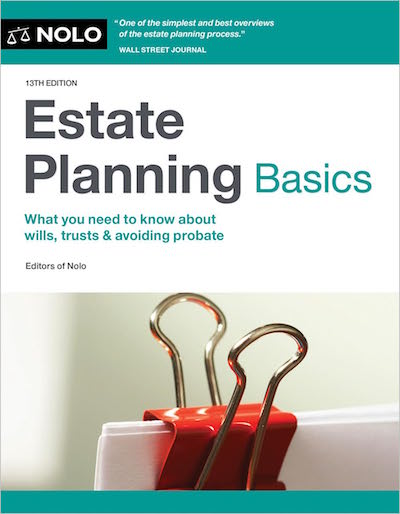
NOLO Estate Planning Basics by Denis Clifford ($21 on Amazon)
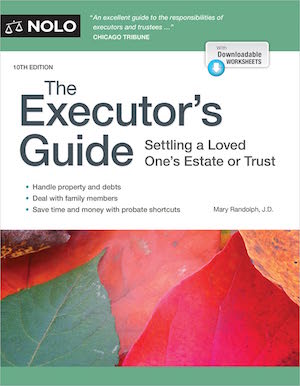
NOLO’s Executor’s Guide: Settling a Loved One’s Estate or Trust ($25 on Amazon)
Childfree Trust — This fascinating newcomer bills itself as the “only comprehensive, nationwide estate solution for Childfree and Permanently Childless people.” They help you create estate documents and promise to be “your professional, fiduciary medical and financial POA, executor, and trustee and ensure your wishes are followed as you wrote them.” They offer members a 24/7 emergency support call center. It’s free to create an account, but membership costs $999/year with locked-in discounts for prepaying for two or three years.
After three weeks of reviewing what probate is, how to avoid it, and how to organize your estate information to ease the process, I hope you’re finding this essential aspect of “adulting” to be a bit less intimidating.
Thank you for doing all of this research and compiling it in this 3-part series, Julie! Absolutely amazing and slightly overwhelming. There is a lot to consider.
We’ve done some of the work, but clearly have more to do, prepare, and think about.
These are the things that can weigh on me until they are done. And even when they are done, as you said, they need to be updated. We’re more up to date than we were, but there’s still more to do. I appreciate the nudge.
My house is in a trust that is locked in unless I sell it or die. If I sell it, 60% of the sale goes to Rob’s sons but then I can use the 40% to find a new place. If I die, the house must be sold and the profit split.
What I really wasn’t aware of until my lawyer pointed it out, I needed to change my house insurance to reflect that the house was in a trust.
Ooph. Once again, this is a lot. Kudos for you for all the research, and also for explaining this all in a way that the average person (i.e., me) can understand!
We do have an estate attorney and have been through the process. Once many years ago, and more recently to update it all. I live in a state where estate taxes are nasty, so that was one motivation. I do think there are some tax benefits of working with an attorney, which might offset the (considerable) expense of hiring one.
This is never truly “finished,” as situations, accounts, investments, and age are always changing. But it does feel good to feel that we’ve taken steps and won’t be caught completely off guard. Plus, its nice to know there is an attorney “on call” should I need him.
Once again you’ve demonstrated your boundless research skills! As Seana said, you’ve explained all this legal stuff in way that most of us can understand. Thank you for all the time you put into this!