Archive for ‘General’ Category
Organize to Prevent (or Recover From) a Car Theft

HOW I LEARNED ABOUT “KIA BOYS”
It all started with a voicemail. I heard voices mumbling, and then a teenage girl said, “Hi. I’m just wondering, did you lose a car? Call this number back because, um, we just saw a red Kia, so if you’re missing a red Kia call this number back because we just saw someone drive away with a red Kia.”
I get a lot of robocalls, recorded messages meant to sound like personal calls. On my office line and cell, they want to talk to me about my car warranty or a problem on my “Microsoft computer” or, since the pandemic, let me know my company is due $26,000 per (non-existent) employee for the Employee Retention Tax Credit.
But I have a red Kia Soul, which I just paid off last month. So instead of hitting “delete,” I saved the voicemail (from an hour earlier), grabbed my key fob, and ran outside to my parking space. I clicked, but heard no “whoop whoop.” Repeatedly clicking, I searched left to right, thinking perhaps I’d parked a few spaces away in either direction. No car. No broken glass. Just nothing.
I pinched myself, sure this was one of those dreams, like the one where it’s the end of the school year and you haven’t ever attended class. I called the number back, and began a harrowing day. I learned that at 8:50 a.m., the caller and three fellow homeschooled classmates were walking into the gym associated with a church around the corner, just 0.8 miles away. The car thief, startled by their approach, “got back in the car, hit a fence, and drove off through a field.”
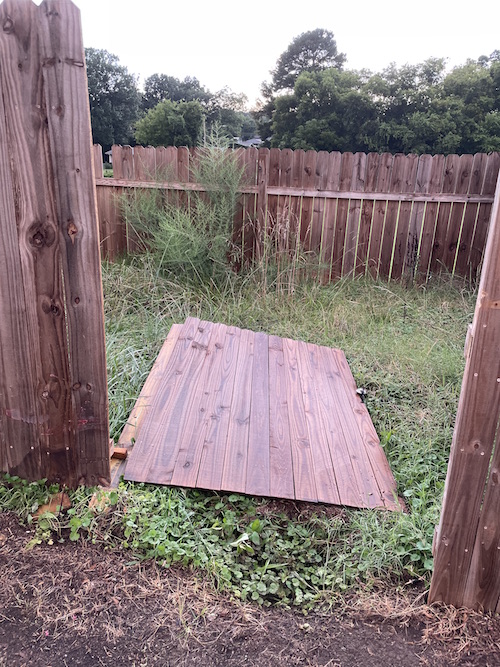
The thief drove my car into the church’s enclosure fence
Unfortunately, they didn’t think to call the police at the time, but after their volleyball practice was over, they came out to find that before they’d interrupted him, the driver had tossed all of my insurance and registration paperwork (as well as, inexplicably, my umbrella and the car parts he’d broken) all over the parking lot and the edge of the field. The girls found my number on the insurance papers and called me at that point.
From there, I called the police. I received a dutiful visit from an officer whose serious demeanor reminded me of Tim from The Rookie.

Next, I spent the afternoon making an insurance claim over the phone, which was made more difficult by a powerful thunder/lightning/hail storm and tornado watch and a four-hour power outage that knocked out my landline.
This was no ring of car thieves. (Kias have the VIN number etched on every engine part, so chop shops don’t want them.) It was, as witnesses and doorbell cameras eventually identified, a teenage boy. Apparently, mine was not an uncommon experience. As I learned from the numerous salt-in-the-wound emails my friends and colleagues sent me, it was an attack by “Kia Boys.” These teenagers learn (from videos propagated across YouTube, Snapchat, and TikTok) how to exploit a flaw in some Kias and Hyundais to start them with just a USB cable, steal them, go joyriding, and abandon the vehicles after a bit of nefarious Ferris Beuler’s Day Off fun.
Kia and Hyundai just settled a $200 million lawsuit which should have meant theft victims like me would be reimbursed for damages, towing and car rental costs, and other out-of-pocket charges racked up as a result of this thievery. There would also have been software upgrades, extended alarms, and stickers to warn off would-be thieves. However, last week, a judge delayed approval of the settlement, saying “it fails to provide “fair and adequate” relief to vehicle owners.”
ORGANIZE TO PREVENT YOUR CAR FROM BEING STOLEN
If being organized guaranteed a car wouldn’t be stolen, professional organizers would be immune. However, there are proactive measures to make your vehicle less vulnerable and deter potential thieves from targeting your car.
- Keep your car in your garage. This recalls the quote, “A ship in harbor is safe, but that is not what ships are built for.” The safest place for your car is in your locked garage rather than in the driveway or on the street. Of course, this means that you might have to reduce the clutter in your garage and organize it to make room for your household’s cars.
- Park in well-lit, well-populated areas, especially at night. This obviously isn’t foolproof, as my car was stolen in broad daylight, at approximately 8:40 a.m., with 40 apartments directly facing my parking space.
- Remove valuables from your car when you’re not in it. Keep a basket or bin in your vehicle or the garage to make it easy to carry things from car-to-home at the end of the day.
- This advice isn’t designed to clutter-shame you, but why tempt thieves who might steal the contents of your car even if they don’t steal your entire car? My car was practically empty; not counting jumper cables in the hatchback/trunk area (which the thief never accessed), the only non-paper items in the interior car were two umbrellas, a $10 phone charger, and my driving eyeglasses.
- The less you have in your car, the easier it is to remember what was stolen and to report it to the police (in case they can track fenced items) and your insurance company.
- If you must leave valuables in the car when you are out and about, hide them to make the contents of the car, if not the car itself, look less desirable. Stash things in the trunk or under the seat, or even in an empty dog food bag or diaper box.

-
- If there are valuable things in your car that you cannot conveniently remove (like children’s car seats or assistive devices like wheelchairs), at least make an inventory of what you own so, in the worst case scenario, you know what’s missing and what needs to be replaced.
- Remove personally-valuable items from your car. I’m amazed whenever an organizing client says, “Oh, I left my purse in the car, let me go get it.” Wallet, checkbook, phone, family photos, toddler’s favorite stuffy? If you’re not in the car, they shouldn’t be in the car, not just because some things tempt thieves, but because your life will be much more inconvenient if you not only lack your car but also your allergy medicine or your chid’s schoolbag with homework or your credit cards.
- Don’t keep any unnecessary personally-identifying papers in the car. However, if stopped by police, you must provide your license and registration, and most jurisdictions now ask for proof of insurance. There’s a safety tradeoff related to keeping insurance and registration information solely on your phone (even in a secure cloud) vs. in the car, and your state and region may have specific rules for digital vs. tangible records.
- Don’t keep other people’s personally-identifying papers unattended in your car. Whether you’re a doctor, lawyer, professional organizer, or whatever else, don’t leave client files easily accessed by ne’er-do-wells.
- Never leave your car running if you are not sitting in it. In the past, I’ve been tempted to get a detachable keyring so I could leave my car running while using my mail key ten feet from my car. Imagine the guilt and frustration you’d feel if you made it that easy for a bad guy to take your car!
- Never leave your keys in the car.
- I don’t just mean your car keys; if a thief has your car and your keyring and your insurance/registration papers, he can figure out where you live (even if the car was stolen from elsewhere) and access your home and your family. Yikes!
- I don’t just mean the keys shouldn’t be visible. Don’t leave keys in your glovebox or console or under the floor mat!
- Always Lock Your Car — Thieves are opportunistic. Don’t make it easy for them.
- Consider a Steering Wheel Lock. — Yes, they’re ugly and clunky and haven’t really been updated since the 1980s when The Club was popular, but if you don’t have a manufacturer-installed software/hardware solution, a visible steering wheel lock can act as a deterrent.

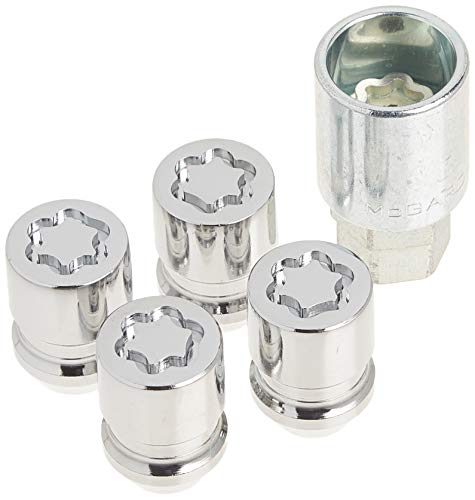
- Use Wheel Locks — If you’re going to be away for an extended period of time, whether your car is at the airport or outside your home, or just fear your wheels or tires being stolen, wheel locks (AKA: lug nut locks) prevent thieves from (easily) removing your tires and wheels. The locks require a special key to remove the nuts. I have them, but unluckily for me, the evildoer wanted my entire car.
- Talk to your insurance company, your dealer, and mechanic about installing any/all of the following:
- An Alarm System — Most modern cars already have alarm systems set when you lock the car such that if someone tries to break in, a loud, annoying sound alerts everyone in the vicinity. However, there are after-market alarm systems to make the alarm louder and of longer duration.
- A Kill Switch — It’s possible to install an electrical device that prevents your car’s engine from starting unless you engage a hidden switch, and it’s a surprisingly inexpensive option. Thieves won’t be able to start the car, even if they have the keys.
- A GPS Tracking System — There are electronic systems and services that allow you to monitor your vehicle’s location so that if your car is stolen, you can tell information and they can find the car. My car’ Kia e-Services allowed me to see the last location I parked (which is helpful in a crowded mall or airport), but it only works in confluence with my phone. A subscription service like Kia Connect or OnStar can actually monitor the location of the car at any time.
- Failing all this, buy an Apple AirTag and link it to your Apple ID account; then tuck it into the upholstery of your vehicle.

You’ll be able to track your car, just as you can use Find My to find your phone or computer. (Car & Driver has a list of similar car trackers.) However, don’t try to recover your car on your own or face off with the thieves; let the police do that!
Again, these precautions aren’t perfect, but you can significantly reduce the risk of a break-in or car theft.
ORGANIZE TO RECOVER FROM A CAR THEFT
If your car gets stolen, it’s important to take prompt action to increase the chances of recovering your vehicle and minimize potential damage.
Recover Procedurally and Physically
1) Contact the Police — Report the theft to your local law enforcement agency as soon as you realize your car has been stolen. Provide them with all necessary details, including your vehicle’s make, model, color, license plate number, VIN (Vehicle Identification Number), and any distinguishing features. Update police with additional information that might help them locate your vehicle, such as any recent sightings, potential locations where the car might have been taken, and any personal belongings that might have been inside the car.
2) Notify Your Insurance Company and Start a Claim — Contact your insurance company to report the theft. They will guide you through the claims process and provide instructions on what information and documentation you need to provide. Your insurance company should also be able to arrange for a rental car, depending on your policy.
If your stolen car is recovered but damaged, you will owe your comprehensive (not collision) deductible, as I explained in Organize for an Accident: Don’t Crash Your Car Insurance Paperwork [UPDATED]. Be prepared for the work to take a long while. I’m two weeks into the process and the estimates haven’t been completed!
3) Notify the Department of Motor Vehicles (DMV) if you’re required to report auto thefts in your jurisdiction. (Ask the police officer who takes your report, check the DMV site, or call to verify.) If someone tries to register a car with your VIN, it should pop up in the DMV’s system as stolen.
3) Try to Find Your Car, but Don’t Get in the Way of the Police — You are not a professional, so don’t step on law enforcement’s toes. However, there are some things you can do:
- GPS Tracking — If your vehicle is equipped with a GPS tracking system, notify the tracking company about the theft. They may coordinate with law enforcement locate your vehicle.
- Check Your Trackers — Track your AirTag’s (or another tracker‘s) location.
- Reach Out on Social Media and in Your Community — Utilize social media platforms to share information about your stolen vehicle, including photos, a description, and any relevant details. You can also share the information with local community groups and online forums to increase awareness. Do not post your personal (off-platform) contact info, though.
- Check Nearby Surveillance Cameras — If the theft occurred in an area with security cameras (e.g., parking lots, streets), contact nearby businesses or property owners to see if they have any surveillance footage that could help identify the thief or the location where the car was taken.
- Ask witnesses to call the police, and give names of witnesses to the police. If call a main number to provide updated information, reference your police report or case number.
4) Keep Organized Notes and Documentation. Write a time-stamp in the corner of the page as you keep a contemporaneous log of everyone you contact at the police, insurance company, towing company, and other services.
You’ll need to provide your VIN number, license plate number, insurance policy number, and police report number over and over. Highlight them on the paper or bold and enlarge them on your screen for quick access. Keep a record of all the information related to the theft, including names of officers, agents, adjustors, or employees with whom you speak. Make a special subfolder for email correspondence with your insurance company or body shops.
5) Prevent Identity Theft — If the thieves gain access to any of your personal information through papers left in the car, be diligent in monitoring your financial accounts and credit reports for any signs of identity theft.
The sooner you take action after your car is stolen, the better your chances of recovering it. It’s also crucial to remain patient and work closely with law enforcement and your insurance company throughout the process.
Recover Emotionally
Call a friend and have them come over and sit with you while you deal with the initial aftermath. If nothing else, they can be a calming presence and body double, watch your kids or sit with your elderly relatives, or make tea. They can answer your landline if you’re on your cell or vice versa. They can take contemporaneous notes while you’re speaking with the police or insurance so that you don’t feel overwhelmed. They can help you brainstorm what might have been in the car, and make sure you don’t miss any steps.
Seek support. You have been a victim of a crime, and while this is not in the same realm as a home invasion or physical attack, it is a violation. Consider speaking with a therapist to handle any anxiety that the situation provokes.
DON’T LET A CAR THIEF LIVE IT UP ON YOUR DIME
Pause or disable any car-related services. Once I’d dealt with the police and insurance, I was frustrated knowing that I would not be able to listen to satellite radio in the rental car. It suddenly made me very angry imagining that not only would I be unable to bop along to 80s songs or listen to Dragnet on Radio Classics, but I realized, “This little miscreant could be in my car right now, listening to Howard Stern!”

Oh, Joe Friday, if only you could have caught the guy!
A little Googling taught me that while you can suspend Sirius XM satellite radio service for up to six months, you can only do by calling, not online. Sirius will only suspend the service for a month at a time, and you must call back to continue the suspension or resume service.
Consider what services are connected to your car so you can avoid the tale told in The Creepy Second Life of a Totaled Tesla.
HOW TO BE AN AMATEUR SLEUTH WITHOUT GETTING IN THE POLICE’S WAY
The night of the theft, after the storms and tornados were behind us, just as a lovely rainbow appeared, my neighbor and his friend offered to drive me around the neighborhood of the church where the thief had dumped my belongings. Behind the church, we saw the small area enclosed by a wooden fence and the portion knocked down by the thief.

Yup. Those are tire tracks. (Would you call that a field?)
We could also see the tire tracks where the thief drove through what the witnesses called a field, but is really just a grassy backyard; on the other wise was an opening onto a suburban street. The guys walked across the wet lawn and dropped a pin on their phones.

My neighbor leads the way across the wet field; his brave friend is wearing shoes he’d literally purchased an hour earlier. Thanks, Jonathan & Andrew!
We then drove to the pinned map location and around the neighborhood, with my arm stuck out the window to see if my key fob could set off the alarm. No luck, but I felt a bit better knowing we’d tried.
AN UPDATE ON THE THEFT OF THE KIA
The witnesses’ coach contacted the police and helped the girls make a detailed report; she also contacted the church’s pastor. He and his wife picked up all of the items the thief dumped in their parking lot. Remember the storms and tornado watch? Had these kind people not connected, my registration and insurance paperwork (and umbrella!) might have ended up in Oz.
When I retrieved my possessions the next day, I learned that the pastor had also made a police report (since it was the church’s fence that the thief hit during his ill-considered escape from the piercing eyes of four teenage girls). Better yet, the church has outdoor security cameras!
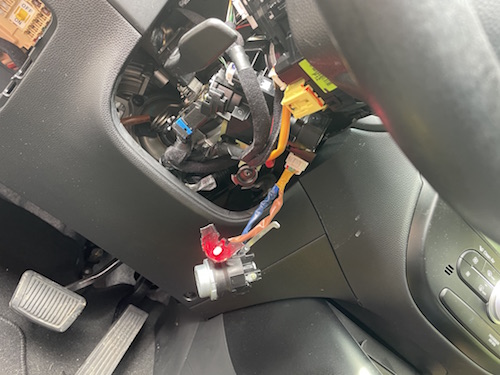
In this bad news/good news/bad news story, the good news is that the police recovered the car the next day. (They even fingerprinted it, just like on TV!) Doorbell footage shows the car was abandoned approximately 15 minutes after the girls saw him, and no more than 30 minutes after it was stolen. And both the dumping of my papers at the church and abandonment were within a mile of my house (in a cul-de sac about one-tenth of a mile from where I’d been clicking the key fob the prior night).
The bad news is that the car was pretty extensively damaged; in addition to front-end smooshing, the ignition system was destroyed and the car isn’t drivable. There’s also unknown functional damage, plus the formerly pristine interior was left a muddy mess. It’s now in the hands of the insurance company and the collision shop.
As with any bad experience, there are always moments of lightness and humor. In addition to leaving behind implements of destruction and thievery, the hoodlum left a ziplock bag filled with about $20+ of quarters. Pinching the bag between my thumb and forefinger as if it were a dirty diaper, I turned it over to the police officer (who gently rolled his eyes when I suggested it might have drug residue on it). My sister tsk’ed that the bag could have held a rare coin, something to fund any non-covered repairs. And my friend suggested the thief planned to take my car to an arcade, or possibly a laundromat. (Considering how much mud he tracked into my car, I’m guessing the latter.)
For what it’s worth, at the end of the day of the theft, storms, and tornado watches, there was a sign of hopefulness.

Organize Away Frustration: Practice The Only Good Kind of “Intolerance”

tol · er · ate –– /ˈtäləˌrāt/; verb
- allow the existence, occurrence, or practice of (something that one does not necessarily like or agree with) without interference.
- accept or endure (someone or something unpleasant or disliked) with forbearance.
What Are You Tolerating?
Years ago, before I became a professional organizer, I was in the habit of reading books about life coaching. They all noted that the first step to creating the kind of life you want was to start by identifying the unsatisfying things that you tolerate. Knowing what makes you unhappy helps you create a strategy for eliminating those “tolerations,” the obstacles to your happiness.
Professionally, I get to use my role as an outside observer to help spot, and eliminate, what clients are tolerating. Too often, people can’t see the forest for the trees. They know they’re frustrated, but they often can’t pinpoint the origin of the pain.
I often assign homework to new clients, asking them to keep a small notebook or pad and write down every instance of when and where they’ve been annoyed by something in their spaces or schedules.
It’s easier to create an effective filing system if you eliminate the papers and documents that are out-of-date or unnecessary, and you’re not going to want to do it if your hanging file rail jiggles or squeaks every time you open a drawer. You can’t organize your closet if it’s full of clothes that don’t fit or flatter your body (or is piled with things that don’t belong in your clothes closet in the first place!), and you won’t work on it at all if the closet’s overhead lightbulb is burned out.
Once you identify a problem, you can begin to fix it.
Forgotten and Hidden Obstacles
Stated that way, it’s obvious. You can’t solve a problem that you don’t know exists.
But even knowing you have a problem doesn’t mean you’ll be inclined to fix it right away. We humans are procrastinators! If a light bulb burns out, but you don’t replace it immediately, the first few times you flip on the switch, you get frustrated anew – you’re alert to the annoyance and it’s acute.

But after a while, you get accustomed to less illumination over your bathroom mirror or dining table, and this problem becomes a low-level hum of almost-forgotten annoyance. You knew you had a problem, but as you learned to live with it, it became chronic, and consciously, you ignored it. Often, a second, or even a third light has to burn out before you can be bothered to make a change. We “put up” with things, tolerating them because we assume the physical energy to fix it will be greater than the mental energy of putting up with it. It’s not.
Professional organizers are not immune to ongoing tolerations. In the vein of “the shoemaker’s children go barefoot,” I’ve been known to let my small frustrations simmer into a stew of crankiness. But if you’re not in a mindset to actively take note of the problem in order to solve it, you’re likely to suffer in silence (or crankiness) without a sense of urgency or agency.
The Shower Curtain Liner Example
I’m short. I’m not exactly built in miniature, but I’m only 5’3″ and a few microns. A standard shower curtain/liner is typically 72 inches long, and to prevent the shower curtain from touching the floor or curving onto the floor of the tub, curtain rods should usually be installed around 75-to-77 inches from the floor. I have a lovely, gossamer shower curtain that hangs outside the tub, and an ordinary vinyl curtain liner hanging inside.
Cleaning vinyl shower curtain liners is a pain, and they’re cheap, so it’s easier to just replace them after a while.
The problem? With most shower curtain rings, even if you don’t need to launder the curtain, you still need to remove the curtain and the liner from the ring to access the liner. Because the ring itself is hanging from (or wrapped around) the rod, you have to be able to manually twist a plastic or metal portion of the ring to open it, releasing both the curtain and the liner.
Then you have to line up the button-hole style openings of the new liner to the ones in the curtain, and, one-by-one, insert the curtain rings and get the clasp to close. Depending on the kind of curtain hooks, you may have to twist the ring into place or pinch your skin on the metal hooks to get everything attached, like getting a new key onto an old keyring.
And if you’re petite, you have to do all of this while standing – balancing, teetering – on the edge of the bathtub.
First world problem, right? I mean, how many times a year do you replace your shower curtain liner? But every time I thought about doing it, I’d waste the powerful mental energy of my shower time grousing about this when I could have been finding a cure for the common cold or having an imaginary conversation with Alexander Hamilton.
But one day, I decided to do the exercise I recommend to my clients. I went room by room, listing each thing I’d been tolerating, each annoyance that was small on its own, but together conspired to frustrate my organized, joyous life.
At first, I only tackled the teeny tasks. I made decisions on clutter, moving things to the laundry, the dry-cleaning bag, the closet, the trash, and so on. Because I’m already fairly organized, this didn’t take long, and it honestly didn’t put much of a dent in my life. But then I kept coming back to that shower curtain toleration.
Instead of just hunkering down and changing the liner, I wondered, “How could this be less of a problem?” and, as I do with clients, brainstormed a list of possible solutions, no matter how silly.
- I could wish really hard that a genie would appear to do the task for me.
- I could move somewhere with a glass shower door.
- I could hire a cleaning person occasionally, timed to when I’d need the liner changed.
- I could buy a higher step-stool to make the height issue less drastic (if still risky).
- I could research shower curtains to see if there were alternatives to the norm.
Wait, what was that last one?
Who actually brainstorms, 'Is there a different or better way to do this?' People who eliminate their frustrations, that's who! Share on X
Finding a Solution
I’m sometimes shocked by how often a client or friend will state a problem and then sigh, as if it’s just something they have to suffer. Occasionally, they’ll say, “Well, I looked at doing X” or “But I tried Y” as if a powerful force field had kept them from going further. But let’s look at some quick, easy options. When facing an problem, you can:
- Google (or use your favorite search engine), tweaking your search terms to find what you need. There are tricks to improve your searches.
- Search on YouTube (which is ideal for solving “how to” problems, whether for plumbing repair, tying a tie, or fixing a stuck spacebar). Last year, someone stole my driver’s side mirror, yanking it from the electrical connections. (Who does that?!) A clear, concise YouTube video allowed me to purchase just the mirror and replace it myself, rather than having to take it to mechanic and pay for service.
- Search in an online forum like (the less dodgy parts of) Reddit, Facebook business or community groups, or neighborhood groups.
- Ask for suggestions on your social media pages.
- Visit or call your local public library. Librarians are experts at finding information. (Let’s say your problem requires a tool, and you don’t want to buy a specialized tool. Did you know many cities have tool libraries?)
- Ask a professional organizer. We know stuff. (We professional organizers get asked all sorts of things. “How do I fold a fitted sheet? What’s the best label-maker? How do I pay off my mortgage faster? Where can I donate this random item that’s of no use to me but might make someone else’s life magical?” Ask your PO!
Back to the Shower Curtain Liner
I didn’t know what I was seeking – yet – but I’d identified the problem. So, I Googled (and Googled and Googled). I found washable shower curtain liners that never need to be thrown away. That was good for the environment, but didn’t help me with my twisty/pinchy fingers or my balancing on the tub’s edge. Then I moved on to looking at all of the different kinds of shower curtain hooks and rings. I’d seen different colors and styles all my life, but they all functioned basically the same – you must twist, snap, or (at best) slide both the curtain and the liner onto/off of one hook.
Eventually, I found the term that would lead me to my solution: double shower curtain rings! The genius of a double shower curtain ring is that it separates the hanging of the shower curtain liner and the shower curtain itself; they hang independently, each on its own hook.
Vaguely reminiscent of tie hangers, the Amazer stainless-steel double shower curtain rings fit the bill!
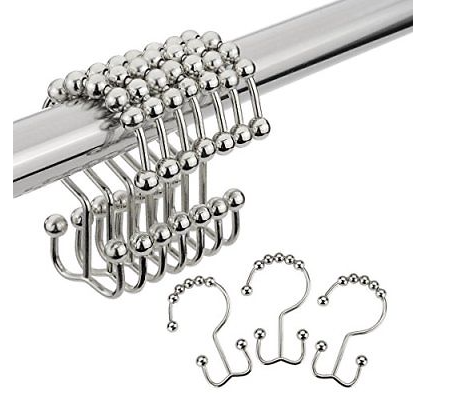
I could now remove the shower curtain liner and replace it without messing with the in-place shower curtain, and it was as simple as sliding the hook through the button-hole. My fingers were saved! Because the there’s nothing to un-hook or un-twist, there’s no need to stand on the edge of the tub – I could easily reach up and hang the new liner in under a minute.
Since finding (and delighting) in this simple solution, I’ve found other kinds of double shower curtain rings.
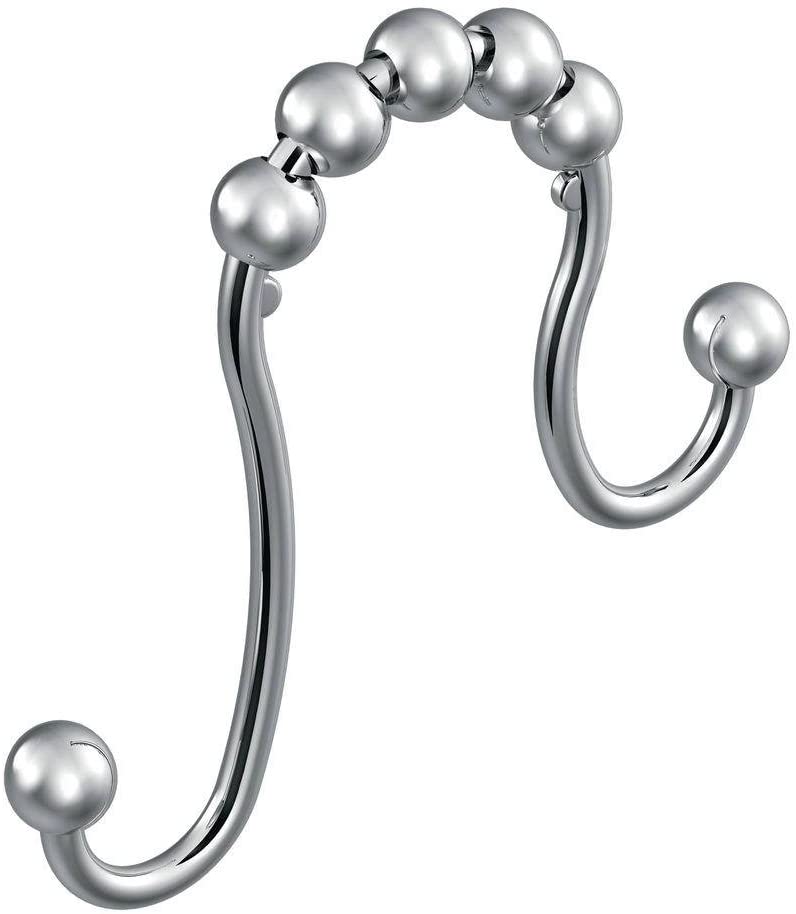
The Moen Double Shower Curtain Rings remind me of Marlo Thomas’ hairstyle on That Girl.

Orb’s Stainless Steel Double-Glide Hooks have an interior (shower-side) hook that hangs lower than the exterior hook. It’s a nifty design, but Paper Doll wonders whether the shower curtain liner may fall too low in the shower, creating a fall hazard.
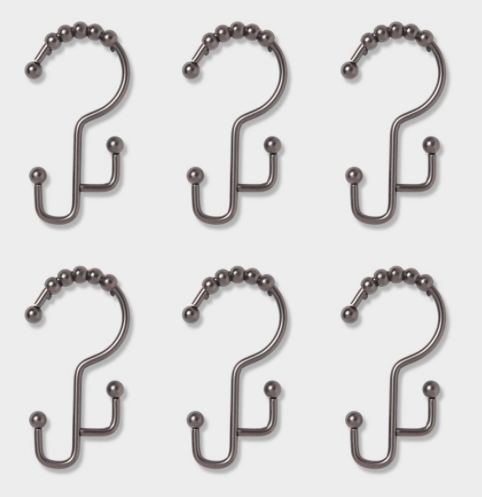
Maybe this is to hide the top of the liner from view outside of the shower, but the Mr. Monk in me would not appreciate the uneven nature.

Digging Deeply to Solve Your Problem
Almost all of the things we tolerate can be solved by one of the following:
- A product
- A service
- A change in behavior
- A change in attitude
But first, we have to dig deeply to figure out what the real problem is. Let’s go back to what we discussed at the beginning. (And then read the classic Paper Doll post, 5 “Real Simple” Reasons We Don’t Get the Laundry (or Paperwork) Done.)
Is your family dressing out of the laundry basket? You may complain that nobody helps you put away the laundry, or that you find putting away laundry to be a chore. But perhaps it’s really that your closets and drawers are overstuffed, which makes the prospect of even thinking about putting laundry away too frustrating to consider. So, you tolerate the initial problem (overstuffed closets and drawers), which leads you to tolerate a further annoyance (wearing, washing, and rewearing the same outfits over and over, and dressing out of the laundry basket).
Let’s say you’re not filing your papers. Your instinct may be to dismiss yourself as lazy. But looking deeper, you may realize that a change in attitude or behavior could help, and decide to talk to a therapist or coach. Is it that you don’t have the time or willingness to do your own filing? If so, a professional organizer or assistant may be the way to go.
Perhaps on your own (or with a professional organizer’s guidance), you might realize that it’s not you – maybe it’s not even your system! Perhaps you’re avoiding filing because you’re chronically annoyed by a terrible, squeaky, unbalanced aftermarket file rail?
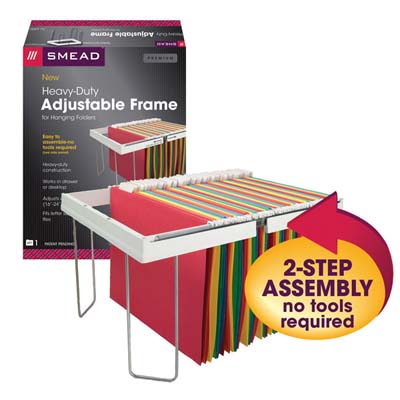
Over the past 13 years, the Paper Doll blog has covered a wide variety of products that offer solutions to organizing problems, most related to paper and information management. In fact, the most popular post in the history of this blog was the one where I told you about the Smead Heavy-Duty Adjustable Frame.
No matter how many times we get annoyed at a problem, we have to call it a problem so that we can start looking for a solution instead of just accepting the annoyance.
Then, if we are confident that a solution can be found, we are much more likely to explore all of the options.
Whether it’s your pantry or your filing cabinet, your to-do list or your darned shower curtain, there are always solutions, and between search engines and experts – like your friendly, neighborhood professional organizer – your life can be better.
Moving forward, I’d like to open up the blog to readers and ask you to submit your organizing problems, Dear Abby-style. (Be assured, your privacy will be protected.) If there’s a product that can solve it, I’ll try to find it for you. If there’s a behavioral approach, we’ll tackle it. And if we need an outside expert, then we’ll talk to a rocket scientist who can find the solution.
What are you tolerating?
Is Your Junk Drawer a Drunk Drawer? 3 Steps to An Organized Junk Drawer
[This post originally appeared on January 8, 2019, and has been updated with additional material as of October 4, 2021.]
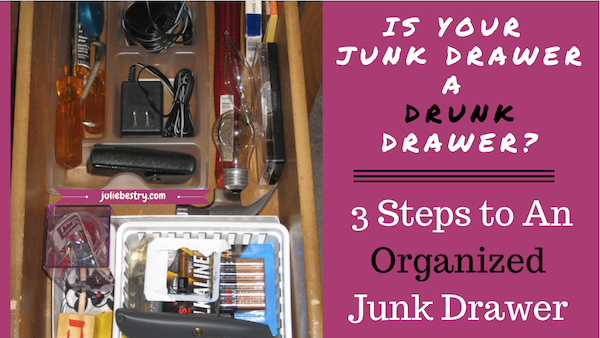
One of my clients refers to her kitchen junk drawer the “Drunk Drawer.”
I don’t drink, so I thought I was missing a pop culture reference. She said that now that we’ve been working together to help her get her life back in order after a few tumultuous years, most of her life is planned out to the nearest detail — organized, categorized, contained. But, on the rare occasion that someone puts a margarita in her hand, especially after a stressful time at work, and she has the opportunity to let her hair down, everything flows freely.
My client notes that with a margarita (or a few) in hand, she says what she wants, she dances to her own drummer, and she gives herself permission to accept that not everything makes sense. Similarly, my client sees that her junk drawer is the one area in her house where she lets the wackiness take over, categories intermingle, and nothing makes sense.
I was reminded of my client’s story when I was approached by Katina Hazimihalis of Dumpsters.com for the Start Fresh: Take the 30-day Decluttering Challenge. (Definitely check it out!) They asked for my advice for Day 7, earmarked as the day of their challenge to “Declutter the Kitchen Junk Drawer.”
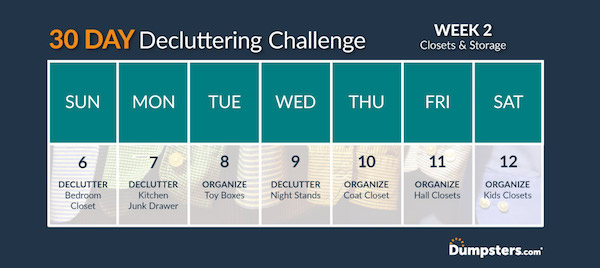 Longtime readers of Paper Doll know that I can never give only a little bit of advice, so there’s a lot that didn’t make it into that post. So, now it’s all here for you!
WHAT’S THE DEAL WITH THE JUNK DRAWER?
Most of the things in a junk drawer aren’t junk. They just tend to be far from their friends in similar categories — the loose change that never makes it to the wallet, the tools that haven’t found their way back to the toolbox, all those random things we want to keep, but we don’t want to take the time to think about where they belong.
Seth Godin says, “The junk drawer is the enemy of understanding.” I have to agree. If you can’t name it, you can’t fathom it.
With paper, “miscellaneous” is the enemy. Is it financial, legal, medical, household, or personal? Is it action paper or reference paper?
With clothing, it’s either underwear, outerwear, or what you wear! You can subdivide into shirts, pants, dresses, etc., and onward to sleeve length or color or season, but there’s still a basic way to start breaking things down.
Categorically, things need to belong somewhere — is it fish or fowl? Animal, vegetable, or mineral? Ginger or Mary Ann? If you can name it, you can put it into place.
Something has to belong somewhere — is it fish or fowl? Animal, vegetable, or mineral? Ginger or Mary Ann? If you can name it, you can put it into place. Share on XBut unlike paper or clothing, not everything has just one home. Some things have a main home and a vacation home — that’s the junk drawer. Yes, you should have a home first aid kit, but it’s helpful to keep a few Band-aids in the kitchen. Yes, most of your office supplies belong in your home office or at your desk, but sometimes you need to grab a highlighter to make sense of the recipe you’re making.
At its best, the household junk drawer can be a miniature subset of categories found around the house. At its worse, however, it’s drunk. It’s sloppy, it makes no sense, and it leads you down a path of regret. Let’s fix that!
WHAT’S THE FIRST STEP TO ORGANIZING A JUNK DRAWER?
Empty that junk drawer. Dump the whole thing out.
It’s rare to hear a professional organizer advise emptying everything out of any space. Usually, we focus on handling one shelf or one category at a time. That’s because the last thing you want to do is get ninety minutes into a closet overhaul and have to pick up your children from school, leaving you with an unusable bedroom and a huge headache.
However, there are two reasons why a complete dump-out makes sense with a drunk junk drawer. First, junk drawers are small. Other than a wallet, purse, or glove compartment, I’d be hard-pressed to find a smaller space that requires concerted attention.
Second, approaching a junk drawer too delicately usually means nothing ever gets completed. People pull out one item at a time and make a few decisions, put a few things back when they decide to keep them, and never quite get around to making decisions about everything. Instead, the best thing to do is to remove everything from the drawer.
Because most junk drawers are in kitchens, what often works is to put a large towel down on the countertop or kitchen table (to prevent scratches). Plop everything down together. Slowly move things to the outer edges of the towel, as if you were searching for a Canadian penny amid all the coins you’ve shaken out of your piggy bank.
Grab the low-hanging fruit first. Remove gum, candy, soy sauce or hot sauce packets, or really anything edible and move to a “snack” box or food storage container on one of the shelves of your kitchen or pantry. Keep sticky, melty, or bug-friendly edibles out of the junk drawer.
Select one item at a time and ask yourself a few questions:
- Is it broken, expired, dried out (like pens or old wipes), or icky? Toss it out!
- Do you ever really use it? If not, you might toss it or donate it.
- Do you find yourself using it often enough that it really needs to be in the kitchen (or whatever room you keep your junk drawer)? If not, move it to a part of the house where it better fits with a category of items already kept elsewhere, like tools or office supplies.
- Do you need this many of whatever it is? Keep your favorite, keep the best, keep the one you’d grab if you needed it. Set the excess free (from the drawer) and either donate or move to a more appropriate place in your home.
Remember, if you don’t use it often, don’t let it take up the valuable prime real estate in your drawer!
NEXT, MAKE SENSE OUT OF THE CATEGORIES
At first glance, it may seem like everything in the junk drawer belongs to the miscellaneous category, but with patience, you’ll start seeing patterns.
Categorize the items into little areas/zones on the counter or table so you get a sense of how many of each thing you have. If you have duplicates, triplicates, or more, you may want to keep one version handy in the drawer, but move the remainder elsewhere, in your own mini-mall of “when I need them” supplies.
Ask yourself, what does the item DO? What is it for? Some category examples:
Batteries — Keep a small supply of the most commonly (and urgently) needed (like AA and AAA). Move the rest, plus whatever other sizes (9 volt, C and D, and smaller batteries for hearing aids, watches, and medical devices) to one divided container (like a tackle box) elsewhere in the house, like in a cabinet or on a shelf in the laundry room, utility room, or basement.
Duplicate keys — Use key cap tags/covers or labels to identify what the keys fit and keep all keys in one container.

Eyeglass Supplies — like spare reading glasses, mini bottles of eyeglass cleaner, a microfiber cloth, tiny magnetic screwdrivers for repairing glasses
Electronics — like chargers, plugs, adapters, power banks, or any electrical doo-dads that you need to get your hands on regularly. If you’ve got a charger you only use with your old video camera, store it with the camera case, not taking up space in your new-to-sobriety junk drawer.
Loose change — Store your change in a small-to-medium-sized lidded jar, and whenever you come across any loose change in the house, drop it in. When it’s full, take to your bank or donate it to charity. Hate rolling your coins? Hand it off to a responsible ten-year-old, or consider Coinstar.

Image by PublicDomainPictures from Pixabay
Many grocery stores and retail lobbies have Coinstar kiosks; you just dump your coins in, and (for a hefty 11.9% fee) the machine will count your money and give you four great alternatives. You can:
- Get back cash in the form of paper money.
- Add cash to your Amazon balance (and learn more about how it works on the Amazon side, if you’d like to shop without using a debit or credit card)
- Buy an eGift card (and bypass the coin-counting fee) — Current retail gift card options include Amazon, Apple, Cabela’s, GameStop, The Gap, Hotels.com, iHop, Krispy Kreme (whoohoo!), Outback, Sephora, Starbucks, and many other retail and dining locations.
- Donate to charity (including the American Red Cross, Children’s Miracle Network Hospitals, Feeding America, the Leukemia & Lymphoma Society, Make-a-Wish, NAACP, the Humane Society, UNICEF, United Way, and the World Wildlife Federation. (See? By organizing, you can do well for yourself and do good for others!)
Apparently you can also purchase Bitcoin through Coinstar, but it’s Paper Doll‘s policy never to recommend options that I can’t explain.
Office supplies — Subdivide this larger category into smaller office supply categories by function:
- things that put stuff together (stapler, tape, binder clips)
- things that pull things apart (scissors, staple remover, X-Acto knife or box cutter), assuming the drawer is safe from the hands of curious little ones
- things with which to write (pens, pencils, highlighters)
- things on which to write (sticky note pads, notepads) — but, in general, try to keep documents and loose papers out of the junk drawer. If you’re keeping takeout menus, coupons, contact info, etc., in that general area, use a file riser and keep a few file folders for the purpose. Paper should live upright, not squished in a tiny drawer.
If you have a home office or homework zone elsewhere in the house, keep these supplies to a minimum in the junk drawer. If you have a kitchen desk (built-in or otherwise), move the office supplies to the desk drawer.
Move any papers out of the drawer and into a desktop file box or a few three-ring binders designated for take-out menus, house-of-worship or homeowner’s association directories, and school reference papers.
Things that burn or light — birthday candles, matches/lighters, flashlights (but, as with sharp doo-dads, do consider whether these need to be kept elsewhere if you have tiny humans in the house)
Tools — People have a habit of getting a tool out of the toolkit for a task and never putting that tool away, tossing it in the junk drawer instead. Homes are much more efficient if you maintain a real toolkit with everything you need to run your house smoothly. (If you have an actual house or do a lot of DIY, get one pre-made; most Grandpas would recommend something by Craftsman. Or assemble one that fits your needs from recommendations online, like this Pioneer Woman post on building a starter tool kit.)
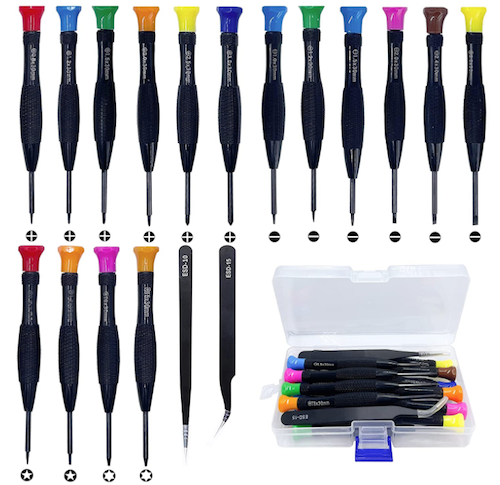
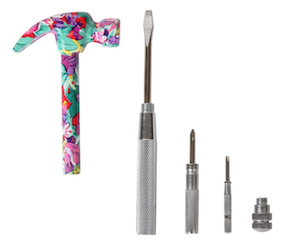
Then, just keep a small section of your junk drawer for a multi-tool (like a Leatherman), a few short-handled Phillips-head and flat-head screwdrivers (and a Robertson* screwdriver, if you’re in Canada), measuring tape, and a small hammer. Because, come on, is your house SO big that walking to the toolkit is going to exhaust you?
Note: If you find yourself doing a lot of tiny repairs, keep all of your tools in your main toolkit, but get any inexpensive hammer with lots of tiny screwdrivers nesting inside.

NOW, CONTAIN YOUR CATEGORIES
Once you divide everything into sub (and sub-sub) categories as described above, you’ll have a sense of what you own, and how much of it you’ve been trying to keep. Now it’s time to get creative and figure out how you are going to make it all fit together.
Divide, contain, and conquer!
But before you start moving things into their new, more organized homes, wipe down the interior of your drawer with a damp cloth.
If more than about one-quarter of the drawer is filled with just one category, then it’s time to move that category out of the junk drawer. Find that category its own dedicated home, in a box or bin that contains all of that category, whether on a shelf in the pantry, laundry room, or wherever is closest to where you use it most often.
Next, use padded, non-slip counter or shelf liners with a bit of rubbery “grip” to cover the bottom of the drawer. This will keep items from sliding around when the drawer opens and closes, and also prevent squeaking.

Use drawer dividers and/or small containers to corral each individual category. There are a variety of options depending on how many items you have in each category, how large they are, and how large the interior of your drawer is (in terms of height and depth). Consider the following options:
Inexpensive, plastic, flat-bottom baskets in multiple lengths/widths. You can arrange them as if you were playing a game of Tetris! (You can use lidded containers, like snap-closed pencil cases designed for elementary school students, but just the tiny added labor of having to open and close lids to retrieve and later put things away might dissuade you from staying organized and lead you to leaving things out on the counter or just tossed in the drawer.)
For example, Mainstays’ line of plastic storage baskets can be found at Walmart, various dollar stores, and online. I particularly like the narrow ones for writing implements, screwdrivers, and scissors.
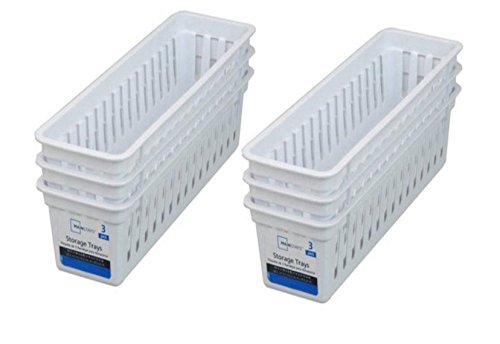
Wider rectangular Mainstay baskets are better for notepads, batteries, and anything where you’re keeping quite a few things grouped together.

There are similar options if you prefer brighter colored baskets, and local or teaching supply stores tend to have cheerier baskets.

Ice cube trays work well for corralling very small items; mini-muffin trays can be great for keeping magnets from getting loose.
Sectioned drawer dividers can be found in a variety of styles in home goods stores. For example:
KD Organizers Deep Drawer Organizing Trays

Container Store Linus 4-Section Drawer Organizer
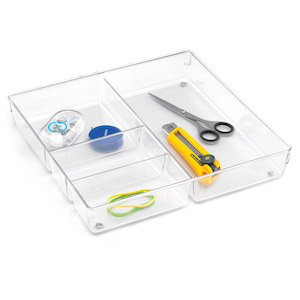 Mesh desk drawer organizers from office supply stores are usually inexpensive, low-key attractive, and work well when you want to buy just one thing. This Rolodex Deep Desk Drawer Organizer is simple, but gets the job done.

Expandable cutlery drawer inserts are also good alternatives; you may already even have extras in the house. Just be sure to use the ones that with rectangular compartments, and not those that are shaped like spoons or forks. Otherwise, most things won’t fit properly.
THE FINAL WORD
An occasional margarita on the beach can be fun, but you wouldn’t want to replace your morning coffee with it. Similarly, you don’t want your junk drawer to get too wild. Make time periodically to maintain your more orderly junk drawer and keep it from becoming a drunk drawer.
*Thanks to my fabulous former professional organizing colleague, Jackie Hollywood Brown (blogger at Canadian Army Wife and virtual assistant extraordinaire at Productively Organized), for introducing me to the concept of those nifty, square Robertson screwdrivers. They rank with Tim Horton’s, poutine, and Kim’s Convenience as just a few of the fabulous things our neighbors to the north enjoy under the radar. Please note that Jackie, herself, serves clients in the U.S. as well, so if you’re in the market for a VA, she’s the bee’s knees!
Disclosure: Some of the links above are affiliate links, and I may get a small remuneration (at no additional cost to you) if you make a purchase after clicking through to the resulting pages. The opinions, as always, are my own. (Seriously, who else would claim them?) For more information regarding how Best Results Organizing handles affiliate links, please see the affiliate section of the site’s Privacy Policy.
5 “Real Simple” Reasons We Don’t Get the Laundry (or Paperwork) Done

Did you just do a double-take? Laundry? In a Paper Doll post? While we rarely talk about organizing non-paper aspects of domestic life, a recent interview presented an interesting way to use laundry to consider how we procrastinate on other tasks, like paper management.
A writer for Real Simple Magazine contacted my colleague, the fabulous Dr. Melissa Gratias, about the psychology behind why people fail to finish their laundry. Being interviewed by Real Simple is a plumb opportunity, but Melissa – a psychologist by training – focuses on corporate organizing and professional productivity. Melissa honored me by suggesting Real Simple should get my take on the topic.
In the end, in Real Simple‘s June issue about “getting it done,” laundry ended up being just one small section. (See my quotes on page 128!) But you, dear readers, have the opportunity to learn it all!
The reporter asked:
Why [do] we have trouble finishing the laundry (wet clothes left in the machine, clean clothes not folded, folded clothes not put away) – and how we can change our habit to get it done in one swoop so it’s off our plate?
The key word in the inquiry was “finishing” but for many people, even starting laundry is the bigger obstacle. It’s funny to think about why we put off laundry as this huge, scary thing, because our great-grandmothers used finger-peeling washboards and our great-greats had to take the washing down to the river to beat the clothing against the rocks.

Meanwhile, we drop our laundry in metal boxes and push a few buttons! It’s not particularly onerous, so there must be more to it than the labor — and, as you may have suspected, much of it is psychological. However, small tweaks can dramatically improve our ability to get our laundry done and get us on our way — fully clothed, unstained, and possibly in a fashionable mode of dress.
First, laundry is not a task, but a project. Tasks are singular, but the ongoing saga of the laundry project involves multiple sequential tasks:
- collecting our laundry from the various places we (and our children, and our spouses who sometimes act like children) drop or toss them
- remembering what special tasks (pre-treating stains, removing accessories, securing drawstrings) must be performed
- sorting laundry by color and/or temperature
- washing (but the actual labor is done by the machine)
- transferring the laundry to the dryer, making sure to remove any items that must be line-dried or hung over sweater racks or otherwise given extra attention
- drying (again, done by the machine)
- removing laundry from the dryer in a timely manner so that wrinkles don’t set in
- folding laundry (clothing, bedding, towels, etc.) and hanging clothing
- putting it all away
Wow. These discrete tasks should naturally flow from one to the next, just as the various steps in cooking a meal, but we’re much more inclined to wander away, mid-task, with laundry.
Consider the following obstacles and solutions:
1) PROBLEM: We lack timely triggers to start laundry.
At least, we don’t have them in the same way we do as for preparing a meal. (What? Do you starve for fluff & fold?) Other than in college, when students tend to put off laundry until they run out of clean underwear, most adults don’t have a natural trigger to get started on laundry.
SOLUTION: Create your own triggers.
Pick days and times when you’ll do laundry, like during your children’s piano lessons and scouting meetings on Tuesday and Thursday afternoons, or on weekend evenings after dinner, because the bulk of the work can be done quickly before TV time and the folding can be done during commercials. Set alerts on your phone or computer and let them serve as your valet or butler — albeit one unwilling to do laundry, but happy to remind you that it must be done.
This concept works just as well for paper-oriented tasks. Instead of waiting for your bills to be due (or overdue) — the equivalent of running out of clean laundry — schedule a time to work on your tasks. Bill-paying is a kind of correspondence (though you’re sending money, rather than cheery news), so you might schedule other tasks, like writing thank-you notes at the same time. In your professional life, group tasks like responding to emails or drafting your business newsletter at set times on certain days, like after your staff meeting on Wednesday mornings.
The key is to identify your trigger, set an auditory or visual alert to help you focus on the trigger, and create a time block to complete the task. Maybe the new Time Timer we recently reviewed can help?

2) PROBLEM: We anticipate that laundry will be more of a pain than it actually is.
Although laundry requires multiple steps, most of them are easy and each can be completed in a matter of minutes (except for what the machines do). But many of us recall when laundry was difficult (requiring amassing adequate stashes of quarters, dragging heavy laundry bags from our dorm rooms to basement laundry rooms only to find all the washers were in use), and that sense memory makes us subconsciously rebel against even the idea of doing laundry.
SOLUTION: Find ways to make doing laundry less unpleasant.
- Install better lighting in your laundry room, and clear the space of clutter.
- If your laundry room is also used for other purposes, create a separate laundry zone. Corral your bottles of stain remover, boxes of fabric softener, lint remover, and everything except your heavy detergent bottles, in rubber dishpans or tubs you can easily slide off cabinet shelves.
- Install a valet hook, a rolling clothes rack, and/or a retractable clothes line in your laundry area to make buttoning, zipping, and hanging clothes easy.
- Get rid of (or fix) anything about your laundry area that makes you avoid it.
These tips work for paperwork, too. Do you put off filing, remembering that one time it took you all weekend to deal with six months’ worth of paper backlog? You have almost ten years of Paper Doll advice on how to create a filing system so that everything is logical and easy to find. Join the Clean Desk Club, and learn what papers you need to keep and what you can toss by getting Do I Have To Keep This Piece of Paper? Instead of filing months of papers in drudgery, do short bursts every week, and put on your favorite music to liven the mood.
3) PROBLEM: We lack systems and don’t set aside time to complete the project.
Work isn’t completed until it’s done, and laundry isn’t done until it’s put away. But that injects another problem. Because we procrastinate about doing laundry, we then feel that we have to do ALL THE LAUNDRY all at once, at which we either will fail (making us resentful of that sense of failure) or succeed (making us resentful that we’re expected to ever do it again).
SOLUTION: Create physical and behavioral systems to make the work easy to complete.
- Only start laundry when you’re going to be around to complete a load from start to finish.
- Don’t start a load of laundry late at night – you’ll be tempted to go to bed and leave the items in the washer or dryer.
- Sort laundry sessions by type. Do bedding and towels when it’s more likely you’ll be interrupted. (Nobody minds wrinkled towels).
- Do more smaller loads of clothing. It’ll wash better and dry faster.
- Know how long your washer and dryer cycles take; if they don’t have musical alerts that you can hear from elsewhere in the house, set your kitchen timer or phone alarm to remind you to move the process along.
With papers, conquer your ingrained avoidance by making sure you have systems that make it easy. Create homes for what is to-be-paid and to-be-filed, and a filing system that is aesthetically pleasing (if that’s what gets you going) and ergonomic (with good lighting and a comfortable place to sit so you don’t hurt your back while working).
Behaviorally, you can complete small tasks in whatever time you have available, but if you’re working on a larger project, like developing a family budget, writing your graduate thesis, or putting together your start-up’s marketing plan, you need to see the big picture and make sure you’ve blocked time to take your project from start to completion.
4) PROBLEM: We resent that we’re doing all the work!
While some of us find the folding of laundry to be almost Zen-like, for most people it’s not exactly
Disney World. That doesn’t mean laundry must mean misery.
SOLUTION: Don’t feel obligated to do it all by yourself.
Delegate: If your kids are old enough, teach them how to do laundry, starting with hard-to-destroy items like towels, and help them to understand laundry instruction tags, temperature settings, etc. Start by working together, and once they’re good to go, include the least destructible types of laundry on their chore charts.
Share: Nobody says laundry has to be a solo adventure. Just as with kitchen tasks (I’ll wash, you dry), split up the effort so it seems like less work. If you get the clothes sorted, pre-treated, and into the washer, make it a tag-team event and let your partner get it from the dryer to the bedrooms and linen closets.
Trade tasks: If you really hate doing laundry, even with these tips, see if your spouse has a much-detested task of similar effort and value, and trade-off, even if only for a few weeks at a time, to give you both a respite.
Entertain yourself: If nobody else can or will help, make laundry time delightful. Listen to podcasts or favorite songs while you do the bulk of the work, and let yourself focus on fun rather than work during the washer and dryer cycles.
This advice is applicable in your non-laundry areas, too. Whatever you have to do, if it’s not something at which you’re skilled (or willing to get skilled), find a way to get it off your plate. If you don’t have a committee member, colleague, employee, neighbor kid, or pal to whom you can delegate or with whom you can share, hire someone affordably:
5) PROBLEM: Our closets and drawers are bulging.
Here’s where the Pareto Principle really comes into play. 80% of the time, we wear the same 20% of our wardrobe; we wear, we wash, we dress out of the laundry basket. Our clothes don’t make it back to our closets and drawers because we often know that trying to squish hangers into tightly jammed spaces or folded clothing into overstuffed drawers will be futile. It reminds us that we must purge our excesses, and to avoid that discomfort, we subconsciously avoid even taking clothing back to where it belongs.
SOLUTION: Declutter!
- Pair up with a spouse, teen, or friend, or enlist the aid of a professional organizer so that you can reduce the number of items that no longer fit (your body or your lifestyle) or flatter.
- Arrange by clothing type (to make it easier to know where to return any just-laundered item.
- Move empty hangers to one area, so you’ll be able to grab them for laundry use instead of fighting to untangle them amid the chaos. Move anything that isn’t clothing, shoes, or
accessories elsewhere. - Pare down linen closets to what you actually use; jettison threadbare towels; donate sheets that don’t fit any size beds you currently own.
To get from to-do to halfway-done to finished with paperwork, eliminate the distracting clutter. Get the kids toys off your bill-paying desk and back to the playroom, pull and shred the household bills from 1987, and get the dust-covered knickknacks out of your workspace.
Finish the laundry. Finish the paperwork. Get on with your life!
NAPO 2015: Origami & SOFI–Innovations for Organizing Your Home
People ask professional organizers about storage solutions all the time. What are the best containers for our possessions? What shelves or tubs or drawers or dividers or other magical tools should we buy to organize our stuff? Of course, that’s the wrong question, or at least the wrong first question. To me, focusing on the storage container instead of the contents is like buying an outfit and becoming determined to lose weight to fit into it.
The problem? When we set out to lose weight, we really have little idea (or control over) whether the weight lost will be in the bosom or the buttocks, the abs or the love handles. It makes much more sense to reduce the excess (of our stuff or our too, too solid flesh) before picking the perfect outfit, wrapper or container.
That said, the right storage container, in a pleasing style or color, can help us preserve order and keep us from backsliding into clutter. Today, we’ll explore two new product lines that displayed their storage solutions at the NAPO 2015 Annual Conference and Organizing Expo.
ORIGAMI
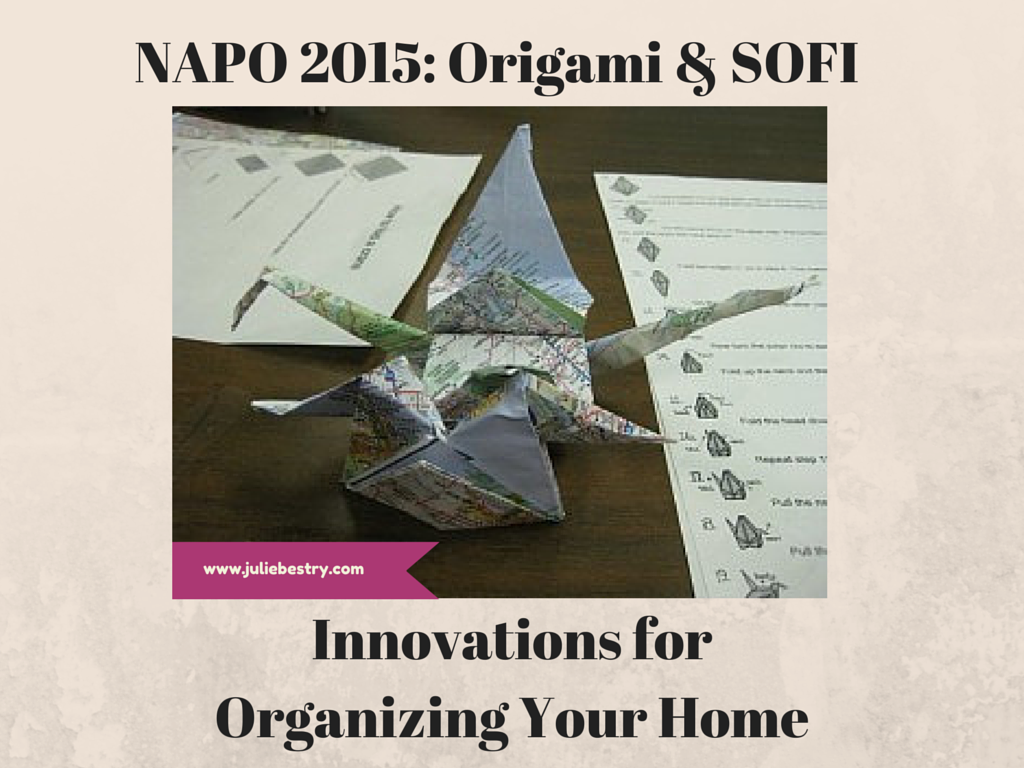
EXPO attendees were mesmerized at the Origami booth. As you may know, origami is the Japanese art of paper folding, an art with which I’ve had mixed results.
Think about what you detest most about putting shelves and racks together. The difficulty making sense of poorly translated directions? The need to buy weird one-time-use tools? The extra bits and pieces left over, leaving you fearing the whole thing will collapse?
Origami seeks to put those worries out of our heads by creating racks and shelves that are already fully assembled, folded and collapsed prior to packing, and require only a bit of “unfolding” to display their genius. No tools are required, and most of the products fold flat for easy storage.
To see how a basic Origami Rack comes together, take a peek at this video.
Origami has five product lines:
- Home Origami products includes racks, tables and organizers. The racks are suitable for mudrooms, bedrooms, pantries and living rooms, and also include decorative displays, folding closets and shoe racks.
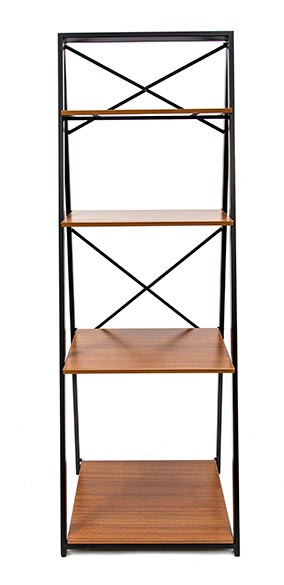 The basic table is just the right size for sewing, crafts or a small study desk. The metal/soft-side organizers work vertically and horizontally.
- Kitchen Origami products include a tall pantry rack, Baker’s rack, and a variety of kitchen carts.
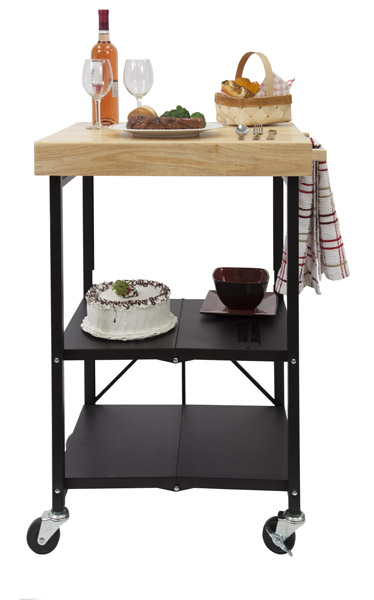
- Garage Origami racks come in multiple sizes, shapes and heights, and both with and without wheels, for everything from storeroom displays to corralling seasonal possessions.
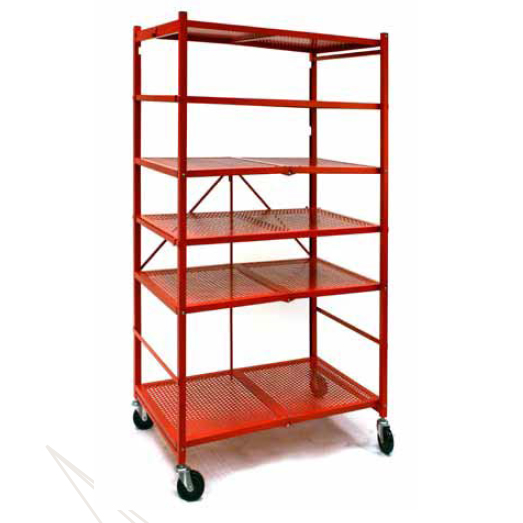 There are also small and full-size workbenches.
 - Garden Origami products include a 3-foot potting bench and a 4-tier greenhouse.
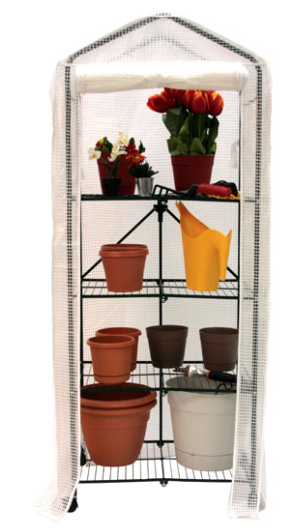
- Office Origami items include a six-tier bookshelf, a standard computer desk and a laptop trolley, as well as an intriguing folding trunk.
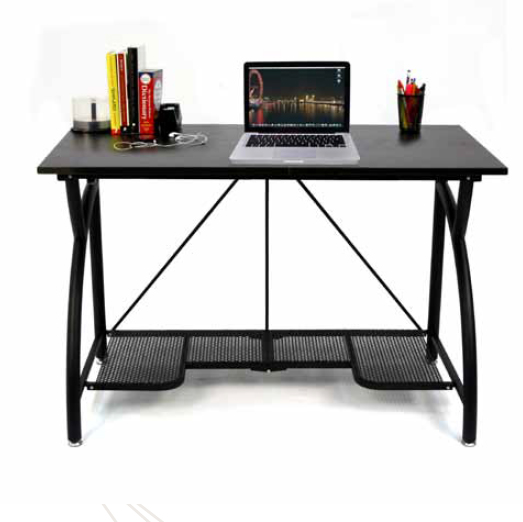
Other products, not shown on the Origami web site but included in the catalog distributed at the NAPO Expo, include an over-the-washer/dryer rack, additional general-purpose shelving units and bookshelves, a TV stand with extra tiers, and soft canvas rack and cart covers.
The Origami racks and other shelving items seemed impressively sturdy and easy to “unfold” into place; most of the shelves for the larger racks have a 250 pound weight-bearing capacity. (The pantry rack, computer desk and workbenches support 100 pounds; the laptop trolley, 50 pounds.)
Pricing for the various units ranges from $49.99 to $299.99, though the vast majority of items are under $150. Origami’s shelves, racks, tables and organizers are so new that there’s no distribution information readily available on the website, but if you’re willing to have something shipped, you may purchase through the Origami web site at each individual product page, or visit Amazon to purchase a small sub-set of Origami racks.
SOFI
SOFI™ is a new product from an old friend. You’re almost assuredly familiar with Bankers Boxes, made by Fellowes, either from personal use at home or work, or via This Is Not Your Grandfather’s Bankers Box. We’ve talked previously about the advances in Bankers Boxes in recent years, but this is something brand new — a mix-and-match storage organization system.
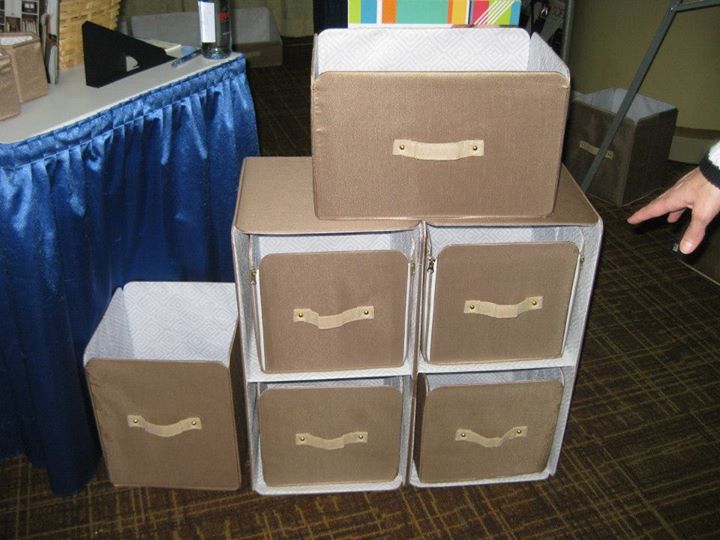
Each item this line is stain-guard protected, with a silk-textured exterior and a patterned (SOFI materials say “stylish,” but that’s subjective) interior. All of the items below, with the exception of the HEX boxes, have strong woven handles with brass rivets. All but the Hex Boxes boxes and STAX shelves are made of up to 80% recycled content.
The SOFI elements, from smallest to largest, are:
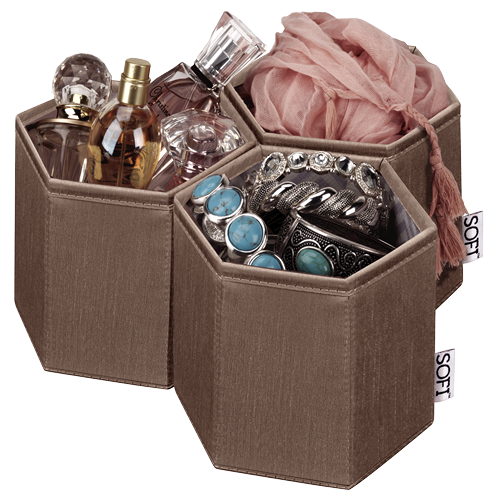
Hex Box™ — These hexagonal open-top containers measure 4″ H x 5″ W x 4.25″ D and are designed to organize small items in the open, on shelves, nightstands, or dressers, or for organizing the interior of easily cluttered drawers and cabinets. SOFI Hex Boxes come two to a package, and you can use the enclosed clips to create a sort of honeycombed organizing system by fastening two or more HEX Boxes together.
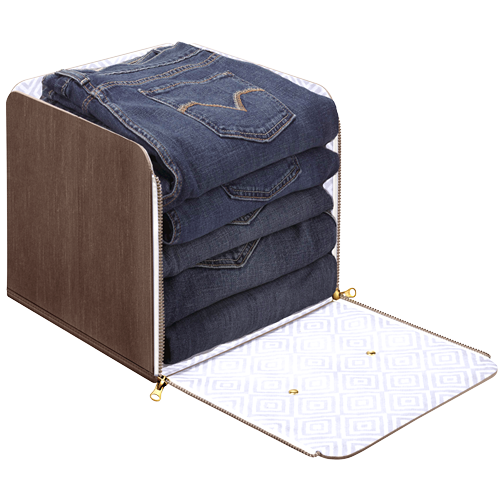
Zipper Tote™ — This cube-style tote comes in two sizes, Small (10″ H x 10.75″ W x 10.75″ D) and Tall (13″ H x 10.75″ W x 10.75″ D), and the vertical intersections of the front (handled) panel with the flanking panels zips down to provide easy access to contents.
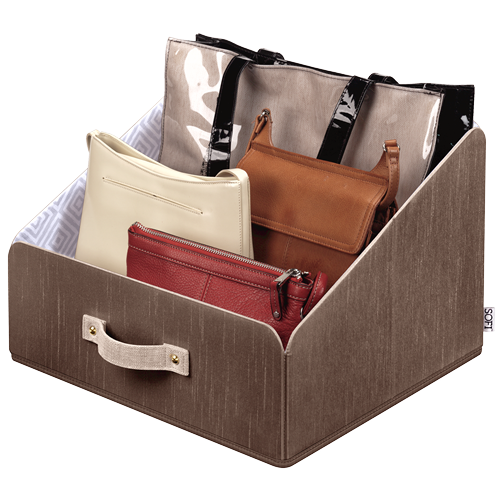
Rax Bin™ — Angled sides of this open-top bin allow both easy access and a full view of the contents, making it suitable for wallets, purses, totes and other items you would stack vertically. It measures 10″ H x 15″ W x 13″ D.
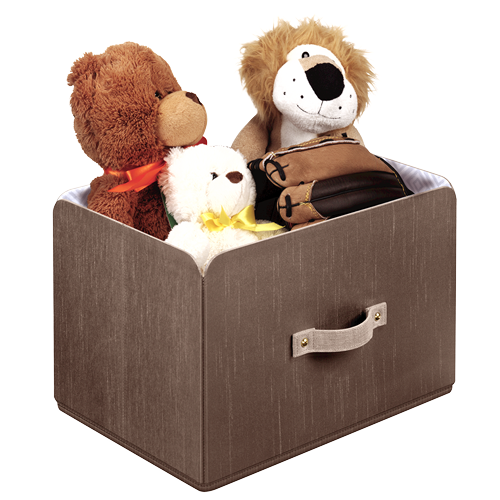
Brix Bin™ — Envisioned for bulkier items like linens, toys and chunky accessories, this bin measures 10″ H x 15.5″ W x 10.75″ D.
Brix Box™ — Like the Zipper Tote, this cube-style tote comes in two sizes, Small (10″ H x 10.75″ W x 10.75″ D) and Tall (13″ H x 10.75″ W x 10.75″ D, as shown below), but lacks the zip-down panel.
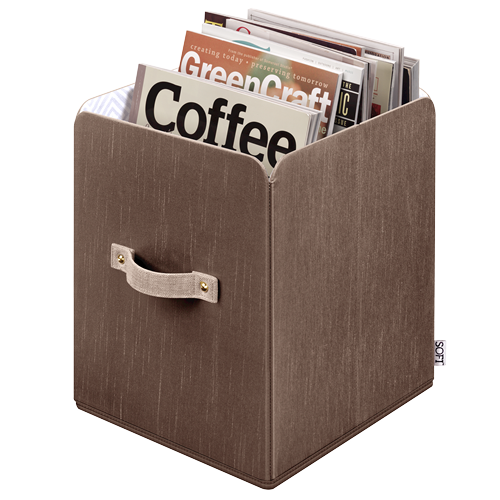
The smaller Brix Box™ is compatible with the Stax Shelf, below.
Stax Shelf™ — Designed to help make the most of vertical space by allowing stacking, this mini-cupboard allows you to stack two of the small Brix Boxes vertically; multiple Stax Shelves could be put together horizontally or vertically (with the enclosed connecting clips) to create an organized system of stackable (small) Brix Boxes. You may also use the shelf on its own, without internal boxes. 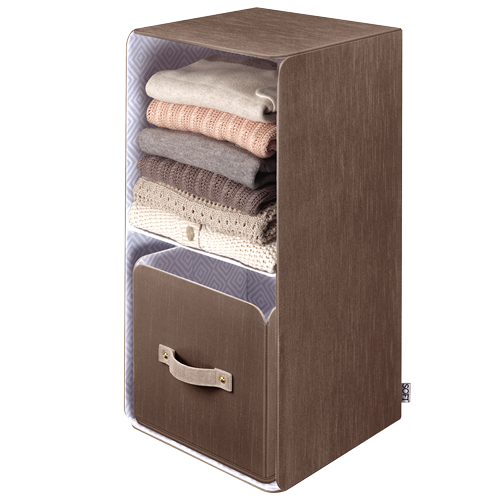 The central shelf has a 15 pound capacity; the unit measures 24″ H x 12″ W x 12″ D.
SOFI products seemed sturdy enough, from the cursory glance I got at the crowded NAPO Expo. However, if you have roughhousing tiny humans (or pets) intent on putting these storage items through their paces, you might want to add pieces slowly and review how your more wackadoodle household members deal with them.
The main drawback I see with SOFI, and this is certainly subjective, is that the line currently comes in a very drab, manly, retro brown, recalling the panelling in my parents’ 1970s living room, and the interior blue and white pattern doesn’t provoke much fashionista excitement, either. SOFI’s tag line is “So functional. So fashionable.” I’d agree to the former, but am unpersuaded as to the latter.
SOFI products are sold at Amazon, Staples, Office Depot, Wal-Mart and Target, and other retailers, with prices ranging from $10-$30.
Check out the video of SOFI in action.
Origami and SOFI were just two household organizing products to make their debut at this year’s NAPO Expo. Later in this recap series, we’ll revisit some old favorites to see what new tricks they had on display. Until then, make sure you haven’t missed some of the prior posts in this series:
NAPO 2015: Conference By the (Organizing) Books
NAPO 2015: PhD in Productivity at the College of Organizing Knowledge
NEET & Cozy Cables: A NAPO 2015 EXPO Organizers’ Choice Award Winner




Follow Me