Archive for ‘Paper Organizing’ Category
15 Ways To Get Organized for Get Organized Month 2015
Happy New Year. Now, GO!
Wait, wait, come back! I wasn’t saying to go away. January is National Get Organized Month!
What, you didn’t know that was a thing? According to research published in the Journal of Clinical Psychology, organizing is the second-most popular New Year’s resolution, just after losing weight. And, if you think about it, losing weight involves organizing your body and your health. And if you think some more, organizing your tangible resources, your time and your thoughts are keys to reaching all of your other resolutions, too.
Readers, I’m so excited to be starting another year with you, improving skills, finding tools and creating strategies to make your lives more organized! To ease into this new year, let’s start with 15 tips for 2015!
1) Update your address “book” whether it’s a Snoopy spiral-bound book or the contacts app in the snazzy new smart phone you got for the holidays.
Did you get holiday cards? Check the return addresses on the envelopes and update the information in your own personal database. Consider penciling in “As of 1/15”, or marking an extra field with that date, so you have a sense of how up-to-date your information is. And, if you haven’t done it already, set the cards (and their envelopes) free, as we discussed in Hallmark Holidays and American Greetings: Card Clutter.
Need a little help from your friends? Post a Facebook message to ask people to send you a (private) note if they’ve moved in the last two years and need to update you on their vital info.
2) Forge a commitment — to your planner.
Are you still writing appointments on that extra, orphan “January” page at the back of your 2014 planner? No more! Last week, we covered the basics for selecting the right planner in Pick Your Planner 2015: Paper Doll Rounds Up the (Un)Usual Suspects, so get thee to it!
Do you have an embarrassment of riches, perhaps too many calendars and none which guarantees a full view of your life? Take a peek at our classic post, Lost Time, Dinner With the King of Norway and The Curse of Multiple Calendars.
Commit to whatever system and process you pick. Having a great calendaring system is like having Jeeves as your butler. If you pay Jeeves poorly (i.e., buy a cheap system or kluge together elements that don’t really work) or don’t feed him (and forsake updating your appointments), such neglect will yield one insolent, neglectful butler (or a calendar of conflicts, illegible notes and missing appointments). Plus, the Downton Abbey Butler’s Union will be (politely) pounding at your door!

Finally, before you let go of 2014, take your planner or digital calendar in hand and enjoy a backwards glance through the year with Paper Doll Takes One Last Flip Through the Calendar.
3) Nurture your commitment to your planning system…every day.
If there’s so much going on in your life that you forget to mark appointments in the first place or fail check your planner until it’s too late, upgrade your accountability:
- Set an alarm on your phone to ring at the end of every day, around 5 p.m., to remind you to check your calendar and tickler file for the next day and the coming week.
- If you have an assistant at the office (or a virtual assistant), schedule time each day to meet and review newly-added appointments and obligations.
- Ask loved ones to prompt you by asking, “What’s on your schedule for tomorrow?” at dinnertime.
- Block family time weekly, perhaps on Sundays, to jointly review the coming week. Make sure you’ve cordoned off time for anything important to all of them, individually, or for the family as a whole.
- Schedule your next appointments before leaving anyplace you visit intermittently (doctor, dentist, massage therapist, hair or nail salon, etc.) — but only if you have your calendar with you. If you aren’t traveling with your calendar, ask them to call you the next day (at a time you know you will be available) to set up your next appointment. Never agree to any date without your planner nearby.
4) Get your vital documents in order.
Make 2015 the year you find (or replace) your Social Security Card, renew your dusty passport and finally get a will, a Power of Attorney for financial matters and a health care proxy. Start small, handling one item at a time, and get a handle on what you need by reviewing:
Top 10 Vital Documents–Do You Know Where Your VIPs Are?
More VIPs–Very Important Papers Beyond the Top 10
Are you feeling a little iffy on the basics of VIPs and important documents? You can go back to the classic Paper Doll post, I Fought the Law…And the Paperwork Won!
And once you find everything you need, log where you’ve put them after reading The Ultimate Treasure Map: Creating A Document Inventory.
5) Create a Tax Prep folder.
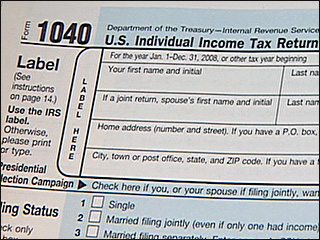
Tax time is just around the corner, and whether you manage it all with a two-minute EZ form or have a flock of accountants, you’ll need to be ready, so read:
Taxing Conversations: Organizing the Essentials & a New Tax Tool
Taxing Conversations (Part 2): Organizing Fun With Forms
(Actually, what WOULD you call a flock of accountants? Animal group names are so festive. A pride of lions, a kettle of vultures, a crèche of penguins. If you employed a whole mess of accountants, what would they be? A file of CPAs? A form of bookkeepers? Share suggestions below.)
6) Settle your money, honey!
Make a list of all of your credit cards, loans and other debts, as well as their balances and interest rates. Seeing it in black and white in one place is the first step towards taking control of your future. Don’t be afraid to ask for help from a Certified Financial Planner or a Daily Money Manager to figure out the strategies for keeping your bills paid, on time, every time.
Use a good financial dashboard, like Mint or You Need A Budget.
Let 2015 be the year that your money works for you! And watch this space in the coming days for a post on getting your financial basics organized.
7) Give yourself a present.
No, not a holiday present. Give yourself a gift of THE present by letting go of paper from the past that doesn’t fit your life or your needs. You probably have a smart phone or a tablet or a GPS, so let go of crumbling maps cluttering the door pockets of your car. Toss those recipes you’ve been collecting for 20 years and have never once tried. Junk your notes and papers from high school and college unless there’s a senior thesis or lovingly-written comment from a favorite professor. (Even then, consider scanning.)
8) Start thinking about paperless options.
Yes, I’m your Paper Doll, but part of being organized is knowing when digital options work as well, or better, than paper. Love letters? Paper! Operating manuals? Perhaps digital.
Search Paper Doll for the word “paperless” and you’ll be reading until 2016, but at least start with Paperless vs. Less Paper: 6 Ways to Reduce Paper Consumption.
The Tools and Toys blog just published Setting Up and Maintaining a Paperless Home and Office, and last year, the Professional Organizers Blog Carnival had a great, collaborative post on going paperless.
9) Make 2015 the year you safeguard and preserve your photos.
Digital photos mean we can have multiple forms of inexpensive backup without taking up more space in our homes. But what about all the old Kodak snapshots, fading away a bit more every day, even as you read this?
In 2015, Paper Doll will have an ongoing series on organizing photos. We’ll look at how to weed the prints you have and create an organized system for maintaining them. We’ll also look at the options for going forward, whether you choose to scan photos yourself or use a photo scanning service. Either way, find a NAPO member specializing in organizing photos, and visit the Association of Personal Photo Organizers to find professional organizers trained to organize and care for your family’s photographic history.
10) Stop hanging out with floozies.
I stand behind the advice I gave you wayyyyyyy back in October 2007, in one of the first Paper Doll posts ever. Stay Far From Floozies: Avoiding the Loose Paper Trap wasn’t just an admonishment to stop scribbling on every loose piece of paper you find. It’s a whole philosophy about the importance of having a system of behaviors and tools to help you keep your sanity. Use the blog sidebar to search for posts tagged with “notes and notebooks,” including:
5 Key Points for Organizing With Notebooks
Notions on Notebooks: Organize Your Paper Picks
Commit to making this one change and you will be more organized, more productive, and so much happier.
11) Make friends with some great organizing and productivity bloggers.
A million years ago (well, in blogging time), I wrote a post called, Paper Doll Invites You To A Party: Should Auld Acquaintance Be Forgot?. Almost all of those bloggers are still blogging, though if not at those links, they’ve left forwarding URLs so you can keep up with them in their new spaces.
Soon, however, I’ll be sharing an updated post with experts who will help you keep your paper and information (as well as the rest of your life) organized.
12) Let go of subscriptions for magazines and newspapers you don’t read.
Why? Well, because you’re just building mountains of paper clutter. But why else? Mountains of reminders to renew magazines — in your mailbox, in your inbox, and probably in your nightmares. We’ve been talking about magazine clutter for a long time, but even with magazine apps for your phone and tablet, the paper piles keep coming. So, the advice in these posts is still valid:
Mountains of Magazines (And Renewal Cards)
More Mountains of Magazines: Information Clutter Cures
13) Get in the mood!
Remember what I said above, about this being Get Organized Month? That means that there are organizing events all over the country — workshops, presentations, webinars, teleclasses, and more. You are not alone in your experiences with clutter, and you’re not alone in your wish to get and stay more organized and productive.
14) Hire a professional organizer.
I have to admit it: it’s not always about paper. Whether you need to reinvigorate a closet or get your productivity zipping along or downsize Grandma’s house so she can move to Boca, professional organizers can show you the way. We’re not just experts in organizing, but experts in helping you figure out how best to organize for your ways of thinking and living.
Start with the National Association of Professional Organizers (or, for those of you in the land of Hockey Night and Coffee Crisp, Professional Organizers in Canada) to find skilled, caring professional organizers. Specialties range from client types (students, seniors, people with ADHD, attorney’s or doctor’s offices, etc.) to service needs (small business organizing, productivity and time management training, hoarding services) to specific areas (paperwork, computer data, kitchens, closets, attics, etc.). You may also want to consult with our colleagues in the Institute for Challenging Disorganization.
As a Certified Professional Organizer since 2007, and a professional organizer since 2002, I can tell you with pride that my profession is filled with empathetic individuals who will bend over backward (sometimes literally) to help you achieve your organizing and productivity goals and show you how to maintain your progress long-term. Just ask.
15) Cut yourself some slack.
Being organized isn’t a contest. It’s not about whose home looks better, whose papers are more easily accessible or who has the lowest clutter-to-house (or office) ratio. Being organized is about things being easier. More functional. More fun. It’s about having time and space serve you, rather than the other way around.
Happy New Year and Happy Get Organized Month! It’s going to be a great year!
Pick Your Planner 2015: Paper Doll Rounds Up the (Un)Usual Suspects
On the cusp of a new year, it’s time to start entering important dates (birthdays, appointments, meetings, vacations, conferences, National Doughnut Day, etc.) into your planning system. Strictly speaking, a calendar is just a chart showing you the days, weeks and months. A planner is a tool for combining your calendar with your task list and other essential information to make your life more productive.
A few years ago, I offered up a less philosophical, more practical, discussion in Paper Doll Pencils You In On Her Calendar: 6 Tips for Planning 2011, with the most apt advice I could possibly give:
Surprised that people still use paper planners? Canadian professional organizer Clare Kumar explains five reasons why paper planners will never go away. Clare mentions the sensory aspects (you can see more at once, customize the look to appeal to your aesthetic preferences, and make your planner feel good), and notes that you can be grid-independent — the availability of electricity, internet and Wi-Fi are non-essential in the workings of a paper planner.
But it was Clare’s note about the nature of handwriting vs. typing that caught my attention. This year, we’ve discussed, at length, the research indicating that handwriting leads to greater learning and recall. Certainly the point of using a planner is that if you write something down, you can stop thinking of it, per se, and start thinking more robustly and contextually about it. Somehow, dragging an email into Outlook to set a meeting, or typing an appointment into your phone, leads to an out-of-sight, out-of-mind situation for many, but with a tangible paper planner, every time you eyeball your month or your week, you are speedily, comfortingly reminded of the important aspects your life.
Of course, knowing that you want a paper planner is only the beginning. You still have to know the style that’s right for you, and then there are a myriad number of options from which to choose.
RING-BOUND
While there have always been calendars, planners are a relative modern invention from the 1980’s onward. The Yuppies had their Filofaxes, DayRunners and Franklin Planners. (Disclosure: Paper Doll still uses a Franklin Planner: Classic size, Seasons theme, two-page-a-day version.)
Ring-bound planners have heft — it’s a binder, with pages for monthly, weekly and daily planning. That heft has always meant lots of options — you can pick-and-choose the elements of your planner — but your choices were generally confined to the binder size to which you’d already committed. I can switch to the Franklin Planner Monticello theme or the anniversary edition “Original” in a berry pink that matches the branding of my website, blog and business cards, but I still have to stick with the “Classic” sized planner unless I want to start from scratch.
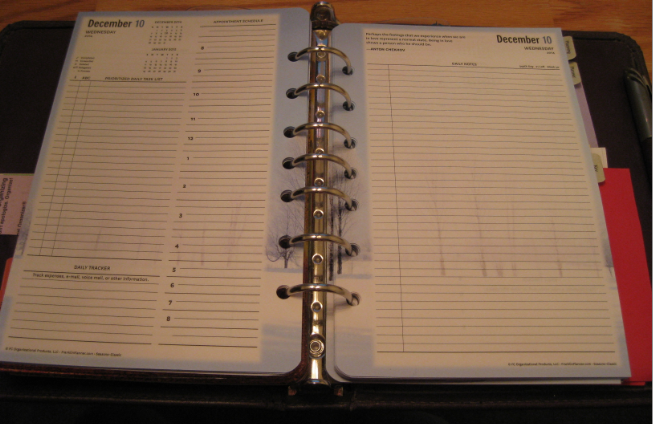
I direct you to Ana Reinert of The Well-Appointed Desk and her recent six-part series, A Beginner’s Dive Into Ring-Bound Planners:
Ana may consider it a beginner’s dive, but by the time you reach the deep end, you’ll have explored all of the oceans of ring-bound planners.
BOOK-BOUND
Book-style planners require serious commitment. There’s generally no customizing, you have to start anew each year, and if your wealth of ideas (and scribblings) exceed the number of available pages, you’re out of luck. However, the features available in many of the modern book-style planners are creative as well as practical, making options possibly outweigh lack of expandability. Three recent alternatives worth considering include:
Evernote Weekly Planner by Moleskine
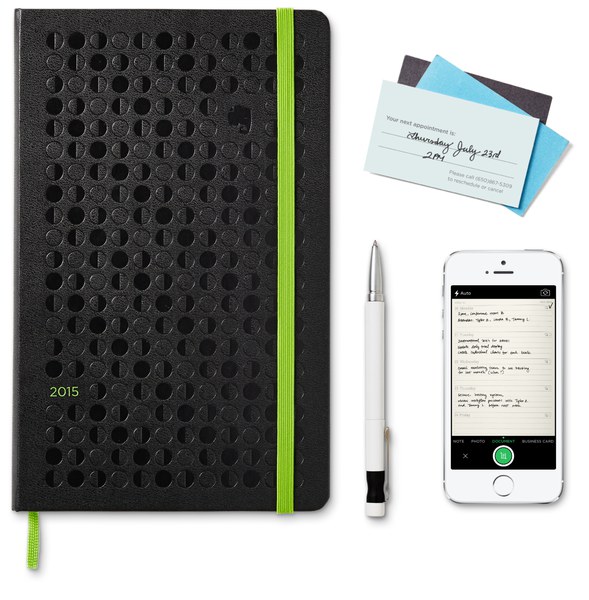
The Evernote Weekly Planner by Moleskine has a lot in common with its cousin, a notebook we discussed at length in An Organized Hybrid: The Evernote Smart Notebook By Moleskine. This 5″ x 8 1/4″, 144-page, dot-ruled planner is designed so that you can enter information by hand and use your iOS Evernote Camera app to snap a picture of a planner page, categorize the information (with the help of special, colorful “smart stickers” to tag your notes), and sync in Evernote, across all your devices. The hard cover binding has a custom Evernote design, and the interior rear cover has a paper pocket for storing loose items, like business cards or receipts.
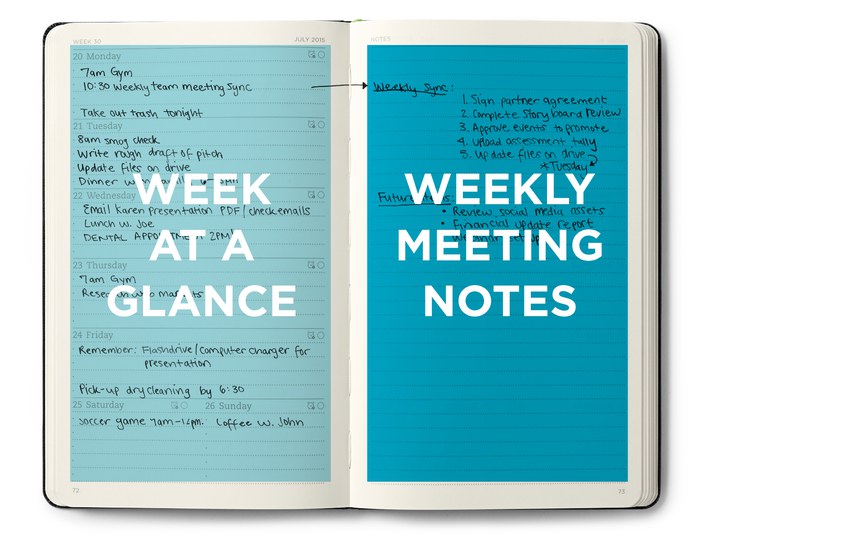
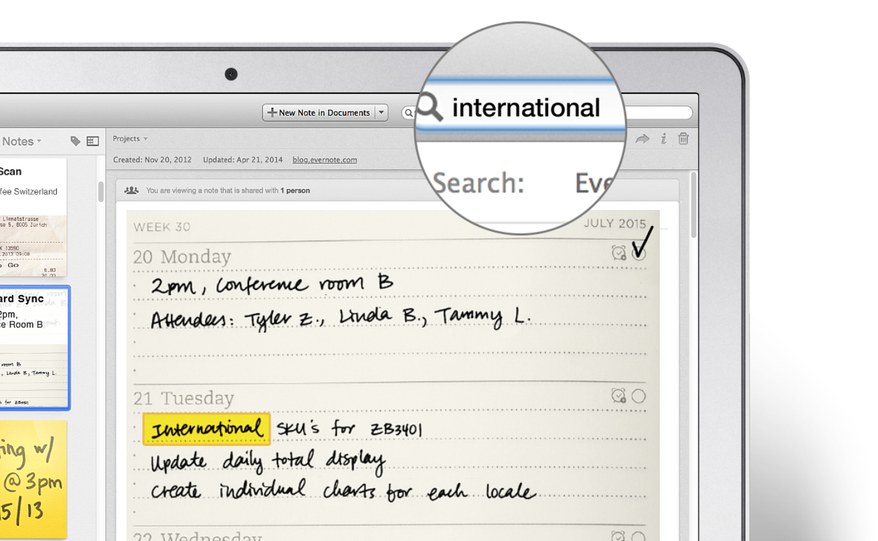
Evernote is able to recognize your handwriting, so you can search within captured photos for specific text you’ve entered by hand. You can even check a box in the upper right corner of any particular date on a calendar page, and Evernote will flag that day as a reminder.
The Evernote Weekly Planner by Moleskine runs $34.95, and you get three months of free Evernote Premium included with the purchase.
Passion Planner bills itself as “An appointment calendar, goal setting guide, journal, sketchbook, gratitude log & personal and work to-do lists all in one notebook.“ Whew.
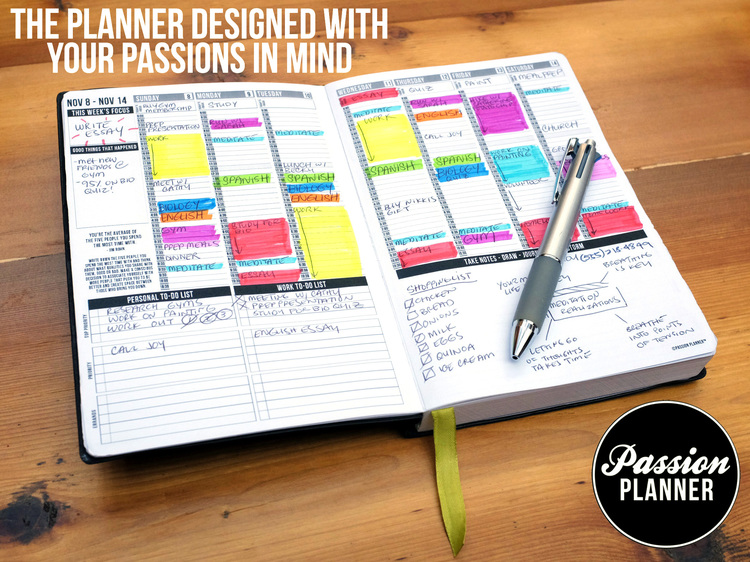
The black, book-bound, soft-cover binding comes in two sizes: 8 1/2″ x 11″ and 5 1/2″ x 8 1/2″. The Passion Planner has a traditional weekly layout, with seven columns for each day of the week, broken down by appointment slots, but fits in a lot of extra space for other areas of life.
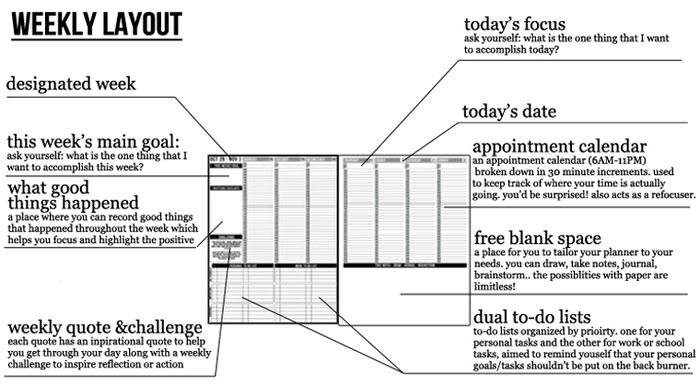
But beyond this, of the Passion Planner’s 190 pages, there are annual and monthly overview calendars, a goal-setting guide to aid brainstorming for lifetime, 3-year, 1-year, and one-month goals, and monthly check-in “reflection questions” to gauge progress, consider gratitude and create steps for improvement. There are also 20 additional blank pages and gridded pages for free writing and drawing.
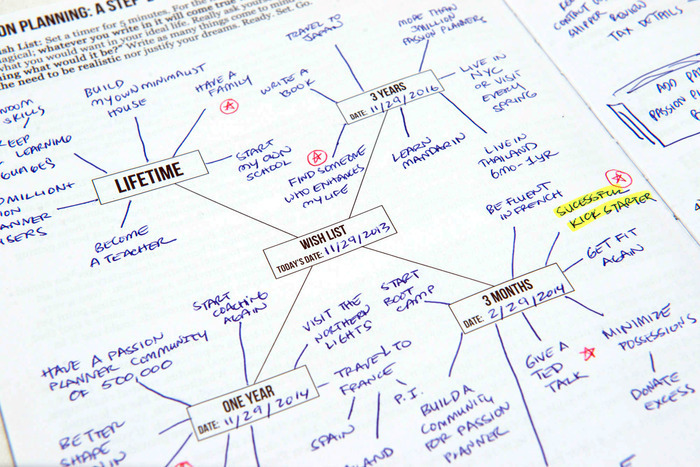
You can see the 2015 Passion Planner in action, page by page. This successful Kickstarter project can be purchased for $30-$40, depending on size, at the Passion Planner site.
Also, if you’re not ready to commit to the Passion Planner, itself, you can print some sample pages to use for free.
Spark Notebook, a Kickstarter project that raised ten times its initial goal, is almost the flip-side of the Passion Planner. If the latter is for right-brained, creative types, Spark Notebook is more for the linear, left-brained among us.
Instead of mind-maps, there are grids and lists, (undated) monthly and weekly goal, project planning and meeting notes pages, 30-day challenges, weekly overviews for time-blocking tasks, lined pages for note-taking, and even perforated blank pages for sharing notes with others. (Of course, this is where a snap with your phone would make more sense.)
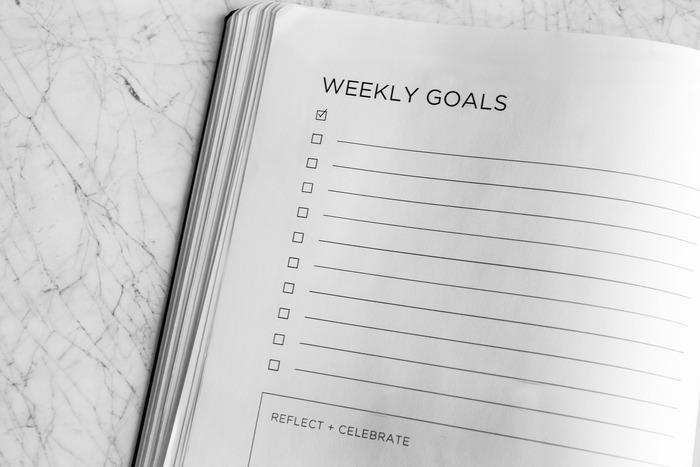
You can click to peek inside the Spark Notebook and see page-by-page of how the 5 3/4″ x 8 1/4″ planner works. The planner is 216 acid-free pages with a lay-flat binding, and was priced at $28/each during the Kickstarter campaign.
WIRE-BOUND
Wire-bound planners generally use twin-loop wire binding and flexible covers, and are meant to be used for one calendar year and then replaced; any information that needs to be maintained must be hand-copied to the next year’s planner. However, they’re less expensive than binder alternatives and far more lightweight.
Beyond that, because wire-bound planners are minimally customizable, they sometimes have a reputation as tame and impersonal. Book-bound planners are often seen as elegant; ring-bound planners may be sophisticated or sassy, depending on customization. But wire-bound planners tend to remind most people of dentist-office receptionist’s calendars.
Of course, that needn’t be the case. Even when you’re talking about the grand-daddy of wire-bound paper planners, Mead’s At-A-Glance, precision doesn’t have to be boring:
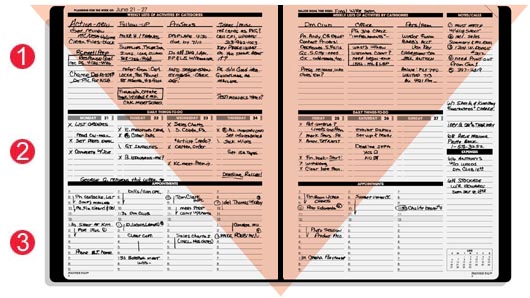
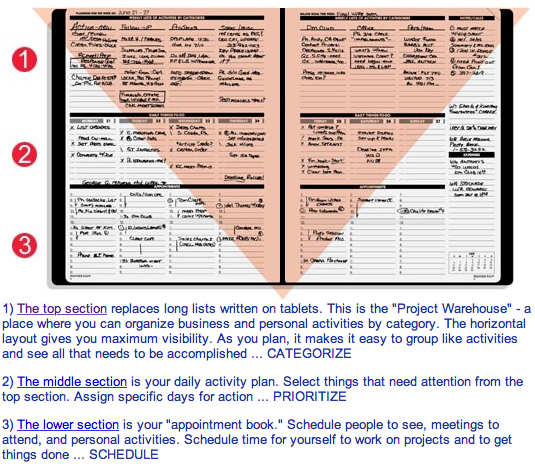
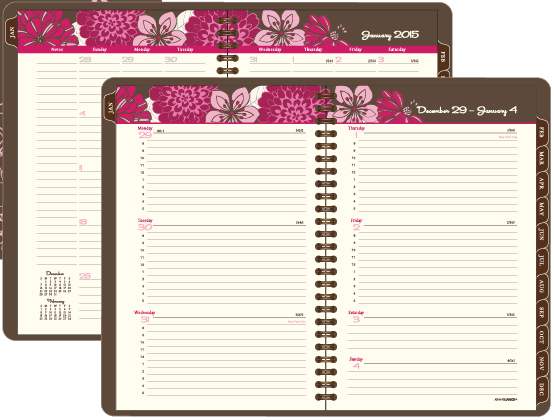 Of course, whether you’re looking at name-brand, store-brand or generic planners, the thing to note about most wire-bound planners is that they tend to be for planning appointments and fixed-date events, and less about setting goals, brainstorming projects or doing complex, long-range planning. One exception is the surprisingly little-known, but nonetheless fiercely loved, funnel-based Planner Pads, with space for categorizing project specifics, prioritizing daily activities and scheduling time- and date-specific appointments.
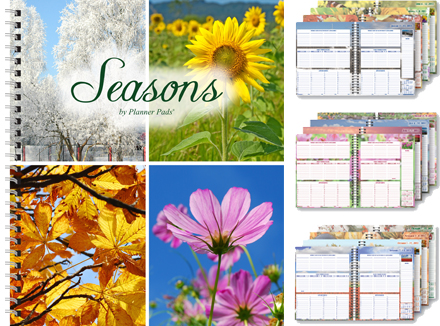
And, if your recollection of Planner Pads is that they are, like most wire-bound planners, fairly black-and-white (literally and figuratively), check out their recent upgrade to brightly colored, seasonal themed planners.
DO-IT-YOURSELF
Not everyone is satisfied with a single-universe planner. When I asked my Twitter followers, I was surprised to find how many people, like Unclutterer‘s Erin Doland, were creating their own planners, mixing and matching formats from different environments.
@ProfOrganizer Staples Arc and the Emergent Task Planner for my daily goal setting
— Erin Doland (@erdoland) December 11, 2014
Many DIY-ers like Erin are customizing notebooks to fit their unique needs and styles. Ring-bound planner users have a variety of free options available on the web, like PrintablePlanners.net‘s seven sizes of page additions (Executive, Desktop, Travel, Personal, Pocket, Hipster, Mini), with basic monthly, weekly, daily, project and task planning pages, as well as journals, spending logs, Cornell Note-taking pages, and more.
Lately, one of the more common way to adapt a planner is to use a customizable notebook, where you select the cover pieces, page elements and accessories, and join them together with discs that hold the specially-punched paper and elements together, or otherwise employ a unique binding system.
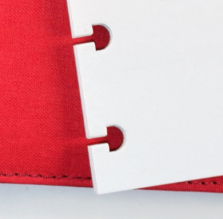
Levenger Punch
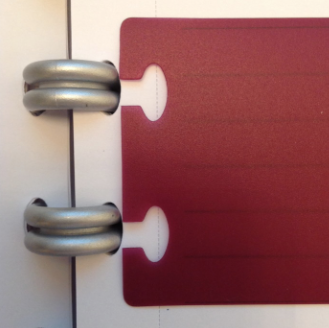
Ampad Punch
The high-end of the scale would be something like the Levenger Circa System, but we’ve also covered more affordable options in past posts, including:
- NAPO Expo 2012 Recap (Part 1) — Paper Lovers’ Dreams Come True (Staples’ Arc System)
- Customizable Notebooks: Have It Your Way…Sorta (YoonCo’s Sorta)
- Presto, Change-o! NAPO Expo 2013 Shape-shifting Organizing Products #3: Ampad Versa Crossover (Ampad Versa Crossover)
With the cover and binding options in place, you can choose in-system elements, like daily/weekly/monthly calendar pages, project planner refill pages, blank (lined or graph) paper, and so on. Alternatively, you might pick solutions from outside your planner’s universe. Erin, for example, uses the Emergent Task Planner from David Seah’s impressive array of productivity tools.
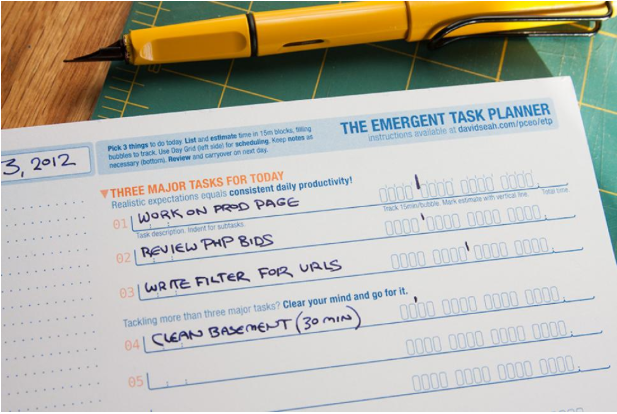
D*I*Y* Planner also has a huge compendium of template elements for use in ring-bound and disc-bound planners. You may also want to review MakeUseOf‘s recent article, 7 Single-Page Productivity Planners To Organize Your To-Do List for more planning element solutions to add to your calendar/planner. And, of course, any planner page or element created for one format can generally be used for the other with the help of a format-specific hole-punch.
YOUR IDEAL PLANNER
In the end, the best planner for you is the one you’ll pick up, carry with you, and use all the time, day-in and day-out. Only you know whether you need bright colors and mind-mapping pages or serious tones and refined lists. Leather, faux-leather or Hello Kitty pink plastic? Un-dated calendars and blank pages or dated calendars with pre-created themes and prompting language? One universe or a blending of many?
If you use a paper planner, feel free to share in the comments and let us know what works for you. And however you plan your 2015, may it be a happy and healthy one!
Last-Minute Holiday Gifts: Clutter-Free Delights
No matter how invested you have (or haven’t) been in the holiday shopping season, you may find you’re still behind schedule and seeking some inspiration. Luckily, you’ve come to the right place, as Paper Doll HQ has corralled some final holiday gift suggestions.
GIFTS OF EXPERIENCES
The best gifts are those that your recipients want, or would want if they knew that such a thing existed. As we’ve discussed previously, I’m hugely in favor of gifts of experiences, those that delight, and those which help us deal with the requirements of life than are less delightful. As I noted last week, a good first start are the experiential presents at my classic Holiday Gift List: Favorite Things Edition. Speaking of which, I’d previously suggested for this category:
Gifts of Adventure — For the thrill-lovers on your list, consider certificates for hot-air balloon rides, rock climbing or zip lines. Race fans might love the NASCAR Racing Experience or the Dale Jarrett Racing Adventure. Athletes will appreciate a week of baseball fantasy camp, pre-paid rounds of golf, or time in the batting cages. For the more casual (and loosely defined) adventurer, bowling, miniature golf, or paintball work equally well.

To these gifts of adventure, I add a new experiential form of adventure and entertainment. A friend who recently visited New York City attended Escape the Room, billed as a “fun, interactive game…While it looks like any other ordinary room, it’s actually a mystery puzzle. Find the hidden objects, figure out the clues and solve the puzzles to earn your freedom and “Escape the Room.” You have 60 minutes, so be quick!”
Not in the Big Apple? The puzzle-busting “Real-life Room Escape” concept is spreading across the country is different guises, from Adventure Rooms in New Jersey and Connecticut to the Real Escape Game in Las Vegas to Escape Experience Chattanooga. Most pricing seems to be about $28-$40/person.
Want more experiential ideas? Fellow Certified Professional Organizer® Bonnie Joy Dewkett, the Joyful Organizer, has come up with a free Clutter-Free Gifts Printable to help you and your fellow worn out, listless giftors come up with new gifting solutions. Karate lessons aren’t your giftee’s style? What about magic lessons?
Still not enough? Take a peek at Getting Organized Magazine‘s 72 Clutter-Free Gift Ideas, divided by categories and chock-full of nifty notions!
GIFTS OF CONSUMABLES
Want a different kind of gift that avoids clutter, but still satisfies? How about consumables, whether fresh-baked goods from your own kitchen or from a local eatery, like my pastry-chef friend Jennifer Hooper’s Chattanooga-based Sweet Eats? (Crispy Mini-Gingy? Yes, please!)

Want something that requires a little less physical effort on your end (so, less washing up or schlepping to the bakery) and more pizzazz? Or maybe you’re concerned about making sure your loved ones are getting something good, but also good for them?

Graze is your opportunity to give personalized, healthy (but not icky-healthy), portion-controlled snacks. Buy a gift voucher, and then your giftee gets to set up an account detailing all of his or her likes and dislikes for snack types, and then the boxes start arriving.
The Nibble Box provides maximum variety. Graze staffers review each person’s preference list and then send anything from chocolate-coated nibbles, to nuts, seeds, and dried fruits, to dips and dippers, crackers and snack bars, selected from 90 different options.
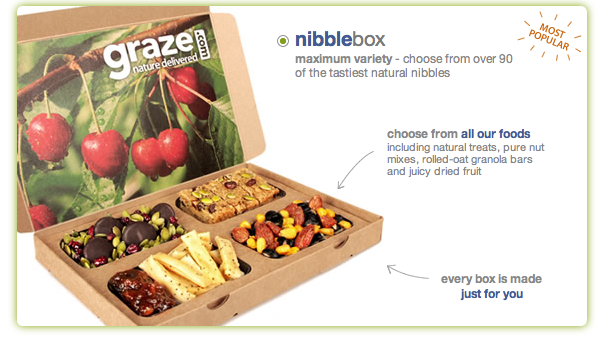
The Calorie Counter Box contains options selected from up to 50 ingredient types to create packages of 150-calorie snacks.
Your recipient can choose to send the Graze boxes to home or work.
Interested in this for yourself? Graze boxes are $6.99 each, delivery is free, and come once a week or every other week. For more information, check out Graze’s FAQ.
For something less snack-oriented, consider one of the nationwide upscale meal-in-a-box services, like Blue Apron, Plated or Hello Fresh. (There are also regional services, like Peach Dish in Atlanta and Home Chef in Chicago.) These services deliver correctly proportioned fresh ingredients and instructions for making a magical meal.
Of course, if your giftee isn’t much of a cook (like Paper Doll), a gift certificate for the services of a personal chef can be surprisingly affordable!
GIFTS FROM THE HEART
Sometimes, the best gift isn’t just a thing or an experience. Author Leo Babauta recently put together an amazing blog post detailing gifts that are (generally) low on cost and high on creativity. To do justice, please read The Zen Habits Holiday Gift Guide in its entirety, but I had to share some of my favorite ways Babauta lists to do something truly special for the people in your life:
- Create a personal website for someone, complete with photo montage, if you’re good at web stuff.
- Find a board game at Goodwill and customize it for the person’s personality.
- Make a treasure hunt for them.
- Help them realize their dreams.
- Do a challenge with them.
- Take a class together (community classes are often free or cheap).
- Create a video from family/friends with everyone sharing what they love about the person.
The key to all of Babauta’s gifts? Taking time and thought to consider the person’s hopes, dreams and needs, and using your abilities to help them reach those sparkly stars.
Of course, in an ideal world, not all of our gifts (or our focus) would be spent solely on those we know. Author Laura Vanderkam‘s recent article in Fast Company posited that we should Forget the Gift Cards, Try 12 Days of Microphilanthropy Instead. Vanderkam comes up with ideas that allow you to give of yourself (and your expertise) one-on-one, and give of your wealth (however meager or robust) to those less fortunate. My favorite of her suggestions?
 ModestNeeds.org is a twelve-year-old non-profit that aims to “…responsibly provide short-term financial assistance to individuals and families in temporary crisis who, because they are working and live just above the poverty level, are ineligible for most types of conventional social assistance…“
Applicants and the facts of their situations are vetted by ModestNeeds.org before their cases are presented for donors to consider.
GIFTS OF ORGANIZATION & PRODUCTIVITY
The gift of organization is one that keeps on giving. Has someone in your life expressed an interest in getting more organized? Are you feeling magnanimous? Help your loved ones find a professional organizer through the National Association of Professional Organizers‘ searchable online directory and offer to pay for a session to help get them closer to their organizing goals.
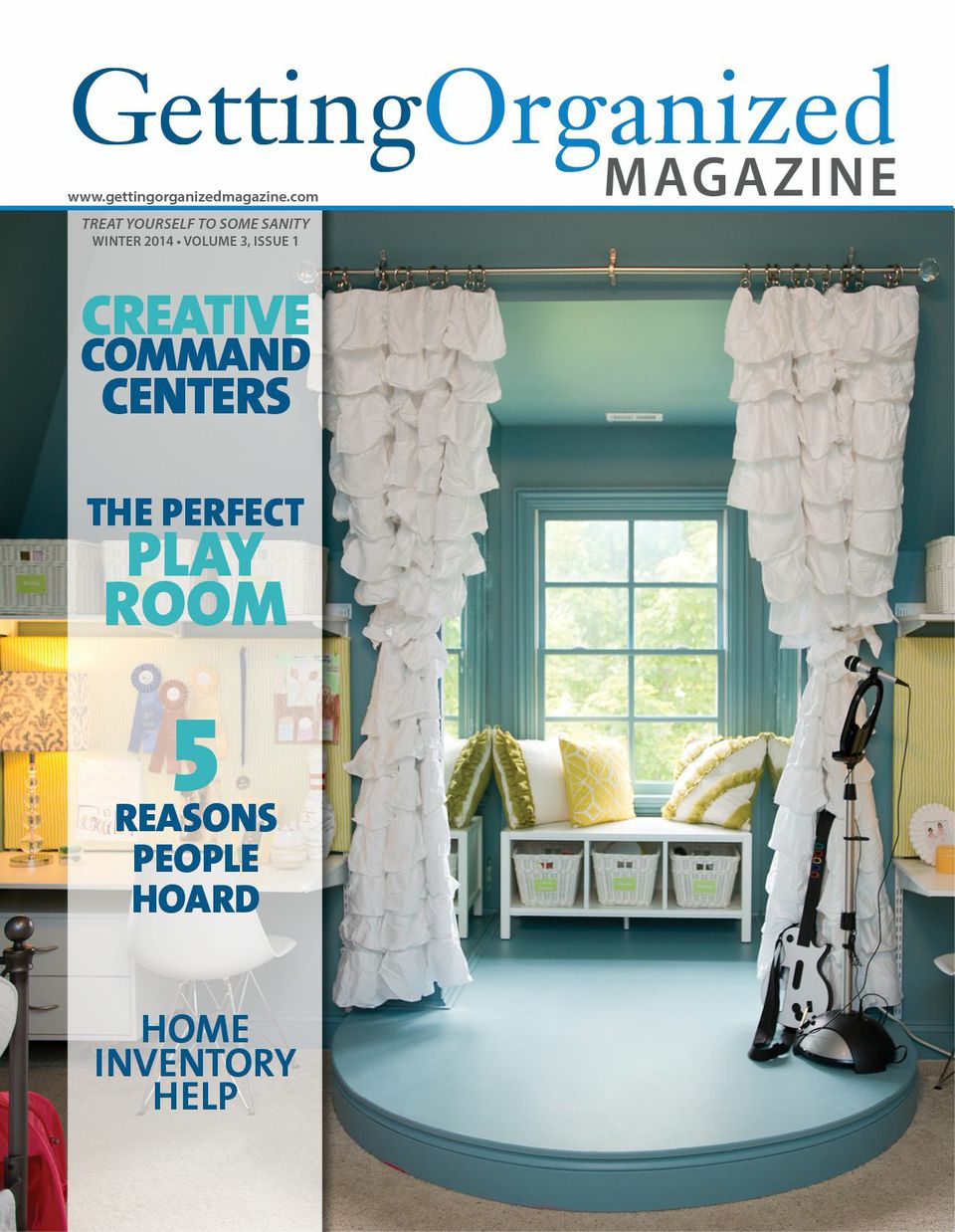
For a more modest present, give a gift subscription to Getting Organized Magazine for four quarterly issues full of great advice on developing the skills and systems for getting organized. For print issues, it’s $19.50/year (or $29.50/year, internationally), or $13.50/year for a truly clutter-free digital subscription. (For new subscriptions, use the coupon code GetOrgJan15 for 20% off if you’re ordering by January 31, 2015.) [Editor’s Note: Getting Organized Magazine is now a digital-only resource, but it’s still worth checking out for more clutter-free and decluttering ideas.]
COOL STUFF FOR WRITERS, TINKERERS AND READERS
Have an inveterate letter-writer on your gift list (or are you trying to encourage a child to write thank you notes)? For $14.95 plus shipping, you can help keep the clutter of unevenly-written and scribbled envelopes at bay with The Lettermate.
(Hat tip to blogger Patrick Rhone of The Cramped for finding this nifty option.)
Got a tinkerer on your list, one who is always leaving bits and pieces of repaired eyeglasses or gadgets all over the place? The Magnetic Project Mat from iFixit is an 8″ x 10″ mat with non-slip foam backing and a dry-erase surface for note-taking ($19.95).
If you’ve got readers in your life, you know that it’s OK not to know their preferences: there’s always an Amazon or Barnes & Nobel wish list — or gift card — to help you out. Of course, if you were intrigued by my post, Netflix-esque Subscriptions for Books: Oyster, Scribd and Entitle, earlier this year, you might want to buy a gift subscription for Scribd (three months for $25, six months for $50 or a year for $100) or an Oyster subscription (customizable pricing for up to 24 months, with pre-set gift pricing at $9.95/month, $29.85 for three months, $59.70 for six months and $119.40 for a year). Entitle lets you select your preferred gift amounts, with fixed-month pricing running about the same as Oyster.
Finally, if there’s someone in your life for whom you’re in still doubt about their wants or needs, chances are good that they’ll appreciate the gentle, goofy humor of this collection, The Little World of Liz Climo.
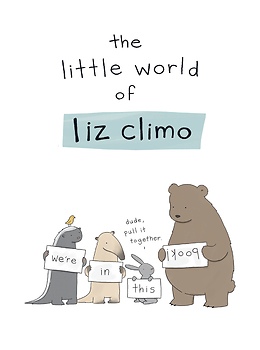 Check out Climo’s work at her Tumblr page, and no matter how harried the holidays have made you, Paper Doll believes Climo will put a smile on your face.
Happy holidays!
Paper Doll’s Guide to the Gift Guides: Decluttering Calling Birds & French Hens

There are eight days of Hanukkah, twelve days of Christmas, and what seems like 365 shopping days each season to get it “right.” And yet, so often the gifts we give (and get) turn into clutter that we must store, dust and caretake. And not merely clutter, but forgettable clutter.
A few years back, I excerpted a portion of my little e-book Simplify the Season and Save Your Sanity and blogged the (mostly) clutter-free Holiday Gift List: Favorite Things Edition. I stand by my recommendation that gifts of experiences — like entertainment, adventure, education, and pampering — are key to making presents memorable. Even practical gifts for those who lack the time or inclination to deal with (or pay for) practicality, can be refreshing, as I wrote:
Any driver would benefit from gift certificates for oil changes, car washes and detailing…even memberships in AAA or a similar auto club. Multiple months or even an annual subscription for internet service, Netflix, cable or satellite TV, or cellular service are practical but charmingly unexpected. For college students or those on a fixed income, comping these expenses can really lighten the load.
Today, I’d like to share what my colleagues in the world of organizing and productivity have said recently about the best gifts for the holiday season.

Unclutterer, the first (and last) word in living a reasonably — rather than ridiculously — uncluttered life puts together an amazing gift-giving guide each year, with editions dating all the way back to 2007. This year’s roundup included:

Introducing the 2014 Unclutterer Holiday Gift Giving Guide by Erin Doland
Organizing gifts for the kitchen and bathroom by Jacki Hollywood Brown
Gifts for kids by David Caolo
Experience Gifts by Jeri Danksy
The ultimate uncluttered gift by Erin Doland
Productivity Gifts by Jacki Hollywood Brown
Technology Gifts by David Caolo
It would be impossible for me to pick a favorite item (though I was incredibly flattered that my 57 Secrets for Organizing Your Small Business was included on the Productivity Gifts list). However, one of the products David Caolo included on the Technology Gifts list was the Magnetic Organization System (MOS), which I reviewed in Paper Doll’s Cable Conundrums & the MOS: Magnetic Organization System.
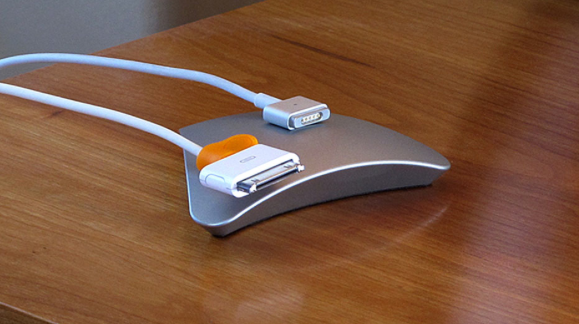
I have the iMac-matching aluminum MOS next to my computer, and a white MOS bed-side to ensure that when I unplug my iPad charger, the cable doesn’t slip or slide beyond my reach, as it had previously — and annoyingly — done for a full year before I discovered the deceptively simple magnetic wonder.
As much as Paper Doll loves paper, I recognize that going paperless (or at least having less paper) in our lives is a worthy pursuit. If you or someone on your shopping list is hoping to lighten up and be responsible for fewer tree homicides, friend-of-the-blog and all-around Canadian nice guy Brooks Duncan of DocumentSnap has put together his own 12 Days of Paperless Gifts series to solve your woes.

Brooks is a few days short of making it all the way through the series, but as of today, you can check out:
12 Days Of Paperless Gifts – Desktop Document Scanners
12 Days Of Paperless Gifts – Personal Document Scanners
12 Days Of Paperless Gifts – Mobile Document Scanners
12 Days Of Paperless Gifts – Book and Object Scanners
12 Days Of Paperless Gifts – External Hard Drives
12 Days Of Paperless Gifts – Personal Cloud Storage
12 Days Of Paperless Gifts – Online Backup
12 Days Of Paperless Gifts – Online Document Services
12 Days Of Paperless Gifts – Note Taking
12 Days Of Paperless Gifts – Helpful Resources
It wouldn’t be fair of me to pick a favorite from an unfinished gift guide series, but so far, the list of technology and paperless resources, like Brooks’ own The Unofficial ScanSnap Setup Guide and Brett Kelly’s Evernote Essentials, is in the running as a heavy favorite.
I don’t know for certain if Brooks will be tackling the topic of shredding, but after preventing paper from coming into the home or office, shredding it once the data contained becomes digital seems the obvious next step. However, just in case shredding isn’t on the agenda, I’d be remiss if I did not point out Jeri Dansky‘s Shredder Design for Function and Fashion post for Core77, an industrial design blog. Trying not to judge a book by its cover or a shredder solely by its sleek lines, I must admit a hankering for the Black & Decker iShred that Jeri reviewed.

Writers, speaker, blogger and podcaster Mike Vardy of Productivityist put together his own holiday shopping compendium, The 2014 Productivityist Holiday Gift Guide. I like the fact that Mike took the approach of looking at productivity from a holistic, whole-life approach, and didn’t limit his list to apps and software, or even to the office environment.
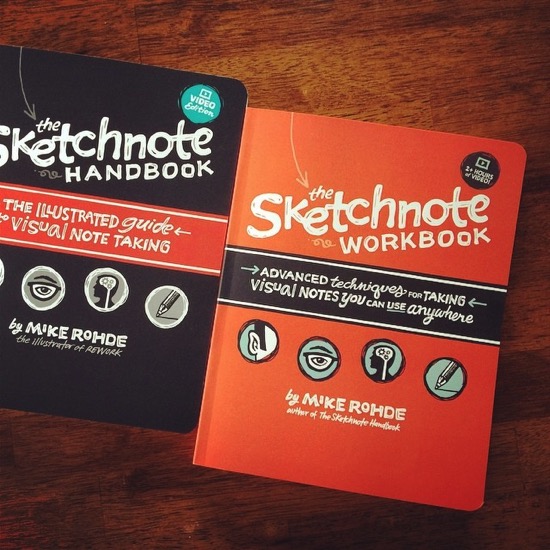
I won’t tell you which item on his list was my favorite, as I’ll (coincidentally, honest!) be writing about it soon. But I must give a nod to his recommendation for designer Mike Rohde’s Sketchnote notebook and workbook products, whose system my colleague Deron Bos illustrated in my NAPO2014: Notetaking and Pendaflex/TOPS’ FocusNotes. I don’t have a visually creative bone in my paper body, but I’m fascinated by the Sketchnote method for visually depicting concepts while notetaking.

Lifehacker‘s Alan Henry (who interviewed me, as well as Unclutterer’s Erin Doland and others, for What Professional Organizers Really Do, and How They Can Help) recently curated The Gift of a More Organized Office, and it is chock-full of splendid items that could make you more efficient…or more cluttered, depending on whether you’re the sort of person who would use the items to their best effect. (Isn’t that always the case?)
I can tell you that I purchased one of the items appearing on the Lifehacker list, the Quirky Space Bar, on the recommendation of a client, and am already loving it, both aesthetically and functionally.

It’s not merely a monitor stand (available in black, white and iMac-matching aluminum); it had six USB ports, two high-power front ports for quick-charging of devices, and four ports (two front and two rear) for charging and syncing USB devices. The Space Bar is available from Quirky and Amazon. (Note: Following my own advice from 8 Brainy Tips to Organize Your Holiday Spending, using Ebates and RetailMeNot, I got it at a significantly discounted price and free shipping.) It’s great having my Fitbit’s bluetooth dongle and charger, my camera cable, the iPad charger and flash drives all potentially accessible without having to reach behind my iMac.
I can give a big thumbs-up to most of the product categories on the Lifehacker post: cable management tools, portable scanners, computer stands, whiteboards, and standing desks. However, while I am a major proponent of label makers, I would caution most readers against the one-handed model shown, with letters arrayed in alphabetical order. Most of us, even if not touch-typists, are adept at using a QUERTY keyboard, and trying to hunt-and-peck letters on an ABCDE keyboard can be maddeningly slow. Finally, the Lifehacker gift list reminds us of the not-very-sexy but ultimate importance of a surge protector and/or uninterruptible power supply (UPS).

Finally, nobody does a better job of gathering and collating the collective knowledge of professional organizers than Janet Barclay of Your Organizing Business, and I’m proud to have been one of the 68 bloggers to have contributed to this year’s series of monthly Professional Organizers Blog Carnivals as one of the SuperStar Bloggers.
The most recent Professional Organizers Blog Carnival on Holiday Gift Giving includes posts from 31 organizing experts (including yours truly). That edition covers organizing-related gifts, clutter-free and clutter-reducing gifts, and gift-giving tips. Along with the practical advice, you’ll find some wise philosophizing on gift-giving for minimalists, maximalists and all your recipients in between.
If, after all this, you’re still unsure of what to get (or ask for) for the holidays in order to keep clutter at bay and satisfaction maximized, never fear. Tune in next time for last-minute gifts that won’t break the bank, pile on the clutter, or arrive too late.
Achieve Your Goals: Modern Truths Behind the Urban Legend

Stop me if you’ve heard this one. In 1953, academic researchers interviewed graduating seniors at Yale University to quantity how many had created specific, written goals for their future. The answer: 3%. In 1973, researchers polled the surviving members of Yale’s Class of ’53 and — lo and beyond — the 3% with goals had accumulated more personal financial wealth than the other 97% of the class combined!
It’s a great, motivating story. Build it and they will come; write it down and it will happen. The only problem is, it isn’t true. None of it — no survey was done of Yalies, or at any other of the Ivies, in 1953 or twenty years later. But for decades, productivity consultants and business writers kept hailing that study, cross-quoting one another to reference its existence. It took another 23 years, until Fast Company researched (and debunked) the story by tracing every reference to the tale, and questioning both Yale’s administration and the Class of ’53. Nada.
If the study never happened, does that mean that writing down your goals won’t make you richer than all of your classmates or colleagues? And what if your life goals aren’t financial in nature, and you want to be an Olympic gold medal winner, a published author or a happily married parent with a Martha-Stewart-cloaked-in-Pinterest lifestyle?
Dominican University of California Professor Gail Matthews set out to find an answer. She recruited 267 participants, aged 23 to 72, from a wide variety of businesses, organizations, and networking groups, both in the United States and abroad, to examine how achieving professional goals can be influenced by pro-active behaviors.
Matthews’ findings? The three key ingredients to achieving professional goals are:
- Writing down your goals
- Committing to goal-directed actions
- Getting accountability from outside yourself, including detailing your goals to a friend or colleague and providing (weekly) updates on your progress
No big surprises here, and we can probably extrapolate to figure that these behaviors can help achieve goals outside the professional realm. But, how do you put it all into action?
CREATE YOUR GOALS
You’ve probably heard that motivational experts encourage setting SMART goals, where the mnemonic stands for goals that are:
Specific—Don’t merely plan to sell “more” or serve your clients “better.” What do you want to accomplish? Where, why, how, and with whom will you take each step? Instead of “losing weight,” might your goal be losing 5% of your current weight? Specificity of goals improves your ability to visualize, and you’ll be more inspired to take the necessary steps to achieve each goal if you can picture the intricate details of which it’s composed.
Measurable—How will you know you’ve achieved a goal completely? Can you track, record or log your progress? (And have you come up with a strategy to do exactly that?) Think beyond general hopes and dreams. How much, in dollars or by percentages, do you want your business revenue (or household savings) to increase next quarter? How many speaking engagements will you secure each month for the coming year? Quantify your goals: How many? How much? How often? By when?
Attainable—It’s fine to dream big, but research shows that always setting goals beyond your reach eventually leads to disappointment. Set goals high enough to be aspirational, but modest enough to be achievable. Consult your formal and informal advisors, your employees, clients and colleagues, your friends and family, and ask for a reality check on whether the goals you’ve selected fit the economic environment, the community, the family schedule and your actual or anticipated resources.
Relevant—Goals can be precisely defined, measured, achieved, and timed without being relevant to your ultimate purpose. Is your goal aligned with your other aspirations and strategies? You’ll maintain your motivation and get more support from others if the goal fits the bigger picture.
Time Sensitive—Clarify goals to identify when you plan to achieve them. Set intermediate benchmarks, so rather than setting yourself up for failure, each smaller goal creates a stepping-stone.
Organized SMART goals are superior to random dreams, but to attain ideal levels of productivity, Paper Doll encourages you to take the next step. Become a SMARTY.
Yours—It does you, your company and your customers, your family and your club or group, no good if you resolve to meet goals solely to reflect the latest marketing buzzwords or social trends. Make a concerted effort to set goals that reflect the aspirations that prompted you to enter your profession, start your company, create a family or begin a project in the first place.
So, now you’re a SMARTY! Congratulations! In business and in life, though, being a good old boy is no longer enough, so we need to move beyond being a “smarty pants” with goals. It’s time to get in touch with your feminine side. Take that smart start to the next level with goals that are:
Stretchy—Do you want to meet everyone’s expectations, or do you want to exceed them? In Annie Hall, Woody Allen said, “Relationships are like sharks. They have to keep moving forward or they die.” Keep your ‘goal relationship sharks’ alive and well. Keep stretching forward!
Knowledge-based—Follow gut instinct, but commit to those SMART goals based on research and strong reasoning. Specificity moves you beyond the vague; pinpoint what previous businesses or role models have accomplished successfully. Make your goals measurable by basing projections on recorded successes and failures – your own and those of others who have achieved what you want. To know if a goal is attainable, due diligence is key. Do your homework.
Inspiring—Breathe life into the soul of your goals. Instead of just saying you’ll increase revenue by $3000 in April, why not peg the goal to a reward for yourself, your employees, and vendors – even your customers. For personal goals for your health or home, make sure they resonate with your spouse, your kids and your friends. How can you motivate everyone so your success breeds more success?
Revolutionary—Foment rebellion against whatever isn’t working. Think Jerry McGuire’s mission statement!
Fire off an “Email Read ‘Round the World” and maybe a statue will be erected in your honor!
Tantalizing—Boring jargon doesn’t spur action. If you can’t inspire yourself, how will you motivate your troops to support you? Define your goals so they make you salivate as if someone walked by with a chocolate cheesecake. Write your goals with colorful language so you’re eager to advance and post them where you will see them and be stimulated to act each day.
Be a SMARTY SKIRT. Because Smarty Pants are so last century.
WHAT’S NEXT?
Now that you’ve got the content of your goals squared away, take Professor Matthews’ research to heart. Write your goals down and commit to goal-oriented actions. But how should you write them? In Too Much of a Good Thing: The Benefits of Implementation Intentions Depend on the Number of Goals, a study published by Amy N. Dalton and Stephen A. Spiller in the Journal of Consumer Research, found that the more competing goals you have, and the more detailed your implementation plan is, the less successful you’re likely to be. And that makes sense — as summarized:
…the benefits of implemental planning for attaining a single goal do not typically extend to multiple goals. Instead, implemental planning draws attention to the difficulty of executing multiple goals, which undermines commitment to those goals relative to other desirable activities and thereby undermines goal success.
So, don’t write a bible, which will just psych you out and make it all seem too hard. Focus on one main goal at a time, determine what steps (and in what order) you will commit to implementing them, and write it all down.
Once you write your goals, don’t tuck them away in your musty Yale 🙂 trunk. Place them somewhere that will trigger you to think about them often. For example:
- In your journal
- On the bathroom mirror
- On the refrigerator door
- Clipped to the front of your Tickler File
- On the wall beyond/behind your computer
- On the start-up screen for your computer
- On the lock screen for your phone or tablet
- On the whiteboard in your office
- On a vision board on your wall or bulletin board
- On a digital pinboard (like on Pinterest) that reflects visual representations of your goal
Consistency is key. Don’t let your goals become faint whispers or faded wallpaper. Use your reminder system (online prompts, phone alarms, Siri, etc.) to review your main goals every day. In the morning. At the end of the day. When you’re stuck. When you’ve succeeded at reaching the next benchmark.
When you plan your schedule and block groups of similar tasks, particularly when you’re getting dragged down — ask yourself, is this helping me to move forward to my goals?
Track your goals — pay attention to how consistently you perform the activities you’ve assigned yourself to achieve those goals. Whether you go high-tech with an app like Lift or prefer the classic Seinfeldian Don’t Break the Chain approach, tracking your progress lets you savor successes and figure out if and where you’ve gone astray so that you can press “reset” and start again.
How will you reach your goals for 2015 and beyond?
Follow Me