Why You Think You’ll Regret Decluttering and Why You (Mostly) Won’t
As a Certified Professional Organizer in my 25th year in the organizing and productivity field, I’ve found that one of the spoken (and often unspoken) fears people hold is that they will regret having let go of things. This fear persists whether they’re worried about letting go of tangible possessions, obligations in their schedules, or even mindsets.
Tangible Clutter
In Paper Doll Explains Aspirational vs. Inspirational Clutter, I reviewed the main types of tangible clutter:
- Practical clutter — These are useful items, like clothing, bedding, or kitchen implements, which may no longer suit your lifestyle or exceed the amount you need.
- Informational clutter — This includes general information, curated research, and personal documents, but is out of date otherwise no longer useful.
- Identity clutter — These include an excess of items that help us define ourselves (to ourselves or to others). The items might say, “I’m the kind of person who runs marathons [or wins spelling bees or bakes from scratch].” But identity clutter can keep us from evolving.
- Aspirational clutter — These items support hobbies you tell yourself that you are going to take up, but never really do. Whether you’re saving a closet full of fancy papers and Cricut gadgets for when you finally become a scrapbooker or amass shelves of books on the topic of “How To [Train Championship Greyhounds/Write a Novel/Mine Crypotocurrency],” you’re collecting an excess of items for a life you don’t actually lead.
- Inspirational clutter — These range from motivational posters to self-help books to knickknacks that don’t motivate you to do a specific activity, but to live a “better” way.
- Nostalgic clutter — Nostalgia is defined as “a sentimental longing or wistful affection for the past, typically for a period or place with happy personal associations.” However, an excess of nostalgic emblems of the past can fill up our homes in the present and prevent us from having space in our lives to make a future.
- Painful or sad clutter — These are things that remind us of bad times or bad people.
Temporal and Mindset Clutter
Temporal clutter (in our schedules) falls into the same kind of categories. These are the tasks, activities, and meetings we have — whether at all or just too many — which we hold onto for fear of an anticipated feeling of unease without them.
- Practical temporal clutter — includes activities that feel like necessities, but can become busywork. In our personal lives, they may be tasks related to cleaning, cooking, shopping, self-care, etc.; at work, they might be networking events, meetings, marketing tasks, non-essential emails, or doing anything that’s not directly related to actual professional success. We may be them because we’re trying to keep the plates spinning, but delegating to family members or colleagues/co-workers, outsourcing, or eliminating them altogether may yield essential breathing room.
- Informational temporal clutter includes webinars and online courses we register for, email newsletter subscriptions, and everything we allow into our lives with the hopes of learning and growing but which end up making our inboxes and browser tabs feel claustrophobic. Informational temporal clutter keeps us feeling behind, no matter how much work we get done.
- Identity clutter is made up of everything we agree to do because it reflects who we think we are, believe we want to be, or hope to be seen as by others. Thus, it relates to temporal and mindset clutter. If you’ve been led to believe that “a good mother” cooks every meal from scratch, and you’d feel guilty for not doing it rather than happy that you’ve done it, those tasks are really clutter. If you keep chairing a committee or remain at a job or in a career path that no longer gives you satisfaction, the obligations are clutter.
- Both aspirational and inspirational clutter in our schedules are related to identity clutter.
Instead of clinging to a schedule laden with events that define us as “the kind of person who” does such tasks, aspirational clutter includes activities in which we participate because we think it will make us into that type of person.
Inspirational clutter can include activities that we hope will make us feel the way we wish we felt, like going on dates with someone whom we don’t like, but whom we wish we did like, or attending social, professional, or activist events we think will make us feel a particular way.
If activities crowd us out of the opportunities that would give us the kinds of joy that would lead us to careers, personal lives, and emotions that would better match our best, happiest selves, then they are clutter.
- Nostalgic clutter in our schedules may find us showing up for events that once brought happy memories, but now make us feel lonely or disconnected. Not all events where you once experienced happy memories will continue to fulfill you, and chasing that high can be expensive, both in terms of money and time.
- Painful or sad temporal clutter includes all of the efforts we go to in order to satisfy unfortunate mindsets. Think of people who spend their lives in relationships that give them nothing but heartache or who remain in careers that offer payment, but not true reward, often because they’ve been groomed (personally or professionally) to believe that they are not deserving of better.
In every case, whether clutter is tangible, temporal, or related to beliefs and mindsets, people hold onto that excess of the unnecessary, undesirable, or no longer rewarding out of fear that a future without them would bring negative consequences. It could all be summed up as “better the devil you know than the devil you don’t know.”
However, good organizing principles aren’t just about moving things around, but moving the right things into the right places after letting go of the wrong (or, at least, no longer right) things altogether.
REGRETS, I (THINK I WILL HAVE) HAD A FEW
Frank Sinatra will have to forgive me.
When people tell me that they fear decluttering, I find that they generally fear that they will regret decluttering. After the fact, folks regret not having jettisoned unhelpful stuff or tasks sooner.
Yes, people may briefly regret decluttering because the process of letting go of possessions can stir complex and unforeseen emotions. However, you can control for fears about anticipated regret by being proactive.
Fear About Emotional Attachment
Our hearts are in good places, but our hearts and heads need to communicate better.
Sentimentality
When objects carry emotional significance, reminding us of absent loved ones, meaningful events, or cherished memories, letting go can feel like losing a part of our personal history, even if the items themselves don’t serve an immediate practical purpose. Working with a professional organizing or close friend and telling the story of how the item came to be often shakes loose “false” attachment, reminding us that the item, itself, isn’t needed to keep those memories intact.
Nostalgia
Again, nostalgia is defined as a longing or wistful affection for a period in the past, but that period is often idealized as being happier or simpler. When we dig deeper, we find bittersweet feelings that tinge pleasure with sadness. The longing is for something that can’t be recovered by merely possessing the object or participating in the activity.
(You’ve probably never heard this full version, and it’s a good reminder of how nostalgia isn’t everything it’s cracked up to be.)
We can’t regain our enthusiasm for learning by holding onto our college textbooks. We can’t hold onto youthful idealism by keeping a T-shirt with an activist phrase emblazoned on it. But we can make plans with a friend to take a course or join a book club; we can get involved in a movement to achieve an important community goal.
The initial stages of decluttering often provoke feelings of nostalgia, and items can seem like tangible connections to the past. However, once these possessions (that haven’t been used, displayed, or paid attention to for decades) are gone, that anticipated sense of loss will be tepid.
In part, that’s down to the Pareto Principle, or 80/20 rule. It says that 80% of our successes come from 20% of our effort. Eighty percent of our utility and enjoyment comes from 20% of our “stuff” — and pretty much none of that utility and enjoyment comes from what’s buried in the back of a closet!
Fear of Future Lack
It’s normal to fear that if you get rid of something, you’ll regret the loss. But when it comes to decluttering, the “road not taken” (keeping the clutter) is often filled with potholes.
“What If” Scenarios
When I work with clients, it’s common for them to worry about needing an item in the future, even if they haven’t used it in a long time (or ever). This fear of not being prepared can lead to second-guessing. It’s not impossible that someone may have regret after they’ve already discarded an item, but that can be minimized by taking “What if?” to its natural conclusion.
Unanticipated Events or Trends
Decluttering clothing, tools, or hobby materials (or the hobbies, themselves) may stir up a momentary twinge of regret when future circumstances arise where those items could be useful.
In the 1970s, the popularity of Happy Days and Laverne & Shirley made 50’s Days at schools popular; in the 1990s, That 70s Show had a similar, if muted, impact. While people may have been disappointed that they no longer had their poodle skirts or bell-bottom jeans, the regret was almost always mild and short-lived because the space and time needed to store and care for such items was more than the value of occasionally having them on-hand.
Fear of Misjudging Value
Clients are sometimes fearful of donating or discarding something and then someday finding out the monetary, sentimental, or practical value of an item after it’s too late. This is why professional organizers strive to know when something should be appraised, or recognize when a client hasn’t adequately come to terms with an emotional connection.
Financial Pain Points
I could write an entire blog post of examples about how people tend to hold onto things they don’t need or want because they fear finding out later that the items had monetary value. My colleagues and I have seen more than our share of clients who invested in Beanie Babies because they were (mistakenly) certain they’d become solid retirement investment instruments.
For example, the value of an antique is not merely that it’s old. Age is only one element of value; others are rarity, condition, provenance (history of ownership), authenticity, design/craftsmanship, and demand. The more you know about somethings monetary value (or lack thereof), the more easily you can make a decision about how and whether to let it out of your life (and home).
Sentimental Blind Spots
Items that might not seem valuable today can gain significance as personal context changes. People may regret not foreseeing the future importance of something seemingly trivial at the time of decluttering.
It helps to accept that there is only so much foresight we can have. I had a late-1985 Macintosh computer. It was cutting edge. Then it was out of date. And then it was a lump on my closet floor. And then I happily sent it to my friend to turn into an Macquarium. Years later, he spent quite a bit of time in an ashram in India, so I’m not sure whatever became of it. If I sat mired in regret that 40 years after I acquired it, it wasn’t still being used to give utility or delight, I’d make myself ill.
Decide now that if you let go of something you later wish you’d kept, you’ll give yourself grace.
Fear of Making Poor Decisions
The whole decluttering process can lead to poor decision-making.
Rushed or Emotional Decisions
Decluttering under pressure — whether due to a move, family expectation, or a desire for fast results—can lead to rash decisions. Later, people often regret discarding things without giving enough thought to their significance.
Overwhelm
Sorting through possessions can be emotionally exhausting, leading to decision fatigue. When overwhelmed, people may simplify be discarding more than intended, only to later wish they had been more selective.
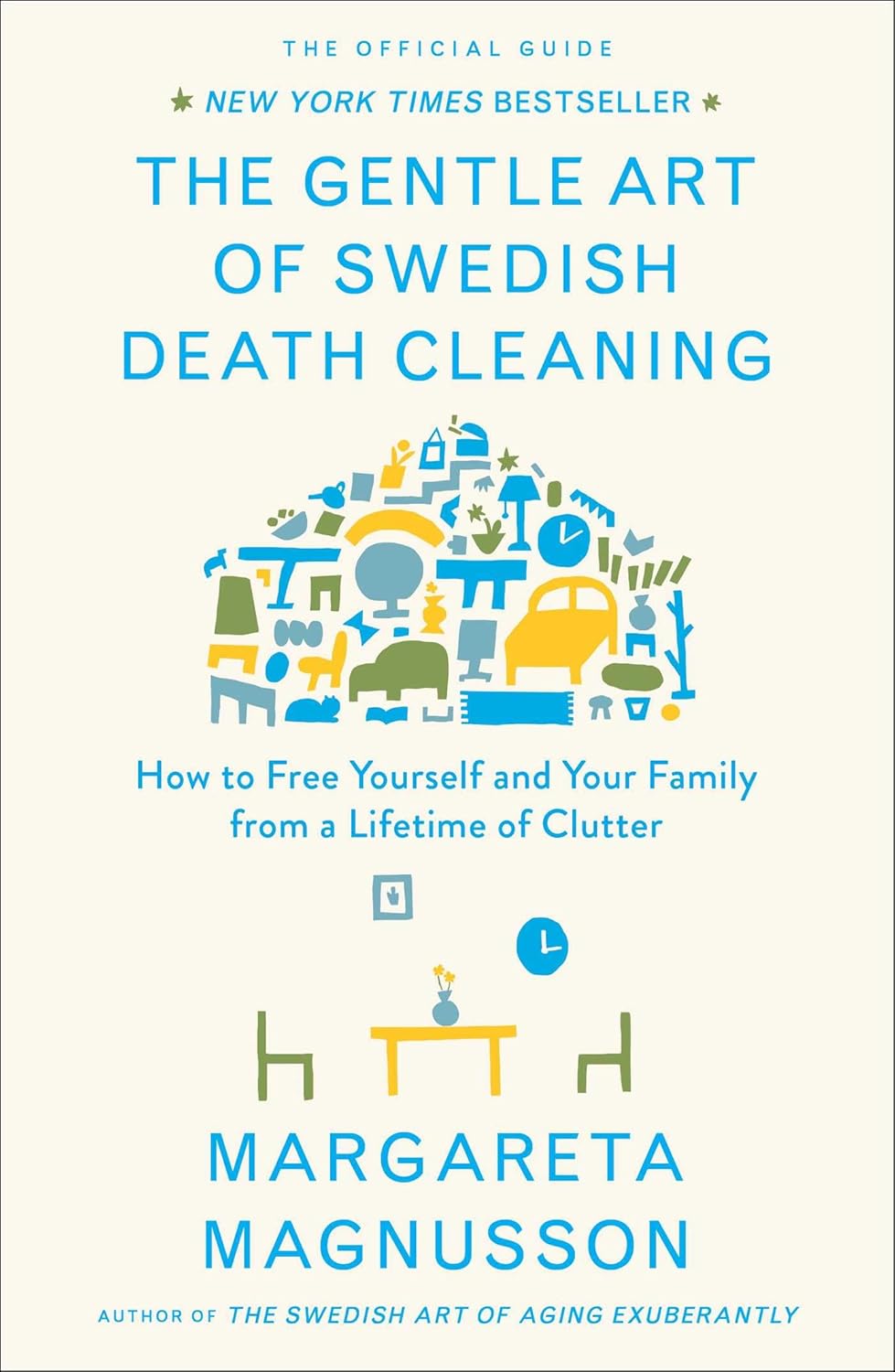
This is why we encourage people to start decluttering early and continue it as an ongoing practice. Even thinking about this in your thirties or forties can make life easier down the road. Expand your mindset on getting comfortable with jettisoning possessions by reading The Gentle Art of Swedish Death Cleaning: How to Free Yourself and Your Family from a Lifetime of Clutter by the late Margareta Magnusson.
Fear of Lost Identity
People fear that letting go of possessions will lead to a loss of connection to who they are.
Personal Identity
Objects help establish and define people’s identities — whether they’re tied to professions, hobbies, interests, or memories. Downsizing can feel like giving up parts of one’s identity, leading to a sense of loss or disconnect from who they were in their heyday.
Cultural or Family Connections
It’s common to hold onto objects that connect one’s family or cultural history. Letting go of these items can feel like breaking ties with heritage or family roots.
You can diminish the fear by talking through the role each item actually plays, and whether the possession is really tied to living your identity.
Does the absence of dust-catching plaque on a shelf really mean you’re no longer a past “Teacher of the Year?” Can you trust that your legacy is actually all the students you guided? If you have half a dozen rosary beads or seder plates but only ever use one favorite, wouldn’t passing along the others to someone who will love and use them actually enhance, rather than detract, from cultural or family connections?
Fear of Minimalism
If you’re used to having a very “full” space, especially as you declutter with an eye toward downsizing to a smaller home, other fears may creep in.
Over-Purging
In the pursuit of minimalism, some people swing too far and end up feeling their space is too bare, missing the comfort and personalization that their possessions once provided. This is particularly common when one member of a married couple is inclined to “pitch things willy-nilly” as one of my clients complained of their spouse. Working with a professional organizer who monitors emotions and asks questions about your future needs throughout the process can soothe frayed nerves.
Similarly, not everyone thrives in minimalist environments. People may feel pressured to declutter because it’s trendy, only to regret it later when they realize it doesn’t align with their personal preferences. I always come back to the William Morris quote, “Have nothing in your house that you do not know to be useful or believe to be beautiful.”

Using this as a rubric will help dissipate fear that you will let go of “too much” and allow you to focus on keeping what is “just right.”
Practical Inconveniences
When people downsize “too much,” they can find themselves in situations where they miss basic, practical items they took for granted, leading to frustration and regret. Again, the solution isn’t to avoid decluttering, but to consider what “after” should look like and set aside favorite essentials before the purging begins.
THERE’S NO BIG FIX FOR FEAR OF DECLUTTERING
There’s no one magic wand to get rid of the fear of decluttering, but there are a few strategies to become more comfortable with uncertainty about how you will feel after decluttering.
Jettison the Expectation of Quick Satisfaction
There’s often an expectation that decluttering will bring immediate peace or satisfaction, but the emotional void left by discarded items can take time to heal, leading to disappointment when results aren’t instantaneous.
Decluttering brings clarity and simplicity. It saves time and money, reduces stress, and increases productivity. Nonetheless, humans are psychologically complex.
We have emotional attachments (and false beliefs about emotional attachments), fear of future situations, quirky needs, experiences of loss, and fears that we will be judged (or judge ourselves) for making poor decisions that leave us without the value we might otherwise have had.
But the alternative to decluttering is physical overwhelm in one’s space and emotional overwhelm as a result of one’s schedule.
Somewhere in between is the balance between keeping what matters and letting go of what we don’t need. We achieve this with mindful, intentional decluttering that respects both the practical and emotional roles possessions play.
PROACTIVITY OVERPOWERS REGRET
Clients are often a bit surprised when I encourage that they *not* let go of certain things for which there are guidelines regarding retention (like old tax returns and supporting documents, loan payoff documentation, etc.).
Clients who take the time to work through a decision regarding whether to keep or discard something rarely have regrets. I’ve never had a client ever say, “Darn, that wagon wheel coffee table that we discussed? I really wish I’d kept it.”
Again, most people express regret that they didn’t let go of things sooner. A substantial aspect of that comes from the proactive nature of working with a professional organizer to consider the consequences. When there is regret related to decluttering, it most often comes from never stopping to think clearly about the value, failing to cautiously review what’s purged, and not being given the choice at all.
The most common circumstance in which people regret the absence of their things is when they didn’t get to control the parting and don’t get closure. This may happen when:
- People are evicted and no arrangements have been made to move their possessions
- There’s a house fire.
- Victims of abuse or neglect escape or end up in foster care without their things.
- Sudden ill health forces elderly people to leave their homes and go into assisted living or nursing care.
- Students haven’t done anything to prepare for end-of-the-year dorm clean-outs and whatever doesn’t fit in the car gets tossed.
It’s much like when a relationship ends. When a spouse dies unexpectedly, you’re left adrift. But no matter how painful, if you have enough time for a “good goodbye,” when the end comes, after a period of mourning, you’re likely to have a lifetime remembering the good rather than obsessing about the fact that it’s over.
If you get a divorce (amicably, or at least if it’s your decision or you agree that it’s for the best), while you may sometimes miss aspects of the relationship, you’ll have a healthy recognition of what transpired. But if a six-month situationship ends when the other person ghosts you, you’ll miss the hoodie left at their house and the lost chance for proper closure.
Separating from your possessions can be similar. If the parting is forced on you, it’s understandable that it will unleash a variety of negative emotions.
FIND THE BALANCE BETWEEN REGRET AND JOY
Marie Kondo’s idea of letting go of everything that fails to give you joy is problematic.
Joy is a great rubric for deciding to get rid of a significant other. If your partner doesn’t give you joy at least 85% of the time, there’s a problem. (It’s OK if it’s not 100%; there’s something to be said for even-keeled neutrality or boredom. But if they make you unhappy more than 1% of the time, toss ’em in the recycling bin.)
Joy is also probably an excellent way of judging what tasks and obligations you should cut from your life, provided that cutting those non-joyful obligations won’t also delete joy. Hate going to meetings at work? Just refusing to go may eventually mean that your employer will jettison you from the workplace, and you’ll lose out on the joy that a paycheck brings.
But outside of the work environment, decluttering tasks should mostly be joy-based.
You don’t get joy from driving your kid to soccer practice? OK, but if your child being happy does bring you joy (and I hope it does), the trick isn’t to stop the soccer but stop the driving. Arranging with another parent to carpool and split the driving (so you only do pickup) might work; so might paying for a ride-share service designed for kids and teens.
You get no joy from having lunch with your complaining, unappreciative something-in-law? Encourage your spouse to pick up the slack and let go of that draining emotional load.
You won’t regret choosing self-care over task clutter. Figure out when, and when not to, emulate Herman Melville’s Bartleby the Scrivener and learn to say, “I would prefer not to.”
Fear of how you will feel about letting go of items and activities is understandable, but don’t let it keep you from taking control of your space and schedule.
Sustainable, intentional decluttering can minimize your fears and regret, and empower you to live the life you want.



Great post, at a time when I feel like I’m constantly decluttering (though in truth I tackle very small areas at a time). Most of all, you’ve reminded me that I’ve wanted to read Swedish Death Cleaning since it came out, so I’ve just put it on hold at the library.
I rarely like books about decluttering written by people not in the profession, but Magnusson (who just died recently) had a wonderful, organic understanding of the process that makes the book a charming, easy read. I’ll be eager to see what you think of it when you read it.
Thanks for sharing your thoughts and for reading!
Fear is such a terrible emotion. We often fear the outcome and spend so much time worrying about it that the fear of what we may feel is worse than the feeling itself.
When I work with clients to declutter overly full spaces, we work deliberately for short periods of time so they make decisions with which they are comfortable. I’m not saying that fear isn’t involved – just that we can minimize it by tackling overly cluttered spaces with a deliberate plan.
As always, Julie – I love the research you’ve done here and totally enjoyed all the videos!
You’re so right. I’ve written about fear several times, but from different perspectives. If people understood that making the decision to mindfully, intentionally clutter actually allows them to control for most/all of their fears, I think they’d be more inclined to embrace the process.
I’m so glad you enjoyed the videos. I think if we can mix humor (and pop culture) into the things that feel hard to think about, we’re more likely to feel at ease about them.
Thank you for reading and for your kind words, Diane!
Fear and nostalgia ae two that come up over and over again with clients.
And then there is the not knowing how to get rid of an item. This weekend while going through a box of items that had been in the client’s car, we came across multiple gadgets that are for assisting you to get out of the car if you have a bad accident. First of all, all of these items were still in the original wrap. A couple were duplicates. In my mind, I was thinking, “So you are in a bad accident, and you need to locate this device, get it out of the wrapping, figure out exactly how to use it…..” So, she decided that she really only needed one but because all of these had been corporate gifts over the years they all had logos on them and she had been told that you could not donate items with the logo. That would mean she would have to trash them. She couldn’t do it. She is now hoping that she can give them to someone else to use.
You’re right, of course, about fear of what to do with the item even after you decide to let go of it. That can definitely paralyze people who want to find the “perfect” home for something, which is when we have to remember that “perfect” is the enemy of the “good.”
I often see items with corporate logos given for donation, so I’m not sure whether she had to sign some sort of agreement to not donate, but certainly she could give these as gifts to family members and friends, or even trust you to find a safe solution. (This reminds me that my mother and I have been saying we need to get these kinds of “escape” tools for cutting seat belts and breaking out of the car for eons. Good reminder!)
Thank you for sharing your thoughts and for reading!
Reading this reminds me of all the reasons why decluttering can be hard. Our relationship with our stuff is more complex than I would have thought.
I do think that many people fear that professional organizers will pressure people to get rid of things, when actually this isn’t the case at all. As you point out, we may encourage people to let go with helpful perspective that can bring their fears of regret into perspective.
That said, the sentimental stuff is probably the hardest because you truly can’t replace that.
I never want my clients to feel regret, so if I can see they are waffling, we talk about it, and then if they still can’t decide, I suggest they keep it. Yes, we may need to cycle back in the future. However, I have found that many clients have an easier time letting go after they’ve been decluttering for a while. And I do think they feel better when I “let them” hold on.
Great videos in this one!!
I wish (prospective) clients knew that even we professional organizers have obstacles to decluttering for all these reasons; we just have the tools for getting ourselves over the bumps.
You’re right about people fearing we’ll push them to let go of things; I think clients are often surprised when I urge them to hold onto certain things until we make another pass (or two) and we can be sure of their emotional connection or check the monetary value.
I’m so glad you liked the videos! It’s always fun to find the right ones, though I wish it were easier to post TikToks and Insta videos, as sometimes there’s an ideal video that just looks weird in WordPress.
Thanks so much for reading and commenting!
First and foremost, congratulations on your 25th anniversary! That is an incredible accomplishment. You’ve given and continue to give so much to our industry, and I am grateful to know you.
Your piece this week ties in beautifully with the theme I’m writing about this month…letting go. I love everything you said. That fear factor is real. Much of the work I do with my clients is about letting go. It’s where the organizing process begins.
Any time a change is involved (and letting go is a change), fear can arise. One of the things that helps my clients is going through that process slowly. Of course, that’s not always possible, especially if there is a specific deadline for moving. But when possible, I encourage them to take as much time as they need. This helps to get used to living with less and gives them time to think through their decisions.
A while back, I worked regularly on my ‘live with less’ project. After clearing out and selling my parents’ house, I was motivated to let go of more things in my home. I kept a list of what I did each day and what I let go of. I’ve referred to those lists (out of curiosity) since then. What’s incredible is that I didn’t remember what I’d let go of. And more than that, I didn’t miss any of it.
Regret can happen. But if you give yourself the time and space to figure out what IS important, meaningful, and useful to keep, the letting go will be easier. Not easy, necessarily, but easier.
Thank you, Linda! I’ll be celebrating all year, trying to find special ways to observe, but you’ve already made it special by your kind words and support!!!
Letting go is change, and as I’ve told you often, I love novelty but hate change, so I know from where my clients are coming. It’s all about starting early (in life, and before deadlines) to make the process proceed “at the speed of safety,” as my friend Morgana Rae says.
I love your idea regarding keeping a list of discards; it’s shocking how little we care about what we discard, mostly because we’re discarding what wasn’t useful or compelling in the first place.
Thank you for your thoughts and for reading my post. I really appreciate it!
Great post, Julie. Always a pleasure to read.
I found that many of my clients go through stages of letting go. They start small, go through things, and then we revisit the areas months later. Usually, it is a lot quicker. I’m ok with that. I never want to force anyone to get rid of anything.
Thanks for your kind words, Sabrina.
I completely agree — I tell clients that we start with a “level one purge” as we set free the low-hanging fruit and everything they can comfortably jettison. It’s OK for it to take a few rounds (provided they’ve allowed themselves enough time and breathing space) so that they get adept at using their downsizing muscles.
Thank you for reading and sharing your thoughts!
Julie, how did you get to be so wise?
Are all organizers smart?
Are only smart people organizers?
Thanks for writing this post exactly when I needed it!
Hee! Thank you, Michele. And I did have you (as well as many others) in mind when I was thinking about writing this post.
I’m pretty sure the people at NASA are pretty smart. Then again, I’m willing to bet they’re pretty organized, too, so who knows?
This is incredibly moving, Julie! The focus on anticipated regrets is very eye-opening. There are, in fact, very few things I have regretted letting go of, and there are one or two! That’s just the cost of moving forward in your life, right?
There are a few things I’ve momentarily regretted, like at the very beginning of the pandemic, I wished I hadn’t toss the small package of medical-grade masks I’d had in my work bag, unused, for almost a decade. That was a wow-I-coulda-had-a-V8 moment. But otherwise, I find (as you said) that knowing yourself and knowing what you value allows you to move forward. Very little can’t be acquired again, if necessary.
Thank you for reading!