Archive for ‘ADHD’ Category
Paper Doll Sees Double: Body Doubling for Productivity
Knowing what you have to do and doing it aren’t the same things. If you were raised in the 1980s or 1990s, you learned you were supposed to eat according to the food pyramid. Nowadays, there’s the updated MyPlate approach to healthy eating, to make sure everyone gets the right proportions of fruits and vegetables, grains, protein, and dairy each day.

But knowing how you should eat doesn’t mean that you’ve never contemplated chowing down on break room doughnuts for breakfast. And it’s not just fictional characters like Olivia Pope who’ve had wine and popcorn for dinner.

And while sometimes family, friends, and colleagues can lead us astray from nutritional goals, it’s been proven that hanging out with people whose health goals are similar to yours can help keep you on the straight and narrow.
Simply put, when you’re with people who model good behavior, you’re more likely to participate in that good behavior. So, what does this have to do with organizing or productivity?
BODY DOUBLING AND ACCOUNTABILITY
Two years ago, I wrote Count on Accountability: 5 Productivity Support Solutions, one of the most popular posts I’ve had in the 15+ years I’ve been writing the Paper Doll blog. The concept of getting accountability support to conquer procrastination and achieve more productivity really resonated.
Perhaps you only know about body doubles in movies or on TV. That kind of body double often appears when the featured character is doing something the actor can’t do, like a backflip or fancy dance move. Subsets of body doubles are stunt doubles, or in the case of some films with a bit of nudity, “butt doubles.” However, when we’re talking about productivity, the “butt” is not about someone else’s; it’s about getting your own derriere into the chair to attack avoided tasks.
In that post two years ago, I explained the body doubling technique developed in the ADHD community. In support groups, participants found that when another person was present, participating in quiet tasks with a similar (non-distracting) energy, it helped the individual maintain focus and motivation. We professional organizers often work as body doubles with clients (both those with ADHD and those without) because it successfully creates an environment for focused work.
Any of us on our own (but particularly clients with ADHD) might (intentionally or unintentionally) delay working on a task or get distracted. Realized or unrealized anxiety about a task — fear of failure, for example — can prevent someone from starting, but you have to start in order to have anything you can improve upon. (See: “You can’t edit a blank page.”)
When a project is hanging over your head, you might find ways to delay or distract yourself, but when someone is there, investing their time in you (and you’re investing your time and money to achieve your goals), body doubling helps you push past the anxiety and be more productive.
As a professional organizer, when I’m body doubling with a client, we may be working side-by-side or across from one another. I may pre-sort piles of papers into categories (bills to pay, documents to review, items to file) while the client is working through one category at a time to complete distinct tasks. Students quietly studying for an exam in the library or doing homework in study hall are similarly using the body doubling method to achieve focus and productivity.
Scientific research on the benefits of body doubling are scant, but I can think of at least six (interlocking) ways in which body doubling advances an individual’s ability to stick with a task:
- Accountability — By definition, accountability is “the obligation or willingness to accept responsibility for one’s actions.” You may feel like introducing a second party to get your own work done is cheating, but it’s not.
Really, accepting responsibility means marshaling all of your resources to attack a problem and achieve the stated outcome. If a body double, accountability partner, mastermind or study group, workout partners, or anyone else can help you achieve your goals by their mere presence in your life, availing yourself is no different from having a state-of-the-art computer, a current eyeglass prescription, or properly-fitting running shoes. A body double is just a quiet, human-shaped resource for maintaining accountability.

Studying in Library Photo by Robert Bye on Unsplash
- Social pressure — If someone present with you expects you to get something done, you’re probably going to stick with it and do it. Of course, we’re not all equally responsive to the presence and expectations of others.
Gretchen Rubin’s work on her Four Tendencies framework (how we respond to inner and outer expectations) is a great place to start for understanding the role of social pressure in getting things accomplished.
Some people are Upholders, disciplined at meeting both their own expectations and those of others. Me? I’m an Obliger. I’ve got superior discipline when someone is waiting for me to do something. I am always on time to meetings or appointments, and I deliver what is expected of me by deadlines. However, I’m iffy at goals that only satisfy my own preferences.
Rebels can’t be forced or convinced, but the beauty is that a body double isn’t a boss or a manager telling you what to do. The body double is just mirroring what you’re doing. There’s nothing to rebel against; the body double is just along for the ride. Meanwhile, Questioners can’t be convinced by expectations, only their own pathway to finding meaning in the task. As with Rebels, the body double’s role is as travel companion.
The key is that for those who struggle with getting started or sticking with a task, a partner or several can improve the likelihood of reaching goals.
- Project or task orientation cues — On their own, many people have difficulty maintaining focus on the project at hand. This can be the result of any of a variety of executive function disorders or just a byproduct of living in the 21st century.
For every work-related search you do on Google, you’ll encounter numerous links — both on the search page and then in the sidebars, body, and bottom of the articles you’re reading — specifically designed to take you somewhere else on the web.
On our own, we go down rabbit holes and can’t find our way back to the original link or get trapped in dozens of open browser tabs. Body doubling means that just on the periphery of our consciousness, we’re aware that someone else is present, and that keeps us tethered to our work. We may go astray, but our body double’s presence can bring us (and our focus) back to the here and now.
- Biological cues — The experience of participating in body doubling and mirroring the body double’s behavior can help activate some nifty neurotransmitters. Literally, doing the task cues the bodily systems to kick start, making it easier to hunker down and do the work.

Do It Now Scrabble Tiles by Brett Jordan on Unsplash
- Task execution — “Well begun is half done.” (Aristotle) “You don’t have to be good to start … you just have to start to be good!” (Joe Sabah) “Only put off until tomorrow what you are willing to die having left undone.” (Pablo Picasso)
Such quotes are all well and good, but if you’re using procrastination to soothe your present discomfort, you already know you’re going to feel worse as the deadline approaches. To borrow from what I wrote in my original post on accountability:
Canadian psychology professor and all-around expert on procrastination, Timothy Pychyl, author of Solving the Procrastination Puzzle: A Concise Guide to Strategies for Change, explains that procrastination isn’t just delay. He explains that procrastination is “a voluntary delay of an intended act,” one where the person procrastinating is cognizant that the delay is going to have a cost, whether that cost is financial, interpersonal, professional, legal, or otherwise.
When we procrastinate, we know that there’s no upside; we aren’t merely weighing a logical choice between two options of equal value. It’s less, “geez, how can I decide on whether to go on this romantic anniversary date with my spouse or prepare for my presentation this week?” and more, “Eek, I’m feeling icky about doing this thing for some reason and I’ll latch on to any random thing, like bingeing a sit-com I’ve seen in its entirety three times!”
Experts like Pychyl have found that at its base, procrastination is “an emotion regulation strategy” – a way to cope with a particular emotion while failing to self-regulate and perform a task we know we need to do. We convince ourselves we’d rather feel good now, thereby causing more trouble for our future selves.
Getting started on those tasks is hard. But the minute you have another person there with you, you’ve got a (silent) partner whose presence makes getting procrastinating less possible and doing the (appropriate) activity a smidgen easier.
- Extended focus — It’s common to have trouble sticking with tasks that are boring, repetitive (and thus boring) or lengthy (again, yawn). The presence of others who match your energy and behavior type (reading, writing, doing math homework, sorting, etc.) sprinkles a little extra fairy dust to keep focus a bit longer.
If you were doing a series of Pomodoros (25 minutes of work, 5 minute breaks) on your own, you might give up after one or two. Someone else doing the same or similar tasks in your nearby environment is kind of like keeping pace with another random jogger or bicyclist on your route. If you were on your own, you might give up, but just a little bit of what I think of “competitive companionship” may be all you need to keep going.
To learn more about body doubling, consider:
Could a Body Double Help You Increase Your Productivity? (CHADD)
‘Body doubling,’ An ADHD Productivity Tool, Is Flourishing Online (Washington Post)
Use Body Doubling to Increase Your Productivity (Life Hacker)
How Body Doubling Helps When You Have ADHD (VeryWellMind.com)
I Tried A ‘Body Doubling’ App To Help With Focus – It’s Weird But It Works (Refinery 29)
What to Know About the ‘Body Doubling’ Trend That’s Keeping People with ADHD on Task (Men’s Health)
CO-WORKING FOR ACCOUNTABILITY
Body doubling as a method of accountability has been on my mind lately. In addition to regular client-related work and this blog, I have four special projects in the course of six weeks. I’m being interviewed for a podcast and for a video summit, participating an online summit requiring me to make a video and appear on live virtual panels, and I’ve got an in-person speaking engagement next week. Yikes!
All of these projects require research, writing, and finessing of verbal expression. (I like to be prepared, even when I will eventually have to be extemporaneous.) Deep down, I know it will be fine, but we all have bits of performance anxiety seep in. Timothy Pychyl might say that my temptation toward procrastination is a bit of (messed-up) emotional regulation strategy. But I’ve had (and will soon have more) help in sorting it all out.
Co-Writing Sessions
I’m a member of the Authorship and Publishing Special Interest Group (SIG) in the National Association of Productivity and Organizing Professionals (NAPO). We have monthly meetings and an email group for supporting one another as we write books, articles, blog posts, presentations, and other projects.
Last week, the SIG began holding weekly two-hour co-writing sessions. A small number of us log on to a Zoom call, talk about what we hope to accomplish, and then settle down to write. We each muted our microphones (especially important for me, as I tend to think out loud, which would make it hard to be a silent body double for anyone else), content in the knowledge that if we needed to reach out to our fellow writers, we could type a message into the Zoom chat.
When I minimized the Zoom window, instead of it dropping into the Mac dock or otherwise hiding, it turned into a tiny, floating, repositionable window (about 3/4″ high by 2″ wide). I could see one of my co-writers — in miniature — and it reminded me that I had a goal and that someone <waves hands> out there is on my side in the effort to get my project done.
At the top of the next hour, we turned our mics back on just long enough to check in, offer support, and return to our writing for another hour. I used the first co-writing session to prepare my notes for the summit interview two days later, and felt so confident and prepared because I had this co-writing time.
These are drop-in sessions on a fixed day each week; the participants will change according to each writer’s need and availability, but I’m already looking forward to the next one.
“Making Space to Write” Virtual Writing Retreat
In some ways, that co-writing session was a practice run for an event this past Friday, January 27th. Two of our Authorship & Publishing colleagues, Standolyn Robertson and Leslie Hatch Gail, put a lot of planning into the event. Registration was required, and we had an hour-by-hour retreat agenda.
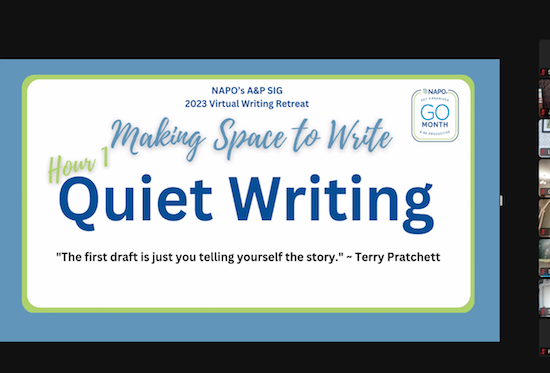
We were encouraged to set our goals in advance, and once we arrived, after brief introductions and some housekeeping announcements, we hunkered down for 45 minutes of quiet writing time, nudged by a slide with a motivating quote.
(Per participant requests, I am not including any identifying photos.)
Because the live Zoom screen showed the participant gallery and a shared slide, the minimized floating screen wasn’t showing me my colleagues, just the slide. I thought that might lessen my feeling that I was being body doubled, but it didn’t. I was always aware (and calmed by) the slide’s reminder of everyone’s presence.
From then on, at the top of each hour we had 15-minute “human breaks” to stretch, address any biological needs, and answer a prompt slide prompt. Questions were lighthearted and ranged from “What hobbies are you participating in?” to “What was your best purchase in the last year?” We entered our answers on the chat screen, had a little verbal interaction on Zoom, but at the quarter hour mark, we all went back to writing.
What fascinated me was that every time I’d get to a logical stopping point in my writing, ready to take a breather, I’d look at the clock and see it was just the 59 minute mark of the hour!
Around 1 p.m. (in my time zone), we took an hourlong lunch break. Some attendees had to run errands, but for the majority who stayed, it was like having a lunch with co-workers, something we professional organizers (mostly solopreneurs) rarely get to do. Finally, after a full day of writing, we had a social hour during which time we played a rousing and hysterical online version of Scattergories.

Which Experience Was Better?
Comparing and contrasting these two events, it’s easy to see the differences. The co-writing session was fairly informal, of a short duration, and included only four participants. While we used one member’s Zoom account, there were no real leaders; we each took responsibility for our own behavior.
Conversely, the virtual writing retreat was more formal (with the exception of wardrobe), with Standolyn and Leslie moderating and leading us through activities. It ran from 11a to 6p (including lunch and our day-ending Scattergories socializing) and had about a dozen writers in attendance.
On an ongoing basis, I can see the advantage of short, weekly co-writing sessions. I’m not usually a fan of events that are too formal or rigid in terms of an agenda. But I absolutely loved the retreat and am hoping we’ll have them a few times a year, as I can picture using the experience to keep me motivated and focused for long-form writing projects.
What’s Next for Paper Doll and Body Doubling Accountability Sessions?
My first experience with these kinds of virtual session was more than a decade ago, when my colleague Deb Lee ran “Action Day” events, which were similar, but run on the telephone. Participants called in, talked about their goals for household or work projects — technology-related tasks were always popular — and stepped off the phone to work. We had various check-ins throughout the day. (In later years, Action Day went high-tech with video conferencing.)
Deb and I used to be on various committees together, but rarely get to chat nowadays. I’d been missing the inspiration she brings to every encounter. After a quick email discussion, we’ve scheduled our own Action Day/Body Doubling/Accountability Extravaganza for mid-February. It’ll be suuuuuuper-informal and only for a few hours, but just anticipating the experience is helping to dispel my procrastination gremlins from their usual hiding places.
FINDING YOUR IDEAL BODY DOUBLE OR ACCOUNTABILITY PLATFORM
My experience has focused on writing, and certainly as evidenced by research summarized in pieces like Writing Accountability Groups (WAGs): A Tool to Help Junior Faculty Members Build Sustainable Writing Habits, it works. But body doubling works to support accountability and boost goal achievement for any activity, from getting your housework done to writing your overdue post-wedding thank you notes. It’s just a matter of finding the right approach and platform for your needs.
In my original post, I focused on five types of accountability options (with some suggested links):
- accountability partners, like friends, colleagues, or people you can meet through apps
- accountability groups, like mastermind groups, in-person or virtual study groups, and professional groups
- professionals, including professional organizers, ADHD coaches, life coaches, and fitness trainers
- apps and gadgets
- accountability events
Not all accountability experiences or platforms are designed for body doubling, per se. For example, mastermind groups tend to focus on support through discussion; all coaches act more like instructors some of the time, though some will offer body doubling support.
Attributes of Body Doubling Platforms
If you want to experiment with body doubling for accountability, consider these factors:
- Formality — Do you prefer things to be structured or loosey-goosey?
- Number of participants — Would you rather only know there’s one other person in a session?
- Familiarity with participants — Would you feel more comfortable with strangers or people you know well (or perhaps people you only know a little bit)?
- Cost — Will you be more motivated if you pay someone (like a professional organizer or coach) or an organization, or might that cause you stress? Would you rather sign up for a monthly membership (like going to the gym) or would you prefer to only pay for drop-in or ad hoc activities?
- Level of communication — Do you want to mostly be a Silent Sam and not have any interaction with your body double(s)? Would you prefer frequent social check-ins, perhaps each hour?
Group Body Doubling For Productivity and Accountability
Two years ago, there were only a few major platforms for group co-working that embraced the body doubling approach as part of accountability groups; now, there are many more. Next time, I’ll be sharing a post comparing the different platforms, their features and costs, and how they work.
And, based on my recent experience, I’ve been considering setting up my own virtual events, perhaps starting with my (in-person and virtual) clients — perhaps a Study Hall for Grownups or Admin Action Adventure. (Yeah, I’ll keep working on the name.)
Similarly, you might gather family, friends, or colleagues to participate on a more ad hoc basis when you need a little support.
Have you participated in any (virtual or in-person) body-doubling activities? What do you do when you need accountability support, and don’t want to talk that much about it, but just do it?
Paper Doll Helps You Get By With a Little Help From Her (Brilliant) Friends
I love sharing my expertise and research with you about a wide variety of topics, from getting more (of the right things) done to conquering toxic productivity to accessing and organizing vital documents.
Although I’m a generalist in my professional organizing practice, I specialize in blogging about organizing paper and information and boosting productivity. But that doesn’t mean that’s all you want to hear about. After all, man (and woman) cannot live by bread alone. We also need cheese. (In Paper Doll‘s case, lots and lots of cheese.)
As a Certified Professional Organizer®, member of NAPO, and Evernote Certified Expert, I get to hobnob with other likeminded specialists, learn from them, and share their knowledge with you. Today, I’ve got a cornucopia of resources for making your life, family, and world run a little more smoothly.
LATE, LOST & LAGGING: UNDERSTANDING ADHD & EXECUTIVE FUNCTIONING
October is ADHD Awareness Month.
As recently as a few decades ago, people lacked a clear understanding of ADHD. If they thought about it at all, they considered it as something that only impacted little boys, that it was about being rambunctious and intentionally (or rebelliously) inattentive, and that it was something people grew out of. It was rarely acknowledged as something that impacted women and girls, and most people, if they considered it at all, thought it was something kids grew out of.
Now, we know more. We know that ADHD is a brain-based disorder, a neurological condition that affects people across all ages, genders, and socio-economic and cultural areas. (It’s diagnosed two-to-three times more often in boys than girls, but that may be because the expression of ADHD in girls can be less disruptive, which says more about socialization norms and pressures than it does about ADHD.)
ADHD impacts the lives people across all levels of education and intelligence. Willful ignorance about ADHD expresses itself in all levels of education and intelligence, as well.
I once worked with a client for whom her late-in-life diagnosed ADHD had caused distress throughout her life, and the emotional abuse inflicted on her by her physician spouse, who refused to “believe” in ADHD, was both eye-opening and frustrating as we tried to implement solutions. (Yes, Dr. Shouty-Dude, ADHD is real, and no, you can’t “conquer” it by having more “diligence” and “willpower.” Grrrr.)
If you or someone you know has ADHD or other challenges with executive functioning, ADHD Awareness Month is a great opportunity to learn more, and I’ve got a great webinar resource for you.
My NAPO colleague, ADHD Student Coach Leslie Josel of Order Out of Chaos, is one of my absolute go-to experts when I have a question about ADHD and executive function.
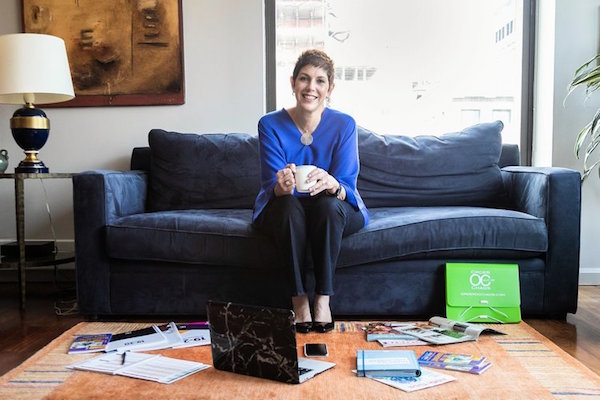
If Leslie’s name sounds familiar (and it should), it may be from the post Paper Doll Peeks Behind the Curtain with Superstar Coach, Author & Speaker Leslie Josel, where we talked about her multi-award-winning Academic Planner: A Tool for Time Management, which is celebrating its tenth anniversary,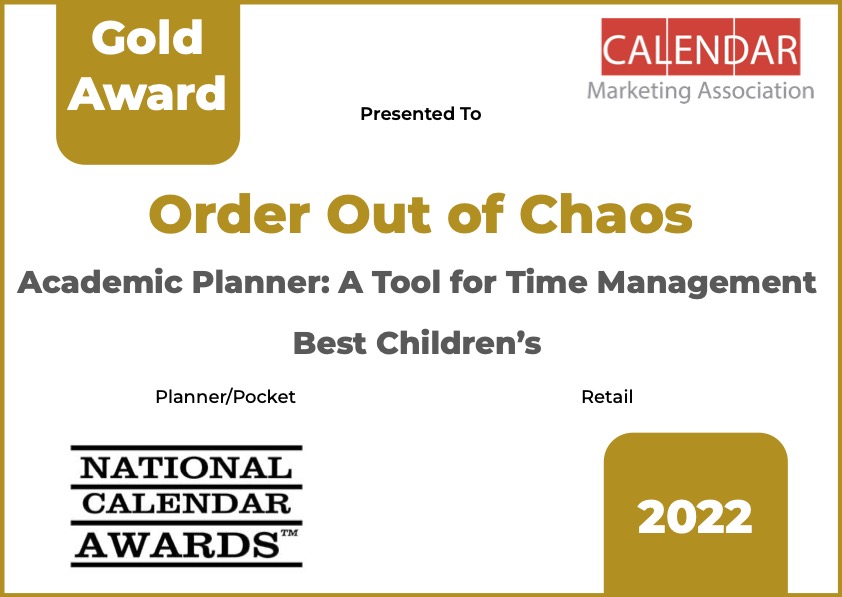
and her book, How to Do It Now Because It’s Not Going Away: An Expert Guide to Getting Stuff Done, which helps middle school, high school, and college students overcome academic procrastination and better manage manage time and study skills.

On Monday, October 24, 2022 at 7 p.m. EST, Leslie is going to be interviewed by another of my go-to NAPO colleagues, fellow Certified Evernote Expert Kimberly Purcell of Amethyst Productivity. Kimberly is an Evernote consultant and trainer for personal and business use, and is stellar at knowing the right questions to achieve the best results. I can’t wait to see what she asks Leslie.

Leslie and Kimberly will be talking about some of the pillars of executive function, including time management, memory, focus, and effort. Leslie will also be sharing the differences between ADHD and other obstacles to executive function.
The webinar, entitled Late, Lost & Lagging: Understanding ADHD & Executive Functioning, is free to attend, and is sponsored by
LESLIE JOSEL’S MASTER CLASS SERIES FOR PARENTS
Sometimes, the news isn’t just about my friends, but about friends of my friends. In fact, Leslie has two upcoming master class events that might be up your alley if you’re a parent (or grandparent) trying to create some order in your family or someone’s academic life.
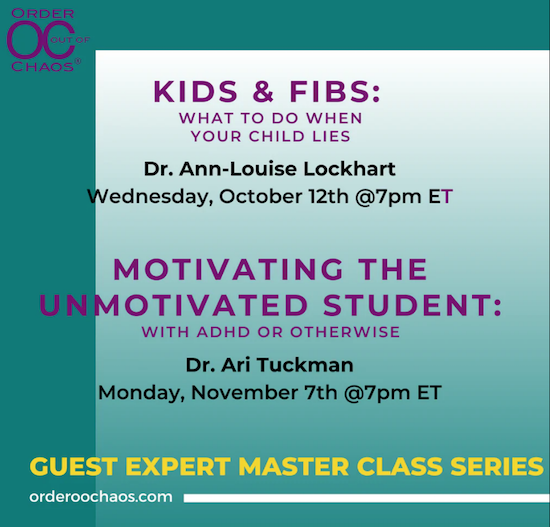
In the first webinar, Leslie will be presenting the wisdom of Dr. Ann-Louise Lockhart in Kids & Fibs: What to Do When Your Child Lies. Dr. Lockhart is a leading expert in pediatric psychology and a parenting coach. Here’s a bit of the description of the event from Leslie’s site:
All children lie. Especially those with weak Executive Functions and ADHD. Some lie because they are testing limits and boundaries, others because their “developing” brains lead to impulsive or inappropriate decision-making. And then there are those children who find lying easier than doing the task or chore they are being asked to do.
There are many reasons and theories behind lying behaviors. But what we do know for sure is that parents feel very hurt or angry, and tend to take the lying personally. Or they are confused and want to correct the behavior immediately.
In this 1-hour online master class, Dr. Ann-Louise Lockhart, pediatric psychologist, and a parenting coach, will discuss the three reasons why children fib. She’ll explain how the most important step to remedy dishonest behavior is to address the underlying reasons behind it. She’ll also show parents how they can dig deeper to discover what’s driving their child’s decision to lie and offer tools to promote future truth-telling. Practical strategies will be discussed along with real-life examples to help parents effectively manage their child’s behavior.
This webinar is Wednesday, October 12, 2022, at 7 p.m. EST. Register at: Kids & Fibs: What to Do When Your Child Lies; the master class, on its own, is $29.99.
I’m particularly excited about Leslie’s November virtual master class Motivating the Unmotivated Student: With ADHD or Otherwise with Dr. Ari Tuckman. Longtime readers of the blog have seen me buzz about the brilliant programs Dr. Tuckman has put on at NAPO conferences over the years. I can honestly say that the bulk of my true understanding of how to help my clients with ADHD and executive function disorders came from attending presentations by Dr. Tuckman.
Topics covered in this virtual master class include:
- Why many teens struggle with motivation — and especially those with ADHD and executive dysfunction.
- Understanding how attention gets hijacked and why prevention is more effective than willpower.
- How to “feel the future” more in order to increase motivation in the present so your student actually uses these strategies.
(As a side note to my Certified Professional Organizer colleagues, this seems like an ideal class for getting continuing education units toward our CPO® recertifications.)
Leslie’s master class with Dr. Ari Tuckman is November 7, 2022 at 7 p.m. EST. Sign up for Motivating the Unmotivated Student: With ADHD or Otherwise on its own for $29.99.
If both tickle your fancy, click here to register for Leslie’s master classes with both Drs. Lockhart and Tuckman, and you can save 10%.
It’s not necessary to join either webinar live, as Leslie will send links to the replay the following day, and you’ll have one week to watch. However, you’re urged to act quickly, as there are limited virtual seats available, and only the first 1000 participants are able to register. (FYI: Leslie’s master classes and webinars tend to sell out.)
HOW TO CONQUER CLUTTER WORKSHOP
Friend of the blog, NAPO colleague, and fellow lover-of-purple Linda Samuels, CPO-CD®, CVOP® of Oh, So Organized also has a big event this month. Linda is a past president of the Institute for Challenging Disorganization, an expert in chronic disorganization, and a coach extraordinaire.

She also has amazing empathy, warmth, and insight into the human condition, as evidenced by her blog, The Other Side of Organized, which shares a title with her now-classic book, The Other Side of Organized: Finding Balance Between Chaos and Perfection.

Later this month, Linda is delivering a workshop entitled How to Conquer Clutter: Understanding the Where, Why & What.
This lively virtual workshop is designed for those who are overwhelmed by clutter. Given that clutter can adversely affect levels of anxiety, as well as the quality of a person’s interpersonal relationships, sleep, and ability to focus, a little guidance can go a long way. A little buffer in your space is surprisingly effective in giving you room to breathe!
In Linda’s one-hour workshop, attendees will discover the truth about where clutter really comes from (and no, it’s not the Clutter Fairy), why it’s so hard to let go of possessions, and what you can do to reverse the clutter trend.
Linda says that you will come away from the workshop with at least one powerful and actionable strategy to use immediately to reduce your clutter. Attendees will have the opportunity ask questions and discuss their organizational and clutter-related challenges.
Linda’s How to Conquer Clutter: Understanding the Where, Why & What Workshop is scheduled for Thursday, October 20, 2022 at 7 p.m. EST and costs $59.
Be sure to register by Monday, October 17, 2022 at 6:00 p.m. to ensure your participation. This live workshop will be presented via Zoom; within 48 hours after registering, you will receive an email with the Zoom link and handout. I’m willing to bet something in that email will be purple.
MY LIST SIMPLIFIED JOURNAL
This last item is neither a webinar nor a master class nor a workshop. It’s something you can hold in your hands and make your own.
My List Simplified is yet another brainchild from my NAPO colleagues and friends from my own NAPO-Georgia chapter, Diane Quintana, CPO®, CPO-CD® and Jonda Beattie, M. Ed.
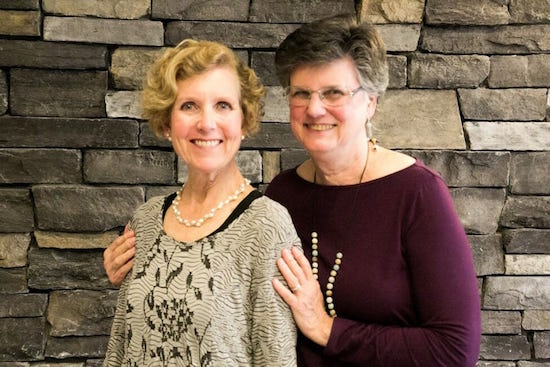
I’ve previously blogged about their various ventures, like their stellar book, Filled Up and Overflowing: What to do When Life Events, Chronic Disorganization, or Hoarding Go Overboard,

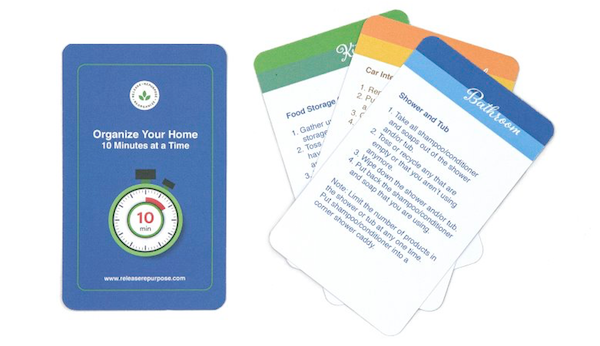
and their children’s books, Suzie’s Messy Room and Benji’s Messy Room. We discussed Diane and Jonda’s Organize Your Home 10 Minutes at a Time Deck of Cards in Paper Doll Models the Spring 2021 Organizing Products.
Their newest collaboration is a journal called My List Simplified.
As experienced professional organizers, Diane and Jonda recognize that people often have oodles of scribbled paper notes cluttering their desks, reminding them of phone calls to be returned, cards and emails to write, errands to run, and so on.
Clients inclined to rid themselves of little bits of paper by going digital might select an app or online platform to rid themselves of the mess. But Diane and Jonda (and I, and most organizers) know that there are still many, many people who are both comforted by, and more efficient with, paper solutions. For them, the business partners have created a journal to capture and corral all these lists, plans, and ideas in one place.
My List Simplified is a spiral-bound, lay-flat, undated journal with solutions that work for those who best comprehend a paper environment. There are a number of features for simplifying information and making it easy to retrieve without bogging users down in a system that might be too complicated to maintain.
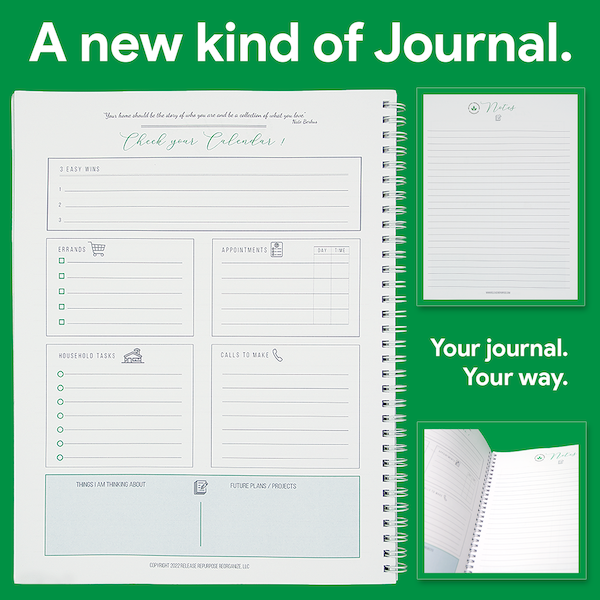
Use the left-side Check Your Calendar page to capture the various lists you’d otherwise keep on (too many) scraps of paper. This page starts with an inspirational quote and a place to specify the date (of which, more later), and includes small sections for:
- 3 quick wins
- Errands
- Appointments
- Household tasks
- Calls to make
- “Things I am thinking about”
- Future plans/projects
Facing the Check Your Calendar page on the opposite (right) side is a Notes page for capturing information on the fly, such as when you’re on the phone and someone is giving you directions or instructions. You can also use it to capture context related to any of the lists on the reverse page.
This journal is not so much for the person who would normally use a Franklin Planner or Planner Pad to keep every 15-minute block of life scheduled and annotated. Rather, it’s for the person who wants to transition from lots of little sticky notes and fluttering pieces of paper to a centralized system they can trust, but which will not overwhelm them.
My List Simplified would be a great resource for anyone planning a move or home remodeling/renovation project. If you’re juggling to-do items for any sort of major ongoing project and prefer a paper approach, this gives you space to collect, collate, and keep it all in front of your eyes. And if you’re trying to keep track of which service providers were called, what they promised, and when materials were due to be back in stock, here’s your central location.
They key difference of this journal is that it’s a flexible planner for those who need a want or need a little support, but don’t wish to be locked into a system. The journal is undated, so you can determine the date and day for each Calendar page. As Jonda and Diane say, it is a “forever journal.”
You might use it during the school year but not during the summers. You might only use it when you’re starting to feel overwhelmed by everything going on during the holidays or for the run up to a vacation.
As professional organizers and productivity specialists, we can get caught up in presenting clients with complex systems to cover all possible eventualities and forget that that’s not what everyone needs (or wants). This journal offers a more relaxed, flexible approach to keeping all of “this week’s” essentials in front of you, even if you only need it one week a month (or a season, or a year).
My List Simplified has 114 pages measuring 8 1/2″ x 11″ and is made in the United States. It costs $25 at Diane and Jonda’s collaborative Release*Repurpose*Reorganize site.
If you have any questions about the webinar, master classes, workshop, or journal above, please contact my genius friends directly. In ease case, their names are linked to their own sites. Happy October!
Follow Me