Paper Doll
Paper Doll Wraps Up the Leftovers: Organize Your Totes, Guests and Pin Boards
I hope you had a wonderful Thanksgiving and that your company gobbled up the last of the leftovers so that you have room in your fridge and freezer for all the upcoming holiday treats. I took an extra day to spend a longer holiday weekend with Paper Mommy, so today’s post includes only a few tasty morsels of updates on delicious things we’ve previously discussed.
I FEEL LIKE A WINNER
No, I didn’t win the Power Ball. (Apparently nobody did — can you believe the new estimated jackpot is $425 million? That’s a lot of little green papers!) But I still feel pretty special. A few months ago, I got a lovely note from Stacey Anderson, publisher of Getting Organized Magazine, letting me know I’d won something in the magazine’s 30 Days of Giveaways.
Loyal readers of this blog can imagine my excitement when I learned that I would receive something I’d listed on my 2011 Holiday Gift List: Favorite Things Edition. The prize? An absolutely gorgeous special edition of The Tote Buddy.
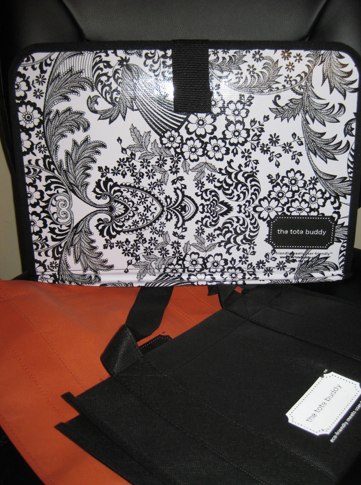
The pattern, a nifty black & white Fleur de Lis, was the envy of Paper Mommy over Thanksgiving weekend, and the interior includes a matching (attached) zipper compartment suitable for coupons, shopping lists, price books, color swatches and the like.
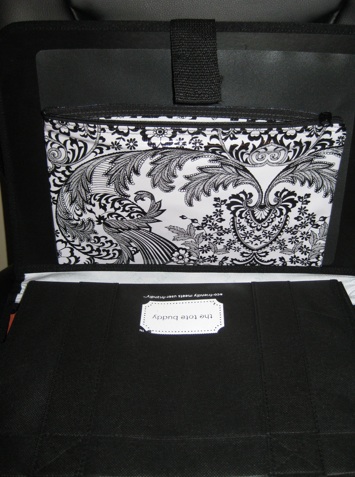
Pretty snazzy, eh? The Tote Buddy portfolios are a great way to avoid saying “paper” or “plastic” so that you can say yes to keeping your canvas bags tidy. As my overstuffed post-holiday car will attest, canvas bags aren’t just for groceries anymore!
HELLO, MY NAME IS…
Before I departed for Thanksgiving, two different clients mentioned that they wished they had a way to keep straight whose drinks and plates were whose during the mingling portion of holiday get-togethers.
Sure, for the super-casual crowd, you can just write your own name on your red Solo cup with a Sharpie. (For those who don’t mind the slightly not-safe-for-work Toby Keith song “Red Solo Cup,” be advised there’s a holiday version of the video.)
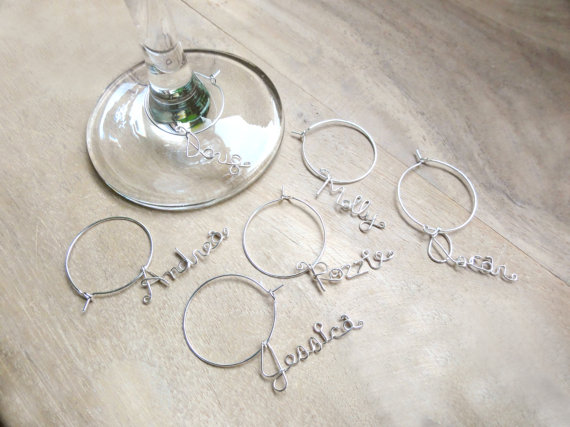
And, of course, if your entertaining style is a little more upscale, wine charms are all the fashion. You can opt for custom-made silvery baubles
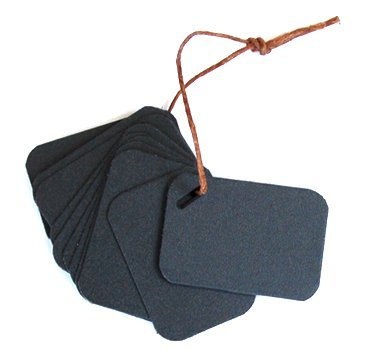
or DIY chalkboard charms
or a variety of other styles to suit your company and your mood.
But last week’s legal pad napkins led me to another keen product from Decor Craft, Inc., something that helps you keep track of your glass or plate and help other party-goers remember your name.
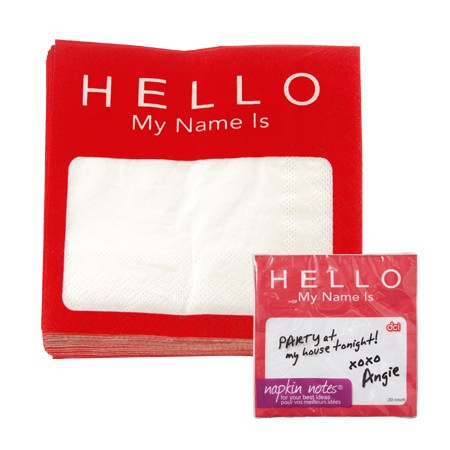
Hello, My Name Is Napkin Notes comes in packs of 20 dinner-sized (7.88″ x 7.88″) napkins for about $10 or cocktail-sized (5″ x 5″) napkins for about $5.
SHHHHHH. IT’S A SECRET!
Last March, when we talked about mainstream pin boards and their specialized siblings (for guys and other pinners), the one pin that seem to stick in everyone’s craw was the severe dearth of private pin boards on Pinterest. How could a site that was at the forefront of social curation fail to recognize that some things might need to be kept private?
What if you wanted to create a secret board for holiday gift ideas for your family members, and wanted to share it only with Santa’s favorite helpers?
What if you were collecting visual material for a blog and wanted to keep the funny, beautiful or delightful images under wraps until the big reveal on your blog?
What if the items you were curating on your boards were actually elements of your competitive advantage in building a soap box derby car or designing your Project Runway creation?
While the social aspect of pinning made Pinterest and its ilk popular, not being able to keep a few items close to the vest was a sticking point for many potential users. But we’re stuck no longer! Pinterest has announced private pin boards.
In fact, one suspects Pinterest didn’t just respond to user demand — it seems more like Pinterest’s leadership watched the new Bond film, Skyfall, just a few too many times. The private boards have been dubbed “Secret.”
Of course, Pinterest hasn’t gone into this willy-nilly. There are rules:
- You can only have three secret boards at any one time, so if you want to create a fourth, you’ll have to take one of your three secret boards public. But note: once you take a board public, you won’t be able to make it private again, and you can’t change any of your currently-public boards to private.
- You can grant access to any Pinterest member so they can see and add to your secret board.
- If you’re given access to a secret board, it won’t count against your three-board limit.
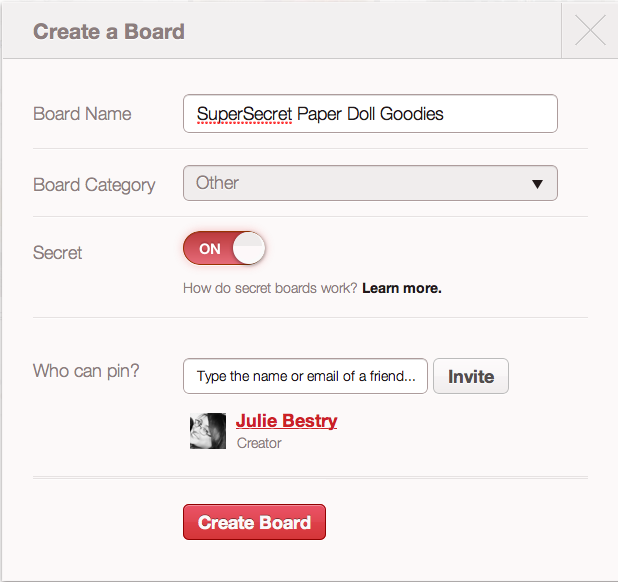
Creating a secret board is easily handled in one of two ways. Click Add+ at the top right of any page and select “Create a Board” as always, but slide the “Secret” toggle from Off to On. (Don’t forget to select anyone to whom you’d like to grant pinning privileges.)
Or, you can scroll to the bottom of your profile — just log into your Pinterest account, select Boards from the drop-down arrow under your name in the top right corner — and you’ll see three blank secret board outlines:
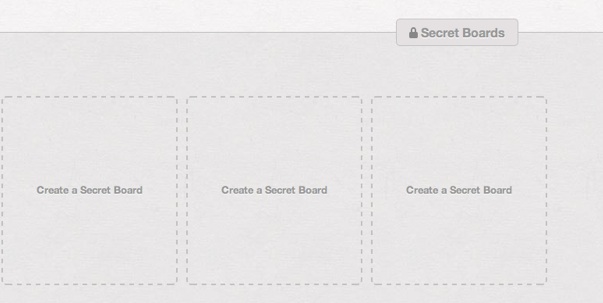
Click on “Create a Secret Board” and follow the usual prompts. Once you’ve created one, two, or three secret boards, you’ll always be able to see them at the bottom of your profile, right below your public boards.
For more on secret Pinterest boards, check out the official Secret Boards 101.
Still not sold on the need for a private board? Check out Pinterest Secret Boards: 10 Reasons To Use This New App Feature to see if any of those situations might apply to you.
That’s all for this week’s Paper Doll leftovers. (As for the last few slices of Paper Mommy‘s peanut butter mousse pie, I’m not sharing!)
Paper Doll Organizing Carnival — Charming Reminders, Library Amnesty, and Disappearing Ink
Last Thursday was National Clean Out Your Fridge Day, and my colleagues (by way of Janet Barclay’s excellent Professional Organizers Blog Carnival) shared their wisdom and advice. With just days to go until Thanksgiving, people all over America have been making meals of ill-matched foods, just to clear space for the elements of the holiday spread. Sometimes, I feel like the Paper Doll Organizing Carnival is a bit like that — dribs and drabs of news and information saved up (or left over), making for a quixotic (if hopefully yummy) bloggish meal. As you head off for your holiday pursuits, I hope you find a morsel here that suits your tastes.
ALWAYS SOMETHING THERE TO REMIND ME
Are you rushing around to get ready for Thanksgiving? Do you need to remember what (or whom) to pick up when (and where)?

Paper Source, whose motto is “Do Something Creative Every Day” is often the source for enchanting solutions for organizing, and I recently saw two cool alternatives that may come in handy, particularly during the planning-heavy holiday season.
Although professional organizers recommend real calendaring systems (whether paper or digital), sometimes people need something very simple, or an extra, in-your-face reminder. This Color Block Notepad works for either.
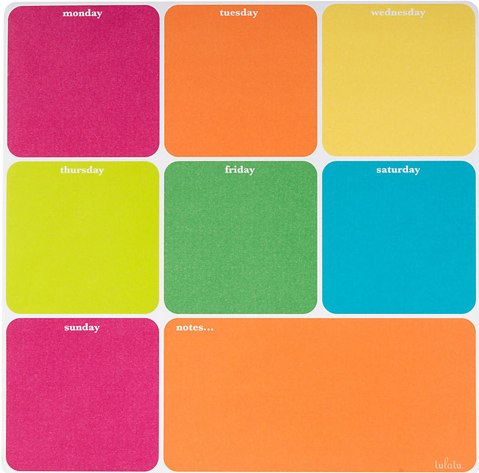
These colorful 50-sheet, 10″ x 10″ day-of-the-week notepads adhere to a wide variety of surfaces, including finished wood, glass, tile, stainless steel, mirrors, and laminates, making them suitable for middle school and high school lockers, college dorm room mirrors or doors, the front of the fridge or the side of your file cabinet in the office.
There’s a colorful cube for each day of the week, plus a double-wide section for notes. Kids can keep track of which days they have gym glass or need to bring their musical instruments for lessons; you can track your workouts or remind yourself which lunch to pack. This won’t replace your calendaring system, but it’s a cheery introduction to time management for younger kids and a keen reminder or tracking system for the special-attention issues in your life.
I also liked the Bamboo Desktop Message Board. This is great for those who prefer a tactile writing experience over digital solutions, at least for simple notes in the kitchen or office, but who don’t like the environmental impact of disposable options or the bland nature of a traditional white board.
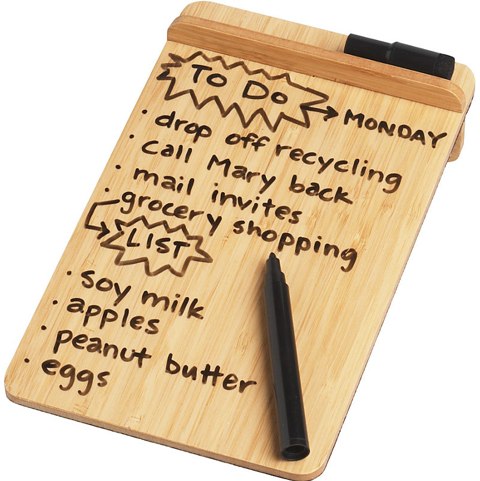
This 5 1/2″ x 9″ x 2″ non-magnetic dry-erase board features a sustainable, patent-pending bamboo surface and allows you to organize quick notes, messages or grocery lists with a swish of the board’s chubby black marker. It’s $14.95.

If you’d just like to make sure your Thanksgiving-morning breakfast isn’t interrupted by family members jumping up from the table to grab their phones, gadgets or Moleskines to record what they need to do on Black Friday, Decor Craft, Inc. has you covered.
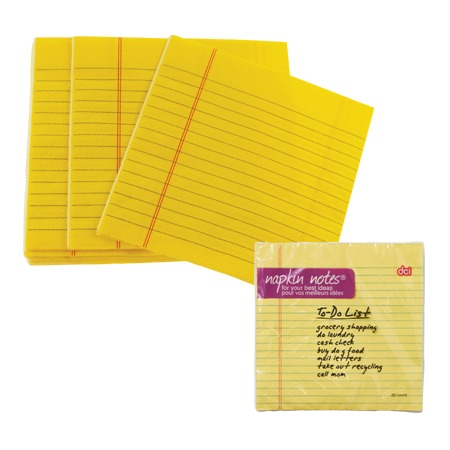
Napkin Notes, designed to look like legal pads, measure 7.88″ x 7.88″ x 0.75″ and come in sets of 20 dinner-size napkins. You can find them at quirky gift, party and stationery retailers, and on Amazon. (Just remember Paper Doll’s feelings about floozies!)
PUBLIC LIBRARY AMNESTY
A recent story about the Chicago Public Library‘s first amnesty program in two decades caught my attention. In 1993, a Chicago woman inherited a copy of The Picture of Dorian Gray by Oscar Wilde when her mother passed away. Except the woman’s mother never actually owned the book; in 1934, the mom’s childhood chum checked out the copy (part of a 14-volume set of Wilde’s work, printed in 1911 — one of only 480 copies ever printed)!
Just as Dorian Gray walked the earth while his portrait became ever more decrepit, the book passed from friend to mother to daughter, while some microfiched ledger was toting up library fines day by day, year after year. The amnesty program allowed the woman to return the 78-years-overdue book without having to go into debtor’s prison. Well, actually, the Chicago Public Library caps fines at $10, but fear of returning such an obviously overdue book apparently had the library patron somewhat apprehensive for close to twenty years.
(While it’s not something one likes to advise, Paper Doll does wonder why the woman didn’t just carefully wrap the book and leave it in the library’s return drop-box at some point over the last two decades.)
Library amnesty programs are a great way to regain valuable items lost from collections by eliminating the twin obstacles of guilt and fear (of fines) that usually prevent return. If you have a habit of delaying return of borrowed library items (either because of disorganization in your home or trouble with time management), call your public library system to find out if there’s an annual or periodic amnesty program. And to keep yourself on the straight and narrow in the future, perhaps you might “borrow” some of these tips on keeping track of your library books in a classic Paper Doll post on how library borrowing can reduce book clutter.
DISAPPEARING INK
I suspect that most people fail to return their library books because they get interrupted while reading and hope to finish reading before (or not long after) the book is due. Buenos Aires publisher Eterna Cadencia has its own twist on increasing readers’ senses of urgency. They’ve released El Libro que No Puede Esperar, which translates as The Book that Cannot Wait – an anthology of new works of fiction printed in ink that disappears two months after the book is opened!
Does this bring to mind a reversal of the grade-school science project where the ink is made of lemon juice and made visible by holding it over a light bulb? To be clear, the book doesn’t disappear sixty days after it’s printed; rather, each newly printed book is enclosed in a plastic wrapper. Once the book is purchased and the wrapper is removed, the ink begins to rapidly age, just like in the “Deadly Years” episode of Star Trek. If you buy a copy today, by New Year’s Eve, The Book That Cannot Wait will be nothing but blank pages.
As this video explains, it’s a high-tech method and a bold publishing move:
It’s a novel (if you’ll pardon the pun) approach. For many readers, this might be exactly the impetus they need to devote time to a reading list; for others, the prospect of “failing” (to read the book) and losing the monetary investment might make them shy away. And, of course, as serious readers know, when you love a book, you want to share it and sometimes reread it on multiple occasions, options which this seriously limits. It’s a cute publicity stunt, but Paper Doll can’t recommend any option which sets the more organizationally-challenged up for anxiety.
What do you think? Would you race to read and buy a book you knew would disappear off the page? Some people would — the first edition sold out in one day!
PAPER WRAPS ROCK, BEATS (PRACTICALLY) EVERYTHING ELSE
I know I said last week that I wouldn’t be including anything on the future of paper in this week’s post, but I’d be remiss if I didn’t call attention to Time Management Ninja’s 5 Ways Paper Beats Your Tech. TMN’s Craig Jarrow spells out just a few of the purposes (brainstorming, note-taking) and the attributes (simplicity, reliability and the gosh-darn satisfaction of manually crossing something off your list) that make paper essential for organizing thoughts and information.
Future generations may accomplish everything on glass and metal pads (just like on Star Trek), but Paper Doll still considers putting pen to paper to be the ultimate no-tech solution to many problems, and until it isn’t, I’ll be back with more ways to organize your paper (and paper alternatives), post after post.
And for this, I am truly thankful.
Happy Thanksgiving to all Paper Doll readers. May you travel safely, eat well, and enjoy your time, however you spend it. (And for you Canadian readers who celebrated your Thanksgiving last month, I’m sure you’ll enjoy the south-of-the-border peace and quiet brought on by our collective turkey-induced stupors.)
Paper Doll Contemplates the Future of Paper: Art, Music and Medicine
Our periodical forays into the future of paper are usually part of the Paper Doll Organizing Carnivals, but I’ve got so many goodies lined up for next week (a time when Thanksgiving travel and preparations will already be dividing everyone’s attention) that it seemed better to focus on the future today, and shiny, happy organizing delights next time.
A MUSEUM FOR PAPER
Just a few days ago, the culture section of the UK newspaper The Guardian ran a thoughtful piece entitled, “Can Paper Survive the Digital Age?” (We should pause a moment pause to recognize the absurdity of a blog — a piece of digital real estate — referencing a newspaper’s digital site, opining on the dubious future of paper. Moving on now.)
The columnist Ian Sansom, author of Paper: An Elegy, is known for reflecting on the paradoxical qualities of paper. After all, it’s both durable (historically) and vulnerable (to the elements and to growing user disinterest). Sansom discusses the role of paper in art, from Matisse to Miro to the modern paper art of Gordon Matta Clark, then digresses into other artistic ventures, including Pixar film creations like A Bug’s Life and Ratatouille. Architecture and literature do not escape his gaze in the evaluation of the future of paper, either.
Various bloggers were uncomfortable with Sansom’s approach, particular his notion that to prove the ongoing relevance of paper, a national or international museum, on the pattern of The British Museum, should be created in homage to paper. Of course, there are already museums for paper, from the Robert C. Williams Paper Museum in Atlanta to Japan’s Paper Museum to the Paper Discovery Center in Appleton, Wisconsin.
The problem, of course, is that for many, museums stultify. They entomb. The bore. To ensure paper the respected role it deserves in international appreciation, something more lively than a standard museum would be needed. Perhaps something along the lines of the remarkable and interactive Newseum in Washington, DC, a living tribute to journalism (including daily newspapers), would be appropriate.
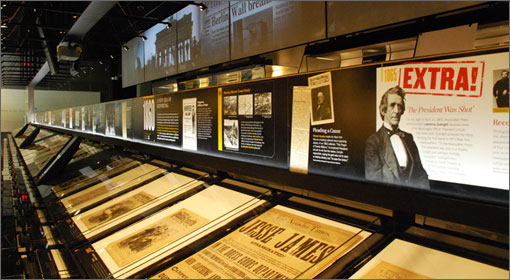
The irony, of course, is that museums grow and strengthen their reach by expanding from the confines of their physical locations via far-flung visitors’ digital explorations.
Finally, I was still captivated by Sansom’s statement that:
We consume more paper, pound for pound, than any other product, food included. We are paper omnivores. We devour it: any kind, from anywhere.
As a professional organizer who specializes in paper, this description prompts me to see the piles of papers that haunt my clients’ spaces in a new light. It’s as though they were culinary masterpieces and sad leftovers, meals in progress and barely-chewed bits hidden in crumpled napkins. It’s vivid, apt and a bit prone to causing indigestion.
PAPER AND MUSIC
Although I love organizing paper, I’m happy for every digital solution that improves upon paper standards. So, I was delighted to read that the Brussels Philharmonic orchestra will be going paperless. The orchestra is replacing traditional sheet music with 100 individual Samsung Galaxy Note 10.1 tablet computers loaded with NeoScores music software.

Functionally, musicians can note the music director’s or conductor’s instructions and changes, record personal notes and highlight pertinent information, save the notations and share them with other musicians. No more fine erasure crumbles or illegible scribblings. No more coffee-stained music sheets that curl at the edges or blow off the music stand.
For anyone who has ever been a musician (or loved one), you know that page-turning carries with it the potential for fumbles or catastrophes. But the Galaxy Note has a special concert mode that is likened to “flight mode” on cell phones. The feature allows musicians to program a setting which lets them securely swipe pages without accidentally skipping ahead in the musical piece.
Organizationally, this all means that the orchestra can reduce storage space and costs. And, from a financial perspective, the change from sheet music to digital will save the orchestra close to €25,000, or $35,528.
Of course, I wouldn’t expect your nearest middle school orchestra to jump on the bandwagon. Samsung donated these one hundred Galaxy Notes to the Brussels Philharmonic, which is certainly good marketing for both of them. I imagine getting enough of these for all the seventh-grade tuba-players, violinists and flautists will require more than a few bake sales, so I’m fairly confident that sheet music will be around for a while.
MEDICAL ADVANCES…ON PAPER
In medical circles, the big issue these days is EMR, or electronic medical records. Last December, at the mHealth Summit, U.S. Department of Health & Human Services Secretary Kathleen Sebelius provided a clear-headed understanding for the need to bring medical practices into the 21st century. So now, doctors who have happily (or grumpily) scribbled notes on paper charts or even dictated their charting wisdom for the benefit of medical transcriptionists are coping with the learning curve required to modernize their electronic charting skills. As the The Washington Post wrote last week,
Technology has changed most industries in recent years, but many doctors’ offices still run as they have for decades, with receptionists requesting faxed paperwork and physicians leafing through thick manila folders with years of scrawled medical history stapled inside. Medical students may now be accessing textbooks on their iPads, but much of “health care has stubbornly held onto its cabinet and hanging files,” as Health and Human Services Secretary Kathleen Sebelius remarked at a conference last year.
Some physicians have jumped at the chance, installing computers in treatment rooms — the best of the touch-typists are able to maintain eye contact with patients as they cursor around the screens, selecting short-hand diagnostic codes and text-expanding pre-created phrases. Other medical practitioners have taken to using tablet computers to keep up with their charting, adding notations as they move from room to room.
However, as the New York Times reported last month, the very issues described in “The Ups and Downs of Electronic Medical Records” are making for a shaky transition. Some of it is surely whining — just as white-color executives in the late 1980s and 1990s bemoaned the loss of secretaries and the obligation to master word processing and spreadsheets on their own, I’m sure some doctors would rather focus more on healing and less on trying to figure out why they’re repeatedly directed to click F7 to resume what they were doing in the first place.
Beyond cranky resistance to change, learning curves take time, and doctors seem to have less and less time these day. And certainly there must be some concern from a medical perspective. Computers, and especially text-expanders, macros and short-cut codes save time, but human error via “fat fingers” are more likely to cause errors that are less likely to be caught than if a physician had to hand-write a long diagnostic explanation in Latin. And, of course, there are, as with anything digital, concerns about privacy.
All this said, Paper Doll has faith that the digitization of medical records will improve medical care and organization of medical information, and decrease health care costs…eventually. Until then, I’m pleased to see paper making new and unusual strides in the medical realm.
Just a few days, ago, David Hill at SingularityHub wrote about the use of an inexpensive, paper-based diagnostic test that can assess liver health in only 15 minutes from a single drop of blood. The test measures the presence of liver enzymes without requiring a lab or medical instruments.
It seems almost amazing that all that is needed is an ink-jet printer loaded with wax ink, which prints a specialized pattern on two sheets of paper. The reagents that react with liver enzymes are printed on one sheet; the other receives dyes that change color if a reaction occurs. Then, the two pieces of paper are heated and fused together, creating “channels” that work like mini test tubes in which the reactions occur. Finally, a plasma filter is added and everything is laminated together and cut into squares.
Once a blood drop is added, the color change can be viewed by the naked eye or scanned into a smart phone for improved accuracy and analysis. Liver damage or disease can be diagnosed or ruled out in a quarter of an hour!
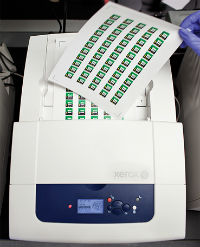
Harvard Professor George Whitesides developed this system, and supported by the Bill and Melinda Gates Foundation, created the non-profit Diagnostics for All to provide “low-cost, easy-to-use, point-of-care diagnostic devices designed specifically for the developing world.” Among Diagnostics for All’s innovations is a paper-based microfluidic diagnostics kit enabling screening for preeclampsia, anemia, and abnormal glucose levels for the detection of high-risk pregnancies.
These are just some of the many paper-based medical diagnostic advances. The approach started with an older format made from nitrocellulose, where an adhesive plasticky membrane has been used by all kinds of medical researchers to detect antibodies, proteins, and DNA — it’s the basis for store-bought pregnancy tests.
But tech blog Futurity.org explains that there’s a way to coat common paper, the same kind sold at office supply stores and probably sitting in your printer right now, so that while it’s smooth to the touch, it would actually be “sticky” to medically-related chemicals. Daniel Ratner, assistant professor of bioengineering at the University of Washington, developed the method for using an inexpensive industrial solvent, divinyl sulfone, to make paper adhere to “medically interesting molecules.” It’s expected that this new method might be able to inexpensively text for diabetes, influenza, malaria and other medical conditions and diseases.
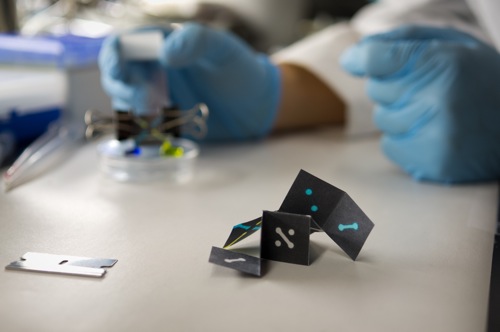
And there are more breakthroughs in paper medicine. Earlier this year, chemical researchers at the University of Texas developed a 3-D paper sensor that can be printed on a standard office printer, folded, and used to test for things like malaria and HIV…for about ten cents per printout!
2012 Alex Wang
Unlike the pregnancy tests on nitrocellulose described above, these 3-D sensors — created from the simple origami-like folding of the papers — can test for a larger number of chemical substances over a smaller surface area and thus provide results for more complex kinds of medical tests.
While these paper advances would be used primarily in developing nations where hospitals and medical labs are few and far between, the implications are impressive and immeasurable. Without the need for the “clutter” of materials for expensive lab tests, diagnoses will be made more quickly, treatment plans clarified and more lives saved — something that would have been science fiction just a few years ago.
What a cool future for paper!
Organize Your Travel Documents
Last month, I traveled to the MARCPO conference and then enjoyed a vacation up the Eastern seaboard, traveling from Washington, DC to Providence, Rhode Island to Boston and Salem, Massachusetts. During that time, I took four airplanes, two airport shuttle vans, one car and multiple subway trains. In ten days, I stayed in four hotels in three cities. It may seem like a shocking confession for the 21st century, but I navigated them all without benefit of a smart phone or tablet.
Keeping track of travel information these days seems made for digitization. Nifty apps can replace piles of paper printouts. But should they? On the morning of my return flight, a flustered man stood in front of me in the security line, unable to show his boarding pass because he couldn’t get his cell phone to boot up. Power outages, cell phone tower outages, lost chargers, dead gadgets, limited or intermittent web access — they can all wreak havoc with your travel plans if you don’t have a paper alternative.
I strongly recommend the following basic steps for organizing your travel documents and information to minimize any potential catastrophes.
1) Gather and isolate documents as they arrive. As you make your travel arrangements, print out the confirmations, the bar-coded and QR-coded passes, and any other items you need. Collate them and tuck them away in your tickler file for the day your trip is set to start.
2) Use the belt-and-suspenders approach. Yes, you should print your documents, but there’s no reason not to keep electronic copies, too. Convert each confirmation email or web page to PDF, then back it up in any of a variety of ways. Send it to your Kindle or other e-reader. Save it in a Dropbox or Evernote folder marked with the trip name. Email it to Gmail or another web-based account.
For a lower-tech option, snap photos of your documents with your phone or camera. If necessary, access data using the zoom function to get a close-up on whatever you need.
3) Arrange essential documents in the order in which you WILL need to access them.
- Airline tickets and boarding passes — Printing your boarding pass in advance of your flight allows you to bypass lines at check-in and ticketing kiosks. At larger airports, just give your checked luggage (if you have any) to the Skycap, and you’ll be on your way. Even at airports where you need to check your luggage inside the airport, having your tickets and boarding pass available in advance will expedite the process.
- Special air travel documents — If you are recently married and your honeymoon arrangements were made in your new name, but your photo ID lists your maiden name, having a copy of your marriage certificate with you will help things along, especially if you’re traveling internationally. If you’re divorced (or married, traveling without your spouse) and are traveling with your child, or if you are traveling with a child who is not your own (such as a grandchild or your child’s playmate), you will need a notarized Minor Consent Form from a custodial parent.
- Redress number — This is a code granted to certain passengers whose names have been added to the No-Fly list in error. Providing your accurate redress number should eliminate travel difficulties.
- Train reservation tickets/confirmations
- Cruise tickets/confirmation
- Auto rental reservations/confirmations
- Ground transportation (shuttle/car service) reservations/confirmations
- Printed directions or maps if you’re driving yourself
- Subway/commuter train maps and directions
- Hotel reservations/confirmations
- Writing pad for itinerary changes, directions, messages, etc.
Some travel items should be kept separate from your basic travel documents:
- Airport parking ticket — When you arrive at the airport and take your ticket, tuck it into a safe place in your wallet, away from your cash and other items you’ll be rifling through during your trip. (Snap a photo of your parking level/area to find your car easily upon your return.)
- Passport and Visas — These legal documents need to be kept even more securely than the itemized information above. Rather than keeping your passport and visas with your travel information, maintain them on your person with an RFID-blocking, wearable passport wallet.
4) Arrange non-essential documents in the order in which you MAY need to access them.
- Itinerary
- Airline and frequent traveler loyalty contact numbers
- Travel aggregator (e.g., Travelocity, Orbitz) or travel agency numbers
- Credit card company concierge numbers
- Printout of alternative flight options
- Emergency contact numbers at home and at your destination
- Groupons, Living Social, Restaurant.com and other discounts/coupons for dining at your destination(s)
- Envelope for collecting receipts, especially for items that will need to be expensed/reimbursed, checked against a bank or credit card statement, or needed for tax purposes.
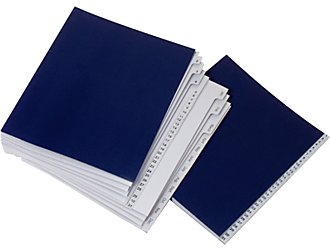
5) Contain documents in a translucent document organizer.
Certainly, you could maintain your travel documents in traditional file folders or kraft envelopes. They aren’t optimal, however, because you have to open them to see anything, even the very next item you’ll need, and each opening of the file or envelope risks loss and items fluttering to the ground.
The trick with a see-through travel document organizer is to have the items you know you’ll need in “front,” with the items you may need, located at the “back.” Place the stacks of the two types of items back-to-back. Then, just flip over the whole document organizer, and your itinerary will be easy to read without removing it from the organizer, while items behind the itinerary can be easily accessed should they become necessary.
In the twelve minutes between when I confirmed that my flight to DC was on time and the moment I’d entered the airport, soaking wet, after parking in the last available airport parking spot, my flight had been canceled due to mechanical difficulties. The rumor among the equally-soaked passengers was that we’d be boarded onto a bus to take us to a nearby city’s airport. That option would certainly have caused me to miss my connection.
Flipping my translucent document organizer over, I perused the items in the back. Behind my itinerary, the next two sheets provided what I wanted — Delta Skymiles’ direct number and Travelocity’s schedule of other flights to my destination. In what almost seems miraculous in this age of grumpy traveling, well before I’d reached the head of the line, I’d been rebooked for a flight that got me to my connecting airport only 40 minutes later than originally planned, tidily making my connection. Meanwhile, people who had been ahead of me in line, frantically shuffling and dropping papers, were delayed up to eight hours.
So, Paper Doll is a big proponent of using translucent poly envelopes or pockets to corral travel documents. Some excellent options include:
Smead Poly Wallets are highly durable, four-sided, reinforced wallets which repel moisture, resist tears and hold up to 200 letter-sized sheets.
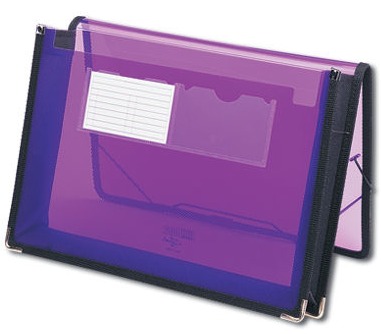
They come in blue, green and purple, are highly visible and are unlikely to blend in with your surroundings and be left behind. The poly wallets can expand up to 2 1/4″, and feature sewn fabric trim, heavy-duty black cloth gussets, a protective cover flap and an elastic cord for securing the corners. In addition, the wallets have two clear pockets on the front for positioning business cards or keeping emergency information easily accessible. You can clearly read the documents within.
Pendaflex’s Oxford Storage Envelope Plastic Tab Dividers offer a simple but elegant alternative. Coming in packs of three colored envelopes (red, blue and yellow), each with one of three tab positions, these pockets have a fold-over flap with a Velcro dot closure, securing the contents on all four sides. The plastic flap can be closed or tucked inside the envelope to keep it out of the way when you’re flipping through your travel documents.
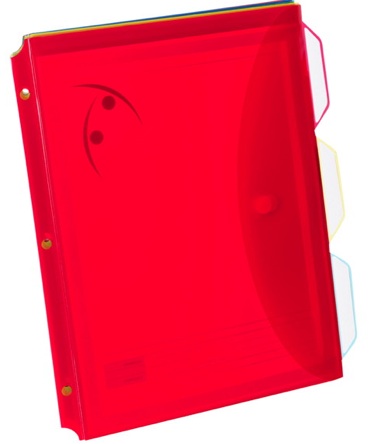
On the left side (if one holds the envelope vertically), the Storage Envelope Tab Dividers have a three-hole-punched poly extension. Each pocket holds about 50 sheets of letter-sized paper. Use just one pocket for a shorter trip; for a longer one, label the tabs and use individual pockets for each day or leg of your travels. Again, you can read the “top” contents (on either side) right through the Storage Envelope Tab Dividers.
Smead Travel Organizers are made of a clear, acid-free archival polypropylene and have three clear plastic tabbed sheets.
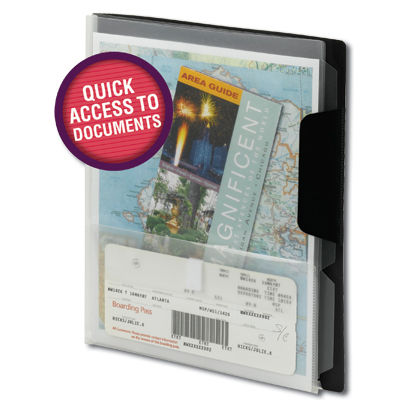
There’s a stiff plastic backing and a Velcro-closure plastic envelope (about the size of a standard #10 envelope) attached to the front divider. The pocket is designed to hold boarding passes and receipts, while itineraries, notes, flat maps and confirmation numbers can be easily slotted in the tabbed pages. To see how it might be customized for your travel needs, take a peek at how Janine Adams of Peace of Mind Organizing personalized her Smead Travel Organizer.
6) Upgrade for extended travels. If you’re going to be traveling for weeks at a time and headed to multiple venues, you might want to consider a three-ring binder and upgrade from standard plastic sheet protectors by using the above-mentioned Oxford Storage Envelope Plastic Tab Dividers.
Or, for creating more categories, look at the Oxford Full-Pocket Plastic Tab Dividers.
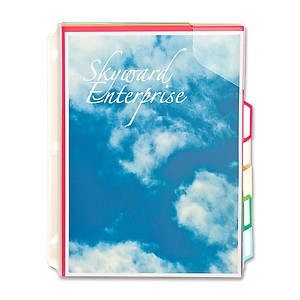
These come in packs of five colored pockets (red, orange, yellow, green and blue), each with one of five tabbed positions. The front is clear, while the back of the pocket is translucent colored poly. The pockets are closed along the bottom and left (hole-punched) sides, while the top and right (tabbed) sides are open. A poly corner lock positioned at the juncture of the two open edges keeps documents in place (provided you remember to tuck the corners of your documents underneath it).
Unlike the Storage Envelope Plastic Tab Dividers, the Full-Pocket Plastic Tab Dividers hold only about 20 sheets of letter-sized paper. However, they do feel a bit sturdier than the Storage Envelopes.
Since both styles are already three-hole punched and tabbed, drop them in your binder and color-code for cities/states/countries or use multiple packs, coding red as airlines or blue as hotels at each destination.
Another alternative is the Oxford Pocket Storage Folder with 4 Sliding Pockets. When closed, it appears similar to the Storage Envelopes above, albeit with a larger flap and made of stiffer, more durable poly.
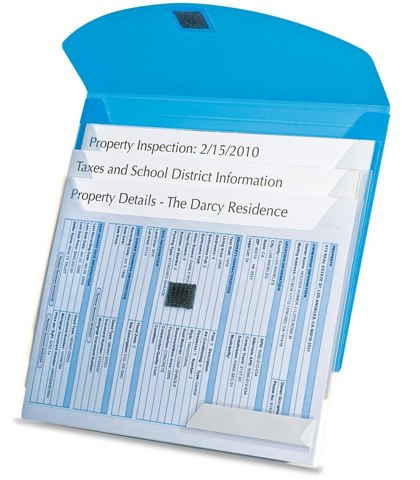
The Oxford Storage Pocket Folder’s divided pockets are clear, while the backing and flap are opaque blue poly. When opened, the four connecting pockets slide apart, vertically as well as in terms of depth, to enable you to view bits of each section simultaneously.
7) Have a human backup. Make sure an always-reachable assistant, BFF or spouse has paper or digital copies of your essential travel information. I always send copies of my trip info to Paper Mommy and to a tech-savvy hero/friend (who blushes if named publicly). So far, so good.
Happy travels!
Feeling Haunted? Be A Paper Doll For Halloween!
Paper Doll isn’t much of a fan of scary things. While I respect Stephen King’s talents, I won’t read his books. Joey from Friends hid The Shining (and later, due to Beth’s death scene, Little Women), in the freezer. Rather than hiding books, I’ve hidden myself, and have been known to hide in the closet when things get too scary, like during the recent premiere of 666 Park Avenue. (Hey, at least the closet is organized enough to make space for me during such tribulations.)
I prefer Halloween costumes to be delightful or punny, rather than terrifying. As a child, my go-to Trick-or-Treat costume was a gypsy fortune teller, though that owes at least as much to Paper Mommy‘s lack of sewing skills as to my fear of gore. (One gold lam top, a full, vibrant skirt and a painted face of exotic makeup, plus one faux-crystal ball, all go a long way towards maintaining peaceful mother-daughter relations without keeping a mommy up until all hours.) Costume creativity was not our strong suit; had our sheets been white rather than pastels, I might have been Casper for a dozen years running.
Even if professional organizers had been widely known in the early 1970s, I doubt Paper Mommy and I would have been able to conceptualize a costume. While everyone knows that superheroes (like Superman, Batman and Wonder Woman) hide their secret identities behind milquetoast, garden-variety guises (Clark Kent, Bruce Wayne, Diana Prince), we organizing superheroes always look just like everyone else (if a bit more disheveled after climbing around under desks and in the depths of closets).
Even now, the idea flummoxes me. If tiny Trick-or-Treaters came to your door with tickler files in one hand and label makers in the other, would they get fun-sized chocolate candy bars or, like Charlie Brown, coal-like lumps of rock?
Forget Halloween costumes for a moment — paper can be scary all on its own. Piles of unopened mail, haunting us three days after we return from vacation, can terrify the best of us. Bulging files (and filing cabinets) that haven’t been purged in years take on a mustiness as frightening as Miss Havisham’s wedding banquet. And missing VIPs, passports and financial documents — ghosts, basically — might send you screaming into the night!
Who needs the frights of Halloween?
Thus, I hope readers will indulge me today in going slightly far afield by making this Halloween not quite so scary. Rather than paper organizing tips, per se, let’s look at ways your little ones might (inexpensively) emulate a superhero that’s near and dear to my heart.
I submit for your adoration this DIY paper doll costume from the smart people at Spoonful, courtesy of Disney’s FamilyFun.com.
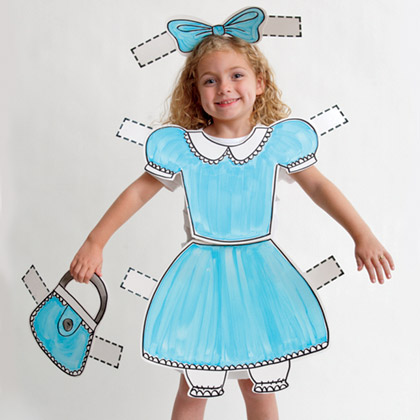
2012 Disney FamilyFun Magazine, Photograph by Ed Judice
I’m also impressed with blogger Sadie of SlapDashMom’s charming $1 DIY Halloween Costume Tutorial: Paper Doll, which helps parents create paper doll costumes based on their children’s favorite outfits.
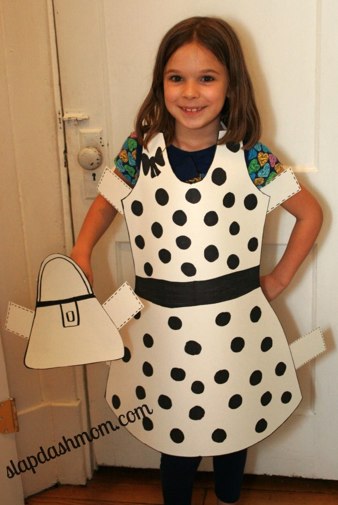
By the way, SlapDashMom proved to be a treasure trove a resources, including a recommendation for Everyday Sugar’s design for a Paper Mommy-approved take on Robert Munsch’s modern classic, the children’s book Paper Bag Princess. The last-minute costume idea requires about the same (non-existent) skill set as my MARCPO conference flapper design from last week, but with eminently improved results.
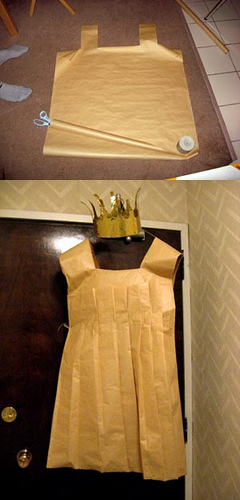
2008 Everyday Sugar
And for not-too-scary paper monsters, check out the amazingly creative parenting site Wee Society’s Weeblog how-to’s for creating “Wee Alphas,” a Fantastically (but not too) Frightening Fox, a Jovial Jack O’lion, a Haunting, Hoo-hoo’ing Owl, and my favorite, the Ghoulish & Giggly Gorilla.
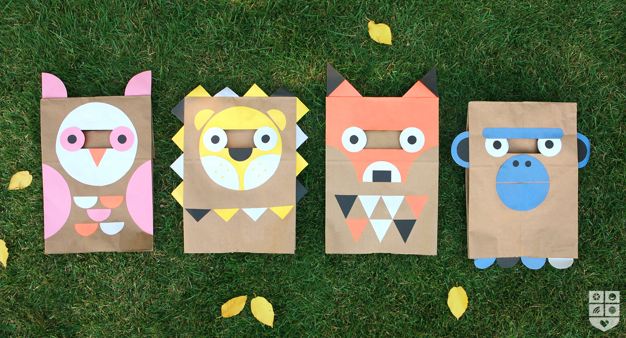
Seriously, how scary AREN’T these? 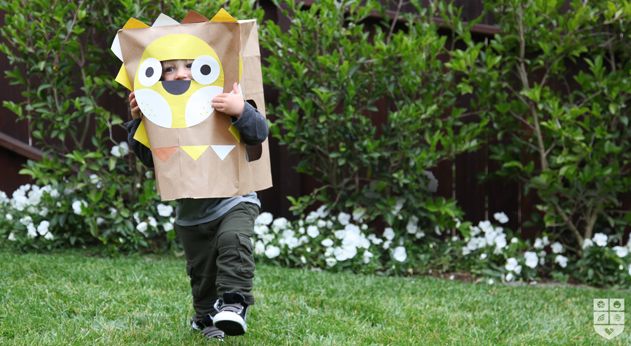
Not only do you just need paper bags, construction paper, glue and scissors, but the costumes are inexpensive, easy to make and simple to tuck away in a pre-schooler’s knapsack. These paper-bag based costumes are so simple and well-explained, even Paper Doll could make them, which is saying quite a lot!
CoolestHomemadeCostumes.com knows that sometimes costumes are a family affair and shared this adorable user-submitted mommy/baby paper doll costume set.
The instructions are a twinge vague, but you have to give Diane from Texas credit for using old-timey wallpaper to create the image.
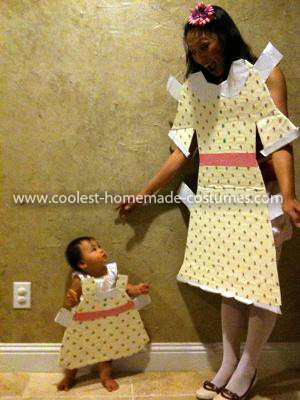
2011 Diane from Texas

And finally, for those of us who aren’t so adept at following craft instructions from simple illustrations, this step-by-step video from Better TV.com hits the spot.
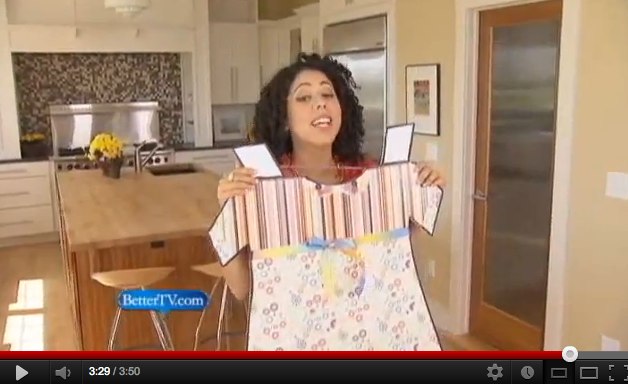
So, if work or life or bad weather got in the way, and you weren’t so organized with your plans this year, you may be finding yourself searching, in vain, for an inexpensive, last-minute costume. If you’re child’s panicked howls could wake the dead, see if your kid is willing to play Paper Doll*.
*Label maker not included.
Follow Me