Archive for ‘Paper Organizing’ Category
12 Tips for Organizing Your Reading Time
Recently, we talked about organizing your space for more reading time. That’s a great start, but you probably still have obstacles. You’re busy: at work, at home, volunteering, and schlepping between home, work, school and all the sites of your errands. Maybe you’re tired. Maybe the last book you read cover to cover was Goodnight Moon. Perhaps reading too many tweets and Instagram captions has shortened your attention span.
How will you get yourself back into reading? Try these dozen tips to carve more reading time out of your schedule.
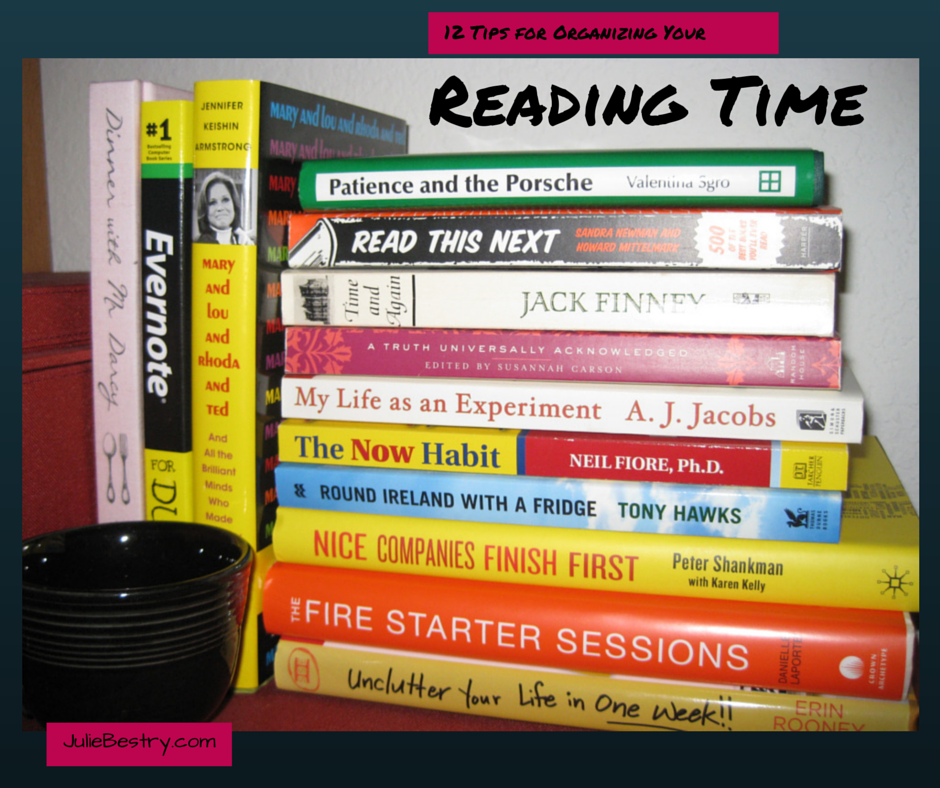
1) BUILD SOME STRUCTURE INTO YOUR SCHEDULE. (Think of it as a temporal book fort!) I’m not suggesting that you schedule yourself to read every day from 10:18a until 10:37a (though you certainly could). But the truth is that when we don’t plan when we’re going to perform a task, it’s far less likely that it will be accomplished at all, especially when there are no external pressures to force the issue.
Most of what we do, we do either by rote or when there’s a situational compulsion (children who need to be fed, bills that must be paid, supervisors who want their TPS reports ASAP) to do so. But if we plan and link similar tasks together, we’re much more likely to be successful at starting (and hopefully, accomplishing) what we want to do.
Create or envision blocks in your schedule for when you will perform different types of tasks: housekeeping, physical self-care/exercise/grooming, errands. Somewhere, find a block and plan when you will set aside some time to read for fun. If you’re an at-home parent, maybe you might block 45 minutes for housework in the late morning, followed by 30 minutes for reading (as a reward for getting through an entire week without stepping on a Lego)!
Professionally, consider reading in your field to be as much a part of your work as attending conferences or participating in other forms of continuing education. Experiment by blocking two fifteen-minute slots each day, perhaps just prior to lunch and then mid-afternoon, to read professional journals or other writing in your field.
Create a family reading hour or reading night. This could be an hour every evening, or even part of a variety of options: Family Board Game Night, Family Bowling Night, Family Bottlecap Collecting Night! (What? Bert must have family somewhere!)
2) ASK FOR A BREAK. Other people’s expectations of your time should not go unchallenged. Do you do all the cooking and cleaning and driving and nurturing while your significant other (or housemate) benefits from your hospitable nature? Have a heart-to-heart with loved ones about splitting or trading tasks, and request some specific, scheduled downtime so that you can meditate, read, and center yourself. All work and no fun makes, well, for something not so pleasant!
Give yourself a break, too. Remember that every activity in which you participate is an active choice and a tradeoff. If you choose to hire a housekeeper for a few hours a week to do the tasks you truly hate, while Hazel is washing the bathroom floor, you can jettison the guilt and read The Fault in our Stars. You could choose to order pizza instead of cooking, and use the found time to delve into The Goldfinch. And in your office, you could automate or outsource the tasks outside your strongest skill set and use the found moments to read 57 Secrets for Organizing Your Small Business
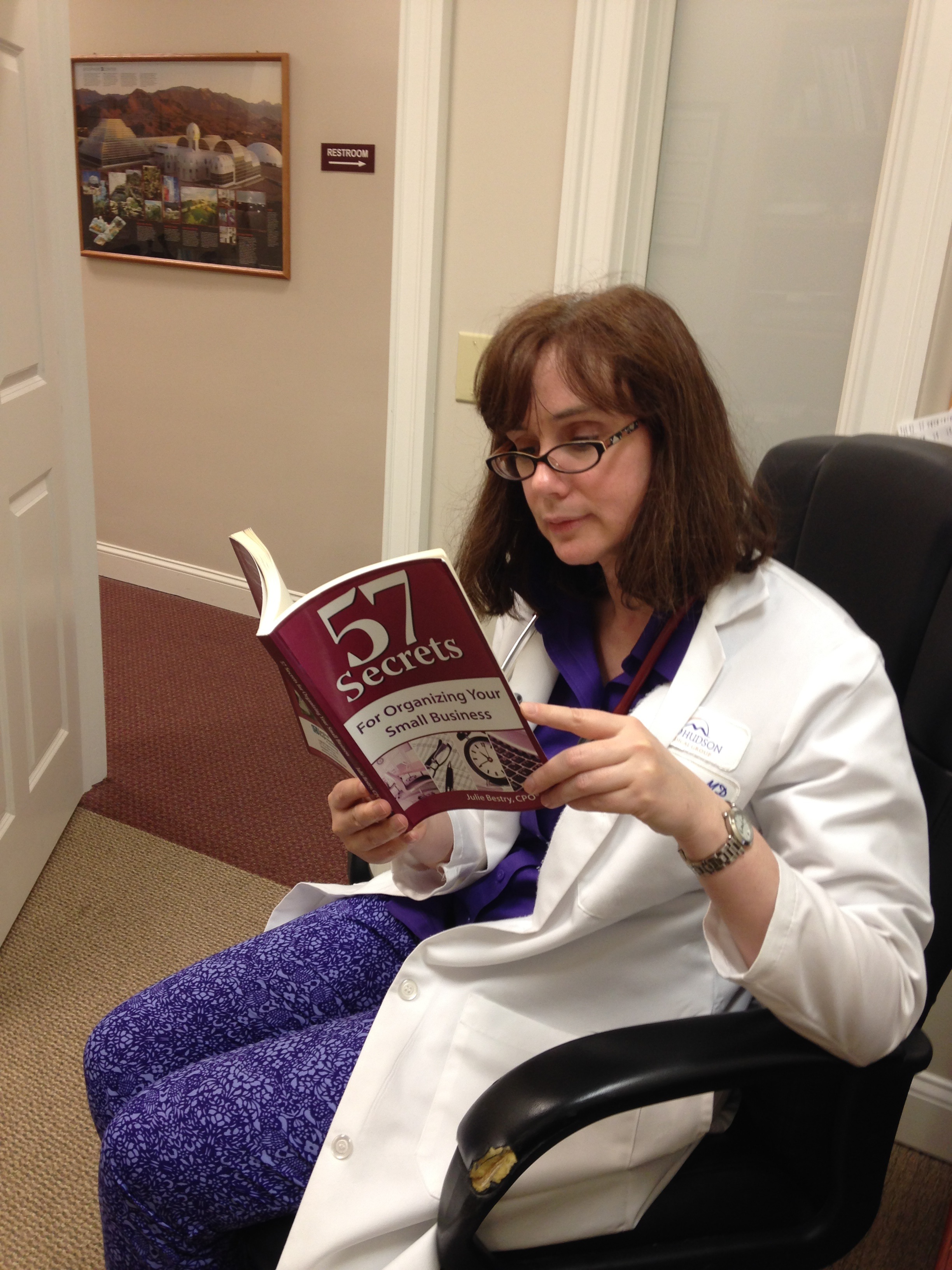
3) MULTITASK, BUT WISELY. Real multi-tasking is a myth. Our brains cannot handle actually focusing on two things at once. We are merely switch-tasking, moving quickly back and forth between two tasks. Generally, this means reduced efficiency at both endeavors. However, there is one way to get two things done at once with little loss of time or quality, but it only works when one of the tasks requires little, if any, cognitive capacity. For example:
- Read while doing the laundry. One of the very few delights of being a poor college student or otherwise lacking one’s own washer/dryer is the time spent sitting in plastic chairs amid dubious co-launderers at the laundromat with little to do except read. It’s not like we have to traipse to the river to beat our permanent press against the rocks. Push the buttons, then settle in and read!
- Read while traveling. Surely nobody suggests you should read while driving or biking, but, provided you have ample natural light, an Itty Bitty Book Light, or a backlit e-reader or tablet, you can read — as a passenger — during a road trip, a taxi ride, on the subway (provided you have safe seating and keep your wits about you), on the train or while flying. [Remember to load ebooks from cloud storage to your device before embarking, as Wi-Fi may be unpredictable en route.]
- Read while cooking. OK, not cooking, per se. Paper and stovetops are a really bad combination. But if you’ve just put a frozen dinner in the microwave, you’ve got anywhere from three to a dozen minutes when you need to stay close to the kitchen. Set a timer for when the food has to be checked so you don’t get too deeply engrossed in your chapter.
- Read while eating. People who are loath to dine alone usually develop a habit of bringing a book into a restaurant, but I’m often surprised by how few people ever think to read during breakfast or lunch, the meals where they’re the most likely to be eating alone. Indeed, if you tend to gobble your non-social meals to get to your next task, savoring a page with every taste may help you digest your thoughts as well as your food.
- Read while waiting. In the carpool line before school lets out. In the parking lot when the person you’re picking up is running late. Before seeing the doctor or while waiting for your children, significant other or friends to finish their appointments. Sure, it’s not the same as losing yourself in a novel for three hours while bundled under a cozy blanket, but even five or ten minutes of reading time can be luxurious.
- Read while working out…maybe. Paper Doll is definitely no expert in exercise physiology, and obviously you’re not going to read while doing crunches or lifting weights. But enough people have expanded from standing desks to treadmill desks that treadmill walking and reading is worth investigating. I know I’d get queasy and I suspect many might become lax with regard to maintaining proper form. But since a treadmill is like an endless walk to nowhere, why not pair your walking with reading, which is a journey to wherever you choose?
4) RISE and SHINE. The common advice for those who can’t find time to exercise is to awaken 15 or 30 minutes earlier than usual. For those of us who are not morning people, that’s like saying, “Hey, if you give up your dessert, you’ll have more time to do homework!” However, if your book or e-reader is at your bedside and you can start your day bathed in gentle light, snuggled under the covers, slowly warming up your brain for a busy day, you’ll not only have discovered time for reading, but when your regular alarm goes off, you’ll be less stressed about facing your day.
5) SET A READING GOAL! 52 novels in a year? One book in your professional field each month? A biography of every president or monarch of England in chronological order, starting with the first? The nature of your goal or the benchmarks really don’t matter, but having an aspiration can lend form to your approach, and give you a sense of progress. It’s like training for a half-marathon or working towards a degree. Just knowing that you’re on the path will inspire you, and that inspiration will condition you to weigh your priorities and focus your time and attention.
6) LISTEN TO AN AUDIO BOOK. For some reason, some people feel like it’s cheating to listen instead of read, but while seeing and hearing are both passive activities, reading and listening are active. Your brain still creates visuals, conjures scents and textures and emotions, and flickers with its own internal, customized film.
Reading is already a collaborative process: the writer creates, whether from whole cloth or from research. You, the reader, take in what’s presented and create your own sense of meaning and understanding. It’s not any more of a cheat to listen to Neil deGrasse Tyson read Death By Black Hole than it would be to attend one of his lectures, and neither should be considered an inferior experience to reading the book. So…
- Borrow audio books from your library on CD or digitally via Overdrive or Hoopla.
- Buy one-off audio books from Amazon or subscribe to Audible (downloaded) or Audiobooks.com (streamed).
- Rent audio books in CD format from companies like Simply Audiobooks or BooksFree.
- Let Kindle Voiceover read to you from your Kindle or the Kindle app on your digital device.
7) JOIN A BOOK CLUB. An ideal book club is one where people you like are reading and discussing the kinds of books you want to read and discuss. It’s one that inspires more reading and extends the joy of the experience beyond “The End.”
For many of us, inspiration, even to do things we want to do, benefits from a kick in the pants via social interaction. People start exercise regimens because their high school reunions are upcoming. More than a few of you report scheduling dinner parties to yield the necessary panic to get you to clean or organize your home. If going to a book club to discuss a book you’d have wanted to read anyway will give you the extra push needed to read the book (because you want to engage in delightful conversation or even to avoid sounding like an oaf), then go to it!
8) FIND A READING PARTNER. This is different from joining a book club, the goal of which is to bring everyone together after they’ve read the book. If you and a friend (across the hall or across the globe) commit to reading a book together, you’ll soon find inspiration — and time — to read. If you think discussing Scandal at the water cooler is fun, making time to chat with a friend (in person, over the phone or on Skype) over the latest chapter of a classic or a new best-seller provides a special thrill. You get to enjoy the book while reading, and then savor it again while reveling in one another’s thoughts.
9) LEARN HOW TO READ FASTER. For my 19th birthday, my college friends gave me a book on speed reading as a joke. Speed reading, per se, is a dubious pursuit, but there really are a variety of ways to read faster while maintaining or even increasing one’s comprehension.
10) READ TWO OR MORE BOOKS CONCURRENTLY. Sometimes you feel like a nut; sometimes you don’t. Maybe the passage you’re currently reading evokes memories you don’t want to face right now. You like the story and are not planning on ditching the book, but sometimes you need to strike a different tone. Having an alternate book selection for today’s reading slot is like changing up your regular coffee order with an occasional pumpkin-spiced latte. If absence makes the heart grow fonder, taking a short break from one title while dabbling with another will make you all the more eager to return to the first.
11) GIVE UP! It may seem counterintuitive, but not books are for all people at all stages in their lives. Paper Doll is a fast reader and loves to lose herself in books, but two titles: Anna Karenina and Moby Dick have proved elusive. I’ve tried both, multiple times, and just can’t push through. Giving up — for now — on a book that isn’t satisfying you is like accepting the fact that cilantro just isn’t your seasoning.
Letting go of obligations or possessions that don’t serve your current goals gives you time and space for the things that do matter to you. Letting go of a book that doesn’t tickle your fancy will free up time to immerse yourself in your next BBFF (Best Book Friend Forever).
12) DRIP BY DRIP, PUT IT TOGETHER. If your life is so overburdened with tasks you are unable or unwilling to give up or reduce, your time truly is as limited as the space of someone who lives in a studio apartment and collects pianos.
But hope is not lost. Micro-reading opportunities may serve your needs. In our next post, we’ll be looking at how digital era technology, including sites and apps like Daily Lit, Rooster, Drip Read and others, can deliver appetizer-sized portions of books to people who don’t have the time for a sit-down meal of good reading.
Organizing Your Reading Space for More Reading Time
As you know, Paper Doll is a reader. Fiction. Non-fiction. Cereal boxes. Whatever there is to read, I’m eager to read it. But one of the complaints I hear from fellow readers is that while the spirit is willing, the flesh is weak. They want to read more books, but their busy lives and exhausted work/play-group/soccer-practice bodies don’t give them the time or opportunity to organize so that they can devour the new and classic titles for which they hunger.
Over the next few posts, we’re going to look at different ways to make it easier to read — what you should be reading (for work or school), what you want to be reading (for personal satisfaction or self-edification) or a combination of both (for socialization, like book clubs or just being in on the thing that everyone is discussing)!
DECLUTTER YOUR BOOK COLLECTION
It probably comes as no surprise that I believe you can’t really organize your time unless you organize your space. That begins with giving yourself permission to let go of what no longer fits.
Seriously. Let it go. (I’m sorry. I know that phrase has been Disneyfied straight into your cerebellum.)
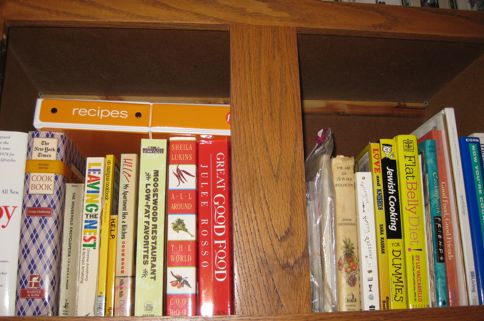 Lots of cookbooks for someone who relies on takeout sushi.
You’ve heard me say this before. Everything should have a home, but not everything has to live with you! The Pareto Principle, also called the 80/20 Rule, says that 80% of success comes from 20% of the effort, and it pretty much applies to your whole life. So, you may find that 80% of the time you are wearing (then washing, then re-wearing) the same basic 20% of your wardrobe; your kids are probably playing with the same 20% of their toys. That’s why paring things down gives you a much bigger bang for your buck than you expect…because you usually don’t miss the things you purge out, even though you probably thought you would, which is what kept you from downsizing in the first place.
This means letting go of books you read but hated, read but never plan to read again, got as a gift but don’t really want to read, or acquired for a different version of your life (one that you no longer lead). Even people who have no problem letting go of the rest of their possessions often still chafe at the idea of letting go of books, because readers know that in books, all the potential knowledge of the universe dwells. Well, that’s true, but if the knowledge is propping up your printer or gathering dust on a bedside table, that knowledge is being locked away in prison. Read it or set it free!
In previous Paper Doll posts, I’ve encouraged you to start the purging process by dividing books into three categories: Now, Then and Someday.
NOW books are the subjects, authors and titles that represent who you are today! They may be novels by authors you love or subjects you find compelling. For me, these would be my complete collection of Jane Austen, new novels like Charlie Lovett‘s forthcoming First Impressions, and recent books in my professional bailiwick, like The Organized Mind: Thinking Straight in the Age of Information Overload
THEN books represent who you used to be. My THEN books covered all aspects of the television industry from the days I was a TV program director. By the time I became Paper Doll, I no longer needed to know the elements of a cause of action for a libel suit or how to calculate ratings and shares. If your youngest child is in middle school and the very idea of having another kid just made you shout obscenities at this family-friendly blog post, books about pregnancy and caring for newborns are so very THEN. As I’ve said before:
THEN books are like guests who have overstayed their welcomes. Consider the following alternatives for setting your THEN books free:
- Sell your books to a local used book store. Understand that you will get a tiny fraction of your original paid price. Instead, think of it as getting paid to recycle, like when you get a soda pop bottle deposit back.
- Sell your books online. (Amazon is the biggest and best-known option, but check out BookScouter for a Orbitz/Kayak-style search of all your price options.)
- Donate to your public library or school library. School libraries are often desperate for titles for their collections. Public libraries may be limited in what they’re allowed to select for circulation, but usually raise money by selling donated books at annual book sales.
- Donate books to hospital libraries, hospices, chemotherapy and dialysis treatment rooms, and community centers.
- Donate books to military personnel via projects like Books for Soldiers or Books for Troops.
- Donate your adult and YA titles, and textbooks, to incarcerated persons seeking to improve their literacy via programs like Prison Book Program.
- Set books free via Bookcrossing. (It’s not just a way to declutter; it’s a way to be part of “an unlikely global sociology experiment.”)
- Join the Little Free Library movement and share books with your neighbors and random passers-by.
SOMEDAY books represent who you wish (or once wished) to be someday. These are the publishing equivalent of the exercise videos that gather dust next to the TV. They’re the guides to speaking Italian or Urdu that you bought in hopes of learning an exotic language, the cookbooks for cuisines that are too complicated, too fattening or too much fuss for you to make…or the books on topics that represent your less relevant, if not less realistic, dreams.
Remember: Someday isn’t a date on the calendar. If you’ve decided that you’re starting a home-based business, books on writing business plans belong in your NOW collection; if you’ve been talking about starting a business for ten years but have never made any movement towards your goals, sell these books and let them fund a more current dream. Make space for your real life!
ORGANIZE YOUR LIBRARY SPACE & YOUR READING SPACE
These two zones may overlap, but unless you live (and read) in a dorm room or have a teeny studio apartment, your library and your reading area probably aren’t the same spaces. Start with two basic organizing guidelines:
- Things should live with others like them. As a professional organizer, this is a lesson I teach over and over, and it’s often an Ah-ha/lightbulb moment for clients. Put all your coffee mugs in the same cabinet. Let your shoes, except the ones on your feet right now, live in a little shoe commune in your closet. Your books should, generally, live together.
If you lack massive home library space, there’s no reason you can’t emulate official libraries with multiple collections in disparate spaces (e.g., children’s books in the kids’ rooms, cookbooks in the kitchen, non-fiction (including yearbooks and photo albums) in the den or living room). The key is that unless it’s the book you are currently reading, and unless it’s in your hand, your lap, your bag or under your eyeglasses on your bedside table, one lone book is likely to get buried and ignored. Books have stories to share — when they aren’t on the job, let them hang out with their friends.
- Things should live where they’re used. Reality check. If you have a big, comfy reading chair by the window in your bedroom — and yet you never sit in the big comfy reading chair, and the chair is covered with sedimentary rock-like layers of your wardrobe from the last few days, it’s not your reading chair. It’s your laundry chair.
Keep your main personal/family library where it best fits your home, but have your circulating library, your handful of borrowed library books, your current book club selection, and the novel you’ve been hacking away at, page by page, for months, in one small, defined space where you are actually reading. If you get all your reading done while rocking your baby to sleep, it’s alright to have your grownup books on shelf in the nursery next to currently nibbled-and-drooled-upon baby books. Your six-month-old won’t complain.
And if the only time you have to read your books is on your lunch hour, you have permission from a random blogger on the internet to keep your books, tidied by bookends, at the back of your desk against your cubicle wall.
[But don’t store books in your bathroom, even if you read them in the tub (or, y’know, elsewhere). Humidity and heat are bad for books.]
KNOW WHAT YOU HAVE SO YOU CAN READ WHAT YOU WANT
Finally, your library space will better serve you if you know what’s in it. The smaller your keep your collection, the less effort you’ll need to expend on putting your books in all but a rudimentary order, but if decluttering your library is an ongoing challenge, at least give yourself a chance to find what you want to read when the inspiration (and opportunity) strikes. The classic Paper Doll post, Shhhhh… We’re organizing the library… provides a good head start on no-tech, low-tech and more advanced ways to keep up with your library inventory; an eventual update on that post is in the works.
For more advice on keeping book clutter at bay so that you can find and focus on what you really want to read, be sure to revisit:
- Reducing Book Clutter (Part 1): Book Rentals for Grownups
- Reducing Book Clutter (Part 2): Book Rentals for Kids
- Reducing Book Clutter (Part 3): Trading Books Online (But keep to the “one-in, one-out” rule.)
- Reducing Book Clutter (Part 4): Borrowing & Returning–A Library Love Letter
- Reducing Book Clutter (Part 5): Electronic Books
- Reducing Book Clutter (Part 6): Audio Books
Next time, we’ll discuss how to carve organized space in your schedule so that reading doesn’t lose out to other activities in the competition for your time.
Smead, Secrets for Organizing a Small Business, and the New TV Season
Long before Paper Doll became a professional organizer, I was a television character. No, not a character on television, but one whose personality and intellect was lovingly devoted to TV.
Not only was my first career as a television program director (for Fox, UPN and WB stations), but my life was guided by the broadcast schedule. (Yes, kids, in the olden days, all television was available only via broadcast, and you watched it while it was airing, not when it was convenient for you. Pretty disorganized, eh?)
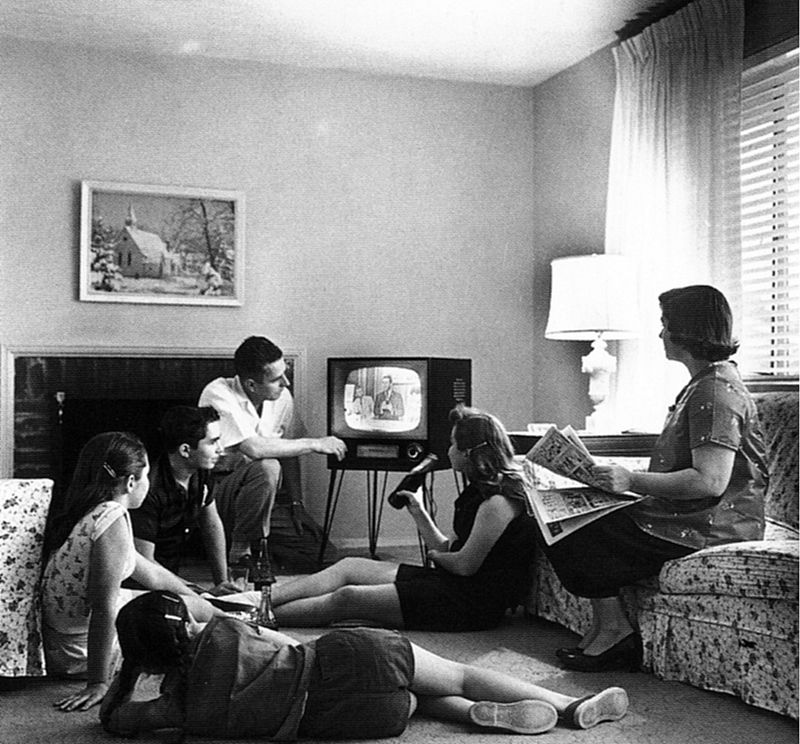
– National Archives and Records Administration
In recent years, I’ve had some fun appearing on the modern version of television — online video — from short tips and product testimonials for Rubbermaid and Smead to longer video interviews, like this year’s Delegate Like a Boss. (I’ve even had some forays into audio, participating in various teleseminar series like Declutter Your Life, talking about eliminating paper clutter, and radio interviews like WGOW-FM’s Chewin’ the Chatt (start at about 3:15), on organizing strategies for senior citizens.
But this summer, I had an especially fun time talking with John Hunt on episode #41 of Smead’s Keeping You Organized podcast. We talked about the “secrets” to organizing a small business, focusing on paper management and information flow, and I even got to promote my recently published book, 57 Secrets for Organizing Your Small Business.
There was no fancy green room and no celebrities for me to make room for on the couch, but it was a lively discussion about a topic near and dear to my heart, organizing all that important stuff so you can think about that information contextually instead of just trying to think of it, so it doesn’t fall out of your head.
[There’s an audio-only option for those of you who — like I — get a bit distracted by the close-up editing and my humidity-inspired Art Garfunkel hair.]
I was thrilled to be part of the first season of the Keeping You Organized podcasts, but like any true television aficionado, I’m also excited about the new season. As a TV person, that means combing the TV Guide Fall 2014 Schedule to figure out what I’ll be watching each night. And as a professional organizer, it means I’ll be waiting for this week’s launch of the second season of Keeping You Organized.
Until then, I invite you all to catch up on the first season highlights with professional organizing All-Stars like Geralin Thomas, Ramona Creel, Leslie Josel, Ellen Delap, Deb Lee, and more.
Welcome to September! New school year, new TV season, new opportunities for Keeping You Organized. Happy new year, Paper Doll readers!
Organize Your Reading: A Customized Digital Newspaper…That’s Actually Paper!
Are you a reader? Organizing the form of information flow can be just as important as squaring away the content.
Previously, we’ve discussed how handwritten notetaking correlates better with learning and improved cognition than typewritten notes. Also, a recent Scientific American piece, The Reading Brain in the Digital Age: The Science of Paper versus Screens, reviewed the current research. It found that there was at least some indication that “by limiting the way people navigate texts, screens impair comprehension” and that “screens and e-readers interfere with two other important aspects of navigating texts: serendipity and a sense of control.”
Leaving behind the science of the matter, sometimes, you just want to read things on paper. Perhaps you want to scribble something in the margin, or highlight it, or circle a portion, or post it on your mirror for inspiration or your office door to make a statement. You want to clip it out and paste it on your high school locker door, or dorm room bulletin board, or office cubical half-wall. You want to share it with your great-grandma.
But GamGam may not want to log in to Facebook or Tumblr. And you can’t post your iPad on your mirror or your door, and even if you could, some goofball would come along and change the screen. The web is great, and there’s amazing stuff out there just waiting to be absorbed. But…sometimes…paper is ineffably better.
However, as you probably know from experience, indiscriminately printing things from the web is generally a no-go. Sure, you can print directions or a recipe, but usually you end up with excess: ads, navigation links and junk; you use up the color ink disproportionately to how much you care for the things that print in color. And yes, previously, we’ve talked about options to make your online reading simplified, and that can help reduce the waste of ink and paper. But, sigh, sometimes, we miss newspapers.
The UK company Newspaper Club, which helps consumers design and print their own newspapers, has come up with an innovative approach for just such moments. They call it Paper Later. (Not to be confused with the creativity app Paper. Or Facebook’s app called Paper.)
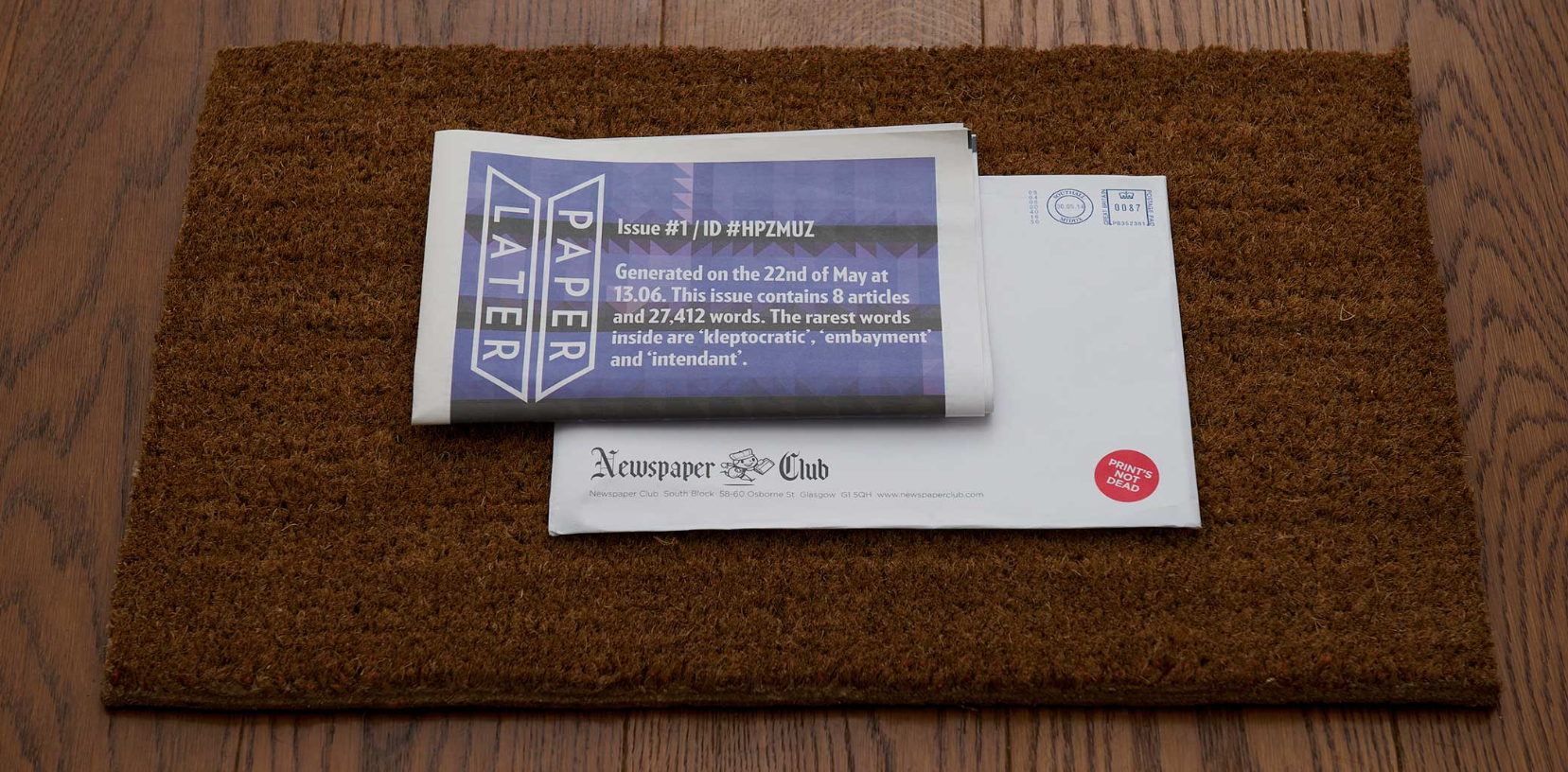
At first glance, Paper Later works similarly to other ‘read it later’ services like Instapaper, Pocket, Flipboard or Readability. As you’re reading along, click the “Save for Paper Later” button in your browser while you’re standing in line at the grocery store or waiting for the dental hygienist. Whatever you’re reading, click on your phone or tablet and select those really good bits of the web, particularly what’s come to be known as “longreads” from stellar sources like the eponymously named Longreads, Medium, Hazlitt (Canadian and oh-so-cool), ProPublica (for public interest journalism) or The Classical (for sports fans).
But instead of coming back and reading them on the web, you get to read them on paper. Real paper. And not like printing a PDF on your printer, but in a newspaper. So, click to save, and when you have enough articles, hit “print” and Paper Later will lay your newspaper out, print it and ship it to you, and it should be delivered within 3-5 working days. It’ll come in a card-backed envelope and should fit in a standard mailbox or through a standard letter slot.
You can save anything from the web, but articles and blog posts work best. Obviously, this is not for saving and printing hot news stories. It’s not for reading quickly and tweeting out to your followers. It’s designed to let you take the more thoughtful approach, to read on a long train or airplane ride, or while you’re enjoying those last few sunny, crisp days in the hammock. Pick stories that are a little closer to timeless — or at least those which will have meaning to you once you’ve collected enough to read.
Paper Later is printed on 55gsm newsprint, with a high recycled content. It’s FSC– and PEFC-certified, and sourced from Swedish forests (because apparently those Swedes grow the best newspaper trees). I was curious about the length of a typical customized Paper Later edition, and got a quick reply:
@ProfOrganizer you can order anything from 8-24pp, and many people hit the maximum, which works out to be 30-40k words, typically.
— PaperLater (@paperlaterhq) August 18, 2014
Paper Later reports that the end-result looks and feels like a traditional newspaper, but is a tad thicker than typical newspaper, and is thus less likely to tear.
Unlike the Little Printer, which (even with its recent advances) I still think is mainly good for a lark, I can envision a number of reasons why you might want to invest in a subscription to Paper Later.
- You love the experience of reading the paper, but find your daily newspaper mostly pointless because you’ve read it all on Twitter already.
- Paper is less distracting than digital. With Paper Later, there’s no advertising (which makes it better than a traditional newspaper). And you don’t have to worry about tilt-lock, or losing wi-fi, or dropping it on concrete.
- You’ve been trying to learn a new language, but digital just isn’t conducive for you to unravel the nuances of longer pieces. With your Paper Later in one hand and your favorite whatever-to-English dictionary (digital or otherwise) in the other, you can explore.
- Artistically archiving a project appeals to you. An expectant couple might be blogging about preparations for the baby-to-be, and a newspaper archive of those posts provides a touching and tangible record.
- You want to curate fabulous pieces of writing for a loved one who is not digitally adept. Great-Grandpa’s brain is still sharp, but perhaps his hands aren’t so steady, and a tablet or keyboard just doesn’t work for him. A newspaper filled with writing that satisfies his intellect might be just the ticket.
Unfortunately, Paper Later is only available in the UK for now, so only Paper Doll readers on the other side of the Atlantic, like Jacki Hollywood Brown (Canadian professional organizer and blogger on extended stay in England), can report in on how well it works, but there’s an option to write in to let them know you’d like Paper Later to expand to your locale.
At £4.99 (about US $8.28) per issue, it’s a small indulgence. Much like taking quiet time, sitting in a hammock and catching up on your reading.
Paper Doll’s Campus Tour: Organize Your College Life
Paper Doll is old enough to remember the excitement that the August back-to-school issue of Seventeen Magazine would bring. I especially loved the articles about preparing for college.
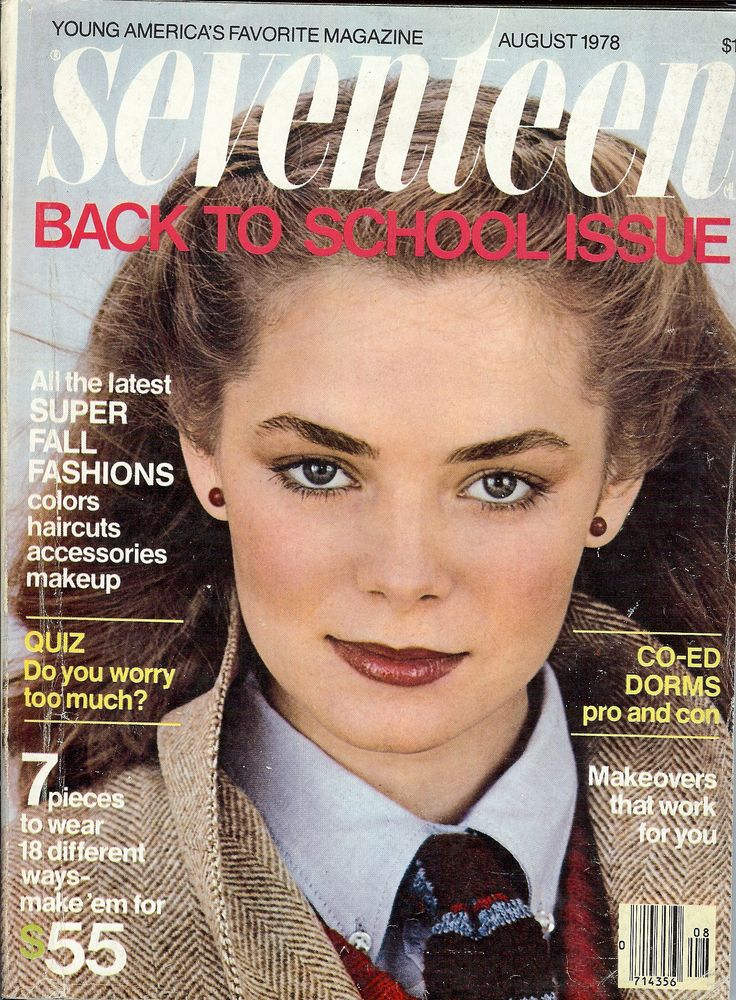
Long before I was ready to go to college, I couldn’t wait to get organized to go to college. And by the summer between graduation and going off to school, it seemed like Paper Mommy and I comparison-shopped every possible dorm room item, as if we were setting up a color-coordinated magazine spread for Dorm Room Beautiful!
Over the years, I’ve offered a lot of advice about preparing for college. Elsewhere on my site, I’ve written articles like Organizing Your College Search and Application Process and Organize Your Dorm Room. A search of the Paper Doll blog for the tag “Notes and Notebooks” examines options for the right note-taking solutions and resources, and the blog covered Textbook Rentals: How to Avoid College Textbook Clutter as early as 2009, and then in again in 2010, and looked at 11 Tips for Beating the High Cost of Textbooks in 2012.
Today’s entry offers up some of Paper Doll‘s favorite items and venues for organizing college life.
QUIRKY
Pivot Power — this flexible power strip and surge protector from Quirky comes in a few versions: junior, with three outlets, as well as six-outlet versions in traditional black, white with blue, and various colors in the POP line. This full-sized pink POP Pivot (say that three times fast!) runs about $20.
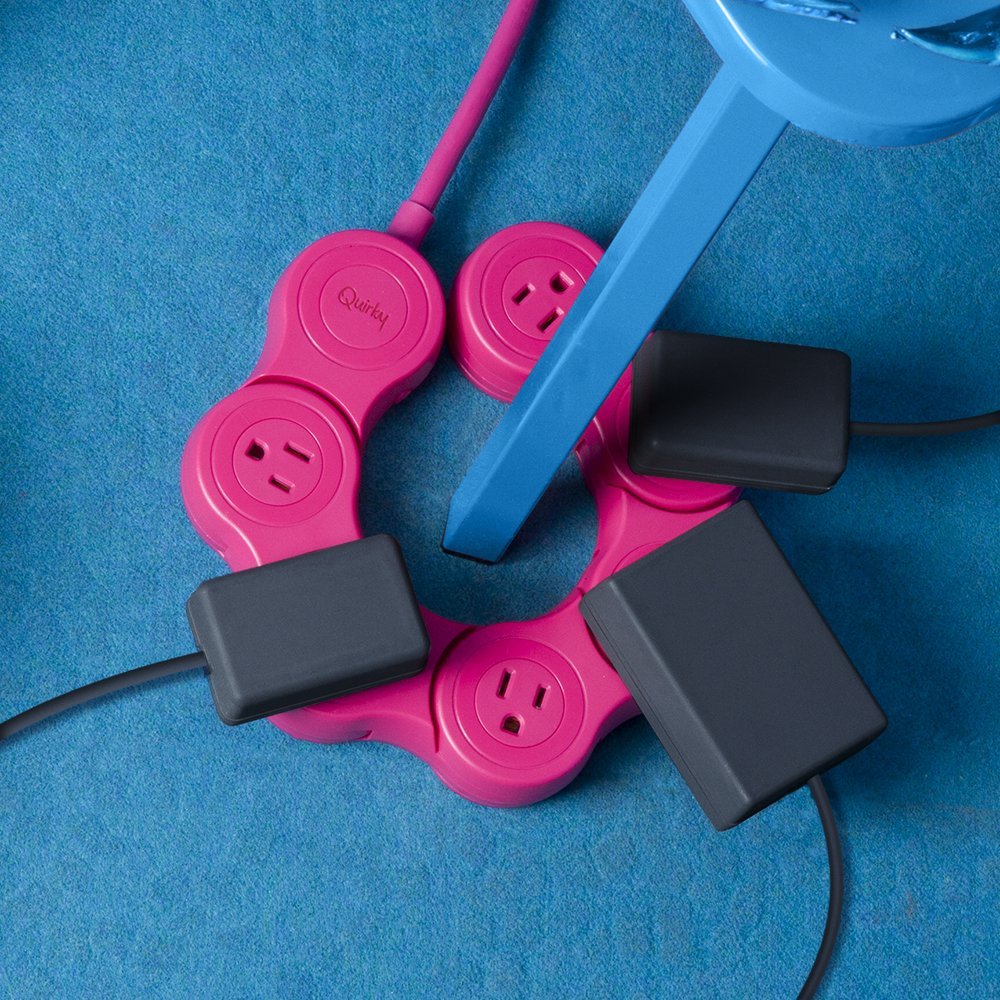 Bend the Pivot to accommodate hairpin dorm room turns, large chargers and inconveniently-placed furniture.
SMEAD CAMPUS.ORG
We’ve already talked about the Vertical Step Index Expanding File and the
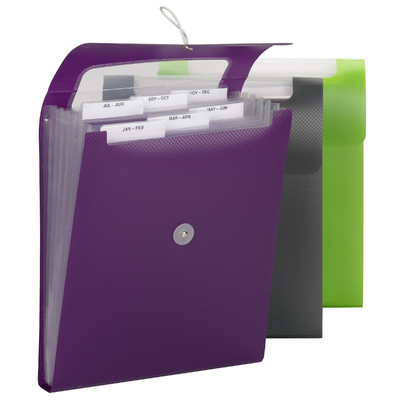
Organized Up™ Vertical Stadium File when we looked at NAPO2014: Our Friends at Smead Are on the Up and Up!, and we’ve covered the Organized Up™ folders, which have dual tabs for easy storage in backbacks and when traditionally filed. But be sure to check out other backpack-friendly vertical school supplies in that same line. I’m particularly fond of poly folders, as they won’t rip or get wrinkled with overuse, and seem like a step up from the paper subject folders prevalent in middle and high school.
For example, there’s the Poly Backpack Folder.
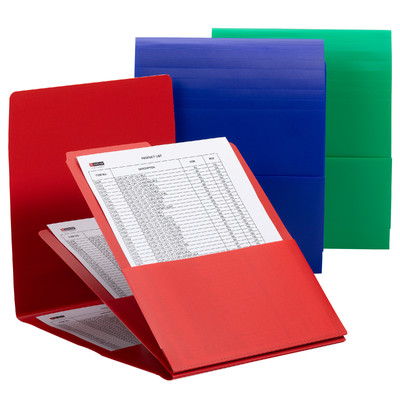
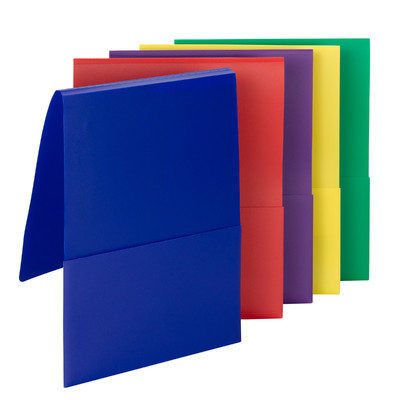 These upright folders are designed to hold one subject at a time, and the fold-over flap keeps your syllabus and handouts secure. The flap is straight-cut, so it can be tucked or untucked (like college shirts after the Freshman Fifteen take hold) and each Poly Backpack folder will hold up to 100 sheets and run about $1.29 at Amazon and elsewhere.
Smead’s Campus.org line also includes the similar Poly Backpack Organizer. Each of the three pockets will hold up to 50 sheets. (For those who are still fond of paper over poly, both products are available in 11-point textured paper stock, as well as poly.) You can find the organizers for about $5 each.
CAMPUS CANDY
Paper Doll perennial faves Office Candy have a whole line for fashionable college students to get their organizational groove on. Collegiate-themed Campus Candy has the same philosophy as its older sibling — if your organizing resources are appealing, you’ll be more likely to use them to keep yourself orderly.
From Kate Spade storage boxes ($52 for a set of three sturdy, patterned boxes with gold foil accents and gold foil ID labels)
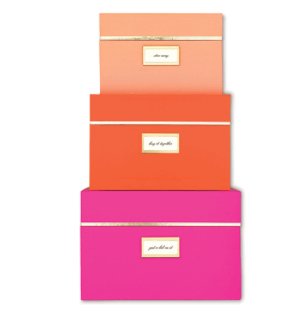
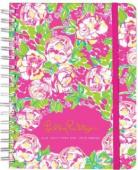
to a plethora of Lily Pulitzer agendas, spiral notebooks, water bottles, desk sets and more, Campus Candy offers decorative sweets.
BATTLE OF THE BACKPACKS
I’ll admit, in my day, when dinosaurs roamed the campus, backpacks were pretty basic. One large interior pocket, one smaller, zipped exterior pocket, and if you were lucky, padded straps. As far as I can recall, bottle water (let alone mesh pockets for water bottles) wasn’t even a thing yet. Now, students have an embarrassment of stuff-schlepping riches from which to choose.
Cocoon Innovations, makers of the Grid-It! (in all of its various incarnations), has always been a Paper Doll all-star. I think college-bound students should be considering a variety of Grid-It! resources, from the standard Grid-It! Organizers (Medium shown here, 10 1/2″ x 7 1/2″, $18, available in red, blue and black)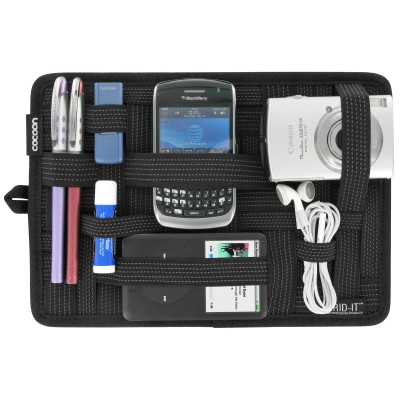
to the Grid-It! Wraps for tablets (in black, grey and red) for $30.
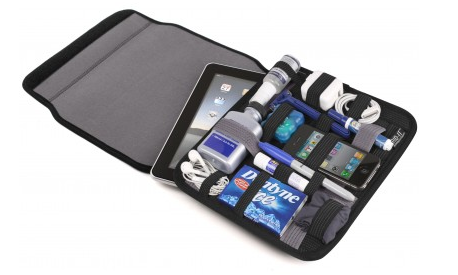 But the backpacks have taken the game up a notch — and while the Central Park Professional Backpack (designed to hold a 17″ laptop) is definitely practical and stylish, the Cocoon Slim Backpack (able to hold up to a 15″ MacBook Pro) has everything a college student might need to make it from breakfast to bedtime without a moment’s clutter kerfuffle.
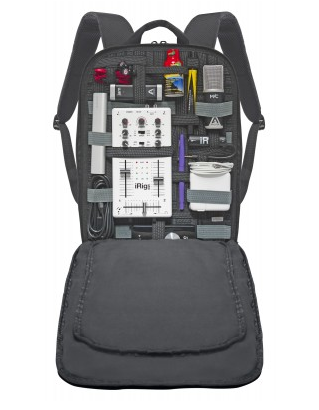
The slim has a padded compartment for a laptop as well as a separate iPad compartment, and a built-in 16″ x 10 1/2″ GRID-IT! front pocket. There’s an interior document section, and an exterior zippered compartment for more storage. The whole interior is lined in faux suede to buffer the high-tech gadgets, and the exterior features water-resistant ballistic nylon, waterproof zippers, and gun-metal hardware. Ridiculously organized and durable, but also sleek, when fully packed, it’s still only 3 1/2″ deep:
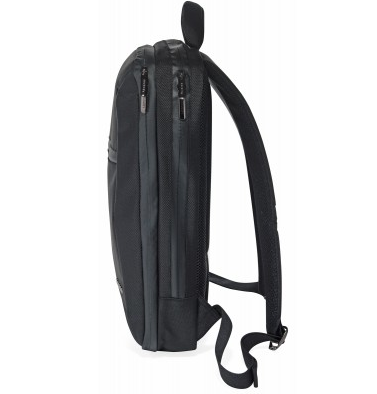
And it’s only $79! I’d always thought that if I were going back to college, I couldn’t find anything more perfect for me than my Züca bag combined with a Grid-It for all my chargers and gadgets, but the Slim is mighty tempting.
Of course, if you (or your college-bound student) want a similarly lean alternative but with a little more minimalist cachet, the Evernote-branded, French-designed Côte & Ciel Flat Backpack may fit the bill. The high performance, dark grey EcoYarn exterior is tough but attractive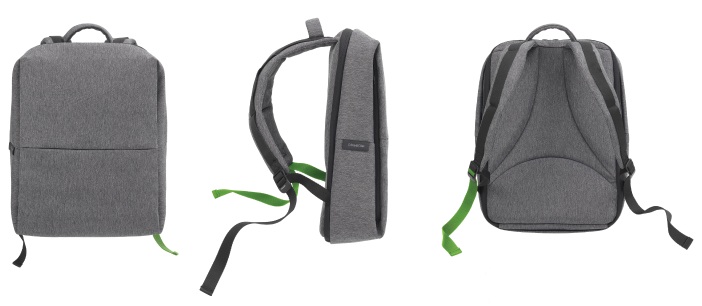 in that oh-so-Old-World, “Oh, this old thing?” manner, and the three interior pouches will accommodate a 13″ or 15″ laptop, a tablet and stacks of papers, all in under 4″ of depth. The price, however, is a not-so-slender $180!
RISE UP FOR SWEET DREAMS AND LATE NIGHT STUDYING
Most college students can adequately outfit themselves for campus survival without ever leaving their nearest Big Box store plaza. For example, Power Bed Risers, like these from Bed, Bath and Beyond, serve two purposes: superior storage and increased available outlets.
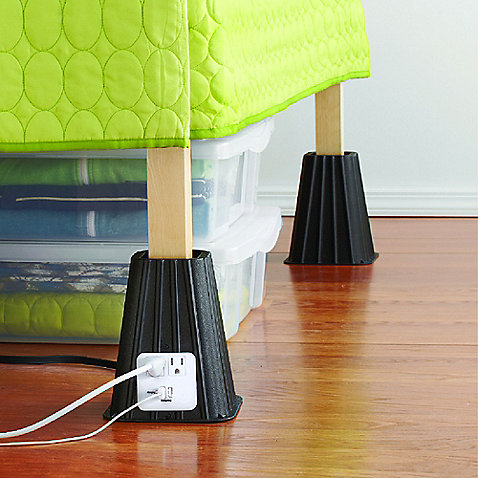
A set for four, for $30, raises a dorm room bed 7″ from the floor, allowing for more ample storage of lidded tubs (for extra supplies and off-season clothing) without cluttering the room. Additionally, one riser in each set includes twin 110-volt, 15-amp grounded power outlets and twin USB 5-volt DC outlets with a charging light, so you can make sure everything from phones to Fitbits, iPads to (probably still contraband) toaster ovens will be ready when the need arises.
BACK TO BASICS
Finally, there’s something to be said for the basics. College students have put milk crates to use as bookshelves, open armoires for clothing, fridge-top food storage, filing boxes, chairs, dining tables and more for about half a century.
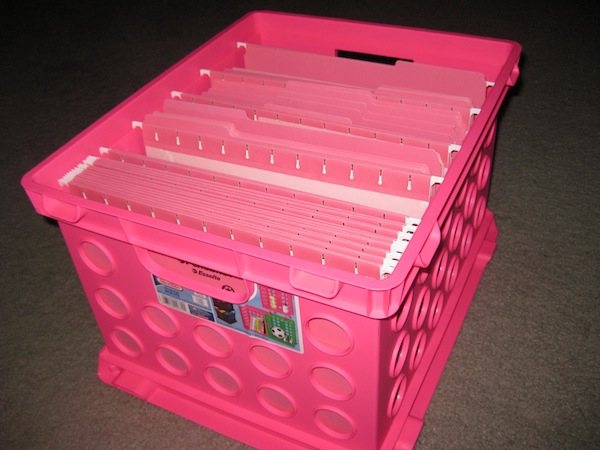
Nowadays, they’re designed primarily for files, not wholesome dairy products, and have hanging file rails running along the interior in both directions to corral letter- or legal-sized files.
For between $4 and $6 each at Walmart, Target or Staples, you can grab two or three plastic milk crates in mix-and-match colors, pack and stack them with minimal fuss and cost, and maximize the organization in your postage stamp-sized castle. It’s academic.
And by the way, Seventeen Magazine is still offering advice on what to bring to college.
Follow Me