Archive for ‘Paper Organizing’ Category
Paper Doll Finds Your Lost Eyeglasses: Technology Beyond Checking the Top of Your Head

Last time, in Paper Doll Finds Your Lost Keys, Wallets, and Phones: Bluetooth Trackers 2019, we talked about the big names in Bluetooth trackers that can help you find your lost keys, wallets, purses, passports, luggage, phones, and any of a variety of items in your life. Certainly, it’s better to not to lose things in the first place. But how do you do that?
HOW TO NOT LOSE STUFF
As a professional organizer, I start by decluttering the backlog that hides things from clients. After that, the path to not losing things is pretty straightforward, in theory. Any good system has two parts: the location and the behavior:
- Designate a home for every item. Think about the first place you’d go to look for something, and then make that the home. There’s your location. Ice cream goes in the freezer. Toothpaste goes in the bathroom.
- Don’t put things down; put them away. Too often, people randomly put their wallets or keys or whatever down near them instead of the home they’ve assigned. Stop that! Your wallet goes in your purse or your pocket when you’re out and about. Don’t set it down on the cashier’s counter or the restaurant table. When you’re home, keep it in your purse or designate a tray on your bedroom dresser (or wherever works for you).
That’s it. But if that’s all there is to it, why do so many people continue to misplace things? Sure, sometimes it happens as we saw at the start of last week’s post, when someone’s toddler (or pet, or “helpful” spouse) moves something. But usually, it’s because we fail to put things away because we’re focusing on things we deem more important in the moment. We have to pay attention!
No, this isn’t a post on mindfulness. Yes, if you practice mindfulness, stop multitasking, and focus on one thing at a time, you’re much more likely to put things away instead of randomly down. But unless you’re a fairly magical television character able to suddenly remember things that happened in the blurry background while you were focusing on something else, your lack of mindfulness up until now isn’t going to help you find what you’ve mislaid.
So what will? That’s why we’re here. Last time, we saw how some of the big name general Bluetooth trackers can help us find a whole smattering of things we’ve lost. But those trackers, while not large, are still too big to attach to the one thing people are constantly losing (other than their minds, while searching for lost items). Eyeglasses!
ORBIT GLASSES
Last time, I pointed out that most of the various Orbit products, including Keys, Card, Wallet, and PowerBank all did double (or, with regard to the wallet and power bank, triple) duty. Not only do they help you track your lost items, but their buttons can be used as selfie remotes! Well, this special Orbit product doesn’t help you create a photo so you can look fabulous, but it does ensure that you can see how gorgeous you are in the mirror or in pictures.
Orbit Glasses work the same way most of the Bluetooth trackers we’ve already described. The company claims it’s the world’s smallest Bluetooth device. (Note: A number of trackers make similar claims – the smallest device, the loudest ring, the widest range. In general, claims about metrics are unimportant. However, when you want to hide a device somewhere on your eyeglass frame, size does matter.)
As with all Bluetooth tracking devices, you’re dealing with a device and an app. Start with the Orbit Glasses device, which is 1.2″ (28mm) long and 0.2″ (5mm) wide; it’s only a third of an ounce in weight, so it isn’t going weigh you down.
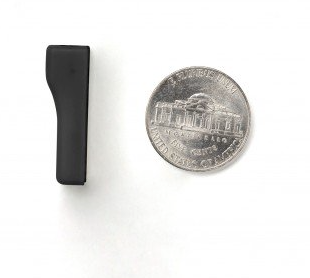
Unlike most use cases for trackers, your device won’t be dangling from a string. (That would be annoying, like turning your glasses into a charm bracelet!) Instead, attach the device directly to your glasses. Affix it with the device’s 3M-brand double-sided adhesive, allegedly the strongest adhesive 3M makes. (Who knows better than the company that created Post-its® and Scotch tape?) The instructions note that while the device can be removed and repositioned, it should otherwise stay firmly affixed.
In most cases, Orbit Glasses will fit on the inside of the arm, either by your temple or on the back-most part of the earpiece. The surface needs to be at least 4mm wide. The arms of my glasses are extremely narrow, perhaps 1.5mm, but if you have more typical eyeglasses or sunglasses, the Orbit should stay discrete.
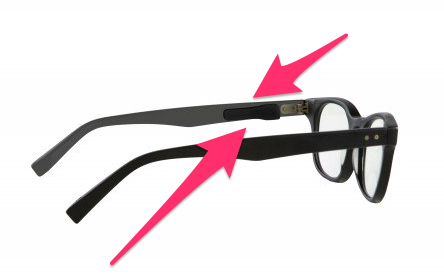
Next, download the Orbit app from the App Store or Google Play. As with all of the other Orbit trackers, if you misplace your glasses, whether on top of your head, in your car, or anywhere out in the world, you can use the app to make your glasses ring if they are within Bluetooth range; otherwise, check last known GPS location on the app’s map. The Orbit Net Crowdfinder community boosts your signal, so if an Orbit app user is anywhere near where you left your glasses, it will improve your chances of pinpointing where you need to go.
Orbit Glasses also has a nifty separation alarm, commonly known in the tech world as “geofencing.” That means that if you wander away from your glasses (or the cafeteria staff carries off your tray with the glasses still sitting on them), and the difference between you and your glasses exceeds Bluetooth range, it will proactively trigger an alert in your app.
Have a big house? You can turn on the SafeZone feature so the separation alarm won’t be triggered on your home WiFi. (However, if you tend to lose your glasses in your house, perhaps it’s better to suffer the indignity of a few alarms until you get used to using some mindfulness techniques?)
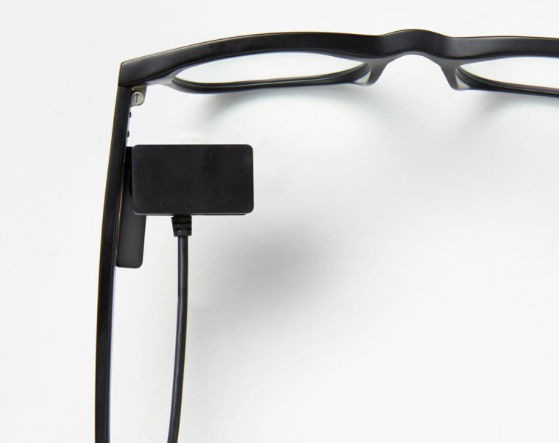
Orbit Glasses has a rechargeable battery with a one-month charge life, so there’s no need to make additional purchases or detach the Orbit from your specs. Just plug and charge, which should take two-to-three hours. Given that the charger goes where your face normally belongs (as indicated below), you can’t charge the device while wearing your glasses, so plan to charge it while you’re sleeping, wearing different glasses, or otherwise not needing the sharpest vision.
The Orbit Glasses device is a really teeny tracker, so it can’t be used in reverse to call your lost phone (as the other Orbit trackers can do). Paper Doll logic leads me to believe that if you have your glasses but not your phone, you can at least look for your phone, and if you have your phone (with the app), you can find your glasses. Of course, Orbit hopes you’ll buy multiple versions of their products, so if you have your glasses, you can use the button on any of those to find that pesky wandering phone!
Orbit Glasses will work with iPhone or Android. They come only in black, and are $39.99, whether directly from Orbit or Amazon. Orbit offers bulk discounts ranging from 25%-40% off for purchases of 4, 6, or 8 Orbit Glasses (or other Orbit products, in various combinations). Note: If you purchase from Orbit, remember to reset the drop-down from Australian to U.S. dollars.
FINDY
Orbit may be the bigger name in teeny eyeglass trackers, but they aren’t the only name. FoxSmart, a Swiss company which (incorrectly, and amusingly) claims it makes the only eyeglass tracker, sells FINDY.
At 28mm x 5mm, the same size as Orbit Glasses, FINDY claims to be the “smallest Bluetooth tracking device on the market.” Where have we heard that before? The website says:
“With our special adhesive FINDY is fitted on your eyewear frame. FINDY will not bother you in any way. In most cases FINDY is completely invisible to you or anyone else. FINDY disappears on the inner side of the temple or behind your ear. FINDY suits any frame material.”
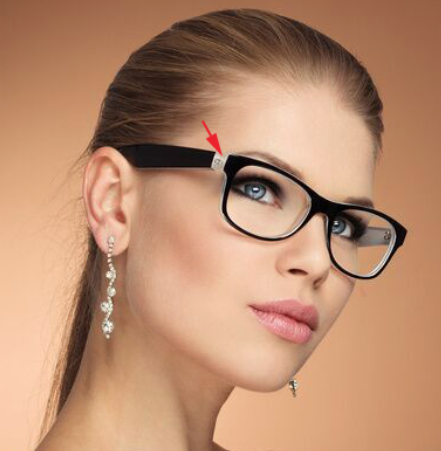
FINDY comes in two colors, black and a sort of frosted white/clear. As with the Orbit Glasses, this isn’t the product for you if the temples or arms of your glasses are wires or very thin plastic.
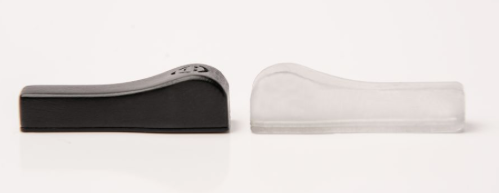
Once you have the tracker in place, download the FINDY app from Google Play or the App Store. FoxSmart has concentrated all essential features on one main screen. Simply press the “buzzer” button on the app to force the FINDY tracker to begin beeping. If you are within range (the measurement of which FoxSmart does not specify), you will hear the beeping.
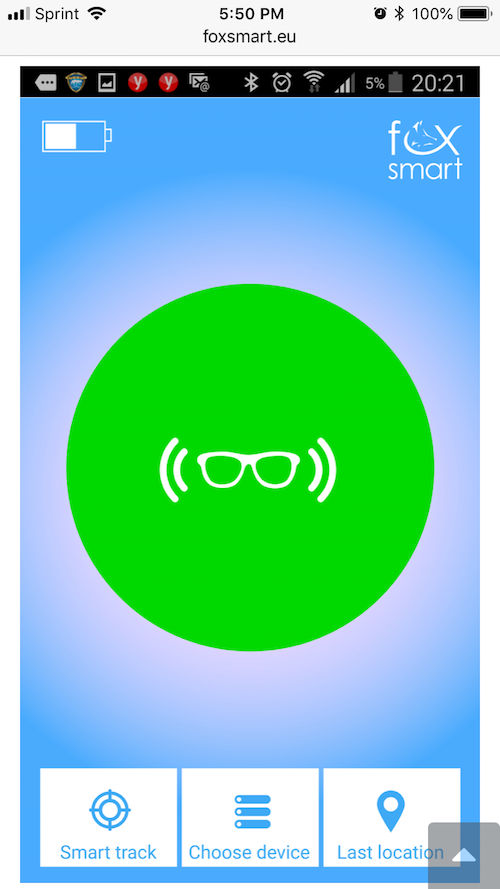
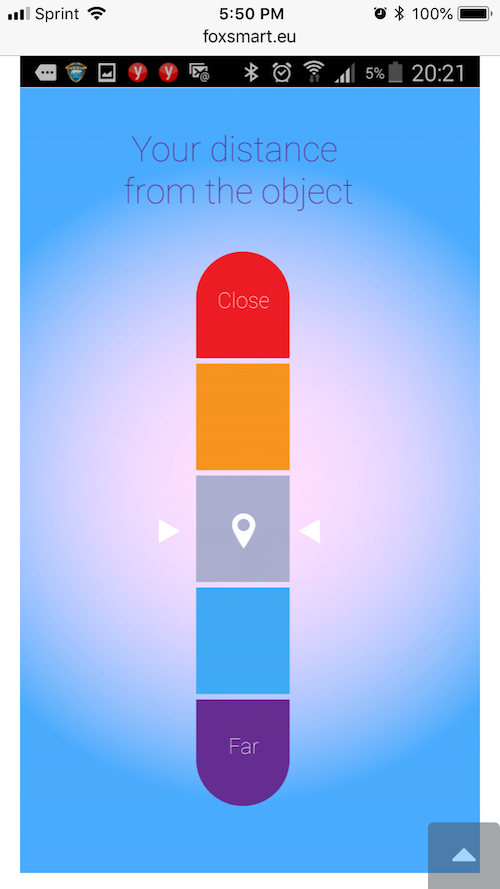
Here’s where it gets interesting, though, as FINDY has some unusual approaches. What if you don’t WANT your glasses to beep? Maybe you’re in a library, or your spouse or children are sleeping, or you don’t want anyone to know that you’ve lost your glasses once again. FINDY has you covered. Press the “smart track” button on the app and it will display a silent “signal receipt meter” to help you locate your eyeglasses without using the buzzer.
BUT WAIT, THERE’S MORE! The company recognizes that not everyone uses a smartphone. (Although they focus on use by seniors citizens, many people may lack smartphones and have no app access.) FINDY’s manufacturers have thought of that. The FINDY Smart Button (perhaps the European cousin of Staples’ Easy Button?), sold separately, is a one-touch button you can permanently attach to any smooth surface, like your fridge, filing cabinet, nightstand, etc. Just press the Smart Button and the buzzer function of FINDY will be activated.
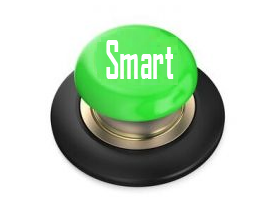
The company says that one Smart Button will cover a three-to-four room apartment, through for a multi-story home or larger apartment, one Smart Button on each floor in a centralized location might be wise.
FINDY devices operate on a single, standard coin cell battery. When the battery level goes below 7%, the FINDY App prompts users to replace the battery.
FINDY sells for $39.95; the Smart Button is $34.95. Shipping is free to the 48 contiguous states and to Canada. (Sorry, Hawaii and Alaska!)
LEVEL SMART GLASSES
What if keeping track of your spectacles is only one of the many things you want? What if you also desire:
- fashion-forward, precision-calibrated eyewear?
- fitness trackers built into your glasses so you can track your step count, distance traveled, overall active minutes, and calories burned?
- wireless syncing of your fitness tracker without having to remember to put on a smart-watch or clip on a device?
Level Smart Glasses takes all of these needs into account. VSP Global, a 60-year-old eyeglass company, has joined forces with the University of Southern California’s Center for Body Computing to develop eyeglasses that are for more than just vision correction.
These $328+ Level Techology glasses combine new technology, fashionable frame design, and smartphone app communication to create true 21st-century eyewear. And yes, one thing the technology can accomplish is finding your glasses when you’ve put them down and can’t locate them. (Somewhere, Geordi LaForge is smiling!)
Think of it this way: If you don’t lose your glasses, you’re more likely to wear them. And if you’re wearing them, you’re more likely to get credit for your fitness behaviors since Level bakes fitness tracking right into the frames. So, the more you move, the more likely you are to get points for hitting your daily fitness goals and stretch goals – and here’s another advantage to Level Smart Glasses! Every time you accrue 50 points in the app, VSP will give a person in need both an eye exam and a pair of glasses, at no charge, through the Eyes of Hope charity.
So, if high-tech glasses that help you find them, track your fitness, and give charitably are what you’re looking for, find Level Smart Glasses near you or buy online. In many cases, you can use your vision insurance coverage to defray the cost.
AT-HOME SHORTCUTS
If you don’t have a tracker but can’t find your glasses at home, searching everywhere is counterproductive. There are still some low-tech and no-tech solutions.
If you’ve mislaid glasses for distance vision in your house, you probably wore them to watch TV. Go sit down as if you were watching television and feel around. If your distance vision is too wonky to find your glasses on your own, try taking a few snapshots on your cell phone and then carefully enlarge sections of the screen to see what would otherwise be blurry.
If you’re looking for your reading glasses, check the following locations where you tend to read:
- next to the computer
- next to/on top of the book or magazine you’ve been reading
- on your bedside table (reading at bedtime?)
- on the bathroom countertop (did you remove them to put on makeup or wash your face?)
- on the kitchen countertop (after reading a recipe)
When in doubt, there are always two more places to search
- Look down! Are they hooked to the neckline of your shirt?
- Look up! Are they on top of your head?
IN SUMMARY
Investing in multiple pairs of glasses to keep all around home ensures you can see what you’re doing, but at a cost. Wearing your glasses on lanyards will keep them close but may have a deleterious impact on how fashionable you seem (and will make hugging inconvenient). Using Bluetooth trackers invokes an additional cost but gives you peace of mind. Being more mindful is free, but requires some time and effort.
Cost, style, convenience – consider what you’re willing to sacrifice to stay organized and see clearly.
*Photo of doggie wearing glasses by Jamie Street on Unsplash
Paper Doll Finds Your Lost Keys, Wallets, and Phones: Bluetooth Trackers 2019
Good organizing skills can keep our lives from becoming a series of lost-and-found activities, but sometimes, though no fault of our own, things go missing. Last week, my friend Jennifer posted the following on her Facebook page:
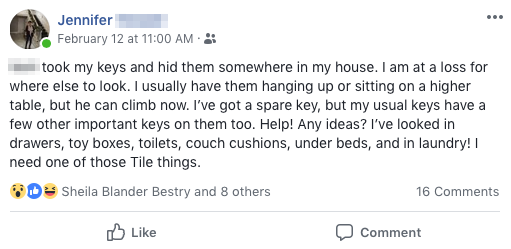
Life with her 20-month old is an adventure! Eventually, she posted: “Update: I found them!!!!!!! In the dining room, under the runner on my table with a chair turned to the side… I’m officially blaming [toddler], but I could have easily done this too. ??♀️ I have been looking for 6 hours on and off! Going to Amazon to order the key Tile so I can find them for future mishaps!”
A few years ago, Paper Mommy lost her keys, too. She eventually found them in her potato storage bin, weeks later. Almost assuredly, she returned from the grocery store and as she was putting away a bag of potatoes, keys in hand, the keys got set in the potato bin. One night, changing her mind repeatedly about what she wanted to make for dinner, she eventually settled on something with potatoes got a side order of key-ring!
How often do you see social media posts by parents anguished when their child’s favorite stuffed animal has been left behind at an airport or theme park? If only more people had a solution like the friends of this lost, little panda.
Today, we’re going to look at some big-name solutions for finding your lost keys, phone, wallet, or whatever you tend to randomly put down (instead of putting away).
Bluetooth Trackers
If you don’t love playing hide-and-seek with your possessions, you may want to consider a Bluetooth tracking system, which comes in two parts: a tiny device and a digital app.
A Bluetooth tracking device is a small, usually plastic, doo-dad that you attach to things you don’t want to lose. The device “talks” to your phone or tablet via Bluetooth, a wireless technology for exchanging data over short distances using short-wavelength UHF radio waves. If you have a wireless mouse or ear buds, or a fitness tracker like Fitbit, you’re already using Bluetooth.
The tracker’s app on your phone can then locate and talk to your device with some GPS-esque precision, like how Find My iPhone helps you find your lost Apple products left at the coffeehouse, or trigger the device to set off a “find me” alarm there in your house (so you can find it under all the LEGO pieces your toddler has up-ended onto the floor).
TILE
Tile – Right at the end of Jennifer’s post, she noted, “I need one of those Tile things.” When I wrote about Seek (with Bluetooth) and Ye Shall Find back in 2014, Tile was already the first big name in Bluetooth trackers and it’s still the Big Kahuna. The product line has changed over the years, but the basics remain the same.
Physically, a Tile device is a small, fairly flat, rounded plastic square, about the size of a poker chip. Some Tiles have a small hole punched in one corner through which you can thread key chains and zipper-pulls (on purses, wallets, backpacks, or children’s jackets), or use their double-backed adhesive on the reverse of a Tile to stick it to virtually anything, from computers to toys. You can also just drop it in a pocket, your wallet’s change compartment, or the bottom of a purse. Allegedly, Tile is waterproof, but don’t go scuba diving, OK?
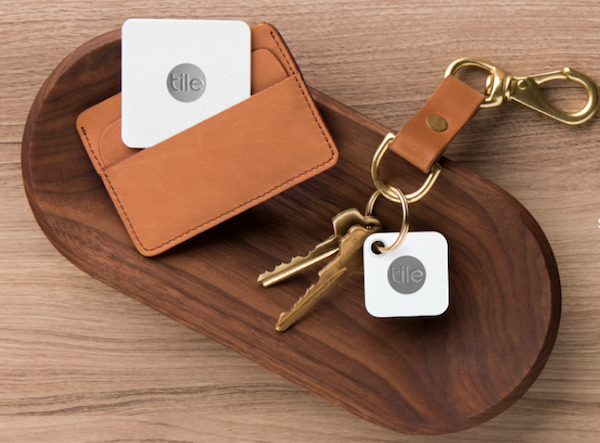
There are three products in the Tile line:
- Tile PRO – It’s louder, a bit heavier, and has the widest search range
- Tile MATE – It’s smaller, lighter, and has a moderate range
- Tile SLIM – It has the lowest price, narrowest range, and a non-replaceable battery; it’s best for items with a thinner profile, like stuck to a passport or tucked inside a wallet
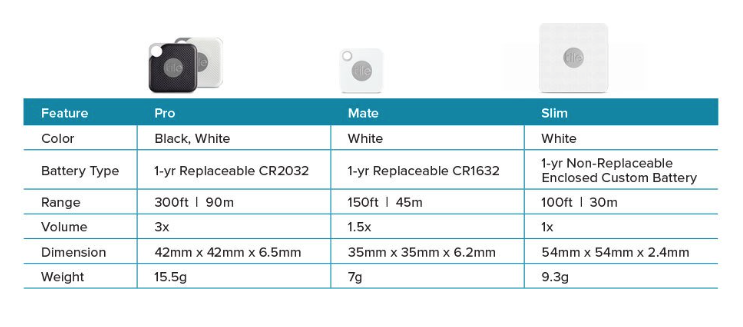
The old Tile was designed so that you never had to charge it or replace the battery. But because a new Tile was pricier than a new coin-style battery, the obsolescence of each Tile was its major drawback. Nowadays, two versions of Tile (Pro and Mate) have replaceable batteries; only the larger (but flatter) Slim needs to be fully replaced (or you can upgrade at a discount through the reTile program).
Compatibility has really expanded since the last time Paper Doll looked at Tile, when it was limited to a few iOS devices. Now, it works with all devices (iPhone, iPad, or Apple Watch) using iOS 11 or higher, as well as Android devices using 6.0 or above. If it has Bluetooth 4.0 or BLE, you’re good.
Once you have a Tile device, download the Tile app and hold the device close to your phone. If you’ve ever paired an exercise tracker or Bluetooth keyboard to your phone or tablet, you know the drill.
When you look for your keys, phone, or whatever your Tile is attached to, direct the app to make the Tile ring. Or, you can ask Siri, Alexa, or Google Assistant to find your items. Can’t hear anything and figure your item is too far away? Check the app for your item’s last known location.
The Tile user community is connected, so if you’re two towns away from where you left your wallet but another Tile user’s phone or device is near enough to your Tile (300 feet from a Pro, 150 feet from a Mate, or 100 feet from a Slim), you’ll still get an update from your long-lost Tile to your phone! (Of course, you and everyone else only support this Tile community if you’re keeping the app running 24/7 in the background, something that may not be so appealing.)
If you have something with a Tile attached but can’t find your phone? It works in reverse. Push the button on your Tile, and your phone will ring!
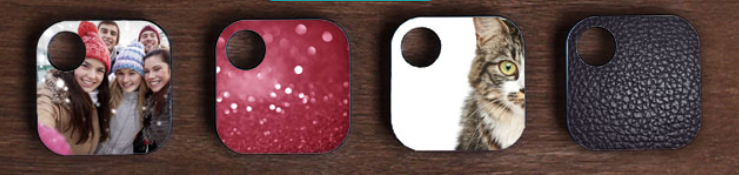
Stylewise, if basic black and bright white don’t do it for you, Tile’s partner company sells customized skins for Tile devices. Be true to your school with college logos (though, sadly, not my beloved Cornell), pick textures, colors, or patterns, or select designs from the worlds of art and photography.
For a more in-depth and more rigorously researched review, check out The Wirecutter (my go-to for tech reviews), which pegs the Tile Pro as the best Bluetooth tracker on the market.
Individually, direct from Tile, the Pro is $35, the Mate is $25, and the Slim is $30. You can also buy 2-, 4- and 8-packs of each type, a Pro Combo (one white, one black), and a Mate and Slim combo pack. Tile products, in various combinations, are sold on Amazon, generally discounted 5-20%.
Tile also offers a Premium plan ($2.99/month or $29.99/year), which offers smart alerts, free battery replacement, 30-day location histories, unlimited sharing, an extended warranty, and text-based customer service.
CHIPOLO
I first encountered the Chipolo tracker last Thanksgiving when I was wandering through a luggage store and spied this display. The features are very similar to Tile’s, and in fact, Chipolo beat Tile to the punch on the “Can’t find your phone? Reverse-the-charges” method of using your device to find your phone.
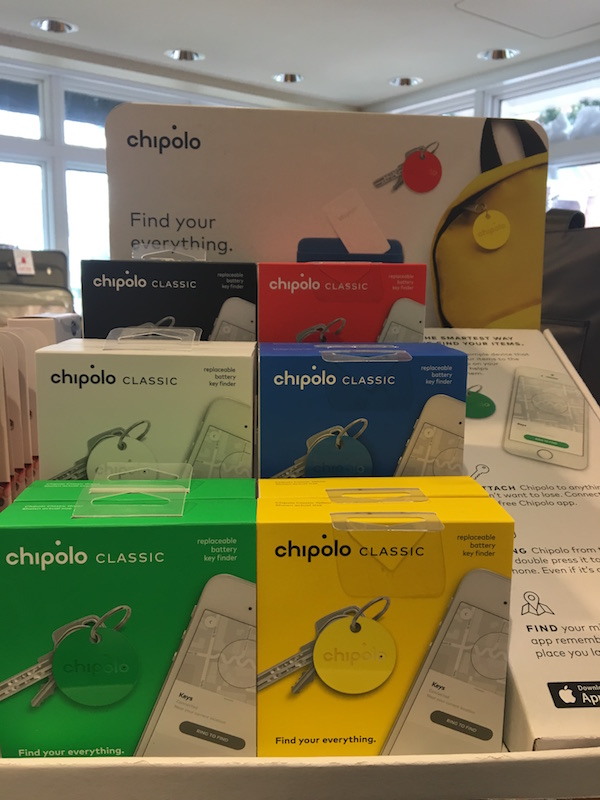
Tuck a Chipolo device into something you own (like the flat, rectangular Chipolo Card into your wallet) or use the hole in the Chipolo Classic and Plus discs, threaded through zipper pulls, onto key chains, or hooked to a collar on a pet or stuffed animal. Then download the app and pair the Bluetooth app to the device.
Use the Chipolo app to ring a Chipolo device attached to your possessions, or double-press a Chipolo device to make your phone ring, even if your phone is set to silent. If your item is too far away to make it ring, check the app for its last location. If it’s still not there, mark it as “lost” in the app, and the phones of any members of Chipolo community of users nearby the item will cause it to ping your app with the newest location.
If you share items (like car keys) with family members or roommates, you can set up one Chipolo in more than one person’s app account. When I was in grad school, we had key hooks set up with spare key sets; if a housemate’s car blocked us in while he was in class, we could easily grab keys, move the car, and get on with the day. Invariably, the one housemate who most often blocked us in would lose his keys in the house and take his spare set, leaving us trapped; Chipolo would have been great back then. (It would also have been great to not have 7 grad students living in one ancient house that resembled where the Addams Family lived, but that’s another blog post.)
Chipolo makes three devices:
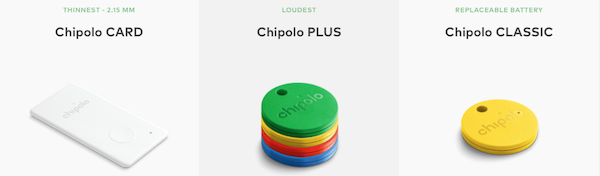
- Chipolo CARD – Thinnest (2.15mm), 1-year life (replaceable at a discount through the Chipolo Renewal Program), white only, perfect for inserting in your wallet
- Chipolo CLASSIC – 9-month battery life (replaceable), 6 bright colors
- Chipolo PLUS – Loudest (100 dB), 1-year life (replaceable at a discount through the Chipolo Renewal Program), 6 bright colors, water-resistant
The Classic and Plus come in green, yellow, red, blue, black, and white. The Chipolo devices are voice-controllable and work with Google Assistant and Amazon Alexa on smart speakers, and on mobile devices when the Google Assistant or Amazon Alexa app installed. Although Chipolo works on both Android and iOS, it is apparently not on speaking terms with Siri except through iOS12’s Shortcuts.
Chipolo’s Card is $35 and the Plus is $25, from Chipolo, Amazon, and luggage stores; the Classic is $30 (but $25 on Amazon). (Disclaimer: the dude in yellow pants from the video is sold separately.)
According to news from January’s Consumer Electronics Show (CES2019), the Plus will be replaced at the end of 2019 with the Chipolo DOT, a golf-ball-shaped device with a built-in LED light and a replaceable battery good for three years, which is expected to have an alarm twice as loud as the Plus.
ORBIT
Orbit is an entire family of Bluetooth trackers in six different formats. They all work via an app and Bluetooth like Tile and Chipolo, and there’s a worldwide (Matrix-y) Orbit Net to help signal boost your search. But most of the family of Orbit devices have two unusual functions: a separation alarm if the device and your phone get too far from one another, and a selfie remote! Yes, you can use your tracker to take selfies and group photos with your camera at a distance and your thumb on the Orbit device.
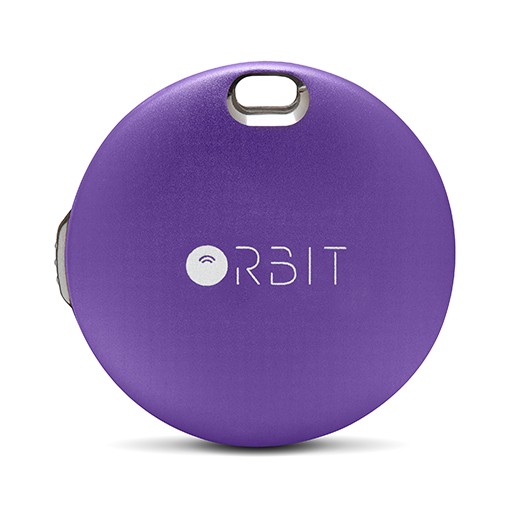
Orbit Keys are the most like other trackers – the device round but a little puffier, more like an Oreo than a poker chip. It has a premium waterproof aluminum casing and comes in 12 different colors (Black, Space Grey, Dark Storm, Silver, Gold, Rose Gold, Shocking Pink, Azure, Candy Red, Emerald Green, Violet, and Sunset Orange). Orbit Keys have replaceable batteries and a Bluetooth range of 100 feet. It retails at Orbit for $29.99, or about 10% less on Amazon. (Note: all prices on the Orbit site default to Australian dollars; use the drop-down to select U.S. prices.)
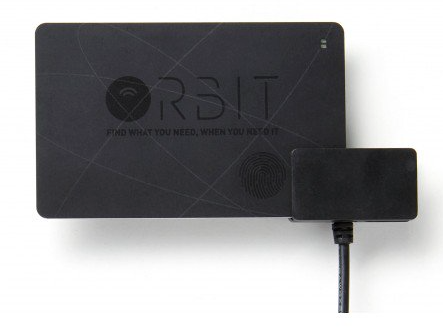
Orbit Card is as thin as a credit card, has a rechargeable battery (with three months between recharging), comes only in black, and costs $39.99 (and $35 at Amazon).
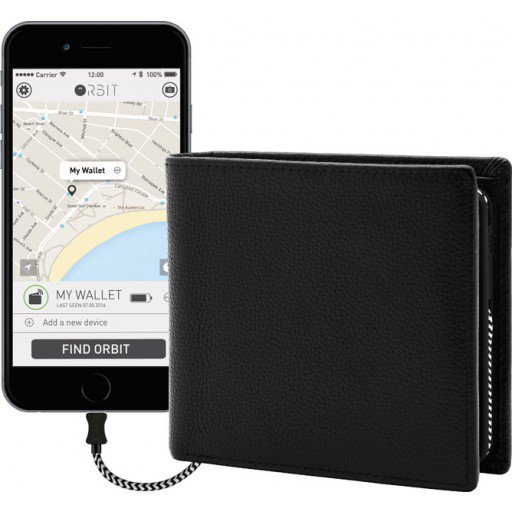
Orbit Wallet is an RFID-blocking, genuine leather wallet with a built-in Orbit tracker. It has a 2800 mAh rechargeable battery and micro-USB and iPhone adapters, and sells for $109 from most retailers. (Oddly, the version sold in the U.S. only comes in black, while the Australian version is Navy Blue.)
Orbit makes three additional products: a Stick-On tracker, similar in size and shape to Orbit Keys, but with an adhesive backing (in black or grey for $24.99) to attach anywhere, and replaceable battery. The Orbit PowerBank has a tracker built into an anodized aluminum power bank charging (in Black, Dark Storm, Silver, or Rose Gold) for $49.99 from most retailers, including Amazon.
The final Orbit product, and the only one that does not operate as a selfie remote, is a secret. Well, a secret until our next post, which covers more trackers, including one specialized lost-and-found type of product. See you next time – if you don’t get lost!
Organizing the Shape of Notebooks to Come: Panobook, Triangle, and Sidekick
Notebooks. Bullet Journals. Diaries. Sketchbooks. Whatever you use, notebooks are essential to capturing words, feelings, designs, and brilliant ideas so they don’t fade away into oblivion.
We’ve talked a lot of notebooks here at Paper Doll HQ, everything from waterproof notebooks to notebooks for left-handers. We’ve discussed various types of hybrid paper/digital notebooks, like Ampad’s Shot Notes and Versa Crossover, TOPS’ Focus Notes, and Evernote’s Smart Notebook by Moleskine. We’ve dug into magnetic notebooks, dry-erase notebooks, and customizable notebooks.
The blog has also looked at the 5 Key Points for Organizing with Notebooks, and in Notions on Notebooks: Organize Your Paper Picks, we delved into all of the considerations to take into account when choosing a notebook solution, including: price, branding, portability, binding, paper quality, lines, and color.
We’ve even looked at the shape of notebooks before when we presented Paper Doll Surveys the (Paper) Landscape. Because, sometimes, you just want something a little different. Today, we’re going to embrace three very different notebook styles.
PANOBOOK
Most notebooks have a portrait orientation. It’s rare, other than with sketchbooks, to see a notebook with a landscape orientation. Panobook, however, takes landscape one step further and delivers a panoramic (landscape-orientation, but wider) notebook designed to sit on your desk (in that bit of space between your abdomen and your keyboard), and eventually, on your bookshelf.
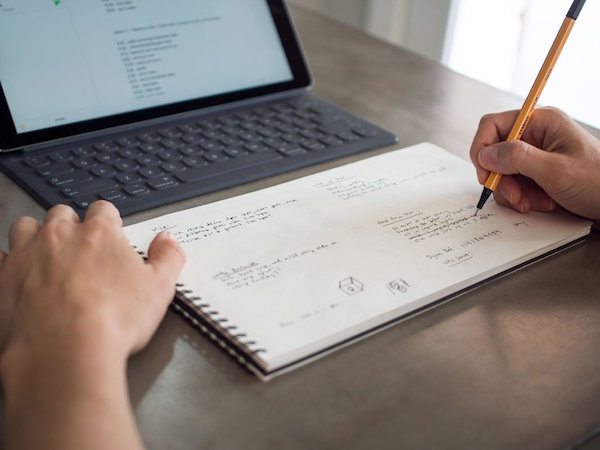
Created by Texas-based Studio Neat, known for a variety of innovative products, from wooden charging docks to cocktail-making tools to video-related apps, Panobook began life as a Kickstarter and quickly gathered community support.
It’s easy to understand why. Depending on the width of your desk, you may or may not have space to the left or right of your body. But your monitor is generally straight in front of you, and so is your keyboard, so unless you have an L-shaped desk, the real estate in front of you is pretty tightly packed.
If you want to take notes, maybe you can scroll (I mean, slide) your body to the left or right, or you may have to swivel in your seat to use the left side of the desk (or the right side, if you’re left-handed) to take notes. Unless your arms are long (and your eyesight so pristine that your monitor is very far away), there’s just not that much writing space in front of you. (And I’m pretty sure you don’t want a notebook poking into your tummy.)
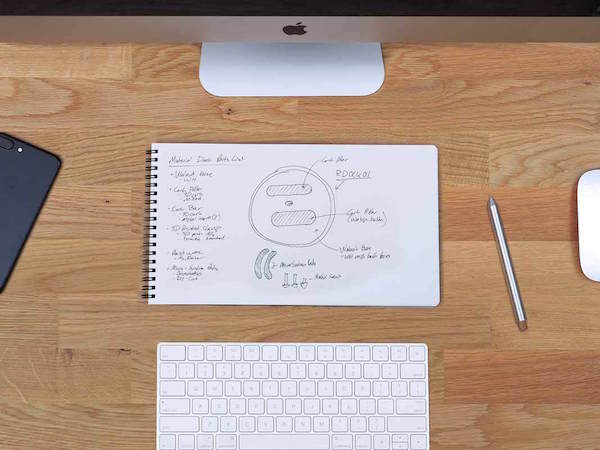
Panobook was created to solve this problem of limited space. The panoramic format, measuring 160 mm x 288 mm (6.53″ x 11.34″) is designed to sit squarely in front of, or if you prefer, behind, your keyboard. (Turned vertically, of course, it can sit to the left or right, if you have that much space. But then you’d probably be using a traditional notebook or legal pad, right?)
Panobook is made of high-quality (Finch Fine Soft White Ultra Smooth 70 lb text-quality) paper and designed to perform with a variety of writing instruments and inks without causing bleed-through or smudging. Both the front and back of Panobook are rigid, made of Neenah LaCrema 617 Charcoal-colored 50 pt black chipboard. It’s all bound with sturdy black Wire-O (12.7 mm (0.5″) diameter), so Panobook will sit flat when opened on your desk. (For some of us, this is a huge deal!)
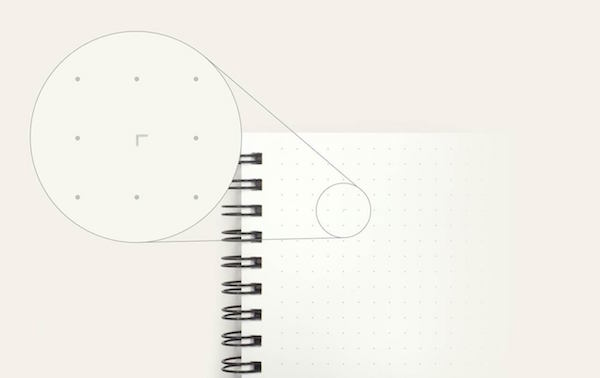
Each notebook contains 50 sheets (100 pages). Instead of being lined or blank, Panobook has a subtle dot pattern with grid spacing at 5 mm (0.20″). And there’s a quirky little twist. There are guide markers on each page that make it easy to quickly draw three rectangles on the page, sized ideally for web designers doing smartphone user interface design or creative types for doing storyboarding. There are also edge guides to divide each page and provide cues for layout. They’re subtle, so if you don’t need them, you might not even notice them.
So what do you do when you finish the notebook? Panobook is designed to let you archive your creations and comes with a slip case in a French Paper Kraft-Tone Standard White 100 lb Cover (for people who know about such things). Write on the spines to catalog your notebooks and keep your collection together on a shelf.
See the Panobook in action:
You can buy Panobook directly from Studio Neat for $20/notebook for one or two; they’re discounted to $19/notebook when you purchase three or more.
TRIANGLE NOTEBOOK
When I first saw the Triangle Notebook last summer, it seemed vaguely familiar. Back in 2012, there were quite a few posts on the design blogs about this product and it was selling at the Metropolitan Museum of Art shop. However, by the time I planned to write about it, the Triangle Notebook had already sold out and been withdrawn from the marketplace. Now it’s back in an improved form.
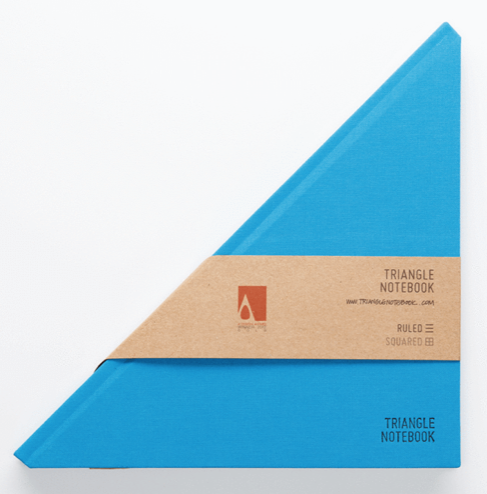
The Triangle Notebooks (both the original and improved versions) were created by Tan Mavitan, a creator based in Istanbul, Turkey and best known for his sculptures. As you can imagine, artists need someplace to collect designs and thoughts, so who better to imagine innovatively designed notebooks?

The Triangle Notebook appears to be just that: When closed, it’s a triangle. Flipped open, the notebook is square. The hard front and back covers and spine are encased in fabric, and the 160 interior (90 gr acid-free paper) sheets are narrowly ruled.
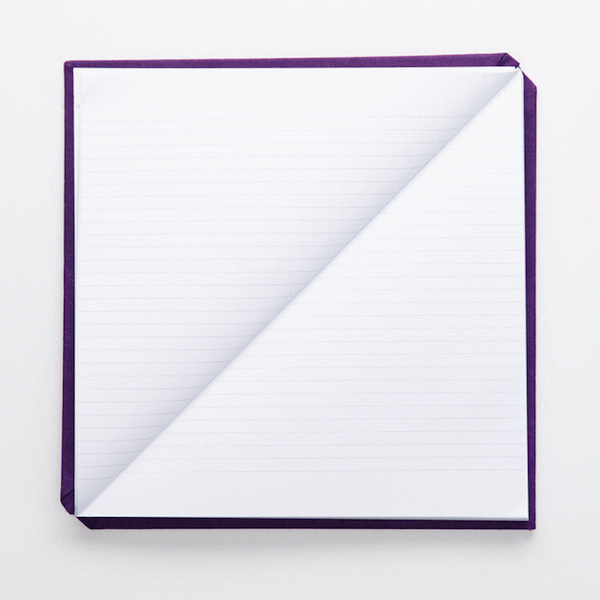
The Triangle Notebook comes in 13 solid colors, including Black, (light) Blue, Dark Green, “Green” (which looks more like chartreuse), Navy Blue, Pink, Purple, Red, Yellow, Dark Amber, Ghost White, and Mustard. There are also three Special Edition Triangle Notebooks: Triangle Thoughts (white with black avante garde style, and Yachtsman Blue (pictured below) and Yachtsman Red. All notebooks are 21 cm x 21 cm (8.26″ x 8.26″).
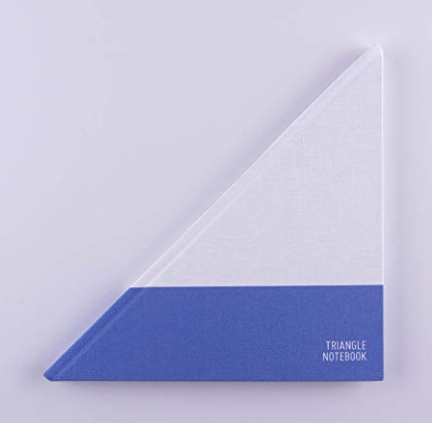
Personally, I find $33 to be a steep price, even for an admittedly lovely hardcover notebook, but my larger concern is that the pages may not lay flat when the notebook is open. Of course, at about 8 1/4″ square, you could place a small book weight in the center without obscuring too much of your content.
All versions of the Triangle Notebook are available from Amazon or from the Tan Mavitan Studio shop. The price in both venues is $33. The Studio often has discount codes listed at the top of the page; as of this writing, WELCOME2019 yields a 20% discount. However, there’s no shipping rate information on the site, and the notebooks do qualify for Amazon Prime two-day shipping, so check both options to see what works best for you.
SIDEKICK NOTEBOOK
Remember what I was saying about real estate on your desk being at a premium? Panobook isn’t the only option for handling this problem creatively. The Sidekick Notebook appears to be a mostly normal (if narrow) portrait-oriented notebook with a bottom margin cut strangely on the diagonal.
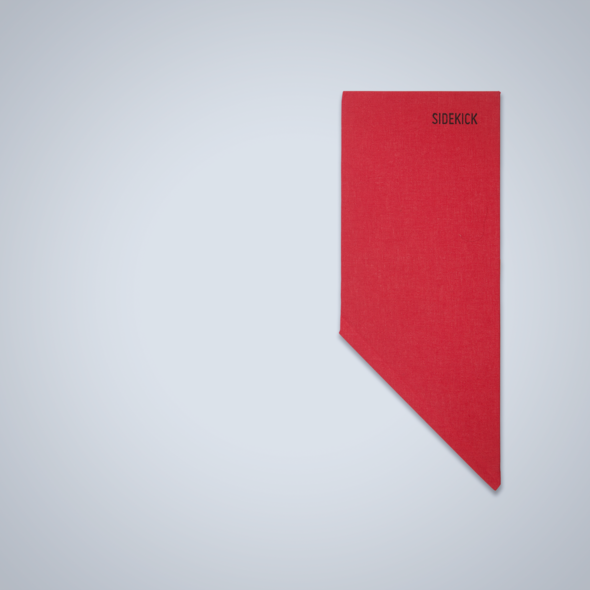
When closed, the Sidekick Notebook measures 21.5 cm x 8.5 cm (8.46″ x 3.34″). But once it’s flipped open, the Sidekick is actually an L-shaped notebook designed to hug the corners of keyboards, iPads/tablets, mousepads, books, and other square-ish items.
Instead of a portrait or landscape orientation, the Sidekick delivers both options simultaneously
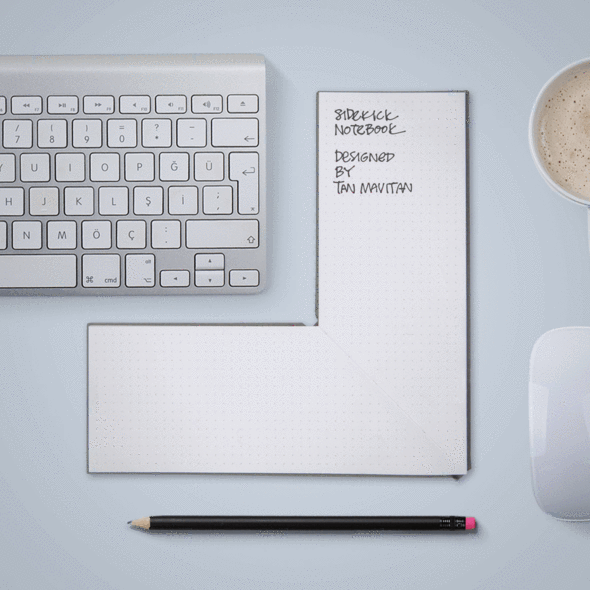
The Sidekick, which comes 160 sheets (of 90 gr acid-free paper) per notebook, has a hard fabric-encased cover and comes in four colors: Red, Black, Navy Blue, and Light Gray. The layout is dot- grid style.
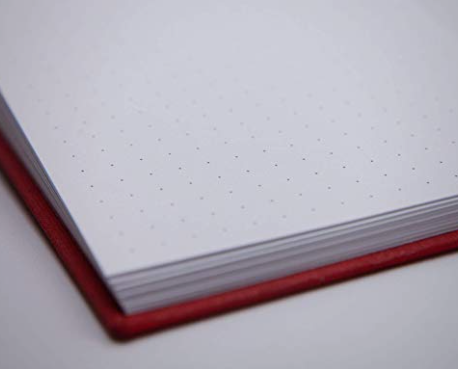
I suspect that the Sidekick won’t serve well for sketching large designs, but with both landscape and portrait writing areas, it’s good for taking notes and creating fiddly, small-detail designs.
The Sidekick is available for $24 per notebook from Amazon and from the Tan Mavitan Studio store, with the same discount and shipping caveats as noted above for the Triangle Notebook.
As always, the content you create and capture in your notebook is more important than the size, shape, color, or design. Sometimes, if a notebook is too spiffy (or expensive), we are reluctant to put anything but our “best” notions in them, which may mean procrastinating on doing anything at all.
If a unique design inspires you, embrace an unusual landscape or angle. Just give yourself permission to create first, and judge your work later.
Is Your Junk Drawer a Drunk Drawer? 3 Steps to An Organized Junk Drawer
[This post originally appeared on January 8, 2019, and has been updated with additional material as of October 4, 2021.]
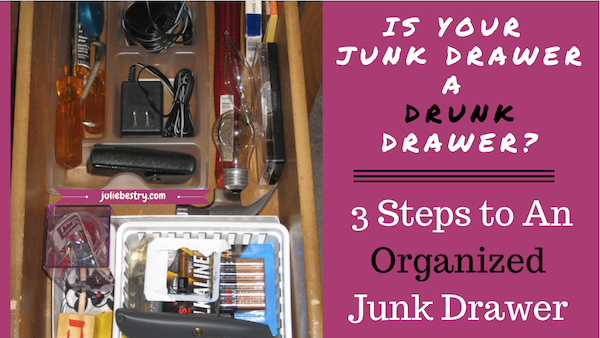
One of my clients refers to her kitchen junk drawer the “Drunk Drawer.”
I don’t drink, so I thought I was missing a pop culture reference. She said that now that we’ve been working together to help her get her life back in order after a few tumultuous years, most of her life is planned out to the nearest detail — organized, categorized, contained. But, on the rare occasion that someone puts a margarita in her hand, especially after a stressful time at work, and she has the opportunity to let her hair down, everything flows freely.
My client notes that with a margarita (or a few) in hand, she says what she wants, she dances to her own drummer, and she gives herself permission to accept that not everything makes sense. Similarly, my client sees that her junk drawer is the one area in her house where she lets the wackiness take over, categories intermingle, and nothing makes sense.
I was reminded of my client’s story when I was approached by Katina Hazimihalis of Dumpsters.com for the Start Fresh: Take the 30-day Decluttering Challenge. (Definitely check it out!) They asked for my advice for Day 7, earmarked as the day of their challenge to “Declutter the Kitchen Junk Drawer.”
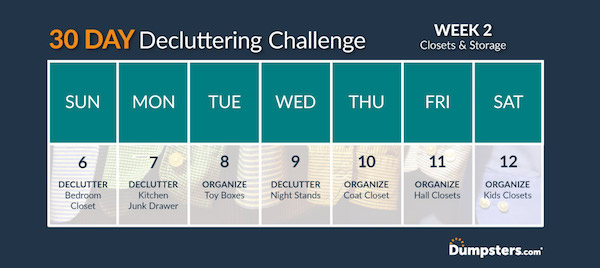 Longtime readers of Paper Doll know that I can never give only a little bit of advice, so there’s a lot that didn’t make it into that post. So, now it’s all here for you!
WHAT’S THE DEAL WITH THE JUNK DRAWER?
Most of the things in a junk drawer aren’t junk. They just tend to be far from their friends in similar categories — the loose change that never makes it to the wallet, the tools that haven’t found their way back to the toolbox, all those random things we want to keep, but we don’t want to take the time to think about where they belong.
Seth Godin says, “The junk drawer is the enemy of understanding.” I have to agree. If you can’t name it, you can’t fathom it.
With paper, “miscellaneous” is the enemy. Is it financial, legal, medical, household, or personal? Is it action paper or reference paper?
With clothing, it’s either underwear, outerwear, or what you wear! You can subdivide into shirts, pants, dresses, etc., and onward to sleeve length or color or season, but there’s still a basic way to start breaking things down.
Categorically, things need to belong somewhere — is it fish or fowl? Animal, vegetable, or mineral? Ginger or Mary Ann? If you can name it, you can put it into place.
Something has to belong somewhere — is it fish or fowl? Animal, vegetable, or mineral? Ginger or Mary Ann? If you can name it, you can put it into place. Share on XBut unlike paper or clothing, not everything has just one home. Some things have a main home and a vacation home — that’s the junk drawer. Yes, you should have a home first aid kit, but it’s helpful to keep a few Band-aids in the kitchen. Yes, most of your office supplies belong in your home office or at your desk, but sometimes you need to grab a highlighter to make sense of the recipe you’re making.
At its best, the household junk drawer can be a miniature subset of categories found around the house. At its worse, however, it’s drunk. It’s sloppy, it makes no sense, and it leads you down a path of regret. Let’s fix that!
WHAT’S THE FIRST STEP TO ORGANIZING A JUNK DRAWER?
Empty that junk drawer. Dump the whole thing out.
It’s rare to hear a professional organizer advise emptying everything out of any space. Usually, we focus on handling one shelf or one category at a time. That’s because the last thing you want to do is get ninety minutes into a closet overhaul and have to pick up your children from school, leaving you with an unusable bedroom and a huge headache.
However, there are two reasons why a complete dump-out makes sense with a drunk junk drawer. First, junk drawers are small. Other than a wallet, purse, or glove compartment, I’d be hard-pressed to find a smaller space that requires concerted attention.
Second, approaching a junk drawer too delicately usually means nothing ever gets completed. People pull out one item at a time and make a few decisions, put a few things back when they decide to keep them, and never quite get around to making decisions about everything. Instead, the best thing to do is to remove everything from the drawer.
Because most junk drawers are in kitchens, what often works is to put a large towel down on the countertop or kitchen table (to prevent scratches). Plop everything down together. Slowly move things to the outer edges of the towel, as if you were searching for a Canadian penny amid all the coins you’ve shaken out of your piggy bank.
Grab the low-hanging fruit first. Remove gum, candy, soy sauce or hot sauce packets, or really anything edible and move to a “snack” box or food storage container on one of the shelves of your kitchen or pantry. Keep sticky, melty, or bug-friendly edibles out of the junk drawer.
Select one item at a time and ask yourself a few questions:
- Is it broken, expired, dried out (like pens or old wipes), or icky? Toss it out!
- Do you ever really use it? If not, you might toss it or donate it.
- Do you find yourself using it often enough that it really needs to be in the kitchen (or whatever room you keep your junk drawer)? If not, move it to a part of the house where it better fits with a category of items already kept elsewhere, like tools or office supplies.
- Do you need this many of whatever it is? Keep your favorite, keep the best, keep the one you’d grab if you needed it. Set the excess free (from the drawer) and either donate or move to a more appropriate place in your home.
Remember, if you don’t use it often, don’t let it take up the valuable prime real estate in your drawer!
NEXT, MAKE SENSE OUT OF THE CATEGORIES
At first glance, it may seem like everything in the junk drawer belongs to the miscellaneous category, but with patience, you’ll start seeing patterns.
Categorize the items into little areas/zones on the counter or table so you get a sense of how many of each thing you have. If you have duplicates, triplicates, or more, you may want to keep one version handy in the drawer, but move the remainder elsewhere, in your own mini-mall of “when I need them” supplies.
Ask yourself, what does the item DO? What is it for? Some category examples:
Batteries — Keep a small supply of the most commonly (and urgently) needed (like AA and AAA). Move the rest, plus whatever other sizes (9 volt, C and D, and smaller batteries for hearing aids, watches, and medical devices) to one divided container (like a tackle box) elsewhere in the house, like in a cabinet or on a shelf in the laundry room, utility room, or basement.
Duplicate keys — Use key cap tags/covers or labels to identify what the keys fit and keep all keys in one container.

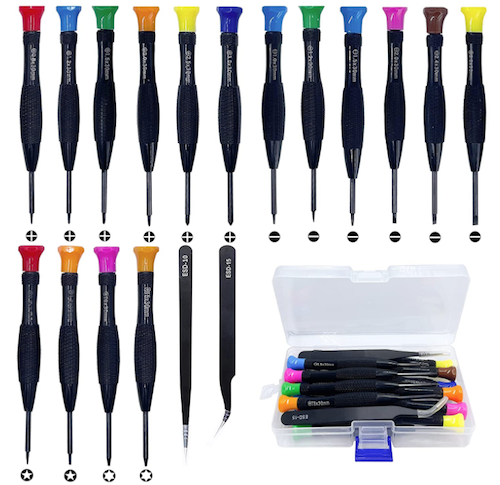
Eyeglass Supplies — like spare reading glasses, mini bottles of eyeglass cleaner, a microfiber cloth, tiny magnetic screwdrivers for repairing glasses
Electronics — like chargers, plugs, adapters, power banks, or any electrical doo-dads that you need to get your hands on regularly. If you’ve got a charger you only use with your old video camera, store it with the camera case, not taking up space in your new-to-sobriety junk drawer.
Loose change — Store your change in a small-to-medium-sized lidded jar, and whenever you come across any loose change in the house, drop it in. When it’s full, take to your bank or donate it to charity. Hate rolling your coins? Hand it off to a responsible ten-year-old, or consider Coinstar.
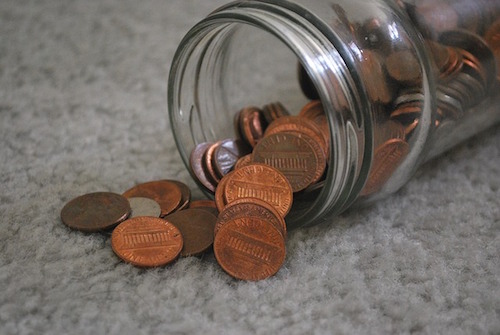
Image by PublicDomainPictures from Pixabay
Many grocery stores and retail lobbies have Coinstar kiosks; you just dump your coins in, and (for a hefty 11.9% fee) the machine will count your money and give you four great alternatives. You can:
- Get back cash in the form of paper money.
- Add cash to your Amazon balance (and learn more about how it works on the Amazon side, if you’d like to shop without using a debit or credit card)
- Buy an eGift card (and bypass the coin-counting fee) — Current retail gift card options include Amazon, Apple, Cabela’s, GameStop, The Gap, Hotels.com, iHop, Krispy Kreme (whoohoo!), Outback, Sephora, Starbucks, and many other retail and dining locations.
- Donate to charity (including the American Red Cross, Children’s Miracle Network Hospitals, Feeding America, the Leukemia & Lymphoma Society, Make-a-Wish, NAACP, the Humane Society, UNICEF, United Way, and the World Wildlife Federation. (See? By organizing, you can do well for yourself and do good for others!)
Apparently you can also purchase Bitcoin through Coinstar, but it’s Paper Doll‘s policy never to recommend options that I can’t explain.
Office supplies — Subdivide this larger category into smaller office supply categories by function:
- things that put stuff together (stapler, tape, binder clips)
- things that pull things apart (scissors, staple remover, X-Acto knife or box cutter), assuming the drawer is safe from the hands of curious little ones
- things with which to write (pens, pencils, highlighters)
- things on which to write (sticky note pads, notepads) — but, in general, try to keep documents and loose papers out of the junk drawer. If you’re keeping takeout menus, coupons, contact info, etc., in that general area, use a file riser and keep a few file folders for the purpose. Paper should live upright, not squished in a tiny drawer.
If you have a home office or homework zone elsewhere in the house, keep these supplies to a minimum in the junk drawer. If you have a kitchen desk (built-in or otherwise), move the office supplies to the desk drawer.
Move any papers out of the drawer and into a desktop file box or a few three-ring binders designated for take-out menus, house-of-worship or homeowner’s association directories, and school reference papers.
Things that burn or light — birthday candles, matches/lighters, flashlights (but, as with sharp doo-dads, do consider whether these need to be kept elsewhere if you have tiny humans in the house)
Tools — People have a habit of getting a tool out of the toolkit for a task and never putting that tool away, tossing it in the junk drawer instead. Homes are much more efficient if you maintain a real toolkit with everything you need to run your house smoothly. (If you have an actual house or do a lot of DIY, get one pre-made; most Grandpas would recommend something by Craftsman. Or assemble one that fits your needs from recommendations online, like this Pioneer Woman post on building a starter tool kit.)
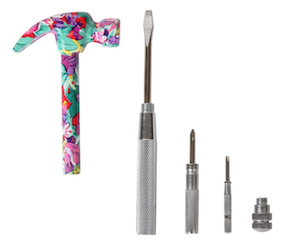
Then, just keep a small section of your junk drawer for a multi-tool (like a Leatherman), a few short-handled Phillips-head and flat-head screwdrivers (and a Robertson* screwdriver, if you’re in Canada), measuring tape, and a small hammer. Because, come on, is your house SO big that walking to the toolkit is going to exhaust you?
Note: If you find yourself doing a lot of tiny repairs, keep all of your tools in your main toolkit, but get any inexpensive hammer with lots of tiny screwdrivers nesting inside.

NOW, CONTAIN YOUR CATEGORIES
Once you divide everything into sub (and sub-sub) categories as described above, you’ll have a sense of what you own, and how much of it you’ve been trying to keep. Now it’s time to get creative and figure out how you are going to make it all fit together.
Divide, contain, and conquer!
But before you start moving things into their new, more organized homes, wipe down the interior of your drawer with a damp cloth.
If more than about one-quarter of the drawer is filled with just one category, then it’s time to move that category out of the junk drawer. Find that category its own dedicated home, in a box or bin that contains all of that category, whether on a shelf in the pantry, laundry room, or wherever is closest to where you use it most often.
Next, use padded, non-slip counter or shelf liners with a bit of rubbery “grip” to cover the bottom of the drawer. This will keep items from sliding around when the drawer opens and closes, and also prevent squeaking.

Use drawer dividers and/or small containers to corral each individual category. There are a variety of options depending on how many items you have in each category, how large they are, and how large the interior of your drawer is (in terms of height and depth). Consider the following options:
Inexpensive, plastic, flat-bottom baskets in multiple lengths/widths. You can arrange them as if you were playing a game of Tetris! (You can use lidded containers, like snap-closed pencil cases designed for elementary school students, but just the tiny added labor of having to open and close lids to retrieve and later put things away might dissuade you from staying organized and lead you to leaving things out on the counter or just tossed in the drawer.)
For example, Mainstays’ line of plastic storage baskets can be found at Walmart, various dollar stores, and online. I particularly like the narrow ones for writing implements, screwdrivers, and scissors.
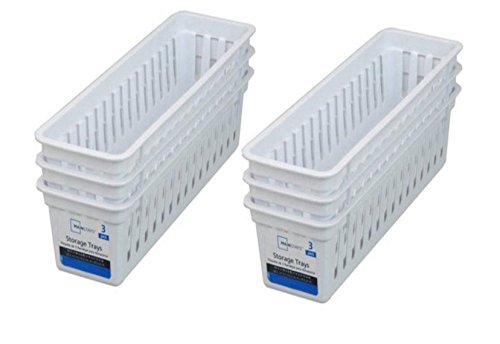
Wider rectangular Mainstay baskets are better for notepads, batteries, and anything where you’re keeping quite a few things grouped together.

There are similar options if you prefer brighter colored baskets, and local or teaching supply stores tend to have cheerier baskets.

Ice cube trays work well for corralling very small items; mini-muffin trays can be great for keeping magnets from getting loose.
Sectioned drawer dividers can be found in a variety of styles in home goods stores. For example:
KD Organizers Deep Drawer Organizing Trays

Container Store Linus 4-Section Drawer Organizer
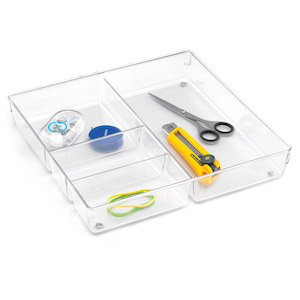 Mesh desk drawer organizers from office supply stores are usually inexpensive, low-key attractive, and work well when you want to buy just one thing. This Rolodex Deep Desk Drawer Organizer is simple, but gets the job done.

Expandable cutlery drawer inserts are also good alternatives; you may already even have extras in the house. Just be sure to use the ones that with rectangular compartments, and not those that are shaped like spoons or forks. Otherwise, most things won’t fit properly.
THE FINAL WORD
An occasional margarita on the beach can be fun, but you wouldn’t want to replace your morning coffee with it. Similarly, you don’t want your junk drawer to get too wild. Make time periodically to maintain your more orderly junk drawer and keep it from becoming a drunk drawer.
*Thanks to my fabulous former professional organizing colleague, Jackie Hollywood Brown (blogger at Canadian Army Wife and virtual assistant extraordinaire at Productively Organized), for introducing me to the concept of those nifty, square Robertson screwdrivers. They rank with Tim Horton’s, poutine, and Kim’s Convenience as just a few of the fabulous things our neighbors to the north enjoy under the radar. Please note that Jackie, herself, serves clients in the U.S. as well, so if you’re in the market for a VA, she’s the bee’s knees!
Disclosure: Some of the links above are affiliate links, and I may get a small remuneration (at no additional cost to you) if you make a purchase after clicking through to the resulting pages. The opinions, as always, are my own. (Seriously, who else would claim them?) For more information regarding how Best Results Organizing handles affiliate links, please see the affiliate section of the site’s Privacy Policy.
Organize Your Life: The Truth About Resolutions, Goals, Habits, and Words of the Year

A new year begins and we give ourselves absolution for everything that has happened previously: our diets, our habits, our clutter. We have this vision that the true version of us isn’t reflected by everything we’ve ever been, but who we could become. Whether that mindset is more a matter of naiveté or positivity doesn’t matter as much as figuring out how we can transform this vision of who we want to be into a reality where we can say, this is who we truly are. So how do we get there?
RESOLUTIONS
New Year’s resolutions tend to come in two flavors. We promise ourselves we will change some behavior or personal trait (quit smoking, swear less, be nicer to our mothers, etc.) or accomplish some personal goal (run a 5K, learn Italian, knit a sweater). Making resolutions dates back ancient times. For example, the Babylonians apparently promised the gods they would return borrowed objects and repay debts. (Perhaps that resolution came from having achieved the prior year’s resolution to declutter, during which they found all the things they’d borrowed?)
In the United States, the ritual of making resolutions has actually increased over time, from about 25% of the population to over 40%. The biggest advantage I see in making resolutions is that it allows us to start the new year in a motivated, positive way – generally, at a time when the weather, our weights, our checking accounts, and our moods are fairly frightful. The disadvantage, however, is that most of us abandon our resolutions somewhere between February and June.
Resolutions tend to fizzle because of a few reasons: the real world (that is, the same things that kept us from maintaining our resolve last year) gets in the way, we haven’t identified working strategies for achieving our resolutions, or we have resolved to do something because we think we should rather than because we really want to do it.
If you’d like some inspiration for developing new or different resolutions, the Daring to Live Fully blog offers 29 New Year’s Resolution Ideas that go beyond the typical, with some motivational notions for volunteering, being more conscientious, and bringing more peace into your life. Lifehack has 50 New Year’s Resolution Ideas and How To Achieve Each of Them to help get you started. From adopting a pet to getting over an ex, there are enough choices to help you make this next year a little more interesting.
GOALS AND HABITS
Goals are the less shiny versions of resolutions. Nobody announces “New Year’s Goals” with a flourish or breathlessly asks celebrities about their “New Year’s Habits.” But goals provide a big-picture framework, and habits develop the muscles to accomplish those goals.
SMART goals are popular because they identify where resolutions and plans have might otherwise fail without precautions. SMART goals are supposed to be:
- Specific (What are you going to do? Use action verbs!)
- Measurable (What metrics will you use to show you’ve done what you said you’d do?)
- Achievable (Is this a practical goal? Is it realistic?)
- Relevant (Does this goal make sense for your life, family, or business?)
- Time-based (When will you start? When will you do the action? When will you repeat it? When will you finish? Remember, “Someday” is not a day on the calendar!)
You may want to lose weight, pay off debt, find a significant other, or grow your business, but the way to get there can’t be vague. Make sure your goals spell out what you’re going to do, how you’re going to do it, and how you’re going to measure your success.
Goals set the rules and create the game plan, but habits are how you get to the finish line. The reason you lose your keys all the time is because you don’t have a habit of always putting your keys in the same place every time you come home. (Or, I guess, you’ve got a hole in your pocket.)
Habits are settled or repeated tendencies. Bad habits become like second nature (which makes them hard to break). Luckily, good habits are hard to break, too! That means that if you can get in the habit, so to speak, repeating positive, healthy tasks, you stand a much better chance of achieving your goals.
Two superior resources for understanding how habits work, and how you can put them to use in your life, are:

The Power of Habit: Why We Do What We Do in Life and Business – This eminently readable modern classic walks you through the research and the practical ways you can use habits to strengthen the chance you’ll achieve your goals. The essence is that every habit has a cue-routine-reward loop, and if you can modify or enhance your routine based on a cue (depending on whether you want to cut out the bad stuff or do more of the good stuff), you can make an improvement.
Duhigg also talks about keystone habits, a notion that if we start or modify a habit and regularly participate, there’s a halo effect. Families who have a habit of eating together, for example, find that their kids do better in school and have more confidence. Making your bed every day allegedly correlates with being more productive, getting better at sticking to a budget, and having a greater sense of well-being.


WORDS, WORDS, WORDS
Like New Year’s Eve parties themselves, resolutions are formal, fizzy, and soon forgotten. Goals and habits are the workhorses of achievement. But what if you’re looking to change your life in a more flexible, unrestricted way?
In the past decade, a different approach to organizing the year began to take hold. The concept? The Word of the Year! Ta Da!
The idea is that rather than defining in advance what you will accomplish or envisioning the specifics of how you will change your life, the word of the year is more fluid. You identify a word that encapsulates the emotional heft of what you want your year to look and feel like, and you use the word to help you focus your efforts. This word can be serious or lighthearted, as long as it focuses on what you want to do, have, or be. In this regard, I suspect Steve Martin’s grandmother was ahead of the curve.
If your word is “delight” and you have to make a decision regarding which of two options to choose, you could ask yourself, will this delight me? If you select the word “contribute” and you recognize yourself spending a little too much time on social media, always having your focus word in the back of your mind (or on the front of your fridge) may prompt you to see how you can better use your time (or your mind) to contribute in a way that resonates for you.
There are a few ways to identify your word of the year. You could ask yourself, “What was I missing last year? What would have given me strength or self-confidence or a better grip on my emotional well-being?”
Alternatively, you could start with your goal in mind and think of words that resonate based on that. Let’s say you want to earn more money and keep within your budget. For some people, that straightforward goal yields the desired structure; for others (those who find the word “structure” to be a bit depressing or at least constricting), selecting a word that encapsulates those goals, like “abundance,” might be just the ticket.
Of course, you don’t have to come up with your word on your own, as there are many bloggers who have created lists from which to choose:
Word of the Year Ideas for 2019 – The Goal Chaser site offers up 300+ enticing word options, and blogger Gem even shares How to Make Your “Word of the Year” Really Stick.
Word of the Year Discovery Tool from superstar coach Christine Kane isn’t merely a list of words (though there’s a healthy bounty of those). The downloadable PDF also explains how intention is the key to using these kinds of focus words and warns about the pitfalls that can sink the success of your word of the year. The tool also includes some worksheets for developing your own way of identifying the right word.
Inc. Magazine has 5 Tips for Choosing Your Word of the Year, while Boston lifestyle blogger Elisabeth McKnight shares her own experiences with selecting words of the years and suggests 100 words from which you might choose.
But Paper Doll, you ask, what if one word isn’t enough?!
We’ve got you covered.
Mike Vardy, The Productivityist, picks three words rather than one and in doing so has motivated many people to expand their approach to focus words. Here are his 2018, 2017, and 2016 posts about his trio of words. (Mike also has theme-word months, so he’s the king of motivational focus words!)
As a result of Mike’s encouragement, I selected “Love, Learn, Launch” as my three words back in 2017, and it struck some interesting chords throughout that year.
Media guru Chris Brogan has been selecting three words for more than a decade and details his process in 3 Words 2018. Meanwhile, Gem of the Goal Chaser site mentioned above has actually picked four words for 2019. (Eventually, someone’s going to pick an entire dictionary!)
MANTRAS
Finally, there’s a plan for people who fall in the middle, those for whom resolutions or goals are too structured for what they want to achieve, but single words (or even trios) are too abstract. For them, a Mantra of the Year may be ideal.
With a mantra, a repeated statement or slogan of a more spiritual (or at least inspirational) bent, you can self-soothe, motivate, and have a clearer sense of the vision you want your actions to reflect.
12 Mantras for the New Year from Mantra Jewelry’s blog has quite a few that provide a breath of fresh air, and I quite like, “I trust in new beginnings” and “I breathe in calmness, I breathe out stress.”
Positive Mantras to Live By For a “New Year, New You” from Cloud 9 Living has a variety of mantras at the end of the article, but “Appreciate More, Complain Less” seems like a worthy and inspirational focus that echoes the attitude of gratitude so often recommended for good mental health.
15 Self-Care Mantras for 2019 That Will Help You Be Kinder To Yourself from Bustle Magazine looks at the new year mantra as a way to combat the negativity that seems to permeate everything from politics to social media to the line at the coffee shop. In some ways, mantras like “I am free to be myself” and “I know who I am and I am enough” seem to be the opposite of the resolutions and goals designed to change who we are. Meanwhile, “With this breath, I release anything that no longer serves me” might be the perfect mantra to pair with all those resolutions and goals helping to break bad habits.
So, what approach appeals to you? Do you make resolutions? Do you have a word or mantra? (To be honest, I’m still working on mine for 2019.)
Dear readers, whether you choose a resolution, a goal (with habits), a word, many words, or a mantra, or you decide that you are nifty just the way you are, I wish you a happy and healthy year!


Follow Me