Archive for ‘Paper Organizing’ Category
Review & Renew for 2022: Resolutions, Goals, and Words of the Year
Snuggled in this week, tucked away between two major holidays, it’s tempting to rush to end the year with some sense of completion on those unfinished tasks. As much as we’d like to be mindfully in the present, we’re zipping along, trying to impose control in an era when there’s very little control to be had.
So today, I propose you take a breather. Bask in the quiet glow before we rush headlong into the future. Take time to do a little review of the past year so you can feel renewed, and if not in control, at least in awareness, for 2022.
TAKE A BACKWARD GLANCE
The best way to grow is to built on one’s successes. Grab a cup of cocoa (or whatever makes you feel alert but cozy) and settle in someplace comfy.
Pull out your calendar, whether it’s digital or paper bound, and start taking note of your successes, achievements, and delights. Personally, I think it’s best to keep a running list on paper (I mean, I am Paper Doll, after all), but if you prefer a spreadsheet, Word doc, or a note in Evernote, by all means, go with what feels comfy.
Look Beyond the Obvious
You can definitely list big accolades, awards, or milestones. Sure, mark down when you hit your revenue goal or finished that marathon. But look at those subtle successes, too.
What did you stick with, even when it was hard? Success isn’t always marked by what you attain, but how you persevere!
What did you try, even though it was out of your comfort zone? Succeeding at what you’re good at is worthy of pride, but stepping up to do something scary but potentially rewarding? That’s magical. (For more on that, check out my Sara Skillen’s Organizing and Big Scary Goals: Working With Discomfort and Doubt To Create Real Life Order.)
What surprisingly good things occurred that you had never even thought to imagine in the first place?
What dreams came true? Where did you decide to make new dreams when the old ones proved untenable (due to life or world circumstances)?
Janet Barclay’s excellent Set Your Compass to Reach Your Goals for the New Year introduced me to the free, downloadable YearCompass, an international marvel. Even if you get nothing else from today’s post, I encourage you to download this fillable, printable PDF and explore the questions. Examine your past year and get guidance for going forward.
I’m working my way through the digital version now, and it’s providing more insight than I’ve received from any prior annual review.
If you prefer an even deeper dive (and are willing to use up lots of Post-its®), try doing a life audit, examining the past, present, and future of your life. Or go shallower, cut to the chase, and stick to Apartment Therapy’s 6 Smart Questions to Ask Yourself at the End of the Year.
Not everyone can weave a tapestry of the past year out of the blocks of a calendar, so this is just a start. If you journal, flip through the pages to look for highlights, and recognize that bad days are actually achievements. You got through them and made it through the other side. (You’re here to read this, right?)
Surf through your social media posts. You may be surprised by what you find on LinkedIn or Facebook (or, yes, TikTok or Instagram). Look for a sense of all the big and little ways you did your thing, or helped others do their things! In particular, look at places where you were tagged for shoutouts and gratitude. There are lots of people always touting having gratitude, but sometimes it’s nice to notice and remember when you did something worthy of someone else’s gratitude or kudos.
Ah, kudos! Speaking of which, definitely check your Success Folder! Don’t have one? Create one! Actually, create two.
Have a digital success folder where you put emails that praise or thank you, or otherwise give you warm fuzzies. While you may get fewer and fewer things by mail, have a paper folder for collecting such tangible high-fives. On days where you are down on yourself, feel under-appreciated, or are disappointed, pulling out something that reminds you that “good stuff happens” and that you’re part of that chain of events is going to lift your spirits.
Engage With Your Village
Raising a child isn’t the only thing that takes a village; count on others to help lift your spirits and give you insight.
Talk to your people. We’re not always good at keeping formal records of our successes, but our friends and loved ones automatically catalog the snazzy things about us. Once, a friend was entering the workforce for the first time in decades, and was bemoaning the fact that she had no marketable skills. But because I’d known her (just about) forever, I was able to recite everything from events she’d run as a volunteer coordinator to the time she caught a PTA high muckety-muck embezzling! She sure-as-heck had marketable skills, but couldn’t immediately see them in herself, let alone recognize her own magnificence.
Want to increase the magic? Recognize your own successes, but also pay attention to your friends’ and colleagues’ achievements. Share their blog posts on your social platforms instead of just clicking “like.” Promote their professional highlights. And send them emails and even write to them the old-fashioned way so they have something to put in their own Success Folders!
MOVING FORWARD: TRIED AND TRUE FOR ’22
Armed with insight into what we achieved (and what we wish we had tried) in the prior year, we can approach the new year. First, we’ll look at the classic approaches, but we’ll also examine some exciting new ways to support our dreams as we move forward into 2022, even if it’s about to be “COVID’s junior year.”
Resolve to Evolve
In general, New Year’s resolutions come in two flavors, either positive or negative.
With positive resolutions, we say we’re going to proactively do something. Maybe we’ll do Couch-to-5K or learn a language. For negative resolutions, we plan to eliminate some aspect of our lives that we know is dragging us down, so we vow to go on a diet or stop hate-watching The Bachelorette.
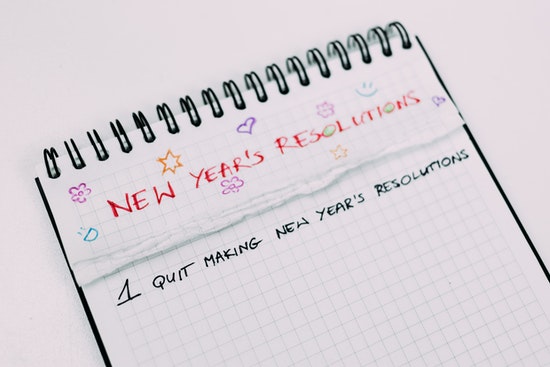
Photo by freestocks.org from Pexels
Resolutions date back many, many centuries. Four thousand years ago, the Babylonians promised the gods they would return borrowed objects and repay outstanding debts. (If only the Babylonians had had professional organizers to help them declutter and locate the borrowed stuff and couch cushion money.)
The Romans promised their two-faced god Janus, who looked simultaneously backward and to the future, that they’d be good in the year to come. And for several hundred years, Christian watch night services have included traditions of reflecting on the prior year and making resolutions for the one to come.
In the United States, resolution-making continues to increase; up to 40% of the population makes a New Year’s resolution. On the up-side, these resolutions help us start the new year in a motivated, positive way – right when the weather, the amount of sunlight, our bank balances, and our moods are at an annual low-ebb. December 31st is when we feel our age and recognize the passing of another year of unfulfilled potential; resolutions rev our engines.
On the down-side, the vast majority of people abandon their resolutions before February. Resolutions fizzle for three reasons:
- our real lives get in the way (year after year after year)
- our resolutions may be things we’re supposed to do, but aren’t passionate about
- we haven’t identified working strategies for achieving our resolutions
So, if you are going to make a resolution, make sure you’re picking things that excite and challenge you, but also figure out how to eliminate the past obstacles and ease your path.
For inspiration on developing new or different resolutions, consider some of the following:
Good Housekeeping‘s 60 Achievable New Year’s Resolutions for Healthier and Happier Living 2022 has less all-encompassing, more bit-sized resolutions, like “Prioritize age-appropriate health screenings,” “eat more vegetables,” and “listen to novels while you work out.
The Pioneer Woman has 40 New Year’s Resolution Ideas to Start 2022 Right, with some fun, sociable ideas like “give more compliments,” “send more cards,” and “make time to spend with family and friends.”
And Antimaximalist’s whopping 67 New Year’s Resolutions for 2022 prioritizes hopeful notions like, “Don’t settle for less than you deserve” and “Be less afraid of making mistakes.”
You can resolve to do things that are fun, too. Gretchen Rubin made a list of 21 things she wanted to do in 2021:
Here’s my 21 for 2021 list. I got a fair number of things crossed off my list. Now I’m writing my 22 for 2022 list—and deciding what items to carry over from 2021. pic.twitter.com/KmdMXUBAPu
— Gretchen Rubin (@gretchenrubin) December 21, 2021
and has a PDF to help you track your 22 in ’22.
Embrace Good Goals and Happy Habits
So, how can you supercharge your resolutions? Maybe stop thinking of them as big, sparkly things you resolve to do (with the unspoken societal expectation that it’ll all fall through), and consider the less flashy younger siblings of resolutions, ye old goals and habits.
Think of goals as providing the big-picture framework, the big city markers on the map; habits are the turn-by-turn directions to get you where you want to go.
SMART goals are popular because they identify where resolutions and plans often fail.
- Specific (What are you going to do? Use action verbs! Where and when are you going to put these efforts into effect? With whose help or partnership will you get there?)
- Measurable (What metrics will you use to show you’ve done what you said you’d do? How many miles per day? How many lessons per week? How many blocks of time for achieving specific tasks?)
- Achievable (Is this a practical goal? Is it realistic?)
- Relevant (Does this goal make sense for your life, family, or business?)
- Time-based (When will you start? When will you perform the action? When will you repeat it? When will you finish? Remember, “Someday” is not a day on the calendar!)
And Paper Doll readers know that I prefer SMARTY goals, where that Y reflects the idea that these are goals that are meaningful to YOU, not your mother-in-law, boss, or favorite Instagram influencer.
I prefer SMARTY goals, where that Y reflects the idea that these are goals that are meaningful to YOU, not your mother-in-law, boss, or favorite Instagram influencer. Share on XWhether you want to lose weight, pay off debt, find a significant other, or grow your business, the goal can’t just be a vague “what I want” without any guideposts. Make sure your goals spell out what you’re going to do, how you’re going to do it, and how you’re going to measure your success.
So, if your goals set the rules and create the game plan, habits are how you get to the finish line.
If your goal is to get to work on time every day, but you often find yourself searching the house for your keys, wallet, phone, and charger, then you’ll want to develop a habit of assigning a “home” and always putting those items in the home upon returning to your house, before you even take off your shoes. If your goal is to be prepared at tax time, then your habits involve doing weekly record-keeping and filing, and not waiting until April 12th to get started.
Habits are your settled or repeated tendencies. Sure, bad habits become second nature, making them hard to break, but good habits are hard to break, too! So, if you can get in the habit of repeating positive, life-affirming tasks, you stand a much better chance of achieving your goals.
I recommend a few superior books for understanding how habits work, and how you can put them to use in your life. Both are becoming modern classics.

The Power of Habit: Why We Do What We Do in Life and Business by Charles Duhigg walks you through the research and the practical ways you can use habits to improve the likelihood of achieving your goals. The central concept is that every habit has a cue-routine-reward loop. Modify or enhance your routine based on an environmental cue (depending on whether you want to cut out the bad stuff or do more of the good stuff), and you can inch closer to your goals.
Duhigg also talks about the halo effect of keystone habits, where starting or modifying certain habits will have a knock-on effect, improving other areas of your life. Kids whose families have a habit of eating together do better in school and have more confidence.
Yes, it’s probably true that families who eat together are less dysfunctional in the first place, and likely include parents with more flexible jobs that allow them to be home at the same time. Correlation is not causation, but on the off chance that making the effort to open your mail and file your papers helps you pay bills on time and get out of debt faster, or making your bed makes you more productive, why not try?


TAKE A DIFFERENT VIEW FOR ’22
So, resolutions are like New Year’s Eve champagne; fizzy, but they soon go flat. Goals and habits are the workhorses of achievement, but they’re not exactly sexy. Sometimes, our behaviors are less of an obstacle than our attitudes, and when we upgrade our attitudes, our actions fall in line. It’s important to know what you need, and what will inspire you.
There are three popular styles of approaching your upcoming year with a new mindset.
Words Matter
Have you heard about developing a Word of the Year?
Instead of a big, formal plan, identify a word (or phrase) that encapsulates the emotional heft of what you want your year to look and feel like, and you use the word to help you focus your efforts.
It can be a noun, verb, or adjective. I was going to joke that it probably shouldn’t be an interjection, but there are many articles that advise trying to live your life such that if it isn’t a “hell, yeah!” then it’s a no.
(That said, your word of the year probably shouldn’t be a conjunction.)
When in doubt, ask yourself “Does this event/date/person/purchase align with my word of the year?”
This word can be serious or lighthearted, as long as it focuses on what you want to do, have, or be. But the meaning of the word should resonate with you.
One year, I picked the word “resilience,” but then found that so many things happened in that year from which I had to bounce back! If my word for that year had been “energize” or “cultivate” or whatnot, I might not have felt like a cloud was hanging over me. And I started 2020 with a word I liked so much that I turned it into a mock ad campaign, “Ample: it’s not just for bosoms anymore!” But then everyone’s 2020 was amply filled in ways that did not charm or delight.
Speaking of delight, which was my 2021 word, it hit the perfect note. Yes, the world was still wackadoodle this year, but somehow I found small delights in positive actions and happenings, and when I asked myself, “Will doing this delight me (or someone I care about)?” it really helped guide my decisions!

Photo by Brett Jordan on Unsplash
To identify your word of the year, go in one of two directions.
- Look back on 2021 and ask yourself, “What do I need more of? What was I missing last year? What would have given me strength or self-confidence or a better grip on my emotional well-being?” What word keeps coming up?
- Look forward, and start with (what would normally be) your resolutions or goals in mind. By the end of 2022, what word would you like to have had resonate with you? Structure? Boundaries? Or perhaps Freedom or (Financial) Independence?
Feeling the need for a thesaurus (or, as my high school boyfriend tried to tell me it was alternatively called, a synonymograph)? See if any words or concepts from the following sources work for you:
Four Steps to Your 2022 Word of the Year from the Messy Bun Mafia
How to Pick One Word for the Year 2022 from Midlife Rambler
Tips for Choosing Your Word of the Year from MountainModernLife.com
Word of the Year Ideas for a Better 2022 from The Goal Chaser (and her How to Make Your “Word of the Year” Really Stick)
Do More Words Mean More Success?
One word isn’t always enough. Some people need a word for themselves, a word for their family, and a word for their businesses. Others need one word each for mind, body, and spirit. Who are we to judge?
Strategist Chris Brogan has been selecting three words for more than a decade. He usually posts his words on New Year’s Day, so until then, you can look at his 2021 post with links to his three words each year going back to 2006.
Your Word Doesn’t Have to Make Sense to Anyone Else
Your word of the year doesn’t have to be in English.
Recently, I was reading an article about how an independent publisher had been told she needed to come up with a name for her publishing enterprise, and she picked bramgioia, Italian for “yearning for joy.” If your goal for next year is to be less of a mouse and more of a lion, chutzpah, Yiddish for “extreme self-confidence or audacity” might be the word for you.
You could even pick a code word. Through a sequence of events and nicknames better forgotten, a high school friend and I came to refer to her crush as “Crater Lake, Oregon.” Nobody needs to know what your code word really means. The point is that you know, and every time you say it, write it, or see it, it will motivate you in the direction you choose.
Om, Om, Oh man, I need a Mantra!
Is a resolution too rigid, a goal too structured, and a single word too abstract? Maybe you need a Mantra of the Year. Mantras can be affirmations or quotes you want to embody. Mike Vardy calls it his Annual Axiom. (For 2021, he picked “Whatever it takes, no matter what.”)
A mantra, whether it’s a short quote, a repeated statement, or a slogan, has an inspirational aspect. Your mantra can help you self-soothe, motivate you, and provide an even clearer sense of the vision you want your actions to reflect.
Your mantra can be as simple as “No drama” or it can be as challenging as one that I’ve considered for myself, “I will be kind, even when the impulse is to be right.”
Your mantra can be as simple as *No drama* or it can be as challenging as one that I've considered for myself, *I will be kind, even when the impulse is to be right.* Share on XAnother format is to choose some variation on “More X, less Z” like “More extraordinary, less ordinary,” or “Move more, sit less” or “Appreciate more, complain less.”
For some inspiration, check out 10 Mantras for a More Meaningful New Year from Huffington Post. Mantras for 2022 from the UK’s Mantra Jewellery’s blog has some visually stunning options.
I’VE GOT MY WORD(S). NOW WHAT?
Keep your resolutions, your goals, your habits, your words, or your mantras in the forefront of your mind until you know them by heart. How?
Set a reminder on your phone to pop up with your mantra every three hours during the “awake” part of your day.
Post your word, Ted Lasso-style, all over your workplace or house, from signs over the office doorway to sticky notes on the bathroom mirror.
Create a vision board. From Oprah Daily to Jack Canfield advice abounds!
Recite your resolution, word or mantra every night before you go to sleep and upon waking. (If necessary, put a sticky note on your phone so you’re prompted when your alarm goes off.)
Do you make resolutions? Set annual goals? Have a word or mantra?
Dear readers, whether you choose a resolution, a goal (with habits), a word (in whatever language you choose) or a mantra, I think you’re spiffy just the way you are.
I wish you a happy, healthy, and organized 2022!
Paper Doll’s Holiday Gift List: Education, Entertainment, and Adventure

A good gift should be so much more than “stuff” that you end up having to dust or dry-clean, store or maintain. Over the past weeks, we’ve looked at clutter-free gifts in a variety of categories.
Holiday Gift List: The Useful and the Beautiful looked at practical gifts to help your recipients achieve their goals, be more productive, and get (and stay) organized. We also talked about how beautiful gifts uplift, support, stir action, lower blood pressure, and drive delight.
Paper Doll’s Holiday Gift List: Warm Their Hearts and Fill Their Tummies focused on two particularly categories, those dealing with yesteryear (family genealogy and legacy) and those to enhance the here and now. (Be forewarned, we’re not done with gifts of food, glorious food!)
Today, we’ll close out the gift ideas with gifts of experiences. Many researchers, including Thomas Gilovich, the Irene Blecker Rosenfeld Professor of Psychology at Cornell University, have found that the enjoyment we get from experiential purchases far exceeds that of tangible items.
First, there’s the anticipatory aspect. When we think about what we will be experiencing, our imaginations fill in the details in a way that makes thinking about tangible items pale in comparison. While this has mainly been studied in terms of things we buy for ourselves, it stands to reason that things given as experiential gifts are endowed with that same anticipatory delight between when we get them and when we get to use them.
But there’s also a retrospective aspect. When we compare our “stuff” to someone else’s “stuff” (my iPad to your iPad, or even to your Surface; my sports car to your sports car) there’s little joy to be had. If what I have is inferior to what you have, it lessens how I feel about what I have, even if I loved mine before comparing it with yours. And if mine is better than yours, well, the excitement doesn’t last. It’s just a thing. And very few tangible things retain their charm after weeks or months or years.
However, it’s almost impossible to compare different experiences (yours vs. someone else’s) because there are so many relative differences. You can, at best, compare your memories of your trip to Italy with someone else’s memories of their own vacation, whether to the same places in Italy, or perhaps to other locale altogether, but you’re far less likely to compare and feel your own experience to be unfavorable. Experiences, like the one who does the experiencing, are unique.
So, what experiential gifts can you provide to those on your gift list?
EDUCATION
The alternatives for gifts of education are almost endless, and you can choose experiences that benefit either the body or the mind (or both).
For example, I love Jane Austen. I’ve read all of the novels many, many times, and I’ve read many books about the author, herself, and others offering up critical analyses of her writing. I can’t get enough. So, for my birthday this year, at the start of what I’ve been hearing called “the sophomore year of the pandemic,” my friend got me The Great Courses‘ set of lectures on The Life and Works of Jane Austen.
It was just what I needed to burrow in for those last few weeks until spring (and vaccinations) had finally sprung. Instead of feeling like someone seeking one more Netflix show to binge, I felt like a college student (and trust me, for Paper Doll, that is a very good thing).
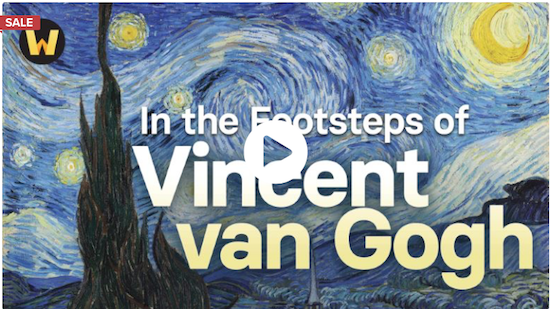
Options from The Great Courses include: economics and finance, history, literature and language, philosophy and religion, music and fine arts, mathematics, and so much more. You can learn Spanish or how to draw, take a grand tour of England, Scotland, and Wales, or understand behavioral economics (and then please, try to explain it to me). From Dog Training 101 to Law Training for Everyone: Constitutional Law, you should be able to delight every adult on your gift list.
The Great Courses does offer their Programs for Young Learners courses, but these tend to be focused on high-school-aged learners; unless you’ve got a Young Sheldon on your list, get the young’uns the games and toys they’ve been craving. (Clutter-free gifts have less meaning to tiny humans!)
If you’d like a sample of the kinds of material you can find in The Great Courses, their Wondrium YouTube channel (formerly Great Choices Plus) offers free video tastes.
Courses are offered on DVD sets and online as “instant” audio or video, and are priced anywhere from $29.95 upward. (This week, all courses are on sale and there’s a 15%-off coupon code: K5H9.)
Another popular choice of course purveyor, one with a less academic bent, is Master Class. It’s hard to surf anywhere on social media or YouTube without seeing a promotion with Ron Howard, Alicia Keys, Neil deGrasse Tyson, or Neil Gaiman. However, in case you’re unfamiliar, MasterClass is a streaming platform where your recipients (or you!) can watch or listen to hundreds of video lessons taught by 100+ of the world’s best in their fields.
Categories of courses include business and leadership, filmmaking and screenwriting, acting, photography, cooking, music, sports, science and technology, government, and more. These classes are less like academic coursework and more like getting to sit in on a series of mentoring classes with recognized experts.
Because these are digital/video lessons, the material is available whenever your giftee has time to watch, and wherever it’s convenient for them: smartphone in the carpool lane, tablet while cooking, computer during a lunch break, or via Apple TV and FireTV streaming media players.
Master Class offers three annual plans: Standard, Plus, or Premium (at $30, $40, and $46/month, respectively, though right now they’re offering a 2-for-1 holiday special). The main difference is the number of devices you can be using simultaneously (1, 2, or 6, respectively), and if you’re using the Standard plan, you can’t download the courses for offline viewing.
So, whether someone on your list wants to learn mindfulness from Jon Kabat-Zinn or philosophy from Cornel West, cooking from Gordon Ramsay or how to hit a high note from Christina Aguilera, there’s something to excite and charm.
But I get it. Not everyone wants to feel like they’re sitting in the front row of a college seminar. Some want the experience of learning by doing. That’s OK, because educational options run the gamut; if you can imagine learning it or doing it, there’s someone or some place that’s teaching it.
Cooking & Food
Google “cooking classes” and the name of your recipient’s city, and chances are good that there will be classes taught at local restaurants, culinary schools, community colleges, and cooking supply stores.
If your recipient is in New York City, Chicago, Boston, Los Angeles, Las Vegas or Dallas, consider Eataly. They offer classes and special events ranging from straight-forward cooking classes for adults and children to market tours where you can learn where the experts go, from butcher to baker.
However, if your gift is for someone who lives far from these kinds of courses or is wisely, cautiously waiting out the next surge in the pandemic, private classes by Zoom or Skype may be an option, locally or at a distance.
While Sur La Table, maker of fine cookware, is better known for their in-store classes, they have a nice schedule of online course options starting at just $29/household. Would your culinarily-inclined friend like to learn how to make a Salted Caramel Lattice-Top Apple Pie? What about the Feast of the Seven Fishes (pictured below)?

Might they be interested in a 2-day croissant workshop or learning how to make traditional tamales? Each live 90-120 minute class is taught by experts via a password-protected Zoom session, so you (or your giftee) and the other attendees are free to ask questions as you follow along step by step.
League of Kitchens describes itself as is a “culinary dream-team of women from around the world who will welcome you into their homes, teach you their family recipes, and inspire you with their personal stories.” Their online cooking classes include an interactive cooking instruction session, a virtual dinner party, a packet with the instructor’s family recipes, and a video recording of the class.
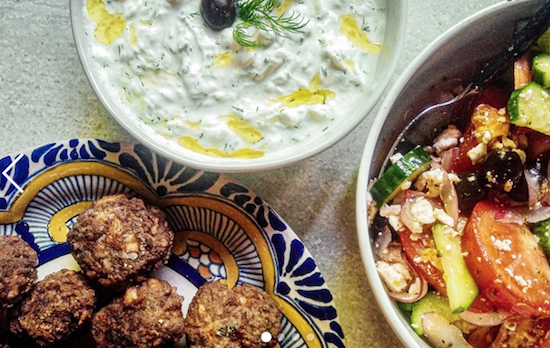
International cuisines represented include Afghan, Argentinian, Bengali, Greek (nomnomnom), Indonesian, Japanese, Lebanese, Mexican, Nepali, Persian, Russian, and Uzbek. Classes are $60/device, and you can buy gift cards for recipients to use for the cooking course of their choice.
Goldbelly Live! Cook-Alongs offer a combination gift. You buy GB’s meal kits and the Goldbelly Live! cook-along classes are included. It’s live via Zoom, so you get to ask the chefs questions as you cook with the ingredients that arrive (the day before) in your meal kit. From pizza to dumplings to cookies, class-and-kit combos tend to range from $99 to $159.
Want to give a more intimate cooking class experience? The Chef & the Dish offers private classes with “white glove” service. Pick your course by mood, dietary preference, or craving — options include homemade pasta, Pad Thai, paella, ceviche, jambalaya, baklava, goulash, curry, and more. Once you book, a Kitchen Assistant makes contact to host a personal Kitchen Prep Session to check the camera settings, review the shopping list, and answer any pre-class questions.
For more online cooking class ideas, check out The Spruce Eats’ post, The 8 Best Online Cooking Class of 2021.
Maybe the loved ones on your list, like Paper Doll, love to eat but aren’t such fans of actually cooking? In addition to the gifts I covered in last week’s post, consider experiential gifts like food tours. To find tours to give as gifts, check Google for your recipients’ hometowns or wherever they tend to visit (like where their parents, in-laws, or adult children live).
There are also national food tour companies, with operations in multiple cities. One option is Secret Food Tours, with domestic and international tours that blend food and culture. Gift vouchers can be used for group or private tours.
Similarly, winery and brewery tours might be just the surprise your recipients might enjoy.
Lest you think Paper Doll only has food on the mind, there are still more educational classes and tutoring you can give as gifts of experience, including:
- Music lessons
- Singing lessons
- Self-defense courses
- Physical education classes — Forget old-school PhysEd; you can gift your loved ones gym memberships in-person or online on-demand classes like at Obé Fitness. From aerobics to yoga, there are in-person and virtual classes for everyone on your list. Or, instead of a specific class, perhaps private fitness coaching sessions might please.

- Dancing — From ballroom to ballet, tap to jazz, if you know someone who loves to dance but might not think to buy lessons for themselves, this might be a dream come true.
- Horseback riding
- Driver’s education — Local school districts have pared down their offerings; those that do offer Driver’s Ed often have four kids (and an instructor) to one car. For teens or adults, a package of driving lessons can help give the twin gifts of driving skills and confidence.
ENTERTAINMENT
As with last year, the COVID pandemic has made the choice of entertainment gifts somewhat problematic. Experiential gifts that entertain are still a great choice, but tickets to date-specific events can turn delight to dismay if there’s a cancelation. (This week alone, ten different Broadway shows and many musical performances around the country had to cancel. This weekend’s Saturday Night Live went on, but barely, with only two cast members, minimal crew, and no audience. Buyer beware.)
So, if you and your giftee are bold and willing to brave the possibility of cancelations and rescheduled events, consider experiential gifts like one-off or seasons tickets to:
- Sporting events — Hint: outdoor sports are somewhat less likely to be canceled
- Concerts — From your giftee’s favorite band to a night at the symphony, there’s a reason that the quote, “Music hath charms to soothe the savage breast” has stuck around since 1697!
- Comedy clubs — because we could all use a reason to laugh these days
- Academic lecture series at local universities
- Theater — Don’t limit yourself to big-city theater performances. Consider local community theaters, universities, and even high school schedules for their musical and entertainment offerings. From a booklet of movie tickets to a big theatrical show, your recipient’s memories will live on after the big holiday night or Christmas morning.
Thanks to technology, and specifically streaming services, you can give experiential entertainment gifts that last the whole year.
Start with the big platforms for TV. Get someone a gift of three months ($39) or a year ($119) of Amazon Prime, which along with all the other great benefits (including fast shipping), they’ll get a variety of original and beloved entertainment on Amazon Prime Video.
If they already have Prime, look to the other obvious options. Buy them a gift card for Netflix, or a monthly or yearly subscription to Hulu.
Instead of one of the big platforms, you could get them AppleTV+ for classics and original shows (including the absolutely hilarious and life-affirming Ted Lasso), Disney+ (for friends with kids or fans of Marvel movies), ParamountPlus (previously CBS All-Access, for those who love all of the Star Trek shows, and for fans of CBS programming, including NFL on CBS).
Some niche networks (like Acorn or BritBox for fans of shows from the UK) can be purchased directly or as sub-subscriptions through Amazon Prime Video. Because almost any streaming service offers a gift option, whatever kinds of viewing your giftees like can be delivered directly to them, wherever they are.
If the folks on your gift list are music fans, a Spotify Premium gift card for three months or a year is the obvious first choice.
For giftees who spend a lot of time in a (compatible and fairly modern) car, a pre-paid SiriusXM gift card is a fun choice for a ridiculously wide variety of streaming music, news, sports, and talk. (I’m a fan of their Radio Classics channel, which plays old radio shows from the 1930s, 1940s, and 1950s, everything from noir to comedy, westerns to music.) And did you know that if you have a SiriusXM account, you can also play the stations in your computer browser? That’s a fun option even for those who don’t have cars!
Do you have movie fans on your list? If they’ve already seen everything on the TV streaming services, consider some of these more niche options.
Metrograph bills itself as, “the ultimate place for movie enthusiasts to experience prestigious film and content. Metrograph represents a special, curated world of cinema, harkening back to the great New York movie theaters of the 1920s and the Commissaries of Hollywood Studio back lots, a world inhabited by movie professionals screening their work, taking meetings, watching films, and collaborating together.”
A $50 gift membership includes Metrograph At Home, with live streaming events, special premieres, exclusive films, conversations with favorite filmmakers, and more. Members in (or visiting) New York City also get discounted tickets at the Metrograph Theater there. (Stream Metrograph via any Roku, Fire TV, Android TV, Apple TV, Google TV and Chromecast.)
If someone on your list is a super-serious cinephile, The Criterion Channel might be your best bet, with gift subscriptions at $10.99/monthly or $99.99 for a full year. Criterion brings your movie buff one thousand “important” classic and contemporary films, plus a constantly updated selection of Hollywood, international, art-house, and independent films from major studios and independent distributors.
And if the folks on your gift list prefer the stage to the screen? To keep them entertained all day and night, whether they prefer Shakespeare or ballet, absurdist theater or Sondheim, consider a monthly or annual gift subscription to BroadwayHD, ranging from $11.99/month to $129.99/year.
ADVENTURE
Adventure is in the eye of the beholder. For Paper Doll, Paper Mommy, and our ilk, adventure should be climate-controlled and have clean restrooms nearby. Over Thanksgiving weekend, we went to a Knight’s Quest-themed escape room.
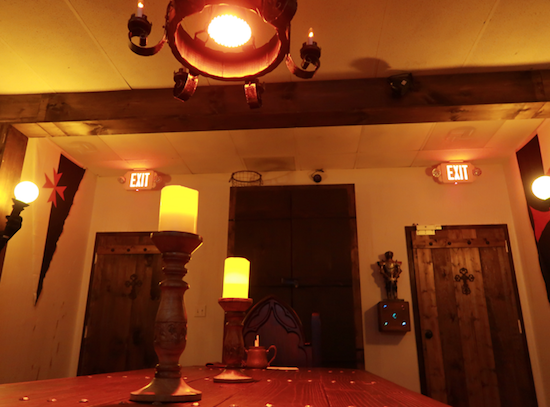
For us, it was the perfect kind of “adventure,” as we didn’t need to buy a special wardrobe, and neither our hairdos or our bodies were ever at risk. As a private group (to better assure pandemic-era safety) we solved puzzles and laughed a lot!
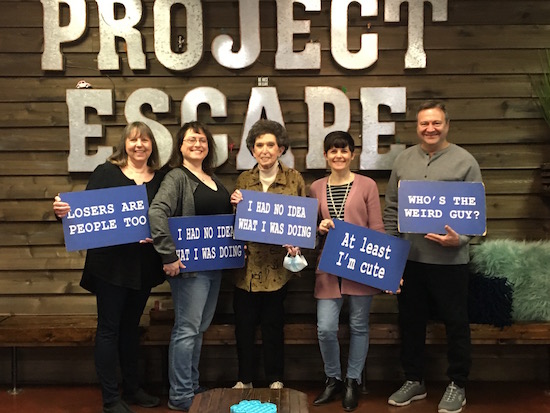
We went to Project Escape in Marietta, Georgia, but almost every community has a few escape rooms these days, so you shouldn’t have to look beyond your nearest search engine.
Want a physical adventure that gets your heart pumping without having to set out into the woods? A recently exploration of my own city found that axe throwing is a thing! (Who knew?) In fact, we have three different axe throwing venues within 15 minutes of my house!
I’m not sure I could lift one of these, but apparently you get one hour in a lane with a target at the end…and an axe! It certainly does seem like a great way to get out frustration, so if you know someone who is feeling more “grrrrrrr” than “fa la la la la,” this might be their style. (Google “Best Axe Throwing Near Me” for your options.)
As always, adventure gifts depend on your recipient and your budget. For real thrill-lovers, zip lines and hot-air balloon rides might be just the thing. Your more athletic friends might prefer sporty adventures; for a reasonable gift, time in the batting cages or pre-paid rounds of golf might work, but for a big-ticket present, you might opt for a week at fantasy baseball camp.
For car fans, a ride-along at the NASCAR Racing Experience program or Daytona Speedway course would be a gift to remember. But if they might prefer a less adventurous car adventure? DriveShare lets you rent a fun-to-drive classic car. Type in your zip code, search the auto options, and book! (You might want to make a gift certificate for your recipient and let them pick their own dream car.)

And while things are still all pandemicky, consider gifts that allow for adventures with a social distancing component, like an annual National Parks Pass ($80) to explore the country’s great natural beauty and experience some elbow room. (Note: annual passes for senior citizens are only $20, and a lifetime pass for seniors is $80.)
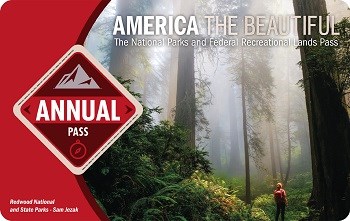
A pass is your ticket to more than 2,000 federal recreation sites. Each pass covers entrance fees at national parks and national wildlife refuges, as well as standard amenity fees and day use fees for a driver and all passengers in a personal vehicle at per-vehicle fee areas (or up to four adults at sites that charge per person). Kids age 15 or under are admitted free.
ONE LAST THOUGHT—ON PRACTICALITY
Over the past three posts, we’ve looked at gifts that are exciting and special in different ways. But bear in mind that some of the people on your holiday gift list might actually appreciate practical gifts. No, not a vacuum cleaner or a toaster (unless they’ve really, really requested one for the holidays). But sometimes, a gift of something to make life easier really is a special present.
Drivers on your “nice” list would benefit from gift certificates for oil changes, car washes or detailing, and even annual memberships in AAA or their favorite auto club. Unlike the streaming entertainment services mentioned above, you generally can’t purchase a gift certificate for multiple months of internet, cable, satellite, or cellular service but you could gift your recipient cash earmarked for pre-paying those services. (If your recipient is in college or just out of school, this might be especially appreciated.) And if you really want to be a hero, you can definitely give the gift of computer backup services. (I’m a fan of Backblaze.)
Just because something is practical doesn’t mean it won’t be loved. As always, you have to really know your recipient.
Whatever you give (and get) this holiday season, I hope you have healthy, happy times with the people who mean the most to you! Happy holidays from Paper Doll!
Paper Doll’s Holiday Gift List: The Useful and the Beautiful
As a professional organizer, my role in writing holiday gift posts is to encourage gifts that minimize clutter and maximize enjoyment. In general, that means focusing on intangible gifts, consumables, or gifts of experiences. And I’ll get to those (with classic advice and new surprises) next week.
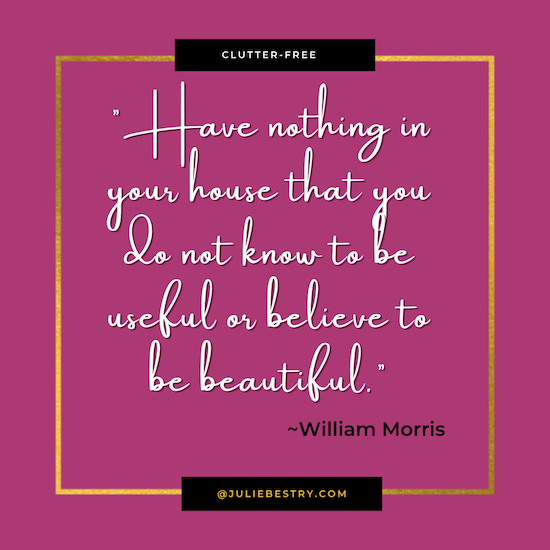
But today, we’re going to look at how to give (and request) gifts that abide by a long-cherished mantra in the organizing community. “Have nothing in your house that you do not know to be useful or believe to be beautiful.”
Not everything in your life is going to “spark joy.” Not a tax return, not a well-thumbed thesaurus, and in Paper Doll‘s case, not a lemon zester or a casserole dish. Utility, like beauty, is in the eye of the beholder. Only you know what you will find useful, but as a professional organizer, I can advise regarding what my clients find useful for reaching their organizing and productivity goals.
So, today we’re going to look at a sampling of gifts that are either useful or beautiful, or, when we’re lucky, both.
GIFTS OF GAMES TO REACH YOUR GOALS
Getting organized is obviously useful, but to people who aren’t professional organizers, it doesn’t always sound like fun. (Like, socks keep your feet warm, but unless you’re giving super-fun socks, like Bombas, the presents won’t always be received in a spirit of delight and joy.) But turning organizing into a game can make all the difference.
Duolingo and Language Learning Apps
On many Paper Doll posts, I’ve written about how I embrace Duolingo to learn Italian, and there’s research about the efficacy of the platform.
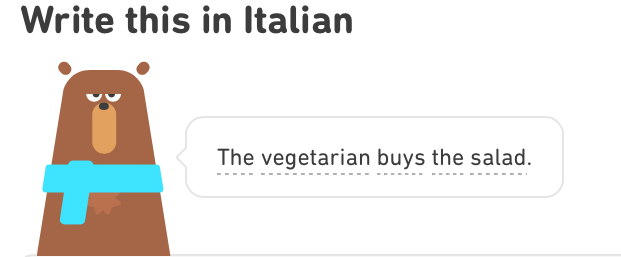
But it’s not the cute cartoons or the funny voices (or at least not only the cute cartoons and the funny voices) that help challenge me to meet my learning goals. Completing a lesson earns points. Completing practice earns points. Reaching the “legendary” level earns oodles of points.
There’s not a lot you can buy with the points (aside from a few lessons on idioms and flirting), but there are leagues and you can compete each week with other language learners to see who has earned the most points over the course of a week. (In theory, the points you earn represent diligence and knowledge gained.) While I don’t like to think of myself as competitive, per se, and don’t care if I land in the prize-winning top three of my weekly assigned league, I do like to see myself in the top half of the 25 people in my league by Sunday nights, right around when I’m writing to you readers.
You can study with Duolingo in your browser or on an mobile device in the app. Duolingo is free, but there’s an advertising-free Plus version you could buy as a gift for someone wanting a fun, gamified way to support their language learning.
(Other language-learning apps include Mango, Babbel, and Memrise. The Intrepid Guide also has a fun post, 26 Cool Gifts for Language Learners They Will Actually Use, and every item is either useful or beautiful, and many are both!)
Fitbit and Activity Trackers
I also use gamification to organize my fitness goals. Years ago, a friend gifted me with a Fitbit, which tracked my steps walked and stairs climbed. After the little device fell off in a parking lot without my realizing it, another friend gifted me an upgrade, wearable as a watch, and I can track my steps, exercise, quality of sleep (oy, vey), weight, calories, hydration, blood glucose, mindfulness, heart rate, and more.
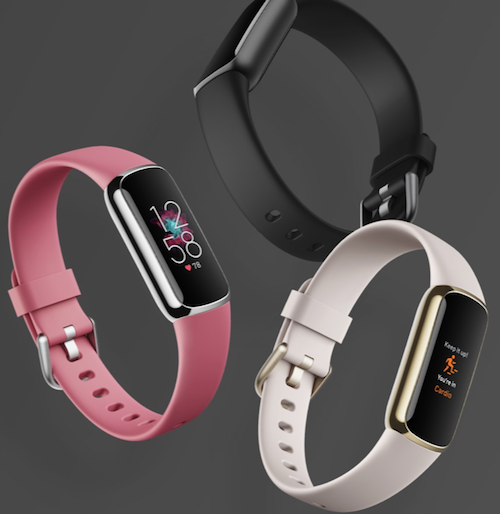
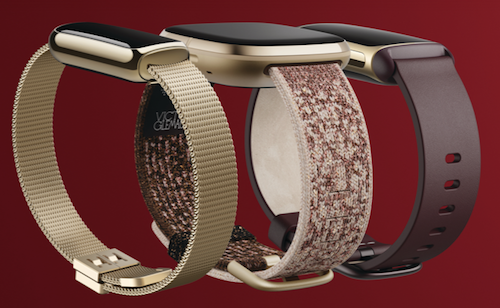
Most Fitbit (and similar brands of) trackers and watches are pretty techie-looking, but there are some (like in Fitbit’s Luxe line) that are both useful and beautiful.
But what I like best? Each Monday, I start a “Workweek Hustle” with my best friend and her Gen-Z son. We can cheer (or lightheartedly taunt) one another, and write supportive messages. It’s social, but unlike social media, there are no photos or videos. We’re just gently encouraging one another to get moving.
You don’t have to take my word for it. My colleague Janine Adams and her podcasting partner Shannon Wilkinson, recently did an episode of their Getting to Good Enough podcast on the benefits and power of gamification. In fact, I was all set to mention a new organizing “game” when I saw that Janine and Shannon had already covered it!
DeclutterGo!™
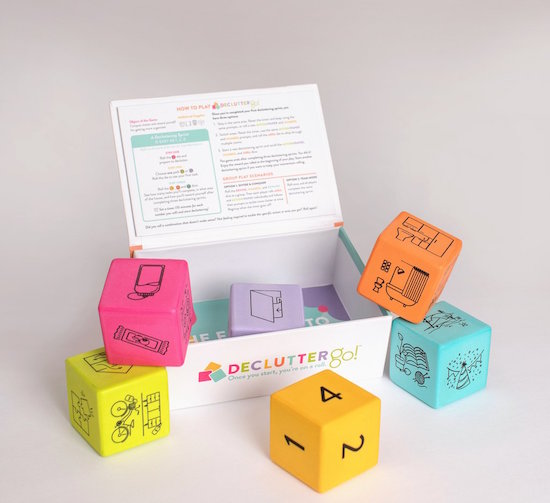
Declutter Go!™ is a just-released cube-based organizing game from our colleague Lynne Poulton. Her new goodie uses concepts from brain science and gamification to encourage people to achieve their organizing goals together. Each set comes with six colorful, two-inch, foam cubes representing stages in the game.
You’ve seen me say it before: action precedes motivation. You have to conquer some kind of obstacle to kick activation energy into gear. (You can’t just wait until you’re motivated, but some strategies of gamification can motivate you to get started!) Declutter Go!™ breaks down larger projects into smaller tasks and gives you that dopamine hit when you accomplish something.
The goal is to conquer clutter and reward yourself for getting organized. You roll the pink die to prep yourself for the activity, then either the green or purple dice (depending on whether you’re going to take action on residential or paper organizing). Rolling the yellow, peach, or turquoise dice help you determine how many tasks, the area in which you’re going to work, and what your reward will be. You can “divide and conquer” tasks separately, or work as a team.
Read more about how it works and take a look:
Declutter Go!™ is $24.95 (with free shipping in the Continental US).
Of course, this is isn’t the only “useful” organizing game in town. You may recall another game from my post, Paper Doll Models the Spring 2021 Organizing Products.
Organize Your Home 10 Minutes at a Time Deck of Cards
Diane Quintana and Jonda Beattie‘s collaborative company, Release * Repurpose * Reorganize, developed the Organize Your Home 10 Minutes at a Time Deck of Cards. It’s a 52-card deck to guide you through organizing your home step-by-step, one 10-minute task at a time. (Again, gamification works best when it breaks down big projects into small tasks to give you that extra push.)
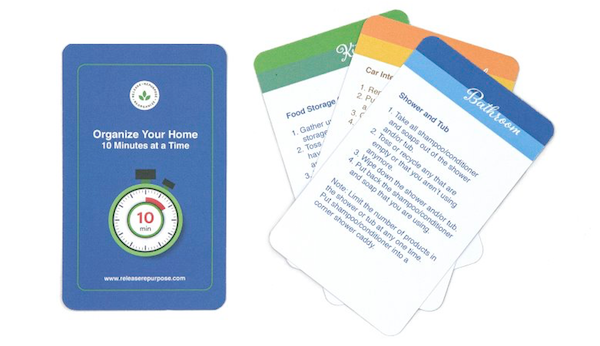
The deck includes two instruction cards to help you get started, plus 50 categorized task cards for coping with typical areas of a home, including kitchens, closets, bedrooms, bathrooms, family rooms, and similar spaces. The top of each card color-codes to the spaces covered, and tells you the space and task to be handled. The body of each card provides instructions for completing the task.
The Organize Your Home 10 Minutes at a Time Deck of Cards is available on their website or on Amazon for $19.95.
(Also, you should check out Jonda’s post, The 10 Most Useful Holiday Gifts for Disorganized People.)
Both of these organizing games are useful; I don’t know that you’d call Declutter Go!™ beautiful, but it sure is cute. And both it and Organize Your Home 10 Minutes at a Time Deck of Cards will help you make your space more beautiful.
ORGANIZING CLASSICS: KEEP YOUR BEAUTIFUL AND USEFUL THINGS FROM GETTING LOST
Over the years, I’ve written many posts about Bluetooth trackers and how you can keep your stuff from getting left behind (or walking away on its own in the guise of jam-handled toddlers or fetch-playing puppies), and the most popular brand always seems to come down to Tile.
Tile
Tile has lots of different styles, but there are some bargains to be had if you want your trackers to stand out and look as beautiful as the items they’re guarding. The Rich Ruby Red Slim and classic Azurite Blue are 30% off right now!
If you or someone on your gift list is a little less into primary colors and a little more into the Elle Woods look, the Rose Pink Tile Slims are 40% off currently.
The above designs are from last year, but if your recipient feel strongly about being au courant, the suuuuper-thin 2022 Tile Slim is designed to work with passports and notebooks as well, and the black ones are 20% off.
Of course, Tile isn’t the only game in town, and if you refer back to one of my posts from last year, Clutter-Free Holiday Gifts for the Weird Year of 2020 (Part 3): Organizing Yourself & Others, you’ll see links to many of the other Bluetooth trackers I’ve reviewed…not counting Apple’s AirTags.
Apple AirTags
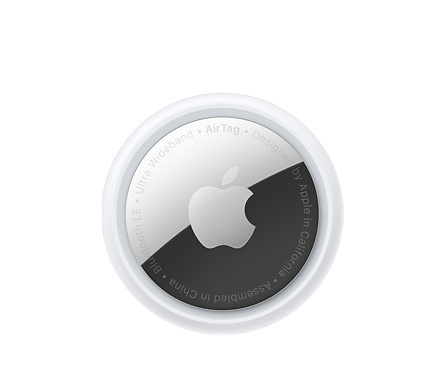
I haven’t had the opportunity to review these personally, but I can share the basics. As with other Bluetooth trackers, you attach your AirTag to your possessions; it sends out a secure Bluetooth signal detectible by any nearby devices in the Apple Find My network. (Find My iPhone. Find My iPad. Etc.)
The devices (off of which the signal pings) will send the location of your AirTag to iCloud — then you can go to the Find My app and see your AirTag-attached item on a map, and get a warmer/colder set of instructions as you head toward finding it. The entire process is both anonymous and encrypted, so your privacy is protected. Here’s a funny little video about how it works.
Apple’s AirTags are are $29.99 each, or $99 for a package of four. Obviously useful, the Air Tags themselves are kind of monochromatic — and thus, to most folks, not that beautiful.
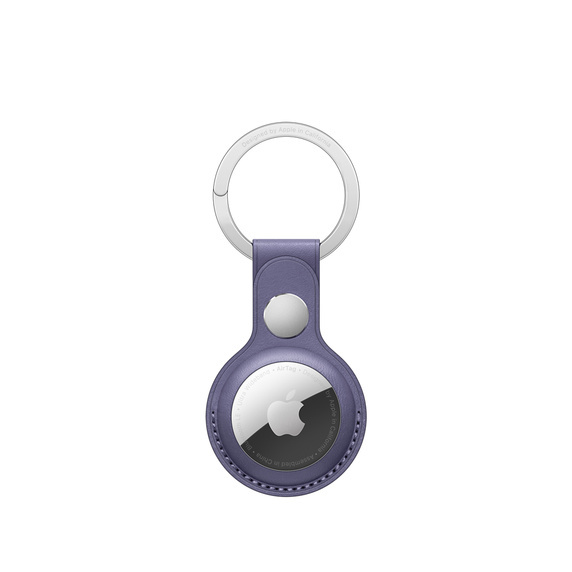
However, even AirTags, which are accessories for your devices and essentials, have their own accessories to make them more beautiful! There are even Hermes AirTag accessories! (And, not surprisingly, these accessories are even more expensive than the AirTags themselves!) For what it’s worth, I’m partial to the Wisteria leather key ring.
So, we’ve looked at what keeps you organized for your bulky stuff. But what about paper?
Tickler Files and Tickle Yourself Organized
Sure, there are all sorts of pretty ways to organize your paper, and that’s something Paper Doll covers all throughout the year. But longtime readers know that there’s nothing I recommend more often than tickler files, which I consider the most useful of paper organizing resources.
A tickler file is the best way to guarantee that all the pieces of paper that reflect tasks you have to perform, ideas you want to put into action, and information you want to convey…eventually…will await you until the day you need to access them. My favorite version is the Smead Desk File/Sorter Daily (1-31) and Monthly (Jan-Dec).

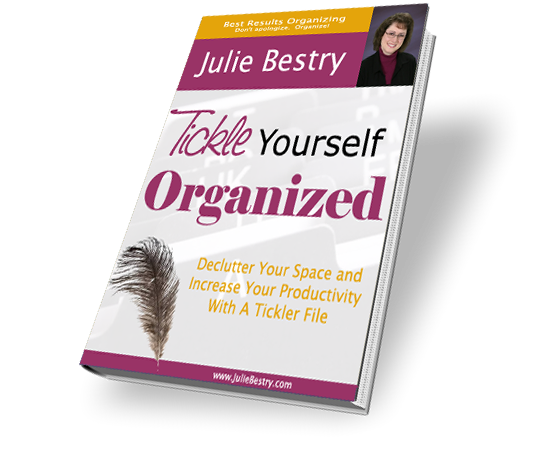
And, of course, if you or your recipient is new to using a tickler file, I’d be doing all of us a disservice if I didn’t mention my own little ebook, Tickle Yourself Organized. Yes, it explains how to use a tickler file, but it’s also an overall primer on keeping action-related paperwork straight.
(And if you have more than just action paperwork, if your piles of paper are making mountains and keeping the filing cabinet from closing, my Do I Have To Keep This Piece of Paper? is a nifty solution. The biggest reason people hold onto papers long after they’ve served their purpose is fear, primarily fear of not having a receipt or document when it’s needed. This ebook gives you the straight dope so that you can confidently maintain what you need and safely shred or discard the rest.)
TIME MANAGEMENT CAN BE BEAUTIFUL
Appreciating the passage of time can be difficult, but if you can actually see time moving, you can be so much more productive. Now, if you’ve been reading this blog for any amount of time, you know about Time Timer, which makes time (and the passage of it) visible.
On most versions, there’s a colored disk that diminishes in size as the set time is depleted. For adults and kids, both, it’s a superbly useful tool for getting a better sense of what time is and how it passes. Because of this, I really love all of the Time Timer products, but especially two items.
I’ve had a crush on the Time Timer Twist® since it came out. You turn the outer ring to set it for the desired time (up to 90 minutes), and then push “play.” The digital countdown is there, like with any modern timer on your phone or microwave, but what’s nice is how there’s a digital disk ticking down, with each moment “disappearing” as you get closer to your desired time.
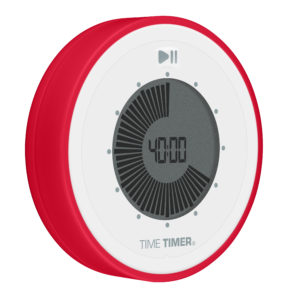
It’s magnetic, so you can stick it to the fridge, microwave, or stove in the kitchen, the whiteboard or filing cabinet in the office, or any metal surface in your work or living space.
It’s bright red, so it will definitely catch your (or your giftee’s) attention. And there’s even a pause function in case you get interrupted.
The Time Timer Twist is $19.95 at the website and a few cents less at Amazon.
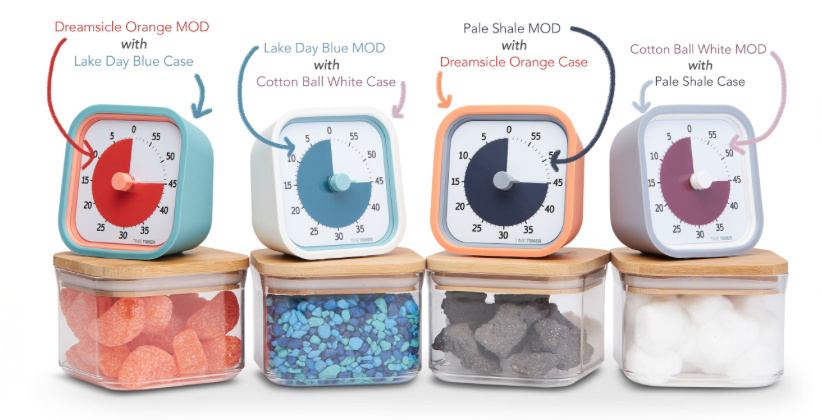
And while I can recommend all sizes and styles of the Time Timer, probably the others most suitable for holiday gifting are the colorful, beautiful Time Timer MOD Home Edition versions in Lake Day Blue, Dreamsicle Orange, Cotton Ball White, Pale Shale. (The soft silicone cases are sold separately, so you or your recipient can mix-and-match color schemes.)
GIFTS THAT ARE BEAUTIFUL FOR THEIR OWN SAKE
Things that are useful (for organizing, or for just achieving any goal or completing any task) can be beautiful. And while I can’t say that I excel at appreciating visual arts, I do believe that what is beautiful can also be useful.
When something makes us pause, reflect, feel an emotion, experience wonder — that visceral experience of beauty is useful to us as human beings. It can stir us to action, lower our blood pressure, or make us laugh.
Something that I’ve been finding beautiful lately is the whimsical art of Jami Wise at Moss Rose Art. My favorite of Jami’s designs is Leopold, a hedgehog who appears in her “Love and Hedgehugs” print.
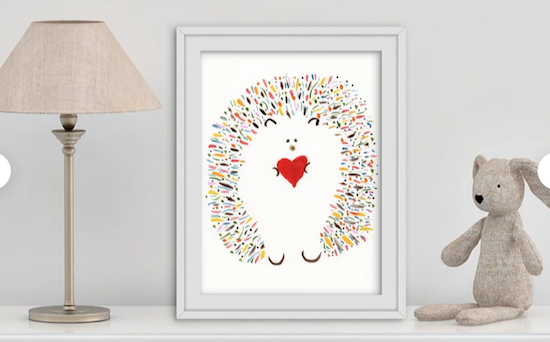
Jami’s delightful designs are include a wide variety of themes, including holidays, graduations, weddings, and other special events. The subjects are often (but in a broad sense) from nature: flowers and trees and animals (oh, my!) — especially plump cats, dogs, cows, and chickens, often in unpredictable settings or with cute accessories (generally books or wine) — and they make me smile whenever I see them.
For example, there’s Martha (the Cat) Reading Cat on a Hot Tin Roof, and during the height of the pandemic, I told my cat-loving pals about her Social Hisstance watercolor, because I knew it would make them giggle. And while I don’t drink, I still find this next card design both charming and practical for sending a message to someone who needs it.
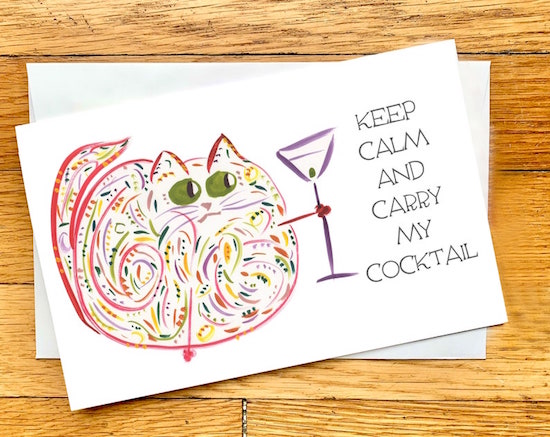
Jami’s work is available as prints (including digital art prints), as well as on mugs, cards, magnets, and stickers.
Call me a philistine if you like, but I even like my art to be useful, and I get more joy out of a magnet on the fridge I see each day as I open the door for my orange juice, or a mug from which I drink that juice, than I do from something I hang on my wall and forget to notice. But that’s just me.
(If you do acquire any of Jami’s creations, please let her know that I sent you. I won’t get anything but the joy of knowing I’m sharing her work with more people, but I do like the idea of organizing some holiday traffic in the direction of her online door.)
Finally, whatever “beautiful” gifts you give, remember that beauty is subjective. To keep something beautiful (but not inherently useful from a practical sense) from becoming clutter, it’s important to know your recipients’ tastes (and whether they have any wall space available for displaying art). If you find something that is both useful and beautiful and gives someone options rather than obligations, you’ll definitely land on the nice, rather than the naughty, list.
I hope you’ve found some good ideas for how you can help your recipients achieve their goals —with presents that are useful and beautiful, practical and pretty. Next time, we’ll be looking at gifts of experience. Until then, please share in the comments your thoughts on these items and what you might like to give or receive.
Disclosure: Some of the links above are affiliate links, and I may get a small remuneration (at no additional cost to you) if you make a purchase after clicking through to the resulting pages. The opinions, as always, are my own. (Seriously, who else would claim them?) For more information regarding how Best Results Organizing handles affiliate links, please see the affiliate section of the site’s Privacy Policy.
Paper Doll Interviews Life Coach, Author, and Kid-Schlepper Allison Task
Paper Doll readers know it’s a rarity for me to do interview posts. I’ve saved this feature for special topics and colleagues, like Melissa Gratias, Leslie Josel, and that fun group of genealogy organizers, Janine Adams, Jennifer Lava, and Hazel Thornton.
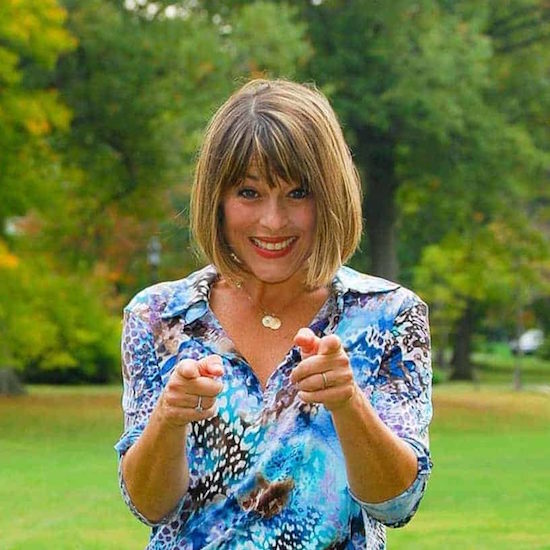
Today, I want to introduce you to life coach Allison Task. You’ll hear how experiencing misogyny, learning psychology, the dot-com boom, culinary school, Martha Stewart, and de-prioritizing social media have helped her organize a life that allows her to support her clients, her readers, and her kids (who have a lot of their own adventures going on).
I’d like to say I knew a lot about Allison before she presented Let’s Make a Shidduch! How to Match Your Strengths to Client Needs and Do More of the Work You Love at NAPO2019 (especially as it turns out we went to the same college). But the shallow truth was, I picked her session because I was intrigued “shidduch” (Yiddish for “match,” as in matchmaking) and then was transfixed by the cool dress she wore during her presentation.
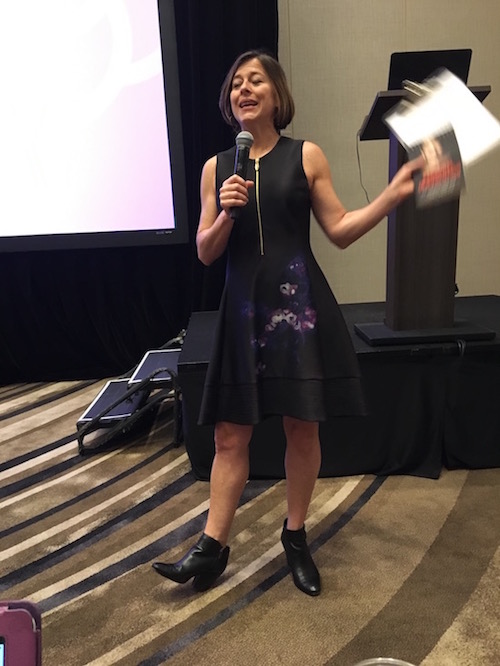
Had I known I’d be writing this post two and a half years later, I’d have been careful to take better photos! In my defense, Allison is such a high-energy presenter, there’s no way I could have caught her when she wasn’t in motion. So, I’m particularly excited that she was able to sit down for this fun interview about how she became the powerhouse life coach, speaker, and author she is today.
Allison, although we met at the NAPO Conference in Fort Worth, Texas, we *almost* could have met at college. I graduated from Cornell University in 1989, and you arrived just a little later, finishing in 1994. Mine was the decade of big hair and oversized sweaters; yours was the era of Beverly Hills, 90210 (the original!), babydoll dresses, and flannel shirts.
Could you tell Paper Doll readers about your early life and college years (when you majored in Human Development and Family Studies at Cornell, and later got a Masters in Science in Food and Nutrition from New York University)? What did you plan to do when you finished school?
But really, which one of us was Gear bags? Neon pinstripe jeans? NafNaf and ID#? I mean, Aqua Net belongs to the ages, but I am going to claim Sir Mix-A-Lots “I Like Big BUTTS” refrain as central to my college experience. Sigh. I just know I wore a lot of unitards and boot cut jeans under that flannel…
[Editor’s Note: As much as I love to link to pop culture videos, readers are just going to have to click through if they want to sing and dance along to Baby Got Back. It’s still a little spicy for an organizing blog!]
I think one thing that was key to college, or at least my interests during that time, was that I wanted to help people. And I was obsessed with how we think, why we think, and how we make the choices we make. Growing up as a girl on Long Island in the 80s, my experience was that we were coached to be lemmings — go to the mall, get your face on, and attract a male.
I really felt like my experience as a smart girl in the 80s was [being told] to tone it down, diminish the smarts so you didn’t alienate the boys. Your value is the boy you attract. I repeat, your value is the boy you attract. So I read the magazines and did the things to be, well…visions of Cherry Pie and Aerosmith videos. I think of the 80s hypersexualized women and girls, and those were the messages I received about women’s and girls’ worth.
At college, there was a refrain that we were the “ugliest girls in the Ivies.” [Editor’s note: Not Allison or I, personally. Just to be clear. We were stunning!]
And we heard that “smart girls are, obviously, dogs.” I remember the word dogs being used instead of women. So, I have a bit of baggage. When Supreme Court Justice Brett Kavanaugh’s hearings were going on, I watched every one. My phone line was lit up with friends at Yale who went there when he did. Those stories about high school parties and bad behavior led to similar in college. Similar but worse. And my college experience was full of experiences like those that Dr. Christine Blasey Ford revealed. Both experientially, and watching very drunk girls get carried away into rooms for terrible abuse. I saw and experienced things I wish I didn’t, and got both campus police and [the campus newspaper] involved. Let’s just say the male authorities didn’t want to touch any of that stuff.
It’s a different time today and I’m grateful for it. But it’s hard not to remember college without those experiences pushing to the fore.
I went to school because I wanted to learn more about people and how they think. Thus, Human Development. As I saw it, after I received my degree, I could go into marketing or social work. Since social work required more schooling, and seemed a bit grim and underpaid from the stories I heard from HDFS grads, I pursued marketing.
And media. In fact, my first job after college was a paid internship with WNET (Channel 13) in NYC. I was to research a documentary about celebrating the differences between the sexes. Gosh, flash forward to years later and this would be a totally different subject!
On Day 1, the funding fell through and I was researching a documentary on Hoboken. After the award-winning producer brought me to his apartment in Hoboken a few times and made me feel horribly uncomfortable (Picking up on a theme here? I hope so!), I quit and waitressed at my local pasta joint. What a summer!
Yikes! So what then?
Then I got a job as a CD-ROM CEO’s secretary, and had the job of researching how they could build a web site.
This is how my career launched. A year later, I was working at an Internet startup, and a year after that was recruited by CNET in San Francisco to join their team. A year after that, I was working for another startup and my starting salary was more than my mother’s final salary before she retired as a principal. I share that to let you know what a head trip this all was — I was three years out of school with a Human Development degree making more than my mother did as a principal in the highest paying district in New York state. Bananas!
I worked at dot coms for the better part of 10 years. I had a front row seat to the internet revolution in the nineties and aughts and it was a blast. I had the most exhilarating conversations about what we can build, and work and life happily blurred. The conversations I had about possibility, and what might happen (“Imagine, some day we will do holiday shopping online! Really, we will!”), dodging the naysayers, believing and building — all set the groundwork for the kind of creatively inspired conversations I have with my clients every day as a coach.
I eventually left dot coms and went to culinary school. After ten years of digital, moving from NY to SF and back again, I was ready for something more tangible and tactile. It’s no mistake that the maker movement has come in concert with the rise of digitalization — they are yin and yang, and I needed more yang.
Also, the B-school folk rushed into the dot-com world and made it all about bottom lines. There was more than enough money for everyone, but the obsessive focus on “exploiting the market” turned me off and felt grotesque. When we moved from the creative question of “what can we build” to “how much money can we make” I got bored and went to share my talents elsewhere.
(The Food Science Masters at NYU happened in my late 30s and was more for fun than a direct part of my career path.)
OK, so basically, you did the dot.com thing until late-stage capitalism turned the joy of creation into something unpalatable, then went to culinary school where everything was (hopefully) palatable! And (like me, before I was Paper Doll) you spent time in the television industry. The word is that you even worked with THE Martha Stewart!
All true! When I went to culinary school, I had a specific goal: I wanted to help people learn to cook at home. We grew up with the first generation of working moms and microwave dinner. I wanted to return the skill of home cooking to full time workers, and make it fun and easy. But not microwave easy, 20-30 minute puttanesca easy. I had put on some weight eating out all the time when I was dot-comming, but more importantly, I couldn’t hard boil an egg. I wanted to learn and I wanted to teach.
And the best home cooking teacher at the time, or at least the most visible, was Martha Stewart. And I needed to work for her. So I pursued and pursued until I had the opportunity. I was part of the launch team for Everyday Food, and eventually ended up as a culinary producer for her TV show.
I learned more there than I had hoped — and was able to work directly with Martha. Presenting a TV segment to her is like defending a thesis. You have to think through everything. It raised my standards in the highest possible way.
While there, Martha was under investigation (and I left when she was sentenced to prison). As a result, the company was looking for talent inside the organization. I was asked to audition for a TV show, and ended up testing really well. (I was told I got very high “Q” ratings.) [Editor’s Note: Q scores measure familiarity and appeal of personalities and brands.)
So they media-trained me and gave me an opportunity to be part of the Everyday Food TV show on…PBS! Channel 13! Ah the irony of returning to that place of abuse as TALENT!
That was my first TV opportunity and it was a blast. Pure fun. After that I had opportunities to host shows on TLC, Lifetime, and Yahoo. An early producer gave me the advice, “Don’t count on this as a career, just have fun with it as long as you can.” I did and it was a blast.
How did these experiences prepare you for a career as a life coach, speaker, and published author? (And anything you want to say about Martha?)
Martha is great. She is endlessly curious and pursues those curiosities with vigor. I admire her tremendously.
I had twists and turns in my career. I knew what I wanted to do — help people, understand why they do what they do, and help them do the things they want / that benefit them. As a dot-com marketer, I helped explain what the internet could be. I helped people open their minds to the possibility of creating businesses online. It’s a leap of faith to show people the future, and to help them dream in this new environment.
That’s exactly what I do as a coach!
I get it! That’s what we do as professional organizers!
When the dot com became too exploitative or materialistic, I was turned off and looked for different work.
Working on TV helped me understand mechanics of communication — how I could interact with people to produce an emotion, and how sometimes helping people have a good cry could be beneficial to them. I learned how to connect with guests on my shows to set them at ease (while cameras were rolling), and build trust. These are absolutely skills I use with clients today (without cameras).
I trained as an early dot-commer to imagine the possible, and I trained as an on-camera host to build relationships with guests on the show and with my audience.
Working as an author I tried to share my personality / point of view to entertain and educate.
I was never very good at or interested in social media and all the self promotion (or all the hours of liking and engagement that it requires). I sidelined myself from media work when that all got big, in part because I had three kids in a little less than 1-1/2 years and I wanted to put my focus on them, not Facebook or Instagram.
This hurt me, I’m sure, in terms of my public image, but I’m quite happy about the connection I have with my kids and our light media engagement. I made the better choice personally, and it’s part of why my public image is rather quiet.
What would you say was the turning point that helped you identify your true calling and fine-tune what you do professionally?
So many moments! Here are three key ones:
- When I became a paper millionaire at my dot com at 26, I decided that was enough money to not have to work again. I wanted to live light, and I could live off the investment (not touching the principal). This opened the question of what work I would do if I didn’t have to work, which led me to helping people, helping their physical health, which led to cooking.
- Getting that Q rating at Martha developed my confidence that “people liked me, they really liked me,” and if I was true to my personality, that could resonate in the market place. I didn’t have to Aqua-Net my way into the favor of the public, I just had to reveal who I actually was. That was the special sauce!
- I was on the back of my boyfriend’s Triumph, tooling around NYC, and stopped near NYU to get some noodles. I picked up a copy of the NYU Steinhardt course catalog and saw the program for coaching. Lightning bolt moment — I could help people raise their game, work better than they are currently doing, enjoy life more. Sign. Me. The. Hell. Up! It was so clear that I had to do this, like the tide lifted me and I had to do it.
What do you love about the coaching experience? What are some things that have surprised you about coaching?
I love my clients. I love their bravery and courage to ask for more in their lives. I love our relationship, how we create a sense of trust and how I help them do what they know they want to do! I like supporting others to their own personal greatness.
I do get sad, sometimes, at the distance that is created culturally that we get so far from our own voice, that we stop listening to ourselves. I love the repair that can happen inside a person — that they can start to believe in and trust themselves again.
I love listening to another person really deeply so that they can better listen to themselves.
I like laughing and having fun with a client. There’s a big range of emotions — fear, sadness, hope, pain, joy…it’s powerful.
Writing is obviously a passion for you. Even before you were a coach, you made a name for yourself in writing cookbooks. There’s You Can Trust a Skinny Cook (as Allison Fishman) and Cooking Light’s Lighten Up, America!: Favorite American Foods Made Guilt-Free (under your full name, Allison Fishman Task).

But then you used your coaching expertise to write Personal [R]Evolution. That had to be a very different experience from writing cookbooks.
Yes! While writing cookbooks I was hired by big publishing houses and given a handsome advance. Personal (R)Evolution as actually self published! So I wrote what I wanted, made up the title and even the cover.

Personal (R)Evolution was written after working as a coach for 10 years. I had learned a lot about coaching, and began to see which of the tools I used to support clients were most helpful. Also at that time my price was pretty high (still is), so I wanted to offer a tool that clients could use that was less than several hundred dollars an hour for coaching.
I had a blog that I wrote weekly in my 30s, chronicling dating and life. I shut that down when I met my husband — he had a child and had been divorced, and I didn’t really feel like those were my stories to share. But I loved my blog, I loved writing my truth and having fun with it. I loved storytelling.
I don’t really have the time to do that right now — or I should say I’m not making the time — but storytelling has always been a part of me. When I was a kid my big Chanukah gift as was a typewriter (not a Cabbage Patch doll). More than painting or music, words have always been my art of choice.
Can you tell us about that writing experience? Writing a book about personal evolution (and revolution) likely yields an evolution and revolution in your own self. What did writing that book change in your life?
It’s hard to write a book on your own without your editor confirming that you’re on the right track. It’s stressful. I realized that I really count on editors to give me that positive reinforcement. I ended up hiring an editor I trusted to give me the straight dope on how the book was. She loved it.
It was important to me to write a book that resonated with others, and wasn’t just a vanity project. It’s very important to me that I am of service — entertainment is part of my service. If I entertain you, and you feel happy / enjoy the experience, then we can work a level deeper. It’s part of making a bond and setting the client at ease, preparing the client for more creative thinking.
The writing experience is different for every author. In the lingo of NaNoWriMo, there are “plotters” (writers who outline) and “pantsers” (those who write by the seat of their pants). What are you? Do you think you apply the coaching skills you give others to yourself to prevent procrastination and keep your writing organized?
BOTH! I need an outline to plot the course, and then I set a daily writing objective and just write the damn thing. I need some sort of direction and guidance, so an outline helps and (just like with my coaching clients), it is not a map it’s a guide. The whole point of the writing is that you learn that your outline needs to be adjusted.
This is KEY actually. Many of my clients want the path and then to follow a recipe. That’s not how life works! Certainly not how my life has worked. You put together your best guess of a plan then you respond to the lessons you learn along the way. Every hero’s journey has our hero meeting with challenges she didn’t expect and must meet to get to the next level. The person who enters the forest is not the person who leaves the forest.
Every hero's journey has our hero meeting with challenges she didn't expect and must meet to get to the next level. The person who enters the forest is not the person who leaves the forest. ~ @allisontask Share on XThat is the game of life! So if you think they same about your book when you start it as when you finish, then you haven’t learned a thing in the writing of it. Be open to what you learn while you write your book and change your book accordingly.
Please tell me you are not living the life you designed when you were 18! Some aspects (for me, it was being of service) are still intact. But I never in a million years thought I’d be on TV or write books. I hoped, I hoped quietly, but I didn’t think that would be available to me. And then it was.
This year, you published A Year of Self-Care Journal, a mix of inspiring quotes, activities, and coached-through writing exercises, and has been in the top 50 of Amazon self-help journals since it launched. (Paper Doll readers, check out my review of the book here.)

In the introduction, you wrote:
Self-care has two components: growth and replenishment. We were not built to be in a state of stasis, we were built for dynamism. By providing yourself with the opportunity to try new things, you will grow.
and thought about how so many of these messages and exercises are ideal for organizing clients — especially after the last year and a half.
Right? What a year for self-care. I wrote this mid-COVID, while all of my children were home and not in school. If there was ever a time when self-care was needed, this was it. Also my husband said if I wrote the book he’d take the lead with the kids, so this was an obvious choice. 🙂
My favorite quote was the one for week #52, by Viktor Frankl, the one that starts, “Between stimulus and response, there is a space.” It resonates so much!
But the exercises are so compelling, too. If you had to pick one exercise from the book that you wish everyone would try, which would it be?
I like the first exercise about laughing. I ask readers to deliberately invite laughter into their lives, whether they watch comedy on TV, go to a comedy show, etc. Be deliberate about making yourself laugh.
Physiologically laughter relaxes you and delights you. It is happiness and joy and creativity. I think we focus on eating, sleeping and exercise. all kinds of healthy obligations that maybe aren’t so fun, but we leave out an easy one that has a direct positive impact, LAUGHTER!
What have readers been telling you is their favorite advice or anecdote from A Year of Self-Care Journal?
People like the week about finance, where you do a quick review of where you are financially — where you’re spending and saving. This can be a quick back-of-the napkin exercise, and the point is that you take a moment to take a look at your financial health.
Many of my clients have been saving for years, and don’t know their current fiscal snapshot, which is much better than they realize. It can be happy to see their fiscal reality. Others don’t want to look because they’re afraid, and they really NEED to look at their finances so they can improve the choices they make and take care of their debt. If your credit card fees are at 20% and you can make a change to bring it to 5%, that’s pretty worthwhile, don’t you think? Refinancing a mortgage at these historically low rates is also a great exercise.
So checking on your fiscal health is just a smart thing to do,whether you do it quarterly or annually. I wish we could start teaching this basic life skill in high school; it’s very important and can set you at ease, or let you know there’s work to be done.
Coaching, public speaking, and books are just the beginning. You have also created not one but TWO podcasts, a blog, and a newsletter! I love that Personal [R]Evolution is now a podcast course. But you also have Find My thrive with Allison Task. Can you talk about these podcasts and how they came to be?
I mean, really? Aren’t you starting to fatigue of me by now?
LOL. The good news is both podcasts are finite and complete so there’s no ongoing content to keep up with. Find My Thrive is about people who’ve left traditional work in favor of more creative/meaningful work and are thrilled they did. It’s very exciting. I created it as a showcase for some of the excellent work my clients were doing, and inspired work I people I knew. I just did one season of it and it was a blast.
My Personal (R)evolution podcast is an audio version of the book — so think of it as an audiobook with lots of bonus episodes. I used to do voiceovers (I know, yet another career), so I really enjoy having time in that audio booth! I connected with an awesome producer (now friend) at a coaching conference in Prague a few years ago, and she was really excited about my book and asked me if her company (Himalaya) could turn it into a podcast. So that’s how that went.
And that’s an important point — when you create something, whether it’s a book, a painting, a song or other work of art, you never know where it might go in the marketplace. I think it’s of value, always, to create and put significant effort into the creation.
I’ve already had a few companies call me to do workshops or other events based on A Year of Self-Care Journal. Because the book has been selling so well, I have people seeking me out. When you put yourself or your ideas out there, you can attract others.
What you’re not being Allison the Expert, what’s going on in your life? What’s on the highlight reel of your life these days?
Allison the Expert. HA! How about Allison the Curious. Or Allison the Helper. Seeker? Seer? Healer sounds arrogant. I like Curious best. Can we go with that?
Oh, girl, in my private life most people think I’m a stay-at-home mom because I’ve got a lot going on. I’ve got four kids and they are some BUSY people. I am the PTA president at their elementary school, and we’re in this big cultural shift because about 1/3 of the population of the school departed during COVID for private school, so our school is completely evolving.
December is all about giving, so we’re organizing food drives, coat drives, gift drives, Toys for Tots…you get the drift. Plus, the PTA is a non-profit, so I’m the president of a non-profit. We have a lot of fundraising to do this year; fundraising to support the school means we get to support the teachers with above-and-beyond projects that they are passionate about. I’m quite honored to have this role and I take it very seriously.
View this post on Instagram
I also shlep my kids around — which is a wonderful part of my day. I love the conversations we have in the car, and seeing them do their things. I twin sons: one is pursuing a black belt, so he does MMA training 3x week, and we’re up at 5 a.m. Saturdays and Sundays for his hockey games; his brother also hopes to start travel baseball this spring; and they play basketball and tennis!
My daughter loves art, so that’s driving to clay and sculpture and painting classes at the museum. She is going to try out for soccer this spring and maybe do Girls on the Run in the fall. And my stepdaughter is a freshman at Rutgers. In addition to rock climbing and fashion design, she’s currently working on an urban farm, so we all went to help her clean out the beds last weekend!
We also have little cabin in the Pennsylvania mountains that we get to once a month, so we do skiing, hiking, kayaking, canoeing, fishing and all that stuff up there.
I like this life. See why social media isn’t a priority? I mean I’d have a great feed if someone wants to follow me around and chronicle this stuff, but for now I’d rather be present doing the stuff than telling everyone that I’m doing the stuff. Does that make sense?
Yes, because you’re prioritzing. This professional organizer approves! So, even though you’re not posting about it all on social media, what are the three things that matter most to you?
1. Physical and mental health (so that I can enjoy #s 2 and 3)
2. The people I love.
3. The experiences that help me grow.
Before we wrap things up, can you tell us what’s next for Allison Task, Life Coach Extraordinaire?
After I turn in my PTA gavel (really, there is one — haven’t use it yet), I want to go deeper into coach training. I am pursuing my MCC [Master Certified Coach] which is the highest level of coach training. I look forward to earning that in 2022-2023.
I think I will pick up my storytelling on my blog so I can be of service to my past and future clients by putting useful ideas and frameworks out there. Sharing what I’m learning as I pursue coach training. Maybe a YouTube channel. Find a more engaging way to share ideas.
Oh! AND! I have another book coming out this December! My husband Aaron and I collaborated on a book earlier this year. (Yes, I know its crazy that I had two books come out in one year!)

The Morning Motivation book was really fun to write — both were in collaboration with a publisher, Callisto. They had the topic and asked me to write it. It’s a book of 130 quotations from a really diverse set of folks, from LL Cool J to Haruki Murakami. It’s all about what gets you up in the morning, and what motivates you to get up and get after it.
My husband is a journalist and we had a lot of fun researching and vetting these quotes this summer. I’ve always liked quotes and this book goes way beyond the obvious. It’s safe to say we deliberated over 500 quotes before landing on our favorites, with great ideas in there from James Cameron, Margaret Thatcher, Shirley Chisholm, RBG, Louis Armstrong, Marva Collins, and my girl Eleanor Roosevelt, really good stuff.
I love a good quote book and so I held myself to a high standard to make this one great. I hope you enjoy it too!
Paper Doll Introduces 5 New and Noteworthy Books By Professional Organizers
When we think of books about organizing (and books by professional organizers), there’s a tendency to focus on the how-toaspect. “Have these problems? Follow these steps.” Done-and-dusted, as my favorite BBC shows would say. There are many, many books like that, identifying the problem and offering turnkey solutions.
None of the books I’m sharing with you today follow that kind of recipe-for-success strategy. They’re deeper, wiser, and recognize the complexities of life that prevent us from robotically following a set of numbered tasks to get from chaos to serenity. Not all of the books I’m going to share with you today will appeal to every reader, but all are written by colleagues whom I respect and admire.
Professional organizers have opinions. LOTS of opinions. And they’re generally backed by years of expertise, continuing education, and research. The authors I’m sharing with you today have dug deeply into the vast quagmires of our human brains (and of society, itself) to understand the intricacies that got us where we are, the challenges we (individually and collectively) face, and the strategies for moving forward.
NON-FICTION
Emotional Labor: Why A Woman’s Work Is Never Done by Dr. Regina F. Lark, Ph.D, CPO® and Judith Kolberg

Whatever you think this book is, based on the title, it’s not just that. You’ll be surprised when you sit down to explore the social, economic, and historical threads interwoven to understand the idea of “women’s work” and why that expression is much more than just outdated concepts of divided gender roles. If it were just that, it would be interesting, but it wouldn’t be as compelling as it is.
Let’s back up. Maybe you’re familiar with the concept of emotional labor due to the Gemma Hartley piece, Stop Calling Women Nags—How Emotional Labor is Dragging Down Gender Equality from Harper’s Bazaar several years ago (which itself served as a precursor to Hartley’s eventual book, Fed Up). Or maybe you figure you’re too busy doing labor (physical or emotional) to get anything out of this. Au contraire, my friend!
Emotional labor, as defined in the book, is “the invisible, unnoticed, unwaged, unwritten, undervalued work women do at home and in the paid workforce.” It’s all about the “internalized gender role expectations that lead women to feel hyper-responsible for tending to the “niceties of life.”” And gracious, there’s a lot of that work!
Let’s start with Lark’s introductory video for the book. (If this piques your interest, and I suspect it will, it’s worth going through the whole Emotional Labor playlist of videos.)
The book traces the sociological understanding of the concept of emotional labor (including a vast Emotional Labor Checklist, which I guarantee you will recognize from your own life). Elements include everything from planning and facilitating medical appointments for everyone in your family (your kids, sure, but also your spouse who’d gladly leave such appointments undone or up to you, and for elderly relatives), to being responsible for the (tangible) organization of your home and (temporal) management of family life.
Emotional labor isn’t just about housework, but as the book explains, it’s about “noticing” what needs to be done and adding to your mental load for keeping track — which child won’t eat dinner if the foods touch, if the ketchup need to be refilled, who needs to be picked up when (and reminded of what), and what needs to be tracked, considered, prepared, done, and evaluated — all with consideration of everyone else’s emotional needs. Emotional labor involves keeping tabs on everything, and as our modern browser metaphor goes, we’ve all got dozens (or hundreds) of open tabs.
Emotional labor involves keeping tabs on everything, and as our modern browser metaphor goes, we've all got dozens (or hundreds) of open tabs. Share on XThe book especially concentrates on “kin work” in terms of all of these activities as they relate to keeping nuclear and extended family ties strengthened. But it doesn’t ignore all of the elements of obligations that ending up resting with women in the workforce, from making sure the break room fridge doesn’t get gross to ensuring everyone receives a birthday card signed by the entire staff.
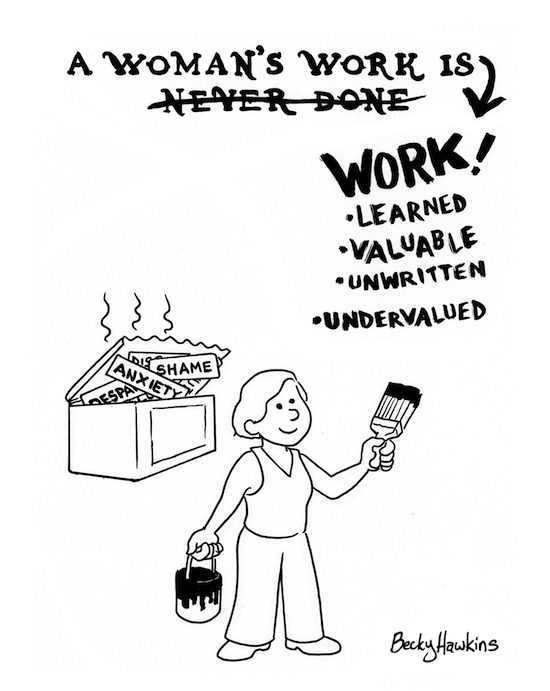
Emotional Labor provides an impressive historical perspective of socioeconomic issues over the last several hundred years. Then (as you’d expect, because it’s written by professional organizers) it delves into some key issues related to emotional labor and organizational skills, including high expectations and low self esteem, cognition and executive function, and the key skill of “anticipation.”
All of these concepts contribute to the focus of the second half of the book, disrupting the long-held narrative surrounding emotional labor throughout the lifecycle, learning how to delegate in a new, more functional way, and concepts (and solutions) for making our personal and professional worlds more equitable. Not a short order!
The book is extensively researched and ends with a robust set of end notes and resources for learning more about the various tendrils of the sprawling topic. As collaborator, Kolberg references that, for Lark, this book represents the “integration of feminist history, women and organizational challenges, and social change.” Whether you’re interested in social and economic history or just why the heck you are so overwhelmed and frustrated, this book will open your eyes and give you plenty to think about and discuss.
Lark is the author of Psychic Debris, Crowded Closets: The Relationship between the Stuff in Your Head and What’s Under your Bed. Her collaborator, Judith Kolberg, is the standard-bearer of professional organizing and author of Conquering Chronic Disorganization, ADD-Friendly Ways to Organize Your Life, and so many other books you should read (and then read again).
Emotional Labor: Why A Woman’s Work is Never Done and What to Do About It is available in paperback and Kindle.

This book was actually published at the very end of 2019, just a few months before the world got caught up in the whirling dervish of COVID. Any big, scary goals (or even small, delightful ones) that most of us had on New Year’s Day 2020 got short shrift in a matter of a couple of months. But that shouldn’t deny Organizing and Big Scary Goals its place in the sun.
You all got a preview of this book earlier in the year, when I wrote Paper Doll Recaps the NAPO2021 Virtual Conference and attended Skillen‘s session,This is Scary: Embracing Discomfort to Help You and Your Clients Succeed. Skillen’s comment about pushing through fear, “Learning to tolerate discomfort lessens its power over you,” is still echoing in my head seven months later.
Skillen’s writing makes you feel like you’ve sat down with your kindest, most truth-telling friend, and her wisdom is punctuated with warm humor that dissipates any fear that might (OK, will) arise from thinking about, well, fear. Organizing and Big Scary Goals follows various clients through their challenges and successes; each chapter starts with intriguing quotes and ends with “Scribbles,” exercises to think and write about how you can apply each chapter’s lessons (both emotional and practical) to your life.
And throughout the book, Skillen shares her own bicycle-related bogeyman to show that she is no more immune to fears than any of us; by sharing her vulnerabilities, the lessons become even more relatable.
Organizing and Big Scary Goals looks at the various types of obstacles we face, including self-criticism, perfectionism, shame, self-doubt, backsliding, and difficulty with life transitions. Skillen focuses on organizing, and how all of these elements stand between us and the homes and lives we might wish to have, but the concepts for dealing with these fears can be applied in a broader, more overarching way to any big project or change you’d like to take on.
If you’re looking to read a book in December to help you get out of a fear-based rut and into a motivational mode for 2022, snuggle up on your sofa with a hot chocolate (the marshmallow count is up to you) and let Sara share the real deal.
It’s available in paperback, on Kindle, and as of this year, as an audiobook.
Mind Body Kitchen: Transform You & Your Kitchen for a Healthier Lifestyle by Stacey Crew

First, if you’re thinking this is a diet book, let me slap that celery-and-cottage-cheese thought out of your head.
Crew is both a professional organizer and Certified Health Coach (as well as the author of The Organized Mom: Simplify Life for You & Baby One Step at a Time). So, it’s understandable that she has integrated the cognitive and emotional, the physical, and the organizational to create a positive, supportive approach to improving your health and home.
Using her health coaching skills, Crew has (thankfully) jettisoned the obsolete (and often dangerous) cycle of dieting and embraced an approach that involves understanding (from an emotional, as well as intellectual, perspective) cravings, instincts, and the mind-body connection. She guides the reader to improve mindset, better understand the basics of nutrition, make healthier eating decisions, and develop a strategy for daily physical movement without making it all a drag.
Because Crew is an organizer, she gives the reader a real-world method (and not an unattainable, glossy magazine set of buzzwords) for creating an organized kitchen that supports making simple, healthy meals. Her kitchen advice covers organizing the pantry and refrigerator, the kitchen gadgets and tools that are really worth owning, and “what to embrace & what to avoid when it comes to certain foods.”
And because we don’t just live in our kitchens (a particular truth for Paper Doll, who mainly subsists on PB&J and takeout sushi), Crew uses her organizing skills to help readers detox and declutter to “create a truly healthy home.”
Mind, Body, Kitchen is so new that it’s not officially out yet — it’s being released next week on December 1st, but you can pre-order it now and by the time you’ve polished off the last of the Thanksgiving leftovers (and given up on buttoning your jeans) you’ll be ready to dig in. You can even read the first two chapters now, online.
Most books that come out in hardcover aren’t available in paperback until months later, but you have your choice of formats: hardcover, paperback, or Kindle. It’ll be available at Amazon, Barnes & Noble, and Target.
Filled Up and Overflowing: What to Do When Life Events, Chronic Disorganization, or Hoarding Go Overboard by Diane Quintana, CPO®, CPO-CD® and Jonda Beattie, M. Ed.

Quintana and Beattie are stellar in many respects. They were already known for their individual professional organizing practices and the books they’ve published independently, as well as their collaborative writing for children, Benji’s Messy Room and Suzie’s Messy Room. They are experts in our field.
But the word that I most often hear describing both of them is compassionate. This compassion is reflected throughout their newest collaboration, which explores and guides readers through the complex realm of hoarding disorders and related challenges.
Too often, the mass media approaches organizing through one of two lenses, a practical “let’s make this pretty” approach for situational disorganization and a frenzied, exposé-oriented hunger when looking at those who struggle with hoarding disorders and related (but very different) organizational challenges. Quintana and Beattie bridge the chasm between those two approaches and bring compassion to those who are often engulfed in derision from others and shame from within.
Filled Up and Overflowing uses case studies from the authors’ own client practices (protecting identities, of course) to help individuals and their loved ones better understand and support individuals for whom excess “stuff” (even when it is to the point of endangering them) is a comfort.
The book spells out the power of words and the dangers and insensitivity of “labeling” those challenged by hoarding tendencies; it also clarifies what hoarding is and is not and explains that both environments and behaviors that look like hoarding to laymen might be chronic disorganization, situational hoarding (triggered by a life event), passive age-related decline, and various neurological and cognitive conditions. In each case, the authors vividly illustrate clients who are three-dimensional humans and not merely labels or or a collection of behaviors to be judged.
Throughout the book, the authors clarify not only why and how people’s situations come to be as they are, but what to say and how to help and support, rather than steamroll, those whose spaces have become chaotic and overwhelming. The book focuses on compassion (there’s that word again!), understanding, communicating, and assisting. The latter is illustrated through a collection of strategies for both those struggling with their possessions, as well as family, friends, social workers, mental health providers, first responders, and others to help create safer, more supportive environments.
The book also includes a variety of references and useful resources.
I should note, I have a personal interest in this book. A few years ago, the authors conducted a presentation for our NAPO chapter on several of the concepts at the heart of this book, including the differences between hoarding disorders and so many of the look-alike behaviors. I was transfixed, and fan-girled my way to the front of the room to gush, insisting that this was a book (!) in the making, and that LOTS of people (and especially our colleagues) needed this information. Yes, Paper Doll considers herself a muse!
Filled Up and Overflowing is available in paperback and for Kindle.
FICTION
Emotional labor, fear, the challenges of healthier living, and hoarding and related situations. Although the books are written in uplifting and compelling styles, that is pretty heavy content.
Perhaps you’d like something a little lighter, perhaps some fiction?
There aren’t many novels actually written about professional organizers by professional organizers (who know what they’re talking about). Until recently, only Valentina Sgro’s Patience Oaktree books (including Patience and the Porsche, Photographic Memories, A Mess of Fish and Other Tidbits, and Heart of a Hoarder) came to mind. And while I would love to see more Patience books, there is a newly published book with a professional organizer front-and-center.
Perfectly Arranged by Liana George

In full disclosure, Liana and I were co-chairs of (take a deep breath to say this whole thing) the National Association of Productivity and Organizing Professionals’ Authorship and Publishing Special Interest Group. (AKA: the NAPO A&P SIG.)
As buddies in support of professional organizers who are also writers, I got to read a very early beta version of Perfectly Arranged, the first in what’s already set to be (at least) a three-part Hopeful Hearts series, with more books coming in 2022 and 2023.
I warned Liana that I rarely read fiction anymore, and when I do, it’s mostly re-reads of Jane Austen or piles and piles of speculative fiction (think: time travel rather than space operas); and I’d definitely never read a novel in the Christian genre. Well, unless you count Christy, but that was a plucky Appalachian Anne of Green Gables/teacher kind of novel that became a series with Kellie Martin, Tyne Daly, Tess Harper, and two smokin’-hot guys (a minister and a doctor a with Scottish accent) between which Martin’s Christy was forced to choose.
That said, I was charmed by Liana’s turns of phrase and her deep research. I don’t want to spoil the story, so I’ll just give you a broad sense of the first-person narrative.
Nicki Mayfield, the protagonist is a plucky professional organizer facing a shortage of clients and funds, considering “hanging up her label maker” when she agrees to take on one (possibly final) job with a wealthy, eccentric, and prickly woman. However, the process of organizing turns up some clues to a client’s family mystery, which leads them on an adventure in China. Of course, there’s the requisite self-doubt and misunderstandings that populate contemporary fiction, especially “chick-lit.”
The early draft I read in early 2019 has been revised, of course. It’s been several years since I first got to know Nicki Mayfield and the characters who populate her life, but I remembered certain settings as though I were replaying (the surely eventual Lifetime TV) movie version in my head; I’m now reading along in the final (published) version, noting the differences but still getting to the same places.
For more about the background of George’s book, you may want to read the pieces in her Perfectly Arranged press tour. Having discussed our writing projects together, I’ve always been intrigued by the motivation for her book. When Liana George was living in China, her father called and requested she visit Shanghai and take a photo of what was at a particular address; the situation that prompted that request was the impetus for this story, and it’s fascinating to see how it all unfolds.
I was captivated by the original tale, and I’m looking forward to seeing how the book has grown and matured.
Speaking of matured, I still haven’t matured beyond sharing clips from TV shows, so here’s the opening “saga cell” from Christy. In case you were wondering about my stance in Christy’s love triange, I was TeamNeilMacNeil (the Scottish doctor).
Happy reading!
Disclosure: Some of the links above are affiliate links, and I may get a small remuneration (at no additional cost to you) if you make a purchase after clicking through to the resulting pages. The opinions, as always, are my own. (Seriously, who else would claim them?) For more information regarding how Best Results Organizing handles affiliate links, please see the affiliate section of the site’s Privacy Policy.
Follow Me