Archive for ‘Professional Organizing’ Category
The Truth About Celebrity Organizers, Magic Wands, and the Reality of Professional Organizing
 Yesterday, it happened again.
“It” is when someone (this time, on an international discussion-based web site I frequent) complains about needing organizational help but doesn’t know where to turn. Unfortunately, they don’t know that professional organizers even exist, or the only thing about organizing they’ve ever seen in the media is Marie Kondo’s show on Netflix.
The Kondo Thing and Celebrity Organizers
Many, many of my colleagues have written about the pros and cons of Kondo, her books, and her television show. However, I have always held off because while I think Kondo is an interesting character study in expert-as-celebrity, the profession of skilled, educated, non-judgmental, and empathetic professional organizers existed for many decades before Marie Kondo came along.
I think the big difference between Kondo and professional organizers in NAPO, ICD, POC, APDO-UK, and the like, is that we believe that systems need to be customized to the individual and hold that one system imposed onto everyone is a recipe for making people feel like failures.
For more than 18 years, I have been telling clients that “tidying” or “cleaning up” is about the stuff, but professional organizing is about the person who owns the stuff.
For more than 18 years, I have been telling clients that tidying or cleaning up is about the stuff, but professional organizing is about the person who owns the stuff. Share on XKondo presents some intriguing approaches in her books and on her Netflix show. I’ve often noted that about 70% of what she discusses is the same advice all professional organizers offer; about 25% focuses on her very precise rubric of organizing methods; and about 5% is culturally specific to her background. Rather than writing about her, per se, I’d point you to some posts by my colleagues, who are better able succinctly share their thoughts:
- The Five Stages of Marie Kondo & The Life-Changing Magic of Doing What Works for YOU by Hazel Thornton
- Tidying Up with Marie Kondo: A professional organizer’s view by Janine Adams
- What Happens When a Professional Organizer Gets Upset, and Finds She Has Much to Say? by Kathy Vines
Marie Kondo isn’t going to be the last famous organizing expert. She’s certainly not the first. When I started my professional organizing business, Julie Morgenstern was starting her meteoric publishing ascent. She won a national award at the NAPO conference in 2002, the first I attended, and her Professional Organizing from the Inside Out was already becoming a classic. I devoured her books, as I had done with Bonnie McCullough’s Totally Organized and Barbara Hemphill’s Taming the Paper Tiger books in the 1980s. A bit later, Oprah Winfrey, who helped make Julie Morgenstern a household name, brought Peter Walsh from Clean Sweep stalwart to media stardom
Good for them. Good for us (the professional organizers). Good for you (the readers who want to get organized)!
Concert Pianists and Magic Wands
I often tell a story about my mother, known to many of you readers as Paper Mommy. When I was little, I asked her what she wanted to be when she grew up. She smiled and said “A concert pianist.” Having just started piano lessons, I encouraged my mother to take lessons with me, and launched into a fantasy of her stellar career in music. I will never forget my mother’s incredible self-awareness and honesty when she explained that she didn’t want to become a concert pianist, she wanted to be one. She wanted the magic wand.
I will never forget my mother's incredible self-awareness and honesty when she explained that she didn't want to become a concert pianist, she wanted to be one. She wanted the magic wand. Share on XCelebrity professionals in all fields, including my own, offer the magic wand: the idea that there is one method, one Holy Grail of organizing that will work for all! It’s pretty compelling.
Superstar professional organizers do one great thing. They let people know (or remind those who have forgotten) that life does not have to be a series of frustrations and overwhelms. Help is available, whether that’s from a book, or a professional organizer, or the guidance of a more experienced friend or relative.
I’ve got news for you. I don’t care whose advice you follow. I mean, sure, I’m delighted that you’re on my blog and come here for advice on organizing. And I love my clients and wish I could clone myself and work with all of the clients who want and need my help, especially now, when so many people have been stuck at home and ostensibly have the time to focus on such projects. (On the plus side, I am now offering virtual services, which means that I can help more people in shorter bursts of time to kickstart their advancement toward organizing and productivity goals.)
But it’s not about me. Or Marie. Or Peter. Or Margareta Magnusson, the lovely lady who wrote The Gentle Art of Swedish Death Cleaning. (For what it’s worth, I find the Magnusson’s gentle, homespun psychological approach to downsizing to be far more applicable to my clients’ lives than most other “star” advice.)
No, it’s not about any of the celebrity organizers, or even my less-famous but fabulous colleagues in NAPO, ICD, POC, and the various organizations within the International Federation of Professional Organizing Associations.
It’s about the client. It’s about you. It’s about being ready and willing to make changes.
The No. 7 Moisturizer
Sometimes, people just want advice on buying storage containers – without ever having given thought as to whether they should hold onto everything they’re going to put in those bins. They believe the right container will solve all of their problems. And sometimes (a lot of the time), people look at celebrity organizers as the magic wands, or in this case, the magic storage bins.
Speaking of Marie Kondo, she’s back in the news lately because she’s hawking her (rather pricey) products appealing to the same human instincts to which we’re all subject. I’m a good example. Years ago, the posh-sounding UK brand No. 7 started selling products in the United States. They came out with a Protect and Perfect, a product designed to smooth the skin and given the just-starting-to-age face a nice boost. The product wasn’t that expensive, and I wasn’t looking particularly decrepit, but the ads in the glossy magazines were compelling, and I plunked down my $20 at Target.

Then two things happened.
First, after the initial few times I used the product, I slacked off. I’m not much of a beauty product person. I don’t watch the influencers on Instagram and YouTube to learn how to make a perfect smokey eye. (Though, six weeks into the pandemic quarantine, I did watch my stylist’s video on how to style my overly long bangs. Twice.)
Second, as time went by, even though I had only used the product in a lackluster fashion and hadn’t seen much effect when I did use it, every single time I saw an ad for the No. 7 product in the beauty magazines, I had a little blip of “I want that.” I had it. I’d used it. I’d blown it off. But I STILL WANTED IT. Advertising is insidious that way.
We want what the product or service promises, even if I’m not willing to do the work. Even if it’s not the right product for me. It’s the fantasy, not the reality.
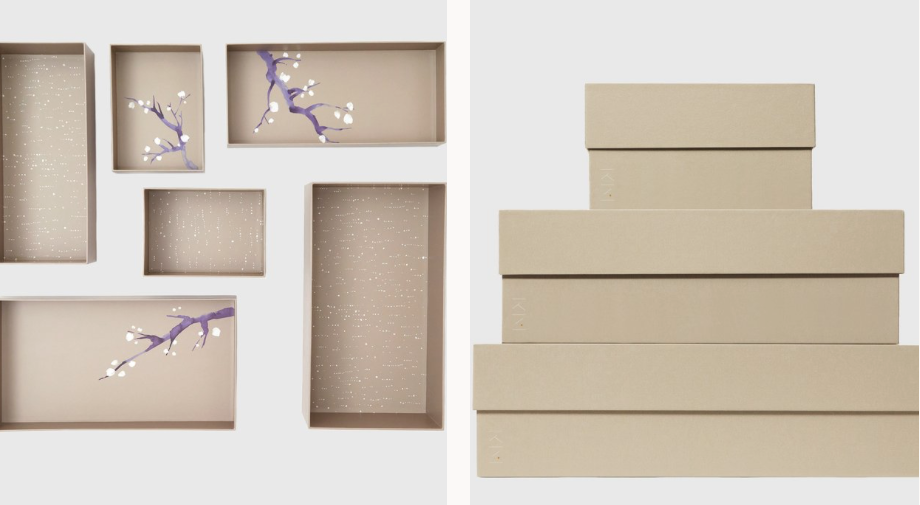
Kondo’s first magic wand was her method; her second selling a series of “joy-sparking” products – including a $58 brass cookbook stand, a single shelf for $135, and a $69 set of three cardboard boxes for inserting in your drawers.
Celebrity organizers offer the fantasy. Some offer good advice. Most offer advice that will work if you follow it, as long as you:
- are able to follow it to the letter
- have the time, money, and physical dexterity to follow it to the letter
- don’t have clinical depression, an anxiety disorder, ADHD, a traumatic brain injury, a family member who has any of these complicating issues, a toddler who likes to touch things rather than sit pristinely and quietly in the middle of the room, pets, or spouses who act like toddlers or pets…
- possess the unerring ability to confidently make decisions without the support of others, have the resources to know what should be donated vs. consigned vs. sent to live on a farm upstate, and
- are incredibly self-motivated to start, continue, and finish a product without any guidance, support, or accountability
Is that you? Yay! But if it’s not you, and you’ve ever felt like a failure because the organizing advice in a book or on a TV show wasn’t enough to deliver the solutions you were seeking, you’re a member of a pretty big club.
For the same reason people who work with fitness coaches achieve more than those who buy exercise videos but never take them out of the plastic (or if they do, feel so awkward that they never make it through the first viewing), not everything works well as a solo endeavor.
Just as not everything is one-size-fits-all.
Just as not every organizer is for every client.
The Reality of Professional Organizing
Professional organizers have different specialities. Some organizers are generalists. Others specialize in types of clients (students, seniors citizens, new parents) or in locations (kitchens, closets, law offices, warehouses). I think of myself as a generalist who specializes in paper management and productivity.
In 2007, under the auspices of NAPO, the Board of Certification for Professional Organizers created a certification program requiring 1500 client-collaborative hours in order to sit for a comprehensive exam. This exam spans content related to client assessments, project plan development, implementation, and maintenance, and ethics. Recertification is dependent upon continuing education.
The Institute for Challenging Disorganization has certificate and specialist credentialing programs programs for organizing practitioners who work with clients with special needs relating ADHD, chronic disorganization, hoarding disorders, and aging.
There are other formal specialities. NAPO members can earn specialist certificates in residential organizing, household management, life transitions, workplace productivity, and team productivity. In addition to being a CPO, I’m an Evernote Certified Constultant. Affiliate with our professional are Senior Move Managers and Daily Money Managers (financial organizers). And yes, Marie Kondo even has training for practitioners who want to organize according to her methods.
The thing I’d love everyone to know is that your professional organizer can have the best training, be the most compassionate provider, and excel in delivery of services and breadth of expertise. But you, the client, are the key to everything.
You have to want more than a changed result. It’s essential to change the behavior that got you to this place of dissatisfaction in the first place. You may have to set boundaries with your child or your pet or your spouse. You may have to develop skills to figure out why you keep buying your own equivalent of No. 7 miracle youth-making skin care products, whether they are blank notebooks you never use, cute outfits you never wear, or healthy produce you never eat.
(Hey, I get it. Professional organizers do aspirational shopping, too. I’ve thrown out a lot of fuzzy vegetables in my time. ShoppingJulie has more confidence in my cooking skills than DiningJulie ever will.)
So What Should You Do?
I’m not advising you stop reading organizing and productivity books or magazines. (I love a good Real Simple multi-page spread on decluttering your entryway as much as the next person!) I’m not saying to stop watching home-improvement TV shows. They can be very entertaining, and these days, darned comforting. I certainly don’t even want you to stop decluttering or creating systems.
I just want you to know that just like the airbrushed bodies in magazines don’t really look like that, the gorgeous rooms in the IKEA and Container Store catalogs and Houzz and House Beautiful don’t look like that in real life, or 92 days into quarantine, or three days after Christmas, or in the middle of summer vacation, or after the whole family has been down with the flu.
Reality TV makes things look tidy, but reality is messy. Professional organizers can help. But none of us, not even (or especially not) the celebrities, have magic wands. You have to want more than the end result; you have to be willing to do the hard work (with us at your side) to gain the mental muscles to confidently make decisions and real behavioral changes.
NAPO 2014 Conference Recap: The Preview
This past week, Paper Doll was extra jet-lagged and suffering withdrawal symptoms from sensory overload, but I’m thrilled to start sharing my excitement over having attended NAPO 2014 Annual Conference & Organizing Expo in Phoenix-Scottsdale.
I got to the beautiful Westin-Kierland Resort and Spa a day early to participate in the Board of Certification (BCPO®) for Professional Organizer’s board meeting. To a layman, discussing the intricacies of upholding the validity of an industry-wide certification program from 7:45 a.m. (yes, really) until dinner time might seem dry, but aside from the actual morning aspect of it, the experience was enlightening.
The BCPO® program, for which I serve as the Director of Program Development, recognizes and raises industry standards, practices and ethics, and lets clients know that CPOs are committed and serious about the work being done. Speaking of serious, how serious am I about certification?
So serious that I was a presenter at the conference. So serious that my colleague, BCPO® president Helene Segura and I got up and presented Why and How to Get Certified, at a similarly o’dark-thirty, on Friday morning.
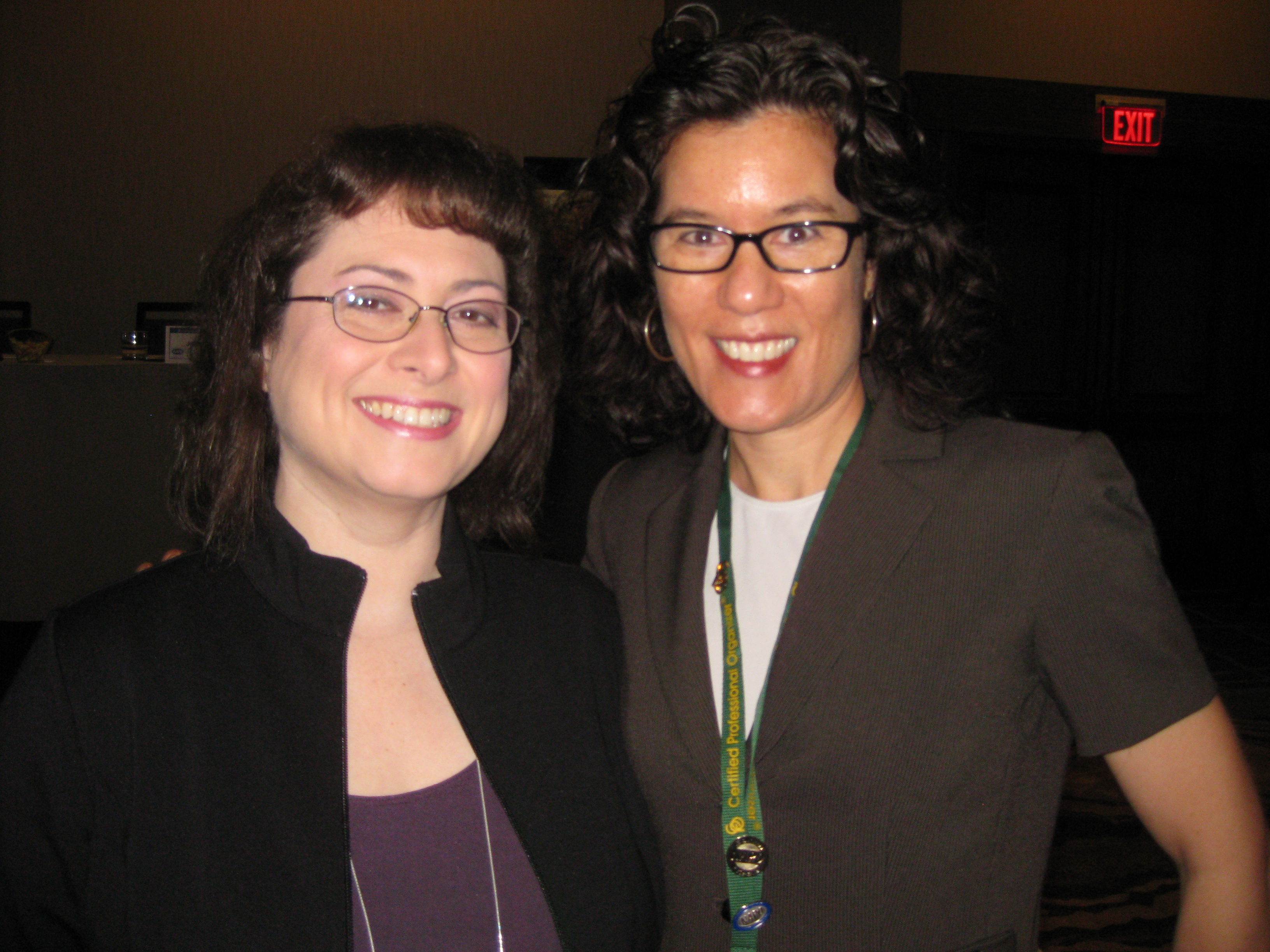
If that doesn’t show commitment, I don’t know what does!
NAPO2014, and indeed every NAPO annual Conference and Expo, means different things to different people. As I try to do every year, I want to share just a few of the highlights of the conference itself, and over the next series of posts, we’ll be looking at the Expo side of things, with all the neato-keen goodies.
EDUCATION
NAPO conference attendees get to pick from among five concurrent educational sessions in each of six session blocks, over three days. Yes, that means selecting what floats your boat (or, y’know, meets your educational objectives) from among thirty different sessions.
In addition to the opportunity to select among a variety of half-day and full-day pre-conference sessions, my colleagues and I attended courses in five educational tracks, including classes designed for infusing our professional practices with growing expertise to serve our clients:
Organizing and Productivity: “Are You Listening? Really? Key Coaching Skills for the Experienced Organizer or Productivity Expert,” “Test Your Technique,” “If Only I Could Draw,” “Going Paperless to Boost Productivity,” and “Clearing Mental Clutter Makes Organizing Easier.”
Special Needs Clients: “Finding Flow: Understanding Your Client’s Style Preferences,” “Is It Hot or Is It Just Me?: Mid-LIfe Transitions and ADHD,” “Decisions, Indecision, and Clutter in Hoarding Situations,” “Exceptional Organizing: Strategies for Special Needs Clients and Their Families,” “Distracted & Obsessed: Helping ADHD and/or OCD Clients,” “Success Under Stress,” “Creating Home and Business Inventories” and “Student Organizing Tools, Apps and More.”
Technology sessions mixed subject matter that serves our clients: “Finding Digital Sanity,” “Evernote for Work: Advanced Implementation Strategies,” and “Virtual Planning for Your Digital Afterlife” with those which help us grow our businesses: “How to Write Blog Posts That Get Results,” and “Boost Your Brand By Podcasting.”
Other sessions in Business Growth, Marketing and Running Your Business focused on topics as varied as “Marketing to Therapists and Psychiatrists,” “Staying in Business a Decade & Beyond,” “Taking Business from ‘I’ to ‘We’ with Employees,” “Niche Markets for Organizers,” “Master the Sales Process,” “6-Figure Marketing on a $2 Budget,” “Do’s and Don’t’s of Successful Book Promotion,” “LinkedIn Means Business,” “How to Create Effective Policies and Procedures,” “How to Be a Kick-Ass Boss” and “List Building: The Secret Sauce of Online Marketing,“ the latter having been taught by NAPO perennial favorite, marketing expert and Spider-Man fan, Rich Brooks:
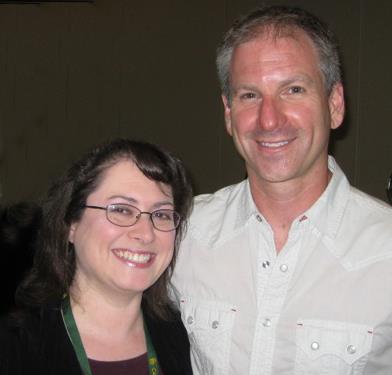
Whew! And this doesn’t even count our opening and closing keynote speakers on leadership and getting out of your own way, two Ask the Organizer panels, and a smattering of exhibitor How-To sessions!
COMMITTEES AND SPECIAL INTEREST GROUPS
In addition to formal educational programs, the annual conference is an opportunity for NAPO’s many groups to meet to conduct important business. From the Education Committee, to the NAPO Ambassador program, to the philanthropic Quantum Leap program, to a wide variety of Special Interest Groups (SIGs), including those for technology, student organizing, public speaking, coaching, eco-awareness, moving and relocation, and small and multi-person businesses, the halls of the Westin-Kierland were humming.
EXPO
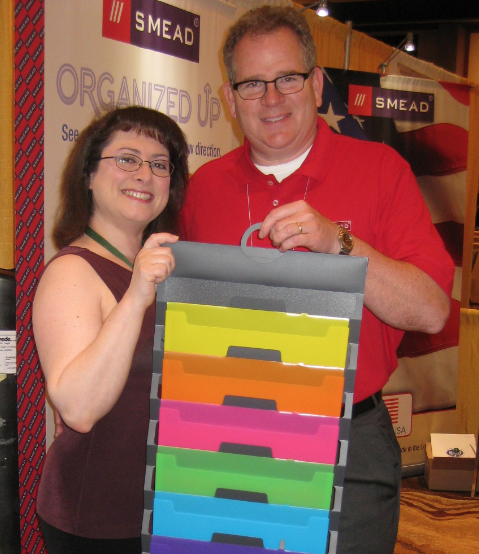
NAPO’s Corporate Associate Members and other exhibitors came from as near as Los Angeles and as far away as Israel to share their products and services with professionals ready to learn and evaluate. You’ll be hearing more about the Expo vendors — including the various winners of the Organizers’ Choice Awards — over the course of the next series of posts. But Paper Doll would be remiss to not include two of this blog’s longtime favorite companies and their representatives, Smead‘s Jim Riesterer
and Pendaflex/TOPS‘ Barb Schmit.
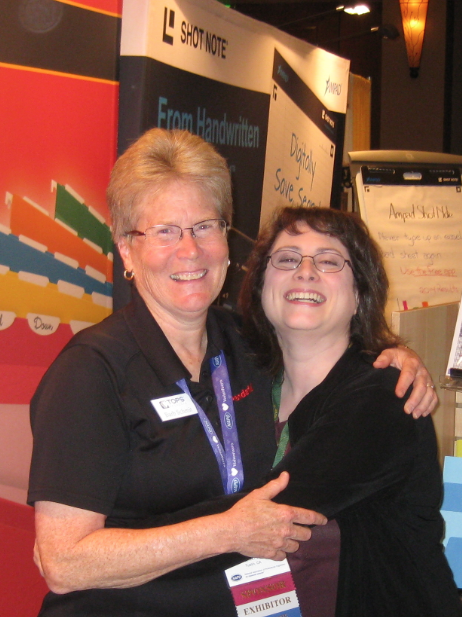
NETWORKING AND SOCIALIZING AND DINING (OH, MY!)
Is it any wonder that with all of these members, educators, exhibitors and random organizing celebrities (of whom, more later), NAPO people took time to socialize? There were formal receptions daily in the EXPO, orientations for a first-time and international attendees, a Golden Circle luncheon (for 5-year+ organizing veterans), a CPO® celebration/reception,
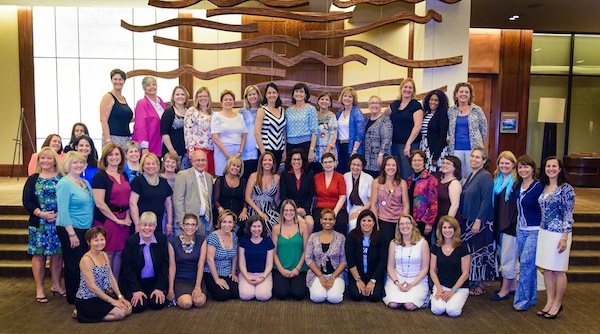
and more continental breakfasts that you could shake a stick at and organize into neat columns and rows.
But be assured, informal socializing was the rule of thumb for day and night. Groups of three, four and upwards of a dozen huddled on comfy couches in the lobby, in quiet corners in the pubs, near poolside chairs and on the back expanse of patio overlooking rolling hills and a golf course.
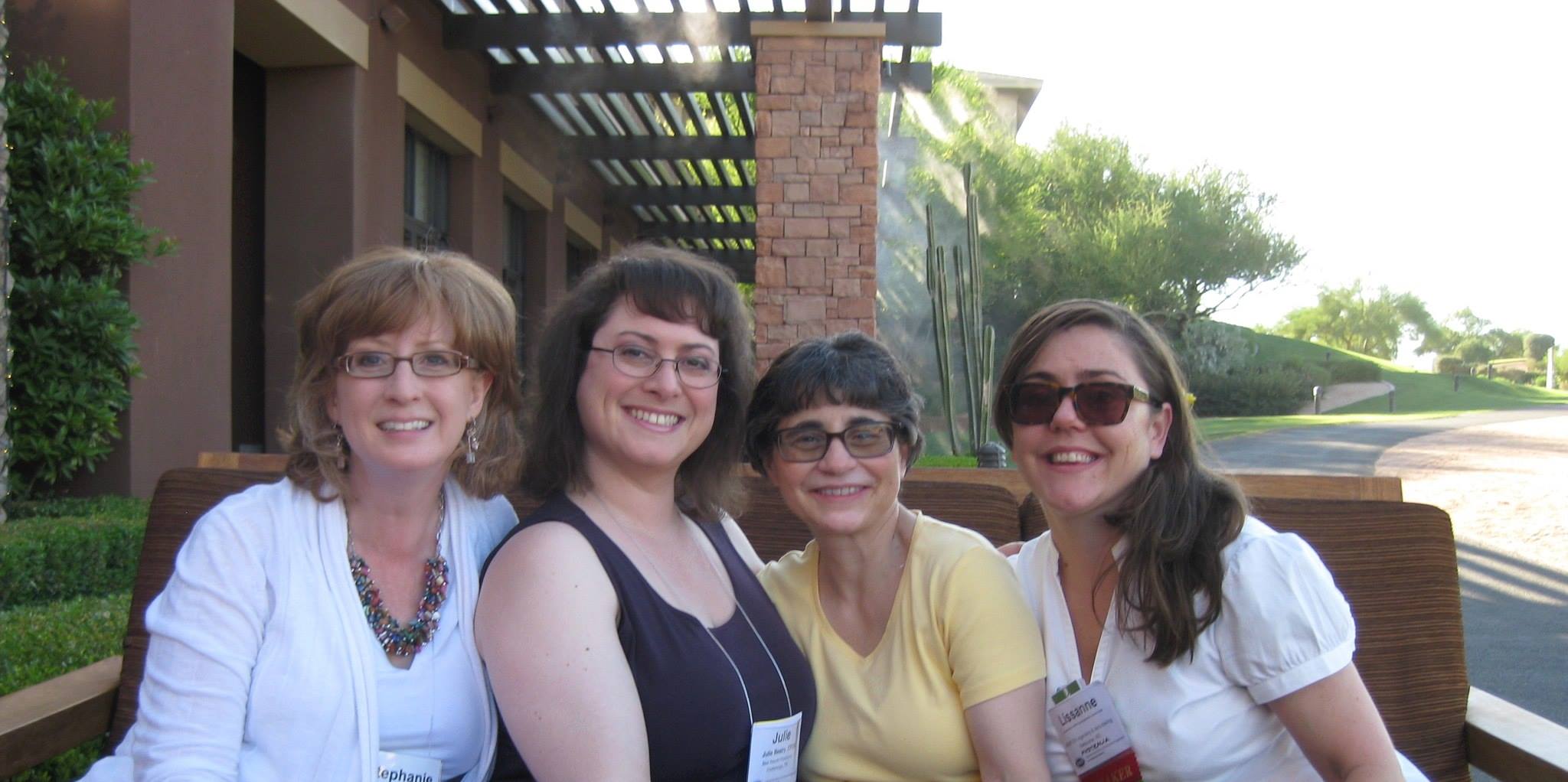
Paper Doll with former NAPO President Stephanie Denton, current Institute for Challenging Disorganization President Valentina Sgro and Australian superstar and AAPO founding member, Lissanne Oliver. (We didn’t think about it at the time, but this photo represents just a sampling of NAPO authors, including Stephanie’s The Organized Life, my 57 Secrets for Organizing Your Small Business, Val’s whole series of Patience Oaktree books, and Lissanne’s Sorted!)
And, of course, it wouldn’t be a NAPO event without many days and nights of dining!
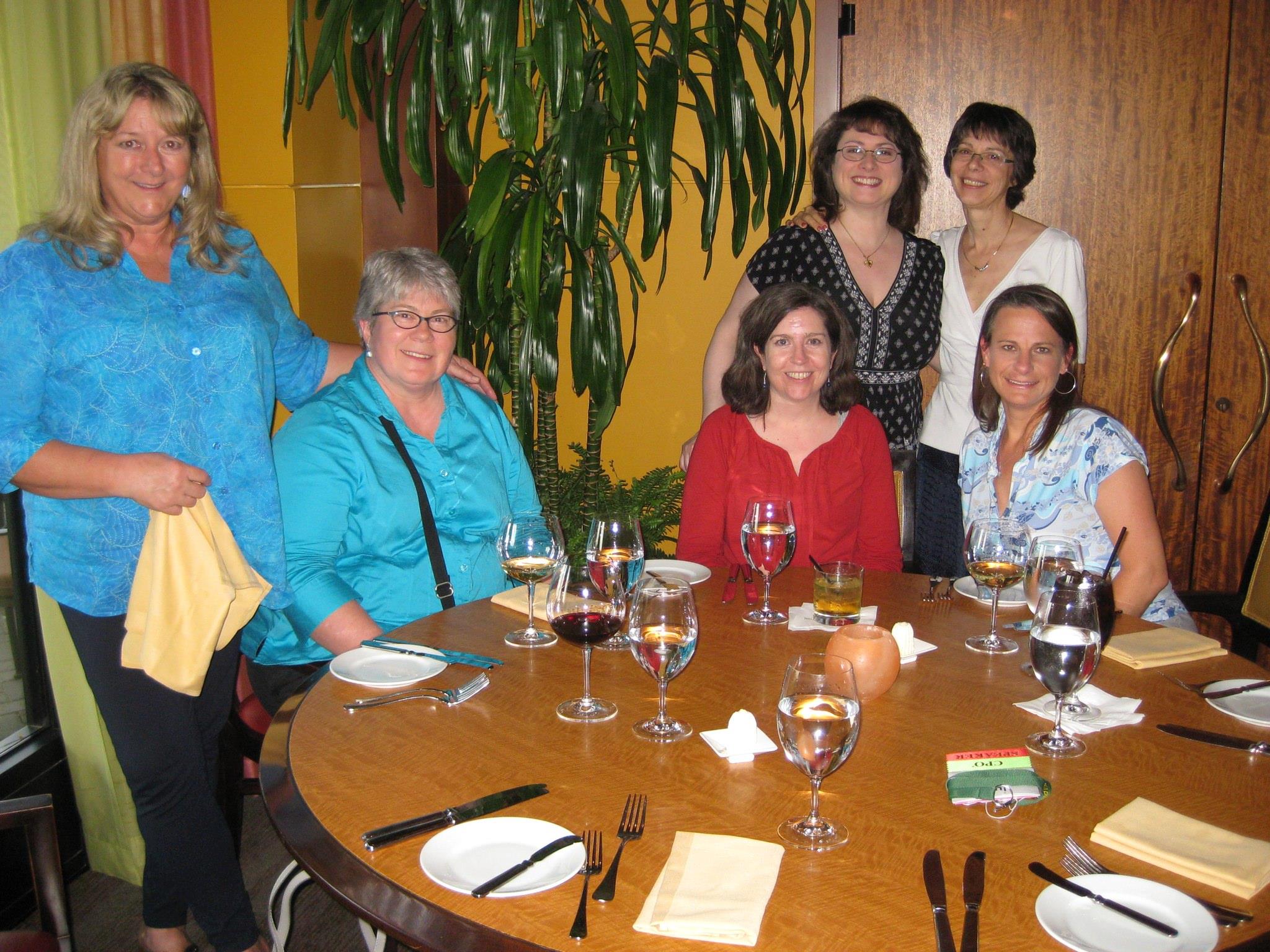
LeighAnn Hensel, Hazel Thornton, Miriam Ortiz Y Pino, Paper Doll, Janet Barclay and non-organizer BCPO® Public Director Sharon Fanning at Deseo
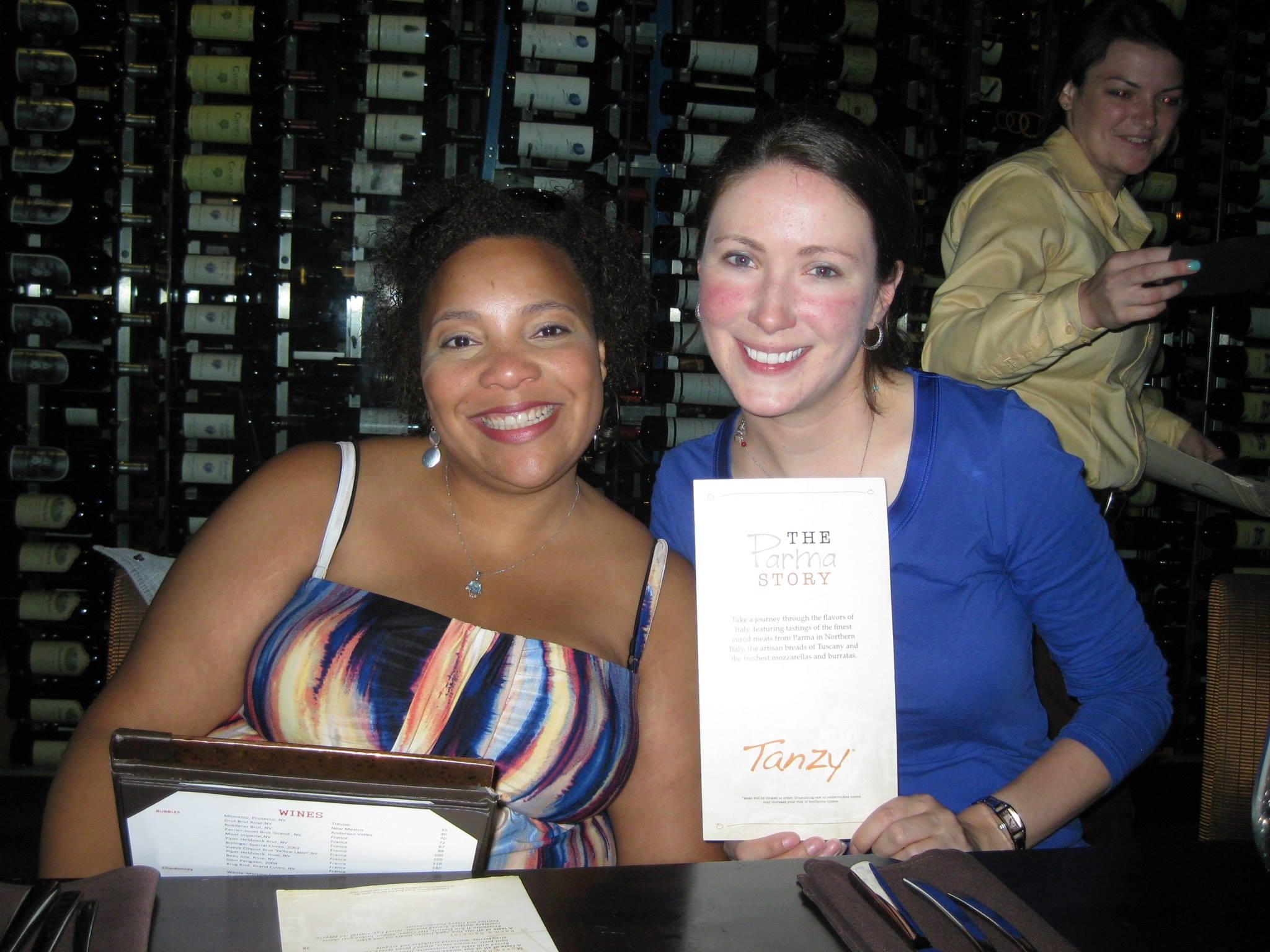
NAPO-Georgia friends Danielle Carney and Tiffany Poole at Tanzy
INTERNATIONAL ATTENDEES AND OTHER EXOTIC FOLKS
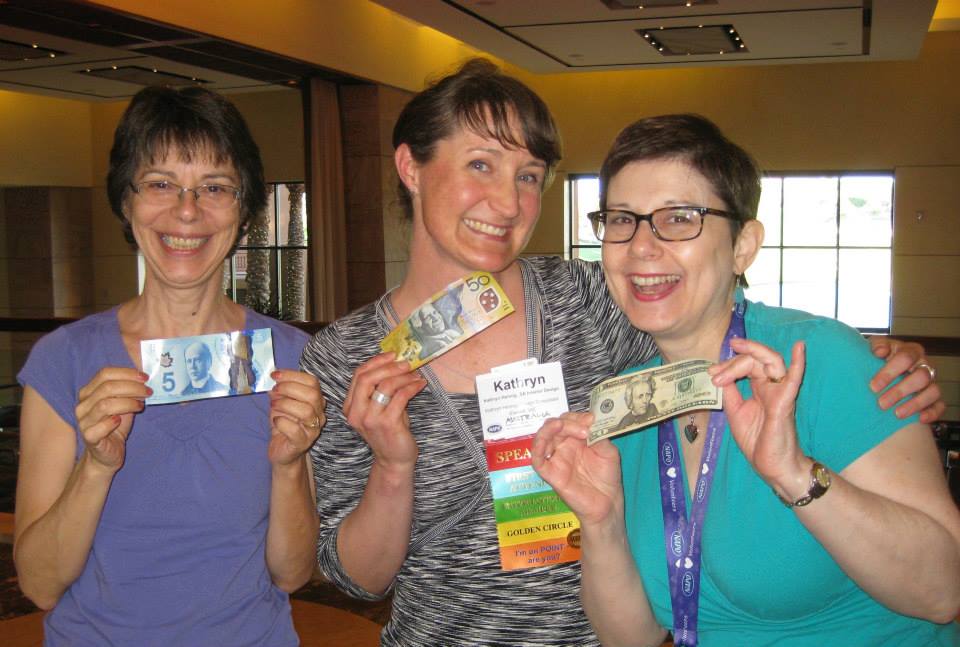
Every year, we’re lucky to have a number of international visitors to our conference from about a dozen nations as far away as Colombia, Brazil and Nigeria. Even a language barrier couldn’t stop these intrepid organizers, who had translators and moxie, speaking the common languages of clutter destruction and productivity. They marveled at their commonalities and discussed their differences, as evidenced by this picture of Canada’s Janet Barclay, Australia’s Kathryn Hennig and New York City’s Sharon Lowenheim (comparing our U.S. paper/linen money with their shinier, more plastic cash).
I never thought I’d be on anybody’s bucket list, but as Janet Barclay of Your Organizing Business writes in her post, My First NAPO Conference, I made it. And not only did I get to rub elbows with current Professional Organizers of Canada President Stephanie Deakin,
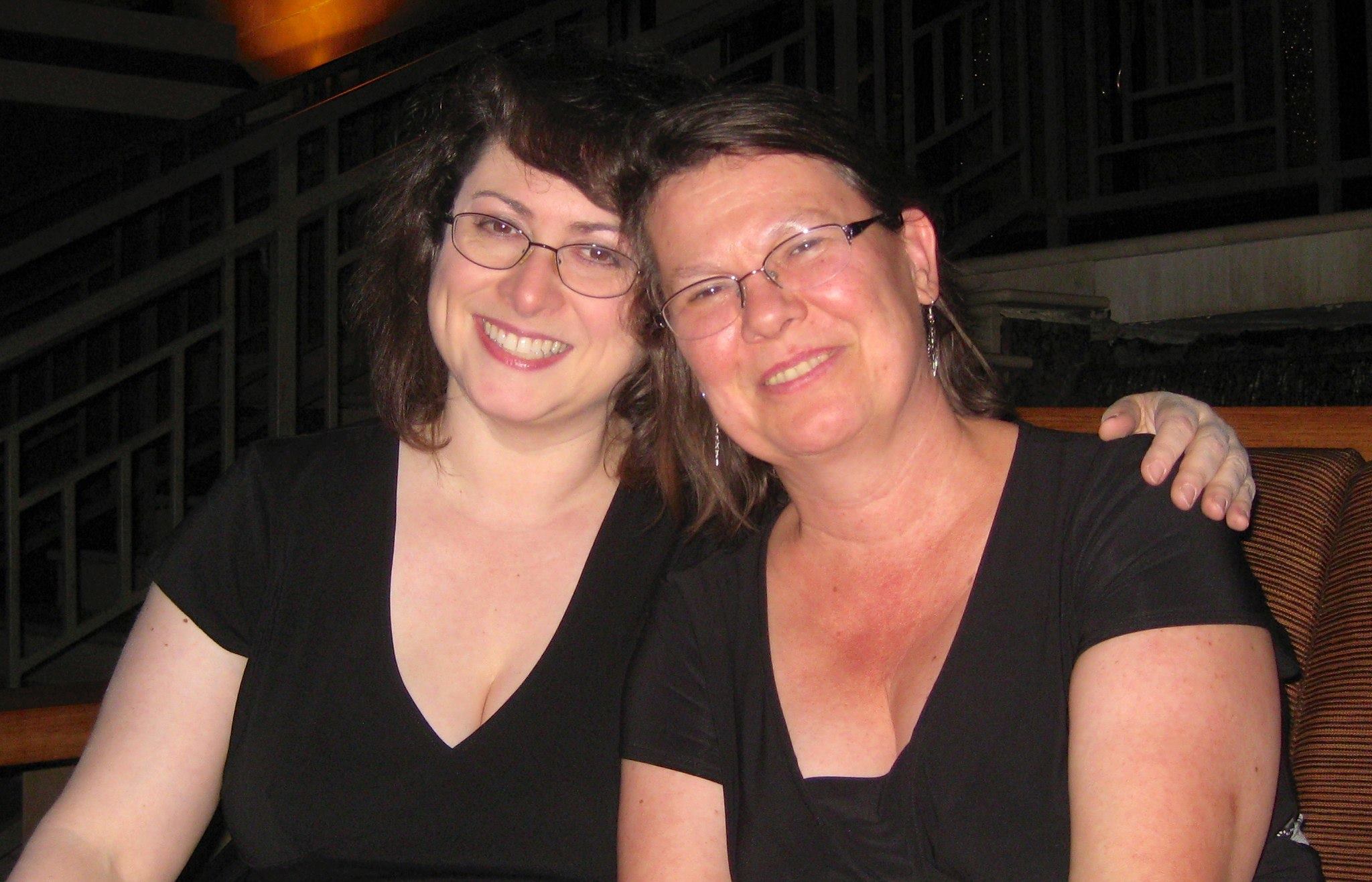
but she continued a long-standing tradition of POC members bringing me my beloved Coffee Crisp, the best candy bar in the world, from above the 49th Parallel.

And while men aren’t generally considered as exotic as international visitors, this year’s NAPO conference boasted an unusually large number of male attendees and presenters, including the aforementioned Rich Brooks, newly re-branded Scott Roewer, Evernote whiz Joshua Zerkel, tech-and-stuff organizer Deron Bos, paperless (gasp!) guru (and Canadian!) Brooks Duncan, NAPO-Connecticut President Rick Woods, and ADHD specialists Dr. Ari Tuckman and Harvard Medical School’s Dr. Roberto Olivardia.
In coming posts, we’ll be talking about new organizing “stuff” for paper and the other areas of your life. Until then, be assured that a good time was had by all. If you’re an organizing client, or plan to be one some day, I hope this has given you confidence in both the educational curriculum of professional organizers and the idea that professional organizers aren’t stuff. And if you’re a professional organizer who missed conference this year, here’s your motivation to start planning for #NAPO2015!
To that end, and to what I’m sure will be my eventual downfall, I share with you this year’s “It seemed like a good idea at the time” greeting, the boob bump.
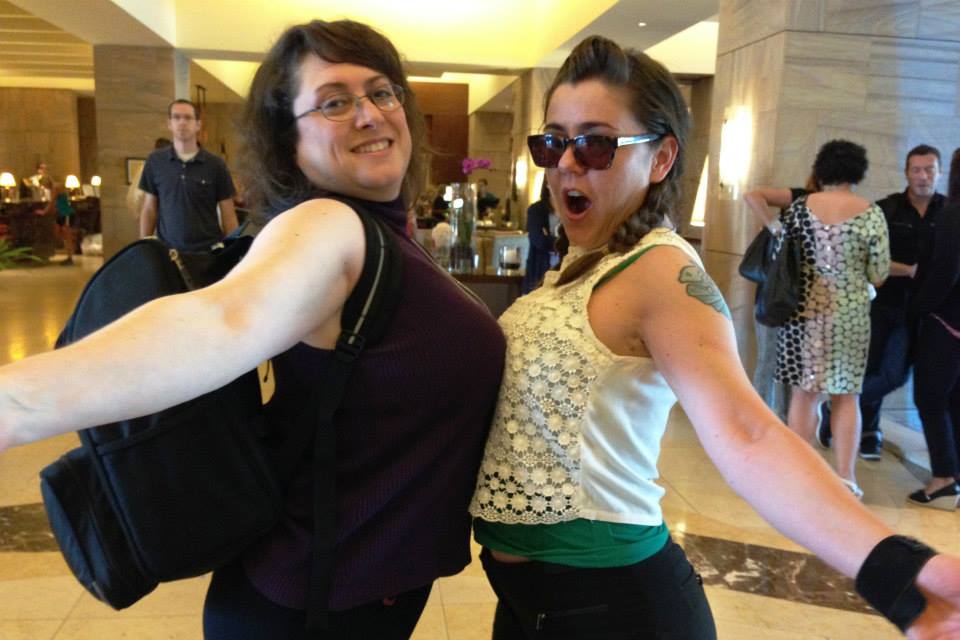
What can I say, dear readers? It was 107° every day. Even the good judgment of organizing professionals can be melted by the Arizona heat.
Follow Me