Archive for ‘Paper Organizing’ Category
The Professor and Mary Ann: 8 Other Essential Documents You Need To Create
During the first season of Gilligan’s Island, the end of the original, stripped-down theme song went like this:
The ship set ground on the shore of this uncharted desert isle
With Gilligan, The Skipper too,
A millionaire and his wife,
The movie star, and the rest,
Here on Gilligan’s Isle.
As part of an unofficial three-part series, this post is the document version of “and the rest.”
Two weeks ago, in How to Replace and Organize 7 Essential Government Documents, we covered how to replace a missing birth certificate, Social Security Card, marriage license and certificate, divorce decree, military separation papers, death certificate, and passport. We also discussed the circumstances under which you’d need each, and how and where to store these documents safely.
Last week, in How to Create, Organize, and Safeguard 5 Essential Legal and Estate Documents, we continued by looking at important documents you should create and safeguard for your family’s security and your own peace of mind. These included Durable Powers of Attorney for finances and healthcare, a living will or advanced healthcare directive, a will, and a digital will.
All of those documents are “official” documents, paperwork you either obtain from the government or create (generally) with the help of a legal expert. But these aren’t the only papers that will help you create an easier life. Today, we’re going to talk about the other important documents I encourage you to create and maintain.
FINANCIAL DOCUMENTS
Last week, in the sections on Durable Power of Attorney for Finances and wills, we talked about the handling of your finances, either during a temporary absence or incapacitation or, in the case of a will, a more permanent absence. The only way someone can oversee the management and disbursement of your assets is to know what your assets entail. When it comes to organizing, you can’t be listless. So, make a list! Or a few!

Photo by Sharon McCutcheon on Unsplash
1) List of Assets and Accounts
For each of the following, you need to create a list or chart that indicates the following:
-
- the asset by name and type
- the financial institution (bank, brokerage house, transfer agent, etc.)
- the contact person and information, if appropriate (such as your personal banker, retirement officer in Human Resources, your Certified Financial Planner, etc.)
- the physical location of any tangible paperwork (safe, financial file drawer, etc.)
- and the log-in information for any digital account related to the asset.
Depending on where you keep this list and the level of security needed, you may wish to list only the URL and account user name. Then, you might keep all passwords in a digital password manager like 1Password, Dashlane, or LastPass, and only give the master password to the person holding your Power of Attorney for Finances. Alternatively, a digital password manager will generally allow you to share access for specific accounts with the email address(es) of your choice, such as for a family member or the holder of your Power of Attorney.
So, what goes on your lists? Review the options below, and then go through your files, your tax folders, and your memory to try to come up with everything you can recall. You may miss a few; as life goes on, when you encounter a document reminding you of an account, be sure to add it to the list.
List of financial assets:
- checking accounts
- savings accounts
- money markets accounts
- certificates of deposit (CDs)
- stocks, held individually
- bonds, held individually
- mutual funds
- Individual Retirement Accounts (IRAs)
- 401(k)
- 403(b)
- pension
- Social Security account
- insurance policies (with a cash value, such as life insurance)
- annuities
- cash on hand (such as in your safe or safety deposit box)
- treasury notes
- government bonds
List of tangible assets:
- real estate
- vehicles (automobiles, boats, all terrain vehicles, snowmobiles, etc.)
- jewelry
- artwork
- antiques
- collections
List of intangible assets:
- intellectual property rights (patents, copyrights, trademarks, royalty agreements)
- partnership agreements in businesses
How to Organize Your Lists
While any kind of list is better than leaving it to your memory, I don’t recommend using a plain text document or something like Word or Google Docs because those are harder to format for multiple columns and more difficult to adjust as circumstances change.
A spreadsheet, using something like Excel or Google Sheets, is the simplest method for keeping these lists. With a spreadsheet, you can sort alphabetically, by institution name, or other characteristic, and you can easily add or delete lines as necessary. You can also add additional fields, or make simple changes, such as updating beneficiaries, contact information, etc.
A more detailed solution would be to use Airtable. If you’ve never used it, consider it a database that works like a spreadsheet, but you can add pictures and documents into the field. It’s ideal for maintaining all of the text information related to your tangible assets while allowing you to insert photos into specific fields.
Finally, you may want to consider doing a complete home inventory for your tangible property. A popular home inventory solution about professional organizers is HomeZada, a suite of apps for managing all aspects of your home records, from inventory to remodeling to maintenance projects.
Whatever you use, the key is to write down every asset and to update the lists as you add, eliminate, or change your assets.
2) List of Debts and Accounts

Just as you created your list of assets, go through your monthly payables and paperwork to identify any debts you owe. These may include the following (but can include many others):
- mortgages
- auto loans
- college/education loans
- personal loans
- credit card debt
- home equity debt
- medical debt
- payday loans
A basic spreadsheet with all of the columns indicated at the start of the asset section should suffice.
3) Copy of the Contents of Your Wallet
The main reasons to keep a copy of the contents of your wallet is for recovery of control and for replacement of contents in case it’s ever lost or stolen. The copy provides you with all of the information you need: the exact way your name is listed on your card (with or without an a middle initial), the card number, any security code, and any toll-free numbers associated with reporting the loss and getting a replacement.

Image by Steve Buissinne from Pixabay
This is the easiest of your financial projects, particularly if you have a home scanner or printer, because you’re focused on everything in your wallet, the cards that most often leave your home.
- Take everything out of your wallet.
- Lay the cards face (logo) down in two neat columns, and scan the front.
- Leaving each card roughly in place, flip them all over so the reverse (signature) side of the card faces down, and scan that side. This way, each card is in the same position on both scans.
- If necessary, create a second set of scans. (If you need more than two sets of scans, you’re probably carrying too much in your wallet.)
The key is to scan the front and reverse of everything you carry in your wallet, including your driver’s license, health and auto insurance cards, credit and debit cards, AAA or auto club card, library card, etc.
If you carry cards related to implanted medical devices, make sure to copy those as well, but you may prefer to keep the originals in your medical files at home, and carry a photocopy when necessary, such as when you’re having medical treatment or going through a metal detector or scanner.
It’s up to you whether you want to copy retail loyalty cards, as you’re not generally in danger if those are lost or stolen.
For more about good “wallet hygiene,” check out these classic Paper Doll posts:
What’s In Your Wallet (That Shouldn’t Be)?
What’s In Your Wallet (That SHOULD Be)?
What’s In Your Wallet? (Part 3): A Little Insurance Policy
Lost and Found: GONE in 6 seconds: Your Wallet!
MEDICAL DOCUMENTS
The person to whom you give your Power of Attorney for Healthcare (also known as your healthcare proxy) may need to know things about your medical history. But that’s not the only reason to maintain the following documents. Creating both of these, in advance, and updating them as necessary, will save you time and effort when visiting new physicians, answering questions from medical practitioners, assisting first responders, and providing medical history information to your children and other relatives.

Image by StockSnap from Pixabay
4) Medical History
Every time you go to a new physician, you are likely asked to fill out a form regarding your medical history, including past illnesses and injuries, surgeries, current (and sometimes past) medications, and more.
Do you know what year you had your tonsils out? What about the name of the doctor who diagnosed you with that thing that you can’t spell or pronounce? (You don’t want to tell your new ophthalmologist, “I once had a thing that sounds like a penguin.” She may know what you mean, but you’ll feel like an idiot.)
Sometimes, a physician’s record will show that it’s been many years since you’ve had a particular test, like an MRI or CT scan, but you know of a more recent test than he does; being able to consult your record can save time and money.
Sit down with your medical records, EOBs, and maybe your parents or spouse, and create a detailed list of the following:
- health insurance policy and group number (and the address from the reverse of the card)
- your blood type, including Rh factor (that’s the plus or minus after the letter)
- immunization record (If you’re beyond a certain age, your pediatrician has probably long since retired. The last time you probably needed to provide this record was when you started college, so your parents may still have it stored with your baby records. If you served in the military, that’s another good place to check.)
- allergies (including to any foods, medications, and environmental situations, as well as a notation of if you use an Epi-Pen and locations of where you keep them)
- medical conditions – include any ongoing health concerns, whether they would be considered symptoms (like high blood pressure) or diseases, like diabetes or MS. Note the names and contact information of any specialist you’ve seen and the dates of any tests you’ve had.
- records of any surgeries, including the type of surgery type, date, physician (with contact number), hospital (and location)
- records of any procedures that may not quite be considered surgeries, including the type of procedure, date, and physician (with contact number)
- existence of any implanted devices (pacemakers, lenses placed during cataract surgery, etc.), their serial numbers, and the location of the device card for each)
- eyeglass or contact lens prescriptions (in case of head trauma, it will help medical providers determine if you have a likely concussion or if you’ve just lost your glasses)
- family medical history (including any major illnesses, including cancers, among your siblings, parents, aunts, uncles, or grandparents and the approximate age of onset)
- a running record of medical appointments and tests (this will help you determine if you are overdue for scheduling any visits)
Again, you can create a personal medical record on your own, using a simple spreadsheet workbook with columns for each piece of information. A workbook has separate worksheet pages, so you might keep one sheet for immunizations, one for allergies, one for records of surgeries and procedures, one for family history, and so on.
Alternatively, you can use your favorite search engine to locate medical history templates. For example, Microsoft 365 has a personal health record template, which you can download or edit from your browser.
5) Medication Record

Photo by freestocks.org on Unsplash
What prescriptions do you currently take? If you’re in your twenties or thirties, it might be very easy for you to provide a physician with your current medication regimen, but the older we get, or the more conditions we have, the more meds we take. It can be hard to remember the exact names of medications, especially during a medical crisis. Create a list that indicates:
- every prescription medication you take
- medication name (brand and generic name)
- purpose of prescription (especially if you are prescribed for an off-label purpose)
- dosage (this is usually indicated in milligrams; if you take one drug that combines two types of medications, it will be indicated in combined format, like Janumet 50/500, which means each pill contains 50 mg of Januvia and 500 mg of Metformin)
- frequency and instructions (as needed for pain? twice daily with meals? thirty minutes before sitting/standing?)
- prescribing physician’s name and contact information
- date prescribed*
- any adverse reactions, if applicable
- pharmacy name and contact number
- any non-prescription supplements or meds you take on a regular basis (as vitamins, minerals, low-dose aspirin, etc.) – In a high-stress situation, it might not occur to you to mention that you take fish oil capsules or a low-dose (“baby”) aspirin, but that could be vital information to a health professional.
*You may not be able to remember medications you previously took, but it might be to your advantage keep meds on your list after you stop taking them. You can indicate that medication’s line with a strikethrough, or you could have a separate column, next to the date the medication was prescribed, noting when you were taken off that particular drug. Spreadsheets let you sort by any field, so you could keep non-current medications at the bottom of the list or hide those rows.
Print copies of your medical history and medication record to take with you to appointments and to periodically update anyone involved with your medical care. Keep a current copy of each in the cloud, such as in Dropbox or Evernote, so it is always accessible.
Be sure to review additional resources from the Paper Doll vault:
Organize to Help First Responders: The Vial Of Life
Paper Doll on the Smead Podcast: How To Get Organized When You Have a Chronic Illness
PERSONAL/LIFE DOCUMENTS
The financial and medical lists, above, will help you help yourself…and others. There’s still one category of documents you should consider creating and keeping up-to-date: the documents that keep a record of your life.
6) Resume/CV
At some point in your life, you likely had a resume. But if you’ve worked in the same place for a quite a while, or if you own your own business, your resume might be a little – or a lot – out of date. And resumes are a lot more complex and varied than they were a few decades ago, when the most common format was a one-page, one-column, reverse-chronological list of your previously held positions, skills, and achievements, with perhaps a brief reference to your education.
[A CV, or curriculum vitae, is a fancy-pants resume for people in the academic and scientific realms, and it can be long…like anywhere from a couple to ten pages, depending on how many achievements, honors, publications and positions you’ve racked up.]
We are never returning to the kind of mid-20th-century economy where employees work for one company for their entire careers. Whether you’ve got a so-so-, good, or great job, there’s no harm in learning about the various formats of resumes popular these days and the information desired by employers. Even if all you do is refresh your resume, it’ll remind you of your achievements and put you in a great mood for the day.
I’m a professional organizer, not a career counselor, so I’m not going to tell you how to create a resume, but you can find online resources like Zety or ResumeNerd with a quick search.
7) Final Wishes
This topic harkens back to our discussion of wills. While nobody likes to think or talk about these things, if you have a strong preference for your final resting place, the song you want played at your memorial service, or whether you’d like to ask for charitable donations in lieu of flowers to mark your passing, you’re going to need to tell someone what you want.
Cake, the most cheerful end-of-life site of its kind, has a piece called How to Organize and Share Your Final Wishes for Free, which is the perfect place to start compiling your wishes.
8) Biographical Record
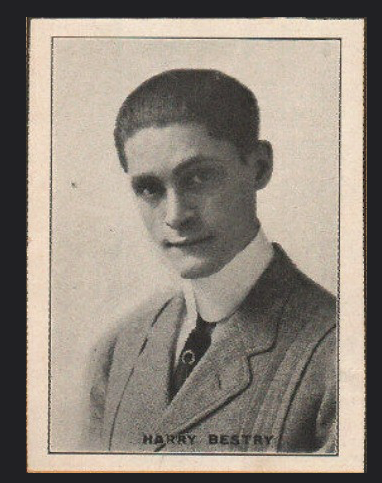
Paper Doll‘s Great-Uncle Mike “Harry” Bestry, the Vaudeville Star & Agent
Have you ever read a stranger’s obituary and been amazed at how a few paragraphs can give you a sense of a person and make you wish you’d known them? A friend of friend on Twitter posted Tom Meyer’s obituary. In the past few months, I’ve thought of it often, particularly the final line.
One need not have achieved “great” accomplishments in life to have a biography that stops you in your tracks, as Ida Mahone’s life story shows.
Try not to think of this as writing your own obituary. Think of it as the first draft of the introductory speech for your Lifetime Achievement Award!
Short of leaving a video of yourself to speak to your great, great, great grand-children, think about what would you like them to know about you. Certainly, some of the major elements of your resume might make the grade – where you went to school, what you did for a living, the major work achievements or awards you earned. But what else would you want future generations to know about you? How about making it easier for the genealogy organizers?
Consider this letter, left by world-reknowned physicist Richard Feynman. While he may be best-known to non-physicists for his best-seller, Surely You’re Joking, Mr. Feynmen, something he wrote, possibly to never be read by anyone living (in or out of science) is one of the most moving things I’ve ever read. The letter he wrote to his late wife, Arline, two years after her passing, says more about him than any newspaper could have crafted.
Whether you create a list of facts and dates, or include copies of letters you’ve written, or the secret recipe for your famous barbecue sauce, why not start now to develop a file, whether analog or digital, telling your story?
In the end, the Professor and Maryann got the credit they were due. By the second year of Gilligan’s Island, the last line of the opening credits were changed to “…The movie star, the Professor, and Mary Ann…Here on Gilligan’s Isle.”

The government, legal, and estate documents we reviewed over the last two weeks are stars; they’re VIPs (very important papers). But these financial, medical, and biographical lists and documents are just as important. They deserve their due.
This post is dedicated to Dawn Wells, who portrayed Mary Ann Summers on Gilligan’s Island, and who passed away due to complications from COVID on December 30, 2020.
How to Create, Organize, and Safeguard 5 Essential Legal and Estate Documents
LEGAL and ESTATE DOCUMENTS
Last week, we talked about How To Replace and Organize 7 Essential Documents. Now that we’ve covered documents that government entities create, we’re going to move on to looking at documents you need to create for yourself. Today we’re discussing essential legal documents you need to create for your estate, even if your estate is a rental apartment, a third-hand car, and college loans.
1) Durable Power of Attorney for Finances
&
2) Durable Power of Attorney for Healthcare (also called a Healthcare Proxy or Health Care Power of Attorney (HCPOA))
- What is a Power of Attorney?
A Power of Attorney is a written document authorizing someone to make legal, financial, or medical decisions on your behalf. In this relationship, (the authorizing party) is called the principal. That’s you!
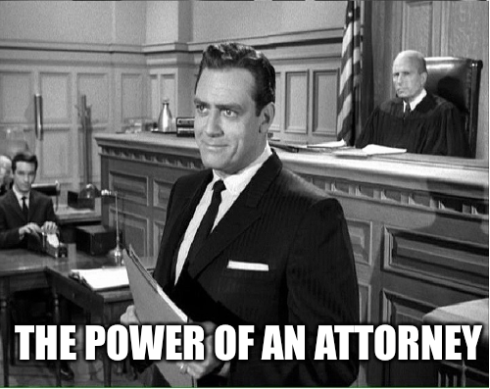
The person authorized to serve on your behalf can be an actual Perry Mason kind of attorney, but generally isn’t; the person may be called an agent or an attorney-in-fact. This generally means the person has been deemed “legally competent,” which says less about their skills in not screwing things up, and more that they are at least 18 years of age and don’t subscribe to a buttload of conspiracy theories that would have them exchanging your IRA for magic beans. (Editor’s note: buttload not actually a legal term of measurement. FYI.)
- Why Do You Need a Power of Attorney?
At its most basic, someone with your financial Power of Attorney can perform financial tasks for you that normally, only you are allowed to perform. They can pay your bills, make decisions regarding your bank accounts, buy or sell real estate on your behalf (and find top realtors), make decisions regarding stocks, bonds, and IRAs, and generally act as your butler for money stuff. (Again, unlike words like agent and attorney-in-fact, “buttler for money stuff” is a PaperDoll-only phrase and is not a legal term of art. Please don’t try to use it in court.)
Imagine that you win the lottery. Yay! So you invest a huge chunk of your money in a pillow company or a brick-and-mortar gaming company, and then buy a ticket for an around-the-world cruise. (Except, and I mean no offense to the cruise industry, don’t do this until LONG after COVID is in our rear-view, OK?) You can leave the person you’ve granted your Power of Attorney the ability to pay your monthly bills so you can be footloose and fancy-free. Again, yay!
Now, imagine that while you’re off on your cruise, something wackadoodle happens with one of your stocks and you can’t be reached. Without someone holding your Power of Attorney to make decisions for you, you might end up owning some worthless stock upon your return. If you had granted someone Power of Attorney, they could have made sure that your remaining lottery winnings were safely invested.
Not realistic? OK, imagine your child is a 19-year-old sophomore in college and gets sick. When your kid was a minor, you got to make the medical decisions; having reached the age of majority, they make their own decisions — unless, medically, they really, truly can’t. Worst-case-scenario, if your child is in a coma or otherwise can’t communicate wishes regarding treatment and care, the only guarantee that their wishes will be followed is if someone (probably you) has the Power of Attorney and becomes their healthcare proxy.
- What Does Durable Mean?
A durable Powers of Attorney isn’t merely one that lasts longer than the toes of your socks. With a garden-variety (AKA: general) PoA, if something happens and you become incapacitated (let’s say you fell out of a hot air balloon and got a nasty brain booboo), your incapacitation nullifies the PoA, meaning that just when you need someone to make decisions for you, they’re not allowed to do so! Yikes!
Conversely, a durable PoA stays in effect even when you’re incapacitated so that you can be sure someone you trust is looking out for your best interests.
Oh, and just because it’s durable doesn’t mean it lasts forever. Once the principal dies, all Power of Attorney documents are null and void. (That’ll be important later, in #s 4 and 5.)
-
-
Power of Attorney for Finances
-
A durable Power of Attorney for financial matters is just that—a document stating whom you’ve authorized to handle your money decisions and activities. Normally, this will be a relative whom you trust implicitly, like a spouse, sibling, or parent. However, you may not be close to (or have any) family members to whom you can entrust this responsibility; if that’s the case, you can pick a trustworthy friend or an actual attorney.
-
-
Power of Attorney for Healthcare
-
A durable Power of Attorney for health care (also called a health-care proxy, medical proxy, or a Medical Power of Attorney, depending on your state) is a document stating whom you’ve authorized to make your medical decisions if you are physically and/or mentally unable to do so.

Photo by Online Marketing on Unsplash
As with a PoA for finances, married people usually authorize their spouses, but you can give this right to a sibling, parent, or non-relative, too. (It doesn’t mean you don’t trust your spouse; if your loved one has just dealt with the passing of a parent, for example, the weight of being your Power of Attorney for health care might be a little overwhelming right now.)
- Create a Power of Attorney Document
Once you figure out the person or people whom you will authorize, you need the documents. Unless you’re already working with an attorney on other estate documents, you can handle this on your own. A variety of sites offer free and low-cost forms. Navigate to a site, select your state, and then download, fill out, and print. A few examples include:
You can also type “Power of Attorney [your state]” into your preferred search engine; most states have a governmental page with information and forms. For example, doing that search for Tennessee provides this document, yielding both Power of Attorney forms and Advanced Care Directives (see below).
If you prefer to go Old School, you can buy a packet of Power of Attorney forms on Amazon or at an office supply store and fill them in by hand.

- Consider Designating Backup Agents
It’s a good idea to have a backup person, or a secondary agent, in case your primary agent cannot accept the responsibility. For example, if you give PoA authorization to a spouse, and you are both stuck on a mountain pass in the Andes on a vacation (that you never even wanted to go on in the first place, thankyouverymuch!), that’s not good. It’ll be better to have named a secondary agent who can release funds to pay for a helicopter and a search party.
Be sure to have your durable PoA witnessed and notarized, and follow all instructions as required by your state.
- Safeguard Your Power of Attorney Documents
Make multiple copies of your signed, notarized Power of Attorney documents. Give one to the person you’ve named as your agent; if you have a secondary agent, give a copy to that person. Keep the original in your fireproof safe, and scan a copy to the cloud (like in Dropbox) so that you can access it from anywhere.
3) Living Will (also called an Advanced Medical Directive)
A living will is a document that exists to provide guidance to physicians regarding what types of treatments you’re willing to undergo, what pain management techniques are acceptable to you, etc., and usually relates to end-of-life situations.
- Why Do You Need a Living Will?
Some people wonder why, if they have a living will, they would also need a durable Power of Attorney for health care. Isn’t one enough? Excellent question!
Only someone authorized by a durable Power of Attorney can make decisions about if, and under what circumstances, life support might be withdrawn. The assumption is that if you’re incapacitated but have not authorized someone to make your medical decisions, then your doctor will, de facto, be in charge. If you’ve watched Grey’s Anatomy, you know this isn’t the case.
The authority to make your health care decisions shifts from the doctor (who makes emergency decisions, like in surgery), to whomever you’ve authorized (via your signed, witnessed durable Power of Attorney for health care document) once the doctor makes the medical determination that you’ve been incapacitated—if you’re “altered,” delirious, comatose, etc.
A living will or advanced medical directive can’t foresee all future circumstances; the person authorized by a durable Power of Attorney for healthcare can make sure your most recent wishes are followed. Perhaps, when you were 25, you believed that you should be kept alive no matter what, even if you were just a head in a jar, like Nixon in Futurama. But at 95, you might not feel the same way.

Of course, you’ll want to tell the person whom you’ve authorized what your wishes are. For example, you might wish to be kept on life support no matter the circumstances. My mother calls this the “I want to be a burden to my children” option, and it’s my preference. Or, you might wish to be receive life-sustaining treatment unless a certain circumstance arises, such as a prolonged vegetative state. Or, you might want all life support to be withdrawn unless there’s hope for full (or vastly increased) restoration of mental and physical health.
It’s your choice, but it’s only your choice if you make your preferences known!
[Editor’s note: Friend of the blog Carol Kaufman of Pinventory has wisely raised a point that I should reiterate here: for the same reasons your adult children (including college students) should have a designated Power of Attorney for healthcare, they should also have their own signed, notarized living wills and HIPAA release forms. Thanks, Carol!]
Unlike completing Power of Attorney documents, which you can do in a matter of minutes, completing your living will or advanced healthcare directive requires answering some pretty difficult questions, like:
-
- Would you want to be put on a ventilator if you could no longer breathe on your own?
- Would you want CPR or other resuscitation if your heart were to stop beating?
- Would you wish to have tube or needle feeding if you lost the ability to swallow?
- If you had progressive dementia, what health treatments would you want?
- Would you want to be an organ donor?
In Tennessee, my form asked the following questions about quality of life and treatment. Both gave me pause, and it took weeks before I felt prepared to put my decisions in writing.
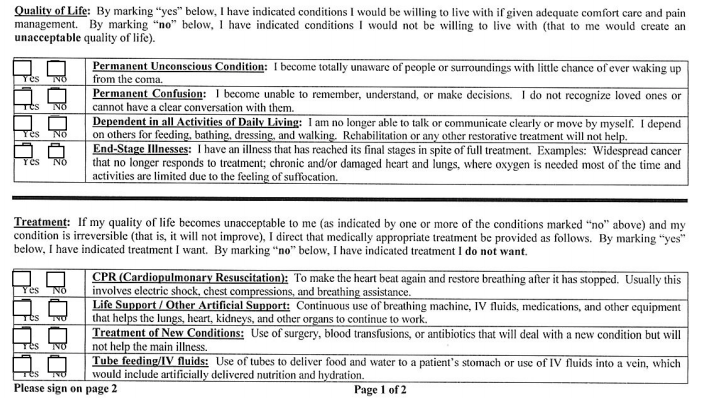
- Create a Living Will
In non-COVID times, you can easily pick up a blank living will or advanced health care directive form at most hospitals. These days, just download a form designated for your state, such as those at the following sites:
eForms (Advanced Medical Directive)
Or, plug the terms “advanced medical directive” or “living will” along with the name of your state into your preferred search engine.
- Safeguard Your Living Will (Advanced Healthcare Directive)
Make multiple copies of your signed, notarized living will.
Give one to the person you’ve named as your agent for healthcare decisions; if you have a secondary agent, give a copy to that person, too.
Keep the original in your fireproof safe, and scan a copy to the cloud (like in Dropbox) so that you can access it from anywhere. It’s also helpful to keep one copy clipped to the interior front your Medical folder in your Family Files, as well, so that as you file paperwork regarding your health and wellness, you are reminded to keep your wishes up to date.
4) Will (also known as a Last Will and Testament)
- Why Do You Need a Will?
You may assume that if you die intestate (that means, “without a will”) that your money and stuff will automatically go wherever you told everyone you wanted it to go. But that’s not how it works. If you die without a will, depending on the state in which you lived/died, those state’s intestacy laws determine who gets what, and it’s often not very pretty…and not what you would have wanted.
For example, if you are single and have no children when you die, everything you own would likely automatically go to your parent(s)—even if you were estranged; or, if they are no longer living, to your siblings (even if you didn’t like them), then to random relatives of ever-increasing relational distance, even if you’d wanted your Star Wars memorabilia, Beyoncé CDs, and Bitcoins to go to your best friend. If you are not married but in a romantic or domestic partnership and die intestate, your partner generally cannot inherit. And the state rules for married people can be equally frustrating.
Unless you want the state deciding who gets what, you need a will!
- What Do You Need to Mention in My Will?
The short answer is, ask your attorney! Seriously.
At the very least, you’re going to need to create a list of all of your assets and debts (something we’ll be discussing in an upcoming post). This will include traditional assets like bank accounts and investments, but you’ll also need to consider all of your tangible property. Will your executor sell your car and add the revenue to your overall assets, or would you like your great-niece to have a more dependable ride? Will you donate your library of books to charity or sell them or have someone create the Biggest Memorial Little Free Library in your name?
If you have any minor children, your will should spell out whom you wish to name as a guardian. (If you have pets, while it’s less of a legal issue, ethically you want to make sure you provide for Fluffy or Mr. Barker.)
And while you can create your wishes regarding funeral arrangements as part of your will, that’s not the only place they should be listed, and we’ll be covering that in a future post.
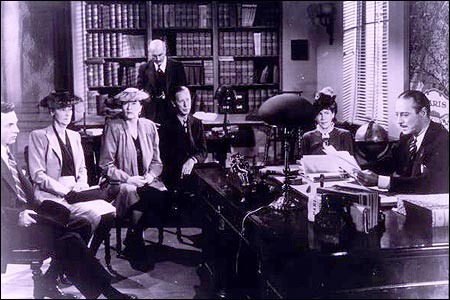
The reading of the will in Monseiur Verdoux (1947), in the public domain
- Types of Wills
Without turning this into a law school class, there are three types of wills (notwithstanding a living will, explained above):
A simple will lets you specify who will get your assets. If you have minor children, this is where you name who will be their guardian. Depending on the rest of your financial and legal situation, you can create a simple will fairly easily, even without an attorney. LegalZoom has a good piece on the starting point for gathering the essential information, writing your will, and making sure it’s kosher.
A testamentary trust will lets you place some of your assets into a trust. If your eyes glaze over at the sight of “wills and trusts,” just know that this a way to make things easier for your beneficiaries and all of your assets (investments, accounts, etc.) live inside the trust. This is advantageous in a few different ways.
First, if you have minor children (or beneficiaries who sometimes act like children) this is a safe way to put conditions on how and when they can access their inheritances. Second, while a will only takes effect after someone dies, a trust becomes active as soon as you create it, and you can spell out the distribution of your assets prior to your death. There are also sub-categories, like living trusts, which you can change, and irrevocable trusts, which can’t be altered after they’re put in place.
A joint will is basically a will where two spouses each have wills that mirror one another’s, and each leaves everything to the other. These are prickly, because the terms of a joint will can’t be changed, even after one of the spouses dies.
- How Do You Create a Will?
If your life is fairly simple — if you’re single and you have relatively few assets, even if you have a spouse and/or a child, you can probably use the internet to create a will at a fairly low cost. Check out sites like:
Legal Zoom Last Will and Testament
To help you in this process, Cake has a detailed piece comparing 13 different online will-making sites.
That said, no matter how simple your life, and how likely you are to select a simple will (vs. a testamentary trust will), I VERY strongly encourage you to at least sit down with an attorney to make sure that you have covered all of your bases and considered all of the issues. Doing so will help you sleep better at night.
An attorney can help you recall assets you may not have remembered, help you fine-tune the decision-making process regarding beneficiaries, guide you with regard to selecting an executor and choosing guardians for minor children, and more.
- What about a Holographic Will?
You may have heard about a holographic will, and no, it has nothing to do with the holodeck on the USS Enterprise. A holographic will is a handwritten and signed document that you can create without a lawyer, and it doesn’t require notaries or witnesses. Sounds great, right?
Nope!
First, some states don’t recognize holographic wills at all. Others have very strict requirements to prove that you (the “testator”) wrote the will and that you are of “sound mind and body” (as they say in the movies), and in the 21st century, if you’re hand-writing your will, somebody is going to question that soundness! A holographic will also has to include your wish to disburse your personal property to your beneficiaries. Nine states will only accept a holographic will from out of state, treating it as a foreign will, and two states (New York and Maryland) only accept holographic wills from members of the military, and only under narrow circumstances.
So, even if you have the best penmanship and can prove that you are “all there up there,” Paper Doll is going to discourage you from creating a holographic will. Come on, if you are reading this post on the web, you can, I’m sure, create your simple will on the web.
- Safeguarding Your Will
Once you have written your will, made sure it is legal for your state, signed it and had it notarized, then you need to keep it safe. Make multiple copies.
Store both the original and one copy in your fireproof safe or lockbox, and one in your Family File system. If an attorney helped you prepare your will, he or she will likely maintain a copy at the law firm.
At the very least, let your significant other and close family members know where the documents are and how to find them.
Do NOT keep your only copy of the will in your bank safe deposit box, because if you are the sole key-holder, access to your box will be shut down upon your death.
5) Digital Will
Digital wills are a relatively new concept. However, as more and more of our assets and accounts can best be accessed digitally (like bank and investment accounts) and exist solely digitally (in terms of intellectual property, web sites, social media accounts, etc.), a digital will is now just as important as a traditional last will and testament.
Your traditional will covers your tangible possessions and financial assets, and creates an executor to handle disbursement of assets to your beneficiaries. Your digital will is your opportunity to create a digital executor to handle digital issues, and spells out what you want done.
First, all of your financial assets will need to be accessed, so you’ll need to create a list of all such accounts and passwords to pass along to your digital executor (or, if you use password software, you’ll need to provide your master password to your trusted executor).
But what about all of your other online property? Do you want to leave accounts open, shut them down, or turn them into memorials to your memory? Each web site has its own very complicated set of guidelines regarding who can access online accounts and how.
Until we cover this in a future post, I strongly urge you to check out Creating Your Digital Estate Plan (Second Edition) by the professional organizing industry rock star, Judith Kolberg. She specializes in this field and has deeply researched the best approaches.

Finally, if the idea of thinking about all of these estate and end-of-life documents trouble you, I encourage you to read Chanel Reynold’s What Matters Most: The Get Your Sh** Together Guide to Wills, Money, Insurance, and Life’s What-Ifs.
Next week, we will finish this series by discussing a variety of non-governmental, non-estate documents that you should create and organize to make your life, and the lives of your loved ones, run more smoothly. In the meantime, I urge you to consider which of these documents you have, which you need, and which you should update.
How to Replace and Organize 7 Essential Government Documents
All documents are not created equal. If you lose your electric bill, you can log into your account, and then view, pay, and even print a copy of your bill. Other items fall into the Very Important Paper, or VIP, category, and require more effort to replace. These are the documents without which we cannot pass GO or collect 200 (or any) dollars unless we present an original, certified copy.
The Search for Vital Documents
While stuck at home, numerous clients and friends have been reporting on the states of their files and important documents.
A few months ago, in anticipation of the world returning to “normal,” a client wanted to make plans for a big post-quarantine trip. Although she hasn’t traveled outside of the country in decades, quarantine left her feeling claustrophobic and she’s eager to explore the world. But her passport is both expired and (unfortunately) missing.
Elsewhere, a reader had seen my blog post, Paper Doll On Narwhals, Fake News, and How To Get A REAL ID from last February, and wanted to get a REAL ID so she’d be able to fly domestically. (As a reminder, that deadline has change from October 2020 to October 2021.)
Both would need their birth certificates. Like many people, neither had needed one since applying for driver’s licenses as teens. One couldn’t find hers; yes, that was the one who also lost her passport. The other knew it was somewhere in her elderly parents’ home but couldn’t risk traveling during COVID to acquire it, nor could she accurately direct her parents to find it or trust the (lately chaotic) postal service to deliver the vital document if it were found.
Another client had received a notice that a company related to one of her late father’s stock holdings had liquidated, and the remaining value had been escheated. This means that having lost sight of his correct address when he moved from his longtime home to a nursing home, the transfer agent for the stock sent the check to his state’s unclaimed property division. To prove that she had a right to that amount, my client had to provide the state with her father’s death certificate and a copy of the will, showing that she was a beneficiary.
When my own father died, to prove Paper Mommy‘s right to certain veteran’s survivor benefits, we had to provide his military separation papers dating from World War II. Luckily, I had located these during the process that went into writing The Great Mesozoic Law Office Purge of 2015: A Professional Organizer’s Family Tale.
Replacing the Documents
As a Certified Professional Organizer, I’m often working with clients, sorting through random piles of papers. Wedged between expired car insurance declaration pages and outdated kindergarten registration paperwork, I’ll find some essential VIP and a client will exclaim, “I’ve been LOOKING for that!”
Whether you want to get benefits or insurance, travel or remarry, obtain a job or live happily ever after (whatever that means to you), you’re going to need to produce certain government documents. And if you don’t have them, you’ll need to replace them to make life easier for yourself and your loved ones.
1) Birth Certificate
You’re reading this, so you’ve already been born. (I mean, unless you’re a time traveler, in which case, howdy, and please leave a comment below about the winner and score of the upcoming Super Bowl!) Further, as you were born in the 20th (or 21st) century, you almost certainly already have a birth certificate, even if it’s not in your possession.
Image by Bruno /Germany from Pixabay
Why you need one: A birth certificate is not merely proof of your arrival on the planet. You need one to get a driver’s license, apply for Social Security and other government benefits owed to you, obtain a passport, join the military, and perhaps prove the date and location of your birth to show you are eligible to be a congressperson, senator, or President of the United States.
Usually, a photocopy will not suffice; you’ll need an embossed (bumpy) certificate, stamped by a government entity related to your place of birth. That might be your county clerk, the registrar of records, or someone else.
If you were born in the United States, contact the office of vital records for your state or territory of birth in writing.
First, visit the Center for Disease Control and Prevention’s National Center for Health Statistics. Through that site, you’ll find information regarding to whom (and at what address) you must write, the fee schedule (for as many copies as you need, plus postal and processing charges), and what information or proof you’ll need to submit. Fees are determined by locale; to get copy of a birth certificate from Guam, it’s only $5; for New York State (outside of New York City), it’s $30. (For New York City, it’s $15, which this Buffalonian considers an unfair discount.)
If you were born abroad to American parents, your birth would have been registered with your nation of birth’s embassy or consulate. If everything is hunky-dory, instead of a standard birth certificate, they would have been given Consular Report of Birth Abroad (CRBA) and you can request a copy from the U.S. Department of State. If they can’t locate your CRBA, or your birth wasn’t registered with an embassy, but you were born on a military base, you can try to contact the hospital where you were born.
If you were born abroad, even if you were adopted by a family in the United States, you won’t have an original U.S. birth certificate; you’ll have to contact the nearest embassy for that nation for assistance. If you were born “on the high seas,” on an aircraft, or in the Panama Canal Zone, you’ll want to read this page for special guidance. (You’ll also want to record your mom telling the story of how that came to be for the delight and amazement of future generations!)
If you were born in Canada, contact the vital statistics office for your province of birth.
To replace your birth certificate, be prepared to provide identifying details, including:
- your full name at birth
- date of birth
- sex (as assigned at birth)
- county and/or city of birth
- hospital name
- your *mother’s complete (including maiden) name, and
- your *father’s complete name
*In the future, it will be more likely that birth certificates will indicate parents names without assuming parents of two genders; currently, however, most locales show these as gendered categories.
You’ll also have to supply your signature (possibly notarized, depending on your state’s requirements), your mailing address, and your phone number.
If you are pressed for time, there are third-party services, like Vitalchek, that can expedite the process for an added cost. (Be sure to do a deep-dive to verify that any expediting service is on the up-and-up.)
2) Social Security Card
Why you need one: You need proof of your registration with the Social Security Administration in order to get a job, accrue benefits, and receive certain government services. Your parents probably completed the paperwork for your Social Security card when you were a newborn, so like a birth certificate, someone has already done the hard work for you. (If you are over the age of 12 but have never received a Social Security card, you will have to apply in person at your local Social Security office.)
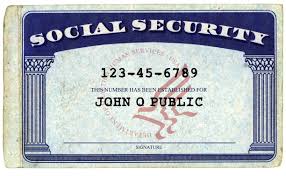
You should already have your Social Security card; you would have needed it to apply for your first “grownup” job. However, if you’ve lost it at some point, you can replace it in one of two ways.
The standard method is by completing an SS-5 application, available online at the Social Security Administration’s website. You will have to print the application and then mail it to your local Social Security office. And that’s the first wrinkle – the Social Security Administration halted all face-to-face services and closed their field offices on March 20, 2020 and they have not yet resumed services. Their website states, “However, we are still able to provide critical services via phone, fax and online.”
Happily, you can replace your Social Security card online, provided that you have (or are willing to create) a mySocialSecurity account.
You’ll be happy to know that unlike a birth certificate, driver’s license, or almost any other official document, you can get your replacement Social Security card for free! However, this isn’t a “Get out of jail, free” card for keeping your paperwork disorganized. You are limited to three replacements per year and ten in your lifetime. (Questions #11 and #12 on the application refer to replacing cards for pre-existing Social Security numbers/cards.)
Remember, don’t carry your Social Security card around with you. That’s like carrying a one million dollar bill, and puts you at risk of identity theft. Unless you have been asked to provide your card for an official reason, such as when you are meeting with Human Resources at your new job, keep your card in a safe place, like your fireproof safe at home.
3) Marriage License & Certificate
Are you married? Mazel tov! But do you know where your marriage license and certificate are?

Image by Engin Akyurt from Pixabay
Why you need one (of each): Every state requires a marriage license, the paper that legally authorizes you to get married, and a marriage certificate, to prove the deed has been done. You apply for a marriage license at some point prior to when you expect the ceremony to be. However, depending on your state, your license might expire anywhere from 30 days to a year after you receive it.
Let’s say you got your marriage license on March 1, 2020, expecting to get married two months later, on May 1, 2020. And let’s say licenses in your state don’t expire for six months. Normally, you wouldn’t be too worried. But perhaps due to COVID, your wedding got postponed and your license expired. No problem; you just apply for a new one.
But let’s say that someone accidentally loses your marriage license, or it got accidentally destroyed after the wedding ceremony but before you were able to submit it to your county. (If it wasn’t accidental, Paper Doll suggests couples counseling.) If that happens, you need the officiant (the minister, priest, rabbi, judge, etc. – the person who officiated) to intervene on your behalf. The officiant has to contact the license-issuing office to get a get a duplicate to ensure that your marriage is kosher.
So, your marriage license is what you need in order to get married; a marriage certificate is proof that the marriage ceremony has happened. If you are taking your new spouse’s name, you will need your marriage certificate in order to legally change your name on your driver’s license, passport, and other official documents.
If your name differs from your spouse, proving your legal right to visit in the hospital may be difficult without documentation. (Granted, during COVID, in many places, visitors – even spouses – are not allowed in hospitals right now.) Insurance companies might require a copy of the certificate to provide spousal coverage, and proof of your marriage is required for everything from qualifying for military housing to obtaining pension benefits to adoption and travel abroad.
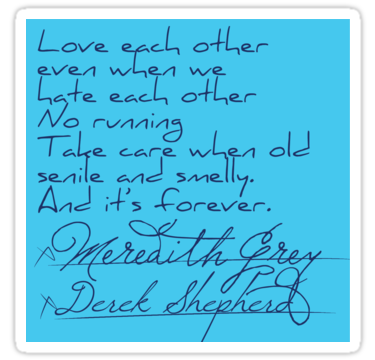
The point is that unless you are a character on Grey’s Anatomy, a Post-It Note of marital promises isn’t going to cut it.
If you’re already married, but you trusted your spouse to file the marriage certificate safely away, and your spouse trusted you to do the same (great trust levels, not-so-great organizational skills), you can use the same CDC link provided for birth certificates to identify your state’s office of vital records and see the fees and requirements for requesting copies. You might also take this opportunity to speak with a professional organizer about the best system for organizing your family’s paperwork and maximize future joy.
4) Divorce Decree
Why you need one: Certified copies of divorce decrees are necessary if you wish to remarry, to provide proof of legally separate finances to a tax authority (like the IRS or the state) or a creditor, and to be a contestant on a TV show like The Bachelor. (But please, don’t do that.)
If you’ve lost your divorce decree paperwork and live in or near the county in which the divorce was granted, the fastest method will be to arrive at the county courthouse with the following information in hand:
- the full name of both spouses (including any maiden names) as of the wedding date
- the court case number
- the exact date of the divorce
- and the city, county, and state in which the divorce took place
If you don’t have the court case number, you will need to call one of attorney(s) and/or mediator who handled your divorce to see if their records include the case file number. With this information, you’ll be able to fill out an official request form at the courthouse.
If you no longer live in or near the county in which the divorce occurred, follow the CDC link for the state in which the divorce took place, and follow your individual locale’s instructions.
5) Military Separation/Discharge Papers
Image by Shonda Ranson from Pixabay
Why you need them: You’ll need your own military records and separation/discharge papers to obtain a job or a security clearance, get proof or copies of medals, or apply for medical or disability benefits. If a relative who served has died, you’ll need certified copies of these records to arrange a military funeral or obtain certain survivor’s benefits.
An original signature of the veteran (or his/her next of kin) is required to fill requests for copies of Official Military Personnel Files (OMPF). To a get a free copy of your (or your relative’s) Report of Separation (DD Form 214) or other military records, start with the electronic search/request system eVetRecs, or mail (or fax) a standard form SF-180 to the National Personnel Records Center.
And here’s where there’s another wrinkle.
Due to COVID, the National Personnel Records Center is closed except for emergencies, and they state on their site:
While we remain in this state, we will continue servicing requests associated with medical treatments, burials, and homeless veterans seeking admittance to a homeless shelter. Please refrain from submitting non-emergency requests such as replacement medals, administrative corrections, or records research until we return to pre-COVID staffing levels.
In other words, unless you are seeking a DD214 so that a veteran can get healthcare or space in a homeless shelter, or to facilitate a veteran’s burial, you may have to make a note on your “To Do After COVID” list for replacing these documents.
6) Death certificate
Why you need one: After someone dies, you will need multiple certified embossed copies of a death certificate for almost everything, including:
- canceling cell phone and utility contracts
- closing an estate
- transferring car titles
- notifying financial institutions regarding debts
- transferring ownership of tangible and intangible property to beneficiaries, and
- other legal, financial, and real estate transactions
If someone has recently died, it is easier and more convenient to acquire death certificates from the funeral home, which generally maintains ongoing relationships with local government offices. In most states, there is a standard fee for acquiring a death certificate, and ethical funeral homes should acquire and pass along requested copies of the death certificate charging an additional fee.
If you need to acquire a death certificate for someone whose passing was not recent, and getting the assistance of the funeral home is not applicable, the procedure is similar to other obtaining copies of birth and marriage certificates. Select your state from the CDC listings for your Office of Vital Records and follow the instructions for your state.
7) Passport
Right now, international travel is an iffy proposition and even where travelers are welcome, many new rules abound, but it can’t help to dream about traveling the globe when all is calm again.
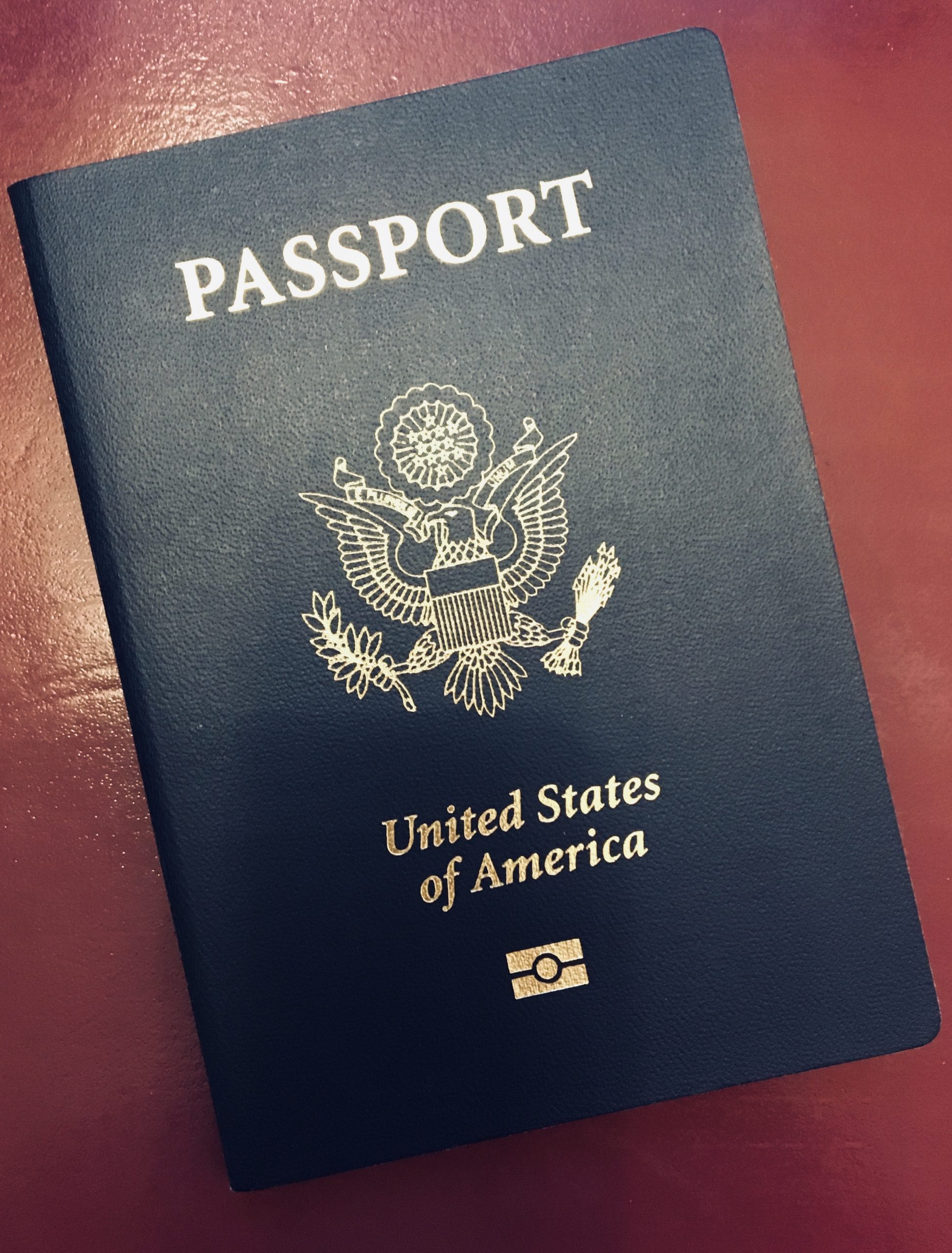
Applying for a new passport still requires some of the process to be completed in person. However, much can be accomplished online, including downloading forms, calculating fees, and getting information about your passport’s application status.
To apply for a new passport, download form DS-11 and read the general instructions at the Department of State web site.
If your passport is lost or stolen, you’ll have to report it. Fill out a DS-64 and then submit it, along with a DS-11, to get a replacement.
To renew your passport by mail, whether it has expired or not, fill out a DS-82 and submit it, along with your old, undamaged passport and required documentation. However, if your expired passport is more than 15 years old, you will have to apply for a new one; if your prior passport was issued before you reached the age of 16, you will have to apply anew. And, you may only renew your passport if it was issued in your current name; or if you can provided legal proof of your name change.
The Department of State has a section explaining delays related to COVID.
What to Do When You Get Your Replacement Documents
Once you spend time and effort replacing a government document, you don’t want to have to do it again. Do the following:
- Scan a copy of your vital documents.
- Provide a scanned and/or paper copy of each of these vital documents to a trusted friend or relative so that if your copies are damaged in a fire or natural disaster, you will at least have some guidance regarding the information contained in them.
- Place your official, embossed (bumpy) paper copies somewhere safe and logical, like a fireproof safe. If you have multiple copies, you can keep extras in a VIP folder of your Family Files.
- Create a digitized index of all of your VIPs so you know what you have. Share a copy with your trusted friend so that, in case of an emergency, your friend can help you identify your documents.
- Make a habit that whenever you remove something from your VIP file or safe, set a reminder on your phone to return it to its proper place. Even if you have to keep snoozing the reminder, it will ensure you put the document back. Otherwise, you’re likely to put it down instead of putting it away, making it more likely to get lost or misplaced again.
A Final Note
Unfortunately, with many of the procedures listed, you may hit speed bumps related to COVID. Many governmental offices are closed, and those that are open often have reduced hours and accessibility. These links and instructions are starting points for official channels; if you hit a road block, you may find assistance by calling your county clerk’s office to seek guidance.
Paper Doll Interviews the Genealogy Organizers
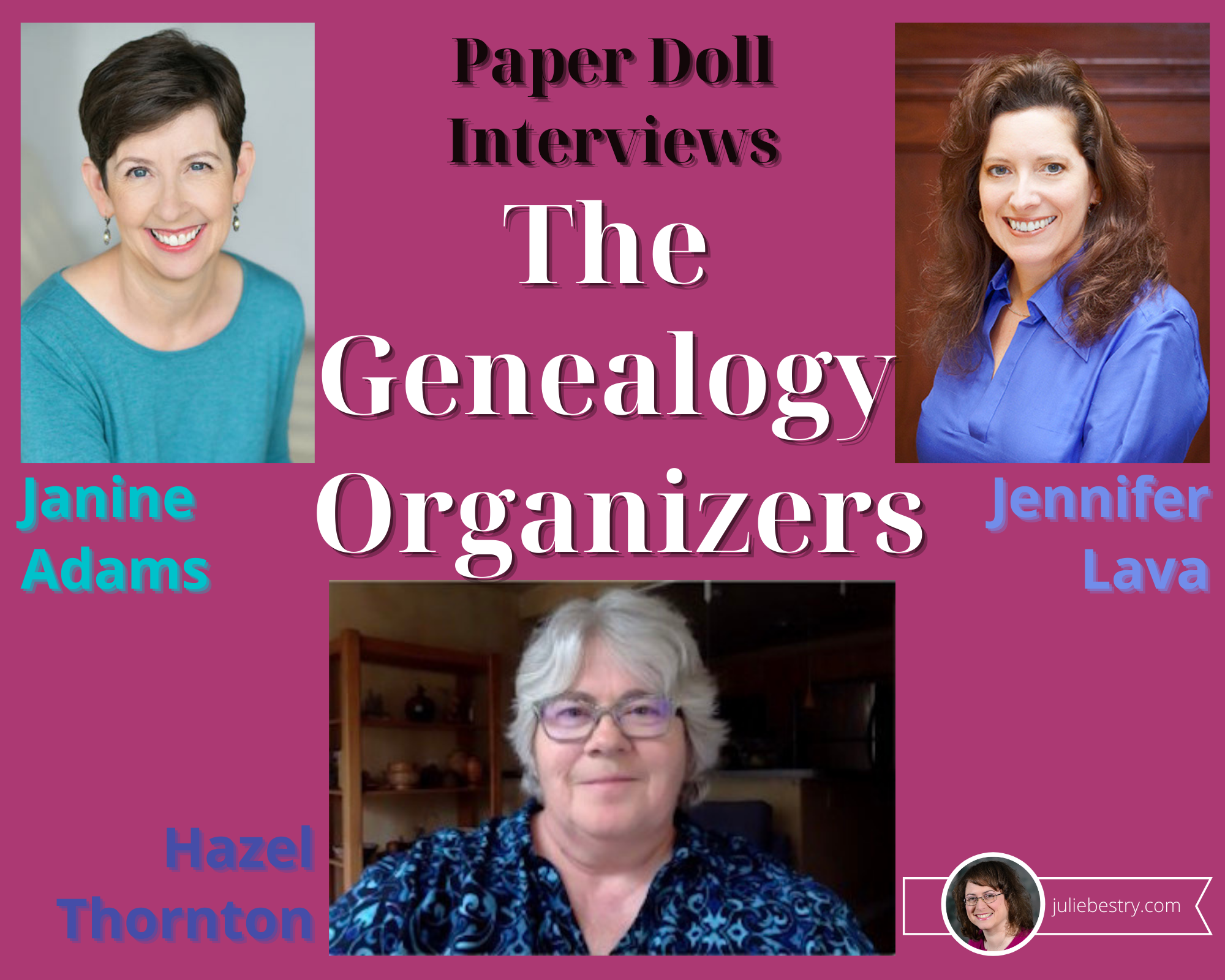
Professional organizers have a variety of specialties. Some focus on particular types of clients (students, senior citizens, people with ADHD), while others specialize in particular spaces (offices, kitchens, closets, warehouses). One of the newer specialities within our field is genealogy organizing, and today I’m interviewing three experts in the field.
I got the idea when Jennifer Lava, one of my colleagues, offered to do a little research into my family history and found an interesting tidbit about my maternal great-aunt’s wedding cake. Jennifer and our colleagues and friends Janine Adams, CPO® and Hazel Thornton have some real insight to share about the nexus of organizing and genealogy. (Insights into Paper Doll‘s family history are just a bonus.)
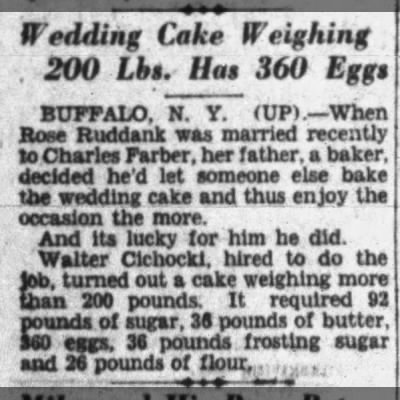
Paper Doll‘s great-aunt’s wedding cake. Mmmm.
What’s your professional background, and what got you involved in organizing and productivity?
Hazel Thornton: I joined NAPO the same month I got laid off from the telephone company after 21-1/2 years: December 2004. Why wait to start doing what I had only months earlier identified as what I really wanted to do when I grew up? As it turns out, the combo of engineering, drafting, and fine arts degrees, plus telephone company experience, is a good pathway to becoming a professional organizer!
Janine Adams: I started Peace of Mind Organizing® in 2005, after ten years as a freelance pet writer. Before that I worked in media relations for the Missouri Botanical Garden and before that I worked for a non-profit in DC where I literally got to travel around the world. All of those positions required keen organizational skills. (In the late 1980s I planned a conference in Nairobi, Kenya, from my desk in Washington, D.C. that had 15 participants from 11 countries. And I managed to do it without the internet!)
I started my organizing business after the publishing industry chewed me up and spit me out. When I was working on my last book (my eighth), I was feeling disrespected and disillusioned and I knew the only way I could get through it was to know it was my last book. I fantasized about what I would do next and was struck by the idea of starting an organizing business. I wrote down three things I thought it would bring me that I wasn’t getting as a writer: The ability to help people directly and tangibly; respect for my expertise; and payment at time of service. Thankfully, I was right and it’s worked out nicely!
Jennifer Lava: I worked in both retail and administrative positions in both the public and private sectors, including local real estate developers, the State Preservation Board, and a custom frame shop. I got involved in organizing and productivity because I realized that in all my jobs, they would have me do the “other duties as assigned,” and they were mostly organizing-related. I enjoyed those duties. I got to a point where I didn’t want to keep working for others, so I took the leap and started my organizing business. I have been doing that for almost 15 years.
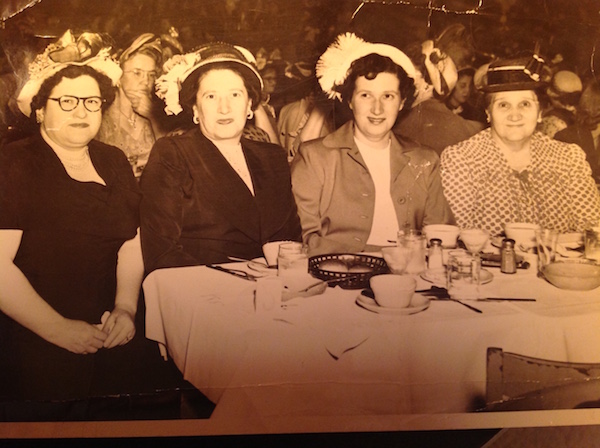
Paper Mommy‘s mother, flanked by two of her five sisters, with her mother (Bubbe)
What would you say was the turning point that helped you identify your calling to work in genealogy organizing?
Jennifer: Since elementary school, I’ve had an interest in genealogy when, in third grade, we did a unit on family trees. In college, I majored in history, and I took a course in writing family histories. In 2009, I got serious again about researching my family using online tools like Ancestry.com. I noticed that many of my clients had genealogy projects they wanted to do once they “got organized.” It was like they wanted to reward themselves with organizing their family papers and researching their trees after they got the rest of their homes organized.
I realized that there was the potential of helping these clients with this additional organizing desire and that my interest and experience fit in well. In this new age of COVID-19, doing genealogy work for clients is great because we can do it virtually. Clients also have more time at home, and they are ready to dive into their trees.
Janine: I started doing genealogy in 2000 but I went about it wrong and ended up with a disorganized mess. So I abandoned my research and in 2011 decided to start again and to do it right this time. (By that I mean, nothing goes in my family tree that’s not a verified fact with a source citation.) By then, I’d had my organizing blog for five years so it seemed natural for me to start a genealogy-organizing blog. I launched Organize Your Family History in 2012.
One thing I know about myself is that I like being new at something. I had a history of gaining a certain amount of expertise in a field and then switching careers. I didn’t want to abandon organizing, since Peace of Mind Organizing was doing well, so I let myself enjoy being a newbie in the world of genealogy, while gradually gaining expertise and followers. The nice thing about genealogy is that there’s always something new to learn so I still feel like a newbie!
Hazel: In 2015, I joined APPO (now known as The Photo Managers). They talk a lot about how important it is to back up, preserve, organize, and share your photos with your family. One of their specialties is genealogy, but what that usually means is helping genealogists organize their photos. Not many photo managers actually do genealogy research. I was suddenly reminded of my own serious genealogy research hobby, which I had put on the back burner while I was starting and running my organizing business. I wasn’t sure if I’d enjoy doing research for others, but I quickly found myself becoming just as interested in clients’ ancestors as my own!
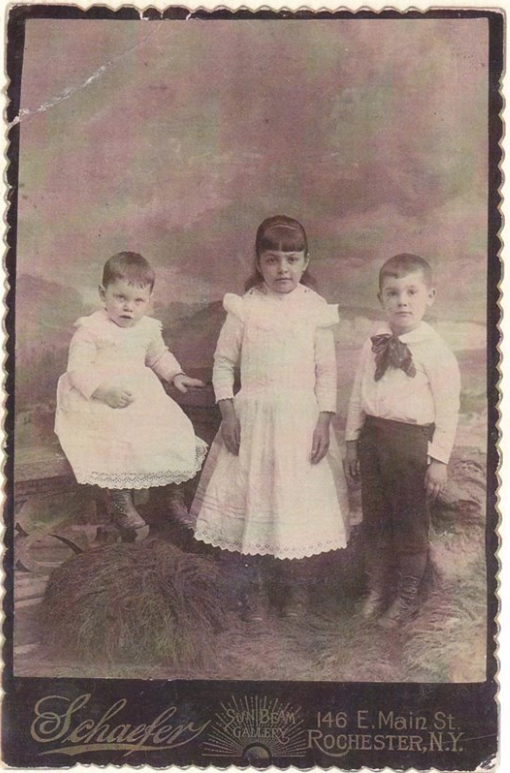
Paper Doll‘s paternal grandfather (far right), circa 1892, with his elder sister and younger brother. They had four other siblings.
I know that you all knew one other from NAPO, but how did you come together? What should people who need your help know about this group? Do you meet? Have Zoom calls? Have wild parties where you pretend to be your ancestors?
Janine: I give Jennifer and Hazel all the credit. They reached out to me and another genealogy organizer, Caroline Guntur, prior to the 2019 NAPO conference in Dallas asking if we’d like to meet up to discuss genealogy organizing.
Hazel: Jennifer and I already were comparing notes occasionally, and came up with the idea of a meeting at NAPO2019. With Caroline and Janine, we four were the charter members of the new Facebook group. Jen is the admin, and the other three of us are moderators. Jen gets all the credit because I didn’t even attend NAPO2019, so she had to find the location, set the time, etc. (I attended virtually.)
The private Facebook group currently has 34 members – mostly from NAPO and The Photo Managers, in the US and Canada … except when Caroline is in Sweden! The “Genealogy Organizers” Facebook group’s “About” section reads as follows:
We are a group of experienced Professional Organizers who work with our clients to help them organize and/or research their family genealogy. The purpose of the group is to support each other and our businesses through sharing information, resources, and positivity. We are requiring that our members have been operating an organizing business for a minimum of a year, belong to an organizing association, and have experience doing genealogy organizing and research.
So, it’s like a SIG (NAPO Special Interest Group) in that we do not teach newbies how to do anything. We do not meet outside of Facebook. I’m open to it, but only if we do NOT have to wear a costume, lol!
[Editor’s note: I am disappointed that there are no historically accurate costumes!]
Jennifer: Once I decided that I wanted to add genealogy organizing and research to what I was offering, I looked around for support and camaraderie. I arranged a time that Caroline, Janine, and I could meet, and included Hazel on Facebook messenger video. We decided to form a group on Facebook, and after the conference, we reached out to NAPO and APPO/The Photo Organizers colleagues. We ask questions, share interesting genealogy news, and talk about upcoming classes. We would have met in-person again, but the NAPO 2020 was canceled due to COVID and the 2021 conferences will be held virtually.
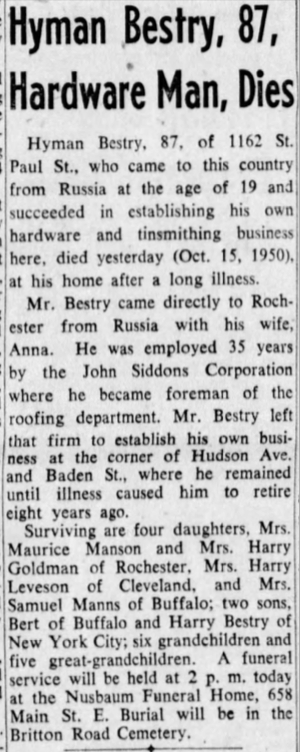
Paper Doll‘s paternal great-grandfather
How do you think your organizing and/or productivity skills help you in this field?
Hazel: Genealogy is really nothing BUT organizing. Organizing dates, names, places, and research materials. Putting like with like, even if it’s misspelled, or barely legible, or contradicts family legend. Recognizing patterns. If you can’t tell that “one of these things is not like the other,” you can find yourself climbing the wrong tree!
Genealogy is really nothing BUT organizing. Organizing dates, names, places, and research materials. Putting like with like, even if it’s misspelled, or barely legible, or contradicts family legend. Recognizing patterns. ~ @Org4Life Share on XJennifer: I can offer my clients ways to file their family history papers and photos in physical and digital formats to help them preserve and locate them for their research. I use my productivity skills to teach my clients how to manage their time, which is quickly sucked away when they fall down the research rabbit hole. It helps me in the same way when I am researching for my clients or myself. Another essential skill that is part of organizing and productivity is attention to detail. Being detail-oriented is an instrumental skill when looking through historical documents to build a family tree.
Janine: Organizing their research is something that most genealogists find very challenging. On my blog, I write about how to organize and ways to think about organizing genealogy research (among other topics). Being able to approach genealogy as a professional organizer allows me to understand their problems and perhaps come up with some solutions.
I’m unusual among genealogists in that organizing my genealogy research is fun for me, so I love thinking, writing and speaking about it. Of course, my experience as a professional organizer informs all my advice!
Do you do genealogical research for your clients, help those who do their own research, or both?
Janine: I help those who do their own research. I don’t do genealogy research for others. I help primarily by writing and speaking but I also work with some clients one-on-one with organizing their research. Sometimes it’s data; sometimes it’s inherited stuff.
Hazel: I do both! Most of my clients have no interest in doing the research themselves. But some do. If they are starting from scratch I teach them how to get started. And, if they are a genealogist who just wants my help breaking through a “brick wall” – or, as we call them in New Mexico, “adobe walls” – I am happy to lend a fresh pair of eyes (and additional resources) to find documents they’ve missed, or to help make sense of what they already have, or to focus their research question in a new way.
Jennifer: I do both. I will help clients get started and go forward on their own. I will look over what a client has already started and check for issues. As our friend Janice Simon has said, I can help clients “de-leaf” when they have “over-leafed” on Ancestry.com. Ancestry uses an image of a leaf to indicate hints of information. People often get over-excited when they begin on Ancestry.com and click on the hints adding them to their trees, without adequately evaluating the data. I will take a look at a client’s tree and remove incorrect information.
Additionally, I will take the basic information a client has and build a tree for them. If they want, I can go deeper into the details to further develop their ancestors’ story. I will put it in a shareable space where family members can add their memories to the collected data.
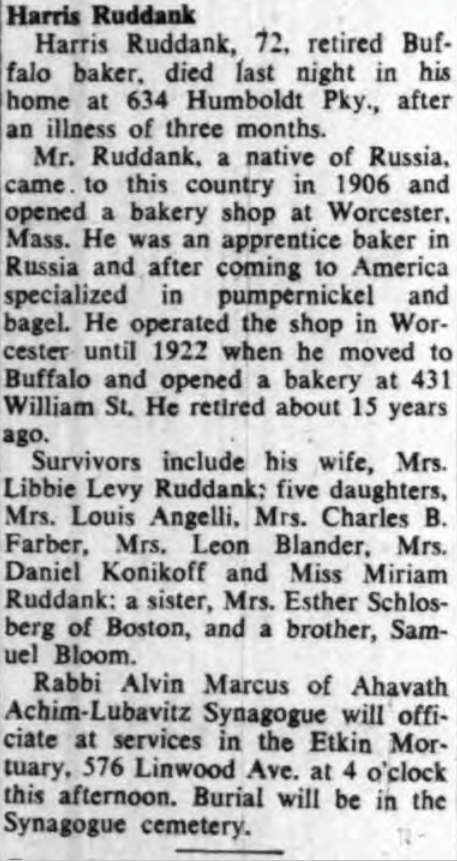
Paper Doll‘s maternal great-grandfather (Paper Mommy‘s grandfather, the baker who “specialized in pumpernickel and bagel”)
What’s the funniest, kookiest, or most interesting anecdote you can share from your work in genealogical organizing?
Hazel: I’ve determined that I’m (very distantly) related to two of my clients! My roots here in America run very deep. I’ve found that if my client has similar, Western European, origins, and if I notice an unusual common surname in their tree, I can run it back a few generations to see if their tree intersects with my own. When that happens, it’s fun for them too!
Janine: I attend a lot of genealogy conferences and in 2015 I attended the Genealogy Society of Southern Illinois’ one-day conference. There was one speaker for the whole day, Joshua Taylor, who is a bit of a genealogy celebrity. (He’s one of the hosts of PBS’s Genealogy Road Show and has serious genealogy cred.) Near the beginning of the first of his four talks he mentioned one of his own ancestors. I quickly consulted my family tree and confirmed my suspicions that we shared that ancestor. I excitedly went up to him after the first talk and told him about our relationship. (I think we are fifth cousins once removed, which might not sound like much to a non-genealogist, but I think it’s a big deal.) I’ve enjoyed a bond with him ever since. I’ve heard him speak many times and have featured him on my blog and collaborated with him through a Family Tree University class I hosted. He’s a great guy.
Jennifer: Finding the articles about your great-aunt’s 200lb wedding cake was pretty kookie. [Editor’s note: It sure was! Not even Paper Mommy or her cousin, the daughter of the bride, had seen that clipping!]
I’ve been working with a client on the Italian part of her family. One of the stories I heard from some of her relatives about her great-great-grandparents who owned a bar/tavern in New York around 1908. The “Black Hand” moved into the area and threatened business owners that their children would be kidnapped for ransom if they didn’t pay protection money. Worried about their children, the family sold the bar and moved back to Italy. They received enough money from the sale of the bar to buy a decent-sized farm in Italy.
What’s the most interesting thing about your OWN family history you’ve uncovered?
Janine: My great great grandfather, Benjamin Franklin Igleheart (1945-1913), was a Civil War Veteran who served as a substitute. He was not drafted but, rather, was paid by a man, Jacob Gish, who had been drafted and did not want to serve. I was able to find their contract; Benjamin was a couple of months shy of his 18th birthday when he signed on. I don’t know, however, how much he was paid. I’m sure glad he survived (obviously)!
Hazel: Oh, gosh, where to begin? The time my maternal grandparents raised their family in a gangster hideout? (Yikes!) The fact that I come from a long line of Quakers, the very knowledge of which completely skipped a generation or two? (How?) That one of my Quaker ancestors was a Loyalist? (Huh?) My slaveowner ancestors? (Ugh!) The time my great-grandmother and her unborn baby died of the Spanish Flu, leaving my 14-year-old grandmother to raise her three younger brothers and two-year-old baby sister almost single-handedly? (Awww.) The origins of the famed Iowa State Fair, formerly the Thornton Farmstead? (Cool!) I love writing family stories, and many of them can be found here.
Jennifer: I am trying to uncover what happened to one of my great-grandfathers. I hope it will become an interesting story. I have heard that he abandoned his family in Chicago sometime in the 1920s by running off with a female cousin. I know he was with his family in 1920 because he is on the U.S. Census record with them that year. But by the 1930 Census, he wasn’t. I’m trying to figure out if he did run off with a relative, where did they go, and when did he die? We have a pretty distinctive last name, so did he change it to hide, and that’s why I can’t find any other records? There aren’t many relatives left around that may know more facts about him.
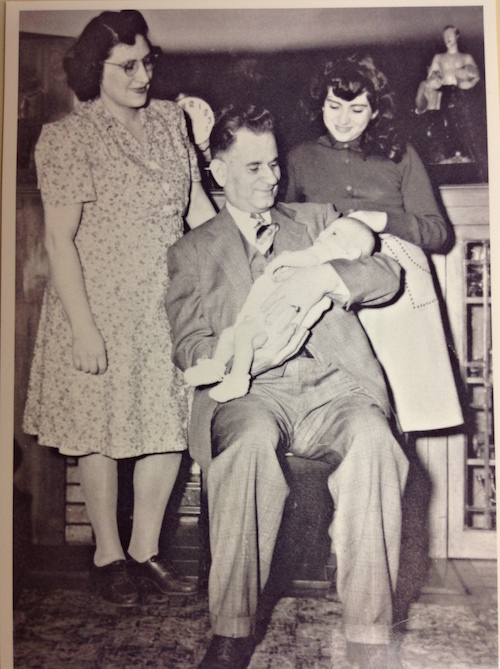
Paper Mommy, circa 1947, with her parents and baby brother
What’s the hardest aspect of genealogy organizing?
Jennifer: So far, for me, the hardest aspect of genealogy research is pulling back when I am finding great information for my clients, but they have only paid for a specific amount of work. I get a charge out of finding new details, and I don’t always want to stop. I also think that carving out this niche is tricky. We are trying to bridge this area that is part Professional Organizing and part Professional Genealogist—making people aware that several of us are here and able to do this work. We can organize your very special family documents and photos, and we understand and appreciate their significance.
Janine: In terms of organizing my own genealogy research, I think the hardest part was putting in place a system that works for how I think. Once I got that locked in, the hardest part became taking the time to do the organizing of the documents I find; that is, analyze the documents, enter the facts into my database and create a source citation before moving on to more research. Try as I might to avoid it, I often find myself with a backlog of documents to process.
Hazel: The hardest for me, and the most important, and the first thing, is to manage client expectations. Genealogy research is a never-ending project, so it’s important to define the project and pay attention to scope creep. If I’m doing research for a client (and not just helping them organize their papers, files, and other genealogy-related materials), I explain that we can “go wide” (i.e. find your 8 great-grandparents); “go deep” (trace one branch back as far as we can); or “focus” on a particular ancestor, location, and timeframe.
When you’re not organizing or delving into genealogy, what’s going on in your life?
Hazel: Before COVID or after? Ha! Actually, I’m writing a book that combines my interest in genealogy, photos, storytelling, memorabilia, and downsizing now so your loved ones don’t have to later. It’s called What’s a Photo Without the Story? A Guide to Leaving Your Family Legacy. Progress on the book during 2020 was replaced largely with Netflix. Fortunately, it was already well along, and I am back at it now. (Click on the title, above, to follow my progress.)
Jennifer: When I’m not organizing or delving into genealogy, I like to spend time with my husband and our four dogs. I enjoy working on craft projects and reading, primarily non-fiction.
Janine: I co-host a podcast called Getting to Good Enough, about letting go of perfectionism so you can do more of what you love. I’m a knitter and spend an inordinate amount of time knitting and watching TV. My husband and I have a wonderful standard poodle, Bix, whom we take great delight in. I also enjoy hand lettering. I honed that skill while writing thousands of postcards to voters between 2018 and 2020. As a new pursuit, I’m trying to learn American Sign Language for the fun of it. Oh, and right now I’m wearing the same dress every day for 100 days. That will end on March 13. It’s been fun!
National Genealogy Day is coming up on March 13, 2021. If you’d like to celebrate with a deep dive into your family history, consider contacting Janine, Hazel, or Jennifer for guidance.
Janine Adams‘ genealogy site is Organize Your Family History. You can order Janine’s three current Orderly Roots Guides (10 Secrets to Organizing Your Genealogy Research, 10 Things I Wish I’d Known When I Started Doing Genealogy, and Organizing Your Genealogy Right From the Start) and forthcoming book at this site.
Reach out to Hazel Thornton at the Genealogy Services section of her website. If you’re an organizer (or want to live like one), you can acquire her Original Clutter Flow Chart, designed to help her clients continue decluttering when she wasn’t right there by their sides, followed by a whole collection of flow charts, which she custom-brands for other organizers. As noted above, Hazel’s current book is in-progress, but her real-life tale will captivate trial and true crime buffs — Hung Jury: The Diary of a Menendez Juror.
Professional Organizer & Family Historian Jennifer Lava can be reached through her site, JenniferLava.com, where you can read her blog and learn about her organizing, genealogy, and speaking services. I can’t guarantee that she’ll find you a 200-pound wedding cake, but I bet she’ll find the sweet spot in your family’s history.
Ask Paper Doll: How And Where Can I Donate Lots of Books?
This is the first in a recurring series of Ask Paper Doll posts where you can get your burning organizing questions answered by Paper Doll, a 20-year veteran professional organizer and amateur goofball.
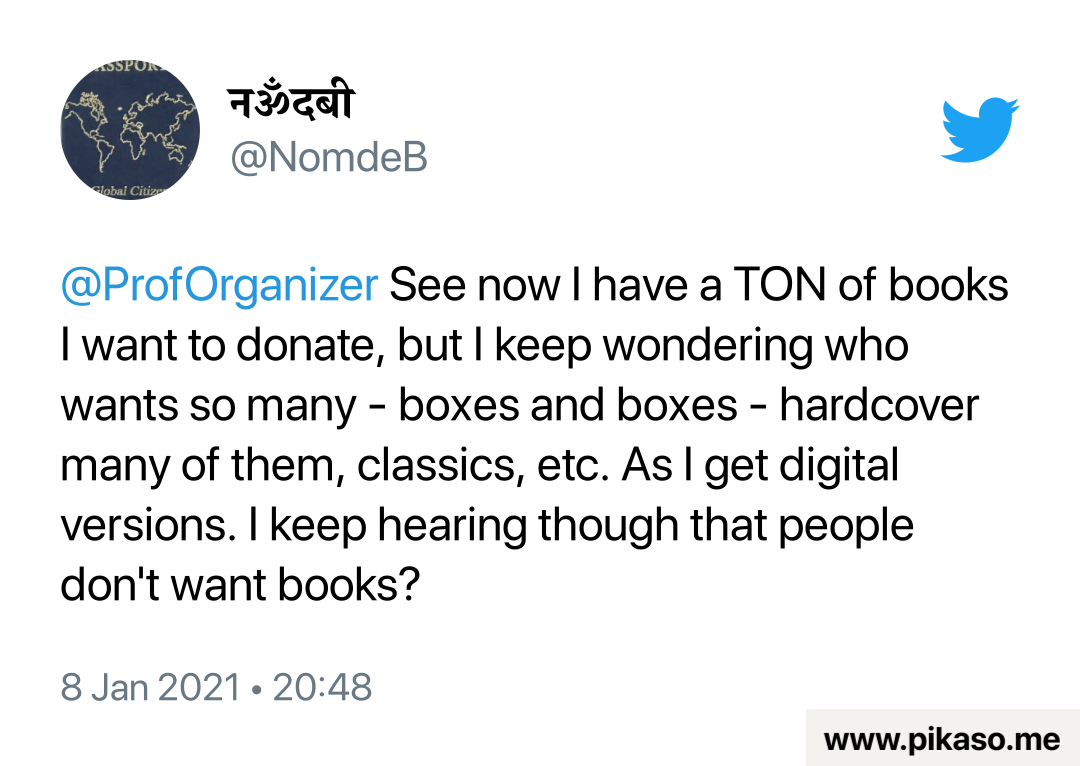
Dear @NomdeB,
These are actually three (excellent) questions! The first, implied, is the bulk of what will address today: where and how can we donate a largesse of books? The second, “Who wants so many?” is partly answered along with the first, but the truth is that if you have a huge book collection (and it appears that you do), you’ll probably be making donations to multiple venues.
But the question at the end of your tweet deserves a bit of attention.
PRINT BOOKS VS. DIGITAL
Do people still want real, tangible books?
And, at the risk of sounding like I’m saying, “Yes, Virginia, there is a Santa Claus,” yes, @nomdeB, people do still want, and read, real books. At the very least, in the United States, even in an era where all-things-digital are the rage, physical books still outsell ebooks. Statistics from 2020 have not fully been reviewed, but in the prior year, the U.S. book industry had $26 billion in revenue; $22.6 billion of that was for print books and only $2.04 billion in digital books. (The rest, one imagines, are in audio books, braille, and rarer, specialized formats.)
[Editor’s note: After publication of this post, results were released showing that print book sales rose 8.2% in 2020, the largest annual increase since 2010!]
It seems the death of the printed book has been greatly exaggerated. There’s some academic research as to why many people (like myself) still prefer tangible books. For example, one study found that print books had the edge over print when it comes to greater reading comprehension and lesser eye fatigue. Further anecdotal evidence indicates that people appreciate the tactile sensation of progress as you get further along in a print book. And I’d be remiss if I didn’t share findings from my alma mater, Cornell University, which has found that “both users and non-users of e-books generally preferred using printed versions of textbooks.” (I hope it’s not just because you can satisfying slam a textbook when you can’t understand what you’re reading!)
People like to read, and people who like to read have a fondness for books they can hold in their hands, show off on the subway, bookmark and annotate easily, and display in their homes to impress their beaus or in their offices to impress their bosses. A book is not just the content of what is written inside, but what it allows one to feel upon seeing the cover, and what we hope it says about ourselves. Books, like people, are complicated.
With that concern dispensed of, let’s move on to what to do when you’re simply ready to let go of the excess – the books you’ve already read and won’t read again, the books you’ve outgrown, and the books you never read, either because they were ill-fitting gifts or you acquired them for aspirational rather than practical purposes and you’re finally, finally giving up trying to read them. (Hello, Moby Dick?)
YOUR BOOKS
@nomdeB, you’re not kidding about having a ton of books.
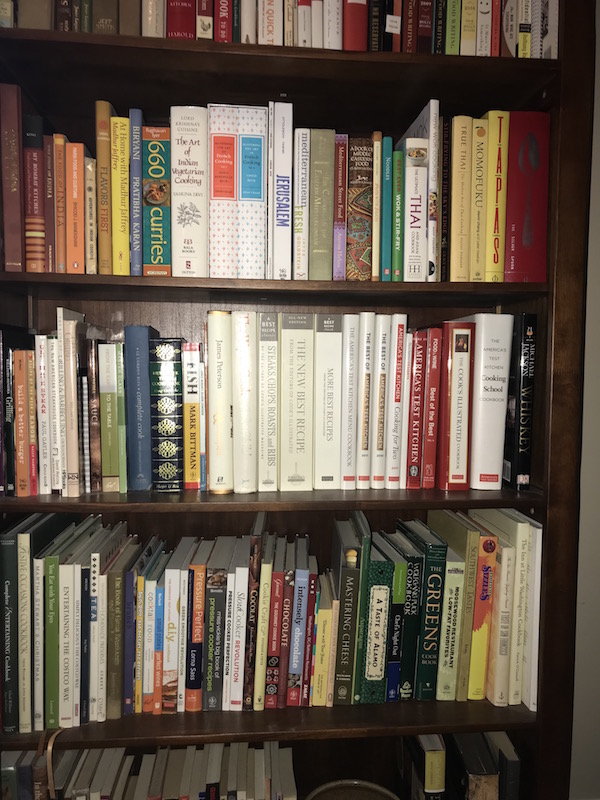
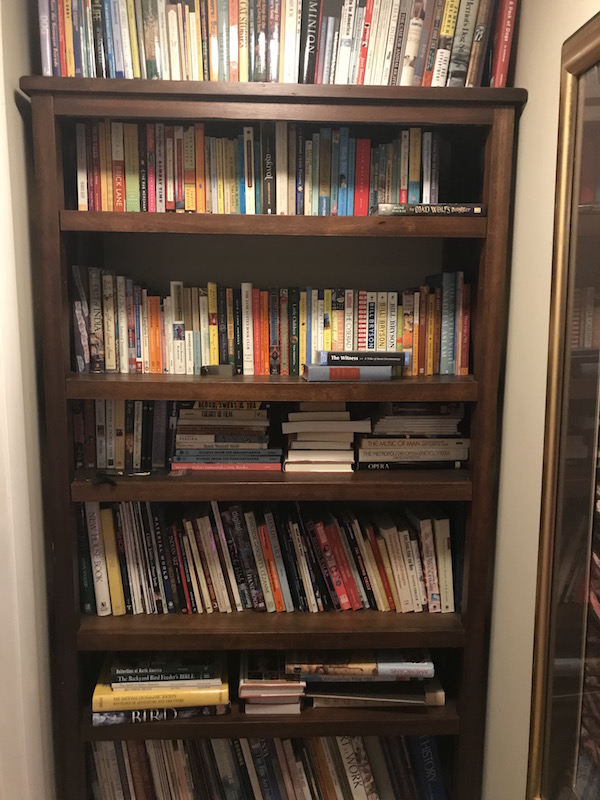
From the photos you showed me, you do, indeed, have a wide variety of books, both on bookshelves and in boxes, and they are almost all perfectly categorized into genres. (Though I do wonder how Hemingway and Thomas Hardy got blended with Geological Hazards.)
From Harry Potter to Mario Puzo, from 660 Curries to Puppies for Dummies, from C.S. Lewis to a Hindi-English/English-Hindi dictionary, you could open up your own bookstore or lending library. (Though I’d be glad to take that Short Walks in English Towns off your hands.)
DONATE YOUR BOOK TO CHARITIES
We’ll begin with a bevy of traditional charities that accept donations of books. As you’ll see further along, this is not the only option, but it’s where most people start. You probably already have some favorite charities, like Goodwill or Vietnam Veterans of America, but if you’d like to look further afield, consider the following.
Donate Books to Members of the Military — Did you know that the surge in popularity of paperback books actually began in World War II, with the creation of publishing arms dedicated to printing smaller, lighter books? (It helps that the proliferation of book-burning by the enemy helped make the reading of books an almost patriotic activity!) If you’d like to read more about this era, Molly Guptill Manning’s When Books Went to War: The Stories That Helped Us Win World War II offers great insight.
Yes, I digress, but it’s my column and I can meander if I want to! The point is that donating books to our soldiers, sailors, airmen, Marines, Coast Guardsmen, and Guardians is a worthwhile endeavor. Consider these options:
Books for Soldiers – With the motto “Care Packages for the Mind,” Books for Soldiers lets any deployed member of the military request a book (or DVD, or video game). Donors can view book requests, and you send books directly to the troops rather than to a central repository.
Operation Paperback – Through a network of volunteer shippers (that is, donors) around the country, this non-profit lets you input the genres you have and OP’s system will generate a customized address list to which to send books. Operation Paperback also provides books to wounded warrior programs and veterans hospitals in the U.S., as well as USO centers at US Airport transit points.
Donate Books to Prisoners – Education is a key to rehabilitation, which is essential for inhibiting recidivism. In recent years, many prisons have curtailed the ability of prisoners to accept books. During COVID, many prisons are in lockdown, leaving few opportunities for human interaction. Most prisons do not not allow friends or family members to send books directly to prisoners, so only bookstores, online stores, publishers, and donation programs can get books into the hands of prisoners. Each organization has a list of requested genres and items they cannot accept. Please read them carefully, and note that in all cases, dictionaries are highly desirable.
Prison Book Program – In addition to general reading for entertainment, escape (no pun intended) and self-education, they have special programs for disseminating GED study guides, legal books, and dictionaries. Prisoners write essays and reviews of the books they’ve read. Due to COVID, they are not currently taking donations by mail and limiting in-person donations. Please keep an eye on their donation information page as we (hopefully) exit the pandemic.
DC Books to Prisons – This organization accepts English- and Spanish-language paperbacks. Due to COVID, they aren’t currently accepting donations at their usual location, but their volunteers are meeting donors by appointment. The link I’ve provided indicates the genres and titles (both fiction and non-fiction) most desired.
Books Through Bars – This group sends books to prisoners via their offices in New York City, Philadelphia, and Boston.
SATURDAY AND SUNDAY—> Mass-Market paperback drive!
We are in need of the following mass-market paperback fiction*:
* Mystery/Detective (e.g. Sue Grafton, Barbara Neely, Lee Child)
* Thrillers/Action (e.g. P.D. James, James Patterson, Patricia
Cornwell, Clive Cussler) pic.twitter.com/xBWpUasUi5— NYC Books Through Bars (@BtBsNYC) January 16, 2021
Books to Prisoners – This Seattle-based nonprofit mails free books to incarcerated person across the U.S. Operations are currently closed due to COVID, but please keep this option bookmarked for future consideration.
Inside Books Project – This group sends more than 35,000 books to incarcerated Texans each year.
Women’s Book Project – Mail books or donate locally in Minneapolis.
Donate Books to the Wider World – Both at home and abroad, books are heartily desired to build collections in libraries and schools and to be sold so profits can support literacy programs. (The following primarily seek adult books; a future post will cover donations of children’s titles, as the requirements tend to be complex and geographically-specific.)
Better World Books – Simply box up your books, print a shipping label (the cost of which is covered by BWB) and ship to their facilities in Indiana. The books will either be resold to raise money for literacy charities or donated to a child in need, as appropriate. They also have drop boxes in a variety of cities; just enter your community in the search map. (You can also buy used books from their site to help them raise money for their literacy causes.)
Books for Africa – This group seeks paperbacks and hardcovers published in the past 15 years, textbooks, and reference books (including medical and IT/computer books) from the last ten years. Over the past 23 years, they’ve shipped millions of books to children and adults in 46 countries. Donation dropoffs are available in Atlanta, GA and St. Paul, MN. See their requirements.
Open World Books – This Chicago-based 501(c)3 nonprofit accepts donations at their headquarters and at donation drop-boxes around the city, allowing for 24/7 contactless donation. They operate a used bookstore, the proceeds for which fund literacy programs for children and young adults.
Books 4 Cause – Book donations to the Chicago-based Books 4 Cause have helped create 118 libraries in Africa, recirculated hundreds of thousands of books, and saved even more from landfills. Their campus book drives have collected textbooks for developing libraries and supported educational programs in Africa. In addition, donated books for children and adults have been distributed to people in need in Chicago and worldwide. Donations are accepted in Chicago and New York City.
And remember, if you don’t want to even leave your house, Give Back Box is an easy option for getting books donated and on their way with minimal effort and at no cost to you.
DONATE IN YOUR COMMUNITY
While the above non-profits are meaningful, many donors prefer to give their books new lives in the communities where they live. The following donation solutions will differ from community to community and venue to venue. Take an extra few minutes to check out the venues and make calls to each to see what the genre requirements and preferences are, and what, if any, special donation rules exist during COVID.
Retirement homes – If you’ve ever visited a friend or relative in a retirement community or assisted living center, you may have noticed how anemic the “library,” if there is one, seems. A mere smattering of bound Reader’s Digest Condensed Books is heartbreaking to an eager reader. While large print books may be the most appealing for some, lifelong readers love to read and will welcome a wide variety of genres.
Think “old folks” just want classics or naval war histories? Get real. Remember, folks born 90 years ago were just in their 30s in the swinging 60s. My 96-year-old friend watches Grey’s Anatomy and keeps up with the same shows I do. Age is no barrier to reading tastes. If you like a book, someone twice (or even thrice) your age may like it, too!
Age is no barrier to reading tastes. If you like a book, someone twice (or even thrice) your age may like it, too! Share on XHospitals, especially children’s hospitals and veterans’ hospitals – During COVID, patients can’t have their loved ones with them. Many hospitals have terrible Wi-Fi and books offer a rare comfort. And even in “normal” times (remember those?), patients and parents of children often seek something to occupy their minds and time. Call the volunteer director of your local hospital(s) and ask if they have a patient/family lending library and if they are accepting donations.
Ronald McDonald Houses – Across the country, Ronald McDonald Houses offer home-away-from-home respites to families of sick children so they can live close to the hospital during treatment. Not all RM Houses accept used books, though, so call your local RMHC chapter or program house and ask whether they have a library to which you can donate. If you’ve got a TON of books, as @NomdeB has, you might be able to help them create an entire library from scratch!
Homeless shelters – Unhoused people lose so much of the dignity of their former lives; a home is not merely a place in which to live, but it’s a space in which to seek refuge. Books are a place in which to seek mental and emotional refuge. While space is likely to be limited at homeless shelters, it’s worth calling to ask if they have a library area in the building and if they are able and willing to accept donations. (If it’s within your power, you might also want to donate bookshelves.)
Domestic violence shelters – The strength it takes to escape a violent household and build a new life for yourself (and possibly your children) is immense. Emotional reserves of strength can be fortified by education, entertainment, and motivation – all attributes to be found in books. As above, call to see if donations are accepted.
Local professional, community, and high school theaters – When you go to the theater, you probably pay the most attention to the actors, but good sets create an ambiance. Check with your local theaters to see if they would like donations of books, particularly hardcovers to line the shelves of sets for spaces like attorney’s offices or fancy-pants rich people’s home libraries.
Libraries – Although libraries have limited budgets, many public library systems have rules regarding what they can accept for circulation. However, if your community has a Friends of the Library organization, it’s likely that there’s some sort of annual library book sale to which your books can be donated.
Additionally, the American Library Association helps American and international libraries after natural disasters. In general, financial aid is sought, but there are often needs for books, particularly children’s books, when library collections are destroyed. Your library may post requests on your branch web site, so it’s great to get in the habit of visiting your public library’s site to keep abreast of such needs. Also, check out the ever-changing tabs at the ALA’s Book Donation Programs site.
School libraries and academic departments – While public libraries may not be allowed to expand their collections with donations, many public schools, particularly in disadvantaged communities, might find your books a boon. If the middle or high school has a home economics department (do schools still teach Home Ec?), those cookbooks of yours could be a delight!
Homeowners Association Clubhouses and Community Centers – @nomdeB, all those gardening books would be a boon to people in a starter home who have never had their own garden. A quick call to an HOA or community center (sometimes found in houses of worship in smaller communities) could find a great home for your how-to and DIY books!
BUILD YOUR OWN LENDING LIBRARY
One of the greatest book-related charms over the past decade has been the growth of the Little Free Library movement. Their website provides all the information you need to start your own lending library program from right outside your own home. Build your library, register it, and trust that the right people will find their perfect reads.
@nomdeB, thank you for asking the first Ask Paper Doll question, and I hope this helps you find homes for your gorgeous collection of books.
Readers, if you have a favorite option for donating books, I encourage you to share in the comments. And, as always, feel free to reach out through social media or my site’s Contact page to contribute your own Ask Paper Doll question.
Follow Me