Archive for ‘Paper Organizing’ Category
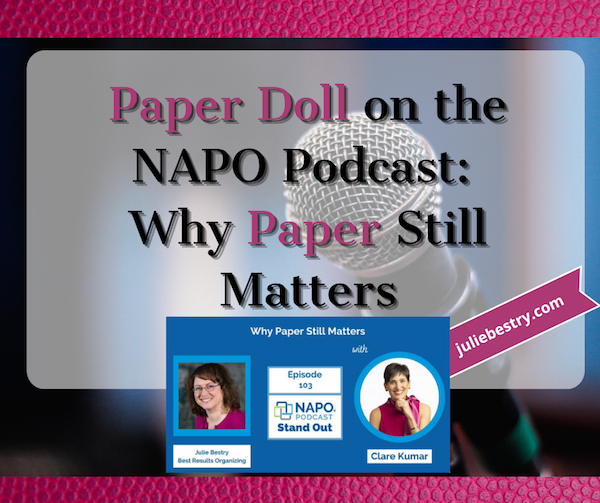
Paper Doll on the NAPO Stand Out Podcast: Why Paper Still Matters
Today’s Paper Doll post is part confessional, part promotional, and part educational. But first…
Have you listened to any good podcasts lately?
I love sharing my research and philosophies of organizing and productivity here in the Paper Doll blog, but I know that sometimes it’s more convenient to listen to (or watch) material that interests you. To that end, back in May, I shared Paper Doll Picks: Organizing and Productivity Podcasts, a list of my favorite podcasts and podcasters in the realms of organizing and productivity. (If you didn’t check it out previously, now is a great time to find some new favorites!)
When I wrote Paper Doll on Planning & Prioritizing for Leadership, I even gave you a two-for-one, recommending you sign up for The Leader’s Asset, a July/August interview series I participated in, as well as sharing my interview on Dr. Frank Buck: Productivity for Total Control & Peace of Mind.
If you didn’t catch my episode, “Julie Bestry: Don’t Apologize…Organize!” the first time around, you can listen at the show link or via Apple Podcasts, Spotify, or all your usual yummy podcast hangouts. (Consider it a summer rerun.) Given the high temperatures around the country, why should you have to struggle and run clicking around the internet dial? Here’s the YouTube version.
Casting a Backward Glance
I started my business twenty years ago, the year that the federal government started prosecuting Enron, the term “Axis of Evil” was coined, and Kelly Clarkson won the first American Idol competition. I joined what was then the National Association of Professional Organizers (NAPO) in the spring of 2002.
When asked what I wanted to do with my business, I said that while I was looking forward to working one-on-one with clients to make their spaces more organized and their lives more productive, my dream project was to have my own newspaper or magazine column.
I started blogging (which is kind of like having a column) in 2007, the same year I became a Certified Professional Organizer.
Over the years, I’ve written some ebooks and had a book (now out of distribution) traditionally published.
I have also been interviewed for a variety of media outlets , including newspapers and magazines (including, I’m always delighted to say, Real Simple), as well as on local television and radio, and on the podcasts in the Paper Doll Picks poast, linked above.
But what I really want to tell you about is a particular career highlight for me.
The NAPO Stand Out Podcast (and a Case of Nerves)
NAPO is still NAPO, but now that stands for the National Association of Productivity and Organizing Professionals. (As you’ve probably noticed, the focus of Paper Doll has also expanded to include more time management and productivity topics, along with paper and information organizing posts.) Since 2018, NAPO has had its own podcast, The NAPO Stand Out Podcast.
The NAPO Stand Out podcast invites organizers, productivity experts, and related experts to share their successes, challenges, best practices, proven strategies, industry developments, and fabulous anecdotes. Of course I listen, as it’s tailor-made for someone like me.
Near the end of last year, the host of the NAPO Stand Out Podcast, my friend Clare Kumar, messaged me to see if I’d like to be on the NAPO podcast.
Clare is a Canadian professional organizer, coach, and media darling, and as I’ve mentioned on these pages before, has a laugh that completely draws you in. She specializes in helping Highly Sensitive Persons (HSPs) optimize their professional performance, and she has her own podcast, Happy Space with Clare Kumar, all about helping HSPs find their own happy spaces. Clare is a force of nature.
Now, as you longtime readers know, I’m not exactly a shrinking violet. I’m always eager to talk (until the cows come home) about residential or business organizing, time management, Evernote, and everything else from notebooks to toxic productivity.
But the NAPO Stand Out Podcast was a different kettle of fish. One of its main audiences includes thousands of my professional organizing colleagues. This wasn’t a matter of talking to strangers who follow other people’s podcasts; this would be heard and seen by my peeps, including the professional organizing rock stars to whom I’ve looked up since I started my business.
The first-ever guest was Geralin Thomas, who is as fashionable as she is business-savvy, and has pivoted to training the next generation of organizing stars. The guest the week before I was set to appear was Harold Taylor, an absolute pioneer of time management and author of numerous books, including the seminal Making Time Work for You

and a time management blog that never ceases to deliver. (You might like The Return of the Checklist.)
From Geralin’s podcast episode #1 and Harold’s #102, the NAPO Stand Out Podcast interviewed powerhouse talents, from former NAPO president and absolute goddess Standolyn Robertson to author/TV star Peter Walsh to multimedia “happiness” guru and best-selling author Gretchen Rubin.
I mean, come on!
I have no trouble getting up to give a presentation in front of a room full of moms of preschoolers or accountants or CEOs because, as speaker training indoctrinates us, in that situation, the speaker is the expert. But a huge number of NAPO Stand Out Podcast listeners are professional organizers; they’re already experts.
“What could I possibly say that would be new or interesting to them?” I whined to my mastermind group. They were amused and not-at-all persuaded by my rare show of humility, and convinced me to have a Zoom call with Clare, who could sell galoshes to desert-dwellers.
Within moments of making delightful conversation, Clare was able to identify some very specific areas in the paper realm about which I feel passionate, and “organized” my anxieties right out of existence. (“Why paper still matters?” Just try to keep me from talking about that!) And then when I procrastinated week after week about actually scheduling the official interview, Clare appeared as if by magic to take the bull (or at least my bull-headedness) by the horns.
And this is the result. You can watch the whole, extended podcast here, via YouTube.
If you’d rather listen while walking (and don’t mind missing the secret squirrel video bonus material), check out the official NAPO Stand Out Podcast page for episode #103 for Why Paper Still Matters with Julie Bestry or the Why Paper Still Matters LibSyn podcast syndication page (with extended show note and links for literally every darned thing I mentioned). Of course, the episode is also available on various podcast platforms, including:
Over the course of the episode, Clare and I discussed how our relationship to paper has changed in recent decades, especially since the advent of smartphones. (We were promised a paper-free office after the advent of the computer revolution, but it didn’t really turn out as we expected!)
We also delved into the importance of finding a system that works for you, whether that’s digital, paper, or hybrid, and how different areas of our lives, from note-notetaking to capturing tasks, benefit from different approaches. I even got to put in a plug for my beloved Cornell note-taking method, which will be a topic of an upcoming blog post for the back-to-school season.
No matter whether you agree or disagree with my take on the beauty of an invitation addressed with calligraphy — I find it superior to an emailed save-the-date reminder — I think you’ll enjoy our hearty discussion of how and why paper still matters in many ways, from paper’s role in cognitive processes to its place in our hearts.
I hope you will take some time this week to watch or listen to the podcast and let me know what you think. Does paper still matter to you?
Organize for an Accident: Don’t Crash Your Car Insurance Paperwork [UPDATED]
[Editor’s note: This post originally appeared on Paper Doll on 1/23/2020 and has been revised and updated as of 8/8/2022. As many college students are headed off or back to their universities with cars, this is an ideal time to discuss the finer points of auto insurance.]
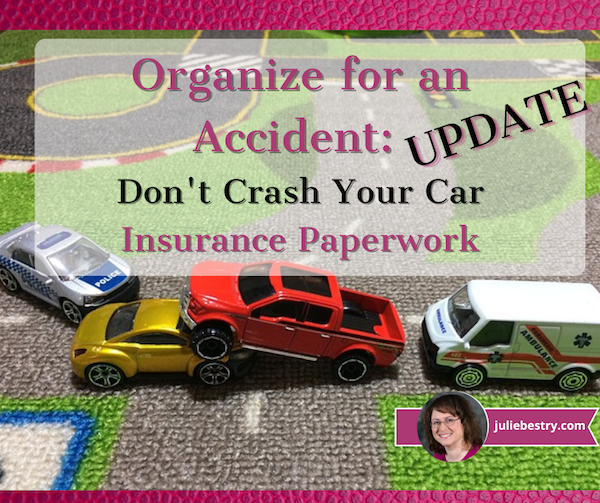
(Image by Andrea Closier on Pixabay)
What happens when an unstoppable force meets an immovable object?
In January 2020, Paper Doll was sitting at a traffic light, preparing to make a turn, when the car behind me answered that physics question. Luckily, it was more of a THUD or a BAM than a CRUNCH. However, even the most minor of fender benders can be scary and overwhelming. It’s definitely not the time to wish you’d been more organized with your car insurance paperwork.
Even the most minor of fender benders can be scary and overwhelming. It's definitely not the time to wish you'd been more organized with your car insurance paperwork. Share on XToday, we’re going to look at the different kinds of paperwork you need, and how to organize it, to make sure you are protected and confident regarding your car insurance.
APPLYING FOR CAR INSURANCE
Whether you’re new to driving, are changing insurance companies, or are insuring a new car in your household, there are certain documents you’re going to need when you apply. Having everything in order ahead of time will make the process move more smoothly. You will need information about yourself, any other drivers covered on the policy, and the vehicle, such as:
Social Security Number(s) — You will need the SSN of anyone who is to be covered on your policy.
Your Driver’s License — Some insurance companies will only need the license number; more old-school agents may want a photocopy of your license. If, like me, you don’t like letting your license out of your hands, make a few photocopies of your license and you’ll have them when you need them.
Your insurance company isn’t just verifying that you are licensed to drive. They’re going to check your driving record — also called a Motor Vehicle Report (MVR) in some areas — to verify that your license hasn’t expired or been suspended, and to see whether you’ve had any accidents, convictions, or traffic violations. Most states look at your driving record for the last three years; however, there are exceptions. Kansas and New Jersey reports go back five years; Colorado, Indiana, and West Virginia look back seven years.
WalletHub has a state-by-state guide to getting a copy of your MVR, with links, in case you want to check it for accuracy before seeking insurance. In my state, I can get a copy for $5 in person or or online; nationwide, costs range from $2 to $25 (sometimes plus processing fees to use debit/credit cards) per report. Be prepared to use an authentication app, like Google Authenticator, or receive a text or email or verify your identity.
Do not be scammed into using a non-governmental service that promises to get your MVR online for you; they up-charge a significant amount and are usually not any faster than going through your state’s website.
Financial History — Insurance companies do standard credit checks, so it’s a good idea to check your credit history at AnnualCreditReport.com (and not one of the shady copycats), as well as your credit score, to make sure there are no mistakes.
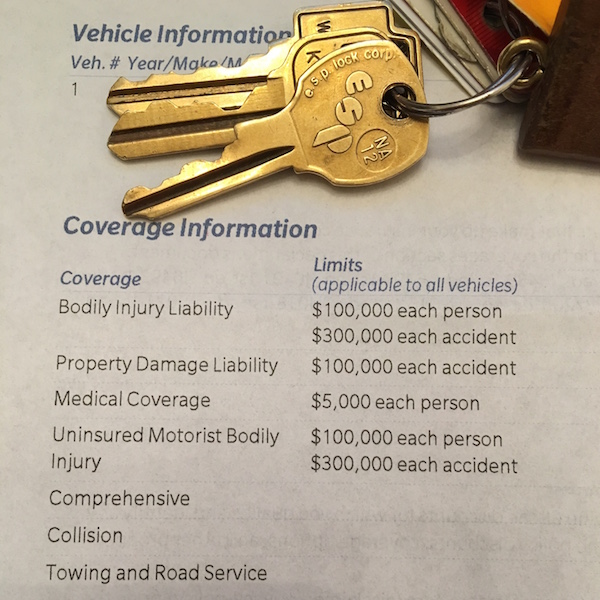
Your Current Insurance Declarations Page – You know that long page (or set of pages) in your policy with big numbers like $300,000/$500,000? (More on that, below.) Having that page will allow your new insurer to provide you with an apples-to-apples quote.
Vehicle Information Number (VIN) — This 17-character identifier is unique to your car and is built into your dashboard or imprinted in your driver’s side door frame. Your insurer uses this to verify that the car is not stolen and doesn’t have any problematic history.
Discount-Related Paperwork — There are a variety of ways to get a discount on car insurance. Your driving record (MVR) will verify if you qualify for a “good driver” discount, and you (or your teenager or college student) may be able to submit a current report card to qualify for a “good student” discount. To get the discount, students usually need to be under 25 and have no at-fault or moving violations on their MVR. A GPA of 3.0 (on a 4.0 scale) or Honor Roll/Dean’s List status is generally required.
You can also get multi-car discounts if you and your spouse both have cars, or multi-policy discounts if you carry homeowners’ or renters’ insurance with the same company.
If you’re over a certain age, you may be able to take a safe driver course, like one offered by AARP, to lower your rates.
You might be eligible for affinity discounts if you are a member of certain clubs, organizations, alumni associations, or sororities/fraternities. There are also often occupational discounts for members of certain professions, including first responders and medical professionals, educators, and government employees, so it’s worth asking your agent what discounts exist before you get too far in the application process.
ORGANIZING YOUR INSURANCE PAPERWORK
Once you have an auto insurance policy in place, you’re going to have paperwork. The more organized you can be, up-front, the less stress you’ll have to deal with in case of an accident or other issue.
Policy
This is the multi-page legal document that tells you everything about your coverage. It can be overwhelming. Make sure you go over it with your insurance agent so that you know and understand the essential elements of your policy, particularly the items on your declarations page, which spells out your coverage:
- Liability (also called Bodily Injury Liability) — These are the limits on your policy per person per accident. You may see $100,000/$300,000, which means you’re covered for any medical expenses and/or lost wages for anyone (including other drivers, passengers, and even bystanders) injured in an accident you cause, up to that amount.
- Property Damage — This pays to repair or replace things that get damaged (in an accident you cause), like other people’s cars, items in their cars that get damaged, actual property (like someone’s garage or mailbox). The dollar limit is quoted per accident. Be sure you understand the difference between collision and comprehensive. Collision covers damage to your car when it collides with another car, or a tree, or a Bob’s Big Boy. Comprehensive covers damage to your car caused by things like vandalism or theft by hooligans, or “natural” disasters (hail, tornadoes), a tree toppling onto your car, or Bambi taking a running leap at your hood.
Your policy may combine liability and property damage into one category, so you might see it listed with three numbers, like “100/300/50” which means $100,000 for injuries per person, $300,000 for total injuries per accident, $50,000 for damages to property.

Depending on your state, your policy may also have (or even require) special types of insurance options, like:
- Uninsured and underinsured motorist coverage — If someone hits you but doesn’t have enough (or any!) insurance, it will cover injuries if you or your passengers get hurt. Basically, you’re insuring yourself against people who aren’t responsible enough to have (enough) insurance. There’s also a line item for uninsured motorist property damage; as you may have guessed, it covers your car if the person who hits you doesn’t have insurance.
- Personal injury protection insurance (PIP) — If you live in a “no-fault” state, this pays out for medical expenses for minor injuries or lost wages for you or your passengers. (Liability coverage is only invoked if the costs go beyond what PIP covers.)
- Medical payment coverage — Like PIP, this covers you or your passengers’ accident-related injuries, no matter which driver is at fault. It doesn’t cover lost wages, and the limits tend to be $5,000-10,000.
Your policy may also cover things like glass replacement damage, towing and road service, accident forgiveness (to keep your rates from going up after an accident claim) and loss of use (for a car rental while a vehicle is being repaired).
I encourage clients to make a file folder for each insurance policy they own (auto insurance, homeowners, etc.) and keep it in the Legal section of your Family File System.
The declarations page is a good cheat sheet for all of your coverage. You may want to make a photocopy and keep it in your glove compartment, or take a photo/scan to save in Evernote, Dropbox, or a similar app accessible on your phone.
Notes for Canadian Readers
Please note that all of the above refers to purchasing auto insurance in the United States. In Canada, different language is used. For example, in addition to provincial and territorial mandatory coverage, there are optional policies including “collision, specified perils, comprehensive, and all perils.” If you are seeking information regarding auto insurance (and organizing insurance paperwork) in Canada, please confer with an insurance professional (or a member of Professional Organizers in Canada).
Bills for Premiums
Insurance companies usually give you the option of paying annually, twice per year, or monthly. The less often they have to invoice you, the more likely you are to get a discount, so paying every six months can save you a bit over monthly bills.
If you receive paper bills, mark the payment date, amount, method of payment (and confirmation number, if applicable) on the invoice and file it in the Financial section of your Family File System.
If you tend to go paperless, print a PDF or take a screen shot of the confirmation screen and keep it in a “paid invoices” folder on your computer, and be sure to able it clearly, like “2022-May Ins-Car.”
Re-shopping Insurance Policies
In April 2022, I made a few calls to investigate the rates of competitive auto and rental insurance policies. When I found an auto policy that was significantly lower than what I’d been paying (while not increasing my associated renter’s policy) for an equivalent policy with an equally reputable insurance company, I contacted my agent.
I was surprised, delighted, and then admittedly annoyed when my agent “magically” found me an even more competitive rate. (A reminder: companies generally do not go looking for ways to reduce consumer costs!) However, even though I was staying with my same insurance company where I’d been for 24+ years, my policy was technically with a new sub-company, and my “accident forgiveness” guarantee went away, as if I were a new policy holder. However, I was able to retain that status with a $20 one-time fee. Caveat emptor!
So, do consider shopping for better rates/discounts at least every couple of years. It’s not fun, but it’s not as inconvenient as you might imagine. If you like your current insurance agent/company, give them the opportunity to surprise, delight, and slightly annoy you by magically finding better rates.
Proof of Insurance Cards
This little card has your name and address, your car’s VIN, make, and model, your insurance company’s name and contact information, and your policy number. It is the only document that verifies the coverage on each of your cars, so keep your proof of insurance somewhere safe in case you need to present it to a police officer or someone with whom you’ve had a driving “misadventure,” or to have information handy if you need to file a claim or report damage to your insurer.
Most insurance companies provide two proof of insurance cards on one piece of paper with your policy renewal. Consider putting one in your wallet and one in your glove compartment. If your glove box is not always tidy, you may want to consider something that keeps important documents front and center, like this car insurance and registration card holder in a bright color.

fashion-forward options, like this sparkly one (available in black, pink, purple, rose gold, and silver).

I also encourage clients to take a photo of your proof of insurance card and keep it in the cloud, accessible via your cell phone in Evernote or Dropbox. If you tend to drive places where cell service is spotty, consider keeping it in a “VIP” album in your photos app.
By the way, most insurance companies now provide official proof of insurance inside your account on the website or the app, but I wouldn’t leave that as your only proof. If you are stopped by a police officer, or worse, in an accident, you don’t want to be at the mercy of wonky internet access.
Other Info
Right now, take a moment to put the following numbers and URLs in your phone:
- The police non-emergency line – if you have a minor fender-bender, there’s no need to call 911.
- Your insurance company’s Claim Filing telephone number. Most insurance companies have a 24/7 line to call if you’ve been in an accident. The Insurance Information Institute and BC Law Review maintain lists of most auto insurers’ telephone numbers for filing a claim. (This also may be useful if someone else causes your car damage; if another driver drags his feet about contacting his insurance company, or tries to convince to go to his cousin’s body shop or proposes some other hinky option, be prepared to call his insurance company to ensure things are handled on the up-and-up. Yes, I’m speaking from experience.)
- AAA or any other auto club’s number, URL, or app will make it easier to quickly call for a tow.
- Your insurance company’s direct claim filing/tracking URL – Navigate to your insurance company’s website, look for the “file a claim” link and bookmark it in your browser’s bookmark/favorite bar to find it quickly. While you may love your agent, she may not love you if you call her at 2 a.m. Most claim-filing departments have representatives on duty 24/7/365.
- The link to this post — Keep this link handy, if for no other reason than to avail yourself of the advice in the next section, should you need it.
WHAT TO DO IN CASE OF AN ACCIDENT
 Photo by Praveesh Palakeel on Unsplash
- Take some deep, calming breaths. My bumper tap was minor, but I still felt shaky. Don’t get out of your car until you feel steady.
- Pull over slowly to get out of the stream of traffic. Turn on your hazard lights. (If you’ve never had to use your hazards before, go check to make sure you know where they are! Ask your teen drivers to do the same.) If you can’t move your car out of the flow of traffic, get all passengers to a safe spot until emergency vehicles arrive.

You might want to consider getting emergency flashers/road flares to make sure the people and cars are safe and that other vehicles can see what’s going on.
- Assess any injuries requiring urgent assistance (your own, and that of your passengers, anyone in the other car, and bystanders, if applicable).
- Call the police and, if appropriate, 911 for medical care. Assuming the other driver is not belligerent or under the influence, call the non-emergency police line to report the accident and request that a police report be taken. (Your insurance company will need documentation of the accident.)
- Exchange information — Get the other driver’s name, contact details, and insurance information. (Taking photos of someone’s proof of insurance and driver’s license is faster than writing it down and you can text those photos to your insurance agent.) Take photos of your car, the other driver’s car, the situation, and road conditions. If it’s a serious accident, ask witnesses to provide their contact info or to stay around until the police arrive.
- Call the claims number and/or your insurance agent if you want to file a claim. Even if you weren’t at fault, you may wish to call your agent, just to put yourself at ease and ensure that you haven’t missed any steps.
As I often say, being organized can’t prevent all catastrophes, but it can make them less catastrophic. Organize well. Drive safely.
Paper Doll’s Ultimate Guide to Getting a Document Notarized
When I was little, I thought a notary public was “Note of Republic.” After all, the concept of [“thing] of [location]” is a known form of expression. Consider Governor of Minnesota, Justice of [the] Peace, or Man of La Mancha. I figured “Note of Republic” meant that it was a document related to our country.
C’mon, it’s weird to hear “public” after a word. We have Certified Public Accountants, not Certified Accountants Public! We’re used to public school, public pool, public park, public relations. What the heck, I wondered when I first saw the expression properly written, was a notary?
Yes, I’m a grownup now, and (mostly) understand what notaries do, but unless you have used a notary’s services or are a notary yourself, you might wonder how it all ensures your legal documents are organized and squared away.
WHAT DOES A NOTARY DO?
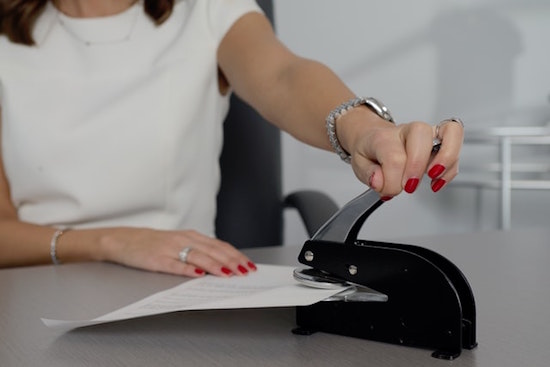
Notary Stamp by Stephen Goldberg on Unsplash
According to the State of Tennessee (where Paper Doll resides), a notary public is:
a person of integrity who is appointed to act as an impartial witness to the signing of an important transaction and to perform a notarial act, which validates the transaction. A notary’s primary purpose is to prevent fraud and forgery by requiring the personal presence of the signer and satisfactorily identifying the signer.
Let’s look at how those elements come into play:
- a person of integrity — The rules vary by state, but generally, you have to be at least 18 years old, a citizen of the United States (though in some states, you need only be a permanent resident), either reside in the state or operate a business in that state, and be able to read and write in English.
You also have to submit an application and purchase a notary surety bond, which is like an insurance policy in that it protects the public in case a notary makes a grievous error.
As you might guess, people with felony records would not fall under the “person of integrity” definition and can’t become notaries. However, while we can all imagine various failures of integrity (bullying, gossiping, cheating at Scrabble), those don’t generally prevent someone from becoming a notary.
- act as an impartial witness — notaries can’t notarize their own signatures, transactions in which they are participants, or documents for their family members or friends.
- requiring the personal presence of the signer — until recently, “personal presence” was literal, but as we will see later, a virtual presence is sometimes an option.
- satisfactorily identifying the signer — this involves the signer being able to provide documents that prove identity.
WHAT ARE THE DIFFERENT TYPES OF NOTARIZATION?
If you’ve never had to get something notarized before, you may assume that there’s just one kind of notarization, where the notary says, “Yup, I’m acknowledging that I just saw you sign this thing.” But it’s more complicated than that.
There are main three types of notarizations:
1) Acknowledgements — The notary is saying, “OK, I just saw this person [verified as the lovely Ms. Nell Fenwick] sign this document willingly; there was no mustache-twirling Snidely Whiplash threatening to tie this person to the railroad tracks if they didn’t sign over the rights to their goldmine.” (What, don’t tell me you never watched Dudley Do-Right!)

There are some essential elements here:
- The signer (that’s Nell) has shown up in front of the notary.
- The notary has been able to positivity identify the person is actually Nell (according to the individual state’s regulations).
- The signer has either signed the document before showing up or must sign it in the notary’s presence.
- The signer has to be able to communicate directly to the notary that the signing is willingly done, at least in 49 states. However, in Arizona, the law allows signers to communicate their willingness to the notary through a translator.
(Also, for the purposes of this blog post, Nell and Snidely are in the United States, not Canada where the cartoon takes place. With apologies to my international readers, non-US notary regulations were far too complex to include in today’s post!)
The notary is required to make sure that the individual understands what the document is and what it means and what the consequences are, in addition to being willing to sign and not under any appearance of being coerced.
Obviously, notaries are not mind-readers; they can’t be certain a person isn’t in an emotionally abusive relationship or having their loved one held for ransom, but a notary can refuse to notarize a document if something seems seriously hinky. The notary can ask all sorts of questions, ranging from the kinds of questions first responders ask accident victims to those of a more legal nature. If the signer appears drunk or under the influence of dugs, or to be suffering from dementia or is otherwise seems cognitively, the notary can (and must) decline to notarize the document.
Acknowledgments are used when you’re getting any of a variety of documents signed, like a contract, a Power of Attorney, or a last will and testament.
2) Jurats — This old-timey, legalese expression (also known as “verification upon oath or affirmation” means that the signer is swearing (or affirming) to the notary that the contents of document they are signing are true.
- As a signer, you must show up and sign the document in front of the notary.
- In many (but, to Paper Doll‘s surprise, not all) states, the notary must verify the signer’s identity.
- The notary administer’s a verbal oath (or affirmation) and the signer must respond aloud* in such a away as to confirm mutual understanding. No nods or thumbs-up are allowed.
*I tried to find verification of what is required if the signer is deaf or is not able to speak, and while there don’t seem to be uniform answers, I was able to learn that communication through a translator or sign interpreter is not enough, though the notary and signer are allowed to communicate in sign language, via writing notes on paper, or typing on a computer, tablet, or cell phone, as long as they are in one another’s presence.
In theory, signers are supposed to raise their right hands while making the oath or affirming (just like in a courtroom), but it’s not required by law. (It’s just to make it obvious that this is more serious, legally speaking, than telling your college roommate’s mom that your roommate is in the shower she’s actually sleeping at her boyfriend’s dorm.)
The idea of an oath or affirmation may ring a bell if you’ve watched a lot of courtroom dramas and have heard, “Do you solemnly swear…”
In brief, an oath is a pledge before a religious entity. As some faiths do not allow oaths to be taken in civil settings, and as some people do not adhere to religious precepts, individuals get a choice. For more on the difference, the National Notary Association has made a short video to explain:
A jurat is used when you must notarize testimony. Imagine you are asked to notarize your statement that you witnessed Ms. Lucy Van Pelt promise not to pull the football away from Mr. Charlie Brown but then she pulled the football away, causing him to kick at the air, fall on his back, and complain of seeing stars.
There are different forms or certificates that notaries use for each notarization, whether acknowledgements or jurats. Generally, an acknowledgment certificate will say something like “acknowledged before me” (where “me” is the notary), while the jurat certificates will say something like, “subscribed and sworn to (or affirmed) before me.”
3) Copy certifications — This is when a notary confirms that the copy of a document is an exact match to the original version. Not all states allow this type of notarization.
Notaries can also provide other services. They can administer oaths, like those given to people deposed in legal depositions. (Notaries can’t administer oaths of office for government service or in a military setting, though.) In Maine, South Carolina, and Florida, they can also perform marriage ceremonies!
Pretty much any kind of document can be notarized except for government vital records documents, like birth and death certificates, or marriage certificates. Notaries aren’t allowed to notarize, make, or certify copies of these; instead, you have to go to the appropriate government agency to get certified copies. For more on that, see Paper Doll‘s post from last year, How to Replace and Organize 7 Essential Government Documents.
HOW CAN YOU PREPARE TO GET SOMETHING NOTARIZED?
First, be sure you know exactly what you need to get notarized and fill in all of the blank spaces (except, as applicable, the signature line).
Next, make an appointment with a notary. While you can sometimes show up at a notary’s office, you wouldn’t want random people showing up to your place of work, unannounced, and have to squeeze them in. Be cool, dude.
Verify the fees you’ll be paying and ask how the notary accepts payment. Notary fees differ by state and notarization type, are set by law for most states, so you can check with your state’s Secretary of State’s office for the basic fees; however, notaries can charge separate fees for travel and for remote services.
Notaries at banks may not charge anything for the service, and notary at companies (like the UPS Store) may allow any of the payment methods the company already accepts for other services. But self-employed notaries are allowed to make up their own payment policies, and might require payment by cash or check; don’t assume they’ll take Venmo.
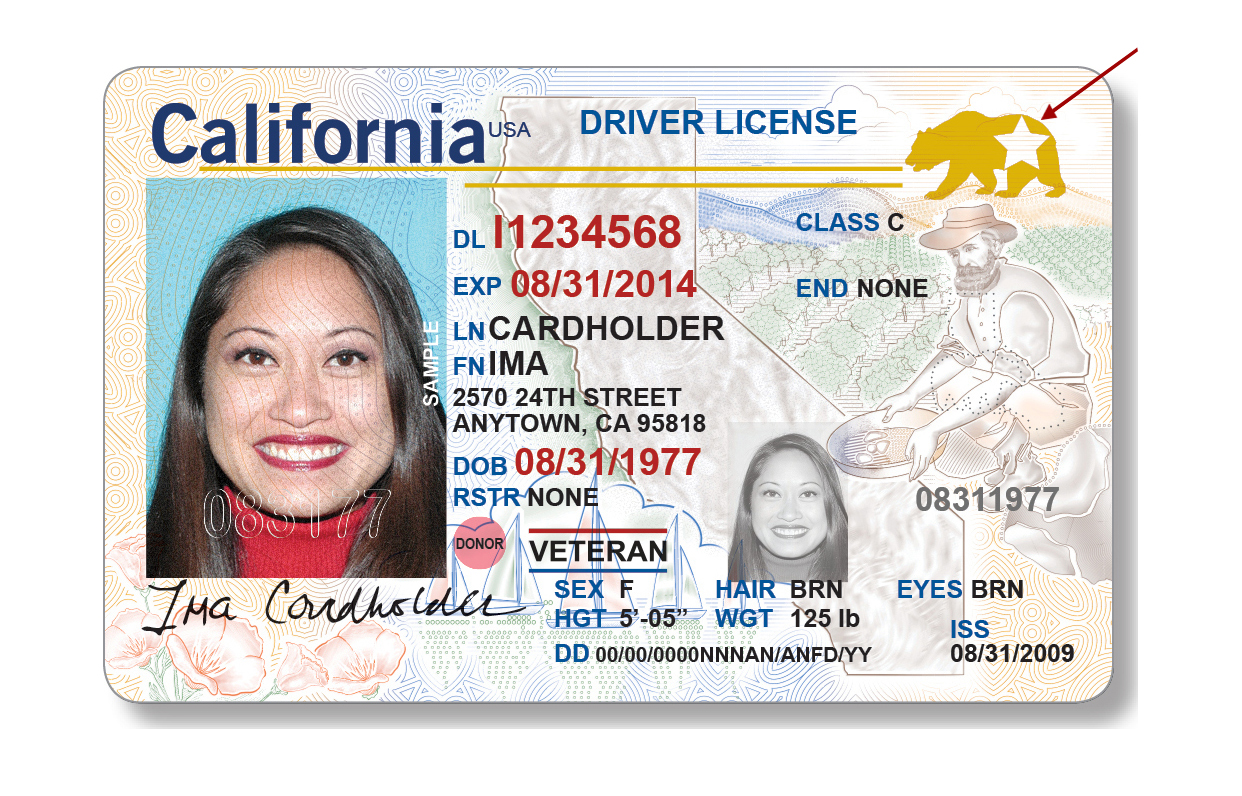
Bring your photo ID. Remember, the notary’s job is, in part, to verify that signers are who they claim to be, and that can’t be done if the signers do not present valid ID. Usually, a government-issued ID with a photo, like a driver’s license or password, is required.
If someone lacks legal identification, the situation isn’t impossible, but it’s fraught. For example, let’s say that Grandpa is in an assisted living facility, hasn’t driven in a decade, and doesn’t have a passport or a government issued photo ID. In many states, the signer can call upon “credible identifying witnesses,” people willing to swear to the notary that they know Grandpa and that he is who he says he is. But Grandpa’s witnesses are going to have those required forms of identification.
Speaking of ID, make sure the name on your ID matches the name you’re using on the documents you need to have notarized. If you’ve recently gotten divorced and have returned to your “maiden” name, or have married and taken your spouse’s name or hyphenated your names, you’ll need to show ID that reflects that change.
Make sure everyone who needs to sign is available for the appointment. (If someone in your family always shows up late, you might want to “accidentally” tell them a slightly earlier time — or drive them yourself!)
Know what the heck you’re going to be signing and what it means. The notary has to make sure that the signer is willing to sign and fully aware of what they’re signing. Paper Doll shouldn’t have to tell you this, but don’t show up at the notary’s office after a boozy brunch. (In the case of Grandpa, above, you might want to warn him that the notary might ask some questions to make sure he’s mentally alert and not signing under duress, so he’s not offended by the questions.)
Be prepared to sign the notary’s log book, which is also known as a public journal. Most states require that notaries keep a log book or journal of all the notary-related acts they perform. It covers all the nitty-gritty details of the transaction, so if a notarized document goes missing, gets stolen or altered, or anything becomes a matter of legal dispute, the record can be set straight. Plus, it keeps everything so nice and organized.
A few years ago, a friend contacted me and asked if I would serve as a witness so that her elderly mother could get some documents signed and notarized. In addition to having to sign my name on the various documents as a witness, I had to sign the notary’s log book/journal, provide my photo ID, write my driver’s license ID number, and provide my thumbprint (which was less messy than I expected, but made me feel like a character on Law & Order).
WHERE CAN YOU FIND A NOTARY?
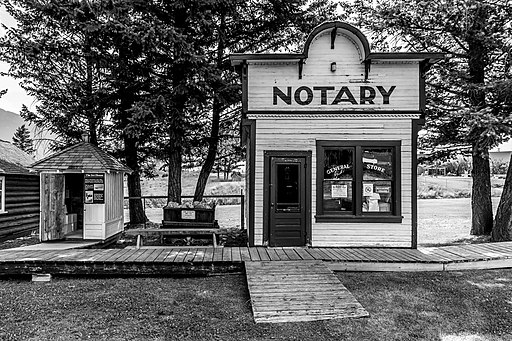
Photo by Matthias Süßen, CC BY-SA 4.0 , via Wikimedia Commons
You may assume that because any notary can notarize your document that any notary will, but that’s not the case. For example, several years ago I needed to sign a document for Paper Mommy and have my signature witnessed and notarized.
Most banks provide notary services, and I was delighted to see that Bank of America provides fee-free notary services. So, I went to Bank of America, where I had both personal and business accounts, but once they saw that it was a Power of Attorney document, I was told that bank employees were not allowed to notarize it, as a matter of company policy.
In the end, I got my signature notarized at the UPS Store just up the block from the bank. It felt odd to be getting a legal document notarized next to people buying bubble wrap and making Amazon returns, but the process was quick and easy, and the fee was reasonable.
In addition to banks and credit unions, you may be able to find notary services at any of the following:
- Law firms — Sometimes paralegals and legal secretaries are notaries, and the process will be faster than trying to see an attorney-notary.
- Real Estate firms — Call your agent; if you’re a renter, ask your friends if any of them loved their real estate purchase experience and how they got documents notarized.
- Accountants — You may be out of luck if you file your taxes with H&R Block or TurboTax, but if you have a relationship with an accountant (and aren’t pestering her during tax season), you might get lucky.
- Package shipping stores like the UPS Store (hey, it worked for me) and FedEx Office (which they offer through a virtual service, of which there’s more below)
- AAA — Most regional AAA offices provide free notary services as part of membership. However, AAA can’t notarize business contracts, mortgages, or wills; if you’ve got to notarize an auto sale, Power of Attorney documents, trusts, or affidavits, though, you’ll be fine. You can’t always make appointments at AAA, so you may end up sitting in the lobby for a while until it’s your turn.
- Public libraries — Many library systems have notaries on staff; you may have to go to a branch that is not where you usually borrow, so call to verify which branches have notaries available. The notaries at your library may be limited as to which documents they can notarize; mine can notarize sworn statements, Power of Attorney documents, rental agreements, copy certifications, and more, but can’t notarize real estate transactions, wills, divorce papers, employment verification forms, Homeland Security I-9 Forms, or documents in languages other than English.
- Colleges — If a member of your family attends a college or university, call the bursar’s office. They’re likely to have someone on-staff with notary credentials or will know where to go.
You can also find notaries the old-fashioned way, by searching the Yellow Pages, using a search engine (e.g., type “notary services [your town]” into Google), or searching statewide notary databases.
Weirdly, there does not seem to be a database of notary databases (which feels awfully disorganized of them), so you’ll have to search for your state’s database through a search engine or by looking at your state’s Secretary of State website.
You don’t have to go to the notary; notaries will come to you!
Over the last few decades, mobile notaries have become a thing. The same notaries whom you can visit for services may provide mobile notary services for an additional fee. Type “mobile notary near me” into your favorite search engine.
As I mentioned earlier, when a friend needed to have her mother’s documents signed, witnessed and notarized, my experience as a professional organizer (and resource researcher) came in handy, and I was able to recommend a wonderful Chattanooga notary public. While there was an additional fee for him to travel to my friend’s location, it far outweighed the inconvenience (and likely impossibility) of getting her elderly and infirm mother to the notary’s office.
Thus, you’ll want to weigh the cost of us using a mobile notary against the convenience of having someone come to you.
WHAT IF YOU CAN’T GET TO A NOTARY (AND ONE CAN’T GET TO YOU)?
A notary can’t just notarize a person’s signature over the phone or Zoom. I know. Bummer.
That said, as a result of lessened bureaucracy due to the COVID pandemic, there’s Remote Online Notarization, or RON. (No, not Ron Weasley from Harry Potter, though it really does seem pretty magical.)
Remote online notarization companies connect a signer with commissioned notaries public (yes, that’s the official plural of notary public, like attorneys general or culs-de-sac) who are authorized to notarize documents remotely via a webcam.
When I originally started researching this post, 24 states allowed notaries to do RON; 24 had temporary regulations allowing it during COVID, and two had weird limits. Then Connecticut rescinded authorization but ten more states made it permanent. But last week, the House of Representatives passed the Remote Online Notarization Bill, which (assuming it passes the Senate) should make secure online remote notarization much easier to access.
Two of the best known remote online notarization service providers are Notarize and NotaryCam.
First up, Notarize.
Who knew notarization could be so funny?
Download the iOS or Android version of the Notarize app or use your computer’s browser. Then snap a photo of the document and upload it (or upload a PDF, or drag-and-drop the document onto the computer’s browser). Then provide your proof of identity, and connect to the notary via the platform’s webcame. Pricing for individuals starts at only $25.
NotaryCam is similarly priced at $25 (or $79 if you’re outside the US). Your document has to be a PDF, and while you can use a Mac or PC, if you don’t want to fiddle with plugins, use Chrome or Firefox. When mobile, iOS is fine but NotaryCam sounds pretty iffy about using Android.
Both platforms are secure, legal, and operate 24/7/365. For what it’s worth, NotaryCam seems oriented more toward real estate and other professionals than toward consumers; Notarize is a little more intuitive and aimed toward both a Regular Joe consumer audience as well as professional.
Have you ever had adventures in getting something notarized? Please feel free to share in the comments.
Finally, now that you’ve made it through this master class in notarization, you deserve a little fun. If you watch to the end, you’ll find that Inspector Fenwick of the Royal Canadian Mounted Police could have used the services of a notary to figure out who was whom!
Organize Back-to-School Savings: Tax-Free Holidays & Discount Codes

Photo by Kelli Tungay on Unsplash
Finances are tight these days. (Let’s be real — when aren’t they?) Inflation is frustrating our bank balances, and corporations are reaping record profits, frustrating our sense of fairness and propriety. Energy costs are surging just as it’s ridiculously hot in most of North America (and elsewhere). And while gas prices have dropped 40-straight-days as of the writing of this post, it’s not like that makes it any more delightful to pay at the pump.
And now, shockingly, it’s time to start thinking about organizing for back-to-school shopping.
Depending on where you live, you’re either nodding or looking shocked; if it’s the latter, it’s because you live, like I did when I grew up in Buffalo, New York, where kids don’t go back to school until after Labor Day. So for you, talking about back-to-school in July is like putting up Christmas decorations right after Halloween. (Oy. Never mind.)
The point is, there’s something going on right about now that can help you organize your financial resources for the back-to-school period.
ORGANIZE YOUR FINANCES WITH TAX-FREE HOLIDAYS
Throughout the year, many states have tax-free holiday weekends or weeks, and they are usually clustered in these mid-summer weeks to coincide with the back-to-school season for the southern states, where students return to school in early August, rather than post-Labor Day.
These states generally allow retailers to sell clothing and footwear, school supplies, computers, and sometimes backpacks, books, and other “tangible personal property” without charging sales tax. In my state, that’s a savings of 9.25%. Combine that with various 10%-off to 40%-off sales, and that’s a great opportunity to stock up on necessities.
Seventeen states scheduled back-to-school tax-free holiday weekends or weeks in 2022. If your state is not listed below, consider clicking on the name of your nearest state to be directed to that state’s official tax-free holiday page.
Note: Alabama’s tax-free holiday period has already occurred (July 15-17, 2022, and generally starts on the third Friday in July and ends at midnight on the following Sunday); watch the Alabama Department of Revenue website for 2023’s schedule.
Arkansas (August 6-7, 2022)
Tax-free: Clothing and footwear (up to $100); clothing accessories and equipment (up to $50); school and academic art supplies; scholastic instructional materials (including, but not limited to books) (no dollar limit)
Connecticut (August 21-27, 2022)
Tax-free: Clothing and footwear (up to $100)
Florida (various tax-free dates — see below)
May 14-August 14, 2022: children’s books
July 25-August 7, 2022: Clothing, footwear, and accessories (up to $100); school supplies (up to $50); learning aids and jigsaw puzzles (up to $30); computers and accessories for personal/non-commercial use (up to $1500).
Note: this overlaps with a year-long tax-free Florida holiday on baby/children’s clothing, shoes, and diapers, from July 1, 2022-June 30, 2023.
Illinois (August 5-14, 2022)
Reduced tax rate to 1.25%: Clothing and school supplies (up to $125)
Iowa (August 5-6, 2022)
Tax-free: Clothing and footwear (up to $100)
Maryland (August 14-20, 2022)
Tax-free: Clothing & footwear (up to $100)
Mississippi (July 29-30, 2022)
Tax-free: Clothing & footwear (up to $100)
Missouri (August 5-7, 2022)
Tax-free: Clothing (up to $100); computers/peripherals (up to $1,500); software (up to $350); graphing calculators (up to $150); school supplies (up to $50)
New Mexico (August 5-7, 2022)
Tax-free: Clothing and footwear (up to $100); desktop or laptop computers, tablets or notebooks (up to $1,000); computer peripherals/hardware (up to $500); school supplies (up to $30)
Ohio (August 5-7, 2022)
Tax-free: Clothing (up to $75); school supplies (up to $20)
Oklahoma (August 5-7, 2022)
Tax-free: Clothing and footwear (up to $100)
South Carolina (August 5-7, 2022)
Tax-free: Clothing and shoes (no limit); school supplies (no limit); backpacks (no limit); computers, printers, peripherals, and software (no limit)

Tennessee (July 29-31, 2022)
Tax-free: Clothing (up to $100); school and art supplies (up to $100); desktop, laptop, and tablet computers (up to $1,500)
Texas (August 5-7, 2022)
Tax-free: Clothing and accessories; footwear; school supplies; and backpacks (each up to $100)
Virginia (August 5-7, 2022)
Tax-free: Clothing, accessories, and footwear (up to $100); school supplies (up to $20)
West Virginia (August 5-8, 2022)
Tax-free: Clothing (up to $125 limit); accessories, and footwear (up to $100); school supplies (up to $20)
In most cases, retailers should abide by the discounts or tax-free status whether the purchases are made at brick & mortar stores, online, or by phone.
However, so that you don’t experience any surprises, be sure to double-check that the online/phone venues from which you order understand your state’s tax holiday regulations. (In case you’re wondering, yes, Amazon participates in state sales tax holidays as long as you purchase the products exempted during your state’s tax holiday. And no, I have no idea how Amazon’s computers work that magic. I still haven’t figured out how Kohl’s magically makes my receipt so much less than I’m always expecting!)

Tax-free holiday tips:
- The price limits above generally refer to the price-per-item cost, not your entire purchase. If the per-item limit is $100 and your entire bill for clothing comes to $250, but no one item is more than $100, you’re golden.
- Make a list of what each family member needs before you get to the store. (Check with your school to see if a grade-appropriate supply list has been posted online. If your school does not provide a list prior to the start of the school year, consider an online supply list organized by grade level.) It’s tempting to buy anything that seems like a bargain, but acquiring what you don’t need just because it’s a “deal” is the fast track to clutter.
- Set a budget for each shopping category so that you’re not tempted to go hog-wild, and consider what each of your students might need vs. what you can keep in a central home school supply area for all to share.
- Shopping with smaller children may stress you (and your kids) out, so consider trading shopping and babysitting time with a friend or split babysitter costs while you and your friend hunt for bargains together.
- Let older children participate — use it as an opportunity to practice math skills (“How much is this shirt if it’s marked as 15% off?”) and encourage them in finding good deals on high-quality products. The more responsible they are, perhaps reward them with the amount by which they came in under budget to apply toward something fun.
- Remember to keep your receipts in case you need to return something; note each retailer’s return policy. Again, this is a great opportunity to teach financial and organizing skills. Show them how you calculated your budget and checked the purchases against the bottom line. Have tweens and teens help you take note of return policy dates and file receipts pending any possible returns.
- Remember that tax-free holidays aren’t just for kids! In most cases, there’s a $100 limit on clothing and shoes for any age person. After all, a shirt a 15-year-old can wear might just as easily be worn by a 30-year-old, and there’s very little way to differentiate school supplies from office supplies. (What do you mean grownups aren’t supposed to use unicorn stickers and fuzzy troll pencil toppers?)
- I’m going to say this a second time — set a budget. And stick to it. The point of saving money is to have more of it, not to buy more of what you don’t necessarily need. Focus on needs, then surprise and delight yourself and your kids with a few wants, as well.
And as long as we’re talking about saving money, here are a few discounts of which you might want to take advantage, as long as you’re doing the back-to-school thing.
Bixbee
Nobody likes sales emails, but I have to admit it. Once I learned of Bixbee a few years ago, I became obsessed with their cool kid products, which include backbacks, lunchboxes, sleeping bags, and kids’ accessories.
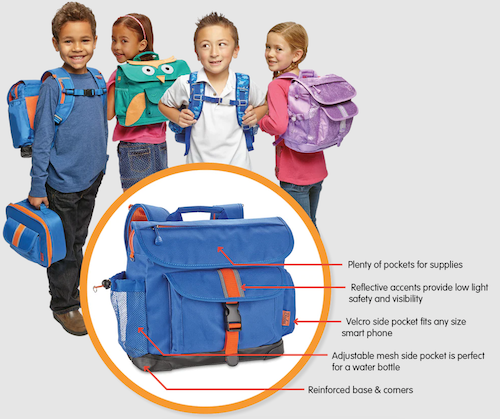
Bixbee, maker of ergonomically-smart backpacks built with the anatomy of tiny humans in mind, has some products that will charm your kids (and their spines) and keep clutter at bay.
Also, if your kids’ backpacks or lunchboxes are super-cool and fun, they’re less likely to leave them on the bus, or in their gym lockers, or just lose them altogether, which means you won’t have to make duplicate purchases…which means you save money. Whoohoo!
Bixbee also has delightful luggage and duffels for ease of traveling, rain boots and T-shirts, water bottles and just a whole bunch of kid-friendly goofiness.
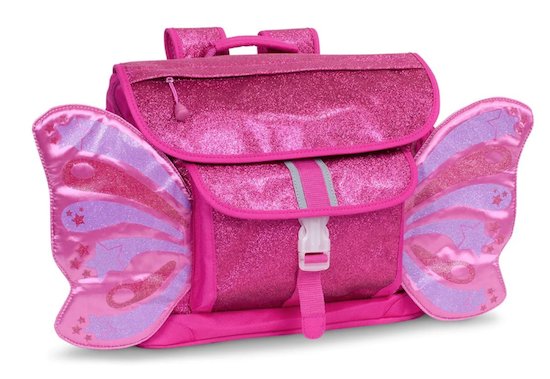
You didn’t ask me, but of course I have favorites, like the Sparkalicious Ruby Raspberry Butterflyer Backpack
and the Monkey Backpack and the matching Monkey Lunchbox:

Bixbee is having a back-to-school sale. Get 25% off any purchase with the code BACK2SCHOOL but hurry, because this discount code expires on Wednesday, July 27, 2022!
Bixbee is also offering free Standard Shipping (for US customers only) on all orders over $60.00 and a FREE folder and stickers with every backpack order! (Who doesn’t love stickers?)
Academic Planner: A Tool for Time Management®
If you’ve been a reader of the Paper Doll blog for a while, then you know that professional organizer Leslie Josel of Order Out of Chaos, is a colleague, friend, and fellow Cornell University alum. And I love every darned thing this smarty-skirt does!
(For more about Leslie, you can read Paper Doll Peeks Behind the Curtain with Superstar Coach, Author & Speaker Leslie Josel. Go. Read. Come back. We’ll wait.)
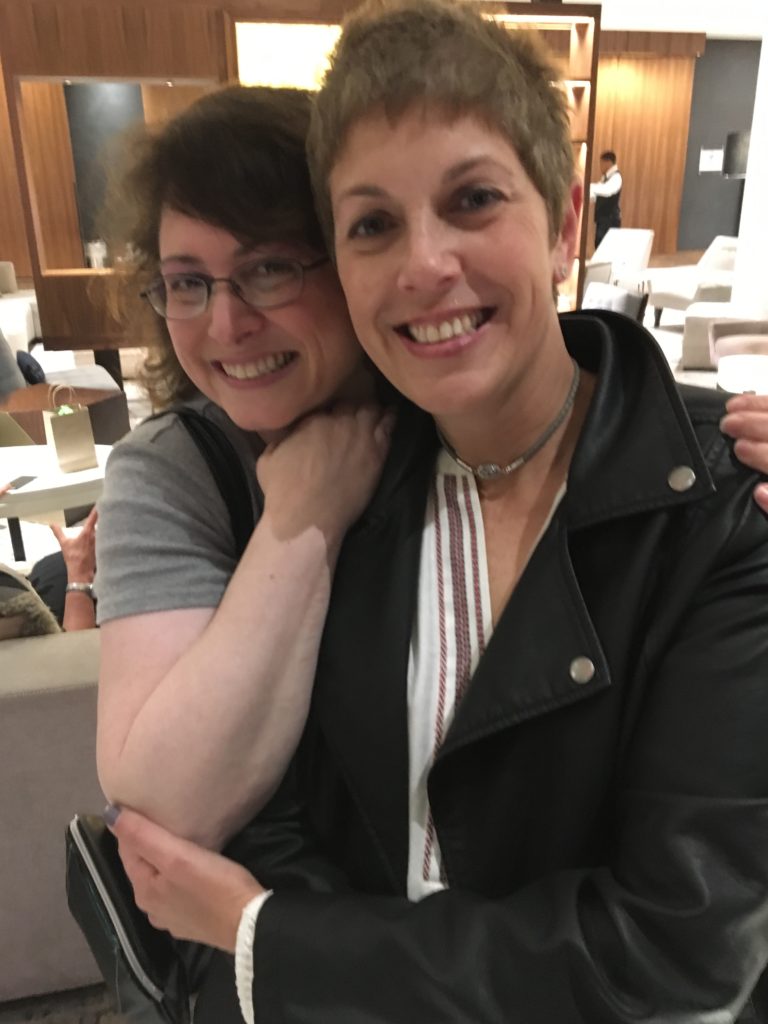
Paper Doll with Leslie Josel, © 2017 Best Results Organizing
I’ve written many, many times about Leslie’s Academic Planner: A Tool for Time Management®. The central concept behind the planner is the need to better enable students to “see” time and all of the related obligations. If you’re brand new to the Academic Planner, you can start here:
The Academic Planner has even won the 2018, 2020, and 2022 Family Choice Award!
 The spiral-bound 2022-2023 Academic Planner comes in two sizes: letter-sized planner with after-school planning (8 1/2″ x 11″) and smaller personal-sized with all-day planning (8 1/4″ x 8 1/2″), both for $19.99. Based on an academic year calendar, the planners run July through June.
Four styles of planners in each size
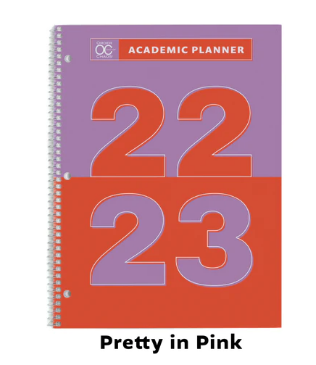
The letter-sized planners with after-school planning come in LimeLight, Pretty In Pink, Blues Brothers, and WhiteOut. The interior pages measure 7” x 11”, offering up more than the typical space for writing down assignments and activities. It has 7 subject boxes and after-school planning capabilities starting at 2p.m., and is ideal for elementary, middle, and high school students and those that are virtual learning or homeschooled.
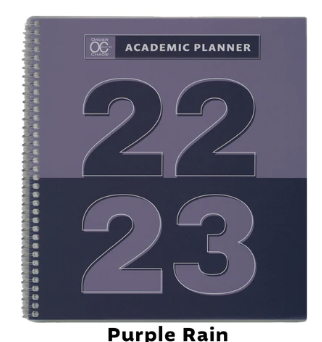
The smaller, personal-sized planner with all-day planning come in Men in Black, Purple Rain, Yellow Submarine, and AquaMan. They have 6 subject boxes and all-day planning capabilities, starting at 8:00am. These work well for high school, college, and homeschool students and even adults!
Introductory Pages
The front pages, measuring the same size as the front and rear cover of the planner, include:
- a contact information section so a lost planner can be easily returned
- a class schedule (subject, period, instructor, room #, days) to quickly acclimate students for the new year (and give a fellow student, armed with the contact info, an easy way to find the owner at the right classroom and return a lost planner)
- a Welcome Letter from Leslie to parents
- a detailed set of Planner Pointers, providing excellent guiding tips for making smart use of the planner. (My favorite? Writing “No Homework” if none was assigned so the student never has to wonder if he or she just forgot to write something down.)
- a two-page Planner Use Guide, showing the planner in action — noting assignments, reminders (“Get permission slips signed!”), after-school activities and previews for the next week
- a Study Planning Guide to help prepare for tests and quizzes
- a sample Project Planning Guide to help plan long-term assignments
- a two-page School Year at a Glance
Planner Pages
On the first and last (extra-sturdy) full-sized, the Academic Planner has a vertical index page that peeks out from behind (and to the left and right) of the actual planner pages. This index page means that students record their class subjects only once. Then everything on the upper calendar sections of the planner pages lines up with the appropriate class subjects, course by course, horizontally (with days of the week arrayed, vertically) across a two-page layout.
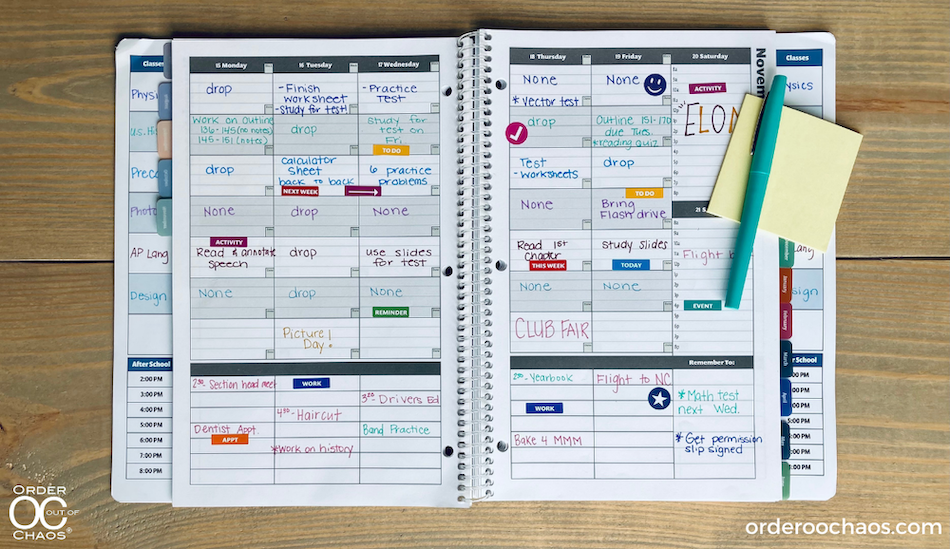
The next row in the smaller planner is for To-Do items by day. In the letter-sized planners, the left and right front pages provide hourly slots from 2 p.m. until 8 p.m. for students to log after school activities and obligations, like clubs, athletic practice, rehearsals, and jobs.
Other Features
- At the start of each month, there’s a left-side full-page monthly calendar with space to note major events, holidays, and vacations, and adequately plan longer-term projects.
- The right-side Notes page facing the calendar offers up ample room for planning, notes, and the kinds of serious thoughts only people between 12 and 18 can understand.
- There’s a clear poly pocket at the rear of the planner for safely keeping notes, permission slips, and other documents too small for a student’s binder.
- There are oodles of extras, like a library of printouts, downloads, videos, and “how-tos”, as well as downloadable resources like Project and Study Planning Guides, Time Trackers, Homework Checklists, Planner Pointers, Study Skills Videos.
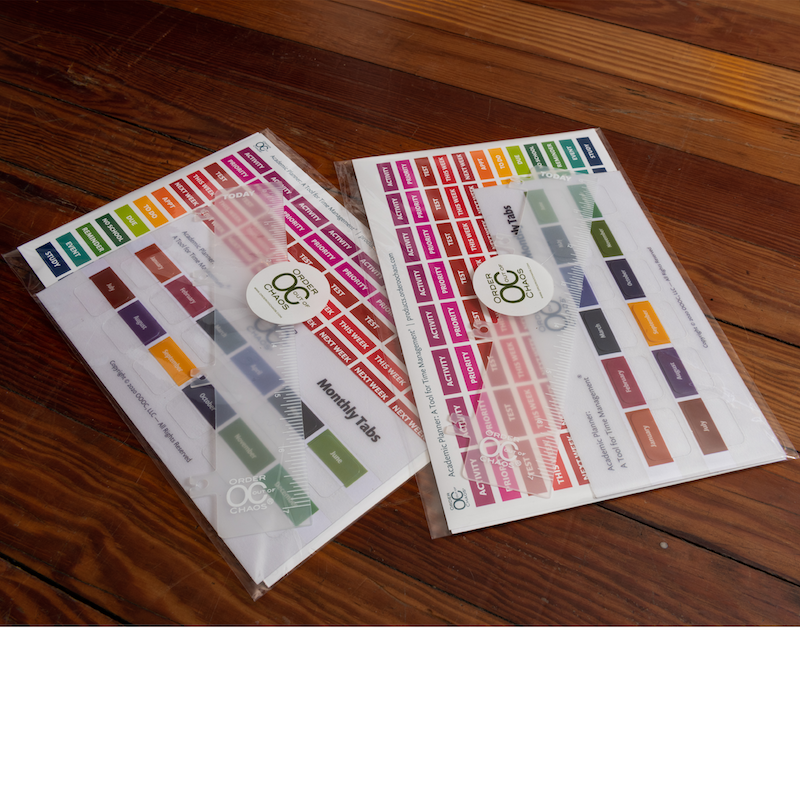
- A bonus Academic Planner Accessories Pack (sold separately, for $10.99) includes a plastic page marker that clips into the spiral binding, so it’s easy to find the current week in the planner, a set of monthly tabs, and a really bright, sunny set of useful stickers.
 Whew! That was a lot. To really do justice to the 2022-2023 Academic Planner: A Tool for Time Management®, take a detailed walk-through with Leslie herself. It’s like having a private coaching session!
And since this post is about saving money for back-to-school, use the promo code PLANNER20 at checkout to get 20% off any academic planners you purchase directly from the Order Out of Chaos website. This promo code expires September 30, 2022.

(If you prefer to order through Amazon, the 8 1/2″ x11″ planner and 8 1/2″ x 8 1/4″ planner sell for the same price.)
Enjoy your summer, but remember that a little planning and organizing now can make back-to-school shopping less costly, less stressful, and a bit more sunny!
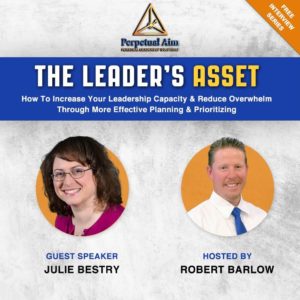
And, just a reminder if you missed my last post, Paper Doll on Planning & Prioritizing for Leadership, we’re only one week into the free, 3-week, The Leader’s Asset interview series. You can still register and catch my interview this Wednesday, July 27, 2022.
Disclosure: Some of the links above are affiliate links, and I may get a small remuneration (at no additional cost to you) if you make a purchase after clicking through to the resulting pages. The opinions, as always, are my own. (Seriously, who else would claim them?)
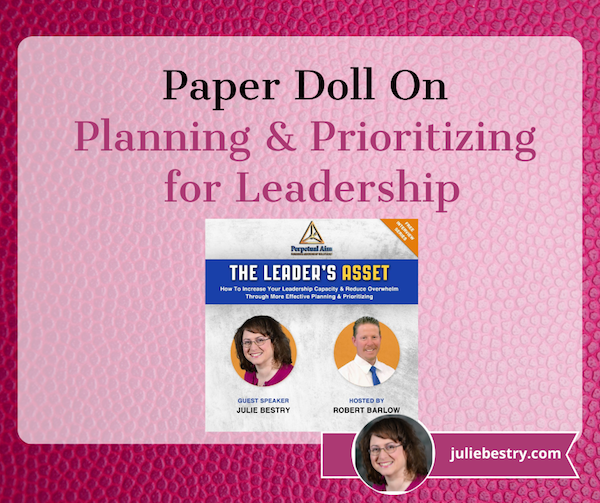
Paper Doll on Planning & Prioritizing for Leadership
You’re used to reading what I have to say about organizing and productivity in the pages of the Paper Doll blog. It might be easy to imagine me as some disembodied robot, typing away. But I am a real (and lively, and talkative) person, and I’ve been delighted to spend the early part of this summer getting to talk about my favorite topics with other experts for the benefit of people interested in guidance on these issues.
In fact, I’ve done four interviews over the past two months, three of which have been for podcasts, which I’ll tell you about later in the post. But today, I’d like to tell you about a really interesting (and FREEEEEE) opportunity for you to learn about planning, prioritizing, and leadership. (And remember, leadership isn’t just about being “in charge” at work. We lead in our homes, in our volunteer areas, and in our communities. Wouldn’t it be nice not to be overwhelmed there, too?)
I’d love for you to join me, along with a few of my beloved productivity colleagues (Frank Buck and Augusto Pinaud, about whom you heard oodles back in Paper Doll Picks: Organizing and Productivity Podcasts), and twenty other specialists for a FREE, 21-day, virtual event.
This event is for those of you who have a desire to accomplish more (of the right things) but have less stress, and to stop feeling stuck or frustrated because you’re not further along. (And since we’ve just come off a five-part series on toxic productivity, you know how that hamster wheel gets us spinning in circles, but not necessarily getting anywhere.)
The official name for this event has so many words in it, you’d think it was a Paper Doll blog post!
The Leader’s Asset: How To Increase Your Leadership Capacity & Reduce Overwhelm Through More Effective Planning & Prioritizing!

Before I forget, you can head over to my special link http://theleadersasset.com/JulieBestry to register. (This isn’t an affiliate link. I don’t get anything out of you registering except the joy of knowing I get dibs on saying I introduced you to this series. But as you’ll see, I’m pretty psyched about it.)
Each of us joined with The Leader’s Asset founder, Robert Barlow of Perpetual Aim (Personal Leadership Solutions), to record video interviews on subjects covering:
- How to plan and prioritize to reduce your overwhelm
- Ways to effectively beat procrastination
- How to accomplish more (of the right things) in less time
- Solutions to gain control over your email
- Tips, tools, and strategies to make planning and prioritizing more effective
- Dealing with distractions and keeping urgent tasks from derailing your focus
- And many more nuggets of wisdom and learning
These are not long, droning PowerPoint presentations. Instead, these are short, information-packed, conversational interviews with zero fluff. Every interview with Robert clocks in at about 20 minutes. (OK, you know I’m a talker, so mine is a few teensy minutes more!)
The point is that you will walk away from each interview with actionable strategies you can use right away and some newly-tweaked mindsets that will, as Robert says, TAKE YOU TO THE NEXT LEVEL!
So, would you (or your spouse, or your bestie, co-workers, and pals) like to hear from a diverse group of experts on how to be more successful leaders by really grasping the whole magic of planning and prioritizing?
How does it work? Once you register, you’ll get a welcome email, and then beginning Monday, July 18th, you’ll get an email each morning with a link to that day’s interview. Again, the 21-day series is free, but you’ll also have a chance to upgrade to a VIP package, with lifetime access to the recordings and some special opportunities Robert has in store.
So come on and register for The Leader’s Asset Interview Series.
Curious about who else is participating besides me, Frank, and Augusto? I don’t want to spoil any of Robert’s surprises, but I can give you a preview of some of the variety of talent he’s put together for this series, which includes:
- Bob Wendover has built a business helping people beat burnout, improve workplace problem solving skills, and develop critical thinking capacity.
- Oleg Konovalov is a global thought leader, author, business educator, consultant, and C-suite coach. He’s known as the DaVinci of Visionary Leadership, and uses his research to help entrepreneurs and managers identify their strategic needs in the terms of leadership.
- Shanda Miller is a leadership coach, trainer, and writer, and author of the book From Supervisor to Super Leader.
- Eva Medilek is a coach who teaches high performance success habits so her clients can leave behind their burnout, overwhelm, and exhaustion.
- Divya Parekh combines her biopharmaceutical career with experience as a coach, author, consultant, and speaker to help individuals become better leaders.
And that’s just scratching the surface. So I invite you to come play in The Leader’s Asset Interview Series sandbox with me, Robert Barlow, and these experts. Take 20 minutes a day to get some gems on how to improve your planning and prioritizing so you can work smarter (and healthier), lead better, and enjoy it all more.
UPDATE: The schedule has been announced, and my interview will go live on Wednesday, July 27, 2022! (Frank’s is Tuesday July 19th; Augusto’s is August 6th. But register to find out the whole schedule and start watching on Monday, July 18th!)
DIDN’T I SAY SOMETHING ABOUT PODCASTS?
I did!
As I mentioned at the top, I’ve been delighted to have been interviewed for three podcasts recently. In my own way, I’ve been working on different aspects of “leadership” in terms of bringing productivity and organizing to a wider audience, beyond my Paper Doll family, clients, and speaking audiences.
I’ve written recently about how I’ve just recertified as a Certified Evernote Expert (formerly Evernote Certified Consultant). In the next month or so (schedule: TBA), I’m excited that I’ll be a guest of the fabulous Ray Sidney-Smith on his new season of the Getting More Done with Evernote podcast. Ray always asks insightful questions and our mutual geeking out over Evernote will make you feel like you were in the room with us.

Toward the end of the summer, I am agog to report that I’ll be a guest on The NAPO Stand Out Podcast with the savvy and chic Clare Kumar! We had an amazing and free-wheeling conversation about some of my favorite organizing topics!
And bringing this all full circle, because Dr. Frank Buck was the one who introduced me to Robert Barlow for the interview series, I was recently on an episode of Frank Buck: Productivity for Total Control & Peace of Mind. He even named the episode “Julie Bestry: Don’t Apologize…Organize!” and you know how I love that!

Listen to the podcast at the show link or via Apple Podcasts, Spotify, or wherever you like to get your podcast mojo going, and lookie, the YouTube video is embedded below. The magic of the internet! (But hey, if you enjoy what we have to say, please click through to YouTube and leave a comment so Frank can feel the love, too!)
So, it may be the lazy, hazy days of summer, but I’m trying to keep you entertained and informed on all things about organizing and productivity.
Oh, and if you sign up for The Leader’s Asset Interview Series, please let me know (so I can do a happy dance), and feel free to come back to this post and let me know any gems you learn from the interviews, whether mine or from one of the other experts.
Happy summer!
Follow Me